New Semester
Started
Get
50% OFF
Study Help!
--h --m --s
Claim Now
Question Answers
Textbooks
Find textbooks, questions and answers
Oops, something went wrong!
Change your search query and then try again
S
Books
FREE
Study Help
Expert Questions
Accounting
General Management
Mathematics
Finance
Organizational Behaviour
Law
Physics
Operating System
Management Leadership
Sociology
Programming
Marketing
Database
Computer Network
Economics
Textbooks Solutions
Accounting
Managerial Accounting
Management Leadership
Cost Accounting
Statistics
Business Law
Corporate Finance
Finance
Economics
Auditing
Tutors
Online Tutors
Find a Tutor
Hire a Tutor
Become a Tutor
AI Tutor
AI Study Planner
NEW
Sell Books
Search
Search
Sign In
Register
study help
mathematics
precalculus
Precalculus Concepts Through Functions A Unit Circle Approach To Trigonometry 5th Edition Michael Sullivan - Solutions
In Problems 65–76, use a calculator to find the approximate value of each expression rounded to two decimal places.sin1°
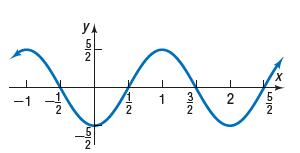
In Problems 63–76, find an equation for each graph. 17~ 316 N11 54 X شام
In Problems 59–76, use the even-odd properties to find the exact value of each expression. Do not use a calculator. COS cos(-4)
In Problems 59–76, use the even-odd properties to find the exact value of each expression. Do not use a calculator. sin E|C 3/
In Problems 59–76, use the even-odd properties to find the exact value of each expression. Do not use a calculator. sin (-T)
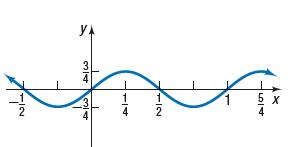
In Problems 63–76, find an equation for each graph. NIG ! ܐܝܐܚ 12 1 NIW 2 NIG 62 y
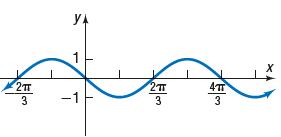
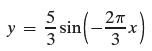
In Problems 63–76, find an equation for each graph. 2T 3 YA -1 2T 3 4T 3
In Problems 59–76, use the even-odd properties to find the exact value of each expression. Do not use a calculator.sin(−90°)
In Problems 65–76, use a calculator to find the approximate value of each expression rounded to two decimal places. ㅠ 8 sin-
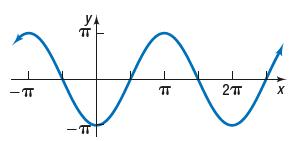
In Problems 63–76, find an equation for each graph. HAY -TT 2TT X
In Problems 59–76, use the even-odd properties to find the exact value of each expression. Do not use a calculator.cos(−270°)
In Problems 47–64, find the exact values of the six trigonometric functions of the given angle. If any are not defined, say “not defined.” Do not use a calculator. 75 3
In Problems 65–70, convert each angle to D°M'S'' form. Round your answer to the nearest second.29.411°
In Problems 47–64, find the exact values of the six trigonometric functions of the given angle. If any are not defined, say “not defined.” Do not use a calculator. 14T 3
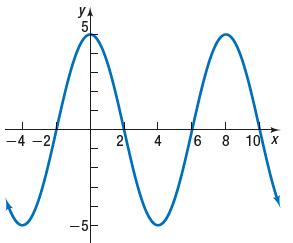
In Problems 63–76, find an equation for each graph. 5 AA -4-2/ 2 4 6 8 10 x -5
Problems 56–65. The purpose of these problems is to keep the material fresh in your mind so that you are better prepared for later sections, a final exam, or subsequent courses such as calculus.Solve: 9x−1 = 3x2−5
Problems 56–65 are based on previously learned material. The purpose of these problems is to keep the material fresh in your mind so that you are better prepared for later sections, a final exam, or subsequent courses such as calculus. Complete the square in x to write √x² + 2x + 26 in
In Problems 47–64, find the exact values of the six trigonometric functions of the given angle. If any are not defined, say “not defined.” Do not use a calculator. 13п 6
In Problems 35–58, graph each function using transformations or the method of key points. Be sure to label key points and show at least two cycles. Use the graph to determine the domain and the range of each function. y = 24 cos (3x)
In Problems 43–58, find the exact value of each of the remaining trigonometric functions of θ. csc0 = 3, cot < 0
In Problems 35–58, graph each function using transformations or the method of key points. Be sure to label key points and show at least two cycles. Use the graph to determine the domain and the range of each function. y = sin(-x)
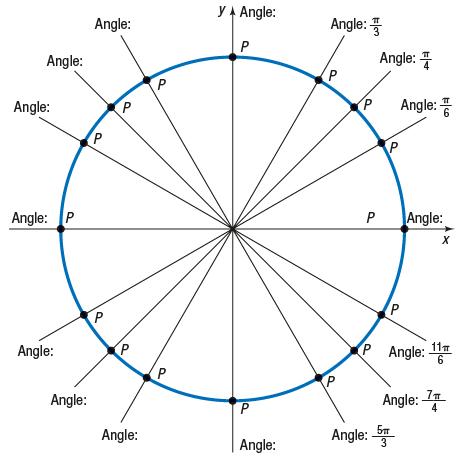
On the given unit circle, fill in the missing angles (0 ≤ θ ≤ 2π) and the corresponding points P. Angle: Angle: Angle: P Angle: Angle: Angle: P P P P Angle: P y Angle: P P Angle: Angle: P D P P Angle: Angle: P Angle: 5 Angle: PAngle: 11 6 Angle: X 7T
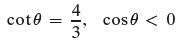
In Problems 43–58, find the exact value of each of the remaining trigonometric functions of θ. cote = 4 cos0 < 0
In Problems 35–58, graph each function using transformations or the method of key points. Be sure to label key points and show at least two cycles. Use the graph to determine the domain and the range of each function. 1 x-1000동 = y
In Problems 59–76, use the even-odd properties to find the exact value of each expression. Do not use a calculator.csc(−30°)
In Problems 47–64, find the exact values of the six trigonometric functions of the given angle. If any are not defined, say “not defined.” Do not use a calculator. TT 6
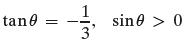
In Problems 43–58, find the exact value of each of the remaining trigonometric functions of θ. tan 1 --- 3 sine > 0
In Problems 43–58, find the exact value of each of the remaining trigonometric functions of θ. cose = 1 3' 2 75 // < < 0 < T
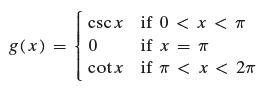
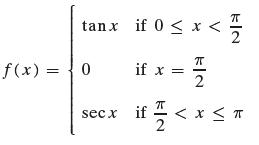
In Problems 49 and 50, graph each function. g(x) = cscx 0 cotx if 0 < x < T if x = π if < x < 2π
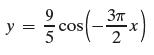
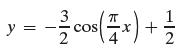
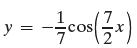
In Problems 35–58, graph each function using transformations or the method of key points. Be sure to label key points and show at least two cycles. Use the graph to determine the domain and the range of each function. y 3 =-2/cos(x) + 1/2 4
What are the domain and the range of f (x) = ln |sin x|? Find any vertical asymptotes.
In Problems 47–64, find the exact values of the six trigonometric functions of the given angle. If any are not defined, say “not defined.” Do not use a calculator.405°
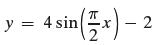
In Problems 35–58, graph each function using transformations or the method of key points. Be sure to label key points and show at least two cycles. Use the graph to determine the domain and the range of each function. y = 4 sin(x) - 2
In Problems 53–58, convert each angle in radians to degrees. Express your answer in decimal form, rounded to two decimal places.7
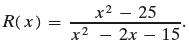
Problems 42–51. The purpose of these problems is to keep the material fresh in your mind so that you are better prepared for later sections, a final exam, or subsequent courses such as calculus.Find the vertical asymptotes, if any, of the graph of R(x) = x² - 25 x²2x15
Problems 56 – 65. The purpose of these problems is to keep the material fresh in your mind so that you are better prepared for later sections, a final exam, or subsequent courses such as calculus.Factor: 125p3 − 8q6
In Problems 47–64, find the exact values of the six trigonometric functions of the given angle. If any are not defined, say “not defined.” Do not use a calculator.390°
Problems 56 – 65. The purpose of these problems is to keep the material fresh in your mind so that you are better prepared for later sections, a final exam, or subsequent courses such as calculus.Hazel can paint a room in 2 hours less time than her friend Gwyneth. Working together, they can paint
In Problems 53–58, convert each angle in radians to degrees. Express your answer in decimal form, rounded to two decimal places.9.28
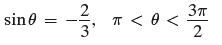
In Problems 43–58, find the exact value of each of the remaining trigonometric functions of θ. sin0 = به این 3' T < < 3T 2
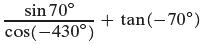
In Problems 77–88, use properties of the trigonometric functions to find the exact value of each expression. Do not use a calculator. sin 70° cos(-430°) + tan(-70°)
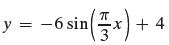
In Problems 35–58, graph each function using transformations or the method of key points. Be sure to label key points and show at least two cycles. Use the graph to determine the domain and the range of each function. y = -6 sin(x). +4 3
Problems 42–51. The purpose of these problems is to keep the material fresh in your mind so that you are better prepared for later sections, a final exam, or subsequent courses such as calculus.Write log2(8x2 y5) as a sum of logarithms. Express powers as factors.
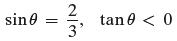
In Problems 43–58, find the exact value of each of the remaining trigonometric functions of θ. sin = 0 W/N tan 0 < 0
In Problems 47 – 64, find the exact values of the six trigonometric functions of the given angle. If any are not defined, say “not defined.” Do not use a calculator. 11T 4
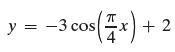
In Problems 35–58, graph each function using transformations or the method of key points. Be sure to label key points and show at least two cycles. Use the graph to determine the domain and the range of each function. y = -3 cos(x) +2 4
In Problems 47–52, convert each angle in degrees to radians. Express your answer in decimal form, rounded to two decimal places.350°
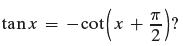
GraphDo you think that = y tanx and y = = −cot (x + 1)
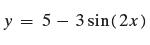
In Problems 35–58, graph each function using transformations or the method of key points. Be sure to label key points and show at least two cycles. Use the graph to determine the domain and the range of each function. y = 53 sin (2x)
In Problems 43–58, find the exact value of each of the remaining trigonometric functions of θ. sece = 2, 2, sin 0 < 0
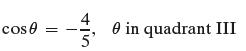
In Problems 43–58, find the exact value of each of the remaining trigonometric functions of θ. cos 5 0 in quadrant III
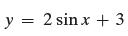
In Problems 35–58, graph each function using transformations or the method of key points. Be sure to label key points and show at least two cycles. Use the graph to determine the domain and the range of each function. y= 2 sin x + 3
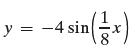
In Problems 35–58, graph each function using transformations or the method of key points. Be sure to label key points and show at least two cycles. Use the graph to determine the domain and the range of each function. y = -4 sin(x)
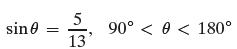
In Problems 43–58, find the exact value of each of the remaining trigonometric functions of θ. sin 0 5 13' 0 in quadrant III
Problems 42–51. The purpose of these problems is to keep the material fresh in your mind so that you are better prepared for later sections, a final exam, or subsequent courses such as calculus. If x = a sint, a > 0, and- FIN 2
Problems 42–51. The purpose of these problems is to keep the material fresh in your mind so that you are better prepared for later sections, a final exam, or subsequent courses such as calculus. Given y = x√x + 4, let u = x + 4 and express y in terms of u.
In Problems 43–58, find the exact value of each of the remaining trigonometric functions of θ. sin 5 13 90° 0 180° <
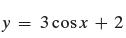
In Problems 35–58, graph each function using transformations or the method of key points. Be sure to label key points and show at least two cycles. Use the graph to determine the domain and the range of each function. y = 3cosx + 2 +2
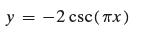
In Problems 17–40, graph each function. Be sure to label key points and show at least two cycles. Use the graph to determine the domain and the range of each function. y = -2 сsс(πx)
What are the domain and the range of f (x) = log(tan x)? Find any vertical asymptotes.
In Problems 43–58, find the exact value of each of the remaining trigonometric functions of θ. cose = 5' 270° 0 < 360°
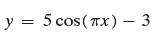
In Problems 35–58, graph each function using transformations or the method of key points. Be sure to label key points and show at least two cycles. Use the graph to determine the domain and the range of each function. y = 5 cos (πx) -
Problems 42–51 are based on previously learned material. The purpose of these problems is to keep the material fresh in your mind so that you are better prepared for later sections, a final exam, or subsequent courses such as calculus.Find the exact distance between the points (4, −1) and (10,
In Problems 49 and 50, graph each function. tanx if 0 x <
In Problems 31–46, find the exact value of each expression. Do not use a calculator.
In Problems 24–32, graph each function. Each graph should contain at least two periods. Use the graph to determine the domain and the range of each function. y = 4 sin (2x + 4) - 2
Problems 42–51. The purpose of these problems is to keep the material fresh in your mind so that you are better prepared for later sections, a final exam, or subsequent courses such as calculus.Solve: |3x + 4| = |5x − 7|
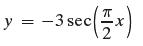
In Problems 17–40, graph each function. Be sure to label key points and show at least two cycles. Use the graph to determine the domain and the range of each function. y = -3 sec (2x)
In Problems 27–34, name the quadrant in which the angle θ lies. cos00, tan > 0
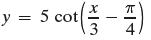
In Problems 24–32, graph each function. Each graph should contain at least two periods. Use the graph to determine the domain and the range of each function. y = 5 cot (-) 3
In Problems 31–46, find the exact value of each expression. Do not use a calculator.sin30° − cos45°
In Problems 31–46, find the exact value of each expression. Do not use a calculator.sin90° + tan45°
In Problems 43–58, find the exact value of each of the remaining trigonometric functions of θ. cose = 4 tan0 > 0
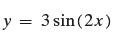
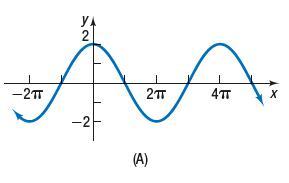
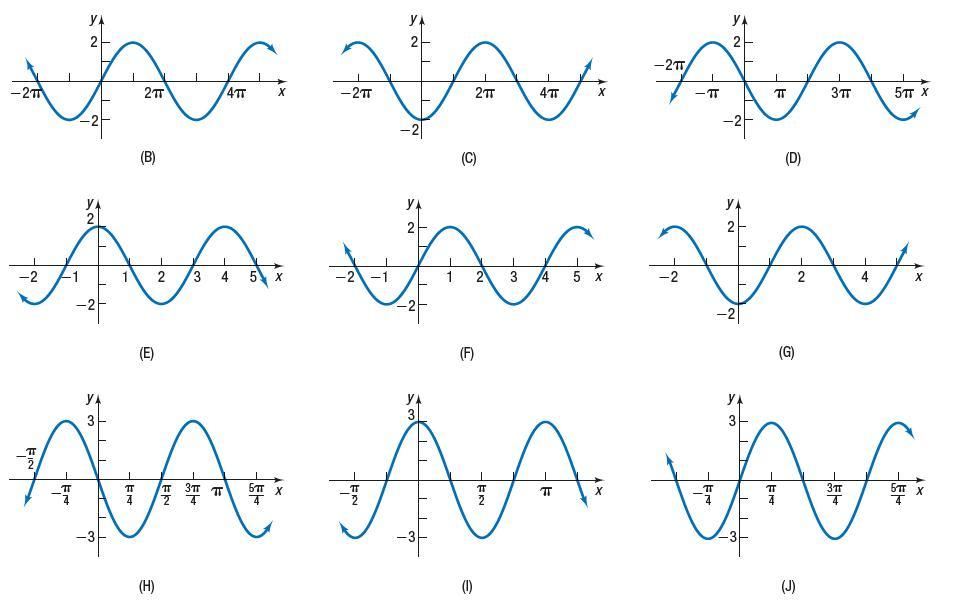
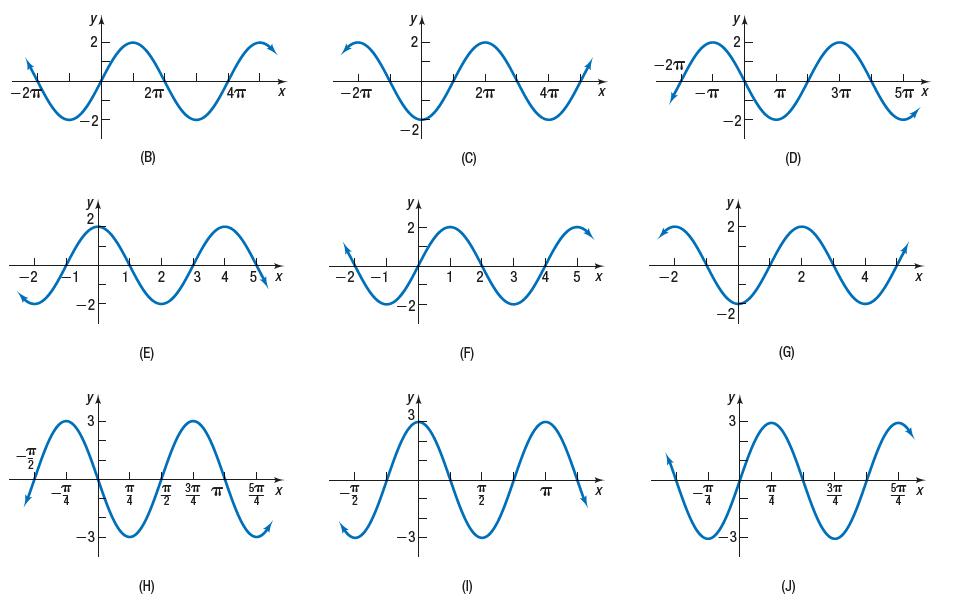
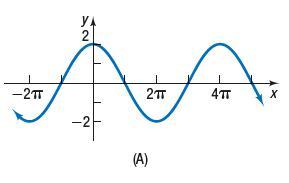
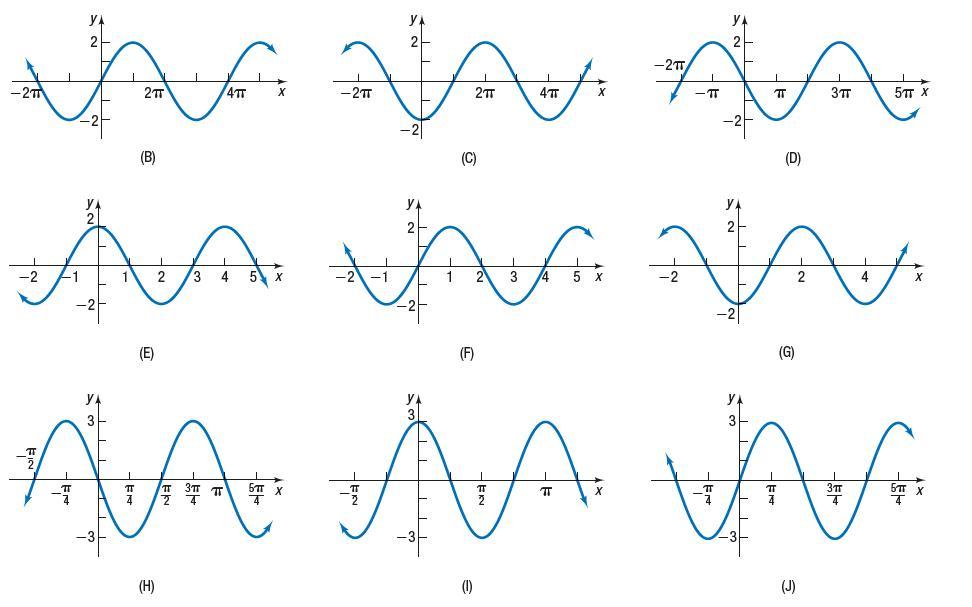
In Problems 25–34, match the given function to one of the graphs (A)–(J). y = 3 sin (2x)
In Problems 47 – 64, find the exact values of the six trigonometric functions of the given angle. If any are not defined, say “not defined.” Do not use a calculator. 00 П 3
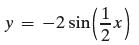
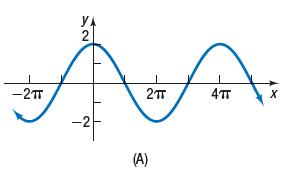
In Problems 25–34, match the given function to one of the graphs (A)–(J). y = = -2 sin(x)
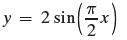
In Problems 25–34, match the given function to one of the graphs (A)–(J). y = 2 sin(x)
The length of time between consecutive high tides is 12 hours and 25 minutes. According to the National Oceanic and Atmospheric Administration, on Friday, April 1, 2022, in Sitka, Alaska, high tide occurred at 3:43 am (3.72 hours) and low tide occurred at 10:40 am (10.67 hours). Water heights are
In Problems 27 – 34, name the quadrant in which the angle θ lies. csc > 0, cos0 < 0 0
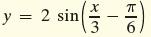
In Problems 25 and 26, graph the function. sin (3-7) 6 y = 2 sin
In Problems 11 – 26, use the fact that the trigonometric functions are periodic to find the exact value of each expression. Do not use a calculator. 19T 6 tan-
In Problems 25 and 26, graph the function. y tan-x + = -7)+ +2 4
In Problems 33 and 34, determine the amplitude and period of each function without graphing.y = sin(2x)
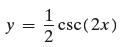
In Problems 17–40, graph each function. Be sure to label key points and show at least two cycles. Use the graph to determine the domain and the range of each function. 1 -csc x 2
In Problems 31 – 46, find the exact value of each expression. Do not use a calculator.cos180° − sin180°
In Problems 21 – 30, find the exact value. Do not use a calculator. sin (-37)
In Problems 11 – 26, use the fact that the trigonometric functions are periodic to find the exact value of each expression. Do not use a calculator. 25T 6 sec:
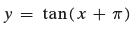
In Problems 24–32, graph each function. Each graph should contain at least two periods. Use the graph to determine the domain and the range of each function. y tan(x + π) =
In Problems 21 – 30, find the exact value. Do not use a calculator. cos Зп 2
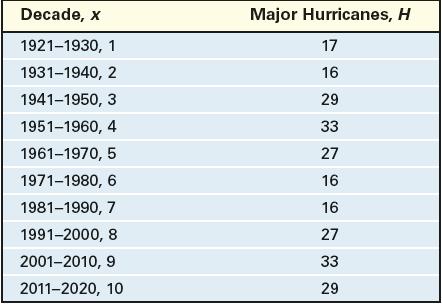
Hurricanes are categorized using the Saffir-Simpson Hurricane Scale, with winds 111–130 miles per hour (mph) corresponding to a category 3 hurricane, winds 131–155 mph corresponding to a category 4 hurricane, and winds in excess of 155 mph corresponding to a category 5 hurricane. The data below
In Problems 21 – 30, find the exact value. Do not use a calculator. sec(-π
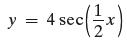
In Problems 17–40, graph each function. Be sure to label key points and show at least two cycles. Use the graph to determine the domain and the range of each function. : 4 sec (1 x) =
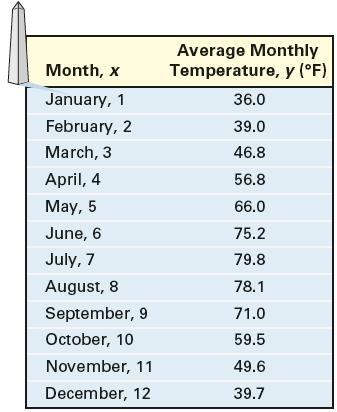
The following data represent the average monthly temperatures for Washington, D.C.(a) Draw a scatter plot of the data for one period.(b) Find a sinusoidal function of the formthat models the data.(c) Draw the sinusoidal function found in part (b) on the scatter plot.(d) Use a graphing utility to
In Problems 21 – 30, find the exact value. Do not use a calculator. tan (-3π)
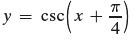
In Problems 24–32, graph each function. Each graph should contain at least two periods. Use the graph to determine the domain and the range of each function. csc ( x + · 4) y = csc k|+
In Problems 17–40, graph each function. Be sure to label key points and show at least two cycles. Use the graph to determine the domain and the range of each function. y = 1/csc (2x)
In Problems 16–23, find the exact value of each of the remaining trigonometric functions. sin = 0 5 13' 3π < 0 < 2π
In Problems 15–24, determine the amplitude and period of each function without graphing. (x²)500 — — = I y
In Problems 16–23, find the exact value of each of the remaining trigonometric functions. tane = 3 180° 0 < 270°
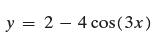
In Problems 3 – 22, find the amplitude (if one exists), period, and phase shift of each function. Graph each function. Be sure to label key points. Show at least two periods. y = -2 cos(4x) + 1
Showing 3000 - 3100
of 29454
First
24
25
26
27
28
29
30
31
32
33
34
35
36
37
38
Last
Step by Step Answers

 Get 50% OFF
Claim Now
Get 50% OFF
Claim Now