New Semester
Started
Get
50% OFF
Study Help!
--h --m --s
Claim Now
Question Answers
Textbooks
Find textbooks, questions and answers
Oops, something went wrong!
Change your search query and then try again
S
Books
FREE
Study Help
Expert Questions
Accounting
General Management
Mathematics
Finance
Organizational Behaviour
Law
Physics
Operating System
Management Leadership
Sociology
Programming
Marketing
Database
Computer Network
Economics
Textbooks Solutions
Accounting
Managerial Accounting
Management Leadership
Cost Accounting
Statistics
Business Law
Corporate Finance
Finance
Economics
Auditing
Tutors
Online Tutors
Find a Tutor
Hire a Tutor
Become a Tutor
AI Tutor
AI Study Planner
NEW
Sell Books
Search
Search
Sign In
Register
study help
mathematics
precalculus
Precalculus Concepts Through Functions A Unit Circle Approach To Trigonometry 5th Edition Michael Sullivan - Solutions
Problems 93–102. The purpose of these problems is to keep the material fresh in your mind so that you are better prepared for later sections, a final exam, or subsequent courses such as calculus.The exponential function f (x) = 1 + 2x is one-to-one. Find f−1.
Problems 90–99. The purpose of these problems is to keep the material fresh in your mind so that you are better prepared for later sections, a final exam, or subsequent courses such as calculus.Solve: log5 (x2 + 16) = 2
In Problems 21–100, establish each identity. (a sin + b cos0)² + (a cose -b sin 0)² a² + b²
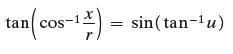
Find u in terms of x and r: tan(cos-1x) = sin (tan-¹u)
In Problems 85–96, use a graphing utility to solve each equation. Express the solution(s) rounded to two decimal places.6 sin x − ex = 2, x > 0
Solve: cos(sin-¹ x) = tan tan cos-1. 5.
Problems 90–99. The purpose of these problems is to keep the material fresh in your mind so that you are better prepared for later sections, a final exam, or subsequent courses such as calculus.Consider f (x) = −2x2 − 10x + 3.(a) Find the vertex.(b) Is the parabola concave up or concave
In Problems 21–100, establish each identity. 1+ cose + sin 0 1+ cose sin 0 sec 0 + tan
In Problems 85–96, use a graphing utility to solve each equation. Express the solution(s) rounded to two decimal places.x2 = x + 3 cos(2x)
Problems 93–102. The purpose of these problems is to keep the material fresh in your mind so that you are better prepared for later sections, a final exam, or subsequent courses such as calculus.Solve: |3x − 2| + 5 ≤ 9
Problems 90–99. The purpose of these problems is to keep the material fresh in your mind so that you are better prepared for later sections, a final exam, or subsequent courses such as calculus.Find the length of the arc subtended by a central angle of 75° on a circle of radius 6 inches. Give
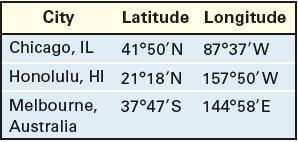
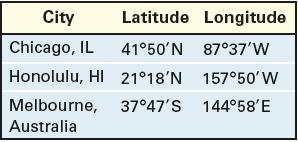
Problems 89 and 90 require the following discussion: The shortest distance between two points on Earth’s surface can be determined from the latitude and longitude of the two locations. For example, if location 1 has (lat, lon) = (α1, β1) and location 2 has (lat, lon) = (α2, β2), the shortest
In Problems 85–96, use a graphing utility to solve each equation. Express the solution(s) rounded to two decimal places.x2 − 2 sin(2x) = 3x
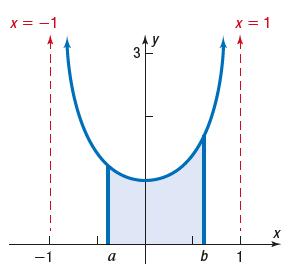
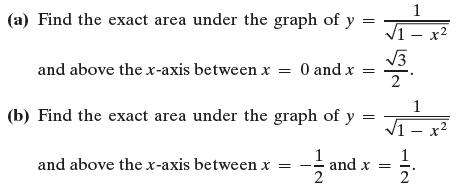
Area Under a Curve The area under the graph of y = 1/√1 − x2 and above the x-axis between x = a and x = b is given by sin−1 b − sin−1 a. See the figure. X x = -1 -1 a Ay x = 1 I 1 b 1 X
In Problems 21–100, establish each identity. 1 - 2 cos²0 sin cos = tan 0 - cot
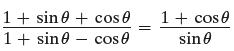
In Problems 21–100, establish each identity. 1+ sin 0 + cos 0 1 sin cos 1 + cos 0 sin
Problems 90–99. The purpose of these problems is to keep the material fresh in your mind so that you are better prepared for later sections, a final exam, or subsequent courses such as calculus.Convert 315° to radians.
Problems 89 and 90 require the following discussion: The shortest distance between two points on Earth’s surface can be determined from the latitude and longitude of the two locations. For example, if location 1 has (lat, lon) = (α1, β1) and location 2 has (lat, lon) = (α2, β2), the shortest
In Problems 85–96, use a graphing utility to solve each equation. Express the solution(s) rounded to two decimal places.x2 + 3 sin x = 0
Problems 90–99 are based on previously learned material. The purpose of these problems is to keep the material fresh in your mind so that you are better prepared for later sections, a final exam, or subsequent courses such as calculus.Determine algebraically whether f (x) = x3 + x2 − x is even,
In Problems 85–96, use a graphing utility to solve each equation. Express the solution(s) rounded to two decimal places.x2 − 2 cos x = 0
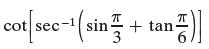
Find the exact value: cot[sec-¹(sin+tan)]
In Problems 21–100, establish each identity. (2 cos²0 cos40 - - 1)² sin 40 = 12 sin 20
Write as an algebraic expression in x: sec{tan-¹[sin (cos-¹|x|)]}
In Problems 21–100, establish each identity. cose + sine sin ³0 sin 0 cote + cos²0
Problems 90–99 are based on previously learned material. The purpose of these problems is to keep the material fresh in your mind so that you are better prepared for later sections, a final exam, or subsequent courses such as calculus.Find the complex zeros of f (x) = x4 + 21x2 − 100.
In Problems 85–96, use a graphing utility to solve each equation. Express the solution(s) rounded to two decimal places.sin x − cos x = x
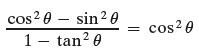
In Problems 21–100, establish each identity. cos²0 sin ²0 1 tan²0 cos²0
In Problems 85–96, use a graphing utility to solve each equation. Express the solution(s) rounded to two decimal places.sin x + cos x = x
In Problems 85–96, use a graphing utility to solve each equation. Express the solution(s) rounded to two decimal places.19x + 8 cos x = 2
In Problems 85–96, use a graphing utility to solve each equation. Express the solution(s) rounded to two decimal places.22x − 17 sin x = 3
In Problems 85–96, use a graphing utility to solve each equation. Express the solution(s) rounded to two decimal places.x − 4 sin x = 0
In Problems 21–100, establish each identity. sin ³0+ cos ³0 1-2 cos²0 sec 0 - sin 0 tan 0 1 85. cos²0 sin ²0 1 tan²0 = cos²0
In Problems 21–100, establish each identity. sin ³0+ cos³0 sin + cos 0 = 1 - sin cos
In Problems 61–84, solve each equation on the interval 0 ≤ θ < 2π. sec²0 tane = 0
In Problems 21–100, establish each identity. sin + cos cose sin cos sin 0 sec 0csc0
In Problems 21–100, establish each identity. sin 0 + cos sin 0 cos sin cos sec 0csc0
In Problems 61–84, solve each equation on the interval 0 ≤ θ < 2π. sec = tan 0 + cot0 0
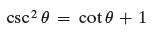
In Problems 61–84, solve each equation on the interval 0 ≤ θ < 2π. csc²0cot 0 + 1
In Problems 85–96, use a graphing utility to solve each equation. Express the solution(s) rounded to two decimal places.x + 5 cos x = 0
In Problems 21–100, establish each identity. sec²v tan²v + tanv secv sin v+cos V
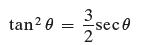
In Problems 61–84, solve each equation on the interval 0 ≤ θ < 2π. tan ²0 = 3 -sec 0 2
In Problems 61–84, solve each equation on the interval 0 ≤ θ < 2π. 4(1 + sin0) cos²0
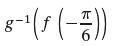
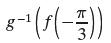
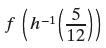
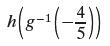
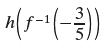
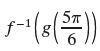
In Problems 71–82, f (x) = sin x, −π/2 ≤ x ≤ π/2; g(x) = cos x, 0 ≤ x ≤ π; and h(x) = tan x, −π/2 < x < π/2. Find the exact value of each composite function.
In Problems 71–82, f (x) = sin x, −π/2 ≤ x ≤ π/2; g(x) = cos x, 0 ≤ x ≤ π; and h(x) = tan x, −π/2 < x < π/2. Find the exact value of each composite function. 9 y_ h 60
In Problems 21–100, establish each identity. (secv tanv)² + 1 csc v(sec v tan v) = 2 tan v
In Problems 61–84, solve each equation on the interval 0 ≤ θ < 2π. 3(1 - cose) = sin ²0
In Problems 71–82, f (x) = sin x, −π/2 ≤ x ≤ π/2; g(x) = cos x, 0 ≤ x ≤ π; and h(x) = tan x, −π/2 < x < π/2. Find the exact value of each composite function.
In Problems 21–100, establish each identity. 1+ sin 0 1 sine 1 - sin 1+ sin 0 4 tan 0 sec 0
In Problems 71–78, find the exact solution of each equation. 5 sin-¹ x - 2π 2 sin-¹x - 3T
In Problems 71–78, find the exact solution of each equation. 4 cos ¹x 2π = 2 cos-1 - x
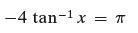
In Problems 71–78, find the exact solution of each equation. -4 tan-¹x = πT
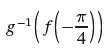
In Problems 71–82, f (x) = sin x, −π/2 ≤ x ≤ π/2; g(x) = cos x, 0 ≤ x ≤ π; and h(x) = tan x, −π/2 < x < π/2. Find the exact value of each composite function. -1 예사) g
In Problems 61–84, solve each equation on the interval 0 ≤ θ < 2π. 2 cos2 0 7 cos0 - 4 = 0
In Problems 21–100, establish each identity. 1 1 - sin + 1 1+ sin 0 2 sec ²0
In Problems 71–82, f (x) = sin x, −π/2 ≤ x ≤ π/2; g(x) = cos x, 0 ≤ x ≤ π; and h(x) = tan x, −π/2 < x < π/2. Find the exact value of each composite function. ((²7/17) 1-4) £
In Problems 61–84, solve each equation on the interval 0 ≤ θ < 2π. sin² = 2 cos 0 + 2
In Problems 71–82, f (x) = sin x, −π/2 ≤ x ≤ π/2; g(x) = cos x, 0 ≤ x ≤ π; and h(x) = tan x, −π/2 < x < π/2. Find the exact value of each composite function. -1
In Problems 61–84, solve each equation on the interval 0 ≤ θ < 2π. 2 sin²0 5 sin0 + 3 = 0
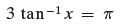
In Problems 71–78, find the exact solution of each equation. 3 tan-¹x = π
In Problems 71–78, find the exact solution of each equation. -6sin-¹ (3x) -1 (3x) = π
In Problems 21–100, establish each identity. tan cote = sec 0csc0
In Problems 61–84, solve each equation on the interval 0 ≤ θ < 2π. 1+ sin 2 cos² 0
In Problems 71–82, f (x) = sin x, −π/2 ≤ x ≤ π/2; g(x) = cos x, 0 ≤ x ≤ π; and h(x) = tan x, −π/2 < x < π/2. Find the exact value of each composite function. (12)-5)대
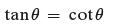
In Problems 61–84, solve each equation on the interval 0 ≤ θ < 2π. tan0 = cot
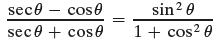
In Problems 21–100, establish each identity. seco - cos = sin Otan
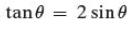
In Problems 61–84, solve each equation on the interval 0 ≤ θ < 2π. tane 2 sin 0
In Problems 71–82, f (x) = sin x, −π/2 ≤ x ≤ π/2; g(x) = cos x, 0 ≤ x ≤ π; and h(x) = tan x, −π/2 < x < π/2. Find the exact value of each composite function. -1 f- 에이죵) 6
In Problems 71–82, f (x) = sin x, −π/2 ≤ x ≤ π/2; g(x) = cos x, 0 ≤ x ≤ π; and h(x) = tan x, −π/2 < x < π/2. Find the exact value of each composite function. 9 |寸 60
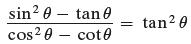
In Problems 21–100, establish each identity. sin²0 cos²0 tan 0 cot tan²0
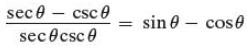
In Problems 21–100, establish each identity. sec8 - csc 0 sec 0csc0 sin cos -
In Problems 63–70, find the inverse function f−1 of each function f. Find the range of f and the domain and range of f−1. f(x) = 3 sin(2x + 1); − −1≤x≤. + π
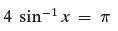
In Problems 71–78, find the exact solution of each equation. 4 sin-¹ x = π -1
In Problems 63–70, find the inverse function f−1 of each function f. Find the range of f and the domain and range of f−1. f(x) = 2 cos(3x + 2); < x < 3
In Problems 61–84, solve each equation on the interval 0 ≤ θ < 2π. cos sin (-0) = 0
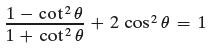
In Problems 21–100, establish each identity. 1 - cot²0 1+ cot²0 + 2 cos² 0 = 1
In Problems 61–84, solve each equation on the interval 0 ≤ θ < 2π. 2 sin 203(1 - cos(-0))
In Problems 61–84, solve each equation on the interval 0 ≤ θ < 2π. cos-sin(-0)
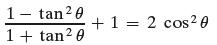
In Problems 21–100, establish each identity. 1 tan ²0 1 + tan²0 + 12 cos ²0
In Problems 63–70, find the inverse function f−1 of each function f. Find the range of f and the domain and range of f−1. f(x) = cos(x + 2) + 1;-2 ≤ x ≤ π-2
In Problems 61–84, solve each equation on the interval 0 ≤ θ < 2π. sin 20 6(cos(-0) + 1) =
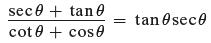
In Problems 21–100, establish each identity. sec 0 + tan 0 cot + cose = tan sece
In Problems 63–70, find the inverse function f−1 of each function f. Find the range of f and the domain and range of f−1. f(x) = 3 sin (2x); -4≤x≤
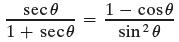
In Problems 21–100, establish each identity. sec 0 1 + sece 1 - cose sin ²0
In Problems 63–70, find the inverse function f−1 of each function f. Find the range of f and the domain and range of f−1. f(x) = |--
In Problems 63–70, find the inverse function f−1 of each function f. Find the range of f and the domain and range of f−1. f(x) = -2 cos(3x); 0 < x < 스플
In Problems 61–84, solve each equation on the interval 0 ≤ θ < 2π. cos² sin 20 + sin 0 =
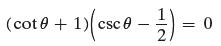
In Problems 61–84, solve each equation on the interval 0 ≤ θ < 2π. (cote + 1)(csc0- · 1) (csc 0-1/2) -1/2) = 0
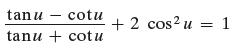
In Problems 21–100, establish each identity. tan u tanu cotu cotu + 1 = 2 sin² u
In Problems 61–70, write each trigonometric expression as an algebraic expression in u.tan(cot−1 u)
In Problems 21–100, establish each identity. tanu - cotu tanu + cotu +2 cos2 u 1
In Problems 61–84, solve each equation on the interval 0 ≤ θ < 2π. sin ²0 cos² 0 = 1 + cos 0
In Problems 63–70, find the inverse function f−1 of each function f. Find the range of f and the domain and range of f−1. f(x) = 2 tanx - 3; π 2
In Problems 61–84, solve each equation on the interval 0 ≤ θ < 2π. (tan01) (sec 0 - 1) = 0
In Problems 61–70, write each trigonometric expression as an algebraic expression in u.cos(sec−1 u)
In Problems 63–70, find the inverse function f−1 of each function f. Find the range of f and the domain and range of f−1. f(x)= = 5 sinx + 2; π 1≤x≤ π
In Problems 21–100, establish each identity. tan cot tan0 + cot = sin 20 cos2 0
In Problems 61–84, solve each equation on the interval 0 ≤ θ < 2π. 2 cos² 0 + cos 0 - 1 = 0
In Problems 21–100, establish each identity. sece cos sec+ cose sin ²0 1+ cos2
In Problems 61–70, write each trigonometric expression as an algebraic expression in u.sin(cot−1 u)
Showing 3600 - 3700
of 29454
First
30
31
32
33
34
35
36
37
38
39
40
41
42
43
44
Last
Step by Step Answers

 Get 50% OFF
Claim Now
Get 50% OFF
Claim Now