New Semester
Started
Get
50% OFF
Study Help!
--h --m --s
Claim Now
Question Answers
Textbooks
Find textbooks, questions and answers
Oops, something went wrong!
Change your search query and then try again
S
Books
FREE
Study Help
Expert Questions
Accounting
General Management
Mathematics
Finance
Organizational Behaviour
Law
Physics
Operating System
Management Leadership
Sociology
Programming
Marketing
Database
Computer Network
Economics
Textbooks Solutions
Accounting
Managerial Accounting
Management Leadership
Cost Accounting
Statistics
Business Law
Corporate Finance
Finance
Economics
Auditing
Tutors
Online Tutors
Find a Tutor
Hire a Tutor
Become a Tutor
AI Tutor
AI Study Planner
NEW
Sell Books
Search
Search
Sign In
Register
study help
mathematics
precalculus
Precalculus Concepts Through Functions A Unit Circle Approach To Trigonometry 5th Edition Michael Sullivan - Solutions
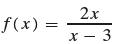
True or False The graph of the functionhas y = 2 as a horizontal asymptote. f(x) = 2.x x - 3
If f (x) = −2x5 + x3 − 5x2 + 7, then f (x)→ ____ as x→−∞, and f (x)→_____ as x → ∞.
In Problems 19–54, solve each inequality algebraically.(x − 5)( x + 2)2 > 0
The range of the function f (x) = ax, where a > 0 and a ≠ 1, is the interval (a) (-∞0,00) (c) (0, ∞0) (b) (-∞, 0) (d) [0, ∞)
In Problems 19–54, solve each inequality algebraically.x3 − 4x2 > 0
In Problems 19–54, solve each inequality algebraically.x3 + 8x2 < 0
Graph f (x) = −3(x + 1)2 + 5 using transformations.
In Problems 19–54, solve each inequality algebraically.2x3 > −8x2
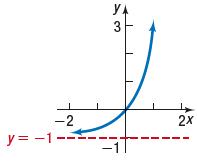
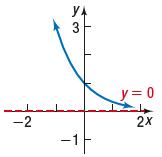
In Problems 39–46, the graph of an exponential function is given. Match each graph to one of the following functions. (A) y = 3x (E) y = 3x 1 (B) y = (F) y = 3-x = 3x-1 (C) y = − 3x (G) y = 31-x (D) y = = -3-* (H) y = 1-3x
In Problems 19–54, solve each inequality algebraically.3x3 < −15x2
Solve: x2 + 3x = 4
In Problems 39–46, the graph of an exponential function is given. Match each graph to one of the following functions. (A) y = 3x (E) y = 3x 1 (B) y = (F) y = 3-x = 3x-1 (C) y = − 3x (G) y = 31-x (D) y = = -3-* (H) y = 1-3x
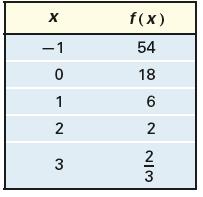
In Problems 31–38, determine whether the given function is linear, exponential, or neither. For those that are linear functions, find a linear function that models the data; for those that are exponential, find an exponential function that models the data. X -1 0 1 2 3 f(x) 54 18 6 2 2/3
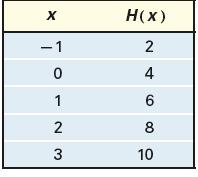
In Problems 31–38, determine whether the given function is linear, exponential, or neither. For those that are linear functions, find a linear function that models the data; for those that are exponential, find an exponential function that models the data. X -1 0 1 23 H(X) 2 +6000 8 10
True or False T o graph y = (x − 2)3 , shift the graph of y = x3 to the left 2 units.
Find the average rate of change of f (x) = 3x − 5 from x = 0 to x = 4.
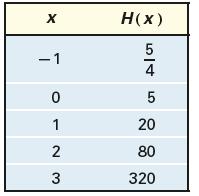
In Problems 31–38, determine whether the given function is linear, exponential, or neither. For those that are linear functions, find a linear function that models the data; for those that are exponential, find an exponential function that models the data. X -1 ܂ 1 2 3 H)x( 5/45 20 80 320
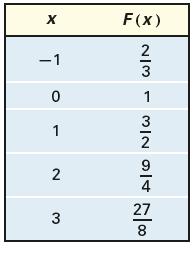
In Problems 31–38, determine whether the given function is linear, exponential, or neither. For those that are linear functions, find a linear function that models the data; for those that are exponential, find an exponential function that models the data. X -1 0 1 2 3 F(x) 2/3 1 MIN 170 00
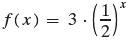
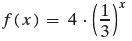
In Problems 47–58, use transformations to graph each function. Determine the domain, range, horizontal asymptote, and y-intercept of each function. X = 3 ⋅ ( ² ) ² f(x) =
If f (x) = −3x + 10, then the graph of f is a_______ with slope______ and y -intercept _______.
Where is the function f (x) = x2 − 4x + 3 increasing? Where is it decreasing?
In Problems 47–58, use transformations to graph each function. Determine the domain, range, horizontal asymptote, and y-intercept of each function. f(x) = 4 ·(-3)*
True or False The function f (x) = ex is increasing and is one-to-one.
If 3x = 34 , then x = ______.
In Problems 19–30, approximate each number using a calculator. Express your answer rounded to three decimal places.(a) 23.14(b) 23.141(c) 23.1415(d) 2π
In Problems 19–30, approximate each number using a calculator. Express your answer rounded to three decimal places.(a) 3.12.7(b) 3.142.71(c) 3.1412.718(d) πe
In Problems 19–30, approximate each number using a calculator. Express your answer rounded to three decimal places.e1.2
In Problems 19–30, approximate each number using a calculator. Express your answer rounded to three decimal places.e−1.3
In Problems 19–30, approximate each number using a calculator. Express your answer rounded to three decimal places.125e 0.026·7
In Problems 67–86, solve each equation. (佳)². 1 25
In Problems 47–58, use transformations to graph each function. Determine the domain, range, horizontal asymptote, and y-intercept of each function.f (x) = 3x−1
In Problems 67–86, solve each equation. () 1 64
In Problems 47–58, use transformations to graph each function. Determine the domain, range, horizontal asymptote, and y-intercept of each function.f (x) = −3x + 1
In Problems 47–58, use transformations to graph each function. Determine the domain, range, horizontal asymptote, and y-intercept of each function.f (x) = 1 − 2−x/3
In Problems 59–66, begin with the graph of y = ex and use transformations to graph each function. Determine the domain, range, horizontal asymptote, and y-intercept of each function.f (x) = e−x
In Problems 59–66, begin with the graph of y = ex and use transformations to graph each function. Determine the domain, range, horizontal asymptote, and y-intercept of each function.f (x) = −ex
In Problems 59–66, begin with the graph of y = ex and use transformations to graph each function. Determine the domain, range, horizontal asymptote, and y-intercept of each function.f (x) = ex+2
In Problems 59–66, begin with the graph of y = ex and use transformations to graph each function. Determine the domain, range, horizontal asymptote, and y-intercept of each function.f (x) = ex − 1
In Problems 59–66, begin with the graph of y = ex and use transformations to graph each function. Determine the domain, range, horizontal asymptote, and y-intercept of each function.f (x) = 5 − e−x
In Problems 59–66, begin with the graph of y = ex and use transformations to graph each function. Determine the domain, range, horizontal asymptote, and y-intercept of each function.f (x) = 9 − 3e−x
In Problems 59–66, begin with the graph of y = ex and use transformations to graph each function. Determine the domain, range, horizontal asymptote, and y-intercept of each function.f (x) = 7 − 3e2x
In Problems 67–86, solve each equation.6x = 65
In Problems 67–86, solve each equation.5x = 5−6
In Problems 67–86, solve each equation.2−x = 16
In Problems 67–86, solve each equation.e3x = e2−x
In Problems 67–86, solve each equation. 5x+3 115
In Problems 67–86, solve each equation.32x−5 = 9
In Problems 67–86, solve each equation.3x3 = 9 x
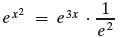
In Problems 67–86, solve each equation. ex2 = ex = 1 ,2
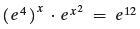
In Problems 67–86, solve each equation. (e4) *. ex² e12
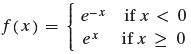
In Problems 105–108, graph each function. Based on the graph, state the domain and the range, and find any intercepts. f(x) = e-x ex if x if x < 0 if x > 0
In Problems 67–86, solve each equation.4x2 = 2x
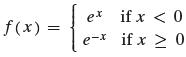
In Problems 105–108, graph each function. Based on the graph, state the domain and the range, and find any intercepts. f(x) = ex if x < 0 e-x if x ≥ 0
In Problems 67–86, solve each equation.8−x+11 = 162x
In Problems 67–86, solve each equation.9−x+15 = 27x
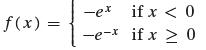
In Problems 105–108, graph each function. Based on the graph, state the domain and the range, and find any intercepts. f(x) = -ex -e-x if x < 0 if x > 0
In Problems 67–86, solve each equation.4x · 2x2 = 162
In Problems 67–86, solve each equation.92x · 27x2 = 3-1
In Problems 67–86, solve each equation.e2x = e5x+12
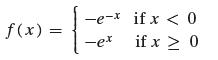
In Problems 105–108, graph each function. Based on the graph, state the domain and the range, and find any intercepts. f(x) = = -e-* -ex if x < 0 if x ≥ 0
If 4x = 7, what does 4−2x equal?
If 2x = 3, what does 4−x equal?
If 3−x = 2, what does 32x equal?
If 5−x = 3, what does 53x equal?
If 9x = 25, what does 3x equal?
If 2−3x = 1/1000, what does 2x equal?
Suppose that f (x) = 3x.(a) What is f (4)? What point is on the graph of f?(b) If f (x) = 1/9, what is x? What point is on the graph of f?
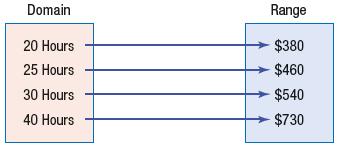
In Problems 13 – 20, determine whether the function is one-to-one. Domain 20 Hours 25 Hours 30 Hours 40 Hours Range $380 $460 $540 $730
If f −1 is the inverse of a function f , then the graphs of f and f −1 are symmetric with respect to the line ______.
If the domain of a one-to-one function f is [ 4,∞), then the range of its inverse function f −1 is ._______
In Problems 21 – 26, the graph of a function f is given. Use the horizontal-line test to determine whether f is one-to-one. -3 У 3 -3 3 x
Problems 79–88 are based on previously learned material. The purpose of these problems is to keep the material fresh in your mind so that you are better prepared for later sections, a final exam, or subsequent courses such as calculus.Solve: 9 − 2x ≤ 4x + 1
Problems 79–88 are based on previously learned material. The purpose of these problems is to keep the material fresh in your mind so that you are better prepared for later sections, a final exam, or subsequent courses such as calculus.Factor completely: 6x4 y4 + 3x3y5 − 18x2 y6
Problems 79–88 are based on previously learned material. The purpose of these problems is to keep the material fresh in your mind so that you are better prepared for later sections, a final exam, or subsequent courses such as calculus.Suppose y varies directly with √x. Write a general formula
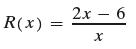
In Example 5, we graphed the rational function and found that the graph has a hole at the point Therefore, the graph of R is discontinuous at We can remove this discontinuity by defining the rational function R using the following piecewise-defined function:(a) Redefine R from Problem 33 so that
Refer to Problem 67.(a) Redefine R from Problem 34 so that the discontinuity at x = −5 is removed.(b) Redefine R from Problem 36 so that the discontinuity at x = -5/2 is removed.Data from problem 67we graphed the rational function and found that the graph has a hole at the pointTherefore, the
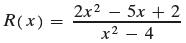
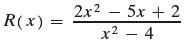
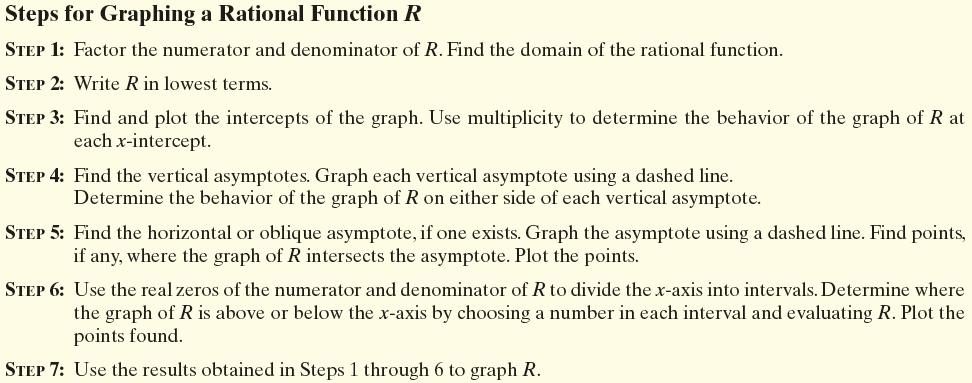
In Problems 38–43, graph each rational function following the seven steps given below. Steps for Graphing a Rational Function R STEP 1: Factor the numerator and denominator of R. Find the domain of the rational function. STEP 2: Write R in lowest terms. STEP 3: Find and plot the intercepts of the
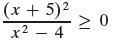
In Problems 19–54, solve each inequality algebraically. (x + 5)² x² - 4 0 <
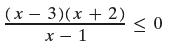
In Problems 19–54, solve each inequality algebraically. (x3)(x + 2) x - 1 < 0
In Problems 19–54, solve each inequality algebraically. x + 2 x - 4 ≥1
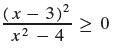
In Problems 19–54, solve each inequality algebraically. (x - 3)² x² - 4 -2 ΛΙ 20
In Problems 19–54, solve each inequality algebraically.(x + 2)(x − 4)(x − 6) ≤ 0
In Problems 19–54, solve each inequality algebraically. x + 4 x-2 VI
In Problems 25 and 26, use the Intermediate Value Theorem to show that each polynomial function has a real zero in the given interval.f (x) = 3x3 − x − 1; [ 0, 1]
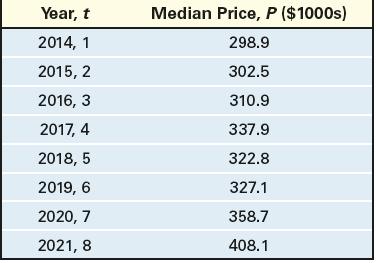
The data in the table on the right represent the median sales price of houses sold in the United States in the fourth quarter (October to December) of the year shown.(a) With a graphing utility, draw a scatter plot of the data. Comment on the type of relation that appears to exist between the two
In Problems 19–54, solve each inequality algebraically.(x + 1)(x + 2)( x + 3) ≤ 0
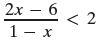
In Problems 44–48, solve each inequality. Graph the solution set. 2x - 6 1- x < 2
In Problems 25 and 26, use the Intermediate Value Theorem to show that each polynomial function has a real zero in the given interval.f (x) = 8x4 − 4x3 − 2x − 1; [ 0, 1]
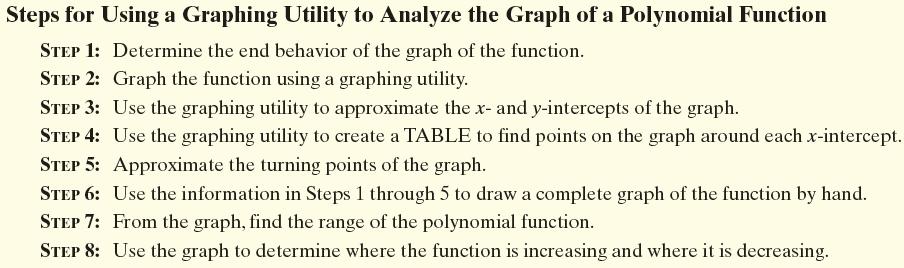
Graph the polynomial function f (x) = x3 − 2.37x2 − 4.68x + 6.93 by following Steps 1 through 8 shown bellow. Steps for Using a Graphing Utility to Analyze the Graph of a Polynomial Function STEP 1: Determine the end behavior of the graph of the function. STEP 2: Graph the function using a
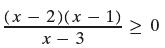
In Problems 44–48, solve each inequality. Graph the solution set. (x-2)(x - 1) x - 3 > 0
In Problems 19–54, solve each inequality algebraically.x3 + 2x2 − 3x > 0
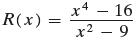
Where is the graph ofabove the x-axis? R(x) = x4 - 16 x² - 9
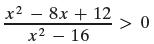
In Problems 44–48, solve each inequality. Graph the solution set. x² - 8x + 12 > 0 x2 x² 16.
In Problems 19–54, solve each inequality algebraically.x4 > x2
In Problems 31–34, find the complex zeros of each polynomial function f. Write f in factored form.f (x) = 4x3 + 4x2 − 7x + 2
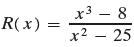
Where is the graph of above the x-axis? R(x) = x3 x³ - 8 25 x2 x²
In Problems 19–54, solve each inequality algebraically.3(x2 − 2) < 2(x − 1)2 + x2
In Problems 44–48, solve each inequality. Graph the solution set.x3 + 4x2 ≥ x + 4
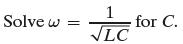
Problems 79–88 are based on previously learned material. The purpose of these problems is to keep the material fresh in your mind so that you are better prepared for later sections, a final exam, or subsequent courses such as calculus. Solve w 1 √LC for C.
Suppose f (x) = 4x − 2. Find X + 이탈리 4
Showing 4200 - 4300
of 29454
First
36
37
38
39
40
41
42
43
44
45
46
47
48
49
50
Last
Step by Step Answers

 Get 50% OFF
Claim Now
Get 50% OFF
Claim Now