New Semester
Started
Get
50% OFF
Study Help!
--h --m --s
Claim Now
Question Answers
Textbooks
Find textbooks, questions and answers
Oops, something went wrong!
Change your search query and then try again
S
Books
FREE
Study Help
Expert Questions
Accounting
General Management
Mathematics
Finance
Organizational Behaviour
Law
Physics
Operating System
Management Leadership
Sociology
Programming
Marketing
Database
Computer Network
Economics
Textbooks Solutions
Accounting
Managerial Accounting
Management Leadership
Cost Accounting
Statistics
Business Law
Corporate Finance
Finance
Economics
Auditing
Tutors
Online Tutors
Find a Tutor
Hire a Tutor
Become a Tutor
AI Tutor
AI Study Planner
NEW
Sell Books
Search
Search
Sign In
Register
study help
physics
principles communications systems
Engineering Electromagnetics 8th edition William H. Hayt, John A.Buck - Solutions
Write an expression in rectangular components for the vector that extends from (x1, y1, z1) to (x2, y2, z2) and determine the magnitude of this vector.
Given the points M(0.1,−0.2,−0.1), N(−0.2, 0.1, 0.3), and P(0.4, 0, 0.1), find(a) The vector RMN;(b) The dot product RMN · RMP;(c) The scalar projection of RMN on RMP;(d) The angle between RMN and RMP.
By expressing diagonals as vectors and using the definition of the dot product, find the smaller angle between any two diagonals of a cube, where each diagonal connects diametrically opposite corners and passes through the center of the cube.
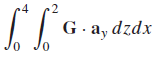
A field is given as G = [25/(x2+ y2)](xax+ yay). Find(a) A unit vector in the direction of G at P(3, 4,ˆ’2);(b) The angle between G and ax at P;(c) The value of the following double integral on the plane y = 7. -2 G - ay dzdx G
Demonstrate the ambiguity that results when the cross product is used to find the angle between two vectors by finding the angle between A = 3ax − 2ay + 4az and B = 2ax + ay − 2az . Does this ambiguity exist when the dot product is used?
Given the vector field E = 4zy2 cos 2xax + 2zy sin 2xay + y2 sin 2xaz for the region |x|, |y|, and |z| less than 2, find(a) The surfaces on which Ey = 0; (b) The region in which Ey = Ez;(c) The region in which E = 0.
Find the acute angle between the two vectors A = 2ax + ay + 3az and B = ax − 3ay + 2az by using the definition of(a) The dot product;(b) The cross product.
A vector field is specified as G = 24xyax + 12(x2 + 2)ay + 18z2az. Given two points, P(1, 2,−1) and Q(−2, 1, 3), find(a) G at P;(b) A unit vector in the direction of G at Q;(c) A unit vector directed from Q toward P;(d) The equation of the surface on which |G| = 60.
A circle, centered at the origin with a radius of 2 units, lies in the xy plane. Determine the unit vector in rectangular components that lies in the xy plane, is tangent to the circle at (− √3,1, 0), and is in the general direction of increasing values of y.
The vector from the origin to point A is given as (6,−2,−4), and the unit vector directed from the origin toward point B is (2,−2, 1)/3. If points A and B are ten units apart, find the coordinates of point B.
Vector A extends from the origin to (1, 2, 3), and vector B extends from the origin to (2, 3,−2). Find(a) the unit vector in the direction of (A − B);(b) the unit vector in the direction of the line extending from the origin to the midpoint of the line joining the ends of A and B.
Given the vectors M = −10ax + 4ay − 8az and N = 8ax + 7ay − 2az, find:(a) A unit vector in the direction of −M+ 2N;(b) The magnitude of 5ax + N − 3M; (c) |M||2N|(M+ N).
Showing 1100 - 1200
of 1112
1
2
3
4
5
6
7
8
9
10
11
12
Step by Step Answers

 Get 50% OFF
Claim Now
Get 50% OFF
Claim Now