Question: This is a question I am working on however do not understand it. I have attached the referenced chapter if needed. Please be clear. Thanks

This is a question I am working on however do not understand it. I have attached the "referenced" chapter if needed. Please be clear.

Thanks for any help.
This is a question I am working on however do notThis is a question I am working on however do not

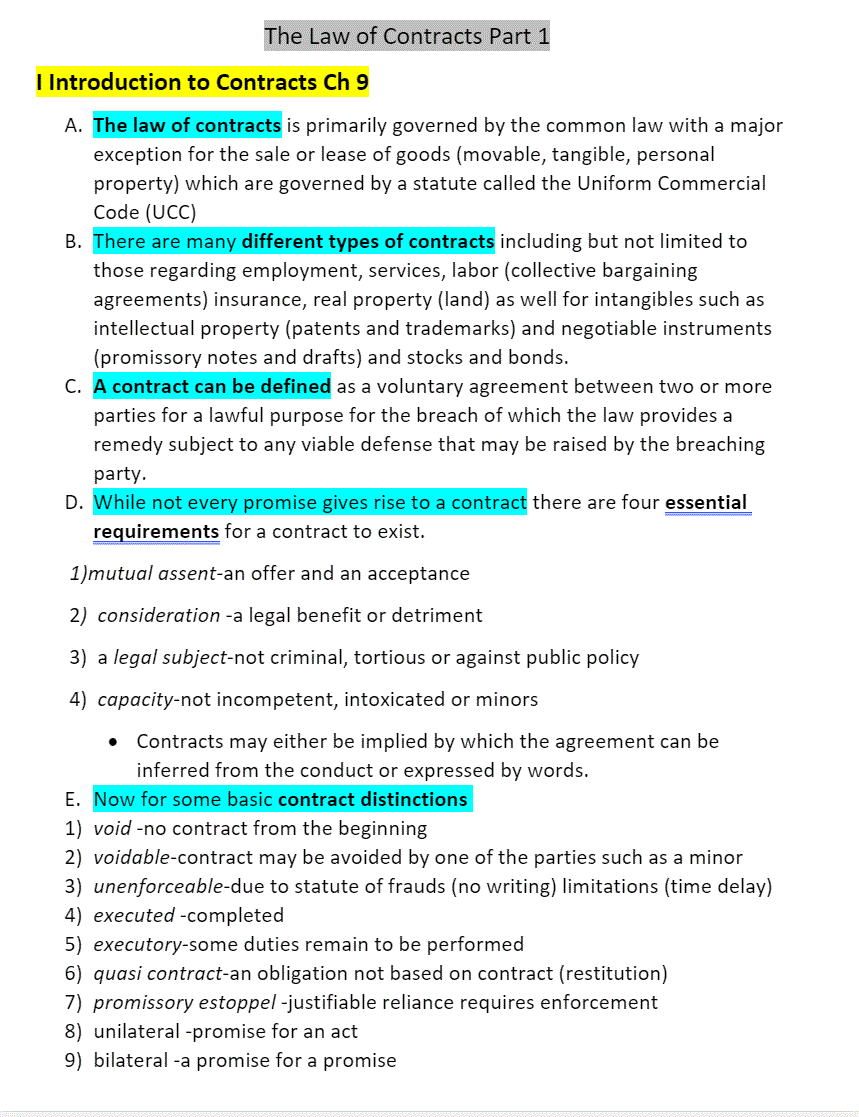
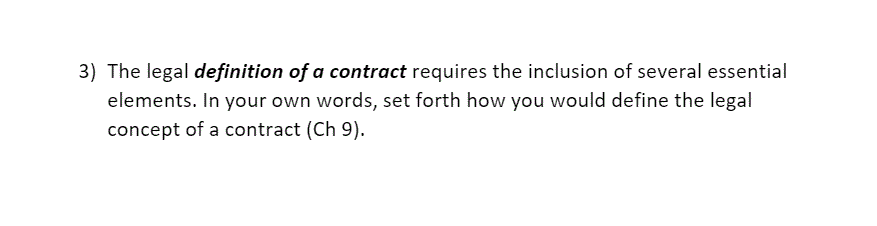
3) The legal definition of a contract requires the inclusion of several essential elements. In your own words, set forth how you would define the legal concept of a contract (Ch 9). The Law of Contracts Part 1 I Introduction to Contracts Ch 9 A. The law of contracts is primarily governed by the common law with a major exception for the sale or lease of goods (movable, tangible, personal property) which are governed by a statute called the Uniform Commercial Code (UCC) B. There are many different types of contracts including but not limited to those regarding employment, services, labor (collective bargaining agreements) insurance, real property (land) as well for intangibles such as intellectual property (patents and trademarks) and negotiable instruments (promissory notes and drafts) and stocks and bonds. C. A contract can be defined as a voluntary agreement between two or more parties for a lawful purpose for the breach of which the law provides a remedy subject to any viable defense that may be raised by the breaching party. D. While not every promise gives rise to a contract there are four essential requirements for a contract to exist. 1)mutual assent-an offer and an acceptance 2) consideration -a legal benefit or detriment 3) a legal subject-not criminal, tortious or against public policy 4) capacity-not incompetent, intoxicated or minors Contracts may either be implied by which the agreement can be inferred from the conduct or expressed by words. E. Now for some basic contract distinctions 1) void -no contract from the beginning 2) voidable-contract may be avoided by one of the parties such as a minor 3) unenforceable-due to statute of frauds (no writing) limitations (time delay) 4) executed -completed 5) executory-some duties remain to be performed 6) quasi contract-an obligation not based on contract (restitution) 7) promissory estoppel-justifiable reliance requires enforcement 8) unilateral -promise for an act 9) bilateral -a promise for a promise

Step by Step Solution

There are 3 Steps involved in it

1 Expert Approved Answer
Step: 1 Unlock blur-text-image

Question Has Been Solved by an Expert!

Get step-by-step solutions from verified subject matter experts

Step: 2 Unlock
Step: 3 Unlock

Students Have Also Explored These Related General Management Questions!