New Semester
Started
Get
50% OFF
Study Help!
--h --m --s
Claim Now
Question Answers
Textbooks
Find textbooks, questions and answers
Oops, something went wrong!
Change your search query and then try again
S
Books
FREE
Study Help
Expert Questions
Accounting
General Management
Mathematics
Finance
Organizational Behaviour
Law
Physics
Operating System
Management Leadership
Sociology
Programming
Marketing
Database
Computer Network
Economics
Textbooks Solutions
Accounting
Managerial Accounting
Management Leadership
Cost Accounting
Statistics
Business Law
Corporate Finance
Finance
Economics
Auditing
Tutors
Online Tutors
Find a Tutor
Hire a Tutor
Become a Tutor
AI Tutor
AI Study Planner
NEW
Sell Books
Search
Search
Sign In
Register
study help
computer science
cambridge international as & a level computer science
Think New Syllabus Mathematics Book 4 8th Edition Dr Yeap Ban Har, Dr Joseph B. W. Yeo, Dr Choy Ban Heng, Teh Keng Seng, Wong Lai Fong, Wong-Ng Slew Hiong - Solutions
17. The areas of two similar triangles are 54 cm2 and 96 cm2. Given that the perimeter of the smaller OPEN triangle is (x + 1) cm, find the sum of the perimeters of the two triangles in terms of x.Hence, give a possible value of x for which the sum is a whole number.
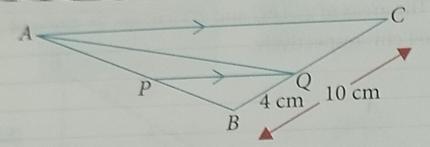
16. In the figure, APB and BQC are straight lines, and PQ is parallel to ACGiven that BQ = 4 cm, BC= 10 cm and the area of ABPQ is 8 cm, find the area of (i) AABC, (iii) AAQC. (ii) APQC, A- P B Q 4 cm 10 cm C
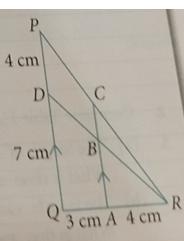
15. The diagram shows a APQR. D lies on PQ, A lies on QR and C lies on PR. DR meets AC at B and AC is parallel to QP. AR = 4 cm,QA = 3 cm, DQ = 7 cm and 4 PD = 4 cm.Find (i) the length of BC, (ii) the ratio of the area of ΔARB to that of ABRC, (iii) the ratio of the area of ABRC to that of ABDQ.
14. The perimeters of two similar triangles are in the ratio 3 : 4. The sum of their areas is 105 cm2. Find the area of each triangle.
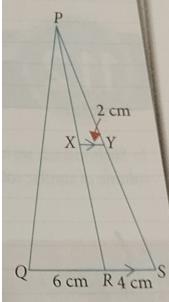
13. In the figure, PYS, PXR and QRS are straight lines. XY is parallel to RS, XY = 2 cm, QR = 6 cm and RS = 4 cm. Given that the area of ΔΡΧΥ is 10 cm2.find the area of(i) ΔPRS,(ii) APQR. P 2 cm XY 6 cm R4 cm S
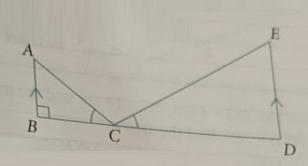
12. In the figure, BCD is a straight line and BA Is parallel to DE, ZABC = 90° and ZACB = LECD.The areas of AABC and ACDE are 25 cm2 and 64 cm3 respectively.Given further that CD is 4.5 cm longer than BC, find the length of BC. E B C D
11. In the figure, PMQ and PNR are straight lines. MN is parallel to QR.If the areas of ΔΡMN and trapezium MQRN are in the ratio 9 : 16, find the ratio MN : QR. P M N R Q
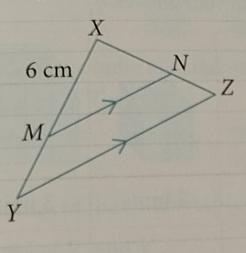
10. In the figure, AXYZ is an enlargement of AXMN.Given that XM = 6 cm and that the areas of AXMN and MYZN are 14 cm2 and 22 cm2 respectively, find the length of MY. Y 6 cm X N M Z
9. Two solid cones are geometrically similar and the height of one cone is 1.5 times that of the other. Given that the height of the smaller cone is 12 cm and its surface area is 124 cm, find (i) the height, and (ii) the surface area of the larger cone.
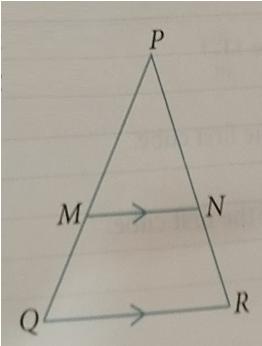
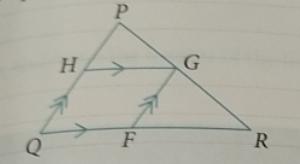
8. In is parallel to QR, FG is parallel to QP and In the figure, PHQ, PGR and QFR are straight lines. QF: FR=P:q. PFind the ratio of the area of APHG to that of APQR in terms of p and q. Q H P G F R
7. In a scale drawing of a house, the width of a door hat aveasures 150 cm is represented by a line yam long. Find the actual land area, in square intres; occupied by the house if the corresponding arch on the plan is 3250 cm3.
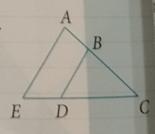
6. In the figure below, ACAE is an enlargement of ACBD with a scale factor of 4/3.Given that the area of &CBD is 9 cm2, find the area of ABDE. A B E D C
5. The perimeters of two similar regular hexagons are 10 m and 8 m. Given that the area of the larget hexagon is 200 ml, find the area of the smaller hexagon.
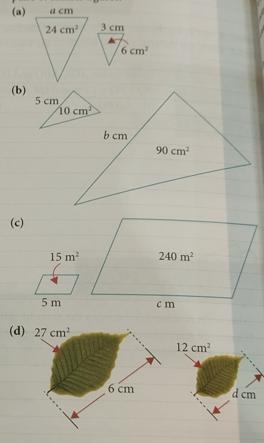
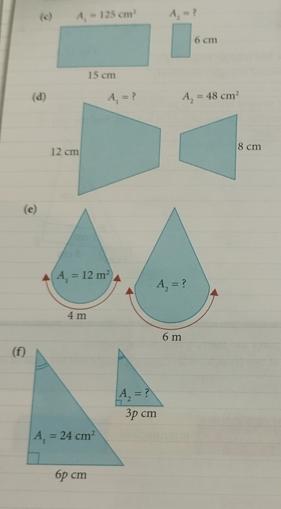
4. Find the unknown value in each of the following pairs of similar figures. (a) acm 24 cm, 3 cm 6 cm (b) 5 cm 10 cm b.cm 90 cm (c) 15 m 240 m 5 m (d) 27 cm cm 6 cm 12 cm d cm
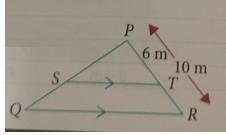
3. A triangular plot of land PQR has a water pipe QR. ST is another water pipe parallel to QR, where S lies on PQ and Tlies on PR. PT-6 m, PR = 10 m and the area of APST is 24 m.Find the area of the land occupied by (i) APQR, (ii) SQRT. S PR 6 m T 10 m R
2. Find the ratio of the areas of two circles whose radii are 4 cm and 7 cm.
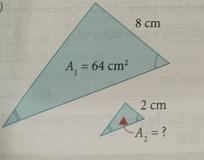
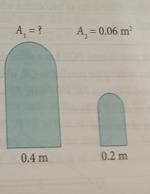
1. Find the unknown area of each of the following pairs of similar figures.(a)(b) A = 64 cm 8 cm 2 cm A =?
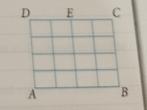
16. The rectangle ABCD is divided into 16 equal rectangles. The point P is such that the area of AAPB is equal to one quarter of the area of rectangle ABCD,and the point Q, lying on AB, is such that AAEB is an enlargement of AAPQ D E C B
15. (i) A square ABCD with vertices A(2, 4), B(4, 4). C(4,6) and D(2, 6) is enlarged with centre P(0,5) and scale factor 3, to A,B,C,D, Construct the images formed and state the coordinates of C (ii) Taking A as the centre of enlargement and scale factor-3, construct the images of A,B,C,D, formed
14. G) AABC with vertices A(1, 1), B(2, 3) and C-1,4) is first reflected in the x-axis and then rotated through 90 anticlockwise about the origin. Calculate the new coordinates of A, B and C (ii) A square PQRS is transformed by the above transformations. Given that the coordinates are P(0, 5), Q(3,
13. Sketch on a copy of the diagram, the image of the square ABCD, correctly lettered, under the transformation MR e R followed by M G) State a single trandformation which is equivalent to MR. A 14. m D C
12. The edinates of AABC are A(1,-1), B(1,0) and -13 AABC is transformed into AA,B,C, by the slowing successive transformations. A reflection in the x-axis. An enlargement, centre origin, scale factor 3. Sea LABC on a sheet of graph paper and LABC, on the same graph. State the dinates of A
11. point (5, 1) and R is a transformation which tidodewise rotation about the origin. Tatradation represented by the column vector RTLA)-B. TR(A)=C and R(A) = D, find coordinates of B, C and D.
10. Sandormation R is a 90 clockwise rotation 2) and the translation T is given by the If A is the print (4.5), find dinates of RLA) and TR(A).
9. Find the coordinates of L, M and N.The coordinates of AABC are A(2, 1), B(7, 1) and(14, 4). ΔABC is mapped onto ΔAPQ by an enlargement scale factor 2.State the centre of enlargement.(i)Find the coordinates of P and Q.(ii)
8. The vertices of APQR are P(1, 2), Q(2, 6) and R(8, 1). APQR is mapped onto ALMN by an enlargement centre E(2, 4) and scale factor -
7. The vertices of AABC are A(1, 1), B(3,-1) and C(0, 0). AABC is enlarged to APQR with E(4, 4) as the centre of enlargement and scale factor 2 Find the coordinates of P, Q and R. AL
6. Enlarge the following triangles with the centre of enlargement E and scale factor k as given. (a) A(1, 3), B(2, 5) and C(6, 1); E(0, 0); k = 2 (b) P(1, 4), Q(4, 1) and R(5, 6); E(1, 2); k = -2 (c) X(1, 1), Y(2, 3) and Z(4, 2); E(1, 1); k=3 (d) L(4, 1), M(4, 3) and N(1, 3); E(1, 0); k=-3 (e) J(4,
5. AABC with vertices A(2, 1), B(4, 3) and C(3, 6) is transformed into AA'B'C' under an enlargement, with centre (1, 1) and scale factor 3. Illustrate these points on a clearly-labelled diagram, marking the positions of AABC and AA'B'C'.
4. The coordinates of the quadrilateral ABCD are A(2,3), B(6,2), C(10, 5) and Đ(8, 8). Find the image of the point(a) A under in enlargement centre at (0. 2) and scale factor 2,(b) Bunder an enlargement centre at (4, 0) and scale factor 3,(c) Cunder an enlargement centre at (8, 4) and scale factor
3. Draw on graph paper the quadrilateral PQRS with vertices P(2, 2). Q(7, 2), R(6, 6) and S(4.6).Enlarge PQRS with E(4, 4) as the centre of enlargement and scale factor 1;
2 Draw on graph paper the triangle POR with vertices P(2. 2). Q(5. 3) and R(3, 5)- Enlarge APQR with Qus the point of enlargement and scale factor 3.
1. Draw on graph paper the triangle ABC with vertices A(2,1). B(2,5) and C(4. 2). Enlarge AABC with the origin as the point of enlargement and scale factor 2.
5. Tis the translation,A is the point (2. 4).Bis (p, q) and C is (h. k).(i) Find the coordinates of the image of the point A under T.(ii) Given that T(B) = A. find the value of p and of q.(iii) Given that T2(A) = C, find the value of h and of k.(iv) Find the coordinates of the point D such that
4. Under a translation T., the image of the point(5, -1) is (2, 3). Under a translation T,, the image of the point (-2, 5) is (4, -5). Find the image of the point (7, 6) under the following transformations.(a) T(b) T,(c) T,T(d) TT,(e) T1
3. A translation T maps the point (6, 2) onto the point(2, 7) and the point (-1, -5) onto the point P.Find the column vector representing the translation Tand the coordinates of the point P.
2. The vertices of APQR are P(1, 3), Q(7.5) and R(2. 0). Find the coordinates of the vertices of the Image of APQR under a translation T represented
1. The vertices of a quadrilateral are A(2, 1), B(3. 3).(TS, 3) and P(5, 2). Find the coordinates of the wetiers of the image of the quadrilateral ABCD under a translation T, represented by Find-4 the image of the new quadrilateral if it undergoes another translation T, represented by Show your
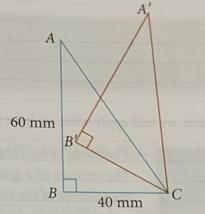
8. The triangle A'B'C is the image of the triangle ABC under a clockwise rotation of 25° about C.Calculate, giving your answer correct to the nearest degree, (i) CAA', (ii) ACB'. A A 60 mm B B C 40 mm
7. Under a rotation, the line P'Q' is the image of the line PQ. Given that their coordinates are P(1. 1), Q(1.4), P'(3, 1) and Q'(k, 1), where k>0, find(i) the value of k,(1,2)(ii) the image of the point(iii) the coordinates of the point whose image is 52 1)
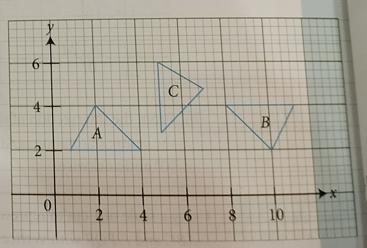
6. (a) Triangle A can be mapped onto triangle B by a rotation. Find(i) the coordinates of the centre of rotation.(ii) the angle of rotation.(b) Triangle C can be mapped onto triangle A by a rotation. Find (i) the coordinates of the centre of rotation, (ii) the angle of rotation.(c) Triangle B is
5. The coordinates of AABC are A(4, 1), B(6, 1) and C(4, 6) while the coordinates of its image AA'B'C'under a rotation are A'(0, -1), B'(-2, -1) and C' (0, -6). On a sheet of graph paper,(i) draw AABC and AA'B'C',(ii) find the centre of rotation and state the angle of rotation.
4. If R represents an anticlockwise rotation of 240°about the origin, describe Rª and R$.
3. Find the coordinates of the image of the point(1, 4) under a clockwise rotation of(a) 90° about the centre (4, 2),(b) 180º about the centre (4, 2),
2. Given that Pis the point (2, 4). Q is the point (4. - 1)and R is the point (-1, 0), find(a) the image of P under a clockwise rotation of 90° about R.(b) the image of Q under an anticlockwise rotation of 90° about P.(c) the image of R under a 180° rotation about Q.
1. The vertices of AABC are A(3, 1), B(4, 1) and C(4, 5).AABC is mapped onto APQR by a 90° clockwise rotation about the point (2, 1).On a sheet of graph paper, draw and label APQR on the same diagram.
12. (i) State the coordinates of the final image when(a) the point A(1, 2) is reflected in the line x + y = 6 followed by another reflection the line x = 4.(b) the point A(1, 2) is reflected in the line x = 4 and then in the line x + y = 6.(ii) Is the reflection commutative in this case!(iii) State
11. (i) State the coordinates of the final image when(a) the point A(1, 4) is reflected in the line y = x followed by another reflection in the line x + y= 6.(b) the point A(1, 4) is reflected in the line x + y = 6 and then in the line y = x.(ii) Is the answer in (a) the same as that in (b)?(iii)
10. The image of the origin under a reflection in the line y = x + 2 is point A. On a sheet of graph paper,(i) draw the line y = x + 2,(ii) find the coordinates of A.
9. Find the coordinates of the image of the point.A(2, 3) under a reflection in the line x = 6 followed by a reflection in the line y = x by showing your working on a graph paper.
8. The point A(3, 4) is reflected in the line x = 2 and then reflected in the line y = 1.(i) Find the coordinates of the image of A under these two reflections.(ii) State the coordinates of the point which remains invariant under these two reflections.
7. The point A and its image Al under a reflection are given below. Plot the points A and A" on a sheet of graph paper, construct the line of reflection and find its equation in each case.(a) A(I. I), A (3. 1)(b) A(1,-1).A'(1,9)(c) A(2,1). A (0, 3)(d) A(0, 1), A (1, 2)(e) A(0,-1).A'(2,1)(f) A(-1,
6. Under a reflection, the point (3, 5) is mapped onto (5, 3). (i) Find the equation of the line of reflection, The point (5, 3) is then reflected and the coordinates of the final image is (-5, 3). (ii) Find the equation of the line of the second reflection.
5. The point P(2, 1) is transformed by M1, a reflection in the y-axis and then M2, a reflection in the line x = 4. Give the coordinates of(ii) M,(P),(i) M,(P),(iv) M_M,(P).(iii) M,M,(P),
4. The reflection of the origin in the line y = x - 2 is the point O'. On a sheet of graph paper,(i) draw the line y = x - 2,(ii) find the coordinates of O'.
3. State the coordinates of the reflection of the point(3, 2) in the line x = 2.
2. (a) State the coordinates of the final image when the point A(-1, 3) is reflected in(i) the x-axis and then in the line y = 4,(ii) the line y = 4 and then in the x-axis.(b) Is the answer in (i) the same as that in (ii)?
1.Write down the coordinates of the reflection of each of the following points in(b) the y-axis, and(a) the x-axis,(c) the line y = x.(ii) (-1, 3)(i) (3, 4)(iv) (-3, -4)(iii) (3, 3)(vi) (p,q)(v) (3,-2)
13. In the figure below, A, B, C and Dare points on the Sumference of a circle. PAB, QCB. PDC and QDA estraight lines, Z.BPC = 31°, LAQB = 49° and(i) By considering ABAQ, find ZBAQ in terms of x(By considering APCB, find LPCB in terms of x. (ii) Hence, find the value of x. (iv) Find LPAD.
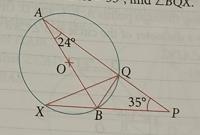
12. In the figure below. A. Q. B ind X are points on the circle, AB in a diameter of the circle, und AQ produced meets XB produced at P. Given that Z.BAP = 24° and Z.BPA = 35", find / BQX. A 24 0 35 X B P
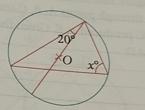
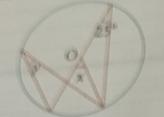
11.Given that O is the centre of the circle, find the value of x. 20
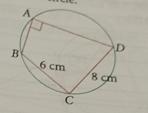
10. In the figure below, A, B, C and D are points on the circle. &BAD - 90", BC = 6 cm and CD = 8 cm.Find the area of the circle. B A D 6 cm 8 cm C
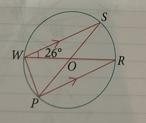
9. In the figure below, O is the centre of the circle with diameters PS and RW. LSWR 26 and WS is parallel to PR.Find (i) ZPWR, (ii) ZSPW. W 26 P S R
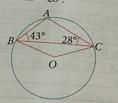
8. In the figure below. O'is the centre of the circle passing through points A. B and C LABC 43 and ZACB-28,(0) ZOBA, (ii) LOCA. 43 BA 28 0
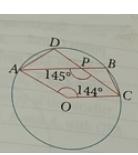
7. In the figure below, O is the centre of the circle and chords AB and CD intersect at P.LAOC = 144" and ZAPC = 145".D Find /BAD.PR A D 145 P 144 0 B C
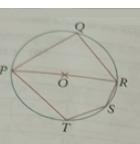
6. In the figure belote O.in the centre of the citde poing through points P. Q. R. S and T.Find the sum of Z.POR, ¿PRS and &PTS T S R
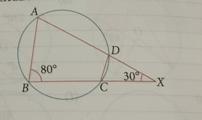
5. In the figure below, A, B, C and Dare points on the circle such that AD produced meets HC produced a X. Given that &ABC - 80" and / AXB = 30, find(1) ZRAD,(ii) #XCD. B A D 80 30 -x C
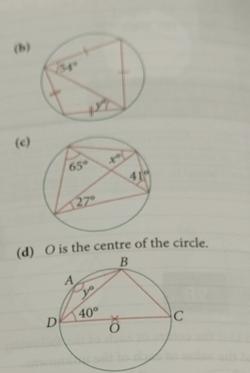
4. Find the values of the unknowns. (a) 70%
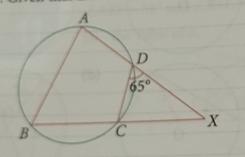
3. In the figure below, A, B, C and D are points on the circle such that AD produced meets BC produced at X. Given that LCDX=65, find LABC D 65 X B C
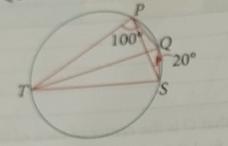
2. In the Figure below, P. Q. S and Tare points on the dirde, ¿TPQ = 100" and Z.PSQ = 20°.Find Z PQT. 100 P S 20
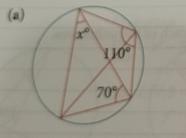
1. Oh angles the Oather of the cine, find the angles marked and y
30. Two concentric circles have radii 12 cm and 25.5 cm respectively. A tangent to the inner circle cuts the outer circle at the points H and K. Find the length of HK.
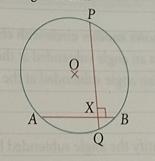
29. The figure shows a circle with centre O and radius 7 cm. The chords AB and PQ have lengths 11 cm and 13 cm respectively, and intersect at right angles at X. Find the length of OX. P OX A X Q B
28. The radius of a circle is 17 cm. A chord XY lies 9 cm from the centre and divides the circle into two segments. Find the perimeter of the minor segment.
27. The tangents from a point T touch a circle with centre O, at the points A and B. Given that LAOT 51, find ZBAT. =
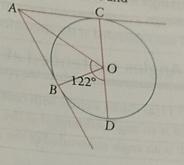
26. In the figure below, AB and AC are tangents to the circle at B and C respectively. O is the centre of the circle, CD is a diameter of the circle and LAOD Is a a d LAOD = 122. Find BAC. A C B 122 D
25. A point T is 9.1 m away from the centre of a circle. The tangent from T to the point of tangency is 8.4 m. Find the diameter of the circle.
24. The tangent from a point P touches a circle at N. Given that the radius of the circle is 5.6 cm and that P is 10.6 cm away from the centre, find the length of the tangent PN.
23. PQ is a chord of a circle with centre O. Given that LPOQ 84, find the obtuse angle between PQ and the tangent at P.
22. The figure shows a circle with centre O passing through points A and B. AC is a tangent to the circle at A and OBC is a straight line.Given that AC = 18 cm and BC = 12 cm, find(i) the radius of the circle,(ii) ZAOB,(iii) the area of the shaded region.
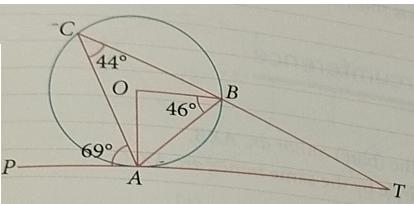
21. In the figure below. PAT is a tangent to the circle with centre O, at A. B and Care points on the circle such that TBC is a straight line and ZACB = 44".Given that ZOBA = 46° and _ PAC = 69", find 0) ZBAT,(ii) ZPTC. C 44 O 46 B 69 P- A T
20. Two parallel chords PQ and MN are 3 cm apart on the same side of a circle where PQ = 7 cm and MN = 14 cm. Calculate the radius of the circle.
19. The lengths of two parallel chords of a circle of radius 5 cm are 6 cm and 8 cm respectively. Find the two possible distances between the chords.
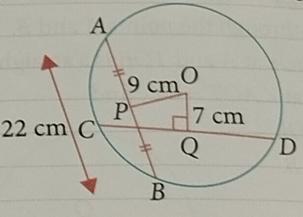
18. In the figure below, AB and CD are chords of the circle with centre O. The point Plies on AB such that AP = BP and the point Q lies on CD such that OQ is perpendicular to CD. Given that AB = 22 cm.OP = 9 cm and OQ = 7 cm, find the length of the chord CD. 22 cm C A P 9 cm 7 cm Q B D
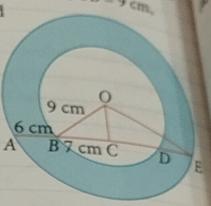
17. The figure below shows two concentric quedes wie, centre O. The points A and E lie on the circumference of the larger circle while the points &and D lie on the circumference of the smaller cinde Given that ABCDE is a straight line, OB - 9 cm AB=6 cm, BC= 7 cm and AC=CE, find (i) the length
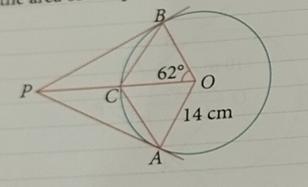
14. In the figure below, O is the centre of the circle passing through the points A, C and B. PA and PB are tangents to the circle. Given that OA = 14 cm and Z.BOP = 62°, find(1) ZOPB,(ii) LOAC,(iii) the length of BP,(iv) the area of the quadrilateral OAPB. P B A 62 O 14 cm
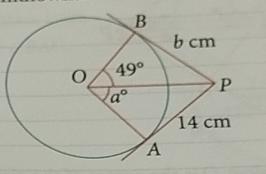
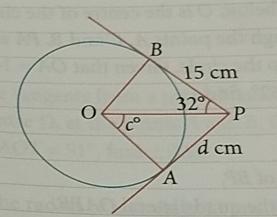
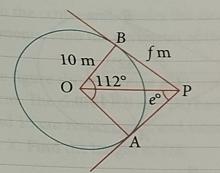
13. Given that PA and PB are tangents to each of the following circles with centre O, find the values of the unknowns.(a)(b)(c)(d) B b.cm 49 P A 14 cm
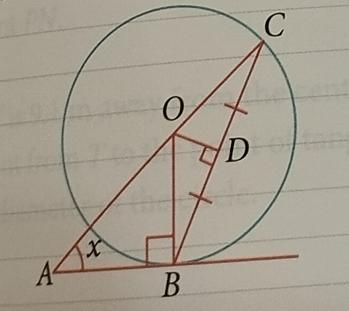
12. In the figure below, AB is a tangent to the circle with centre O. D is the midpoint of the chord BC. Given that LBAC = x, find COD in terms of x. O D C A4 X B
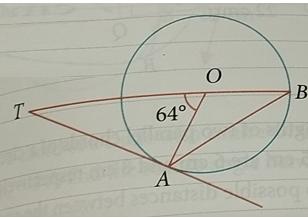
11. In the figure below, O is the centre of the circle passing through the points A and B. TA is a tangent to the circle at A and TOB is a straight line. Given that LAOT = 64, find (i) LATB, (ii) LTAB T 64 A dasonstat 0 B
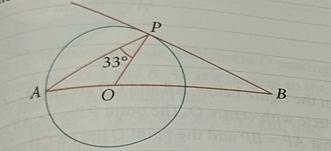
10. In the figure below, O is the centre of the circle passing through the points A and P. AO produced meets the tangent at P at B. Given that LAPO = 33, find LPBA. A 33 P B
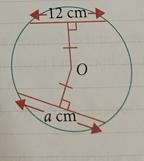
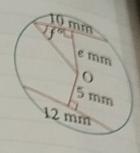
9. Given that O is the centre of each of the following circles, find the values of the unknowns.(a)(b) 12 cm- a cm 0
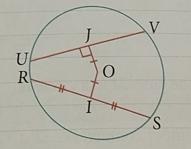
8. In the figure below, RS and UV are chords of the circle with centre O. Point I is the midpoint of RS and point / lies on UV such that LOJU=90. Given that OI = JO and UV = 11 cm, find the length of RS. U R # V S
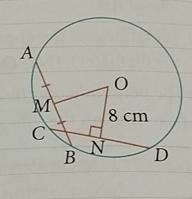
7. In the figure below, AB and CD are chords of the circle with centre O. Point M is the midpoint of AB and point N lies on CD such that ZONC= 90°.Given that AB = CD and ON = 8 cm, find the length of OM. A 0 M 8 cm C N B D
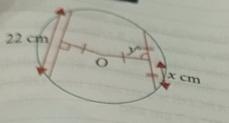
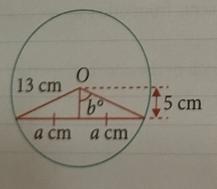
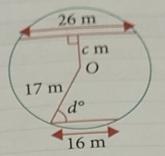
6. Given that O is the centre of each of the following circles, find the values of the unknowns.(a)(b)(c) 13 cm 0 bo a cm a cm [5 cm
5. A chord of a circle of radius 8.5 cm is 5 cm from the centre. Find the length of the chord.
4. A chord of length 24 m is at a distance of 5 m from the centre of a circle. Find the radius of the circle.
3. AB is a chord of a circle with centre O and radius 17 cm. Given that AB = 16 cm, find the perpendicular distance from O to AB.
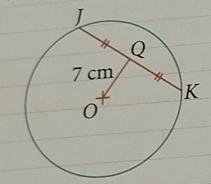
2. In the figure below, JK is a chord of the circle with centre O. Point Q lies on JK such that JQ = QK. Given that the radius of the circle is 16 cm and OQ=7 cm, find the length of the chord JK. 7 cm, 0 Q K
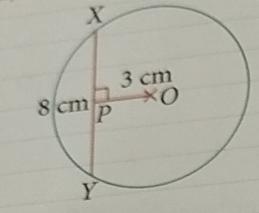
1. In the figure below, XY is a chord of the circle with centre O. Point Plies on XY such that OP is perpendicular to XY. Given that XY = 8 cm and op = 3 cm, find the radius of the circle. X 8 cm P 3 cm Y
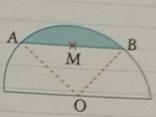
16. The diagram shows a semicircle, centre O, radius 7.5 cm. M is the midpoint of the chord AB and OM=5 cm.(a) Show that angle AOB = 96.4", correct to 3 significant figures.(b) Calculate the shaded area.(c) The semicircle is the cross section of a 32-cm long cake that has the shape of half a
Showing 200 - 300
of 2101
1
2
3
4
5
6
7
8
9
10
11
12
13
14
15
Last
Step by Step Answers

 Get 50% OFF
Claim Now
Get 50% OFF
Claim Now