New Semester
Started
Get
50% OFF
Study Help!
--h --m --s
Claim Now
Question Answers
Textbooks
Find textbooks, questions and answers
Oops, something went wrong!
Change your search query and then try again
S
Books
FREE
Study Help
Expert Questions
Accounting
General Management
Mathematics
Finance
Organizational Behaviour
Law
Physics
Operating System
Management Leadership
Sociology
Programming
Marketing
Database
Computer Network
Economics
Textbooks Solutions
Accounting
Managerial Accounting
Management Leadership
Cost Accounting
Statistics
Business Law
Corporate Finance
Finance
Economics
Auditing
Tutors
Online Tutors
Find a Tutor
Hire a Tutor
Become a Tutor
AI Tutor
AI Study Planner
NEW
Sell Books
Search
Search
Sign In
Register
study help
computer science
cambridge international as & a level computer science
Think New Syllabus Mathematics Book 4 8th Edition Dr Yeap Ban Har, Dr Joseph B. W. Yeo, Dr Choy Ban Heng, Teh Keng Seng, Wong Lai Fong, Wong-Ng Slew Hiong - Solutions
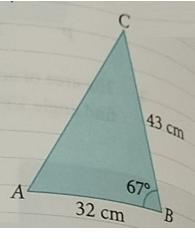
5. LABC=67. In AABC, AB = 32 cm, BC=43 cm and(i) Find the area of AABC. (ii) Hence, find the perpendicular distan A to BC. C A 32 cm 43 cm 67 B
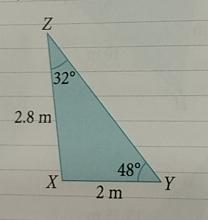
4. Find the area of AXYZ, given that XY = 2 m, XZ=2.8 m, LXYZ = 48 and LXZY = 32. 7 == Z 2.8 m 32 X 2 m 48 Y
3. In APQR, LP = 72, q = 152 cm and r = 125 cm. Find the area of APQR.
2. Find the area of AABC, given that AB = 22 cm, AC=15 cm and ZBAC = 45.
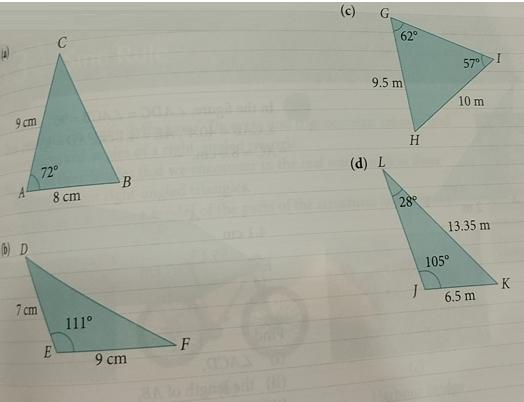
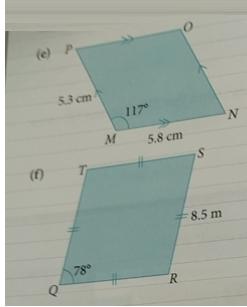
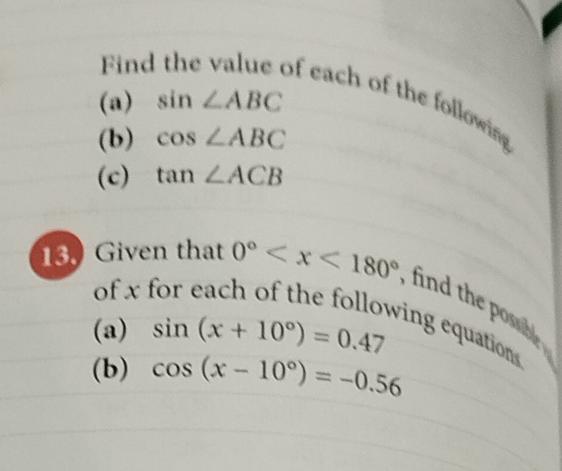
13. Given that 0° (a) sin (x+10°) =0.47(b) cos (x-10°) =- 0.56 1. Find the area of each of the following figures. 9 cm b) D C 72 8 cm 7 cm 111 (c) 62 9.5 m B (d) L E F 9 cm H 57 I 10 m 28 13.35 m 105 J K 6.5 m
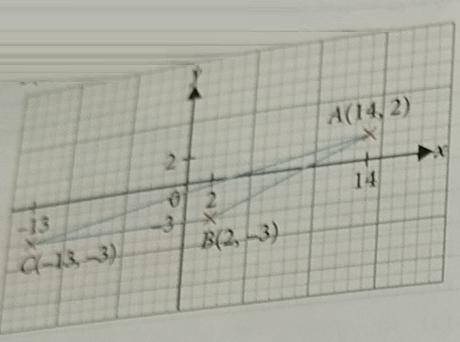
12. The figure shows AABC with vertices A(14, 2).B(2. - 3) and CY-13, -3).Find the value of each of the following (a) sin LABC (b) cos LABC (c) tan LACB 2 B(2-3) A(14,2) 14 02 -13 -3 C-13-3)
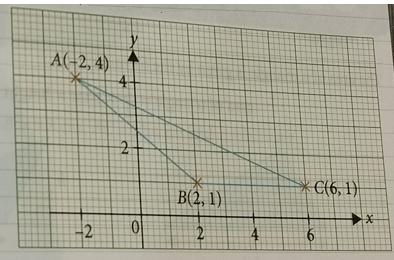
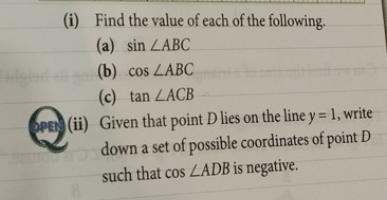
11. The figure shows AABC with vertices A(-2,4), B(2, 1) and C(6, 1).(i) Find the value of each of the following.(a) sin LABC (b) cos LABC (c) tan ZACB OPEN (ii) Given that point D lies on the line y = 1, write down a set of possible coordinates of point D such that cos ZADB is negative. A(-2, 4)
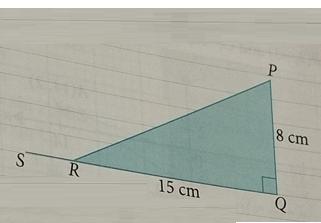
10. In the figure, SRQ is a straight line, LPQR = 90, PQ 8 cm and QR = 15 cm.Find the value of each of the following, giving your answer in exact form. (a) sin PRS (b) cos LSRP (c) tan LPRQ P 8 cm S R 15 cm Q
9. Given that 0 x 180, find the possible value(s) of x for each of the following equations. (a) sin x = 0.753 (b) sin x=0.952 (c) sin x=0.4714 (d) cos x = -0.238 (e) cos x = -0.783 (f) cos x = 0.524
8. Find an acute angle whose cosine is(a) 0.67,(b) 0.756,(c) 0.5,(d) 0.985.
7. Find an obtuse angle whose sine is (a) 0.52, (c) 0.875, (b) 0.75, (d) 0.3456.
6. Find an acute angle whose sine is (a) 0.52, (c) 0.875, (b) 0.75, (d) 0.3456.
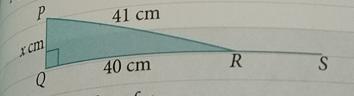
5. In the figure, QRS is a straight line, _PQR = 90°, pQ =x cm, QR = 40 cm and PR = 41 cm.(i) Find the value of x. Find the value of each of the following. (a) sin LPRS (b) cos LPRS (c) tan ZPRQ P. 41 cm xcm 40 cm R Q S
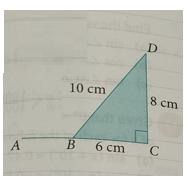
4. In the figure. ABC is a straight line,$CD = 90°, BC = 6 cm.#8 cm and BD = 10 cm.Find the value of each of the following.A Ba sin CABDb) cos ZDRA tan ZCBD laden straight lines 10 cm D 8 cm A B 6 cm C
3. Given that sin 45 = cos 45-0.707 when to 3 significant figures, find the value of a following without using a calculator (a) 2 cos 45 + 3 sin 135 (b) 3 cos 135+ 4 sin 135 (c) cos 135-2 sin 45
2. Given that ain 32º = 0.530 and cos 145° = - 0,819 when corrected to 3 significant figures, find the value of each of the following without using a calculator.(a) sin 148%(b) cos 35°
1. Express cach of the following as a trigonometric ratio of the acute angle(b) sin 176°(d) cos 99°(c) cos 107°(f) cos 175°
8. (i) Find the composite functions fg(x) and gf(x). (ii) Find the values of a and b such that gf(x) = x for all values of x. (iii) With these values of a andb, solve the equation fg(x)=3gf(x). If f: x2x-1 and g: xx+5, find (i) fg(x) and gf(x), (ii) the values of x for which fg(x) = gf(x).
7. It is given that f(x) = 2x + 3 and g(x) = ax + b.
6. Given that f(x) = 2 and g(x) = 3x - 4.(i) find fg(x) and gf(x),(ii) show that there are no real values of x for which fg(x) = gf(x).
5. Functions f and g are defined by f : x-> kx- 3, where k is a constant, and g : x + 2x + 5. Find(i) an expression for fg(x),(ii) the value of k for which fg(x) = gf(x).
4. If f: x -> ax +b, where a and b are constants.g:x->x+7,fg(1)=7 and fg(2)=15,(i) find gf(5),(ii) solve the equation gf(x) = 14.
3. Mffx)=2x +3 and g(x) = 2x + 1, find(#). the composite functions fg(x) and gf(x),(i) the values of fg(-1), gf(-1), fg(3) and gf(3).
2. Itis given that f : x +> x + 1 and g : x+> 3x + 2.() Find the composite functions fg(x) and gf(x).(ii) Find the values of fg(3), gf(3), fg(-1) and gf(-1).
1. Reach of the following pairs of functions, find( f(x) =2x=3,g(x) = x + 5 E=x-1,g(x)=x f(x) = 2x- I. g(x) = = = 3 3*+1() {x) = 3x, g(x) = 4x + 5 1+ 2x W [[x]=5-2x, g(x) =x + 2 x-1
15. A function g is defined by g : x -> mx +c. Given that g-1(-3) = 0 and g '(1) = 2, find the value of g(5)and g '(4).
14. A function f is defined by f: x-> px + q. Given that f(1) == 5 and f(-2) == 10, find the value of p and of q. Hence, find f (x).6.
13. A function fis defined by f: x-> ax +b. Given that f(1) = 3 and f-1(7) = 5, find the value of a and of b.Hence, find f '(x).al
12. Given that (x) = ax - b . (1) = 1 and f-(5) = 2, 4 find the value of a and ofb. Hence, find f !(x).and evaluate f: "(7) and f-|-51).
11. A function h is defined by h:x -> pr + qx. Given that h(1) = 2 and h (36) - 3. find the value of p and of q. Hence, evaluate h(-1) and h(2).
10. Given the function f(x) - 3x 1 where x = 2, find f-'(x) and state the value of x for which f-'(x) is x-2 not defined. Hence, evaluate f (5) and f '(7).
9. Given the function 100 -5x-where x ... find[() and state the value of x for which ( 100) is 2 - 4x not defined. Hence, evaluate [ )(4) and f ((-6).
8. Given that f(x) = ax -b. f(-2) = 20 and f-1(32) = 4, find the value of a and of b.
7. Given the function f(x) = 7-x and g(x)=x-6, evaluate each of the following: 5 (a) f-1(3) (b) f(-17) (c) g(5) (d) g (-6) (e) f(2)+g (1) (f) f(4)-g(4) bne
5. A function f is defined by f: x > 8 - 3x. Find the inverse function of f-1(x). Hence, evaluate f-1(9),(-12). F- 3}) and ( 3).6. A function g is defined by g : x > 6x - 8 for all rea values of x. What are the elements in the domain whose images are 10, 40, -4 and -6?
4. A function h is defined by h : x + 5x + 6. Express h 'in a similar form and hence evaluate h-1(6), B)and h (12}).h=(10), h 1
3. A function g is defined by g : x ) + 3x + 4. Express glin a similar form and hence evaluate g (3),(4) and g (2).
2. A function f is defined by f : x- x-7. Find the inverse function f '(x) and hence evaluate f-1(3).
1. A function f is defined by f: x -- - x - 3. Find the inverse function f-1(x).
14. Given the function h(x) = px + qx + 2 nd tul h(2) = 34 and h(-3) = 29. find the value of q. Hence, evaluate h(4) and h(-2).
13. Given the functions f(x) = 4 x + 2' and g(x) = 1- x, evaluate f(2), 2 3 f g(3); and If w the The (a) Is it true that f(2) + f(3) = f(2+3)? (b) Is it true that g(4) - g(2) = g(4-2)? (c) Find the value of x for which f(x)=gx (d) Express f(a), f(2a) and g(3a) in terms of (e) Find the value of a
12. Given the function f(x)=4x+9, evaluate (1) and f(3). Is it true that (a) f(1)+f(2) = f(1 + 2)? - (b) f(3) f(2) = f(3-2)? (c) f(1) x f(2) = f(1 2)? + (d) f(2)f(1) = f(2+1)?
11. Given the function g(x) = mx + c and that g(1) = 5 and g(5)=-4, find the value of m and ofc. Hence, evaluate g(3) and g(-4).
10. If h(x) = x2- 5x + 4,(a) express h(2a) - h(a) in terms of a,(b) find the values of a which h(a) = 0,(c) express h(a2) + h(a) in terms of a.
9. Given the functions f: x 5x - 9 and g:x2-6x, find the values of x for which (a) f(x)=16 (b) g(x)=14 (c) g(x)=x (d) f(x) = 2x (e) f(x) = g(x) (f) 2f(x)=3g(x)
8. Given the functions f(x) = +3 and(ii) f(-1)-g(-1)(a): find the values of(iv) 5f(-2)-7g(-4)(1) (2)+g(2)(iii) 2f(4) - 3g(6)(b) What are the values of x for which f(x) = g(x)and f(x) = 17?Sx - 9 and
7. Given that F(x) = x(x + 1), evaluate the following: (a) F(x-1) (b) F(x+1) (c) F(x) F(x-1) (d) F(x)
6. If g(x) = x+5, express each of the following in terms of x. (a) g(a) (b) g(a+1) (c) g(a+1)-g(a-1)
5. Given the function g(x) = 7x + 4, find the value of each of the following:(a) g(2)(b) g(-3)(c) 84)(d) g(0) + g(-1)1(e) g
4. Given the function f:x-5-2x, evaluate each of the following: (a) f(1) (b) f(-2) (c) f(0) (d) f(3)+f(-3)
3. A function f is defined by f : x + > 6x - 4 for all real ges of 2, 4, 1 and 1 values of x. What are the images of 2, -4, - and -under f?
2. Draw mapping diagrams for the following functions, where each has a domain of {-2, -1, 0, 1, 2, 3}. (a) f:xx+2 (c) h:x3-2x (b) g:x2x-2
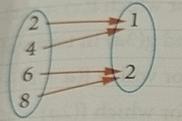
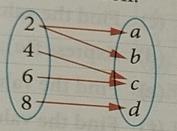
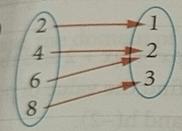
1. Each of the following relations has the set of integers (2, 4, 6, 8} as its domain. State whether each of the following arrow diagrams defines a function. If the answer is no, state the reason.\(a)(b)(c)(d)(e)(f) 2 1 4 6 2 8
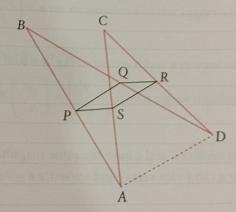
18. In the diagram, P, Q, R and S are the midpoints of AB, BD, CD and AC respectively. Show that (i) PQ is parallel to AD and PQ = AD, (ii) PQRS is a parallelogram. B. C P S A R D
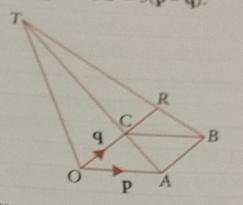
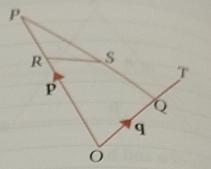
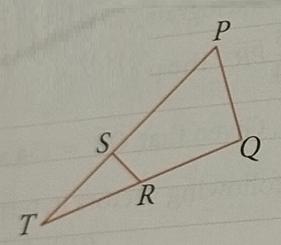
17, OABC is a parallelogram and ACT is a straight line OC is produced to meet BT at R. BT = 48R.OA = p. OC = q and TC = 3(p- q).1q, (i) Express, as simply as possible, in terms of p and c (a) OT, (b) AT, (c) OB, (d) BT, (e) TR. (ii) Show that CR 3 = 49. (iii) Find the value of CR (a) OC' area of
16. In the diagram, T'is the point of intersection of the diagonals of the quadrilateral PQRS. PŘ = 3PT , is = 5b. PQ = 4a + b and PR = 3a + 12b.Express, as simply as possible, in terms of a and b (a) RS, (c) RQ. (b) RT, (i) Show that QT = 3(b-a). (iii) Express QS as simply as possible, in terms
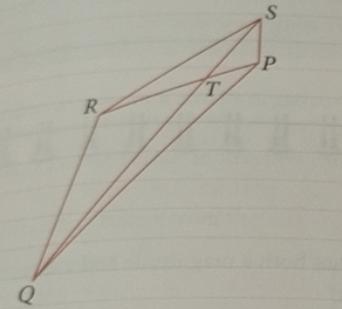
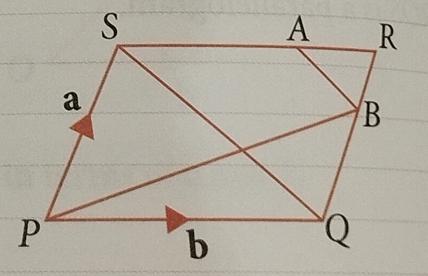
15. PQRS is a parallelogram. BQ = 2RB, AR= PS = a and PQ = b.(i) Express in terms of a and/orb, (a) SA, (b) QB, (c) PB, (d) QS, (e) BA.(ii) Calculate the value of RA (b) () QS area of AABR area of AABR area of ASQR' (c) area of PQRS a S A R P b B
14. Given that A is the point (1, 2), AB =4 AC = ( 5)and that M is the midpoint of Br find(ii) AM,(i) BC,(iii) the coordinates of the point D such th at A is a parallelogram.
13. In the diagram, ORP, OQT and PSQ) are lines. OP-p. 0Q-q. PS: 50-3:2 OQ:QT-2:1 and OR: RP-2:1.(i) Express, as simply as possible, in tern and/or q, (b) QS, (a) QP, (d) ST (c) OS, (ii) (a) Show that RS = kST , where kis;constant.(b) Write down two facts about the point S and T. R P S O 9 T
12. Relative to the origin O, which is not shown in the diagram, Pis the point (1, 11), Q is the point (2, 8), R is the point (-1, 7), S is the point (-2, 8) and Tis the point (-4, 6).(i) Express the following as column vectors.(b) SR (a) PQ (d) TQ (c) RQ RQ (ii) Find the value of the ratio TQ P T
11. In the diagram, OPA and OQC are straight lines, and PC intersects QA at B. Given that OQ = QC, PB BC OP = 8p and OQ = 8q, express the following vectors, as simply as possible, in terms of p and q. (PC (iii) OB (ii) PB (iv) QB I in not shown in the B SP Q 84
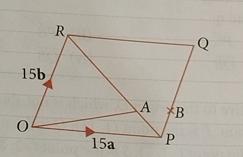
10. OPQR is a parallelogram. The point A on PR is such 3 that AR = PR. The point B on PQ is such that 4 PB = PQ. Given that OP = 15a and OR = 15b, express the following vectors in terms of a andb. (i) PR (iii) OA (ii) PA (iv) OB 15b 0 R. Q A B 15a P
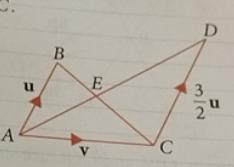
9. In the diagram, AB = u, AC 2 BE BC. =u, AC = v, CD 32 u andExpress the following in terms of u and v.(i) BC (ii) BE (iii) AD (iv) AE (v) BD = B E A V C D 3. u
8. The coordinates of P, Q and R are (1, 0), (4, 2) and(5, 4) respectively. Use a vector method to determine the coordinates of S if(a) PQRS is a parallelogram,(b) PRQS is a parallelogram.
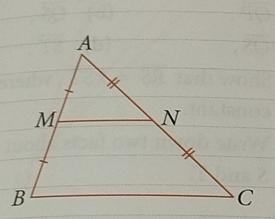
7. == In the diagram, AB = u, AC = v, and M and N are the midpoints of AB and AC respectively. Express in terms of u and/or v, (i) BC, (ii) AM, (iii) AN, (iv) MN. What can you say about BC and MN? B MA A N C
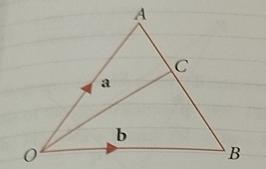
6. In the diagram, OA =a, OB = b and AC = 2CB.Find in terms of a andb, (i) AB, (iii) OC. (ii) AC, a C b B
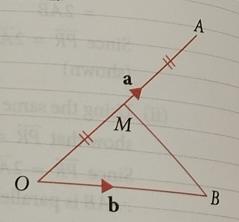
5. midpoint of OA. In the diagram, OA =a, OB = b and Mis theFind BM in terms of a and b. 0 a M A B b
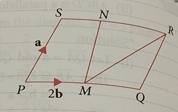
4. In the diagram, PQRS is a parallelogram, y midpoint of PQ and N is a point on SR such SR = 3SN.Given that PS a and PM = 2b, express in te of a and/orb, (i) MR, (iii) NM. (ii) RN, a S N R P 2b M
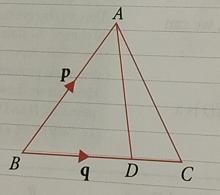
3. In the diagram, D is a point on BC such that BD=3DC.Given that BA =p and BD =q, express in terms of p and/or q (i) BC, (iii) CA. (ii) AD, P A B D C
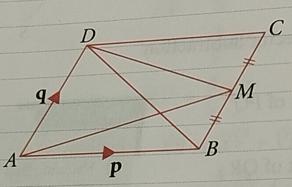
2. ABCD is a parallelogram with M as the midpoint of BC.If AB =p and AD = q, express in terms of p and/or q (i) CM, (ii) DB, (iii) AM, (iv) MD. A 94 D P B M C
1. The coordinates of A, B and D are (2, 3), (7, 5) and (4,9) respectively. Find the coordinates of C if ABCD is a parallelogram.
17. P is the point (2, -3) and PQ (i) Find the coordinates of Q. (ii) Find the gradient of PQ. 8 -2 x (iii) If PQ == y terms of x and y. (iv) If the gradient of PQ is terms of x and y.
16. L is the point (-3, 2) and M is the point (i(i) Express LM as a column vector.8(ii) If LM is parallel to p =-1 find of t.(iii) If instead, LM = p , find the two posilo values of t.
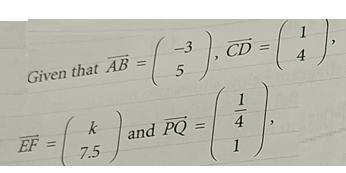
15. (i) express 2AB + 5CD as a column vector,(ii) find the value of k if EF is parallel to AB,(iii) explain why PQ is parallel to CD. Given that AB == (3) CD and PQ = 1 EF k 7.5 ) and == 4
14. It is given that u = 8 -15). Ifu=/ u = kv, where k is a positive constant, and /v/= 51 units, find the value of k. Hence find v.
13. Exercise 4C are two parallel vectors, 13, If () and (2) an explain why a 910 b d' k is
12. AB= and CD=AB. -15 (i) Express CD as a column vector. (ii) Given that A is the point (-2, 7), find the coordinates of the point B. (iii) Given that D is the point (8, -5), find the coordinates of the point C.
11. A point A(-3, 8) is translated by the translation vector AB = -2 to the point B. Find the -4 coordinates of B.
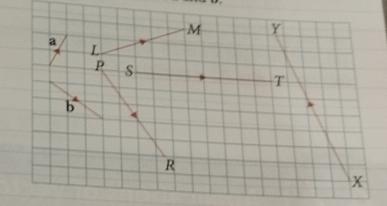
10. The diagram below shows two non-zero and non-parallel vectors a andb. Express LM, PR, ST and XY in terms of a and b. a b L P S M. T R X
9. Given that a andb- 2 illustrate each of the following on a square grid or sheet of graph paper. (i) 2a+b (iii) a-2b (v) 4a+3b (ii) 3a+2b (iv) 2a-3b (vi)-3a+4b
8. For each of the following, find the value of x and of y. (a) a= -0-8 3 8 b and a + 2b= 9 1 2 (b) u= B-A and 4u+y=2 2 2 6(c) 10 P-(3)-4-(;)-2-(2) and
7. (a) Given that and 2 are parallel P vectors, find the value of p. (b) Given that (12). 3 and are parallel -9 vectors, find the value of h.
6. State which of the following pairs of vectors are parallel 6 -4 -5 (b) -3 (a) -3 2 15 7 2 (c) -8 -3
5. IP.Qand R are the points (3,-2). (2,-4) and (2.3) respectively, express the following as column vectors 40 PQ () RP (ii) QR (iv) PR
4. White down the position vectors of the following points (4) A(4.7) (c) C(6-1) (b) B(-2, 5) (d) DX-4,-9)
3. single column vector to represent the following (b) 3p-19 29 4-39+ and r dr- find
2. OPEN Write down two vectors that are parallel to e the following vectors, one in the same direct and the other in the opposite direction. (a) 8 -7 (b) (0) 3 6 (c) -6 -2 and r- find ngle column vector to represent the following (b) 3p-and r- find ngle column vector to represent the following (b)
1. State which of the following pairs of vectors are parallel. -2 -8 (a) 1 4 9 18 (b) 21 (c) -3 -8
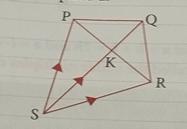
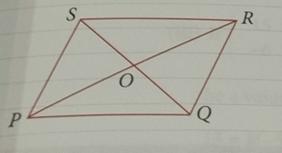
18. In the figure below, the diagonals of PQRS intersect at K. Find, for each of the following equations, a vector which can replace u.(a) SK+u=0 (b) SP+ PQ+u=0 (c) PS+SK+KR = =u (d) PK +(-SK) =U (e) PS+(-RS) (f) PQ+QR+(-PR) = u S P K R
17. PQRS is a parallelogram. O is the point of intersection of its diagonals.00) Simplify (a) PQ+75.(6) 80-00."(c) PR-SR + SỐ:(in) If PQ - a and PS -b. find, in terms of a and/or b.(a) Sk.(b) PR.) SỐ S R P Q
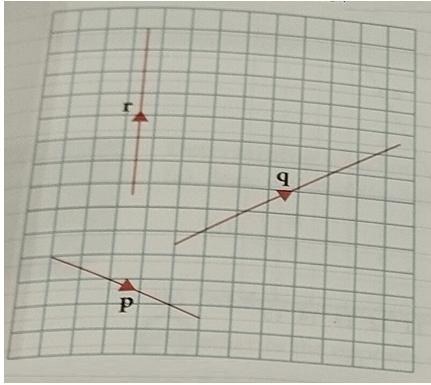
(16) Illustrate graphically the following vector sums using the vectors given in the diagram.(a) p+q (b) q + p (c) (p+q) + r (d) p+ (q+r)(ii). Is p + q = q + p? Explain.(iii) Is (p +q) + r= p + (q + r)? Explain. d
15. The diagram shows three vectors p. q andrOn a square grid or a sheet of graph paper, d appropriate parallelograms to illustrate the following vector additions. (a) p+q (c) p+r (b) q+P (d) g+r P
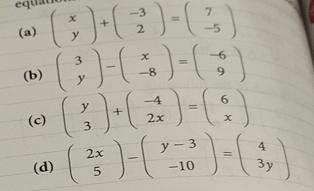
14. Find the value of x and of y in each of the Followers equations. (b) y > ) + ( X (a) y 3 3 2 7 -5 (9)-(0)-(6) -8 y 4 6 (c) 2x 3. 2x (d) 5 y-3 -10 x 4 3y
13. Simplify the following if possible. (a) RS + ST (c) RT - R$ (e) RS-TS (b) RS- RT (d) RS-ST (f) RS+TR-TU
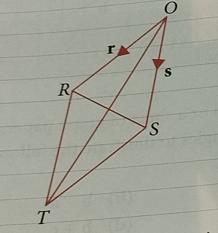
12. The diagram shows a parallelogram ORTS where OR =rand OS = s.Express the following vectors in terms of r and/or s.(ii) TS (i) RT (iv) RS (iii) OT (v) SR T r S R S
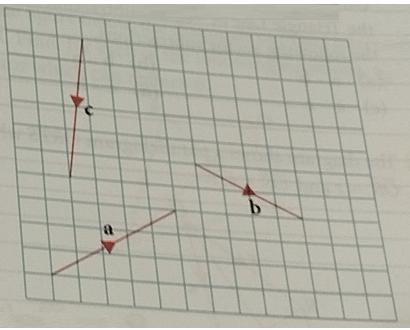
11. The diagram shows three vectorsa, b and c..On a square grid or a sheet of graph paper, use the Triangle Law of Vector Subtraction to illustrate the following vector subtractions.(a) a-b (c) a-c (b) b-a (d) c-b
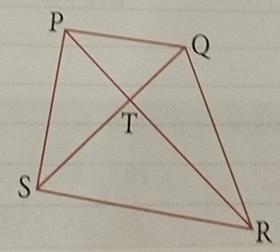
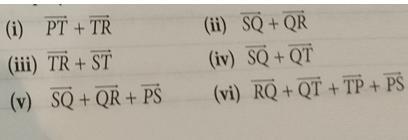
10. The diagram shows a quadrilateral PQRS where its diagonals intersect at T.Simplify each of the following. P. Sh T 0 R
9. The diagram shows three vectorsa, b and c.On a square grid or a sheet of graph paper, draw appropriate triangles to illustrate the following vector additions. (a) a+b (c) a+c (b) b+a (d) b+c b
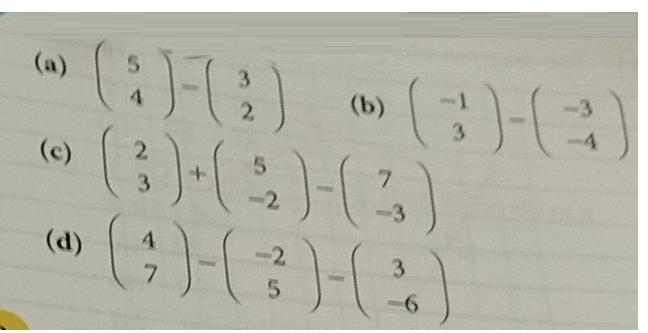
8. Simplify each of the following. (a) 3 4 (b) 2 B-3) (c) (d) 2 3 4 7 5 2 -2 7 3 (6-6)-8) 5
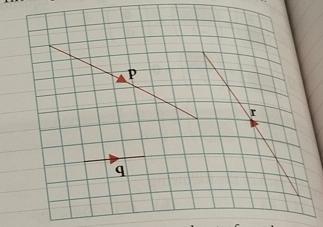
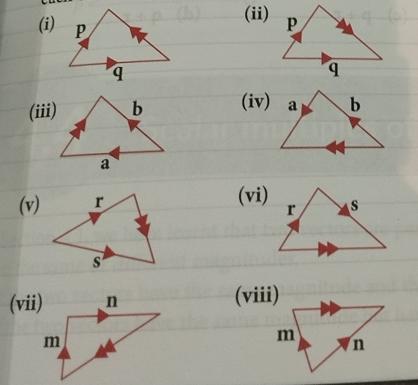
7. Find the vector represented by the double arrow in each of the diagrams below. (i) (iii) P q b (A) (vii) m r (ii) P q (iv) a b a (vi) S r n (viii) m n
Showing 400 - 500
of 2101
1
2
3
4
5
6
7
8
9
10
11
12
13
14
15
Last
Step by Step Answers

 Get 50% OFF
Claim Now
Get 50% OFF
Claim Now