New Semester
Started
Get
50% OFF
Study Help!
--h --m --s
Claim Now
Question Answers
Textbooks
Find textbooks, questions and answers
Oops, something went wrong!
Change your search query and then try again
S
Books
FREE
Study Help
Expert Questions
Accounting
General Management
Mathematics
Finance
Organizational Behaviour
Law
Physics
Operating System
Management Leadership
Sociology
Programming
Marketing
Database
Computer Network
Economics
Textbooks Solutions
Accounting
Managerial Accounting
Management Leadership
Cost Accounting
Statistics
Business Law
Corporate Finance
Finance
Economics
Auditing
Tutors
Online Tutors
Find a Tutor
Hire a Tutor
Become a Tutor
AI Tutor
AI Study Planner
NEW
Sell Books
Search
Search
Sign In
Register
study help
mathematics
calculus 10th edition
Calculus 10th Edition Ron Larson, Bruce H. Edwards - Solutions
Evaluate (if possible) the vector-valued function at each given value of t.(a) r(0) (b) r(π/4)(c) r(θ - π)(d) r(π/6 + Δt) - r(π/6) r(t) = cos ti + 2 sin tj
Find r'(t).r(t) = (2 cos t, 5 sin t)
Find the unit tangent vector T(t) and find a set of parametric equations for the line tangent to the space curve at point P. r(t) = (t, t, √4 - 1²), P(1, 1, √3)
Sketch the curve represented by the vector-valued function and give the orientation of the curve.r(t) = (t + 2, t² - 1)
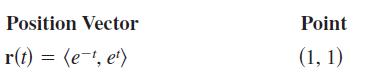
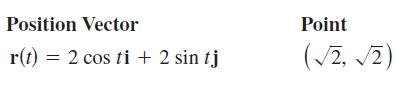
The position vector r describes the path of an object moving in space.(a) Find the velocity vector, speed, and acceleration vector of the object.(b) Evaluate the velocity vector and acceleration vector of theobject at the given value of t. Position Vector r(t) = ti + 5tj + 3tk Time t = 1
Use the binormal vector defined by the equation B = T × N.Find the unit tangent, unit normal, and binormal vectors for the helixat t = π/2. Sketch the helix together with these three mutual orthogonal unit vectors. r(t) = 4 cos ti + 4 sin tj + 3tk
Find r'(t).r(t) = √ti + (1 - t³)j
Sketch the space curve and find its length over the given interval. Vector-Valued Function r(t) = -ti + 4tj + 3tk Interval [0, 1]
Sketch the curve represented by the vector-valued function and give the orientation of the curve.r(t) = (π cost, π sin t)
Evaluate (if possible) the vector-valued function at each given value of t.(a) r(1) (b) r(0) (c) r(s + 1)(d) r(2 + Δt) - r(2) r(t) = t²i(t 1)j
Find r'(t).r(t) = t3i - 3tj
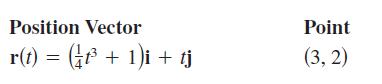
The position vector describes the path of an object moving in the xy-plane.(a) Find the velocity vector, speed, and acceleration vector of the object.(b) Evaluate the velocity vector and acceleration vector of the object at the given point.(c) Sketch a graph of the path, and sketch the velocity and
Find the unit tangent vector T(t) and find a set of parametric equations for the line tangent to the space curve at point P.r(t) = 3 cos ti + 3 sin tj + tk, P(3, 0, 0)
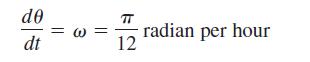
A communications satellite moves in a circular orbit around Earth at a distance of 42,000 kilometers from the center of Earth. The angular velocityis constant.(a) Use polar coordinates to show that the acceleration vector is given bywhere ur = cos θi+sin θj is the unit vector in the radial
Represent the line segment from P to Q by a vector-valued function and by a set of parametric equations.P(-2, -3, 8), Q(5, 1, -2)
Find the domain of the vector-valued function. r(t) = F(t) x G(t), where F(t) = t³itj + tk, G(t) = 3/ti+ 1 t + 1 -j + (t + 2)k
Find r'(t), r(t0), and r'(t0) for the given value of t0. Then sketch the space curve represented by the vector-valued function, and sketch the vectors r(t0) and r'(t0). r(t) = ti + t²j+ k, to = 2
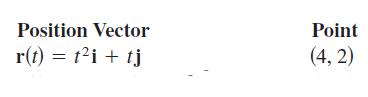
The position vector describes the path of an object moving in the xy-plane.(a) Find the velocity vector, speed, and acceleration vector of the object.(b) Evaluate the velocity vector and acceleration vector of the object at the given point.(c) Sketch a graph of the path, and sketch the velocity and
Find the unit tangent vector T(t) and find a set of parametric equations for the line tangent to the space curve at point P. r(t) = t²i + tj + ¾k, P(1, 1, 3)
Find the domain of the vector-valued function. r(t) = F(t) x G(t), where F(t) = sin ti + cos tj, G(t) sin tj + cos tk
Repeat Exercise 7 for a baseball that is hit 4 feet above the ground at 80 feet per second and at an angle of 30° with respect to the ground.Data from in Exercise 7A baseball is hit 3 feet above the ground at 100 feet per second and at an angle of 45° with respect to the ground.(a) Find the
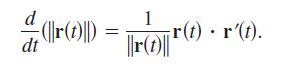
If r(t) is a nonzero differentiable function of prove that d dt (r(t)) = 1 r(t)|| ¡r(t). r'(t).
Evaluate (if possible) the vector-valued function at each given value of t.(a) r(0) (b) r(π/2)(c) r(s - π)(d) r(π + Δt) - r(π) r(t) = 3 cos ti + (1 - sin t)j - tk
The position vector describes the path of an object moving in the xy-plane.(a) Find the velocity vector, speed, and acceleration vector of the object.(b) Evaluate the velocity vector and acceleration vector of the object at the given point.(c) Sketch a graph of the path, and sketch the velocity and
Find r'(t), r(t0), and r'(t0) for the given value of t0. Thensketch the space curve represented by the vector-valuedfunction, and sketch the vectors r(t0) and r'(t0). r(t) = 2 cos ti + 2 sin tj + tk, to = З п 2
Represent the line segment from P to Q by a vector-valued function and by a set of parametric equations.P(3, 0, 5), Q(2, -2, 3)
A baseball is hit 3 feet above the ground at 100 feet per second and at an angle of 45° with respect to the ground.(a) Find the vector-valued function for the path of the baseball.(b) Find the maximum height.(c) Find the range.(d) Find the arc length of the trajectory.
Find the domain of the vector-valued function. r(t) = F(t) G(t), where F(t) = In ti + 5tj - 3t²k, G(t) = i + 4tj − 3t²k -
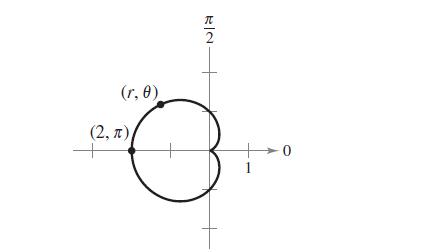
Consider the cardioidas shown in the figure. Let s(θ) be the arc length from the point(2, π) on the cardioid to the point (r, θ), and let p(θ) = 1/K bethe radius of curvature at the point (r, θ). Show that s and p arerelated by the equation s² + 9p² = 16. (This equation is calleda natural
Evaluate (if possible) the vector-valued function at each given value of t.(a) r(0) (b) r(-2) (c) r(c − 1)(d) r(1 + Δt) -r(1) r(t) = (2t + 1)i + t²j − √t + 2 k -
Find the unit tangent vector T(t) and find a set of parametric equations for the line tangent to the space curve at point P.r(t) = ti + t²j + tk, P(0, 0, 0)
Find r'(t), r(t0), and r'(t0) for the given value of t0. Then sketch the plane curve represented by the vector-valued function, and sketch the vectors r(t0) and r'(t0). Position the vectors such that the initial point of r(t0) is at the origin and the initial point of r'(t0) is at the terminal
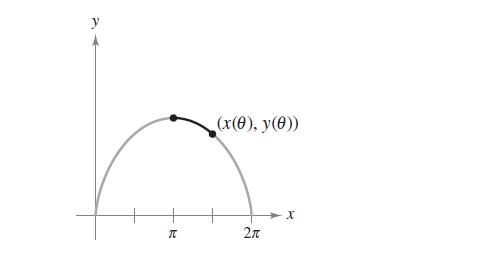
Consider one arch of the cycloidas shown in the figure. Let s(θ) be the arc length from thehighest point on the arch to the point (x(θ), y(θ)), and letp(θ) = 1/K be the radius of curvature at the point (x(θ), y(θ)).Show that s and p are related by the equation s² + p² = 16.(This equation is
Find r'(t), r(t0), and r'(t0) for the given value of t0. Then sketch the plane curve represented by the vector-valued function, and sketch the vectors r(t0) and r'(t0). Position the vectors such that the initial point of r(t0) is at the origin and the initial point of r'(t0) is at the terminal
The position vector describes the path of an object moving in the xy-plane.(a) Find the velocity vector, speed, and acceleration vector of the object.(b) Evaluate the velocity vector and acceleration vector of the object at the given point.(c) Sketch a graph of the path, and sketch the velocity and
Find the domain of the vector-valued function. r(t) = F(t) + G(t), where F(t) = cos ti sin tj + √tk. G(t) = cos ti + sin tj
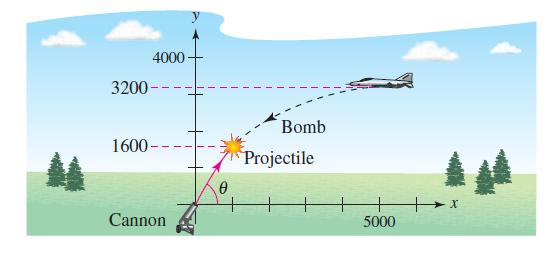
Repeat Exercise 3 for the case in which the bomber is facing away from the launch site, as shown in the figure.Data from in Exercise 3A bomber is flying horizontally at an altitude of 3200 feet with a velocity of 400 feet per second when it releases a bomb. A projectile is launched 5 seconds later
Find r'(t), r(t0), and r'(t0) for the given value of t0. Then sketch the plane curve represented by the vector-valued function, and sketch the vectors r(t0) and r'(t0). Position the vectors such that the initial point of r(t0) is at the origin and the initial point of r'(t0) is at the terminal
Find the domain of the vector-valued function. r(t) = sin ti + 4 cos tj + tk
Sketch the plane curve and find its length over the given interval.r(t) = a cos ti + a sin tj, [0, 2π]
Find the unit tangent vector to the curve at the specified value of the parameter.r(t) = et cos ti + etj, t = 0
The position vector describes the path of an object moving in the xy-plane.(a) Find the velocity vector, speed, and acceleration vector of the object.(b) Evaluate the velocity vector and acceleration vector of the object at the given point.(c) Sketch a graph of the path, and sketch the velocity and
Find the unit tangent vector to the curve at the specified value of the parameter. r(t) = 6 cos ti + 2 sin tj, t TT 3
Sketch the plane curve and find its length over the given interval.r(t) ) = a cos³ ti + a sin³ tj, [0, 2π]
Find the unit tangent vector to the curve at the specified value of the parameter.r(t) = 3ti - In tj, t = e
In Exercises(a) Find the domain of r(b) Determine the values (if any) of t for which the function is continuous.r(t) = (2t + 1)i + t²j + tk
Sketch the plane curve and find its length over the given interval.r(t) = (t + 1)i + t²j, [0, 6]
The position vector describes the path of an object moving in the xy-plane.(a) Find the velocity vector, speed, and acceleration vector of the object.(b) Evaluate the velocity vector and acceleration vector of the object at the given point.(c) Sketch a graph of the path, and sketch the velocity and
Find r'(t), r(t0), and r'(t0) for the given value of t0. Then sketch the plane curve represented by the vector-valued function, and sketch the vectors r(t0) and r'(t0). Position the vectors such that the initial point of r(t0) is at the origin and the initial point of r'(t0) is at the terminal
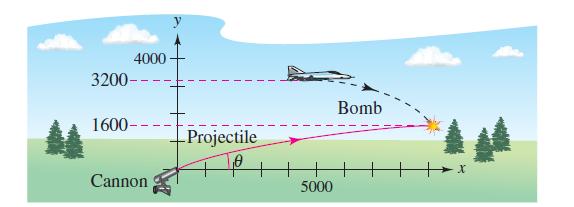
A bomber is flying horizontally at an altitude of 3200 feet with a velocity of 400 feet per second when it releases a bomb. A projectile is launched 5 seconds later from a cannon at a site facing the bomber and 5000 feet from the point that was directly beneath the bomber when the bomb was
Find the domain of the vector-valued function. r(t) = ln ti e' j - tk
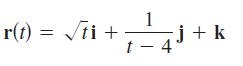
In Exercises(a) Find the domain of r(b) Determine the values (if any) of t for which the function is continuous. r(t) = √ti + 1 t-4 -j + k
Find the unit tangent vector to the curve at the specified value of the parameter. r(t) = 4 cos ti + 4 sin tj, t 4
In Exercises(a) Find the domain of r(b) Determine the values (if any) of t for which the function is continuous.r(t) = In ti + tj + tk
The position vector describes the path of an object moving in the xy-plane.(a) Find the velocity vector, speed, and acceleration vector of the object.(b) Evaluate the velocity vector and acceleration vector of the object at the given point.(c) Sketch a graph of the path, and sketch the velocity and
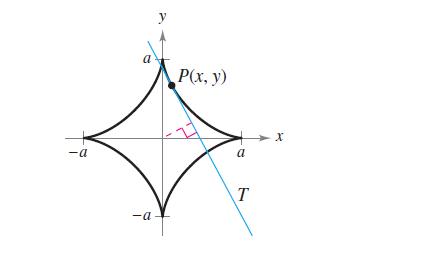
Let T be the tangent line at the point P(x, y) to the graph of the curve x²/3 + y2/3 = a²/3, a > 0, asshown in the figure. Show that the radius of curvature at P isthree times the distance from the origin to the tangent line T. -a a -a y P(x, y) a T X
Sketch the plane curve and find its length over the given interval.r(t) = t³i + t²j, [0, 1]
Find r'(t), r(t0), and r'(t0) for the given value of t0. Then sketch the plane curve represented by the vector-valued function, and sketch the vectors r(t0) and r'(t0). Position the vectors such that the initial point of r(t0) is at the origin and the initial point of r'(t0) is at the terminal
Find the domain of the vector-valued function. r(t) = √√4 − t² i + t²j – 6tk - -
Sketch the plane curve and find its length over the given interval.r(t) = ti + t²j, [0,4]
The position vector describes the path of an object moving in the xy-plane.(a) Find the velocity vector, speed, and acceleration vector of the object.(b) Evaluate the velocity vector and acceleration vector of the object at the given point.(c) Sketch a graph of the path, and sketch the velocity and
Find the unit tangent vector to the curve at the specified value of the parameter.r(t) = t³i + 2t²j, t = 1
In Exercises(a) Find thedomain of r(b) Determine the values (if any) of t for whichthe function is continuous.r(t) = tan ti + j + tk
Sketch the plane curve and find its length over the given interval.r(t) = 3ti - tj, [0, 3]
Find the vector z, given that u = (1, 2, 3), v = (2, 2, -1), and w = (4, 0, -4). zu v + 2w =
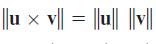
Prove thatif and are orthogonal. ||A|| ||n|| = ||^ × n|| X
Find the angle between a cube’s diagonal and one of its edges.
In your own words, state the difference between a scalar and a vector. Give examples of each.
Find the angle between the diagonal of a cube and the diagonal of one of its sides.
Find the vector z, given that u = (1, 2, 3), v = (2, 2, -1), and w = (4, 0, -4). z = 5u - 3v - w
Identify the quantity as a scalar or as a vector. Explain your reasoning.(a) The muzzle velocity of a gun(b) The price of a company’s stock(c) The air temperature in a room(d) The weight of a car
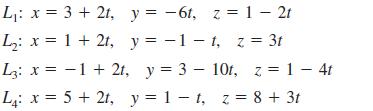
Determine whether any of the lines are parallel or identical. L₁: x= 3 + 21, y = -6t, z = 1 - 2t L₂: x = 1 + 2t₂ y = -1-t, z = 3t L3: x= -1 + 2t, y = 3-10t, z = 1 - 4t L₁: x = 5 + 2t, y = 1-t, z = 8 + 3t
The vertices of a triangle are given. Determine whether the triangle is an acute triangle, an obtuse triangle, or a right triangle. Explain your reasoning. (2, 0, 1), (0, 1, 2), (-0.5, 1.5, 0)
The vector v and its initial point are given. Find the terminal point. v = (-1, 3); Initial point: (4,2)
Find the projection of onto v. u = (7,9), v = (1,5)
The vertices of a triangle are given. Determine whether the triangle is an acute triangle, an obtuse triangle, or a right triangle. Explain your reasoning. (2, -7, 3), (-1, 5, 8), (4, 6, -1)
Find the lengths of the sides of the triangle with the indicated vertices, and determine whether the triangle is a right triangle, an isosceles triangle, or neither. (3, 4, 1), (0, 6, 2), (3, 5, 6)
Find the area of the triangle with the given vertices. A(0, 0, 0), B(1, 0, 3), C(-3, 2, 0)
The vector v and its initial point are given. Find the terminal point. v = (4, -9); Initial point: (5, 3)
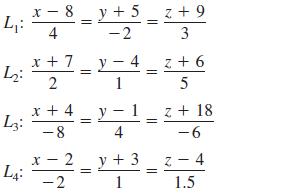
Determine whether any of the lines are parallel or identical. L₁: X -8_y+5 4 4: L3: x+] ܐ .L ܚ . ܚ ܐ ܘ ܠ ܨ 2 x -8 -2 2 X L4: -2 - 4 1 - X+4=y=1_z+18 4 z +9 3 v + 3 1 z +6 5 -6 - 4 1.5
Identify the six quadric surfaces and give the standard form of each.
Find the projection of onto v. u = 4i + 2j, v = 3i + 4j
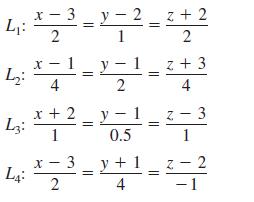
Determine whether any of the lines are parallel or identical. z+2 2 41=Y=1=2 +3 2 4 2=y=2=²₁ 1 L₁: *23 4₂: * 2 - L3: x + ² = № - ¹ = ² − 3 y 1 1 0.5 1 X 3 L₁: * 2 ³ = y + 1 = 2 = 2 y+ 2 4 -
Find an equation in rectangular coordinates for the equation given in cylindrical coordinates, and sketch its graph.r = 2 sin θ
Find the area of the triangle with the given vertices. A(2, -3, 4), B(0, 1, 2), C(-1, 2, 0)
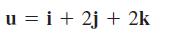
Find the direction cosines and angles of, and demonstrate that the sum of the squares of the direction cosines is 1. u = i + 2j + 2k
Find the lengths of the sides of the triangle with the indicated vertices, and determine whether the triangle is a right triangle, an isosceles triangle, or neither. (-1, 0, -2), (-1, 5, 2), (-3,-1, 1)
What does the equation z = x² represent in the xz-plane? What does it represent in three-space?
Find an equation in rectangular coordinates for the equation given in cylindrical coordinates, and sketch its graph.r = 2 cos θ
Determine whether the lines intersect, and if so, find the point of intersection and the cosine of the angle of intersection. x = 4t + 2, y = 3, z = -t + 1 x = 2s + 2, y = 2s + 3, z = s + 1
What does the equation 4x² + 6y² - 3z² = 12 represent in the xy-plane? What does it represent in three-space?
Find the magnitude of v.v = 7i
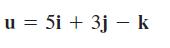
Find the direction cosines and angles of, and demonstrate that the sum of the squares of the direction cosines is 1. u = 5i + 3j - k
Find the lengths of the sides of the triangle with the indicated vertices, and determine whether the triangle is a right triangle, an isosceles triangle, or neither. (4,-1,-1), (2, 0, -4), (3, 5, -1)
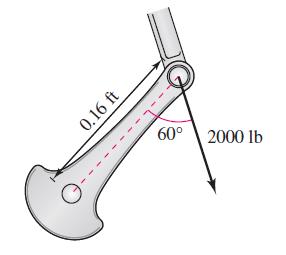
Both the magnitude and the direction of the force on a crankshaft change as the crankshaft rotates. Find the torque on the crankshaft using the position and data shown in the figure. y 910 60° 2000 lb
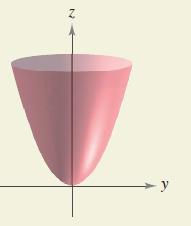
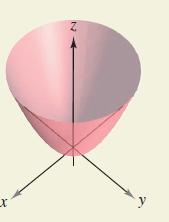
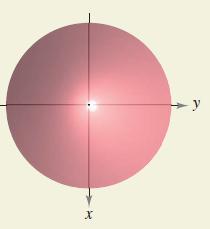
The four figures are graphs of the quadric surface z = x² + y². Match each of the four graphs with the point in space from which the paraboloid is viewed. The four points are (0, 0, 20), (0, 20, 0), (20, 0, 0), and (10, 10, 20).(a)(b)(c)(d) N -y
Convert the point from rectangular coordinates to spherical coordinates.(4, 0, 0)
Find the projection of onto v. u = 5i + j + 3k, v = 2i + 3j + k
Find an equation for the surface of revolution formed by revolving the curve in the indicated coordinate plane about the given axis. Equation of Curve z² = 4y Coordinate Plane yz-plane Axis of Revolution y-axis
Determine whether the lines intersect, and if so, find the point of intersection and the cosine of the angle of intersection. x = -3t+ 1, y = 4t + 1, z = 2t + 4 x = 3s + 1, y = 2s + 4, z = −s + 1
Showing 2600 - 2700
of 9867
First
20
21
22
23
24
25
26
27
28
29
30
31
32
33
34
Last
Step by Step Answers

 Get 50% OFF
Claim Now
Get 50% OFF
Claim Now