New Semester
Started
Get
50% OFF
Study Help!
--h --m --s
Claim Now
Question Answers
Textbooks
Find textbooks, questions and answers
Oops, something went wrong!
Change your search query and then try again
S
Books
FREE
Study Help
Expert Questions
Accounting
General Management
Mathematics
Finance
Organizational Behaviour
Law
Physics
Operating System
Management Leadership
Sociology
Programming
Marketing
Database
Computer Network
Economics
Textbooks Solutions
Accounting
Managerial Accounting
Management Leadership
Cost Accounting
Statistics
Business Law
Corporate Finance
Finance
Economics
Auditing
Tutors
Online Tutors
Find a Tutor
Hire a Tutor
Become a Tutor
AI Tutor
AI Study Planner
NEW
Sell Books
Search
Search
Sign In
Register
study help
mathematics
precalculus 1st
Calculus For Scientists And Engineers Early Transcendentals 1st Edition William L Briggs, Bernard Gillett, Bill L Briggs, Lyle Cochran - Solutions
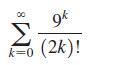
Use a convergence test of your choice to determine whether the following series converge or diverge. 00 k=0 9k (2k)!
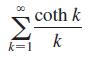
Use a convergence test of your choice to determine whether the following series converge or diverge. 8 k=1 coth k k
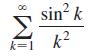
Use the test of your choice to determine whether the following series converge. k=1 sin² k k² 2
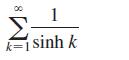
Use a convergence test of your choice to determine whether the following series converge or diverge. 00 1 k=1sinh k
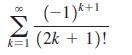
Estimate the value of the following convergent series with an absolute error less than 10-3. k=1 (-1)^+1 (2k + 1)!
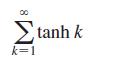
Use a convergence test of your choice to determine whether the following series converge or diverge. 00 Σtanh k k=1
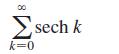
Use a convergence test of your choice to determine whether the following series converge or diverge. k=0 sech k
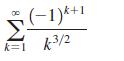
Determine whether the following series converge absolutely or conditionally, or diverge. (-1)*+1 k3/2 k=1
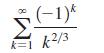
Determine whether the following series converge absolutely or conditionally, or diverge. 00 k=1 (-1)* k2/3
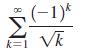
Determine whether the following series converge absolutely or conditionally, or diverge. k=1 (-1)^ Vk
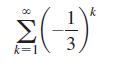
Determine whether the following series converge absolutely or conditionally, or diverge. 되 3 k=1
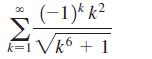
Determine whether the following series converge absolutely or conditionally, or diverge. (-1)k k² k=1 Vk6 + 1.
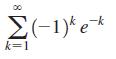
Determine whether the following series converge absolutely or conditionally, or diverge. 00 k Σ(-1)*e* k=1
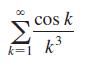
Determine whether the following series converge absolutely or conditionally, or diverge. 00 cos k k3 k=1
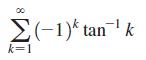
Determine whether the following series converge absolutely or conditionally, or diverge. 00 Σ(-1)* tan ¹ k k=1
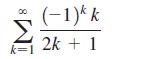
Determine whether the following series converge absolutely or conditionally, or diverge. k=1 (-1)kk 2k + 1
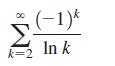
Determine whether the following series converge absolutely or conditionally, or diverge. 00 (-1)k k=2 In k
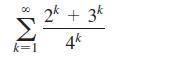
Determine whether the following series converge or diverge. 8 2k + 3k 4k
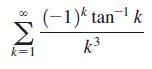
Determine whether the following series converge absolutely or conditionally, or diverge. k=1 (-1) tan-¹ k k³
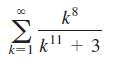
Use the test of your choice to determine whether the following series converge. 8 k=1 k8 k¹¹ +3 11
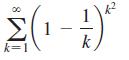
Use the test of your choice to determine whether the following series converge. 2 (₁-1) ² k k=1
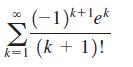
Determine whether the following series converge absolutely or conditionally, or diverge. (-1)k+lek k=1 (k + 1)!
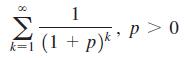
Use the test of your choice to determine whether the following series converge. 00 k=1 1 (1 + p)k' 0
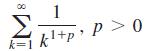
Use the test of your choice to determine whether the following series converge. 1 V P> 0
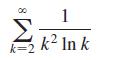
Use the test of your choice to determine whether the following series converge. k=2 1 k² In k
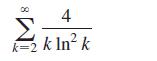
Determine whether the following series converge or diverge. 00 4 k=2 k ln² k
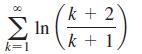
Use the test of your choice to determine whether the following series converge. 00 k=1 In k + 2 k + 1/
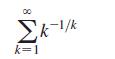
Use the test of your choice to determine whether the following series converge. ΣΕ k=1 −1/k
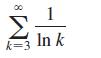
Use the test of your choice to determine whether the following series converge.Data from in Root test 00 k=3 1 In k
Use the properties of infinite series to evaluate the following series. k-1 - | دی
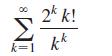
Use the test of your choice to determine whether the following series converge.Data from in Root test 00 k=1 2k k! kk
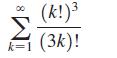
Use the test of your choice to determine whether the following series converge.Data from in Root test 00 k=1 (k!)³ (3k)!
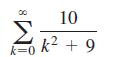
Determine whether the following series converge or diverge. 00 10 2 k=0k² +9
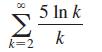
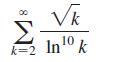
Use the test of your choice to determine whether the following series converge.Data from in Root test 00 k=2 5 In k k
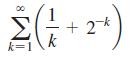
Use the test of your choice to determine whether the following series converge.Data from in Root test k=1 个 + 2*
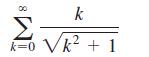
Determine whether the following series converge or diverge. 00 k Σ k=o Vk? + 1 2
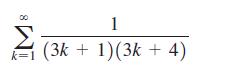
Determine whether the following series converge or diverge. 8 00 k=1 1 (3k + 1)(3k + 4)
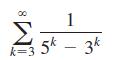
Use the test of your choice to determine whether the following series converge.Data from in Root test 00 1 k=3 5k - 3k
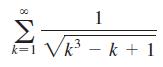
Use the test of your choice to determine whether the following series converge.Data from in Root test k=1 1 √k³k + 1 3
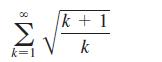
Determine whether the following series converge or diverge. k=1 k + 1 k
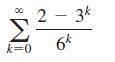
Use the properties of infinite series to evaluate the following series. 8 k=0 2-3k 6k
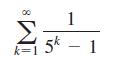
Use the test of your choice to determine whether the following series converge.Data from in Root test 00 k=1 1 5-1
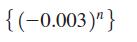
Determine whether the following sequences converge or diverge and describe whether they do so monotonically or by oscillation. Give the limit when the sequence converges. {(-0.003)"}
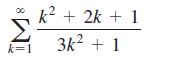
Use the test of your choice to determine whether the following series converge.Data from in Root test k=1 k² + 2k + 1 3k² + 1
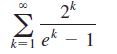
Use the test of your choice to determine whether the following series converge.Data from in Root test 00 k=1 2k ek - 1
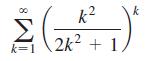
Use the test of your choice to determine whether the following series converge.Data from in Root test k² 2k² + 1/ k
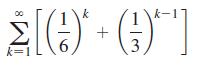
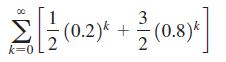
Use the properties of infinite series to evaluate the following series. Σ(0.2)* + (08) Ξ
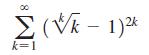
Use the test of your choice to determine whether the following series converge.Data from in Root test 2k Σ (Vk - 1)2* k=1
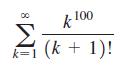
Use the test of your choice to determine whether the following series converge.Data from in Root test 00 Σ k=1 1-100 (k + 1)!
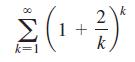
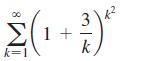
Use the test of your choice to determine whether the following series converge.Data from in Root test 1 + k k
Use the properties of infinite series to evaluate the following series. 69 + ام 113 k=
Consider the following convergent series.a. Find an upper bound for the remainder in terms of n.b. Find how many terms are needed to ensure that the remainder is less than 10-3.c. Find lower and upper bounds (Ln and Un, respectively) on the exact value of the series.d. Find an interval in which the
Consider the following convergent series.a. Find an upper bound for the remainder in terms of n.b. Find how many terms are needed to ensure that the remainder is less than 10-3.c. Find lower and upper bounds (Ln and Un, respectively) on the exact value of the series.d. Find an interval in which the
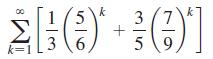
Use the test of your choice to determine whether the following series converge.Data from in Root test 2 3 ()* + ( )* + G)* + 3 4
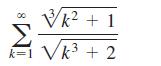
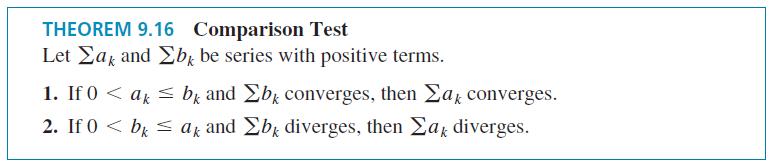
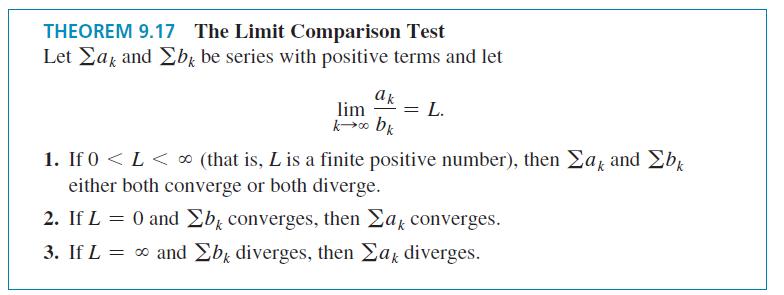
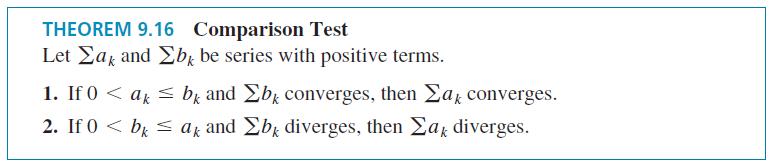
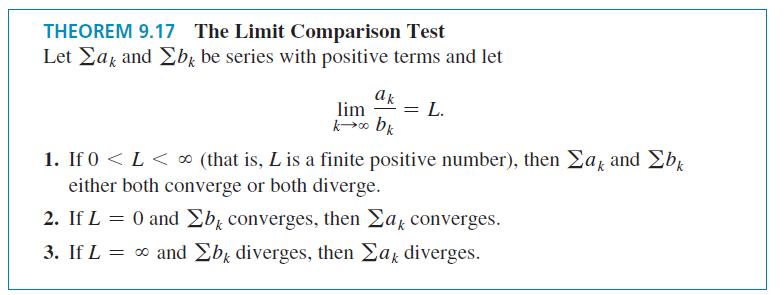
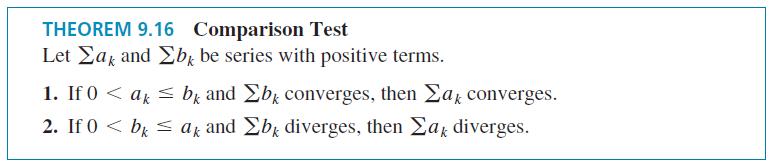
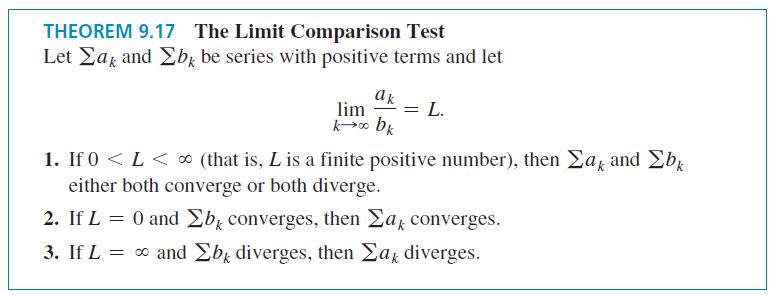
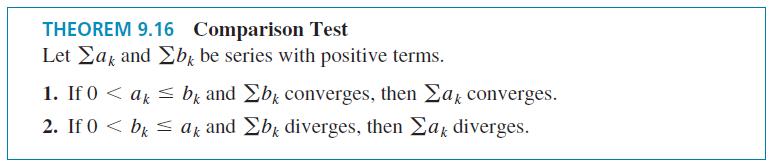
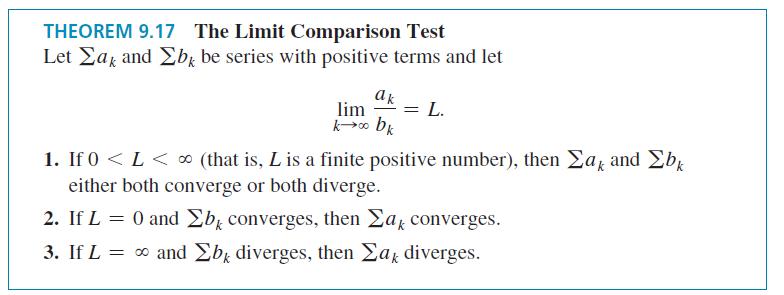
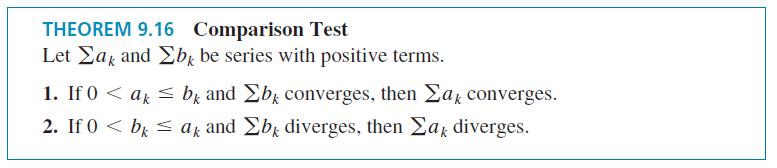
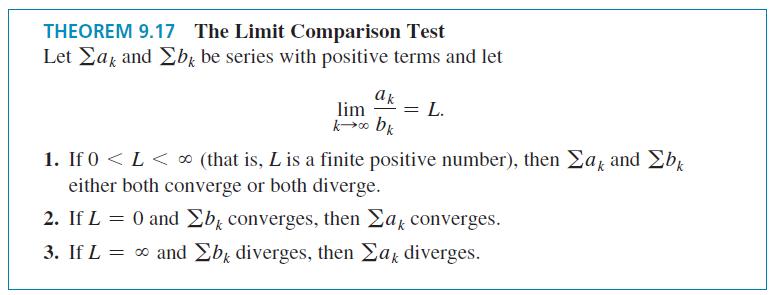
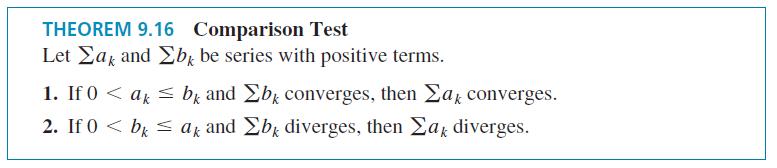
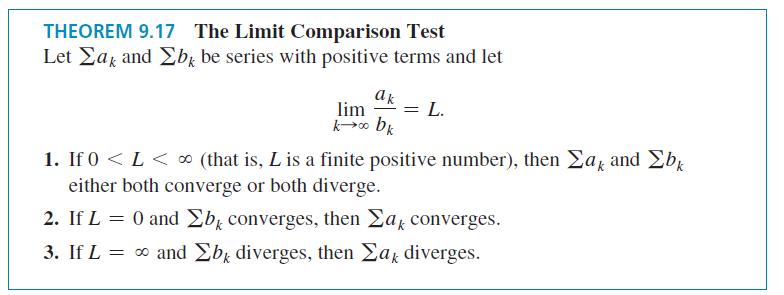
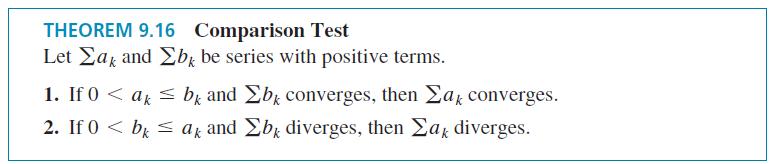
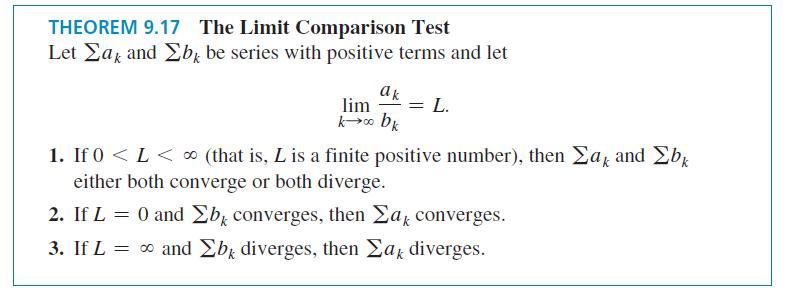
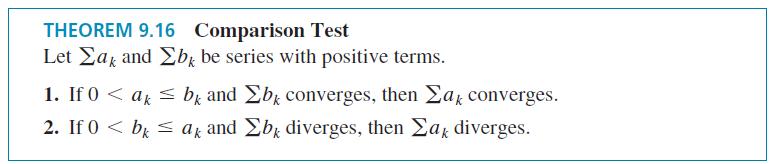
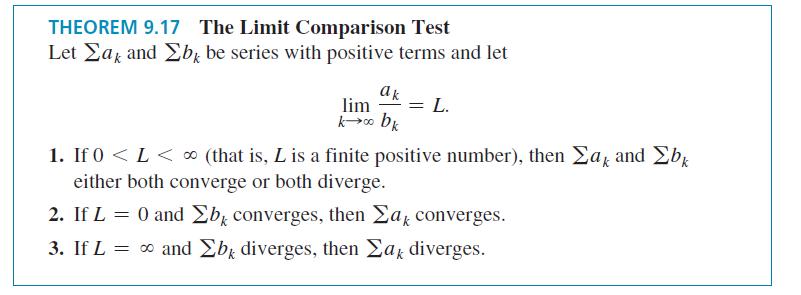
Use the Comparison Test or Limit Comparison Test to determine whether the following series converge.Data from in Comparison Test & Limit Comparison √k² + 1 k=1 √k³ + 2 00
Consider the following convergent series.a. Find an upper bound for the remainder in terms of n.b. Find how many terms are needed to ensure that the remainder is less than 10-3.c. Find lower and upper bounds (Ln and Un, respectively) on the exact value of the series.d. Find an interval in which the
Write the terms a1, a2, a3, and a4 of the following sequences. If the sequence appears to converge, make a conjecture about its limit. If the sequence diverges, explain why. an+1 10an 1; ao = 0
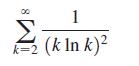
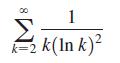
Use the Comparison Test or Limit Comparison Test to determine whether the following series converge.Data from in Comparison Test & Limit Comparison 00 k=2 1 (k In k)²
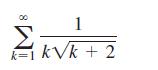
Use the Comparison Test or Limit Comparison Test to determine whether the following series converge.Data from in Comparison Test & Limit Comparison 00 1 k=1 k√k + 2
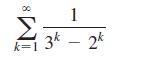
Use the Comparison Test or Limit Comparison Test to determine whether the following series converge.Data from in Comparison Test & Limit Comparison 00 1 1 3 - 2
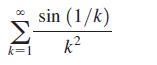
Use the Comparison Test or Limit Comparison Test to determine whether the following series converge.Data from in Comparison Test & Limit Comparison k=1 sin (1/k) k²
Use the Comparison Test or Limit Comparison Test to determine whether the following series converge.Data from in Comparison Test & Limit Comparison 1 k=1 2k Vk
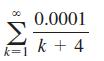
Use the Comparison Test or Limit Comparison Test to determine whether the following series converge.Data from in Comparison Test & Limit Comparison k=1 0.0001 k + 4
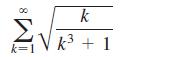
Use the Comparison Test or Limit Comparison Test to determine whether the following series converge.Data from in Comparison Test & Limit Comparison k k=1√k³ +1
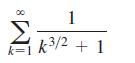
Use the Comparison Test or Limit Comparison Test to determine whether the following series converge.Data from in Comparison Test & Limit Comparison 00 k=1 1 k3/2 + 1
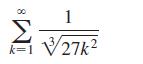
Determine the convergence or divergence of the following series. k=1 1 √27k²
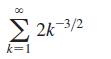
Determine the convergence or divergence of the following series. 8 Σ 24-3/2 21 k=1
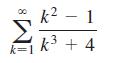
Use the Comparison Test or Limit Comparison Test to determine whether the following series converge.Data from in Comparison Test & Limit Comparison ²-1 k³ + 4
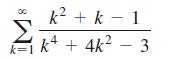
Use the Comparison Test or Limit Comparison Test to determine whether the following series converge.Data from in Comparison Test & Limit Comparison k² + k - 1 k=1k² + 4k² - 3
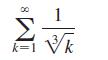
Determine the convergence or divergence of the following series. 00 k=1 1 Vk
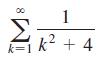
Use the Comparison Test or Limit Comparison Test to determine whether the following series converge.Data from in Comparison Test & Limit Comparison 00 k=1 1 k²+4
Determine the convergence or divergence of the following series. 00 k=2 ke 77
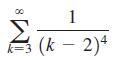
Determine the convergence or divergence of the following series. 1 k=3 (k − 2)4
Determine the convergence or divergence of the following series. 1 -10 k
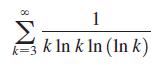
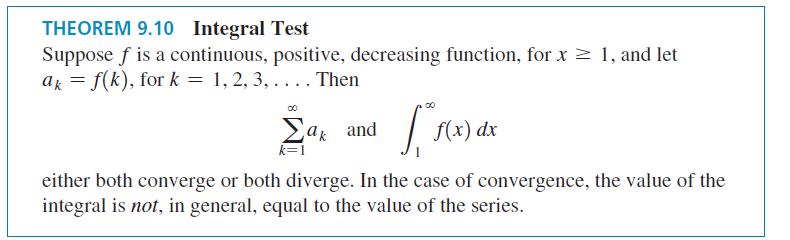
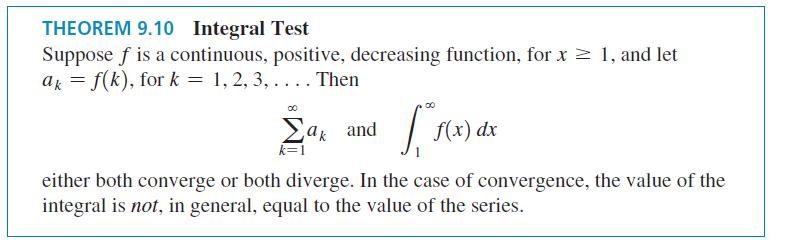
Use the Integral Test to determine the convergence or divergence of the following series, or state that the conditions of the test are not satisfied and, therefore, the test does not apply.Data from in Integral Test 00 1 k=3 k ln k ln (In k)
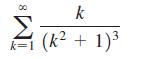
Use the Integral Test to determine the convergence or divergence of the following series, or state that the conditions of the test are not satisfied and, therefore, the test does not apply.Data from in Integral Test 00 k=1 k (k² + 1)³
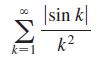
Use the Integral Test to determine the convergence or divergence of the following series, or state that the conditions of the test are not satisfied and, therefore, the test does not apply.Data from in Integral Test k=1 sin k k²
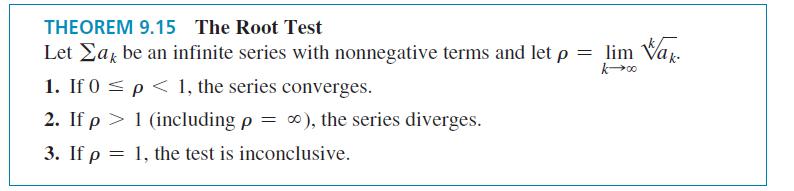
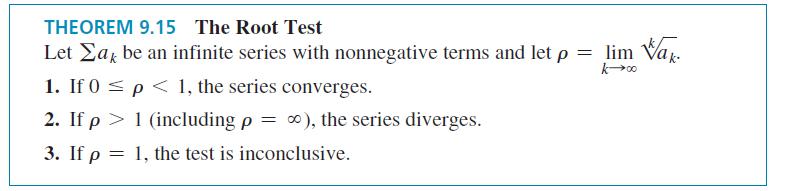
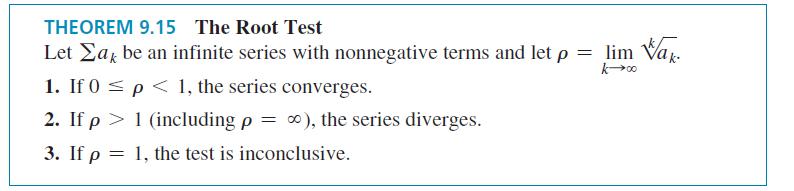
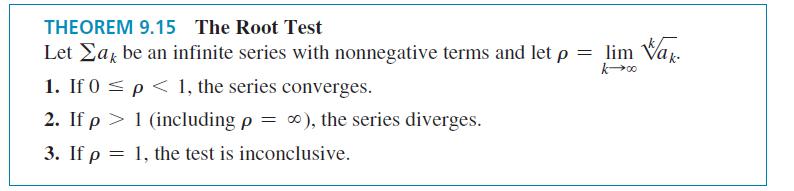
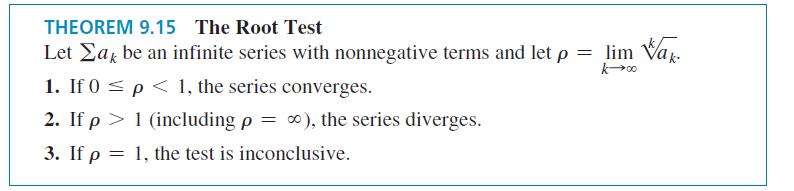
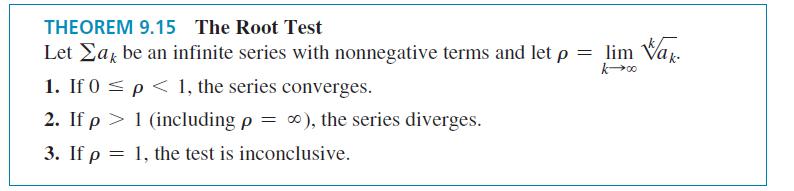
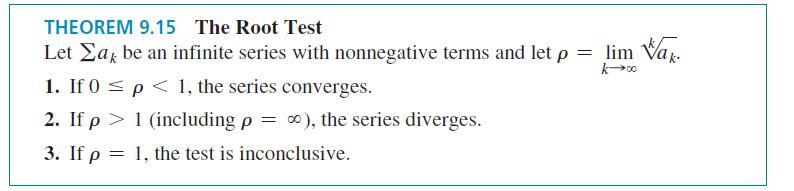
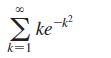
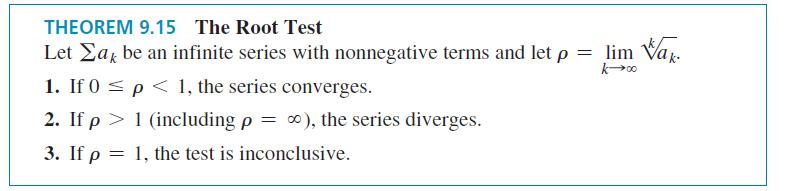
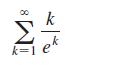
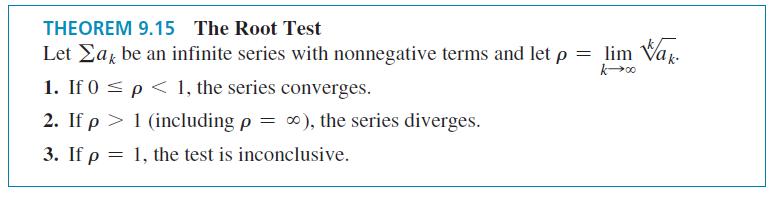
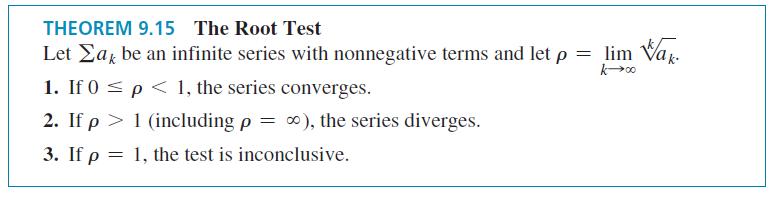
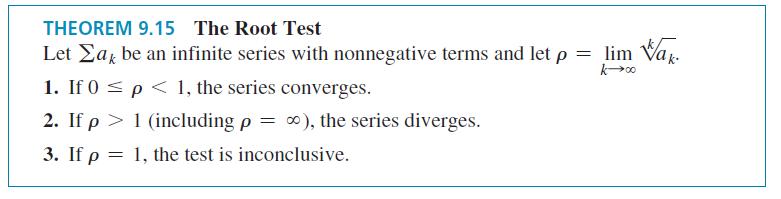
Use the Root Test to determine whether the following series converge.Data from in Root Test k=1 k ek
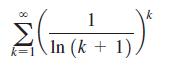
Use the Root Test to determine whether the following series converge.Data from in Root Test 1 In (k+ 1). k
Use the Root Test to determine whether the following series converge.Data from in Root Test 1 + IN + (-:-)* +
Use the Integral Test to determine the convergence or divergence of the following series, or state that the conditions of the test are not satisfied and, therefore, the test does not apply.Data from in Integral Test 00 k k=1 e ek
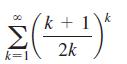
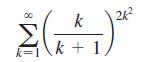
Use the Root Test to determine whether the following series converge.Data from in Root Test (k+ 1) 2k k
Use the Integral Test to determine the convergence or divergence of the following series, or state that the conditions of the test are not satisfied and, therefore, the test does not apply.Data from in Integral Test 1 k=2 k(Ink)²
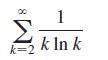
Use the Integral Test to determine the convergence or divergence of the following series, or state that the conditions of the test are not satisfied and, therefore, the test does not apply.Data from in Integral Test 00 k=2 1 k In k
Use the Root Test to determine whether the following series converge.Data from in Root Test 1 + 3-k
Use the Root Test to determine whether the following series converge.Data from in Root Test k k + 1/
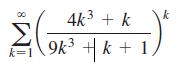
Use the Root Test to determine whether the following series converge.Data from in Root Test k=1 4k³ + k 9k³ + k + 1. k
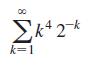
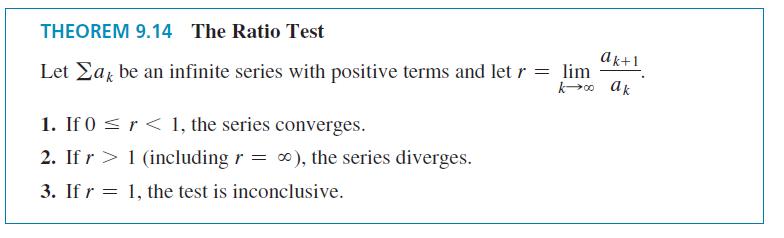
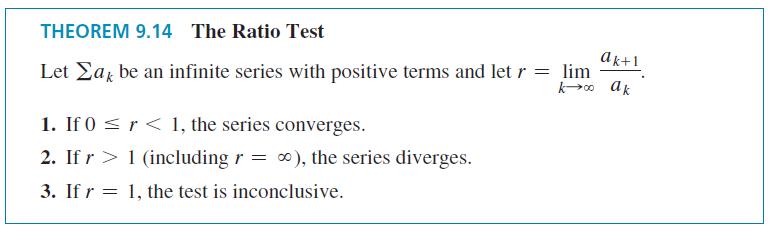
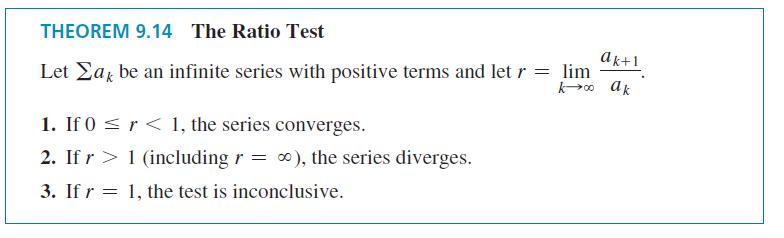
Use the Ratio Test to determine whether the following series converge.Data from in Ratio Test 00 k42-k k=1
Use the Root Test to determine whether the following series converge.Data from in Root Test 00 2 k=1 2k
Use the Divergence Test to determine whether the following series diverge or state that the test is inconclusive.Data from in Divergence Test 00 k=1 3 k!
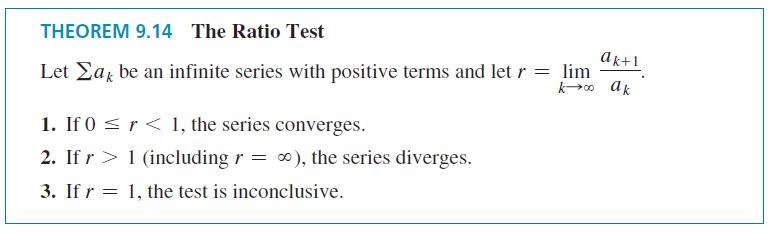
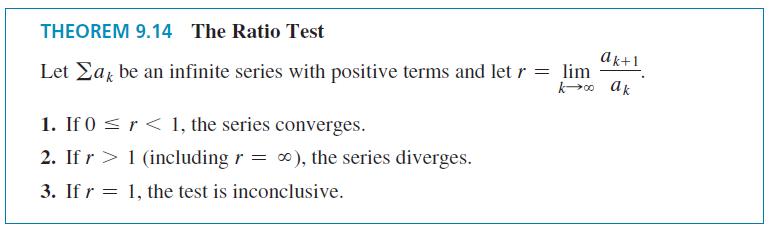
Use the Ratio Test to determine whether the following series converge.Data from in Ratio Test 00 k=1 (k!)² (2k)!
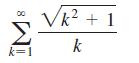
Use the Divergence Test to determine whether the following series diverge or state that the test is inconclusive.Data from in Divergence Test Vk² + 1
Use the Divergence Test to determine whether the following series diverge or state that the test is inconclusive.Data from in Divergence Test 00 Σκακ k=1
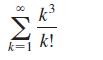
Use the Ratio Test to determine whether the following series converge.Data from in Ratio Test 8 00 k=1 k6 k!
Use the Ratio Test to determine whether the following series converge.Data from in Ratio Test 00 2k k 99 k=1
Evaluate the following geometric sums. + 1 4 12 1 36 + 1 + 108 1 2916
Use the Divergence Test to determine whether the following series diverge or state that the test is inconclusive.Data from in Divergence Test k=2 Vk In 10 k
Use the Ratio Test to determine whether the following series converge.Data from in Ratio Test 8 00 k=1 k! | kk
Explain why computation alone may not determine whether a series converges.
For what values of p does the seriesconverge? For what values of p does it diverge? 00 k=1 1 kp
Showing 1300 - 1400
of 8578
First
7
8
9
10
11
12
13
14
15
16
17
18
19
20
21
Last
Step by Step Answers

 Get 50% OFF
Claim Now
Get 50% OFF
Claim Now