New Semester
Started
Get
50% OFF
Study Help!
--h --m --s
Claim Now
Question Answers
Textbooks
Find textbooks, questions and answers
Oops, something went wrong!
Change your search query and then try again
S
Books
FREE
Study Help
Expert Questions
Accounting
General Management
Mathematics
Finance
Organizational Behaviour
Law
Physics
Operating System
Management Leadership
Sociology
Programming
Marketing
Database
Computer Network
Economics
Textbooks Solutions
Accounting
Managerial Accounting
Management Leadership
Cost Accounting
Statistics
Business Law
Corporate Finance
Finance
Economics
Auditing
Tutors
Online Tutors
Find a Tutor
Hire a Tutor
Become a Tutor
AI Tutor
AI Study Planner
NEW
Sell Books
Search
Search
Sign In
Register
study help
mathematics
precalculus 1st
Calculus For Scientists And Engineers Early Transcendentals 1st Edition William L Briggs, Bernard Gillett, Bill L Briggs, Lyle Cochran - Solutions
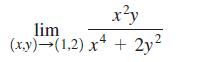
Evaluate the following limits or determine that they do not exist. x²y lim (x,y) (1,2) x² + 2y² x4
Find the values of ℓ and g with ℓ ≥ 0 and g ≥ 0 that maximize the following utility functions subject to the given constraints. Give the value of the utility function at the optimal point. U = f(l,g) = 322/3g¹/3 subject to 4€ + 2g = 12
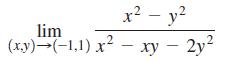
Evaluate the following limits or determine that they do not exist. x² - y² lim (x,y)-(-1,1) x² - xy - 2y² 2
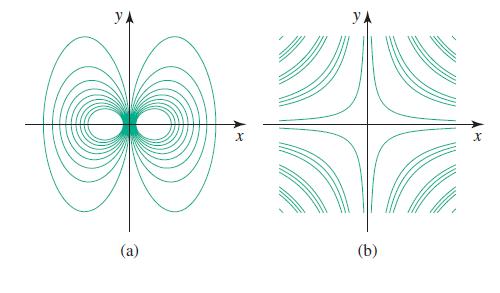
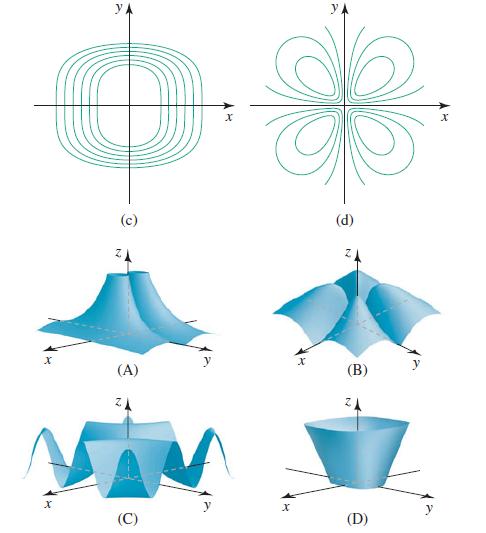
Match level curve plots a–d with surfaces A–D. (a) X (b) X
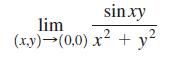
Evaluate the following limits or determine that they do not exist. sin.xy lim (x,y) (0,0) x² + y²
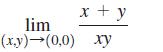
Evaluate the following limits or determine that they do not exist. lim (x,y) → (0,0) x + y xy ху
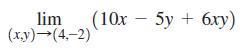
Evaluate the following limits or determine that they do not exist. lim (x,y) →(4,-2) (10x - 5y + 6xy)
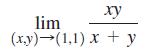
Evaluate the following limits or determine that they do not exist. ху lim (x,y) (1,1) x + y
Describe and sketch a region that is bounded above and below by two curves.
Make a sketch of several level curves of the following functions. Label at least two level curves with their z-values. f(x, y) = 2x² + 4y²
Use Lagrange multipliers in the following problems. When the domain of the objective function is unbounded or open, explain why you have found an absolute maximum or minimum value.Find the dimensions of a right circular cylinder of maximum volume that can be inscribed in a sphere of radius 16.
Make a sketch of several level curves of the following functions. Label at least two level curves with their z-values. f(x, y) = x² - y
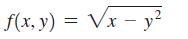
Find the domain of the following functions. Make a sketch of the domain in the xy-plane. f(x, y) = √x - y²
Use Lagrange multipliers in the following problems. When the domain of the objective function is unbounded or open, explain why you have found an absolute maximum or minimum value.Find the minimum and maximum distances between the sphere x2 + y2 + z2 = 9 and the point (2, 3, 4).
Find the domain of the following functions. Make a sketch of the domain in the xy-plane. f(x, y) = tan (x + y)
Use Lagrange multipliers in the following problems. When the domain of the objective function is unbounded or open, explain why you have found an absolute maximum or minimum value.Find the points on the cone z2 = x2 + y2 closest to the point (1, 2, 0).
Use Lagrange multipliers to find the maximum and minimum values of f (when they exist) subject to the given constraint. f(x, y, z) = (xyz)¹/² subject to x + y + z = 1 with x ≥ 0, y ≥ 0, z ≥ 0
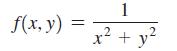
Find the domain of the following functions. Make a sketch of the domain in the xy-plane. f(x, y) = 1 2 x² + y²
Use Lagrange multipliers in the following problems. When the domain of the objective function is unbounded or open, explain why you have found an absolute maximum or minimum value.Find the point on the surface 4x + y - 1 = 0 closest to the point (1, 2, -3).
Use Lagrange multipliers to find the maximum and minimum values of f (when they exist) subject to the given constraint. 2 f(x, y, z) = x² + y² + z² subject to xyz = 4
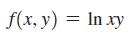
Find the domain of the following functions. Make a sketch of the domain in the xy-plane. f(x, y) = In xy
Use Lagrange multipliers in the following problems. When the domain of the objective function is unbounded or open, explain why you have found an absolute maximum or minimum value.Find the point on the plane 2x + 3y + 6z - 10 = 0 closest to the point (-2, 5, 1).
Use Lagrange multipliers in the following problems. When the domain of the objective function is unbounded or open, explain why you have found an absolute maximum or minimum value.Find the dimensions of the rectangle of maximum perimeter with sides parallel to the coordinate axes that can be
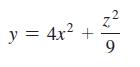
Consider the surfaces defined by the following equations.a. Identify and briefly describe the surface.b. Find the xy-, xz-, and yz-traces, if they exist.c. Find the intercepts with the three coordinate axes, if they exist.d. Make a sketch of the surface. У y = 4x2 + 2 Z 9
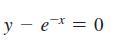
Consider the surfaces defined by the following equations.a. Identify and briefly describe the surface.b. Find the xy-, xz-, and yz-traces, if they exist.c. Find the intercepts with the three coordinate axes, if they exist.d. Make a sketch of the surface. yet = 0
Use Lagrange multipliers in the following problems. When the domain of the objective function is unbounded or open, explain why you have found an absolute maximum or minimum value.Find the dimensions of the rectangle of maximum area with sides parallel to the coordinate axes that can be inscribed
Use Lagrange multipliers to find the maximum and minimum values of f (when they exist) subject to the given constraint. f(x, y, z) = x² + y² - z subject to z z subject to z = 2x²y² + 1
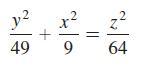
Consider the surfaces defined by the following equations.a. Identify and briefly describe the surface.b. Find the xy-, xz-, and yz-traces, if they exist.c. Find the intercepts with the three coordinate axes, if they exist.d. Make a sketch of the surface. y² 49 x² 9 || 64
Use Lagrange multipliers in the following problems. When the domain of the objective function is unbounded or open, explain why you have found an absolute maximum or minimum value.Find the minimum and maximum distances between the ellipse x2 + xy + 2y2 = 1 and the origin.
Use Lagrange multipliers to find the maximum and minimum values of f (when they exist) subject to the given constraint. f(x, y, z) = 2x + z² subject to x² + y² + 2z² = 25
Use Lagrange multipliers in the following problems. When the domain of the objective function is unbounded or open, explain why you have found an absolute maximum or minimum value.Find the rectangular box with a volume of 16 ft3 that has minimum surface area.
Use Lagrange multipliers to find the maximum and minimum values of f (when they exist) subject to the given constraint. f(x, y, z) = x + y + z subject to x² + y² + z² - 2x - 2y = 1
Use Lagrange multipliers in the following problems. When the domain of the objective function is unbounded or open, explain why you have found an absolute maximum or minimum value.A shipping company requires that the sum of length plus girth of rectangular boxes must not exceed 108 in. Find the
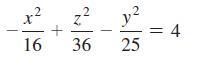
Consider the surfaces defined by the following equations.a. Identify and briefly describe the surface.b. Find the xy-, xz-, and yz-traces, if they exist.c. Find the intercepts with the three coordinate axes, if they exist.d. Make a sketch of the surface. 2 + 16 36 1 25 = 4
Use Lagrange multipliers to find the maximum and minimum values of f (when they exist) subject to the given constraint. f(x, y, z) = xyz subject to x² + 2y2 + 4z² = 9
Use Lagrange multipliers to find the maximum and minimum values of f (when they exist) subject to the given constraint. f(x, y, z) = x z subject to x² + y² + z²y = 2
Use Lagrange multipliers to find the maximum and minimum values of f (when they exist) subject to the given constraint. f(x, y, z) = x subject to x² + y² + z² x2 y2 = 1 z
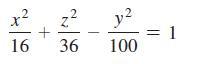
Consider the surfaces defined by the following equations.a. Identify and briefly describe the surface.b. Find the xy-, xz-, and yz-traces, if they exist.c. Find the intercepts with the three coordinate axes, if they exist.d. Make a sketch of the surface. x² z² 16 36 y² 100 = 1
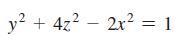
Consider the surfaces defined by the following equations.a. Identify and briefly describe the surface.b. Find the xy-, xz-, and yz-traces, if they exist.c. Find the intercepts with the three coordinate axes, if they exist.d. Make a sketch of the surface. y² + 4z² - 2x² = 1
Use Lagrange multipliers to find the maximum and minimum values of f (when they exist) subject to the given constraint. f(x, y, z) = x + 3y - z subject to x² + y² + z² = 4
Use Lagrange multipliers to find the maximum and minimum values of f (when they exist) subject to the given constraint. f(x, y) = xy + x + y subject to x²y² = 4
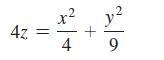
Consider the surfaces defined by the following equations.a. Identify and briefly describe the surface.b. Find the xy-, xz-, and yz-traces, if they exist.c. Find the intercepts with the three coordinate axes, if they exist.d. Make a sketch of the surface. A 9 + || 4 4z
Use Lagrange multipliers to find the maximum and minimum values of f (when they exist) subject to the given constraint. f(x, y) = y² 4x² subject to x² + 2y² = 4
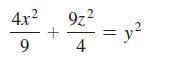
Consider the surfaces defined by the following equations.a. Identify and briefly describe the surface.b. Find the xy-, xz-, and yz-traces, if they exist.c. Find the intercepts with the three coordinate axes, if they exist.d. Make a sketch of the surface. 42 9 9z² 4 ܐy =
Use Lagrange multipliers to find the maximum and minimum values of f (when they exist) subject to the given constraint. f(x, y) = x² + y² subject to x6 + y = 1
Use Lagrange multipliers to find the maximum and minimum values of f (when they exist) subject to the given constraint. f(x, y) = x - y subject to x² + y² - 3xy = 20
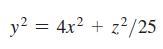
Consider the surfaces defined by the following equations.a. Identify and briefly describe the surface.b. Find the xy-, xz-, and yz-traces, if they exist.c. Find the intercepts with the three coordinate axes, if they exist.d. Make a sketch of the surface. y² = 4x² + z²/25
Use Lagrange multipliers to find the maximum and minimum values of f (when they exist) subject to the given constraint. f(x, y) = e2y subject to x² + y2 16
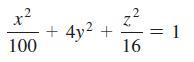
Consider the surfaces defined by the following equations.a. Identify and briefly describe the surface.b. Find the xy-, xz-, and yz-traces, if they exist.c. Find the intercepts with the three coordinate axes, if they exist.d. Make a sketch of the surface. X x2 100 + 4y² + 2 16 = 1
Use Lagrange multipliers to find the maximum and minimum values of f (when they exist) subject to the given constraint. f(x, y) = xy subject to x² + y² - xy = 9
Use Lagrange multipliers to find the maximum and minimum values of f (when they exist) subject to the given constraint. f(x, y) = x² + y² subject to 2x² + 3xy + 2y² = 7
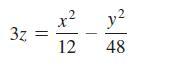
Consider the surfaces defined by the following equations.a. Identify and briefly describe the surface.b. Find the xy-, xz-, and yz-traces, if they exist.c. Find the intercepts with the three coordinate axes, if they exist.d. Make a sketch of the surface. 3z = 12 y² 48
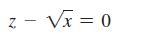
Consider the surfaces defined by the following equations.a. Identify and briefly describe the surface.b. Find the xy-, xz-, and yz-traces, if they exist.c. Find the intercepts with the three coordinate axes, if they exist.d. Make a sketch of the surface. z = √x = 0
Use Lagrange multipliers to find the maximum and minimum values of f (when they exist) subject to the given constraint. f(x, y) = x + y subject to x2 - xy + y² = 1
Find an equation of the line that forms the intersection of the following planes Q and R. Q: 2x + y z = 0, R: -x + y + z = 1
Find an equation of the line that forms the intersection of the following planes Q and R. Q: -3x + y + 2z = 0, R: 3x + 3y + 4z - 12 = 0
Use Lagrange multipliers to find the maximum and minimum values of f (when they exist) subject to the given constraint. f(x, y) = x + 2y subject to x² + y² = 4
Find an equation of the following planes.The plane passing through (-2, 3, 1), (1, 1, 0), and (-1, 0, 1)
Find an equation of the following planes.The plane passing through (2, -3, 1) normal to the line (x, y, z) = (2 + t, 3t, 2 - 3t)
Evaluate the following limits or determine that they do not exist. lim (x.y.z)→(50.) 4 cos y sin Vxz
Find the values of ℓ and g with ℓ ≥ 0 and g ≥ 0 that maximize the following utility functions subject to the given constraints. Give the value of the utility function at the optimal point. U = f(l,g) = (¹/65/6 subject to 4€ + 5g = 20
Find the values of ℓ and g with ℓ ≥ 0 and g ≥ 0 that maximize the following utility functions subject to the given constraints. Give the value of the utility function at the optimal point. U = f(l,g) = 8l4/5g1/5 subject to 10€ + 8g 40
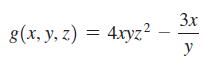
Find the first partial derivatives of the following functions. g(x, y, z) = 4xyz² 3x y
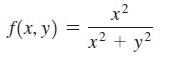
Find the first partial derivatives of the following functions. f(x, y) = x² x² + y² 2
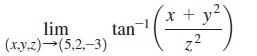
Evaluate the following limits or determine that they do not exist. lim (x,y,z)→(5,2,-3) tan (x + y²) z² 2
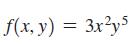
Find the first partial derivatives of the following functions. f(x, y) = 3x²y5
Find the first partial derivatives of the following functions. g(u, v) = u cos v - v sin u
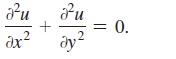
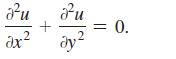
Verify that the following functions satisfy Laplace’s equation a²u + = 0. ах dy² 2 2
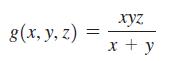
Find the first partial derivatives of the following functions. g(x, y, z) xyz x + y
Find the absolute maximum and minimum values of the following functions over the given regions R. Use Lagrange multipliers to check for extreme points on the boundary. f(x, y) = x² + 4y² + 1; R = {(x, y): x² + 4y² ≤ 1}
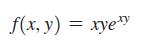
Find the first partial derivatives of the following functions. f(x, y): = xyety
Find the absolute maximum and minimum values of the following functions over the given regions R. Use Lagrange multipliers to check for extreme points on the boundary. f(x, y) = x² - 4y² + xy; R = {(x, y): 4x² +9y² ≤ 36}
Find the first partial derivatives of the following functions. f(x, y, z)= ex+2y+3z
Find the absolute maximum and minimum values of the following functions over the given regions R. Use Lagrange multipliers to check for extreme points on the boundary. f(x, y) = 2x² + y² + 2x - 3y; R = {(x, y): x² + y² ≤ 1}
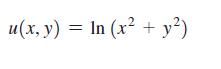
Verify that the following functions satisfy Laplace’s equation a²u + = 0. ах dy² 2 2
Find the first partial derivatives of the following functions. H(p, q, r) p²Vq + r
Compute the gradient of the following functions, evaluate it at the given point, and evaluate the directional derivative at that point in the given direction. g(x,y) = x²y; (-1, 1); u = g 5 12 13' 13/
Find the absolute maximum and minimum values of the following functions over the given regions R. Use Lagrange multipliers to check for extreme points on the boundary. f(x, y) = - (x − 1)² + (y + 1)²; R = {(x, y): x² + y² ≤ 4}
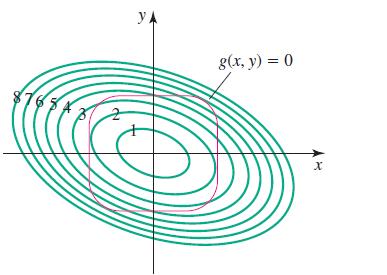
The following figures show the level curves of f and the constraint curve g(x, y) = 0. Estimate the maximum and minimum values of f subject to the constraint. At each point where an extreme value occurs, indicate the direction of ∇f and a possible direction of ∇g. УА g(x,y) = 0 X
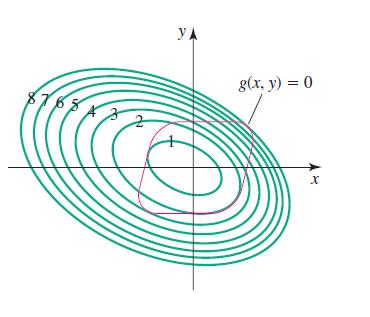
The following figures show the level curves of f and the constraint curve g(x, y) = 0. Estimate the maximum and minimum values of f subject to the constraint. At each point where an extreme value occurs, indicate the direction of ∇f and a possible direction of ∇g. 0 = (x)8 УА 87
Compute the gradient of the following functions, evaluate it at the given point, and evaluate the directional derivative at that point in the given direction. - ( √/2 √2) V2 f(x, y) = x²; (1, 2); u =
Compute the gradient of the following functions, evaluate it at the given point, and evaluate the directional derivative at that point in the given direction. f(x, y) = X 42: (0, 3); u = (23.1)
Compute the gradient of the following functions, evaluate it at the given point, and evaluate the directional derivative at that point in the given direction. h(x, y) = √2 + x² + 2y²; (2, 1); u = 34 5' 5,
a. Find the unit vectors that give the direction of steepest ascent and steepest descent at P.b. Find a unit vector that points in a direction of no change. f(x, y) = √4x² - y²; P(-1, 1)
Compute the gradient of the following functions, evaluate it at the given point, and evaluate the directional derivative at that point in the given direction. f(x, y, z) = xy + yz + xz + 4; (2,–2, 1); u = ( 0, = (0₁- VZ V2/
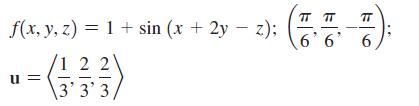
Compute the gradient of the following functions, evaluate it at the given point, and evaluate the directional derivative at that point in the given direction. f(x, y, z) = 1 + sin(x + 2y - z); 1 2 2 3'3' 3, u= TT TT 66 7 6
a. Find the unit vectors that give the direction of steepest ascent and steepest descent at P.b. Find a unit vector that points in a direction of no change. f(x, y) = ln (1 + xy); P(2, 3) In
Find an equation of the plane tangent to the following surfaces at the given points. x² + y² 4 z² 9 1; (0,2,0) and 1, 1, d (1.1.²)
Let f(x, y) = 8 - 2x2 - y2. For the following level curves f(x, y) = C and points (a, b), compute the slope of the line tangent to the level curve at (a, b) and verify that the tangent line is orthogonal to the gradient at that point. f(x, y) = 5; (a, b) = (1, 1)
Let f(x, y) = 8 - 2x2 - y2. For the following level curves f(x, y) = C and points (a, b), compute the slope of the line tangent to the level curve at (a, b) and verify that the tangent line is orthogonal to the gradient at that point. f(x, y) = 0; (a, b) = (2,0)
Find an equation of the plane tangent to the following surfaces at the given points. yzez 8 = 0; (0, 2, 4) and (0,-8,-1)
Find an equation of the plane tangent to the following surfaces at the given points. z = 2x² + y²; (1, 1, 3) and (0, 2, 4)
Find an equation of the plane tangent to the following surfaces at the given points. z = x²ex-; (2,2, 4) and (-1,-1, 1)
Find an equation of the plane tangent to the following surfaces at the given points. п 0; (1, 2, #7) am³ (2., 1.5=) and -2,-1,- 6, 6 xy sin z 1 = 0;
Identify the critical points of the following functions. Then determine whether each critical point corresponds to a local maximum, local minimum, or saddle point. State when your analysis is inconclusive. Confirm your results using a graphing utility. f(x, y) = x² + y4 16xy -
Find an equation of the plane tangent to the following surfaces at the given points. z = ln (1 + xy); (1, 2, In 3) and (-2,-1, In 3)
Identify the critical points of the following functions. Then determine whether each critical point corresponds to a local maximum, local minimum, or saddle point. State when your analysis is inconclusive. Confirm your results using a graphing utility. f(x, y) = x³/3y³/3 + 2xy
a. Find the linear approximation (the equation of the tangent plane) at the point (a, b).b. Use part (a) to estimate the given function value. f(x, y) = 4 cos (2x - y); (a, b) = ㅠㅠ 4 4 ; estimate f(0.8, 0.8).
a. Find the linear approximation (the equation of the tangent plane) at the point (a, b).b. Use part (a) to estimate the given function value. f(x, y) = (x + y)e; (a, b) = (2,0); estimate f(1.95, 0.05).
Identify the critical points of the following functions. Then determine whether each critical point corresponds to a local maximum, local minimum, or saddle point. State when your analysis is inconclusive. Confirm your results using a graphing utility. f(x, y) = xy(2 + x)(y - 3)
Showing 700 - 800
of 8578
1
2
3
4
5
6
7
8
9
10
11
12
13
14
15
Last
Step by Step Answers

 Get 50% OFF
Claim Now
Get 50% OFF
Claim Now