New Semester
Started
Get
50% OFF
Study Help!
--h --m --s
Claim Now
Question Answers
Textbooks
Find textbooks, questions and answers
Oops, something went wrong!
Change your search query and then try again
S
Books
FREE
Study Help
Expert Questions
Accounting
General Management
Mathematics
Finance
Organizational Behaviour
Law
Physics
Operating System
Management Leadership
Sociology
Programming
Marketing
Database
Computer Network
Economics
Textbooks Solutions
Accounting
Managerial Accounting
Management Leadership
Cost Accounting
Statistics
Business Law
Corporate Finance
Finance
Economics
Auditing
Tutors
Online Tutors
Find a Tutor
Hire a Tutor
Become a Tutor
AI Tutor
AI Study Planner
NEW
Sell Books
Search
Search
Sign In
Register
study help
mathematics
numerical analysis
Numerical Methods For Engineers 5th Edition Steven C. Chapra, Raymond P. Canale - Solutions
Determine the number of terms necessary to approximate cos x to 8 significant figure using the Maclaurin series approximation Calculate the approximation using a value of x = 0.3?. Write a program to determine your result.
Use 5-digit arithmetic with chopping to determine the roots the following equation with Eqs. (3.12) and (3.13) X2 – 5000.002 x + 10. Compute percent relative errors for your results.
How can the machine epsilon be employed to formulate a stopping criterion εs for your program? Provide an example.
The following infinite series can be used to approximate ex?: (a) Prove that this Maclaurin series expansion is a special case of the Taylor series expansion [(Eq. (4.7)] with xi?= 0 and h = x (b) Use the Taylor series to estimate ?(x) = e?x at xi+1 = 1 for xi = 0.2. Employ the zero-, first-,
The Maclaurin series expansion for cos x is Starting with the simplest version, cos x = 1, add terms one at a time to estimate cos (?/3). After each new term is added, compute the-true and approximate percent relative errors. Use your pocket calculate to determine the true value. Add terms until
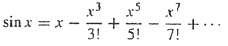
Perform the same computation as in Prob. 4.2, but use the Maclaurin series expansion for the sin x to estimate sin (?/3).
Use zero- through third-order Taylor series expansions to predict ƒ (3) forf(x) = 25x3 – 6x2 + 7x – 88Using a base point at x = 1. Compute the true percent relative error εt for each approximation.
Use zero-through fourth-order Taylor series expansion to predict ƒ(2.5) for ƒ(x) = In x using a base point at x = 1. Compute the true percent relative error εt for each approximation. Discuss the meaning of the results.
Use forward and backward difference approximations of O(h) and a centered differences approximation of O(h2) to estimate the first derivative of the function examined in Prob. 4.4.Evaluate the derivative at x = 2 using a step size of h = 0.2. Compare your results with the true value of the
Use a centered difference approximation of O(h2) to estimate the second derivative of the function examined in Prob.4.4. Perform the evaluation at x = 2 using step sizes of h = 0.25 and 0.125. Compare your estimates with the true value of the second derivative. Interpret your results on the basis
Recall that the velocity of the falling parachutist can be computed by [Eq. (1.10)], v(t) = 8m/c (1
Repeat Prob. 4.8 with g = 9.8, t = 6, c = 12.5 ± 1.5, and m = 50 ± 2.
The Stefan-Boltzmann law can be employed to estimate the rate of radiation of energy H from a surface, as in H = AeσT4. Where H is in watts, A = the surface area (m2), e = emissivity that characterizes the emitting properties of the surface (dimensionless), σ = a universal constant called
Repeat Prob. 4.10 but for a copper sphere with radius = 0.15 ± 0.01 m, e = 0.90 ± 0.05, and T = 550 ± 20.
Evaluate and interpret the condition numbersfor
Employing ideas from sec, 4.2 derive the relationships from Table 4.3.
Prove the Eq. (4.4) is exact for all values of x if ƒ(x) = ax2 + bx + c
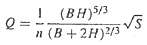
Manning??s formula for a rectangular channel can be written as Where Q = flow (m3/s), n = a roughness coefficient, B = width (m), H = depth (m), and S = slope. You are applying this formula to a stream where you know that the width = 20 m and the depth = 0.3 m. Unfortunately, you know the
If |x| < 1, it is known that 1/1 – x = 1 + x + x2 + x3 + . . .Repeat Prob. 4.2 for this series for x = 0.1.
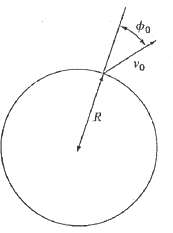
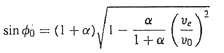
A missile leaves the ground with an initial velocity ?0?forming an angle ?0?with the vertical as shown in figure The maximum desired altitude is ?R where R is the radius of the earth. The laws of mechanics can be used to show that Where ??e = the escape velocity of the missile. It is desired to
To calculate a planet’s space coordinate, we have to solve the function f(x) = x – 1 – 0.5 sin x Let the base point be α = xi = π/2 on the interval [0, π]. Determine the highest-order Taylor series expansion resulting in a maximum error of 0.015 on the specified interval. The error is
Consider the function ƒ(x) = x3 – 2x + 4 on the interval [–2, 2] with h = 0.25. Use the forward, backward, and centered finite difference approximations for the first and second derivatives so as to graphically illustrate which approximation is most accurate. Graph all three first derivative
Determine the real roots of ƒ(x) = – 0.5x2 + 2.5x + 4.5:(a) Graphically.(b) Using the quadratic formula.(c) Using the iteration of the bisection method to determine the highest root. Employ initial guesses of xl = 5 and xu = 10. Compute the estimated error εa and the true
Determine the real root of ƒ(x) = 5x3 – 5x2 + 6x – 2:(a) Graphically(b) Using bisection to located the root. Employ initial guesses of xt = 0 and xu = 1 and iterate until the estimated error εa falls below a level of εs = 10%.
Determine the real root of ƒ(x) = – 25 + 82x – 90x2 + 44x3 – 8x4 + 0.7x5:(a) Graphically.(b) Using bisection to determine the root to εs = 10%. Employ initial guesses of xt = 0.5 and xu = 1.0(c) Perform the same computation as in (b) but use the false-position method and εs = 0.2 %.
(a) Determine the roots of ƒ (x) = – 12 – 21x + 18x2 -2.75x3 graphically. In addition, determine the first root of the function with(b) Bisection, and(c) False position. For (b) and (c) use initial guesses of xt = – 1 and xu = 0, and a stopping criterion of 1 %
Locate the first nontrivial root of sin x = x3, where x is in radians. Use a graphical technique and bisection with the initial interval from 0.5 to 1. Perform the computation until εa is less than εs = 2%. Also perform an error check by substituting your final answer into the original equation.
Determine the positive real root of in (x4) = 0.7(a) Graphically,(b) Using three iterations of the bisection method, with initial guesses of xt = 0.5 and xu = 2, and(c) Using three iterations of the false-position method, with the same initial guesses as in (b).
Determine the real root of ƒ (x) = (0.8 – 0.3 x) / x:(a) Analytically.(b) Graphically.(c) Using there iterations of the false-position method and initial guesses of 1 and 3. Compute the approximate error εa and the true error εt after each iteration. Is there a problem with the result?
Find the positive square root of 18 using the false-position method to within εs = 0.5%. Employ initial guesses of xl = 4 and xu = 5.
Find the smallest positive root of the function (x is in radians) x2 |cos √x| = 5 using the false-position method. To locate the region in which the root lies, first plot this function for values of x between 0 and 5. Perform the computation until εa falls below εs = 1%. Check your final answer
Find the positive real root of ƒ (x) = x4 – 8x3 – 35x2 + 450x – 1001 using the false-position method. Use initial guesses of xt = 4.5 and xa = 6 and performs five iterations. Compute both the true and approximate errors based on the fact that the root is 5.60979. Use a plot to explain
Determine the real root of x3.5 = 80:(a) Analytically, and(b) With the false-position method to within εs = 2.5 %. Use initial guesses of 2.0 and 5.0
Given f(x) = – 2x6 – 1.5 x4 + 10 x + 2. Use bisection to determine the maximum of this function. Employ initial guesses of xt = 0 and perform iterations until the approximate relative error falls below 5%.
The velocity υ of a falling parachutist is given by v = gm/c (1 – e – (c/m)t). Where g = 9.8 m/s2. For a parachutist with a drag coefficient c = 15 kg/s, compute the mass m so that the velocity is υ = 35, m/s at t = 9 s. Use the false-position method to determine m to a level of εs =
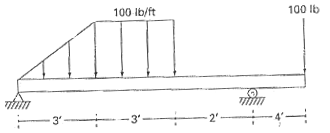
A beam is loaded as shown in figure. Use the bisection method to solve for the position inside the beam where there is nomoment.
Water is flowing in a trapezoidal channel at a rate of Q = 20 m3/s. The critical depth y for such channel must satisfy the equation 0 = 1 – Q2/gA3c B. Where g = 9.81 m/s2, Ac = the cross-sectional area (m2), and B = the width of the channel at the surface (m). For this case, the width and the
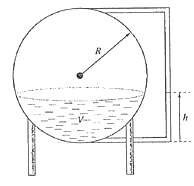
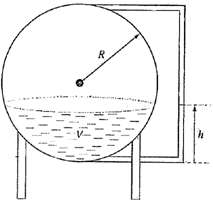
You are designing a spherical tank Figure to hold water for a small village in a developing country. The volume of liquid it can hold can be computed as V = ?h2 [3R - h]/3 2. Where V = volume [m3], h = depth of water in tank [m], and R = the tank radius [m]. If R = m, to what depth must the tank
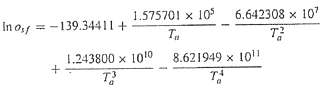
The saturation concentration of dissolved oxygen in fresh-water can be calculate with the equation Where Os??= the saturation concentration of dissolved oxygen in freshwater at l atm (mg/L) and Ta?= absolute temperature (K). Remember that Ta = T + 273.15, where T = temperature (oC).According to
Integrate the algorithm outlined in Figure into a complete, user-friendly bisection subprogram. Among other things:(a) Place documentation statements throughout the subprogram to identify what each section is intended accomplish.(b) Label the input and output.(c) Add an answer check that
Develop a subprogram for the bisection method that minimizes function evaluations based on the pseudocode from Figure Determine the number of function evaluations (n) per total iterations. Test the program by duplicating Example 5.6.
Develop a user-friendly program for the false-position method. The structure of your program should be similar to the bisection algorithm outlined in Figure. Test the program by duplicating Example 5.5.
Develop a subprogram for the false-position method that minimizes function evaluations in a fashion similar to Figure. Determine the number of function evaluations (n) per total iterations. Test the program by duplicating Example 5.6.
Develop a user-friendly subprogram for the modified false-position method based on Figure. Test the program by determining the root of the function described in Example 5.6. Perform a number of run until the true percent relative error falls below 0.01%. Plot the true and approximate percent
Use simple fixed-point iteration to locate the roof ofƒ(x) = 2 sin(√x) – xUse an initial guess of x0 = 0.5 and iterate until εa ≤ 0.001%. Verify that the process is linearly convergent as described in Box 6.1.
Determine the highest real root ofƒ (x) = 2x3 – 11.7x2 + 17.7x – 5(a) Graphically(b) Fixed-point iteration method (three iterations, x0 = 3). Note: Make certain that you develop a solution that converges on the root.(c) Newton-Raphson method (three iterations, x0 = 3).(d) Secant method (three
Use(a) Fixed-point iteration and(b) The Newton-rapshon method to determine a root of ƒ (x) = - x2 + 1.8x + 2.5 using x0 = 5. Perform the computation until εa is less than εs = 0.05%. Also perform an error check of your final answer.
Determine the real roots of ƒ(x) = - 1 + 5.5x – 4x2 + 0.5x3:(a) Graphically and(b) Using the Newton-Raphson method to within εs = 0.01%.
Employ the Newton-Raphson method to determine a real root for ƒ(x) = - 1 + 5.5x – 4x2 + 0.5x3 using initial guesses of(a) 4.52 and(b) 4.54. Discuss and use graphical and analytical methods to explain any peculiarities in your results.
Determine the lowest real root of ƒ(x) = -12 – 21x + 18x2 – 2.4x3:(a) Graphically and(b) Using the secant method to a value of εs corresponding to three significant Figure.
Locate the first positive root ofƒ(x) = sin x + cos(1 + x2) – 1Where x is in radians, use four iterations of the secant method with initial guesses of(a) xi-1 = 1.0 and xi = 3.0;(b) xi-l = 1.5 and xi = 2.5, and(c) xi-l = 1.5 and xi = 2.5 to locate the root.(d) Using the graphical method to
Determine the real root of x3.5 = 80, with the modified secant method to within εs = 0.1% using an initial guess of x0 = 3.5 and δ = 0.01.
Determine the highest real root of ƒ(x) = 0.95x3 – 5.9x2 + 10.9x - 6:(a) Graphically.(b) Using the Newton-Raphson method (three iterations, xi = 3.5).(c) Using the secant method (three iterations, xi-l = 2.5 and xi = 3.5).(d) Using the modified secant method (three iterations, xi = 3.5, δ =
Determine the lowest positive root of ƒ(x) = 8 sin(x) e-x – 1:(a) Graphically.(b) Using the Newton-Raphson method (three iterations, xi = 0.3).(c) Using the secant method (three iterations, xi-l = 0.5 and xi = 0.4).(d) Using the modified secant method (five iterations, xi = 0.3, δ = 0.01).
The function x3 – 2x2 – 4x + 8 has a double root at x = 2. Use(a) The standard Newton-Raphson [Eq. (6.6)],(b) The modified Newton-Raphson [Eq. (6.9a)], and(c) The modified Newton-Raphson [Eq. (6.13)] to solve for the root at x = 2. Compare and discuss the rate of convergence using an initial
Determine the roots of the following simultaneous nonlinear equations using(a) Fixed-point iteration and(b) The Newton-Raphson method:y' = – x2 + x + 0.75y + 5xy = x2Employ initial guesses of x = y = 1.2 and discuss the results.
Determine the roots of the simultaneous nonlinear equations (x – 4)2 + (y – 4)2 = 5, x2 + y2 = 16. Use a graphical approach to obtain your initial guesses. Determine refined estimates with the two-equation Newton-Raphson method described in Sec. 6.5.2.
Repeat Prob. 6.13 except for y = x2 + 1, y = 2 cos x
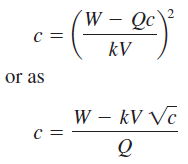
A mass balance for a pollutant in a well-mixed lake can be written as V dc/dt – W – Qc - kV√c. Given the parameter values V = 1 x 10⁶m3, Q = 1 x 10⁵ m3/yr, W = l x 106 g/yr, and k = 0.25 m0.5/g0.5/yr, use the modified secant method to solve for the steady-state concentration. Employ an
For Prob. 6.15, the root can be located with fixed-point iteration as Only one will converge for initial guesses of 2 < c < 6. Select the correct one and demonstrate why it will always work.
Develop a user-friendly program for the Newton-Raphson method based on Figure and sec. 6.2.3. Test it by duplicating the computation from Example 6.3.
Develop a user-friendly program for the secant method based on Figure and sec. 6.3.2. Test it by duplicating the computation from Example 6.6.
Develop a user-friendly program for the modified secant method based on Figure and sec. 6.3.2. Test it by duplicating the computation from Example 6.8.
Develop a user-friendly program for the two-equation Newton-Raphson method based on sec. 6.5. Test it by soling Example 6.10.
Use the program you developed in Prob. 6.20 to solve Probs.6.12 and 6.13 to within a tolerance of εs = 0.01%.
The “divide and average” methods, an old-time method for approximating the square root of any positive number α; can be formulated as x = x + a/x/2. Prove that this is equivalent to the Newton-Raphson algorithm.
(a) Apply the Newton-Raphson method to the function ƒ(x) = tanh(x2 – 9) to evaluate its known real root at x = 3. Use an initial guess of x0 = 3.1 and take a minimum of four iteration.(b) Did the method exhibit convergence onto its real root? Sketch the plot with the results for each iteration
The polynomial ƒ(x) = 0.0074x4 – 0.284x3 + 3.355x2 – 12.183x + 5 has a real root between 15 and 20. Apply the Newton Raphson method to this function using an initial guess of x0 = 16.15. Explain your results.
Use the secant method on the circle function (x + 1)2 + (y – 2)2 = 16 to find a positive real root. Set your initial guess to xi = 3 and xi-1 = 0.5. Approach the solution from the first and fourth quadrants. When solving for ƒ(x) in the fourth quadrants, be sure to take the negative value of the
You are designing a spherical tank (Figure) to hold water for a small village in a developing country. The volume of liquid it can hold can be computed as V = ?h2 [3R + h]/3. Where V = volume [ft3], h = depth of water in tank [ft], and R = the tank redius [ft]. If R = 3 m, what depth must the
Divide a polynomial ƒ(x) = x4 – 7.5x3 + 14.5x2 + 3x – 20 by the monomial factor x – 2. Is x = 2 a root?
Divide a polynomial ƒ(x) = x5 – 5x4 + x3 - 6x2 – 7x + 10 by the monomial factor x –2.
Use Muller’s method to determine the positive real root of(a) ƒ(x) = x3 + x2 - 3x - 5(b) ƒ(x) = x3 – 0.5x2 + 4x – 3
Use Muller’s method or MATLAB to determine the real and complex roots of(a) ƒ(x) = x3 - x2 + 3x - 5(b) ƒ(x) = 2x4 + 6x2 –10(c) ƒ(x) = x4 - 2x3 + 6x2 – 8x + 8
Use Muller’s Bairstow’s method to determine the roots of(a) ƒ(x) = - 2 + 6.2x – 4x2 + 0.7x3(b) ƒ(x) = 9.34 - 21.97x + 16.3x2 - 3.704x3(c) ƒ(x) = x4 - 3x3 + 5x2 – x - 10
Develop a program to implement Muller’s method. Test it by duplicating Example 7.2.
Use the program developed in Prob. 7.6 to determine the real roots of Prob. 7.4a. Construct a graph (by hand or with Excel or some other graphics package) to develop suitable starting guesses.
Develop a program to implement Bairstoe’s method. Test it by duplicating Example 7.3.
Use the program developed in Prob. 7.8 to determine the roots of the equations in Prob. 7.5.
Determine the real roots of x3.5 = 80 with the Goal Seek capability of Excel or a library or package of your choice.
The velocity of a falling parachutist is given byv = 8m/c (1 – e–(e/m)t)Where g = 9.8 m/s2. For a parachutist with a drag coefficient c = 14 kg/s, compute the mass m so that the velocity is υ = 35 m/s at t = 8s. Use the Goal Seek capability of Excel or a library or package of your choice to
Determine the real roots of the simultaneous nonlinear equationsy = – x2 + x + 0.75y + 5xy = x2Employ initial guesses of x = y = 1.2 and use the Solver tool from Excel or a library or package of your choice.
Determine the real roots of the simultaneous nonlinear equations(x – 4)2 + (y – 4)2 = 5x2 + y2 = 16Use a graphical approach to obtain your initial guesses. Determine refined estimates with the Solver tool from Excel or a library or package of your choice.
Perform the identical MATLAB operations as those in Example 7.7 or use a library or package of your choice to find all the roots of the polynomialƒ(x) = (x - 4)(x + 2)(x - 1)(x + 5)(x - 7)Note that the poly function can be used to convert the roots to a polynomial.
Use MATLAB or a library or package of your choice to determine the roots of the equations in Prob. 7.5.
Develop a subprogram to solve for the roots of a polynomial using the IMSL routine, ZREAL or a library or package of your choice. Test it by determining the roots of the equations from probs. 7.4 and 7.5.
A two-dimensional circular cylinder is placed in a high-speed uniform flow. Vortices shed from the cylinder at a constant frequency, and pressure sensors on the rear surface of the cylinder detect this frequency by calculating how often the pressure oscillates. Given three data points, use Muller's
When trying to find the acidity of a solution of magnesium hydroxide in hydrochloric acid, we obtain the following equationA(x) = x3 + 3.5x2 – 40where x is the hydronium ion concentration. Find the hydronium ion concentration for a saturated solution (acidity equals zero) using two different
Consider the following system with three unknowns α, u, and υ:u2 – 2v2 = a2u + v = 2a2 – 2a – u = 0Solve for the real values of the unknown using:(a) The Excel Solver and(b) A symbolic manipulator software package.
In control system analysis, transfer functions are developed that mathematically relate the dynamics of a system?s input to its output. A transfer function for a robotic positioning system is given by Where G(s) = system gain, C(s) = system output, N(s) = system input, and s = Laplace transform
Develop an M-file function for bisection in a similar fashion to Figure. Test the function by duplicating the computations from Example 5.3 and 5.4.
Develop an M-file function for the false-position method. The structure of your function should be similar to the bisection algorithm outlined in Figure. Test the program by duplicating Example 5.5.
Develop an M-file function for the Newton-Raphson method based on Figure and Sec.6.2.3. Along with the initial guess, pass the function and its derivative as arguments. Test it by duplicating the computation from Example 6.3.
Develop an M-file function for the secant method based on Figure. And Sec.6.3.2. Along with the initial guess, pass the function as an argument. Test it by duplicating the computation from Example 6.6.
Develop an M-file function for the modified secant method based on Figure. And Sec, 6, 3, 2. Along with the initial guess and the perturbation fraction, pass the function as an argument. Test it by duplicating the computation from Example 6.8.
Perform the same computation as in Sec. 8.1, but for ethyl alcohol (a = 12.02 and b = 0.08407) at a temperature of 400 K and p of 2.5 atm. Compare your result with the ideal gas law. If possible, use your computer software to determine the molal volume. Otherwise, use any of the numerical methods
In chemical engineering, plug flow reactors (that is, those in witch fluid flows from one end to the other with minimal mixing along the longitudinal axis) are often used to convert reactants into products. It has been determined that the efficiency of the conversion can sometimes be improved by
In a chemical engineering process, water vapor (H2O) is heated to sufficiently high temperature that a significant portion of the water dissociates, or splits apart, to form oxygen (O2) and hydrogen (H2):If it is assumed that this is the only reaction involved, the mole fraction x of H2O that
The following equation pertains to the concentration of a chemical in a completely mixed reactor:If the initial concentration c0 = 5 and the inflow concentration cin = 12, compute the time required for c to be 85 percent of cin
A reversible chemical reaction 2A + B ⇌ C, can be characterized by the equilibrium relationshipK = cc/c2u cbWhere the nomenclature ci represents the concentration of constituent i. Suppose that we define a variable x as representing the number of moles of C that are produced. Conservation of mass
Showing 100 - 200
of 3402
1
2
3
4
5
6
7
8
9
10
11
12
13
14
15
Last
Step by Step Answers

 Get 50% OFF
Claim Now
Get 50% OFF
Claim Now








![1+ R(1 — ХAҫ) R + 1 In R(1 — Хд) RI1 + R(1 — Хд)] - Хдр)1](https://dsd5zvtm8ll6.cloudfront.net/si.question.images/images/question_images/1554/3/5/7/3845ca59c88212361554357386105.jpg)
-2.png)





