New Semester
Started
Get
50% OFF
Study Help!
--h --m --s
Claim Now
Question Answers
Textbooks
Find textbooks, questions and answers
Oops, something went wrong!
Change your search query and then try again
S
Books
FREE
Study Help
Expert Questions
Accounting
General Management
Mathematics
Finance
Organizational Behaviour
Law
Physics
Operating System
Management Leadership
Sociology
Programming
Marketing
Database
Computer Network
Economics
Textbooks Solutions
Accounting
Managerial Accounting
Management Leadership
Cost Accounting
Statistics
Business Law
Corporate Finance
Finance
Economics
Auditing
Tutors
Online Tutors
Find a Tutor
Hire a Tutor
Become a Tutor
AI Tutor
AI Study Planner
NEW
Sell Books
Search
Search
Sign In
Register
study help
business
project management
Project Management In Practice 2nd Edition Neil Pearson, Erik W. Larson, Clifford F. Gray - Solutions
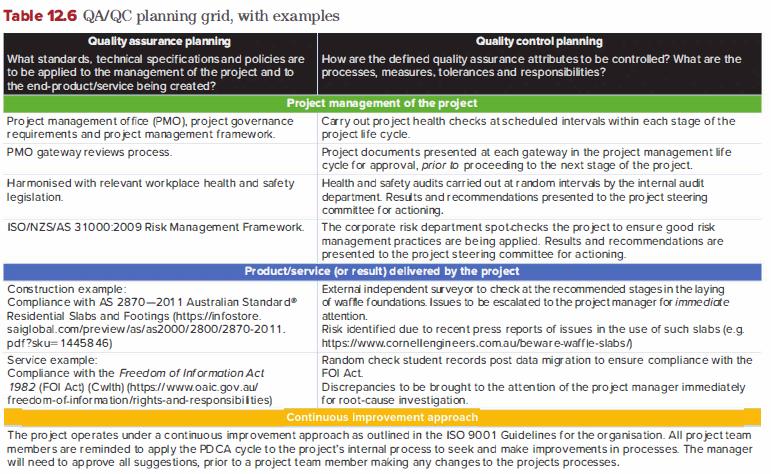
What quality systems and standards exist in your organisation to 1) ensure quality across the project and 2) ensure quality within the products and services produced by your projects?
What is the purpose of the Quality Management Plan?
Which types of tools would be useful for investigating the root cause of a problem?
How can a run chart be used within a project environment?
Explain the process of developing a fishbone diagram.
Using the quality criteria grid from Figure 12. 6, brainstorm key dimensions of quality that are applicable to a project you are currently managing. In doing so, remember to focus on clarifying 'perceptions' of quality (i.e. 'fit for purpose' to tangible criteria of quality).Data from Figure 12. 6
What does a Resource Management Plan highlight the need for, when undertaking resource management?
Provide eight examples of resource categories.
Why is a RASCl useful when organising human resources?
Why is a RAM useful?
What additional project-led information can be useful to a project manager when they are planning human resource needs?
Name three resource identification techniques.
Identify a minimum of four factors that can affect the acquisition of resources.
Why do we monitor and control resources?
What is the resource cycle? Why is it important to the project manager?
How does project resource management present itself in a Scrum (Agile) approach?
Using your class's Case Study (or a live project you are currently working on if you prefer), utilise the RBS and/or WBS, to identify resource requirements.
For the resources identified, build the WBS and define a RAM for the project, allocating who is responsible, accountable, supports, is consulted, and is informed about the work package level of the project.
Discuss in your class group(s) some of the issues you have personally experienced when monitoring and controlling resources in a project you have worked on.
Where do you normally sit on the leadership style continuum?
What should you consider when disbanding a project team or releasing an individual project member?
What is the difference between 'consensus' and 'majority' decision-making? How might each type of decision-making potentially affect project image?
Define 12 questions that you could use at an interview for a project manager that would test their (your!) soft skills and leadership ability.
Review the trust equation video (http://trustedadvisor.com/why-trust-matters/understanding-trust/understandingthetrust-equation) and (using a scale of $1=$ high, $10=$ low) assess where you would place yourself and at least three other (de-identified) stakeholders you may have interacted with
The following activities are to be based on a recently completed group project you have been involved in. This project may have been a student project, a work project or an extracurricular project.(a) Analyse how effectively the group managed meetings. What did the group do well? What did the group
What is the 'network of stakeholders'? Why would you develop one as a project manager?
What is stakeholder co-creation?
What information would be included in a typical Stakeholder Register?
Why is it important to build trust with stakeholders?
What does mapping stakeholders in the Contribution/Commitment Grid enable the project manager to do?
How can organisational change management assist the project manager?
What is the significance of carrying out a detailed stakeholder analysis prior to developing the Communications Matrix?
Define your understanding of project communications management.
What two key models of communication were introduced in this chapter and when would one be preferred over the other?
Why is it important to understand the complexities in lines of communication?
What topics would be addressed within the project Communications Management Plan?
What methods can be used to identify communications?
What is the purpose of the 4 Cs of Truth about Communication and CPORT when writing communications?
What are the four directions of communication the project manager may have to consider when planning communications?
What is a Project Management Information System (PMIS)?
What are non-verbal cues, and why are they important to a project manager?
What is VARK? Why is it important?
Take a postcard-sized envelope, or a half-sheet of A4 paper, and create an elevator pitch (EP) for your group project. Share your pitch with a project team member to gain feedback and then refine the project's EP.
Ask a colleague in the room about the status of a current project they are involved with. Ask them some easy and difficult questions and take note of any non-verbal cues that may reveal their inner thoughts about what is really going on in the project and how they feel about this.
Use the table below to indicate/suggest what type of communication might be the most appropriate in each stated situation. (A response to the first situation is provided by way of an example to help get you started.)SituationYour responseA request for a change to the scope of a work package.The
Think about how having multiple generations in your workplace may affect the way in which communications take place. What (if any) challenges have you experienced when communicating across differing generations and how did you resolve these challenges? Share your observations with a person in the
Why are the WBS and RBS complementary in identifying risk?
What are the parallels between a standard such as ISO 31000:2018 and the Risk Management Plan?
What does the control strategy 'escalate' mean to the project manager?
For a project you are currently involved in: identify and assess major and minor risks that are inherent to the project. Decide on a mitigation strategy, and the residual risk profile. Develop a contingency plan for two to four identified risks. Estimate costs. Assign contingency reserves. How much
The Ashes Cricket Test is occurring in Australia and the project team responsible for planning and hosting the event has identified the following potential risks to their project:(a) umpires failing to show up at designated games(b) fighting between teams(c) pivotal error committed by an umpire
Define your understanding of project procurement.
What is the 'make or buy' decision?
What are the differences between an RFI, RFQ, RFT and RFP tender?
When would a time and materials (T\&M) contract be used?
What is the key difference between a fixed price contract and a cost-reimbursable contract?
What are the key steps involved in a tender process?
What steps can be taken during negotiation to assist in a constructive outcome for all parties involved?
What are some benefits of outsourcing? When is outsourcing likely to be used in a project context?
What considerations should be taken into account when contracting in a Scrum (Agile) project?
In the case of the CLEM7 tunnel example provided (see Snapshot from Practice: CLEM7 tunnel, Brisbane, Australia), what do you think could have been done in the project to better assess potential customer demand for using the tunnel and the toll pricing to be levied?
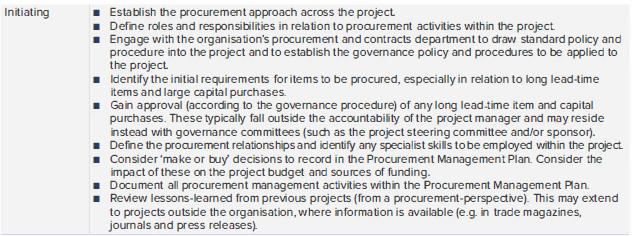
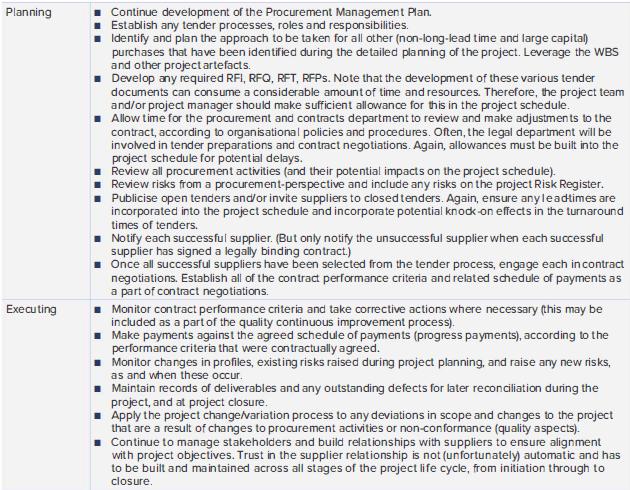
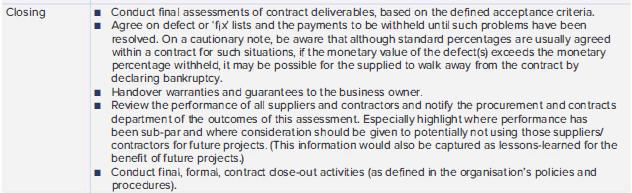
What additional organisation specific activities would you include in the integration of procurement that may not be covered in Table 6. 10: Project procurement integration, in Chapter 6?Data from Table 6. 10 Initiating Establish the procurement approach across the project Define roles and
Reflect back on a recent project you have been involved in which necessitated contractual negotiations. How did the negotiations consider the four essential elements of a contract?
What types of information would you expect to find in a post-implementation review (PIR)?
Why is it important to review supplier and contractor performance?
Explain the activities in relation to benefits that occur across the project life cycle.
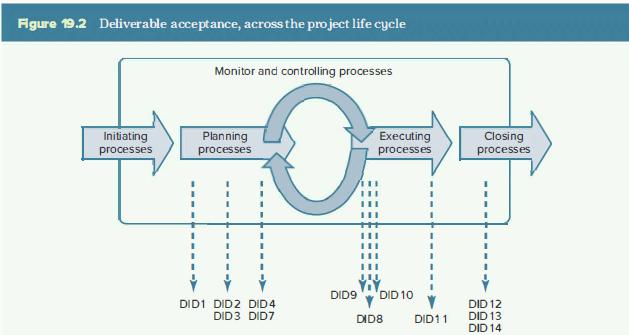
Taking the project closure checklist (refer to Table 19. 2) review, and add in, any specific items to this checklist that would need to be included from your organisation's perspective.Data from Table 19.2 Figure 19.2 Deliverable acceptance, across the project life cycle Monitor and controlling
Interview a fellow project manager in your class and ask them what kind of closure procedures they have previously used to complete a project. Also ask them to provide (a minimum of two) examples of when lessons-learned have been used in a project they are familiar with.
What are two lessons-learned that you have gleaned from a recent project in your organisation? Was a lessonslearned workshop carried out? What Action Plans were generated to improve project management processes as a result of the lessons-learned?
In small groups, discuss how benefits are managed at project closure. Do your experiences differ from each others'? What recommendations would you make to improve the process in future projects and why?
Interview someone who has worked as a project manager or project management professional. Find out.(a) How did they get started in the field?(b) How has their career progressed?(c) What advice would they give someone wishing to pursue a career in project management?
Interview someone who works in a field you are interested in pursuing.(a) How did they get started in the field?(b) How important is project management in the field? In their current job?(c) What advice would they give someone wishing to pursue a career in their field?
Use an internet job search engine (e.g. www.seek.com.au) and search for jobs in the field of project management. What did this search reveal about(a) the demand for project managers?(b) the importance of certification?(c) the different industries looking for project managers?
Explain the role projects play in the delivery of an organisation's strategy
Why should projects be linked to the organisation's Strategic Plan?
Reflect on how the 'pair-wise' criterion system could be applied in your organisation. Against which criterion would you carry out prioritisation?
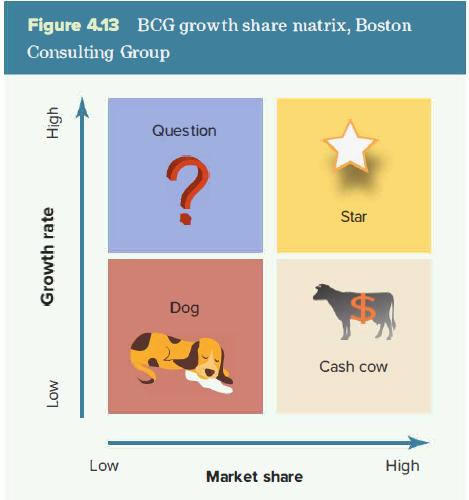
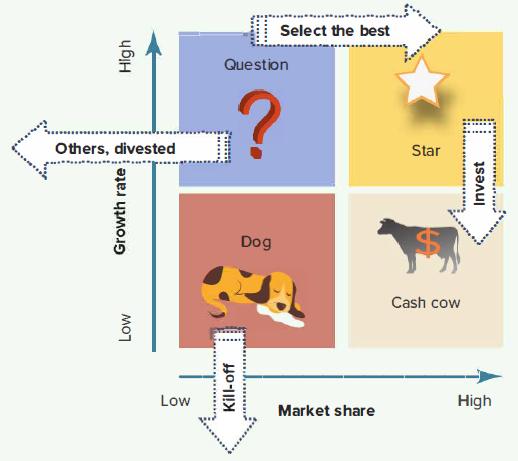
What is the BCG matrix and how is it used?
Using the BCG matrix illustrated in Figure 4. 13 review the investments from the list below.Investment $\mathrm{A}$ is a new product that has been released into the industry. It seems to be experiencing growth at this time.• Investment B has been hanging on, operations have flagged and we are not
Using the Hofstede tool located at: https://www.hofstede-insights.com/product/compare-countries/, review two differing countries for a project you have managed that has crossed international boundaries. Discuss your findings with a group member.
You work for Portable Pathology. Your research and development people believe they have come up with an affordable technology that will revolutionise portable pathology so the service can be taken to patients, rather than patients having to attend pathology laboratories. The project has been named
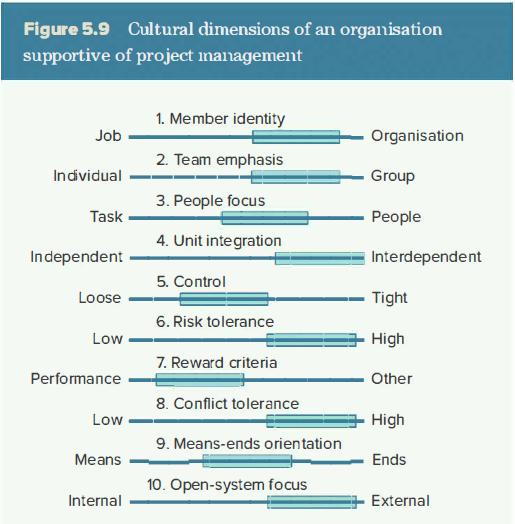
Use the cultural dimensions listed in Figure 5. 9 to assess the culture of your current (or previous) organisation.(a) Which dimensions were easy to evaluate and which ones were not?(b) How strong is/was the culture of your organisation?(c) What functions does/did the culture serve for your
What are the extended seven constraints, and why are they important to project integration management?
What are important considerations in designing a project approach?
What are the components of an Integrated Project Management Plan?
Why is deliverable design important?
What is the importance of having a project charter?
Why is integrated change control essential in the management of change requests?
Provide six techniques (with examples) of sharing project knowledge (and information).
Why are lessons-learned important to a project during, as well as after, project completion?
What is project governance and why is it considered at project initiation?
Complete the change requests template for change requests you have recently encountered on a project, or hypothetically request a change to your group project and capture this request in the template.
Using the change control process, design a change control process for you own organisation/project, or create a change control process that would be applicable to your group project.
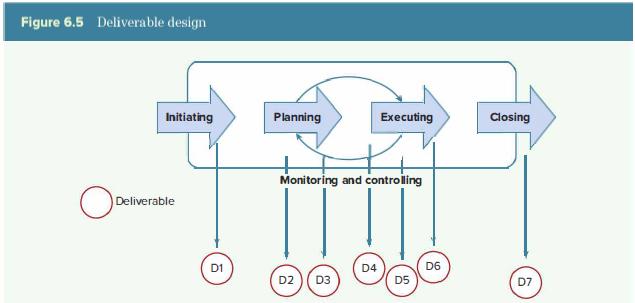
Utilising the information in Figure 6.5 Deliverable design, review your group project's deliverables and make any adjustments as necessary. For example, did you only include deliverables at the end of project? Did you include deliverables in the initiation and planning of the project? Be prepared
For a project you have worked on recently, create a Lessons-Learned Register at project initiation. Ensure you consider both positive and negative lessons, and remember to include how you addressed these lessons in your project.
Josh, who is the project manager for a local charity based in Sydney (Australia), is in the process of establishing the project's governance requirements. The project is concerned with the introduction of a new patient registration system and technological innovations for tracking patients
What is the ' 100 per cent rule' and how does the iterative or staged approach to projects affect it?
What are the main stages in a project change control process?
How can a Scope Management Plan assist in communicating process and governance?
What are the stages in the requirements management process?
What are the key categories of requirements types?
Showing 4500 - 4600
of 5801
First
39
40
41
42
43
44
45
46
47
48
49
50
51
52
53
Last
Step by Step Answers

 Get 50% OFF
Claim Now
Get 50% OFF
Claim Now