New Semester
Started
Get
50% OFF
Study Help!
--h --m --s
Claim Now
Question Answers
Textbooks
Find textbooks, questions and answers
Oops, something went wrong!
Change your search query and then try again
S
Books
FREE
Study Help
Expert Questions
Accounting
General Management
Mathematics
Finance
Organizational Behaviour
Law
Physics
Operating System
Management Leadership
Sociology
Programming
Marketing
Database
Computer Network
Economics
Textbooks Solutions
Accounting
Managerial Accounting
Management Leadership
Cost Accounting
Statistics
Business Law
Corporate Finance
Finance
Economics
Auditing
Tutors
Online Tutors
Find a Tutor
Hire a Tutor
Become a Tutor
AI Tutor
AI Study Planner
NEW
Sell Books
Search
Search
Sign In
Register
study help
engineering
engineering mechanics statics
Engineering Mechanics Statics & Dynamics 15th Edition Russell C. Hibbeler - Solutions
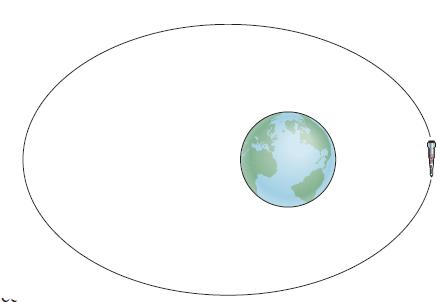
The rocket is in a free-light elliptical orbit about the earth such that the eccentricity of its orbit is e and its perigee is r0. Determine the minimum increment of speed it should have in order to escape the earth’s gravitational field when it is at this point along its orbit.
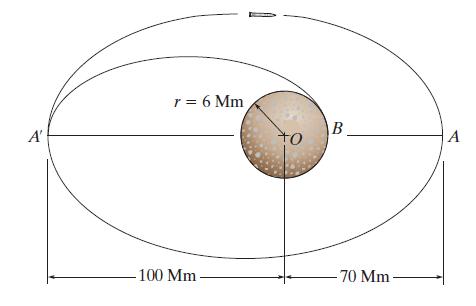
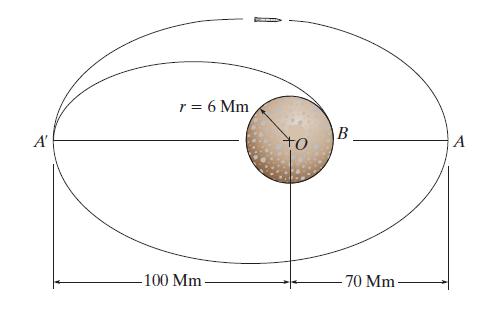
If the rocket is to land on the surface of the planet, determine the required free-flight speed it must have at A′ so that the landing occurs at B. How long does it take for the rocket to land, going from A′ to B? The planet has no atmosphere, and its mass is 0.6 times that of the earth. A' r =
The rocket is traveling around the earth in free flight along an elliptical orbit AC. If the rocket has the orbit shown, determine the rocket’s velocity when it is at point A. Co B 8 Mm- 8 Mm -10 Mm- A
The space shuttle is launched with a velocity of 17 500 mi/h parallel to the tangent of the earth’s surface at point P and then travels around the elliptical orbit. When it reaches point A, its engines are turned on and its velocity is suddenly increased. Determine the required increase in
The rocket is traveling in a free flight along an elliptical trajectory A A. The planet has no atmosphere, and its mass is 0.60 times that of the earth. If the rocket has the orbit shown, determine the rocket’s velocity when it is at point A. A' r = 6 Mm 100 Mm- +0 B -70 Mm- A
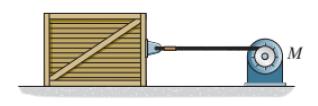
If motor M exerts a force of F = (10t²+ 100) N on the cable, where t is in seconds, determine the velocity of the 25-kg crate when t = 4 s. The coefficients of static and kinetic friction between the crate and the plane are µs = 0.3 and μk = 0.25, respectively. The crate is initially at rest. M
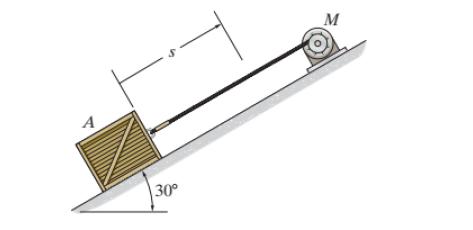
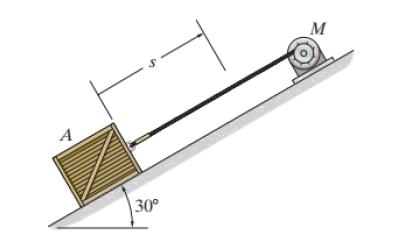
The motor winds in the cable with a constant acceleration, such that the 20-kg crate moves a distance s = 6 m in 3 s, starting from rest. Determine the tension developed in the cable. The coefficient of kinetic friction between the crate and the plane is μk = 0.3. A 30° M
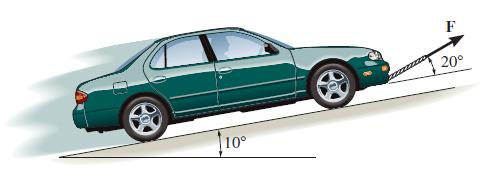
The car having a mass of 2 Mg is originally traveling at 2 m/s. Determine the distance it must be towed by a force F = 4 kN in order to attain a speed of 5 m/s. Neglect friction and the mass of the wheels. 10° F 20°
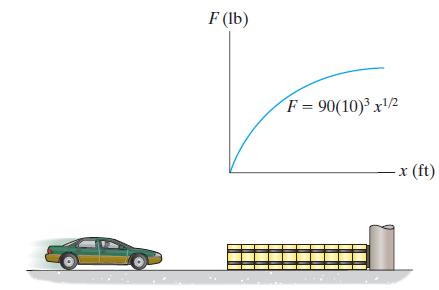
For protection, the barrel barrier is placed in front of the bridge pier. If the relation between the force and deflection of the barrier is F = (90(103)x1/2) lb, where x is in ft, determine the car’s maximum penetration in the barrier. The car has a weight of 4000 lb and it is traveling with a
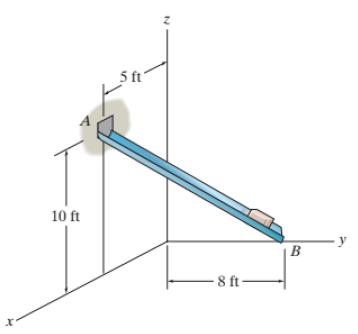
The block has a weight of 1.5 lb and slides along the smooth chute AB. It is released from rest at A, which has coordinates of A(5 ft, 0, 10 ft). Determine the speed at which it slides off at B, which has coordinates of B(0, 8 ft, 0). x 10 ft 5 ft -8 ft- B
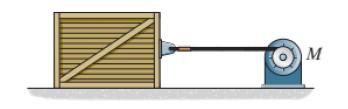
The 2-Mg car is being towed by a winch. If the winch exerts a force of T = 100(s + 1) N on the cable, where s is the displacement of the car in meters, determine the speed of the car when s = 10 m, starting from rest. Neglect rolling resistance of the car.
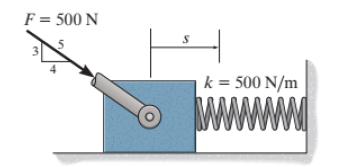
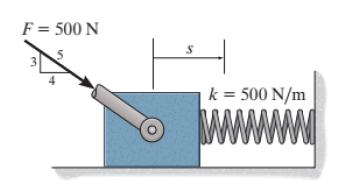
A spring of stiffness k = 500 N/m is mounted against the 10-kg block. If the block is subjected to the force of F = 500 N, determine its velocity at s = 0.5 m. When s = 0, the block is at rest and the spring is uncompressed. The contact surface is smooth. F = 500 N 4 S k = 500 N/m wwwwwww
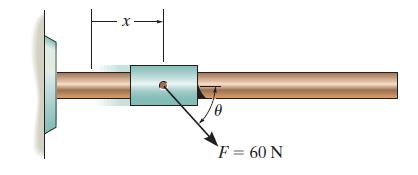
The collar has a mass of 5 kg and is moving at 8 m/s when x = 0 and a force of F = 60 N is applied to it. The direction of this force varies such that θ = 10x, where x is in meters and θ is clockwise, measured in degrees. Determine the speed of the collar when x = 3 m. The coefficient of kinetic
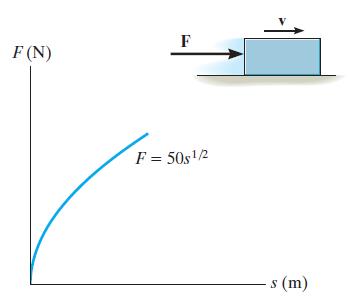
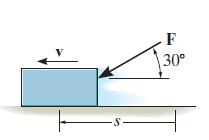
The force F, acting in a constant direction on the 20-kg block, has a magnitude which varies with the position s of the block. Determine how far the block must slide before its velocity becomes 15 m/s. When s = 0 the block is moving to the right at v = 6 m/s. The coefficient of kinetic friction
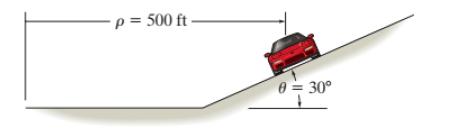
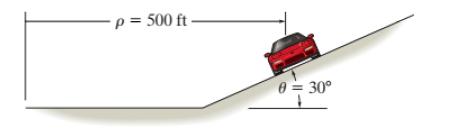
The sports car is traveling along a 30° banked road having a radius of curvature of ρ = 500 ft. If the coefficient of static friction between the tires and the road is μs = 0.2, determine the maximum speed so no slipping occurs. Neglect the size of the car. p= 500 ft- 0 = 30°
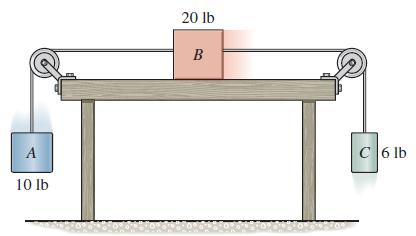
The 20-lb block B rests on the surface of a table for which the coefficient of kinetic friction is μk = 0.1. Determine the speed of the 10-lb block A after it has moved downward 2 ft from the rest. Neglect the mass of the pulleys and cords. A 10 lb 20 lb B C 6 lb
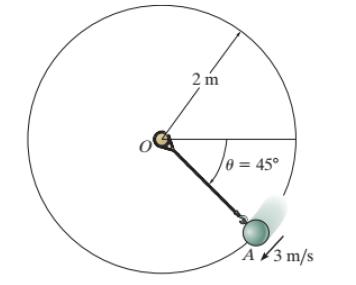
If the 10-kg ball has a velocity of 3 m/s when it is at the position A, along the vertical path, determine the tension in the cord and the increase in the speed of the ball at this position. 2m 0 = 45° A 3 m/s
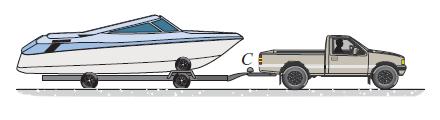
The 2-Mg truck is traveling at 15 m s when the brakes on all its wheels are applied, causing it to skid for a distance of 10 m before coming to rest. Determine the constant horizontal force developed in the coupling C, and the frictional force developed between the tires of the truck and the road
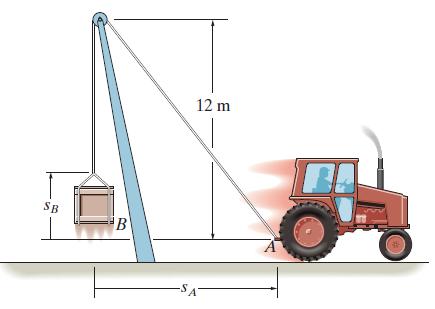
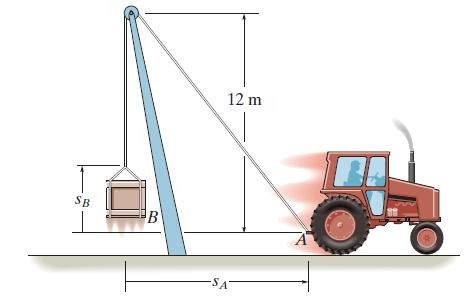
The tractor is used to lift the 150-kg load B with the 24-m- long rope, boom, and pulley system. If the tractor travels to the right with an acceleration of 3 m/s² and has a velocity of 4 m/s at the instant sA = 5 m, determine the tension in the rope at this instant. When sA = 0, sB = 0. SB B 12 m
The tractor is used to lift the 150-kg load B with the 24-mlong rope, boom, and pulley system. If the tractor travels to the right at a constant speed of 4 m/s, determine the tension in the rope when sA = 5 m.When sA = 0, sB = 0. SB B 12 m -SA
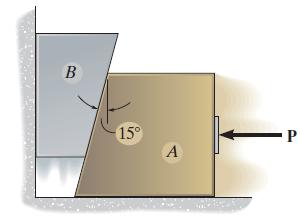
If a horizontal force P = 35 lb is applied to block A, determine the acceleration of block B. Neglect friction. Block A weighs 15 lb, and block B weighs 8 lb. Show that aA = aB tan 15°. B 15° A P
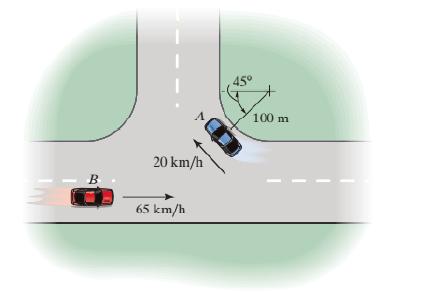
Cars A and B are traveling at the speeds shown. If B is accelerating at 1200 km/h² while A maintains a constant speed, determine the velocity and acceleration of A with respect to B. B 20 km/h 65 km/h 45° 100 m
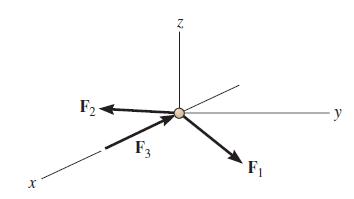
The 6-lb particle is subjected to the action of its weight and forces F₁ = {2i + 6j - 2tk} lb, F₂ = {ti - 4tj - 1k} lb, and F3 = {-2ti} lb, where t is in seconds. Determine the distance the ball is from the origin 2 s after being released from rest. X F₂ F3 N F₁ y
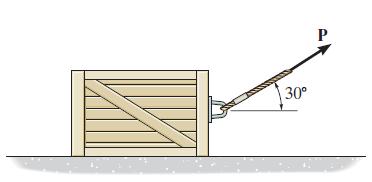
If the coefficient of kinetic friction between the 50-kg crate and the ground is μk = 0.3, determine the distance the crate travels and its velocity when t = 3 s. The crate starts from rest, and P = 200 N. 30° P
The motor winds in the cable with a constant acceleration, such that the 20-kg crate moves a distance s = 6 m in 3 s, starting from rest. Determine the tension developed in the cable. The coefficient of kinetic friction between the crate and the plane is μk = 0.3. A 30° M
A spring of stiffness k = 500 N/m is mounted against the 10-kg block. If the block is subjected to the force of F = 500 N, determine its velocity at s = 0.5 m. When s = 0, the block is at rest and the spring is uncompressed. The contact surface is smooth. F = 500 N O S k = 500 N/m wwwwww
If the 50-kg crate starts from rest and achieves a velocity of v = 4 m/s when it travels a distance of 5 m to the right, determine the magnitude of force P acting on the crate. The coefficient of kinetic friction between the crate and the ground is μk = 0.3. Starting from rest, a bicyclist
If motor M exerts a force of F = (10t² + 100) N on the cable, where t is in seconds, determine the velocity of the 25-kg crate when t = 4 s. The coefficients of static and kinetic friction between the crate and the plane are μs, = 0.3 and μk = 0.25, respectively. The crate is initially at rest. M
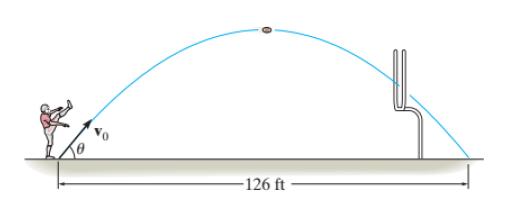
From a videotape, it was observed that a player kicked a football 126 ft during a measured time of 3.6 seconds. Determine the initial speed of the ball and the angle at which it was kicked. 0 -126 ft
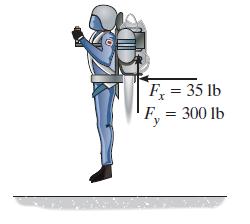
The jet belt and man have a total weight of 210 lb. If the engines provide a constant thrust having x and y components of Fx = 35 lb and Fy = 300 lb, determine the total distance the man travels when t = 5 s after takeoff. What is his velocity at this instant? Neglect air resistance and the loss of
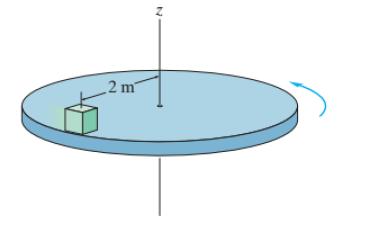
The block rests at a distance of 2 m from the center of the platform. If the coefficient of static friction between the block and the platform is , μs = 0.3, determine the maximum speed which the block can attain before it begins to slip. Assume the angular motion of the disk is slowly increasing.
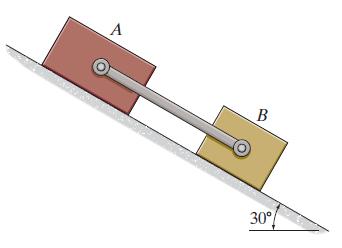
If blocks A and B of mass 10 kg and 6 kg, respectively, are placed on the inclined plane and released, determine the force developed in the link. The coefficients of kinetic friction between the blocks and the inclined plane are μA = 0.1 and μB = 0.3.Neglect the mass of the link. A B 30°
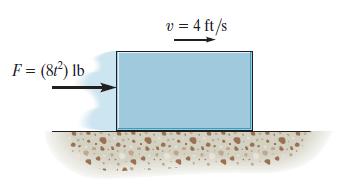
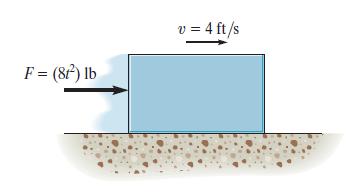
The 10-lb block has a speed of 4 ft>s when the force of F = (8t2) lb is applied. Determine the velocity of the block when t = 2 s. The coefficient of kinetic friction at the surface is μk = 0.2. F = (8²) lb v = 4 ft /s
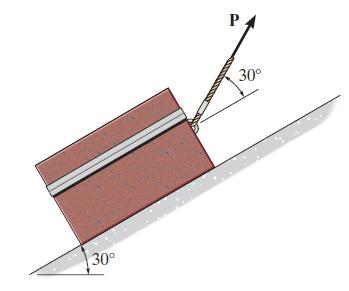
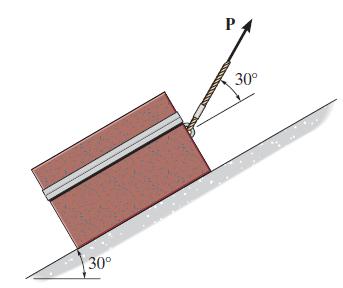
If P = 400 N and the coefficient of kinetic friction between the 50-kg crate and the inclined plane is μk = 0.25, determine the velocity of the crate after it travels 6 m up the plane. The crate starts from rest. 30° P 30°
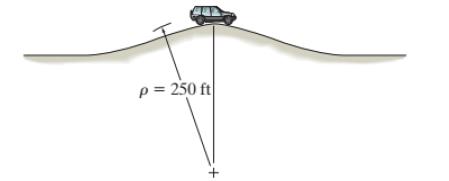
Determine the maximum speed that the jeep can travel over the crest of the hill and not lose contact with the road. p=250 ft
If the 50-kg crate starts from rest and travels a distance of 6 m up the plane in 4 s, determine the magnitude of force acting on the crate. The coefficient of kinetic friction between the crate and the ground is μk = 0.25. 30⁰ P 30°
The sports car is traveling along a 30° banked road having a radius of curvature of ρ = 500 ft. If thecoefficient of static friction between the tires and the roadis μs = 0.2, determine the maximum speed so no slipping occurs. Neglect the size of the car. p = 500 ft 0 = 30°
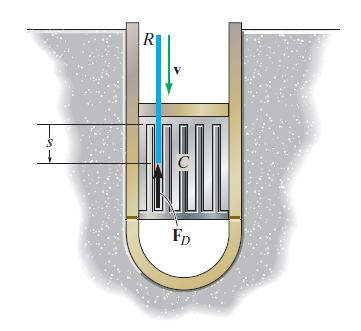
In the event of an emergency, a nuclear reactor is shut down by dropping the control rod R, having a weight of 20 lb, into the reactor core C. If the rod is immersed in “heavy” water, which offers a drag resistance to downward motion of FD = (0.25v) lb, where v is the velocity of the rod in
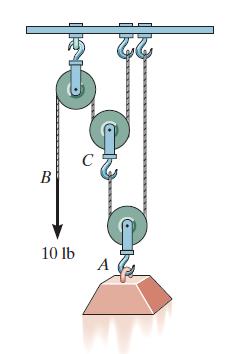
Determine the time needed to pull the cord at B down 4 ft starting from rest when a force of 10 lb is applied to the cord. Block A weighs 20 lb. Neglect the mass of the pulleys and cords. B sil 10 b C A
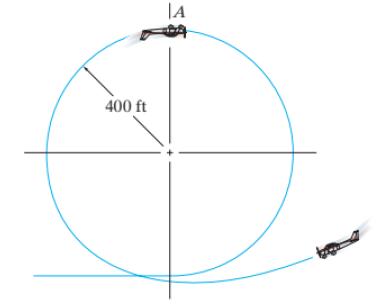
A pilot weighs 150 lb and is traveling at a constant speed of 120 ft/s. Determine the normal force he exerts on the seat of the plane when he is upside down at A. The loop has a radius of curvature of 400 ft. 400 ft |A 24
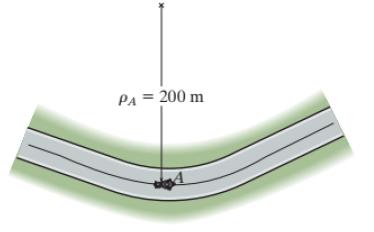
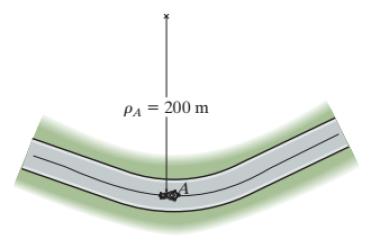
The motorcycle has a mass of 0.5 Mg and a negligible size. It passes point A traveling at a speed of 15 m/s, which is increasing at a constant rate of 1.5 m/s². Determine the resultant frictional force exerted by the road on the tires at this instant. PA = 200 m
The 10-lb block has a speed of 4 ft/s when the force of F = (8t2) lb is applied. Determine the velocity of the block when it moves s = 30 ft. The coefficient of kinetic friction at the surface is μk = 0.2. F = (8t²) lb v = 4 ft/s
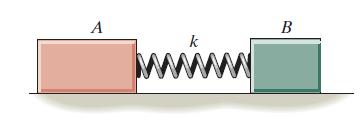
Block A has a weight of 8 lb and block B has a weight of 6 lb. They rest on a surface for which the coefficient of kinetic friction is μk = 0.2. If the spring has a stiffness of k = 20 lb/ft, and it is compressed 0.2 ft, determine the acceleration of each block just after they are released.
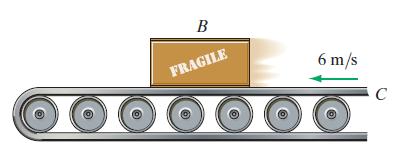
The conveyor belt C is moving at 6 m/s. If the coefficient of static friction between the conveyor belt and the 10-kg box B is μs = 0.2, determine the shortest time the conveyor can stop so that the box does not slip or move on the belt. B FRAGILE 6 m/s C
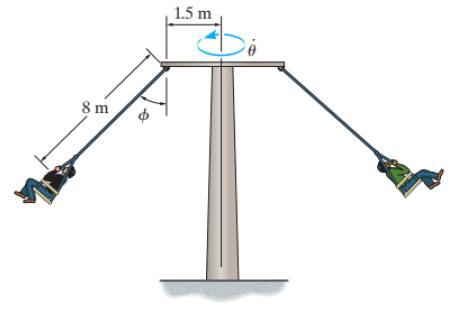
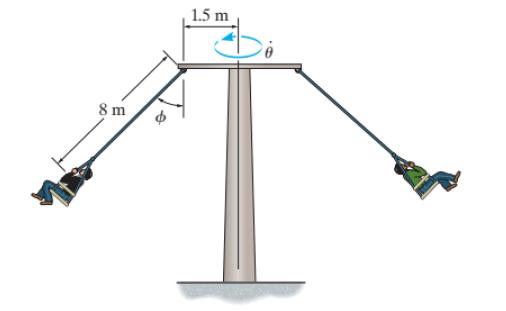
Determine the constant angular velocity of the vertical θ̇ shaft of the amusement ride if ϕ = 45°. Neglect the mass of the cables and the size of the passengers. 8 m 1.5 m
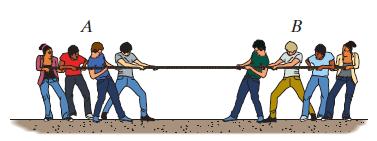
Team A and team B consist of four members of total mass 320 kg and 330 kg, respectively. If the average coefficients of static and kinetic friction for team A are μs = 0.52 and μk = 0.5, and for team B, μs = 0.48 and μk = 0.46, which team will win the tug of war? Also, what is the acceleration
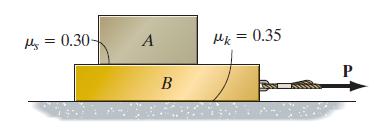
Block A has a mass of 60 kg and rests on block B, which has a mass of 30 kg. If the coefficients of static and kinetic friction are indicated in the figure, determine the largest horizontal force P which can be applied to block B so that block A does not slip on block B while block B slides. H =
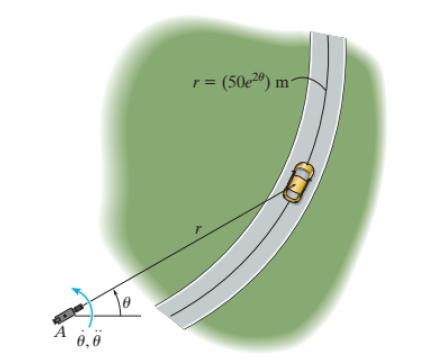
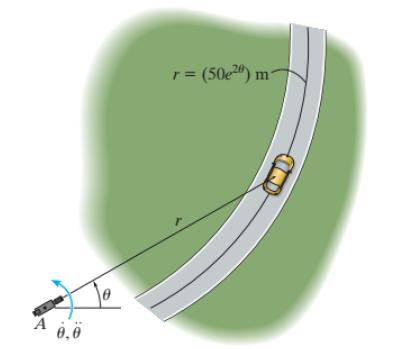
The 2-Mg car is traveling along the curved road described by r = (50e2θ) m, where θ is in radians. If a camera is located at A and it rotates with an angular velocity of θ̇ = 0.05 rad/s and an angular acceleration of θ̈ = 0.01 rad/s² at the instant θ = π/6 rad, determine theresultant
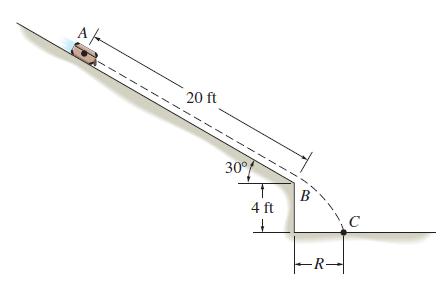
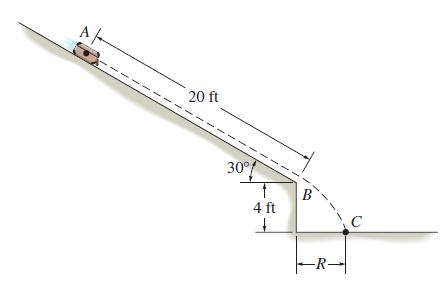
Solve Prob. 13-18 if the suitcase has an initial velocity down the ramp of vA = 10 ft/s and the coefficient of kinetic friction along AB is μk = 0.2.Prob. 13-18A 40-lb suitcase slides from rest 20 ft down the smooth ramp. Determine the point where it strikes the ground at C. How long does it take
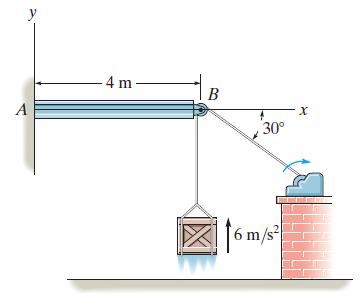
The motor lifts the 50-kg crate with an acceleration of 6 m/s2. Determine the components of force reaction and the couple moment at the fixed support A. A 4m B IXI 30° 6 m/s² X
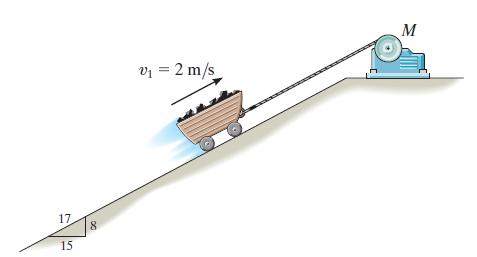
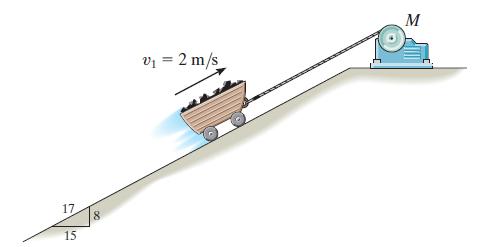
The 400-kg mine car is hoisted up the incline using the cable and motor M. For a short time, the force in the cable is F = (3200t2) N, where t is in seconds. If the car has an initial velocity v₁ = 2 m/s at s = 0 when t = 0, determine the distance it moves up the plane when t = 2 s.
A 40-lb suitcase slides from rest 20 ft down the smooth ramp. Determine the point where it strikes the ground at C. How long does it take to go from A to C? AL 20 ft 30° 4 ft + B -R- C
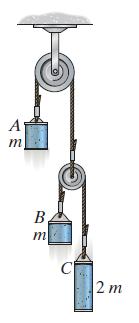
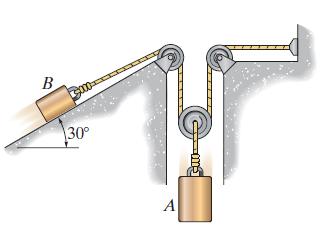
Determine the acceleration of each block if A and B have a mass m and C has a mass 2 m. Neglect the mass of the cords and the pulleys. A m B m C 2 m
The 400-kg mine car is hoisted up the incline using the cable and motor M. For a short time, the force in the cable is F = (3200t2) N, where t is in seconds. If the car has an initial velocity v₁ = 2 m/s when t = 0, determine its velocity when t = 2 s. 17 15 8 v₁ = 2 m/s M
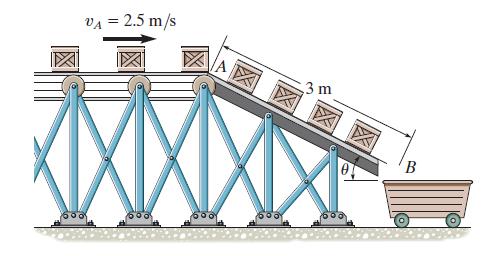
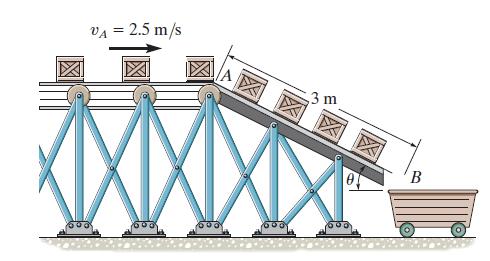
The conveyor belt delivers each 12-kg crate to the ramp at A such that the crate’s speed is vA = 2.5 m>/s, directed down along the ramp. If the coefficient of kinetic friction between each crate and the ramp is μk = 0.3, determine the smallest incline θ of the ramp so that the crates will
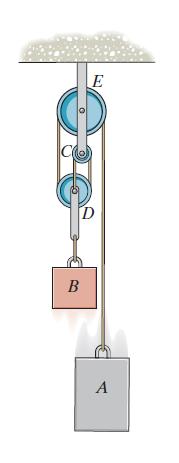
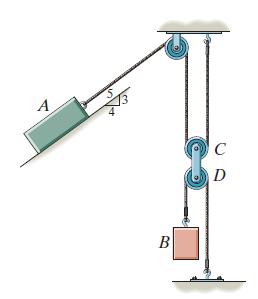
The 50-kg block A is released from rest. Determine the velocity of the 15-kg block B in 2 s. CO E D B A
The conveyor belt delivers each 12-kg crate to the ramp at A such that the crate’s speed is vA = 2.5 m/s, directed down along the ramp. If the coefficient of kinetic friction between each crate and the ramp is μk = 0.3, determine the speed at which each crate slides off the ramp at B. Assume
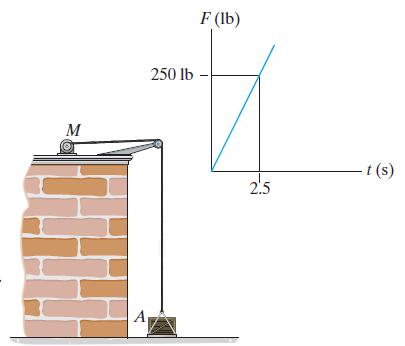
The force exerted by the motor M on the cabilses hown in the graph. Determine the velocity of the 200-lb crate A when t = 2.5 s. M 250 lb FO A₁ F (lb) 2.5 t (s)
At a given instant the 10-lb block A is moving downward with a speed of 6 ft/s. Determine its speed 2 s later if block B has a weight of 4 lb, and the coefficient of kinetic friction between it and the inclined plane is μk = 0.2. Neglect the mass of the pulleys and cord. B 00 30° A
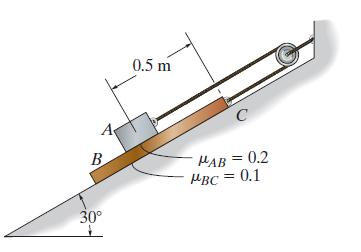
The 20-kg block A rests on the 60-kg plate B in the position shown. Neglecting the mass of the rope and pulley, and using the coefficients of kinetic friction indicated, determine the time needed for block A to slide 0.5 m on the plate when the system is released from rest. А B 30° 0.5 m с HAB =
At the instant shown the 100-lb block A is moving down the plane at 5 ft/s while being attached to the 50-lb block B. If the coefficient of kinetic friction between the block and the incline is μk = 0.2, determine the acceleration of A and the distance A slides before it stops. Neglect the mass of
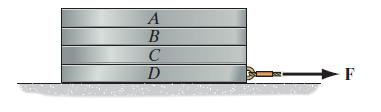
The four 2-kg metal plates are stacked on top of one another. If the coefficient of static friction between any two plates is μs = 0.3, determine the smallest horizontal force F that can be applied to the bottom plate which will cause any one of the plates to slip relative to another. The floor is
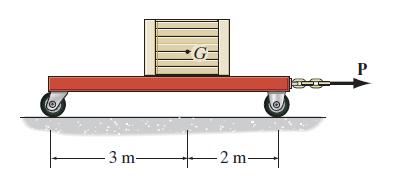
The 3-kg crate rests on the 10-kg cart where the coefficients of static and kinetic friction are μs = 0.25 and μk = 0.2, respectively. Determine the smallest constant force P needed to cause the crate to slip. How much time does it take for the crate to slip off the cart? 3 m- G- -2 m-
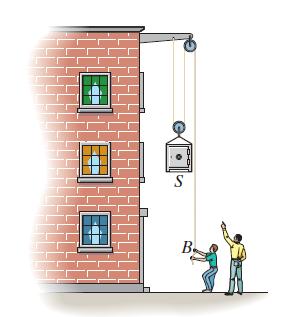
The safe S has a weight of 200 lb and is supported by the rope and pulley arrangement shown. If the end of the rope is given to a boy B of weight 90 lb, determine his acceleration if in the confusion he doesn’t let go of the rope. Neglect the mass of the pulleys and rope. S D-D B.
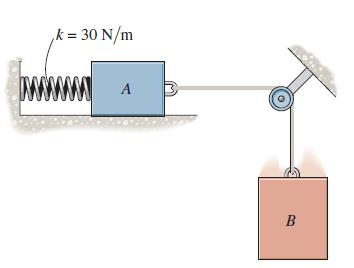
Block A has a mass of 20 kg and block B has a mass of 50 kg. If the spring is stretched 0.2 m at the instant shown, determine the acceleration of block B at this instant if it is(a) Originally at rest, (b) Moving downward with a speed of 3 m/s.Neglect friction. k = 30 N/m www A B
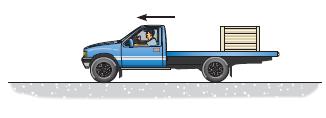
The coefficient of static friction between the 200-kg crate and the flat bed of the truck is μs = 0.3. Determine the shortest time for the truck to reach a speed of 60 km h, starting from rest with constant acceleration, so that the crate does not slip.
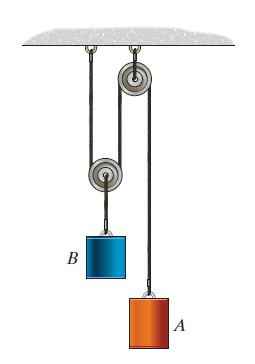
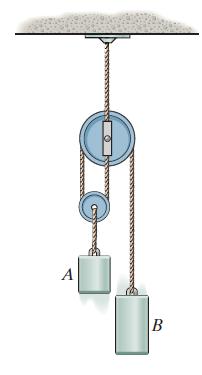
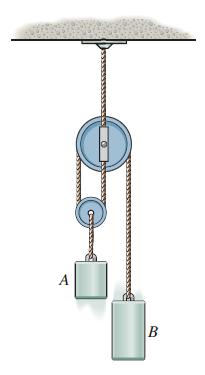
Determine the velocity of the cylinder A when t = 4 s if the system is released from rest. Cylinder A has a mass of 8 kg and cylinder B has a mass of 6 kg. Neglect the mass of the pulleys and cords. B A
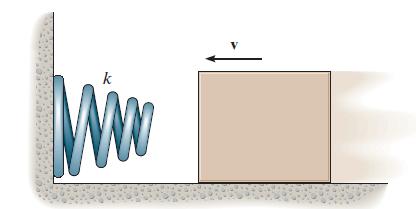
The 1.5-kg block slides along a smooth plane and strikes a nonlinear spring with a speed of v = 4 m/s. The spring is termed "nonlinear" because it has a resistance of Fs = ks², where k = 900 N/m². Determine the speed of the block after it has compressed the spring s = 0.2 m. k Winx
The motorcycle has a mass of 0.5 Mg and a negligible size. It passes point A traveling at a speed of 15 m/s, which is increasing at a constant rate of 1.5 m/s². Determine the resultant frictional force exerted by the road on the tires at this instant. PA = 200 m
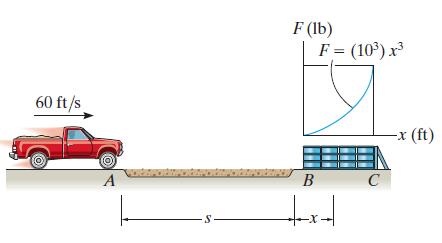
The motion of a truck is arrested using a bed of loose stones AB and a set of crash barrels BC. If experiments show that the stones provide a rolling resistance of 160 lb per wheel and the crash barrels provide a resistance as shown in the graph, determine the the distance x the 4500-lb truck
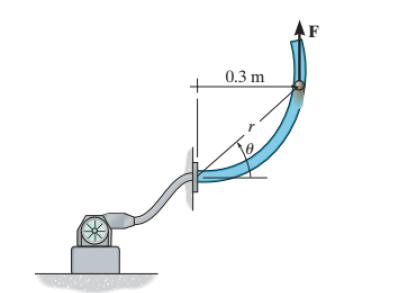
The 0.2-kg ball is blown through the smooth vertical circular tube whose shape is defined by r = (0.6 sin θ) m, where is in radians. If θ = (πt²) rad,where t is in seconds, determine the magnitude of force Fexerted by the blower on the ball when t = 0.5 s. 0.3 m
Determine the constant angular velocity θ̇ of the vertical shaft of the amusement ride if ϕ = 45°. Neglect the mass of the cables and the size of the passengers. 8 m 1.5 m
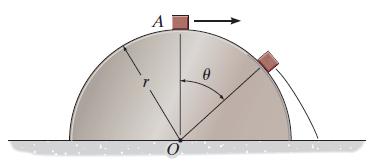
A small box of mass m is given a speed of = √1/4gr at the top of the smooth half cylinder. Determine the angle θ at which the box leaves the surface. A Ө Ө
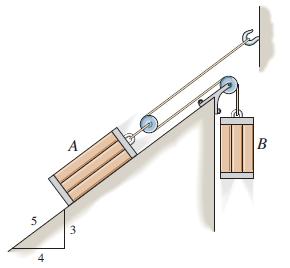
The two blocks A and B have weights WA = 60 lb and WB = 10 lb. If the coefficient of kinetic friction between the incline and block A is μk = 0.2, determine the speed of A after it moves 3 ft down the plane starting from rest. Neglect the mass of the cord and pulleys. 5 دیا 3 B
The 2-Mg car is traveling along the curved road described by r = (50e2θ) m, where θ is in radians.If a camera is located at A and it rotates with an angularvelocity of θ̇ = 0.05 rad/s and an angular acceleration of θ̈ = 0.01 rad/s² at the instant θ = π/6 rad, determine the resultant
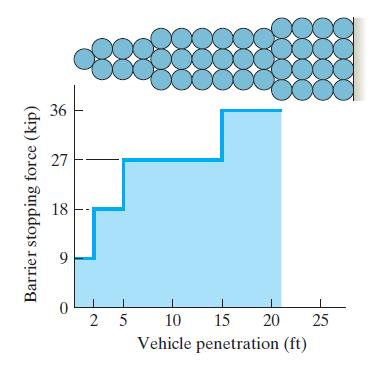
The crash cushion for a highway barrier consists of a nest of barrels filled with an impact-absorbing material.The barrier stopping force is measured versus the vehicle penetration into the barrier. Determine the distance a car having a weight of 4000 lb will penetrate the barrier if it is
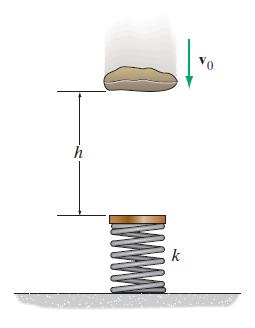
The sack of mass m has a velocity of v0 when it is at a height h above the unstretched spring. Determine the maximum compression of the spring if it has stiffness k. WWW k
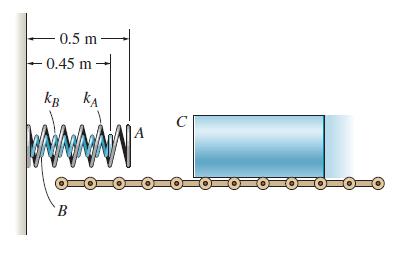
The steel ingot has a mass of 1800 kg. It travels along the conveyor at a speed v = 0.5 m/s when it collides with the “nested” spring assembly. Determine the maximum deflection in each spring needed to stop the motion of the ingot. Take kA = 5 kN/m, kB = 3 kN/m. 0.5 m -0.45 m КВ
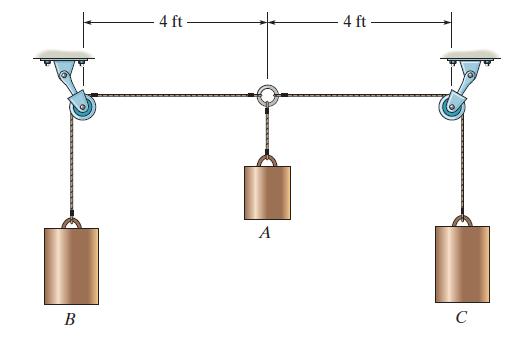
When the 12-lb block A is released from rest it lifts the two 15-lb weights B and C. Determine the maximum distance A will fall before its motion is momentarily stopped. Neglect the weight of the cord and the size of the pulleys. B 4 ft A 4 ft с
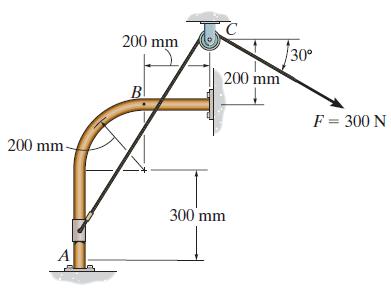
If the cord is subjected to a constant force of F = 300 N and the 15-kg smooth collar starts from rest at A, determine the velocity of the collar when it reaches point B. Neglect the size of the pulley. 200 mm- A 200 mm B 200 mm 300 mm 30° F = 300 N
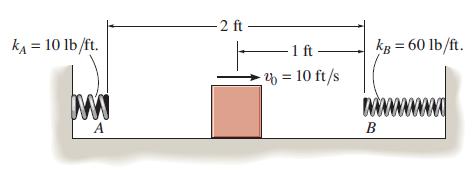
The 25-lb block has an initial speed of v0 = 10 ft/s when it is midway between springs A and B. After striking spring B, it rebounds and slides across the horizontal plane toward spring A, and continues to move back and forth. If the coefficient of kinetic friction between the plane and the block
The force F, acting in a constant direction on the 20-kg block, has a magnitude which varies with positions of the block. Determine the speed of the block after it slides 3 m. When s = 0 the block is moving to the right at 2 m/s. The coefficient of kinetic friction between the block and surface is
At a given instant the 10-lb block A is moving downward with a speed of 6 ft s. Determine its speed 2 s later. Block B has a weight of 4 lb, and the coefficient of kinetic friction between it and the horizontal plane is μk = 0.2. Neglect the mass of the cord and pulleys. B A
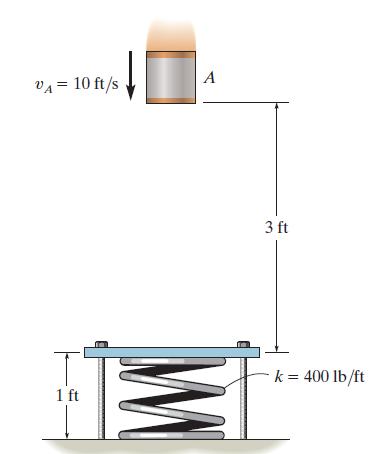
The 5-lb cylinder is falling from A with a speed vA = 10 ft/s onto the platform. Determine the maximum displacement of the platform, caused by the collision. The spring has an unstretched length of 1.75 ft and is originally kept in compression by the 1-ft-long cables attached to the platform.
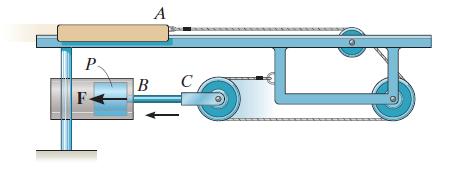
The catapulting mechanism is used to propel the 10-kg slider A to the right along the smooth track.The propelling action is obtained by drawing the pulley attached to rod BC rapidly to the left by means of a piston P. If the piston applies a constant force F = 20 kN to rod BC such that it moves it
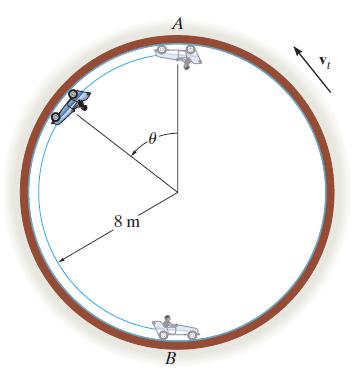
The “flying car” is a ride at an amusement park which consists of a car having wheels that roll along a track mounted inside a rotating drum. By design the car cannot fall off the track, however motion of the car is developed by applying the car’s brake, thereby gripping the car to the track
The 2-kg block is subjected to a force having a constant direction and a magnitude F = (300/(1+ s)) N, where s is in meters. When s = 4 m, the block is moving to the left with a speed of 8 m/s. Determine its speed when s = 12 m. The coefficient of kinetic friction between the block and the ground
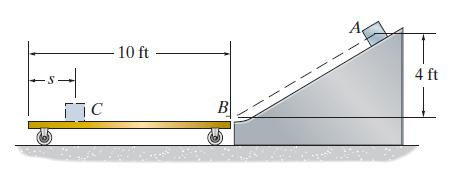
The 30-lb box A is released from rest and slides down along a smooth ramp and onto the surface of a cart. If the cart is fixed from moving, determine the distance s from the end of the cart to where the box stops. The coefficient of kinetic friction between the cart and the box is μk = 0.6.
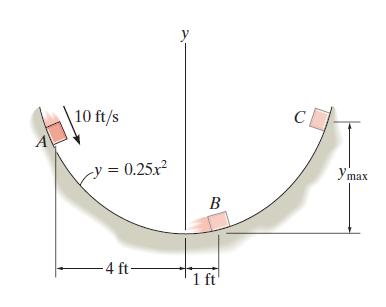
The 2-lb block slides down the smooth parabolic surface, such that when it is at A it has a speed of 10 ft/s. Determine the magnitudes of the block’s velocity and acceleration when it reaches point B, and the maximum height ymax reached by the block. 10 ft/s y = 0.25x² -4 ft- C A y max B 1 ft
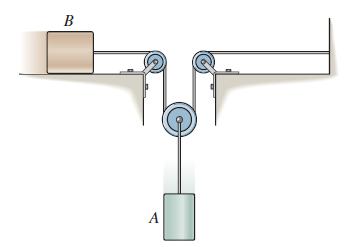
The 8-kg cylinder A and 3-kg cylinder B are released from rest. Determine the speed of A after it has moved 2 m starting from rest. Neglect the mass of the cord and pulleys. A Fo B
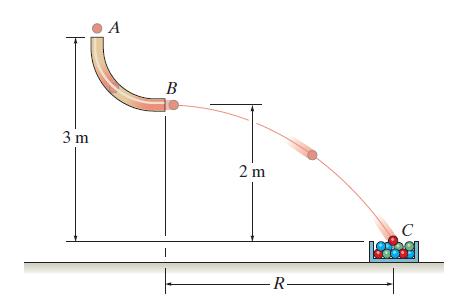
Marbles having a mass of 5 g are dropped from rest at A through the smooth glass tube and accumulate in the can at C. Determine the placement R of the can from the end of the tube and the speed at which the marbles fall into the can. Neglect the size of the can. 3 m A B I 2 m -R- LOS C
Cylinder A has a mass of 3 kg and cylinder B has a mass of 8 kg. Determine the speed of A after it has moved 2 m starting from rest. Neglect the mass of the cord and pulleys. A о B
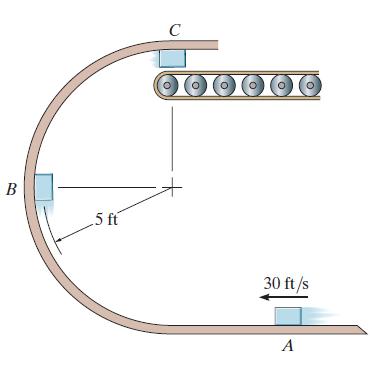
The 2-lb box slides on the smooth circular ramp. If the box has a velocity of 30 ft/s at A, determine the velocity of the box and normal force acting on the ramp when the box is located at B and C. Assume the radius of curvature of the path at C is still 5 ft. B 5 ft C O O O O O 30 ft/s A -
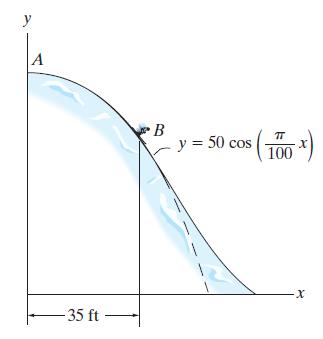
When the 150-lb skier is at point A he has a speed of 5 ft/s. Determine his speed when he reaches point B on the smooth slope. For this distance the slope follows the cosine curve shown. Also, what is the normal force on his skis at B and his rate of increase in speed? Neglect friction and air
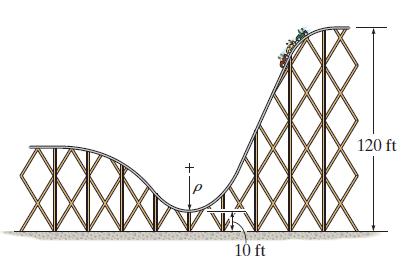
Roller coasters are designed so that riders will not experience a normal force that is more than 3.5 times their weight against the seat of the car. Determine the smallest radius of curvature ρ of the track at its lowest point if the car has a speed of 5 ft/s at the crest of the drop. Neglect
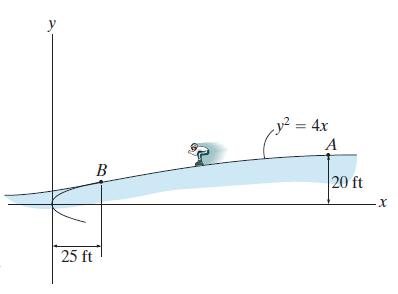
The 150-lb skater passes point A with a speed of 6ft/s. Determine his speed when he reaches point B and the normal force exerted on him by the track at this point. Neglect friction. B 25 ft y² = 4x A 20 ft X
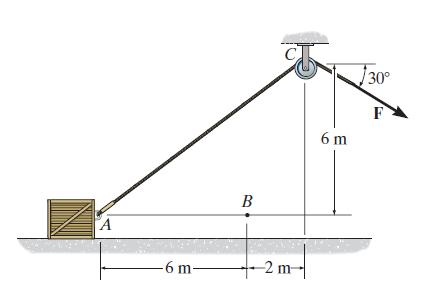
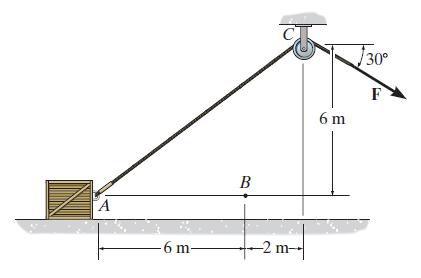
If the 75-kg crate starts from rest at A, and its speed is 6m/s when it passes point B, determine the constant force F exerted on the cable. Neglect friction and the size of the pulley. A -6 m- B -2 m- व 6 m 30° FA
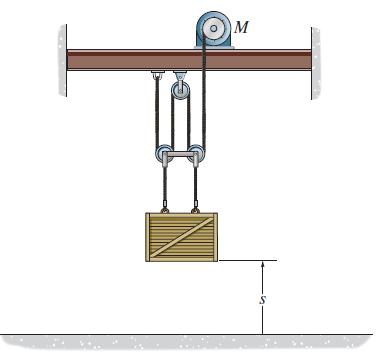
If the force exerted by the motor M on the cable is 250 N, determine the speed of the 100-kg crate when it is hoisted to s = 3 m.The crate is at rest when s = 0. M S
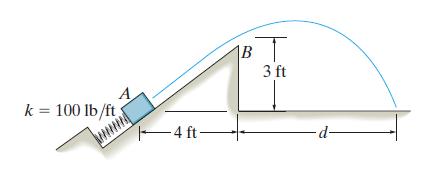
The 10-lb block is pressed against the spring so as to compress it 2 ft when it is at A. If the plane is smooth, determine the distance d, measured from the wall, to where the block strikes the ground. Neglect the size of the block. k = 100 lb/ft 4 ft- 1B Т 3 ft -d-
If the 75-kg crate starts from rest at A, determine its speed when it reaches point B.The cable is subjected to a constant force of F = 300 N. Neglect friction and the size of the pulley. A 6 m- B -2 m- 6 m √30° F
Showing 1300 - 1400
of 2426
First
7
8
9
10
11
12
13
14
15
16
17
18
19
20
21
Last
Step by Step Answers

 Get 50% OFF
Claim Now
Get 50% OFF
Claim Now