New Semester
Started
Get
50% OFF
Study Help!
--h --m --s
Claim Now
Question Answers
Textbooks
Find textbooks, questions and answers
Oops, something went wrong!
Change your search query and then try again
S
Books
FREE
Study Help
Expert Questions
Accounting
General Management
Mathematics
Finance
Organizational Behaviour
Law
Physics
Operating System
Management Leadership
Sociology
Programming
Marketing
Database
Computer Network
Economics
Textbooks Solutions
Accounting
Managerial Accounting
Management Leadership
Cost Accounting
Statistics
Business Law
Corporate Finance
Finance
Economics
Auditing
Tutors
Online Tutors
Find a Tutor
Hire a Tutor
Become a Tutor
AI Tutor
AI Study Planner
NEW
Sell Books
Search
Search
Sign In
Register
study help
mathematics
calculus with applications
Calculus For Business, Economics And The Social And Life Sciences 11th Brief Edition Laurence Hoffmann, Gerald Bradley, David Sobecki, Michael Price - Solutions
Prove the sum rule for derivatives. Note that the difference quotient for f + g can be written as (f+ g)(x + h) (f + g)(x) h = [f(x + h) + g(x + h)] - [f(x) + g(x)] h
An object moves along a straight line with velocitya. Find the acceleration a(t) of the object at time t.b. When is the object stationary for 0 ≤ t ≤ 5? Find the acceleration at each such time.c. When is the acceleration zero for 0 ≤ t ≤ 5? Find the velocity at each such time.d. Use the
An object moves along a straight line in such a way that its position at time t is given bya. Find the velocity v(t) and the acceleration a(t), and then use a graphing utility to graph s(t), v(t), and a(t) on the same axes for 0 ≤ t ≤ 2.b. Use your calculator to find a time when v(t) = 0 for 0
Repeat Exercise 77 for the product function f(x) = x3(x − 3)2.Data from Exercises 77Graph f(x) = x4 + 2x3 − x + 1 using a graphing utility with a viewing rectangle of [−5, 5]1 by [0, 2]0.5. Use TRACE and ZOOM, or the maximum and minimum commands, to find the minima and maxima of this
Store the functionin your graphing utility. Use the numeric differentiation feature of your utility to calculate f'(1) and f'(−3). Explore the graph of f(x). How many horizontal tangents does the graph have? f(x) = √3.1x² + 19.4
The curve y2(2 − x) = x3 is called a cissoid.a. Use a graphing utility to sketch the curve.b. Find an equation for the tangent line to the curve at all points where x = 1.c. What happens to the curve as x approaches 2 from the left?d. Does the curve have a tangent line at the origin? If so, what
Store the functionin your graphing utility. Use the numeric differentiation feature of the utility to calculate f'(0) and f'(4.3). Explore the graph of f(x). How many horizontal tangents does it have? f(x) = (2.7x³ - 3√x + 5)²/3
Prove the general power rule for n = 2 by using the product rule to compute dy/dx if y = [h(x)]2.
Prove the general power rule for n = 3 by using the product rule and the result of Exercise 85 to compute dy/dx if y = [h(x)]3.Data from Exercises 85Prove the general power rule for n = 2 by using the product rule to compute dy/dx if y = [h(x)]2.
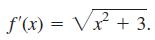
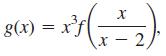
Let f be a function such that f(3) = −1 andIfwhat is g'(3)? f'(x)=√x² + 3.
In Exercises 1 through 12, compute the derivative of the given function and find the slope of the line that is tangent to its graph for the specified value of the independent variable.f(x) = x3 − 1; x = 2
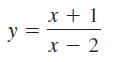
In Exercises 1 through 18, differentiate the given function. y = x x + 1 2
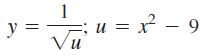
In Exercises 1 through 12, use the chain rule to compute the derivative dy/dx and simplify your answer. y || 1 u - ;u= x²
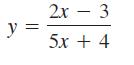
In Exercises 1 through 18, differentiate the given function. y || 2x - 3 5x+4
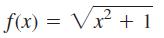
In Exercises 3 through 13, find the derivative of the given function. f(x)=√x² + 1
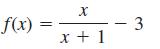
In Exercises 7 through 10, use increments to make the required estimate.Estimate how much the functionwill change as x decreases from 4 to 3.8. f(x) X x + 1 - 3
In Exercises 7 through 10, use increments to make the required estimate.Estimate how much the function f(x) = x2 − 3x + 5 will change as x increases from 5 to 5.3.
In Exercises 1 through 12, use the chain rule to compute the derivative dy/dx and simplify your answer. = n 6 – x = Vu 1 || y
In Exercises 3 through 13, find the derivative of the given function.f(x) = (5x4 − 3x2 + 2x + 1)10
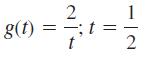
In Exercises 1 through 12, compute the derivative of the given function and find the slope of the line that is tangent to its graph for the specified value of the independent variable. 2 g(t) = :t 1 2
In Exercises 1 through 8, find dy/dx in two ways:(a) By implicit differentiation(b) By differentiating an explicit formula for y.In each case, show that the two answers are the same.xy + 2y = x2
In Exercises 1 through 28, differentiate the given function.y = x3.7
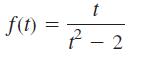
In Exercises 1 through 18, differentiate the given function. f(t) || t 7-2
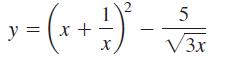
In Exercises 3 through 13, find the derivative of the given function. y = ( x x+ X 2 5 V3x
Suppose the cost of producing x hundred units of a particular commodity is C(x) = 0.04x2 + 5x + 73 thousand dollars. Use marginal cost to estimate the cost of producing the 410th unit. What is the actual cost of producing the 410th unit?
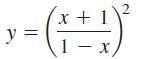
In Exercises 3 through 13, find the derivative of the given function. y = x 1 (++) 1- x 2
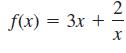
In Exercises 7 through 10, use increments to make the required estimate.Estimate the percentage change in the functionas x decreases from 5 to 4.6. f(x) = 3x + 2 X
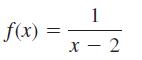
In Exercises 1 through 18, differentiate the given function. f(x) = 1 x 2
In Exercises 1 through 28, differentiate the given function.y = 4 − x−1.2
At a certain factory, the daily output is Q = 500L3/4 units, where L denotes the size of the labor force in worker hours. Currently, 2,401 worker-hours of labor are used each day. Use calculus (increments) to estimate the effect on output of increasing the size of the labor force by 200
In Exercises 9 through 22, find dy/dx by implicit differentiation.x2 + y2 = 25
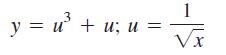
In Exercises 1 through 12, use the chain rule to compute the derivative dy/dx and simplify your answer. y = u³ + u; u = -| 1 X
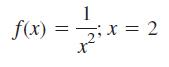
In Exercises 1 through 12, compute the derivative of the given function and find the slope of the line that is tangent to its graph for the specified value of the independent variable. f(x) - =2²x = 2 X
In Exercises 7 through 10, use increments to make the required estimate.Estimate the percentage change in the function f(x) = x2 + 2x − 9 as x increases from 4 to 4.3.
In Exercises 1 through 28, differentiate the given function.y = πr2
In Exercises 1 through 12, use the chain rule to compute the derivative dy/dx and simplify your answer.y = u2 + 2u − 3; u = √x
Pediatricians use the formula S = 0.2029w0.425 to estimate the surface area S (m2) of a child 1 meter tall who weighs w kilograms (kg). A particular child weighs 30 kg and is gaining weight at the rate of 0.13 kg per week while remaining 1 meter tall. At what rate is this child’s surface area
In Exercises 9 through 22, find dy/dx by implicit differentiation.x2 + y = x3 + y2
A cancerous tumor is modeled as a sphere of radius r cm.a. At what rate is the volume V = 4/3πr3 changing with respect to r when r = 0.75 cm?b. Estimate the percentage error that can be allowed in the measurement of the radius r to ensure that there will be no more than an 8% error in the
In Exercises 1 through 28, differentiate the given function.y = 4/3πr3
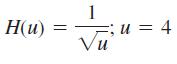
In Exercises 1 through 12, compute the derivative of the given function and find the slope of the line that is tangent to its graph for the specified value of the independent variable. H(u) 1 Fu = 4 Vu
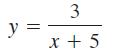
In Exercises 1 through 18, differentiate the given function. y 3 x + 5
In Exercises 3 through 13, find the derivative of the given function. f(x) = (3x + 1)√6x + 5
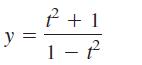
In Exercises 1 through 18, differentiate the given function. y 2+1 1-2
Leticia manages R(q) = 240q − 0.05q2 a company whose total weekly revenue is dollars when q units are produced and sold. Currently, the company produces and sells 80 units a week.a. Using marginal analysis, Leticia estimates the additional revenue that will be generated by the production and sale
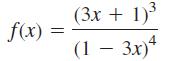
In Exercises 3 through 13, find the derivative of the given function. f(x) = (3x + 1)³ (1 - 3x)4
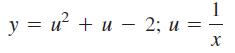
In Exercises 1 through 12, use the chain rule to compute the derivative dy/dx and simplify your answer. y = u² +u = 2; u = = X
In Exercises 9 through 22, find dy/dx by implicit differentiation.x3 + y3 = xy
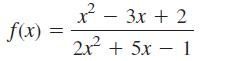
In Exercises 1 through 18, differentiate the given function. f(x): x²2² - 3x + 2 2x² + 5x - 1
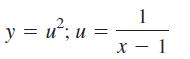
In Exercises 1 through 12, use the chain rule to compute the derivative dy/dx and simplify your answer. y = u²; u = 1 x 1
In Exercises 1 through 28, differentiate the given function.y = √2x
In Exercises 1 through 12, compute the derivative of the given function and find the slope of the line that is tangent to its graph for the specified value of the independent variable.f(x) = √x; x = 9
A manufacturer’s total cost is C(q) = 0.001q3 − 0.05q2 + 40q + 4,000dollars, where q is the number of units produced.a. Use marginal analysis to estimate the cost of producing the 251st unit.b. Compute the actual cost of producing the 251st unit.
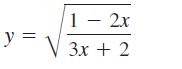
In Exercises 3 through 13, find the derivative of the given function. y = 1 - 2x 3x + 2
In Exercises 9 through 22, find dy/dx by implicit differentiation.5x − x2y3 = 2y
In Exercises 13 through 20, use the chain rule to compute the derivative dy/dx for the given value of x. 1 yu+u = 5 2x for x = 0 = И -
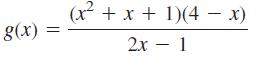
In Exercises 1 through 18, differentiate the given function. g(x) = (x² + x + 1)(4 - x) 2x - 1
In Exercises 1 through 28, differentiate the given function.y = 2 4√x3
In Exercises 13 through 20, use the chain rule to compute the derivative dy/dx for the given value of x.y = u2 − u; u = 4x + 3 for x = 0
Suppose the total cost in dollars of manufacturing q units is C(q) = 3q2 + q + 500.a. Use marginal analysis to estimate the cost of manufacturing the 41st unit.b. Compute the actual cost of manufacturing the 41st unit.
In Exercises 9 through 22, find dy/dx by implicit differentiation.y2 + 2xy2 − 3x + 1 = 0
In Exercises 13 through 24, compute the derivative of the given function and find the equation of the line that is tangent to its graph for the specified value x = c.f(x) = 2; c = 13
In Exercises 1 through 28, differentiate the given function.y = 9/√t
In Exercises 9 through 22, find dy/dx by implicit differentiation.1/x + 1/y = 1
In Exercises 14 through 17, find an equation for the tangent line to the graph of the given function at the specified point.f(x) = x2 − 3x + 2; x = 1
In Exercises 13 through 24, compute the derivative of the given function and find the equation of the line that is tangent to its graph for the specified value x = c.f(x) = 3; c = −4
In Exercises 1 through 28, differentiate the given function.y = 3/2t2
A manufacturer’s total cost is C(q) = 0.1q3 − 0.5q2 + 500q + 200 dollars when q thousand units are produced. Currently, 4,000 units (q = 4) are being produced and the manufacturer is planning to increase the level of production to 4,100. Use marginal analysis to estimate how this change will
In Exercises 13 through 20, use the chain rule to compute the derivative dy/dx for the given value of x.y = 3u4 − 4u + 5; u = x3 − 2x − 5 for x = 2
In Exercises 1 through 18, differentiate the given function.f(x) = (2 + 5x)2
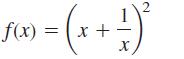
In Exercises 1 through 18, differentiate the given function. f(x) = x + X 2
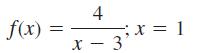
In Exercises 14 through 17, find an equation for the tangent line to the graph of the given function at the specified point. f(x) = 4 x - 3' x= = 1
In Exercises 14 through 17, find an equation for the tangent line to the graph of the given function at the specified point. f(x) = √x² + 5; x = −2
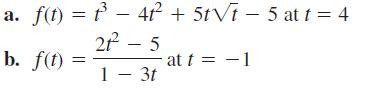
In each of these cases, find the rate of change of f(t) with respect to t at the given value of t. a. f(t) = t³² − 4t² + 5t√t - 5 at t = 4 21²-5 b. f(t) 1 - 3t at t = -1
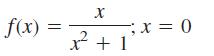
In Exercises 14 through 17, find an equation for the tangent line to the graph of the given function at the specified point. f(x) = X x² + 1 ; x = 0
A manufacturer’s total monthly revenue is R(q) = 240q − 0.05q2 dollars when q hundred units are produced during the month. Currently, the manufacturer is producing 8,000 units a month and is planning to decrease the monthly output by 65 units. Estimate how the total monthly revenue will change
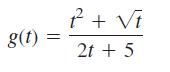
In Exercises 1 through 18, differentiate the given function. g(t) = t + Vi 2t + 5
In Exercises 9 through 22, find dy/dx by implicit differentiation.√x + √y = 1
In Exercises 13 through 20, use the chain rule to compute the derivative dy/dx for the given value of x. y = 3u² 6u + 2; u 1 X for. 1 3
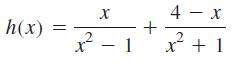
In Exercises 1 through 18, differentiate the given function. ²+1 x - t + 1 - 2x X || h(x)
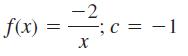
In Exercises 13 through 24, compute the derivative of the given function and find the equation of the line that is tangent to its graph for the specified value x = c. f(x) = -2 X ; c = - 1
In Exercises 1 through 28, differentiate the given function.y = x2 + 2x + 3
In Exercises 13 through 20, use the chain rule to compute the derivative dy/dx for the given value of x.y = u5 − 3u2 + 6u − 5; u = x2 − 1 for x = 1
In Exercises 9 through 22, find dy/dx by implicit differentiation.√2x + y2 = 4
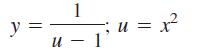
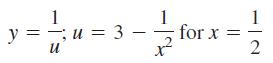
In Exercises 13 through 20, use the chain rule to compute the derivative dy/dx for the given value of x. y ==;u= u 3 - 1 for x 2
In Exercises 13 through 24, compute the derivative of the given function and find the equation of the line that is tangent to its graph for the specified value x = c.f(x) = 3x; c = 1
In Exercises 1 through 28, differentiate the given function.y = 3x5 − 4x3 + 9x − 6
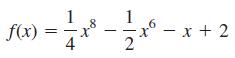
In Exercises 1 through 28, differentiate the given function. 1 8 f(x) = 11/16 4 2 - x + 2
In Exercises 13 through 20, use the chain rule to compute the derivative dy/dx for the given value of x.y = √u; u = x2 − 2x + 6 r x = 3
At a certain factory, the daily output is Q(K) = 600K1/2 units, where K denotes the capital investment measured in units of $1,000. The current capital investment is $900,000. Estimate the effect that an additional capital investment of $800 will have on the daily output.
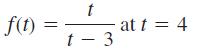
In each of these cases, find the percentage rate of change of the function f(t) with respect to t at the given value of t.a. f(t) = t2 − 3t + √t at t = 4b. f(t) || t t-3 - at t = 4
In Exercises 9 through 22, find dy/dx by implicit differentiation.xy − x = y + 2
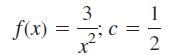
In Exercises 13 through 24, compute the derivative of the given function and find the equation of the line that is tangent to its graph for the specified value x = c. f(x) 3 с X² −2
Matthew manages a company that produces Q = 3,000K1/2L1/3 units per day, where K is the capital investment in thousands of dollars and L is the size of the labor force measured in worker-hours. Currently, the capital investment is $400,000 (K = 400) and the labor force is 1,331 worker-hours per
In Exercises 13 through 20, use the chain rule to compute the derivative dy/dx for the given value of x. y = 1 -; u u = u + 1 = x³ - 2x + 5 for x = 0
In Exercises 13 through 24, compute the derivative of the given function and find the equation of the line that is tangent to its graph for the specified value x = c.f(x) = x2; c = 1
In Exercises 1 through 28, differentiate the given function.f(x) = x9 − 5x8 + x + 12
In Exercises 13 through 24, compute the derivative of the given function and find the equation of the line that is tangent to its graph for the specified value x = c.f(x) = 2 − 3x2; c = 1
In each of these cases, find the rate of change of f(t) with respect to t at the given value of t.a. f(t) = t3(t2 − 1) at t = 0b. f(t) = (t2 − 3t + 6)1/2 at t = 1
At a certain factory, the daily output is Q(L) = 60,000L1/3 units, where L denotes the size of the labor force measured in worker-hours. Currently 1,000 worker-hours of labor are used each day. Estimate the effect on output that will be produced if the labor force is cut to 940 worker-hours.
Showing 3600 - 3700
of 8662
First
30
31
32
33
34
35
36
37
38
39
40
41
42
43
44
Last
Step by Step Answers

 Get 50% OFF
Claim Now
Get 50% OFF
Claim Now