New Semester
Started
Get
50% OFF
Study Help!
--h --m --s
Claim Now
Question Answers
Textbooks
Find textbooks, questions and answers
Oops, something went wrong!
Change your search query and then try again
S
Books
FREE
Study Help
Expert Questions
Accounting
General Management
Mathematics
Finance
Organizational Behaviour
Law
Physics
Operating System
Management Leadership
Sociology
Programming
Marketing
Database
Computer Network
Economics
Textbooks Solutions
Accounting
Managerial Accounting
Management Leadership
Cost Accounting
Statistics
Business Law
Corporate Finance
Finance
Economics
Auditing
Tutors
Online Tutors
Find a Tutor
Hire a Tutor
Become a Tutor
AI Tutor
AI Study Planner
NEW
Sell Books
Search
Search
Sign In
Register
study help
mathematics
college algebra graphs and models
College Algebra 7th Edition Robert F Blitzer - Solutions
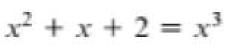
Solve the polynomial equation. Find all complex solutions. { x = 2 + x + ₂x
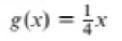
Determine any (a) Local extrema and (b) Absolute extrema. x² = (x)8
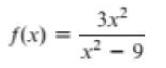
Find any horizontal or vertical asymptotes. f(x) = 3x² ²-9
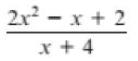
Use division to express the (Dividend) as (Divisor)(Quotient) + (Remainder). 2x² = x + 2 x + 4
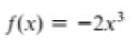
Complete the following. (a) State the degree and leading coefficient of f. (b) State the end behavior of the graph of f. f(x) = -2x³
Write the quadratic polynomial f(x)=2x2 - 4x +1 in the form f(x) = a(x - h)2 + k.
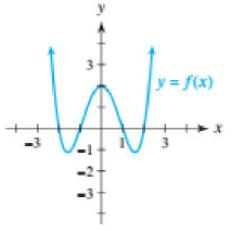
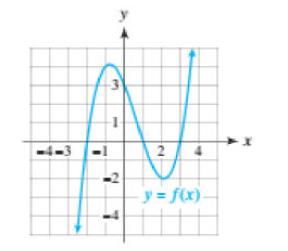
Solve the equation and inequalities. (a) f(x)=0 (b) f(x) >0 (c) f(x) < 0 y y = f(x) 3 X
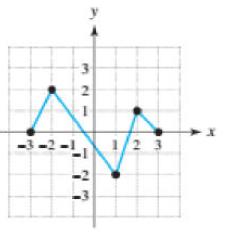
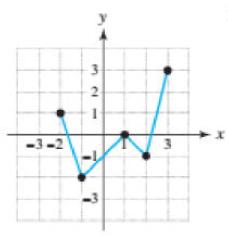
Use the graph off to estimate the (a) Local extrema and (b) Absolute extrema. -3-2 32 3 X
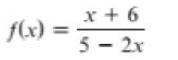
Find any horizontal or vertical asymptotes. f(x) = x+6 5 - 2x
Solve the equation. x43x² + 2 = 0
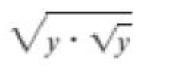
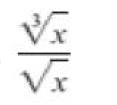
Use positive exponents to rewrite. Vy. Vy
Use graphing to factor f(x). f(x)=-3x³ 3x² + 18x
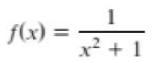
Find any horizontal or vertical asymptotes. f(x) = 1 x² + 1
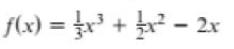
Complete the following. (a) Graph y = f(x) in the standard viewing rectangle. (b) Approximate the coordinates of each turning point.(c) Estimate any local extrema. f(x) = x³ + x² - 2x
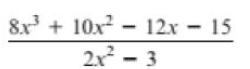
Divide the expression. 8x³+ 10x²12x - 15 2x²-3
Complete the following. (a) Find all complex zeros of f(x). (b) Write the complete factored form of f(x). f(x) = x² + 5x² + 4
Use the graph of y = f(x) to write its complete factored form. (Do not assume that the leading coefficient is ±1.) 7 2 4 y = f(x).
Complete the following. (a) Graph y = f(x) in the standard viewing rectangle. (b) Approximate the coordinates of each turning point.(c) Estimate any local extrema. I + XC - xf — xf + ,xf = al
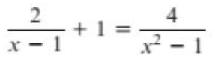
Find all real solutions. Check your results. 2/ ₁+1= 4 - 1
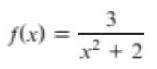
Find any horizontal or vertical asymptotes. f(x) = 3 x² + 2
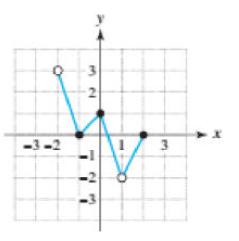
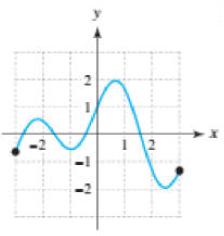
Use the graph off to estimate the (a) Local extrema and (b) Absolute extrema. N 2
Use graphing to factor f(x). f(x) = {x³ + ¾x² + x - 4
Complete the following. (a) Find all complex zeros of f(x). (b) Write the complete factored form of f(x). f(x) = x² + 4x²
Use positive exponents to rewrite. x
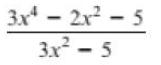
Divide the expression. 3x - 2x² - 5 3x²-5
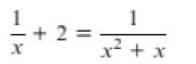
Find all real solutions. Check your results. 1 +2 2= 1 x² + x
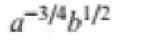
Use radical notation to rewrite. a-3/461/2
Use graphing to factor f(x). f(x) = x² + ¾x³ − 3x² - 2x - -
Complete the following. (a) Find all complex zeros of f(x). (b) Write the complete factored form of f(x). f(x) = x² + 2x² + 16x + 32
Use the rational zero test to determine any rational zeros of f(x). f(x) = 2x³ + x² − 13x + 6 -
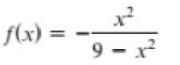
Find any horizontal or vertical asymptotes. f(x) = 1² 9-x²
Use the graph off to estimate the (a) Local extrema and (b) Absolute extrema. -3-2. 3 32 1/2 3
Use graphing to factor f(x). f(x) = 10x4 + 7x³ - 27x² + 2x + 8
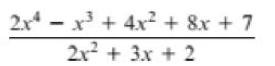
Divide the expression. 2x4x³+4x² + 8x + 7 2x² + 3x + 2
Complete the following. (a) Find all complex zeros of f(x). (b) Write the complete factored form of f(x). f(x) = x² + 2x²³ + x² + 8x - 12 x4
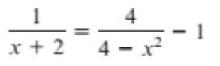
Find all real solutions. Check your results. 1 x + 2 4 4-x²
Complete the following. (a) State the degree and leading coefficient of f. (b) State the end behavior of the graph of f. f(x) = -2x +3
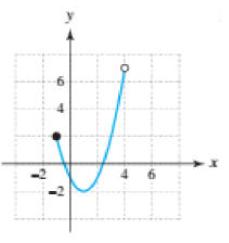
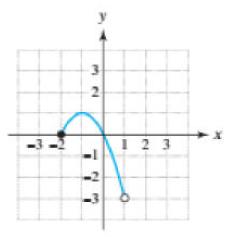
Use the graph off to estimate the (a) Local extrema and (b) Absolute extrema. -2 6
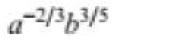
Use radical notation to rewrite. a-2/3b3/5
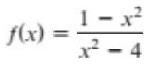
Find any horizontal or vertical asymptotes. f(x) 1-x² x² - 4
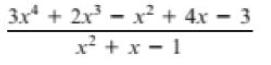
Divide the expression. 3x² + 2x³ = x² + 4x - 3 x²+x=1
What is the maximum number of times that a horizontal line can intersect the graph of each type of polynomial? (a) Linear (degree 1) (b) Quadratic (c) Cubic
Use the rational zero test to determine any rational zeros of f(x). f(x) = x³ + x² - 11x − 11 -
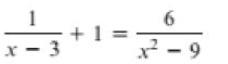
Find all real solutions. Check your results. 1 x-3 +1 = 6 ²-9
Use the graph off to estimate the (a) Local extrema and (b) Absolute extrema. 32 3 1 2 3
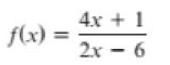
Find any horizontal or vertical asymptotes. f(x) = 4x + 1 2x - 6
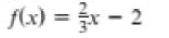
Complete the following. (a) State the degree and leading coefficient of f. (b) State the end behavior of the graph of f. f(x) = x - 2
Write the complete factored form of the polynomial f(x), given that k is a zero. f(x)=x²³ - 9x² + 23x - 15 k = 1
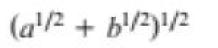
Use radical notation to rewrite. 2/1(2/19 + 2/10)
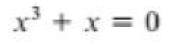
Solve the polynomial equation. Find all complex solutions. 3 x³ + x = 0
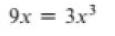
Solve the equation. 9x = 3x³
Use the graph off to estimate the (a) Local extrema and (b) Absolute extrema. -3-2 3 32 -3
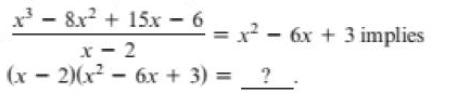
Use the equation (Dividend) = (Divisor)(Quotient) + (Remainder) to complete the following. x³8x² + 15x - 6 x-2 (x-2)(x² - 6x + 3) = _? - 6x + 3 implies
Write the complete factored form of the polynomial f(x), given that k is a zero. f(x) = 2x³ + x² - 11x10 k=-2
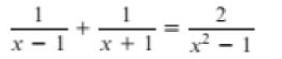
Find all real solutions. Check your results. x-1 1 x +1 2 x-1
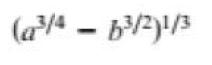
Use radical notation to rewrite. (a³/4 - 6³/2)¹/3
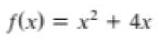
Complete the following. (a) State the degree and leading coefficient of f. (b) State the end behavior of the graph of f. f(x) = x² + 4x
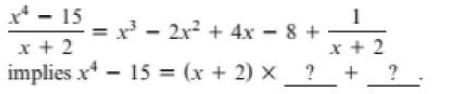
Use the equation (Dividend) = (Divisor)(Quotient) + (Remainder) to complete the following. 14-15 x + 2 implies x = x³ = 2x² + 4x = 8 + 15 = (x + 2) × ? 1 x+2 + ?
Solve the polynomial equation. Find all complex solutions. 0=1+x=27
Solve the equation. Check your answers. x-2/32x-1/3-3=0
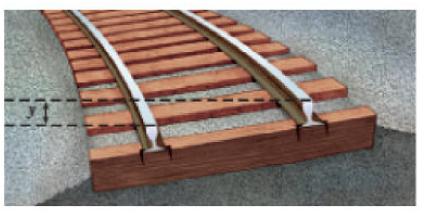
When curves are designed for trains, sometimes the outer rail is elevated or banked, so that a locomotive can safely negotiate the curve at a higher speed. See the figure. Suppose a circular curve is designed for 60 miles per hour. The formula f(x) = 2540/x computes the elevation y in inches of the
Solve the equation. Check your answers. x3/42x¹/2 - 4x¹/4 + 8 = 0
Solve the equation. Check your answers. x3/4x1/2x¹/4 + 1 = 0
Solve the equation. Check your answers. 10x2/3+29x¹/³ + 10 = 0
Fill in each blank so that the resulting statement is true.If f is a polynomial function of degree n, then the graph of f has at most________ turning points.
In Exercises 9–16,a. List all possible rational zeros.b. Use synthetic division to test the possible rational zeros and find an actual zero.c. Use the quotient from part (b) to find the remaining zeros of the polynomial function. f(x) = x3 + 4x2 - 3x - 6 -
In Exercises 11–20, write an equation that expresses each relationship. Then solve the equation for y.x varies directly as the cube of z and inversely as y.
In Exercises 13–18, graph each equation in a rectangular coordinate system. If two functions are given, graph both in the same system.f(x) = x3 - 4x2 - x + 4
In Exercises 14–19, solve each polynomial equation.x3 - 3x + 2 = 0
In Exercises 9–16, find the coordinates of the vertex for the parabola defined by the given quadratic function.f(x) = 3x2 - 12x + 1
Find a fourth-degree polynomial function f(x) with real coefficients that has -1, 1, and i as zeros and such that f(3) = 160.
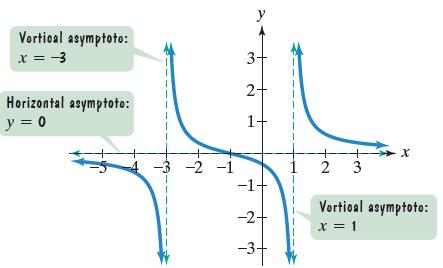
Use the graph of the rational function in the figure shown to complete each statement in Exercises 9–14. Vortical asymptoto: x = -3 Horizontal asymptoto: y = 0 -3 -2 -1 y 3+ 2+ ㅜ -2- -3- 2 3 X Vertical asymptoto: x = 1
In Exercises 11–14, identify which graphs are not those of polynomial functions. y Xx
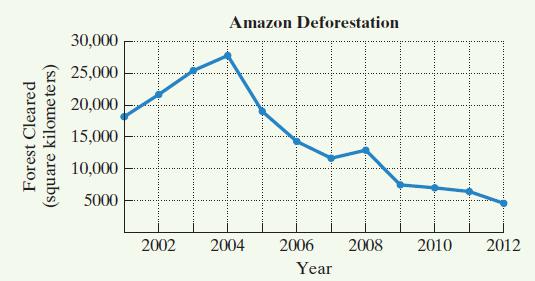
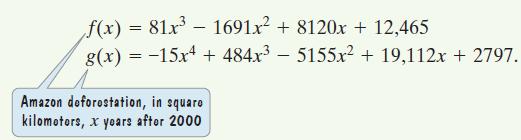
The Brazilian Amazon rain forest is the world’s largest tropical rain forest, with some of the greatest biodiversity of any region. In 2012, the number of trees cut down in the Amazon dropped to its lowest level in 20 years. The line graph shows the number of square kilometers cleared from 2001
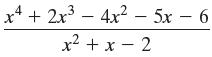
In Exercises 1–16, divide using long division. State the quotient, q(x), and the remainder, r(x). x² + 2x³4x² - 5x - 6 x² + x - 2
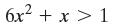
Solve each polynomial inequality in Exercises 1–42 and graph the solution set on a real number line. Express each solution set in interval notation. I < x + zx9 で
In Exercises 9–16,a. List all possible rational zeros.b. Use synthetic division to test the possible rational zeros and find an actual zero.c. Use the quotient from part (b) to find the remaining zeros of the polynomial function. f(x) = 2x³ + x²-3x + 1
In Exercises 13–18, graph each equation in a rectangular coordinate system. If two functions are given, graph both in the same system.f(x) = x2 + 2x - 8
In Exercises 14–19, solve each polynomial equation.6x3 - 11x2 + 6x - 1 = 0
In Exercises 9–16, find the coordinates of the vertex for the parabola defined by the given quadratic function.f(x) = -x2 - 2x + 8
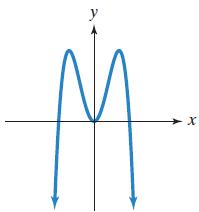
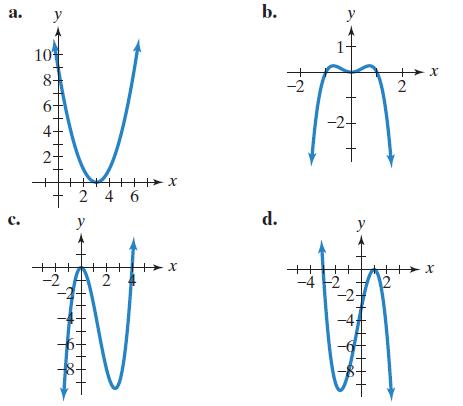
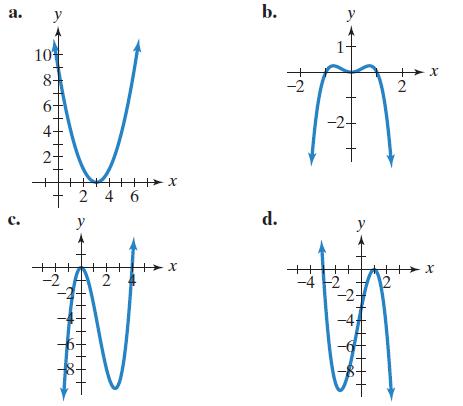
In Exercises 15–18, use the Leading Coefficient Test to determine the end behavior of the graph of the given polynomial function. Then use this end behavior to match the polynomial function with its graph. [The graphs are labeled (a) through (d).]f(x) = -x4 + x2 a. C. 10 8- + ||||| X 4
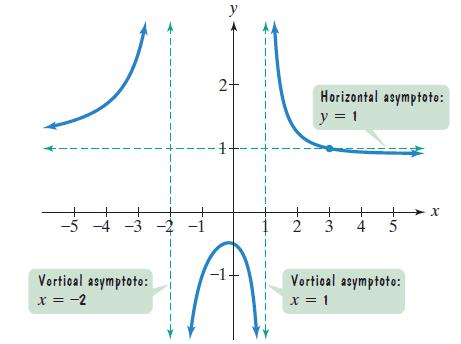
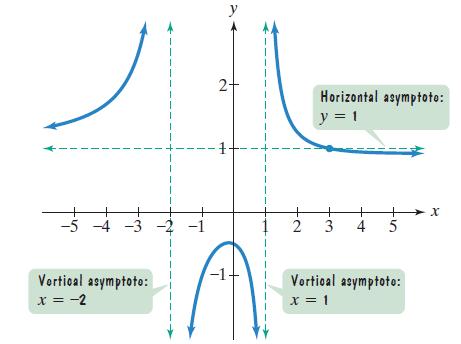
Use the graph of the rational function in the figure shown to complete each statement in Exercises 15–20. 1 -5 -4 -3 -2 -1 Vertical asymptoto: x = -2 y 2+ - 1+ -1+ 1 2 Horizontal asymptoto: y = 1 + 3 w. + 4 5 Vortical asymptoto: x = 1 x
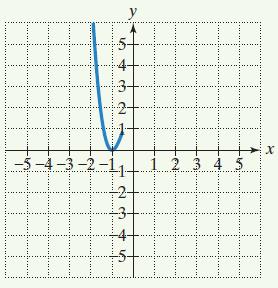
The figure shows an incomplete graph of f(x) = -3x3 - 4x2 + x + 2. Find all the zeros of the function. Then draw a complete graph. H -5-4-3-2 IITT Pl 2 3 4 5 # X
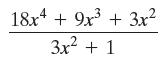
In Exercises 1–16, divide using long division. State the quotient, q(x), and the remainder, r(x). 18x4 + 9x³ + 3x² 3x² + 1
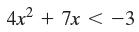
Solve each polynomial inequality in Exercises 1–42 and graph the solution set on a real number line. Express each solution set in interval notation. 4x² + 7.x < -3
In Exercises 9–16,a. List all possible rational zeros.b. Use synthetic division to test the possible rational zeros and find an actual zero.c. Use the quotient from part (b) to find the remaining zeros of the polynomial function. f(x) = 2x³ + 6x² + 5x + 2
In Exercises 11–20, write an equation that expresses each relationship. Then solve the equation for y.x varies jointly as y and z and inversely as the square root of w.
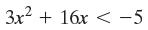
Solve each polynomial inequality in Exercises 1–42 and graph the solution set on a real number line. Express each solution set in interval notation. 3x² + 16x < -5
In Exercises 9–16,a. List all possible rational zeros.b. Use synthetic division to test the possible rational zeros and find an actual zero.c. Use the quotient from part (b) to find the remaining zeros of the polynomial function. f(x) = x³ 4x² + 8x - 5
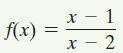
In Exercises 13–18, graph each equation in a rectangular coordinate system. If two functions are given, graph both in the same system. f(x) = x-1 x-2
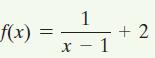
In Exercises 16–21, find the domain of each rational function and graph the function. f(x) 1 x - 1 +2
In Exercises 14–19, solve each polynomial equation.2x3 + 5x2 - 200x - 500 = 0
In Exercises 11–20, write an equation that expresses each relationship. Then solve the equation for y.x varies jointly as y and z and inversely as the square of w.
In Exercises 17–38, use the vertex and intercepts to sketch the graph of each quadratic function. Give the equation of the parabola’s axis of symmetry. Use the graph to determine the function’s domain and range.f(x) = (x - 4)2 - 1
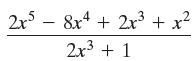
In Exercises 1–16, divide using long division. State the quotient, q(x), and the remainder, r(x). 2x58x4 + 2x³ + x² 2x³ + 1
In Exercises 16–17, find the zeros for each polynomial function and give the multiplicity of each zero. State whether the graph crosses the x-axis, or touches the x-axis and turns around, at each zero.f(x) = -2(x - 1)(x + 2)2(x + 5)3
Use the graph of the rational function in the figure shown to complete each statement in Exercises 15–20. 1 -5 -4 -3 -2 -1 Vertical asymptoto: x = -2 y 2+ - 1+ -1+ 1 2 Horizontal asymptoto: y = 1 + 3 w. + 4 5 Vortical asymptoto: x = 1 x
In Exercises 15–18, use the Leading Coefficient Test to determine the end behavior of the graph of the given polynomial function. Then use this end behavior to match the polynomial function with its graph. [The graphs are labeled (a) through (d).]f(x) = x3 - 4x2 a. C. 10 8- + ||||| X 4
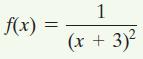
In Exercises 16–21, find the domain of each rational function and graph the function. f(x): || 1 (x + 3)²
In Exercises 9–16, find the coordinates of the vertex for the parabola defined by the given quadratic function.f(x) = -2x2 + 8x - 1
Showing 8600 - 8700
of 13634
First
80
81
82
83
84
85
86
87
88
89
90
91
92
93
94
Last
Step by Step Answers

 Get 50% OFF
Claim Now
Get 50% OFF
Claim Now