New Semester
Started
Get
50% OFF
Study Help!
--h --m --s
Claim Now
Question Answers
Textbooks
Find textbooks, questions and answers
Oops, something went wrong!
Change your search query and then try again
S
Books
FREE
Study Help
Expert Questions
Accounting
General Management
Mathematics
Finance
Organizational Behaviour
Law
Physics
Operating System
Management Leadership
Sociology
Programming
Marketing
Database
Computer Network
Economics
Textbooks Solutions
Accounting
Managerial Accounting
Management Leadership
Cost Accounting
Statistics
Business Law
Corporate Finance
Finance
Economics
Auditing
Tutors
Online Tutors
Find a Tutor
Hire a Tutor
Become a Tutor
AI Tutor
AI Study Planner
NEW
Sell Books
Search
Search
Sign In
Register
study help
mathematics
college algebra graphs and models
College Algebra 7th Edition Robert F Blitzer - Solutions
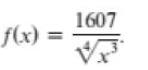
During the 18th century Bryan Robinson found that the pulse rate of an animal could be approximated byThe input x is the length of the animal in inches, and the output f(x) is the approximate number of heart-beats per minute.(a) Use f to estimate the pulse rates of a 2-foot dog and a 5.5-foot
Solve the equation. Check your answers. 0 = 1 + £/1*6 + {/2*
Solve the equation. Check your answers. 0 = 9 - £/1¹ - E/Z.X
Solve the equation. Check your answers. 5m² +13n¹ = 28 13-1
Solve the equation. Check your answers. 3n-2 - 19n-1 + 20 = 0
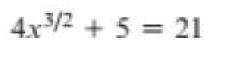
Solve the equation. Check your answers. 4x³/2 + 5 = 21
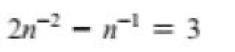
Solve the equation. Check your answers. 2n-²-n²²¹² = 3
Solve the equation. Check your answers. n² + 3n¹ + 2 = 0
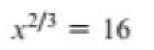
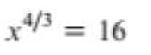
Solve the equation. Check your answers. 2/3 16
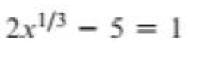
Solve the equation. Check your answers. 2x¹/3 - 5 = 1
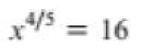
Solve the equation. Check your answers. 91 = 5/* 1-4/5
Solve the equation. Check your answers. 16 91 = £/*
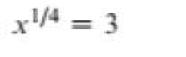
Solve the equation. Check your answers. x1/4 = 3
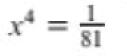
Solve the equation. Check your answers. 81 무사 x
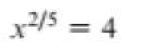
Solve the equation. Check your answers. 2/5 = 4
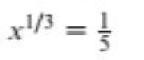
Solve the equation. Check your answers. { = x-1/3
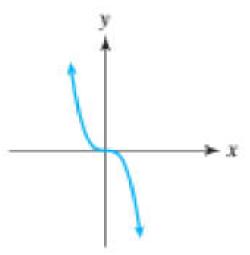
Use the given graph of y = axn, where n is a nonzero integer to complete the following. (a) Is n odd or even? Is n positive or negative? (b) Is the coefficient a positive or negative? (c) Over what interval(s) is f(x) positive? negative? (d) Over what interval(s) is the graph increasing?
Solve the equation. Check your answers. 6x2/3 11x¹/3+4= 0
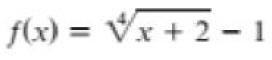
Use transformations of the graphs of y = √x, y = 3√x, or y = 4√x to graph y = f(x). f(x)=√x + 2-1
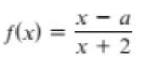
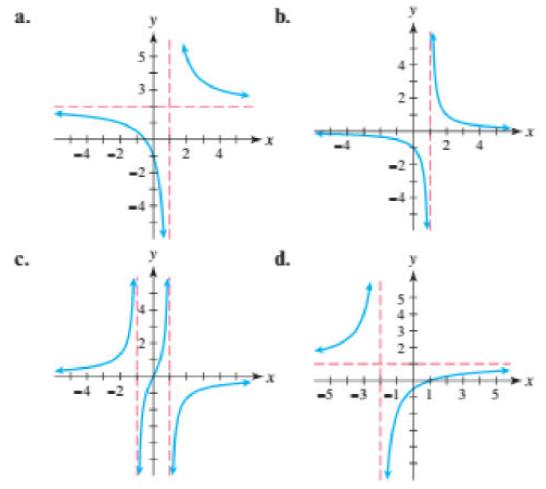
Let a be a positive constant. Match f(x) with its graph (a-d) without using a calculator. f(x) = x - a x+2
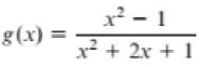
Graph y = g(x) by hand. g(x) = 1-zx x² + 2x + 1
In Exercises 33–38, use Descartes’s Rule of Signs to determine the possible number of positive and negative real zeros for each given function. f(x) = 2x45x³ - x² - 6x + 4
In Exercises 33–40, use synthetic division and the Remainder Theorem to find the indicated function value. f(x) = x² + 5x³ + 5x² - 5x - 6; f(3)
The average number of daily phone calls, C, between two cities varies jointly as the product of their populations, P1 and P2, and inversely as the square of the distance, d, between them.a. Write an equation that expresses this relationship.b. The distance between San Francisco (population:
Solve each polynomial inequality in Exercises 1–42 and graph the solution set on a real number line. Express each solution set in interval notation. x³ + 7x²-x-7
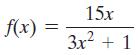
In Exercises 37–44, find the horizontal asymptote, if there is one, of the graph of each rational function. f(x) = 15x 3x² + 1
In Exercises 33–40, use synthetic division and the Remainder Theorem to find the indicated function value. f(x) = x4 − 5x³ + 5x² + 5x − 6; f(2)
In Exercises 17–38, use the vertex and intercepts to sketch the graph of each quadratic function. Give the equation of the parabola’s axis of symmetry. Use the graph to determine the function’s domain and range.f(x) = 6 - 4x + x2
In Exercises 37–38, use Descartes’s Rule of Signs to determine the possible number of positive and negative real zeros for each given function.f(x) = 3x4 - 2x3 - 8x + 5
In Exercises 33–40, use the Intermediate Value Theorem to show that each polynomial has a real zero between the given integersf(x) = x5 - x3 - 1; between 1 and 2
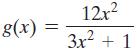
In Exercises 37–44, find the horizontal asymptote, if there is one, of the graph of each rational function. g(x) = 12x² 2 3x² + 1
The force of wind blowing on a window positioned at a right angle to the direction of the wind varies jointly as the area of the window and the square of the wind’s speed. It is known that a wind of 30 miles per hour blowing on a window measuring 4 feet by 5 feet exerts a force of 150 pounds.
In Exercises 37–38, use Descartes’s Rule of Signs to determine the possible number of positive and negative real zeros for each given function.f(x) = 2x5 - 3x3 - 5x2 + 3x - 1
Solve each polynomial inequality in Exercises 1–42 and graph the solution set on a real number line. Express each solution set in interval notation. x³ + x² + 4x +4>0
In Exercises 33–38, use Descartes’s Rule of Signs to determine the possible number of positive and negative real zeros for each given function. f(x) = 4x4 = x³ + 5x² - 2x - 6 -
The table shows the values for the current, I, in an electric circuit and the resistance, R, of the circuit.a. Graph the ordered pairs in the table of values, with values of I along the x-axis and values of R along the y-axis. Connect the eight points with a smooth curve.b. Write an equation of
In Exercises 39–44, an equation of a quadratic function is given.a. Determine, without graphing, whether the function has a minimum value or a maximum value.b. Find the minimum or maximum value and determine where it occurs.c. Identify the function’s domain and its range.f(x) = 3x2 - 12x - 1
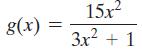
In Exercises 37–44, find the horizontal asymptote, if there is one, of the graph of each rational function. g(x): 2 15x² 3x² + 1
In Exercises 33–40, use synthetic division and the Remainder Theorem to find the indicated function value. f(x) = 2x4 − 5x³ − x² + 3x + 2; ƒ(−²2²)
In Exercises 39–52, find all zeros of the polynomial function or solve the given polynomial equation. Use the Rational Zero Theorem, Descartes’s Rule of Signs, and possibly the graph of the polynomial function shown by a graphing utility as an aid in obtaining the first zero or the first root.
Solve each polynomial inequality in Exercises 1–42 and graph the solution set on a real number line. Express each solution set in interval notation. 0 < 6 - ²6 + z** x6
For Exercises 40–46,a. List all possible rational roots or rational zeros.b. Use Descartes’s Rule of Signs to determine the possible number of positive and negative real roots or real zeros.c. Use synthetic division to test the possible rational roots or zeros and find an actual root or zero.d.
In Exercises 39–52, find all zeros of the polynomial function or solve the given polynomial equation. Use the Rational Zero Theorem, Descartes’s Rule of Signs, and possibly the graph of the polynomial function shown by a graphing utility as an aid in obtaining the first zero or the first root.
In Exercises 33–40, use synthetic division and the Remainder Theorem to find the indicated function value. 2 ƒ(-3) f(x) = 6x4 6x4+ 10x³+ 5x² + x + 1; fl
In Exercises 33–40, use the Intermediate Value Theorem to show that each polynomial has a real zero between the given integersf(x) = 3x3 - 10x + 9; between -3 and -2
In Exercises 41–64,a. Use the Leading Coefficient Test to determine the graph’s end behavior.b. Find the x-intercepts. State whether the graph crosses the x-axis, or touches the x-axis and turns around, at each intercept.c. Find the y-intercept.d. Determine whether the graph has y-axis
Use Descartes’s Rule of Signs to explain why 2x4 + 6x2 + 8 = 0 has no real roots.
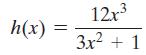
In Exercises 37–44, find the horizontal asymptote, if there is one, of the graph of each rational function. h(x) = 12x³ 3x² + 1
Solve each polynomial inequality in Exercises 1–42 and graph the solution set on a real number line. Express each solution set in interval notation. x3 > 9x2
For Exercises 40–46,a. List all possible rational roots or rational zeros.b. Use Descartes’s Rule of Signs to determine the possible number of positive and negative real roots or real zeros.c. Use synthetic division to test the possible rational roots or zeros and find an actual root or zero.d.
In Exercises 39–44, an equation of a quadratic function is given.a. Determine, without graphing, whether the function has a minimum value or a maximum value.b. Find the minimum or maximum value and determine where it occurs.c. Identify the function’s domain and its range.f(x) = 2x2 - 8x - 3
In Exercises 33–40, use the Intermediate Value Theorem to show that each polynomial has a real zero between the given integersf(x) = 3x3 - 8x2 + x + 2; between 2 and 3
In Exercises 39–44, an equation of a quadratic function is given.a. Determine, without graphing, whether the function has a minimum value or a maximum value.b. Find the minimum or maximum value and determine where it occurs.c. Identify the function’s domain and its range.f(x) = -4x2 + 8x - 3
What does it mean if two quantities vary directly?
Use synthetic division to divide f(x) = x3 - 4x2 + x + 6 by x + 1.Use the result to find all zeros of f.
In your own words, explain how to solve a variation problem.
In Exercises 39–52, find all zeros of the polynomial function or solve the given polynomial equation. Use the Rational Zero Theorem, Descartes’s Rule of Signs, and possibly the graph of the polynomial function shown by a graphing utility as an aid in obtaining the first zero or the first root.
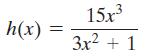
In Exercises 37–44, find the horizontal asymptote, if there is one, of the graph of each rational function. h(x) = 15x³ 3x² + 1
In Exercises 41–64,a. Use the Leading Coefficient Test to determine the graph’s end behavior.b. Find the x-intercepts. State whether the graph crosses the x-axis, or touches the x-axis and turns around, at each intercept.c. Find the y-intercept.d. Determine whether the graph has y-axis
In Exercises 39–44, an equation of a quadratic function is given.a. Determine, without graphing, whether the function has a minimum value or a maximum value.b. Find the minimum or maximum value and determine where it occurs.c. Identify the function’s domain and its range.f(x) = -2x2 - 12x + 3
Solve each polynomial inequality in Exercises 1–42 and graph the solution set on a real number line. Express each solution set in interval notation. x³ = 4x² 2
In Exercises 41–64,a. Use the Leading Coefficient Test to determine the graph’s end behavior.b. Find the x-intercepts. State whether the graph crosses the x-axis, or touches the x-axis and turns around, at each intercept.c. Find the y-intercept.d. Determine whether the graph has y-axis
What does it mean if two quantities vary inversely?
Use synthetic division to divide f(x) = x3 - 2x2 - x + 2 by x + 1.Use the result to find all zeros of f.
For Exercises 40–46,a. List all possible rational roots or rational zeros.b. Use Descartes’s Rule of Signs to determine the possible number of positive and negative real roots or real zeros.c. Use synthetic division to test the possible rational roots or zeros and find an actual root or zero.d.
In Exercises 39–52, find all zeros of the polynomial function or solve the given polynomial equation. Use the Rational Zero Theorem, Descartes’s Rule of Signs, and possibly the graph of the polynomial function shown by a graphing utility as an aid in obtaining the first zero or the first root.
In Exercises 39–44, an equation of a quadratic function is given.a. Determine, without graphing, whether the function has a minimum value or a maximum value.b. Find the minimum or maximum value and determine where it occurs.c. Identify the function’s domain and its range.f(x) = 5x2 - 5x
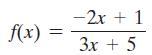
In Exercises 37–44, find the horizontal asymptote, if there is one, of the graph of each rational function. f(x) -2x + 1 3x + 5
In Exercises 41–64,a. Use the Leading Coefficient Test to determine the graph’s end behavior.b. Find the x-intercepts. State whether the graph crosses the x-axis, or touches the x-axis and turns around, at each intercept.c. Find the y-intercept.d. Determine whether the graph has y-axis
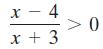
Solve each rational inequality in Exercises 43–60 and graph the solution set on a real number line. Express each solution set in interval notation. x - 4 x + 3 V 0
Solve the equationgiven that 2 is a zero of 2x³5x² + x + 2 = 0
For Exercises 40–46,a. List all possible rational roots or rational zeros.b. Use Descartes’s Rule of Signs to determine the possible number of positive and negative real roots or real zeros.c. Use synthetic division to test the possible rational roots or zeros and find an actual root or zero.d.
In Exercises 39–52, find all zeros of the polynomial function or solve the given polynomial equation. Use the Rational Zero Theorem, Descartes’s Rule of Signs, and possibly the graph of the polynomial function shown by a graphing utility as an aid in obtaining the first zero or the first root.
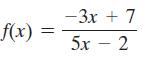
In Exercises 37–44, find the horizontal asymptote, if there is one, of the graph of each rational function. f(x) = -3x + 7 5x – 2
In Exercises 39–44, an equation of a quadratic function is given.a. Determine, without graphing, whether the function has a minimum value or a maximum value.b. Find the minimum or maximum value and determine where it occurs.c. Identify the function’s domain and its range.f(x) = 6x2 - 6x
Explain what is meant by combined variation. Give an example with your explanation.
Explain what is meant by joint variation. Give an example with your explanation.
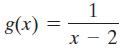
In Exercises 45–56, use transformations of f(x) = 1/x or f(x) = 1/x2 to graph each rational function. g(x) 1 x-2
In Exercises 39–52, find all zeros of the polynomial function or solve the given polynomial equation. Use the Rational Zero Theorem, Descartes’s Rule of Signs, and possibly the graph of the polynomial function shown by a graphing utility as an aid in obtaining the first zero or the first root.
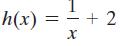
In Exercises 45–56, use transformations of f(x) = 1/x or f(x) = 1/x2 to graph each rational function. h(x) = X +2
For Exercises 40–46,a. List all possible rational roots or rational zeros.b. Use Descartes’s Rule of Signs to determine the possible number of positive and negative real roots or real zeros.c. Use synthetic division to test the possible rational roots or zeros and find an actual root or zero.d.
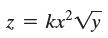
In Exercises 45–46, describe in words the variation shown by the given equation. z = kx² kx² Vy
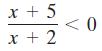
Solve each rational inequality in Exercises 43–60 and graph the solution set on a real number line. Express each solution set in interval notation. x + 5 x + 2 < 0
For Exercises 40–46,a. List all possible rational roots or rational zeros.b. Use Descartes’s Rule of Signs to determine the possible number of positive and negative real roots or real zeros.c. Use synthetic division to test the possible rational roots or zeros and find an actual root or zero.d.
In Exercises 39–52, find all zeros of the polynomial function or solve the given polynomial equation. Use the Rational Zero Theorem, Descartes’s Rule of Signs, and possibly the graph of the polynomial function shown by a graphing utility as an aid in obtaining the first zero or the first root.
In Exercises 39–52, find all zeros of the polynomial function or solve the given polynomial equation. Use the Rational Zero Theorem, Descartes’s Rule of Signs, and possibly the graph of the polynomial function shown by a graphing utility as an aid in obtaining the first zero or the first root.
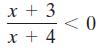
Solve each rational inequality in Exercises 43–60 and graph the solution set on a real number line. Express each solution set in interval notation. x + 3 x + 4 < 0
In Exercises 41–64,a. Use the Leading Coefficient Test to determine the graph’s end behavior.b. Find the x-intercepts. State whether the graph crosses the x-axis, or touches the x-axis and turns around, at each intercept.c. Find the y-intercept.d. Determine whether the graph has y-axis
Solve the equation 3x3 + 7x2 - 22x - 8 = 0 given that -1/3 is a root.
In Exercises 45–46, describe in words the variation shown by the given equation. Z || k√x y
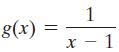
In Exercises 45–56, use transformations of f(x) = 1/x or f(x) = 1/x2 to graph each rational function. g(x) 1 x-1
For Exercises 40–46,a. List all possible rational roots or rational zeros.b. Use Descartes’s Rule of Signs to determine the possible number of positive and negative real roots or real zeros.c. Use synthetic division to test the possible rational roots or zeros and find an actual root or zero.d.
In Exercises 45–48, give the domain and the range of each quadratic function whose graph is described.Maximum = -6 at x = 10
Solve the equation 12x3 + 16x2. 5x - 3 = 0 given that -3/2 is a root.
In Exercises 45–48, give the domain and the range of each quadratic function whose graph is described.The vertex is (-3, -4) and the parabola opens down.
Solve the equation 2x3 - 3x2 - 11x + 6 = 0 given that -2 is a zero f(x) = 2x3 -3x2 -11x + 6.
In Exercises 45–48, give the domain and the range of each quadratic function whose graph is described.The vertex is (-1, -2) and the parabola opens up.
In Exercises 41–64,a. Use the Leading Coefficient Test to determine the graph’s end behavior.b. Find the x-intercepts. State whether the graph crosses the x-axis, or touches the x-axis and turns around, at each intercept.c. Find the y-intercept.d. Determine whether the graph has y-axis
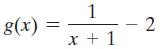
In Exercises 45–56, use transformations of f(x) = 1/x or f(x) = 1/x2 to graph each rational function. g(x) = 1 x + 1 2
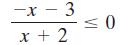
Solve each rational inequality in Exercises 43–60 and graph the solution set on a real number line. Express each solution set in interval notation. -x-3 x + 2 ≤0
Showing 8200 - 8300
of 13634
First
76
77
78
79
80
81
82
83
84
85
86
87
88
89
90
Last
Step by Step Answers

 Get 50% OFF
Claim Now
Get 50% OFF
Claim Now