New Semester
Started
Get
50% OFF
Study Help!
--h --m --s
Claim Now
Question Answers
Textbooks
Find textbooks, questions and answers
Oops, something went wrong!
Change your search query and then try again
S
Books
FREE
Study Help
Expert Questions
Accounting
General Management
Mathematics
Finance
Organizational Behaviour
Law
Physics
Operating System
Management Leadership
Sociology
Programming
Marketing
Database
Computer Network
Economics
Textbooks Solutions
Accounting
Managerial Accounting
Management Leadership
Cost Accounting
Statistics
Business Law
Corporate Finance
Finance
Economics
Auditing
Tutors
Online Tutors
Find a Tutor
Hire a Tutor
Become a Tutor
AI Tutor
AI Study Planner
NEW
Sell Books
Search
Search
Sign In
Register
study help
mathematics
precalculus
Thomas Calculus Early Transcendentals 13th Edition Joel R Hass, Christopher E Heil, Maurice D Weir - Solutions
Find the general solution of the first-order differential equation for x > 0 by any appropriate method.y' cos x2 + y cos x2/x = sec x2
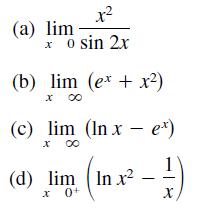
For each limit, use direct substitution. Then identify the form of the limit as either indeterminate or not. x² x 0 sin 2x (a) lim (b) lim (ex + x²) x ∞0 (c) lim (In xex) x ∞0 (d) lim In x² 3. (1 x 0+ 11)
The rate of change of the number of raccoons N(t) in a population is directly proportional to 380 - N(t), where t is the time in years. When t = 0, the population is 110, and when t = 4, the population has increased to 150. Find the population when t = 8.
Find the general solution of the first-order differential equation for x > 0 by any appropriate method.y cos x - cos x + dy/dx = 0
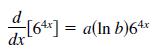
What are the values of a and b? d dx [64] = a(In b)64x
Use integration to find a general solution of the differential equation.dy/dx = xex2
Find the general solution of the first-order differential equation for x > 0 by any appropriate method.y' = 2x√1 - y2
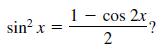
Which hyperbolic identity corresponds to the trigonometric identity sin²x = 1 cos 2x, -? 2
What are two options for finding the indefinite integral below? 5¹ dt
Describe the General Power Rule for Integration in your own words.
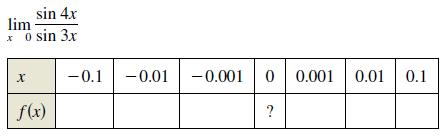
Complete the table and use the result to estimate the limit. Use a graphing utility to graph the function to confirm your result. sin 4x lim x 0 sin 3x X f(x) -0.1 -0.01 -0.001 0 0.001 0.01 0.1 ?
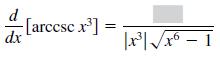
What is the missing value? d dx -[arcesc x³] |x³|√√√x6 =1
Describe the meaning of arccos x in your own words.
Explain the benefit of L’Hôpital’s Rule.
Describe how the name hyperbolic function arose.
Complete the table and use the result to estimate the limit. Use a graphing utility to graph the function to confirm your result.lim x0 1 - ex/x ¿ 1'0 100 10000 1000- 10'0- 10- (x)ƒ
What is a restricted domain? Why are restricted domains necessary to define inverse trigonometric functions?
In your own words, describe the process of completing the square of a quadratic function. Explain when completing the square is useful for finding an integral.
Which hyperbolic functions have domains that are not all real numbers?
Which inverse trigonometric function has a range of 0 < y < π?
Explain when it is necessary to use logarithmic differentiation to find the derivative of an exponential function.
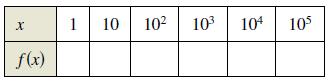
Complete the table and use the result to estimate the limit. Use a graphing utility to graph the function to confirm your result.lim x∞ 6x/√3x2 - 2x X f(x) 1 10 10² 10³ 104 105
Use the properties of logarithms to approximate the indicated logarithms, given that ln 4 = 1.3863 and ln 5 = 1.6094.(a) ln 20(b) ln 4/5(c) ln 625(d) ln√5
Explain how to choose which compound interest formula to use to find the balance of a deposit.
Evaluate the expression without using a calculator.log64 32
Find the derivative of the function.g(x) = ln√2x
Evaluate the expression without using a calculator.arccos(-1)
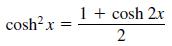
Verify the identity. cosh²x 1 + cosh 2x 2
Evaluate the expression without using a calculator.log27 1/9
Verify the identity.sinh x + cosh x = ex
Find the derivative of the function.f (x) = x√ln x
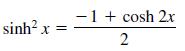
Verify the identity. sinh? x = - 1 + cosh 2x 2
Find the derivative of the function.f (x) = [ln(2x)]3
Evaluate the expression without using a calculator.arccsc(-√2)
Verify the identity.tanh2 x + sech2 x = 1
Sketch the graph of the function.y = 2x
Evaluate the expression without using a calculator.arcsec 2
Verify the identity.coth2 x - csch2 x = 1
Find the derivative of the function.y = ln 4x/ x - 6
Use a calculator to approximate the value. Round your answer to two decimal places.arccos(0.051)
Find the derivative of the function.y = 1/ln(1 - 7x)
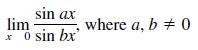
Evaluate the limit, using L’Hôpital’s Rule if necessary. sin ax lim x 0 sin bx' where a, b = 0
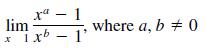
Evaluate the limit, using L’Hôpital’s Rule if necessary. xa x1xb-1' 1 lim where a, b = 0
Sketch the graph of the function.y = (1/3)x
Sketch the graph of the function.y = 4x-1
Sketch the graph of the function.h(x) = 5x-2
Find the derivative of the function.y = ln 5x /1 - x
Evaluate the limit, using L’Hôpital’s Rule if necessary. lim 8 - x Et oo x x
Use a calculator to approximate the value. Round your answer to two decimal places.arccsc(-4.487)
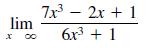
Evaluate the limit, using L’Hôpital’s Rule if necessary. 7x³ lim 2x + 1 6x³ + 1
Sketch the graph of the function.y = 2x2
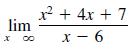
Evaluate the limit, using L’Hôpital’s Rule if necessary. lim x² + 4x + 7 x-6
Sketch the graph of the function.y = 3 -|x|
Solve for x.(a) log10 1000 = x(b) log10 0.1 = x
Evaluate the limit, using L’Hôpital’s Rule if necessary. X lim x x + 2 ∞0
Solve for x.(a) log3 1/81 = x(b) log6 36 = x
Solve for x.(a) log3 x = -1(b) log2 x = -4
Solve for x.(a) log4 x = -2(b) log5 x = 3
Find the derivative of the function.f (x) = sinh 9x
Solve for x.(a) x2 - x = log5 25(b) 3x + 5 = log2 64
Solve for x.(a) log3 x + log3(x - 2) = 1(b) log10 (x + 3) - log10 x = 1
Solve the equation accurate to three decimal places.32x = 75
Find the derivative of the function.y = sech 5x2
Solve the equation accurate to three decimal places.6-2x = 74
Find the derivative of the function.f (x) = tanh(4x2 + 3x)
Solve the equation accurate to three decimal places.23-z = 625
Evaluate the limit, using L’Hôpital’s Rule if necessary. x3 X:3 lim * ∞ e-x/2
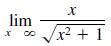
Evaluate the limit, using L’Hôpital’s Rule if necessary. lim x 00 x² + 1
The population (in millions) of a country in 2015 and the expected continuous annual rate of change k of the population are given. (a) Find the exponential growth model P = Cekt for the population by letting t= 5 correspond to 2015.(b) Use the model to predict the population of the country in
The population (in millions) of a country in 2015 and the expected continuous annual rate of change k of the population are given. (a) Find the exponential growth model P = Cekt for the population by letting t = 5 correspond to 2015.(b) Use the model to predict the population of the country in
Use integration to find a general solution of the differential equation.dy/dx = 5(sin x)ecos x
Find the general solution of the first-order linear differential equation.y' - y = 10
Find the general solution of the first-order differential equation for x > 0 by any appropriate method.(2y - ex) dx + x dy = 0
Find the general solution of the first-order linear differential equation.exy' + 4exy = 1
Is an equation of the formseparable? Explain. dy dx = f(x)g(y)-f(x)h(y), g(y) #h(y)
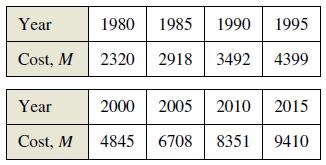
The table shows the cost of tuition and fees M (in dollars) at public four-year universities for selected years.(a) Use a graphing utility to find an exponential model M1 for the data. Let t = 0 represent 1980.(b) Use a graphing utility to find a linear model M2 for the data. Let t = 0 represent
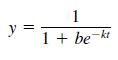
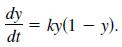
Show that ifthen y || 1 1+ be-kt
Find the general solution of the first-order differential equation for x > 0 by any appropriate method.(x + y) dx - x dy = 0
Find the general solution of the first-order linear differential equation.4y' = ex/4 + y
Find the general solution of the first-order differential equation for x > 0 by any appropriate method.3(y - 4x2) dx + x dy = 0
Find the general solution of the first-order linear differential equation.dy/dx - 5y/x2 = 1/x2, x > 0
Find the general solution of the first-order differential equation for x > 0 by any appropriate method.x dx + (y + ey)(x2 + 1) dy = 0
(a) Sketch the slope field for the differential equation,(b) Use the slope field to sketch the solution that passes through the given point, and(c) Discuss the graph of the solution as x ∞ and x -∞. Use a graphing utility to verify your results. To print a blank coordinate plane, go to
The number of bacteria in a culture is increasing according to the law of exponential growth. There are 125 bacteria in the culture after 2 hours and 350 bacteria after 4 hours.(a) Find the initial population.(b) Write an exponential growth model for the bacteria population. Let t represent the
Find the general solution of the first-order linear differential equation.(x - 2)y' + y = 1, x > 2
Find the general solution of the first-order linear differential equation.(x + 3)y' + 2y = 2(x + 3)2, x > -3
Find the logistic equation that passes through the given point.dy/dt = 4.2y(1 - y/21), (0, 9)
The level of sound β (in decibels) with an intensity of I is β(I) = 10 log10(I/I0), where I0 is an intensity of 10-16 watt per square centimeter, corresponding roughly to the faintest sound that can be heard. Determine β(I) for the following.(a) I = 10-14 watt per square centimeter (whisper)(b)
Describe the slope field for a logistic differential equation. Explain your reasoning.
Determine whether the statement is true or false. If it is false, explain why or give an example that shows it is false.Half of the atoms in a sample of radioactive radium decay in 799.5 years.
At time t = 0 minutes, the temperature of an object is 140°F. The temperature of the object is changing at the rate given by the differential equation(a) Use a graphing utility and Euler’s Method to approximate the particular solutions of this differential equation at t = 1, 2, and 3. Use a step
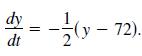
Use a computer algebra system to(a) Graph the slope field for the differential equation and(b) Graph the solution satisfying the specified initial condition.dy/dx = 0.25y, y(0) = 4
A slope field shows that the slope at the point (1, 1) is 6. Does this slope field represent the family of solutions for the differential equation y' = 4x + 2y? Explain.
Let f be a twice-differentiable real-valued function satisfying f (x) + f''(x) = -xg(x)f'(x), where g(x) ≥ 0 for all real x. Prove that |f (x)| is bounded.
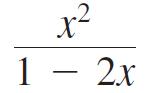
Use power series operations to find the Taylor series at x = 0 for the function. x² 1 - 2x
a. Does the value ofappear to depend on the value of a? If so, how?b. Does the value ofappear to depend on the value of b? If so, how?c. Use calculus to confirm your findings in parts (a) and (b). lim 1 11-0 cos (a/n) n a constant,
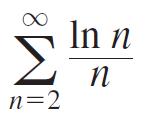
Which of the series converge, and which diverge? Give reasons for your answers. Σ n=2 In n n
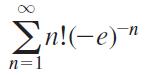
Use any method to determine if the series converges or diverges. Give reasons for your answer. Ση!(-e)" n=1
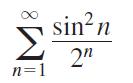
Which of the series converge, and which diverge? Use any method, and give reasons for your answers. 8 Σ n=1 sin²n 2"
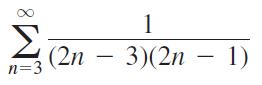
Find the sums of the serie. n=3 1 (2n - 3)(2n-1)
Showing 9900 - 10000
of 29454
First
93
94
95
96
97
98
99
100
101
102
103
104
105
106
107
Last
Step by Step Answers

 Get 50% OFF
Claim Now
Get 50% OFF
Claim Now