New Semester
Started
Get
50% OFF
Study Help!
--h --m --s
Claim Now
Question Answers
Textbooks
Find textbooks, questions and answers
Oops, something went wrong!
Change your search query and then try again
S
Books
FREE
Study Help
Expert Questions
Accounting
General Management
Mathematics
Finance
Organizational Behaviour
Law
Physics
Operating System
Management Leadership
Sociology
Programming
Marketing
Database
Computer Network
Economics
Textbooks Solutions
Accounting
Managerial Accounting
Management Leadership
Cost Accounting
Statistics
Business Law
Corporate Finance
Finance
Economics
Auditing
Tutors
Online Tutors
Find a Tutor
Hire a Tutor
Become a Tutor
AI Tutor
AI Study Planner
NEW
Sell Books
Search
Search
Sign In
Register
study help
mathematics
precalculus
Thomas Calculus Early Transcendentals 13th Edition Joel R Hass, Christopher E Heil, Maurice D Weir - Solutions
Find the Taylor polynomials of orders 0, 1, 2, and 3 generated by ƒ at a.ƒ(x) = sin x, a = 0
Find the first four terms of the binomial series for the function.(1 + x)1/3
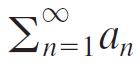
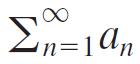
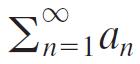
Which of the series defined by the formulas converge, and which diverge? Give reasons for your answers. X n=1 an
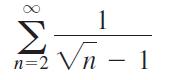
Use the Comparison Test to determine if each series converges or diverges. 1 Σ n=2 √n 1
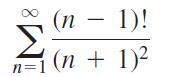
Use the Ratio Test to determine if each series converges absolutely or diverges. 8 (n = 1)! Σ n=1 (n + 1)²
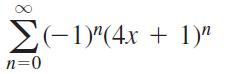
(a) Find the series’ radius and interval of convergence. For what values of x does the series converge (b) Absolutely, (c) Conditionally? Σ(-1)"(4x + 1)" n=0
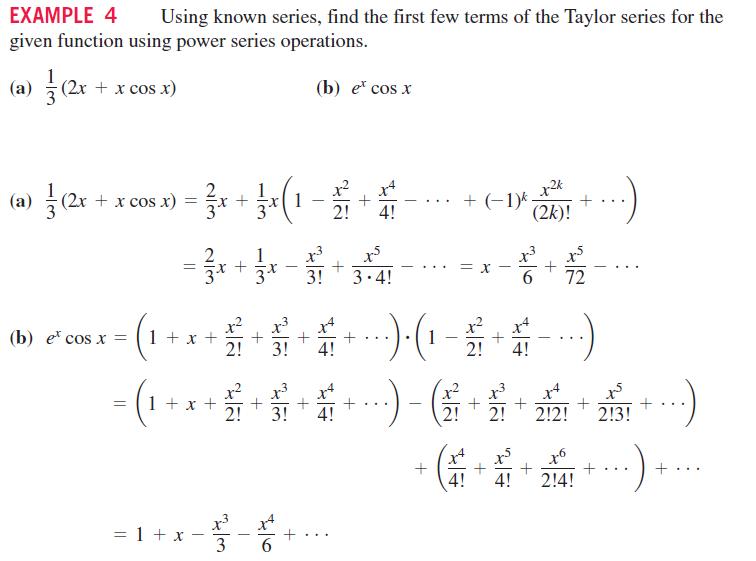
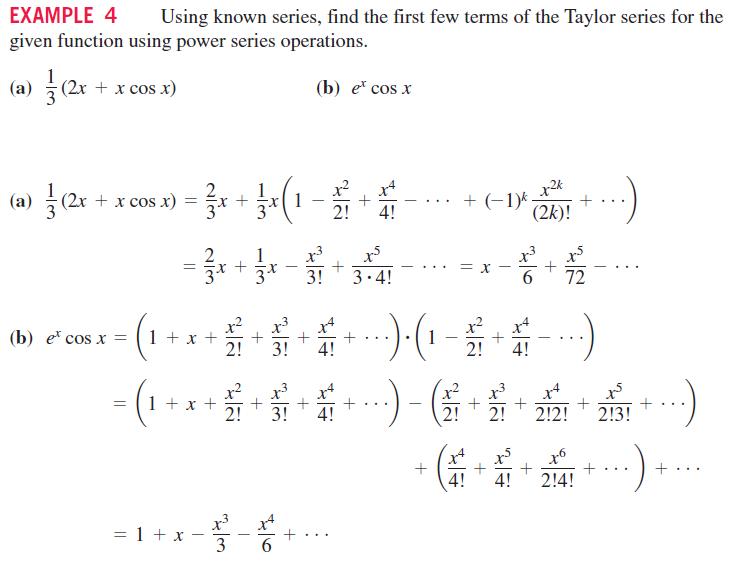
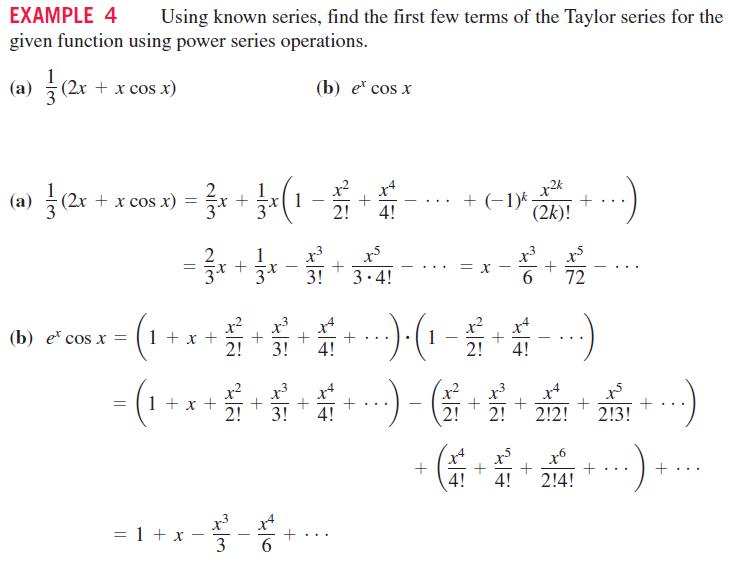
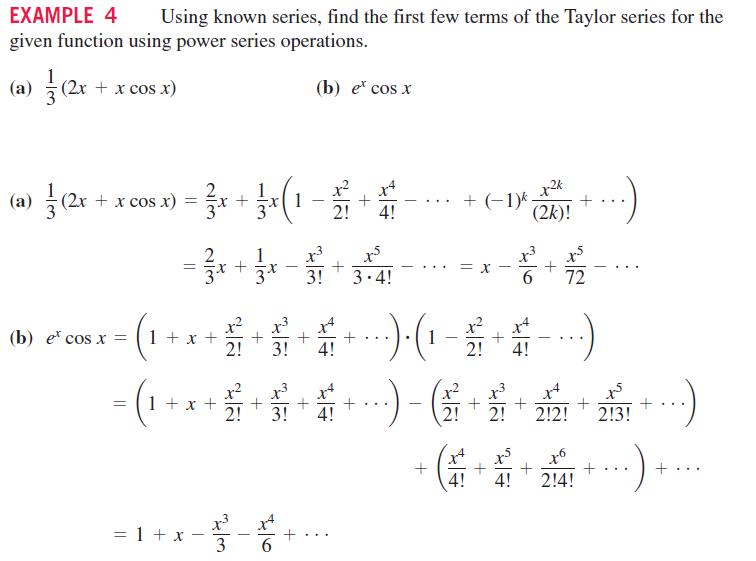
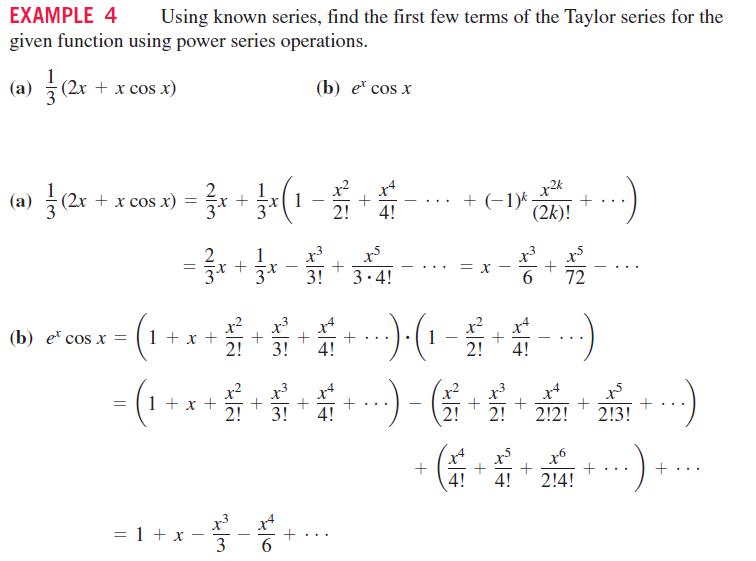
Use substitution (as in Example 4) to find the Taylor series at x = 0 of the functions. EXAMPLE 4 Using known series, find the first few terms of the Taylor series for the given function using power series operations. (b) e cos x (a) (2x (2x + x cos x) (a) (2x (2x + x cos x) = (b) e cos x = = 2 = 1
Find a formula for the nth partial sum of each series and use it to find the series’ sum if the series converges. 1-2 +48 + + (−1)n-12n-1 ... + ..
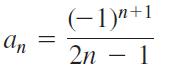
Gives a formula for the nth term an of a sequence {an}. Find the values of a1, a2, a3, and a4. an = (-1)2+1 2n - 1
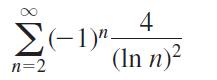
Determine if the alternating series converges or diverges. Some of the series do not satisfy the conditions of the Alternating Series Test. 4 (In n)2 Σ(-1)", n=2
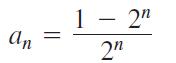
Which of the sequences whose nth terms appear converge, and which diverge? Find the limit of each convergent sequence. an 1 - 2n 2n
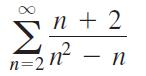
Use the Comparison Test to determine if each series converges or diverges. n + 2 Σ ₂2 n=2 n² – 1
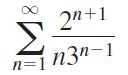
Use the Ratio Test to determine if each series converges absolutely or diverges. 2n+1 Σ n=1n3n-1
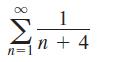
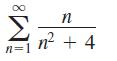
Use the Integral Test to determine if the series converge or diverge. Be sure to check that the conditions of the Integral Test are satisfied. n=1 1 " +4
What theorems are available for calculating limits of sequences? Give examples.
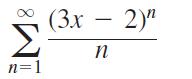
(a) Find the series’ radius and interval of convergence. For what values of x does the series converge (b) Absolutely, (c) Conditionally? 8 n=1 (3x 2)" n
Which of the series defined by the formulas converge, and which diverge? Give reasons for your answers. X n=1 an
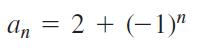
Gives a formula for the nth term an of a sequence {an}. Find the values of a1, a2, a3, and a4. an 2 + (-1)" =
Find a formula for the nth partial sum of each series and use it to find the series’ sum if the series converges. 1 + 2.3 1 + 3.4 1 4.5 + : + (n + + 1 1)(n + 2)
Use substitution (as in Example 4) to find the Taylor series at x = 0 of the functions.cos 5x2 EXAMPLE 4 Using known series, find the first few terms of the Taylor series for the given function using power series operations. (b) e cos x (a) (2x (2x + x cos x) (a) (2x (2x + x cos x) = (b) e cos x
Find the Taylor polynomials of orders 0, 1, 2, and 3 generated by ƒ at a.ƒ(x) = ln x, a = 1
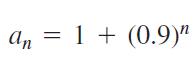
Which of the sequences whose nth terms appear converge, and which diverge? Find the limit of each convergent sequence. an = 1 + (0.9)
Find the first four terms of the binomial series for the function.(1 - x)-3
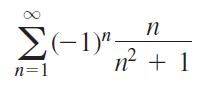
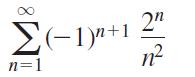
Determine if the alternating series converges or diverges. Some of the series do not satisfy the conditions of the Alternating Series Test. n Σ(1)". n² + 1 n=1
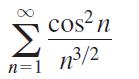
Use the Comparison Test to determine if each series converges or diverges. cosa n n=1_n3/2 Σ M8
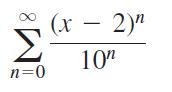
(a) Find the series’ radius and interval of convergence. For what values of x does the series converge (b) Absolutely, (c) Conditionally? 8 n=0 (x - 2)" 10n
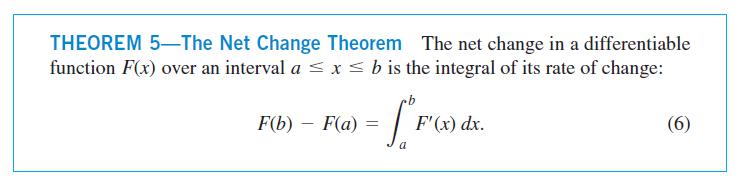
What are the six commonly occurring limits in Theorem 5 that arise frequently when you work with sequences and series? THEOREM 5-The Net Change Theorem The net change in a differentiable function F(x) over an interval a ≤ x ≤ b is the integral of its rate of change: F(b) F(a) - Sº = F'(x)
Use the Integral Test to determine if the series converge or diverge. Be sure to check that the conditions of the Integral Test are satisfied. 8 -2n Lemn n=1
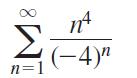
Use the Ratio Test to determine if each series converges absolutely or diverges. 8 Σ n=1 nt (-4)"
What theorem sometimes enables us to use l’Hôpital’s Rule to calculate the limit of a sequence? Give an example.
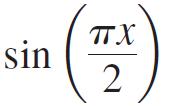
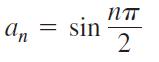
Which of the sequences whose nth terms appear converge, and which diverge? Find the limit of each convergent sequence. = an sin NTT 2
Find the Taylor polynomials of orders 0, 1, 2, and 3 generated by ƒ at a.ƒ(x) = ln (1 + x), a = 0
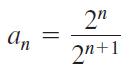
Gives a formula for the nth term an of a sequence {an}. Find the values of a1, a2, a3, and a4. an 2n 2n+1
Which of the series defined by the formulas converge, and which diverge? Give reasons for your answers. X n=1 an
Use substitution (as in Example 4) to find the Taylor series at x = 0 of the functions.cos (x2/3/√2) EXAMPLE 4 Using known series, find the first few terms of the Taylor series for the given function using power series operations. (b) e cos x (a) (2x (2x + x cos x) (a) (2x (2x + x cos x) = (b) e
Find the first four terms of the binomial series for the function.(1 - 2x)1/2
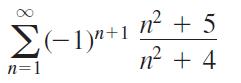
Determine if the alternating series converges or diverges. Some of the series do not satisfy the conditions of the Alternating Series Test. Σ(-1)+1 n=1 n? + 5 n² + 4
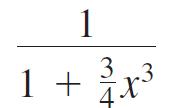
Find the first four terms of the binomial series for the function. 1 + X -2
Find a formula for the nth partial sum of each series and use it to find the series’ sum if the series converges. 5 1.2 + 5 + 2.3 5 3.4 + + 5 n(n + 1) +
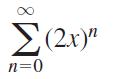
(a) Find the series’ radius and interval of convergence. For what values of x does the series converge (b) Absolutely, (c) Conditionally? Σ (2x)" n=0
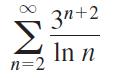
Use the Ratio Test to determine if each series converges absolutely or diverges. Σ n=2 3n+2 In n
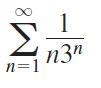
Use the Comparison Test to determine if each series converges or diverges. ∞ n=1 1 n3n
Find the first four terms of the binomial series for the function. 1 بنانا 4
Find the Taylor polynomials of orders 0, 1, 2, and 3 generated by ƒ at a.ƒ(x) = 1/x, a = 2
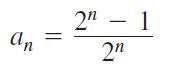
Gives a formula for the nth term an of a sequence {an}. Find the values of a1, a2, a3, and a4. an || 2" - 1 24
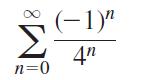
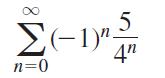
Write out the first eight terms of each series to show how the series starts. Then find the sum of the series or show that it diverges. Σ n=0 (-1)" 4n
Use substitution (as in Example 4) to find the Taylor series at x = 0 of the functions.ln (1 + x2) EXAMPLE 4 Using known series, find the first few terms of the Taylor series for the given function using power series operations. (b) e cos x (a) (2x (2x + x cos x) (a) (2x (2x + x cos x) = (b) e cos
Use the Integral Test to determine if the series converge or diverge. Be sure to check that the conditions of the Integral Test are satisfied. :00 Σ n=1 n n? + 4 +4
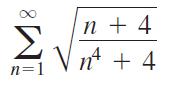
Use the Comparison Test to determine if each series converges or diverges. Σ n=1 n + 4 +4 Vnt + 4
Determine if the alternating series converges or diverges. Some of the series do not satisfy the conditions of the Alternating Series Test. Σ(-1)+1 n=1 ₂2 n²
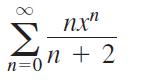
(a) Find the series’ radius and interval of convergence. For what values of x does the series converge (b) Absolutely, (c) Conditionally? nxn Σ n=on + 2
What is an infinite series? What does it mean for such a series to converge? To diverge? Give examples.
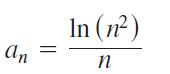
Which of the sequences whose nth terms appear converge, and which diverge? Find the limit of each convergent sequence. an = In (n²) n
Which of the sequences whose nth terms appear converge, and which diverge? Find the limit of each convergent sequence.an = sin nπ
Use substitution (as in Example 4) to find the Taylor series at x = 0 of the functions.tan-1 (3x4) EXAMPLE 4 Using known series, find the first few terms of the Taylor series for the given function using power series operations. (b) e cos x (a) (2x (2x + x cos x) (a) (2x (2x + x cos x) = (b) e cos
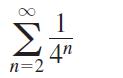
Write out the first eight terms of each series to show how the series starts. Then find the sum of the series or show that it diverges. Σ 4n n=2
Find the Taylor polynomials of orders 0, 1, 2, and 3 generated by ƒ at a.ƒ(x) = 1/(x + 2), a = 0
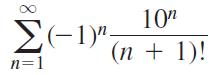
Determine if the alternating series converges or diverges. Some of the series do not satisfy the conditions of the Alternating Series Test. 10n Σ(1)", (n + 1)! n=1
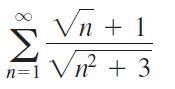
Use the Comparison Test to determine if each series converges or diverges. M8 Vn + 1 + 3 Σ n=1 \ Vn
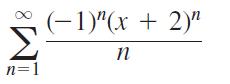
(a) Find the series’ radius and interval of convergence. For what values of x does the series converge (b) Absolutely, (c) Conditionally? n=1 (-1)^(x + 2)" n
Use the Integral Test to determine if the series converge or diverge. Be sure to check that the conditions of the Integral Test are satisfied. ∞ n=2 In (n²) n
Use substitution (as in Example 4) to find the Taylor series at x = 0 of the functions. EXAMPLE 4 Using known series, find the first few terms of the Taylor series for the given function using power series operations. (b) e cos x (a) (2x (2x + x cos x) (a) (2x (2x + x cos x) = (b) e cos x = = 2 = 1
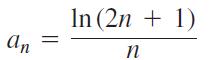
Which of the sequences whose nth terms appear converge, and which diverge? Find the limit of each convergent sequence. an In (2n + 1) n
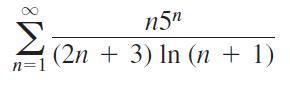
Use the Ratio Test to determine if each series converges absolutely or diverges. n5n Σ (2n + 3) In (n + 1) n=1
Find the Taylor polynomials of orders 0, 1, 2, and 3 generated by ƒ at a.ƒ(x) = sin x, a = π/4
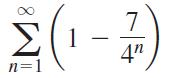
Write out the first eight terms of each series to show how the series starts. Then find the sum of the series or show that it diverges. 7 Σ 4" n=1
Find the first four terms of the binomial series for the function.(1 + x3)-1/2
Determine if the alternating series converges or diverges. Some of the series do not satisfy the conditions of the Alternating Series Test. n Σ(-1)+1 (1) 00 n=1 n n
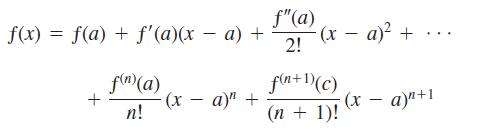
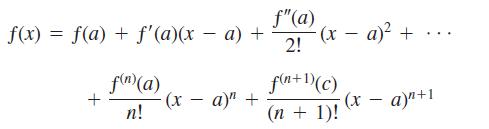
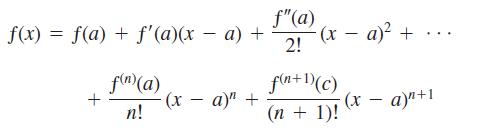
Taylor’s formulaexpresses the value of ƒ at x in terms of the values of ƒ and its derivatives at x = a. In numerical computations, we therefore need a to be a point where we know the values of ƒ and its derivatives. We also need a to be close enough to the values of ƒ we are interested in to
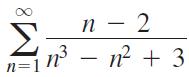
Use the Limit Comparison Test to determine if each series converges or diverges. ∞ Σ n=1 n – 2 n³n² + 3
Use the Integral Test to determine if the series converge or diverge. Be sure to check that the conditions of the Integral Test are satisfied. ∞ n² n=1 en/3
Besides geometric series, what other convergent and divergent series do you know?
Gives the first term or two of a sequence along with a recursion formula for the remaining terms. Write out the first ten terms of the sequence.a1 = 1, an+1 = an/(n + 1)
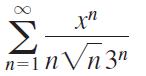
(a) Find the series’ radius and interval of convergence. For what values of x does the series converge (b) Absolutely, (c) Conditionally? ∞ xn Σ n=inVn3n η n=1η 3η
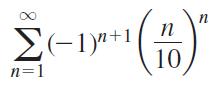
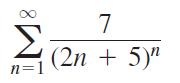
Use the Root Test to determine if each series converges absolutely or diverges. ME 7 Σ (2n + 5)" n=1
Find the first four terms of the binomial series for the function.(1 + x2)-1/3
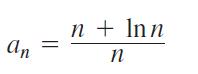
Which of the sequences whose nth terms appear converge, and which diverge? Find the limit of each convergent sequence. an n + Inn n
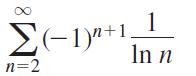
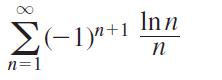
Determine if the alternating series converges or diverges. Some of the series do not satisfy the conditions of the Alternating Series Test. 1 In n Σ(-1)+1, n=2
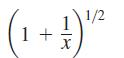
Find the first four terms of the binomial series for the function. 1 + X 1/2
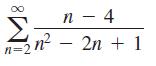
Use the Integral Test to determine if the series converge or diverge. Be sure to check that the conditions of the Integral Test are satisfied. 200 n - 4 Σ. n=n? – 2n + 1
Write out the first eight terms of each series to show how the series starts. Then find the sum of the series or show that it diverges. Σ(1)"; 4n n=0
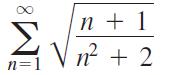
Use the Limit Comparison Test to determine if each series converges or diverges. Σ n=1 n Vn? + 1 + 2
Gives the first term or two of a sequence along with a recursion formula for the remaining terms. Write out the first ten terms of the sequence.a1 = 2, an+1 = (-1)n+1an/2
Find the Taylor polynomials of orders 0, 1, 2, and 3 generated by ƒ at a.ƒ(x) = √x, a = 4
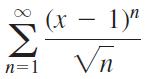
(a) Find the series’ radius and interval of convergence. For what values of x does the series converge (b) Absolutely, (c) Conditionally? n=1 (x - 1)n √n
Taylor’s formulaexpresses the value of ƒ at x in terms of the values of ƒ and its derivatives at x = a. In numerical computations, we therefore need a to be a point where we know the values of ƒ and its derivatives. We also need a to be close enough to the values of ƒ we are interested in to
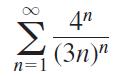
Use the Root Test to determine if each series converges absolutely or diverges. ∞ 4n ηξη (3η)" Σ
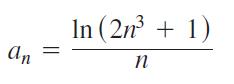
Which of the sequences whose nth terms appear converge, and which diverge? Find the limit of each convergent sequence. an || In (2n³ + 1) n
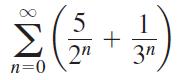
Write out the first eight terms of each series to show how the series starts. Then find the sum of the series or show that it diverges. M8 5 2" n Σ + n=0 3n
Find the first four terms of the binomial series for the function. X 1 + x
Determine if the alternating series converges or diverges. Some of the series do not satisfy the conditions of the Alternating Series Test. Σ(-1)+1 n=1 Inn n
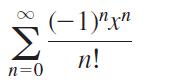
(a) Find the series’ radius and interval of convergence. For what values of x does the series converge (b) Absolutely, (c) Conditionally? Σ n=0 (−1)"x" n!
Taylor’s formulaexpresses the value of ƒ at x in terms of the values of ƒ and its derivatives at x = a. In numerical computations, we therefore need a to be a point where we know the values of ƒ and its derivatives. We also need a to be close enough to the values of ƒ we are interested in to
What can be said about term-by-term sums and differences of convergent series? About constant multiples of convergent and divergent series?
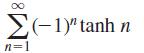
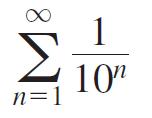
Which of the series converge, and which diverge? Give reasons for your answers. n=1 1 10n
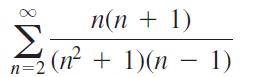
Use the Limit Comparison Test to determine if each series converges or diverges. n(n + 1) Σ n=2 (n? + 1)(n – 1)
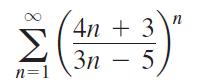
Use the Root Test to determine if each series converges absolutely or diverges. Σ n=1 ( 3η n 4η + 3 5 T
Gives the first term or two of a sequence along with a recursion formula for the remaining terms. Write out the first ten terms of the sequence.a1 = -2, an+1 = nan/(n + 1)
Find the Taylor polynomials of orders 0, 1, 2, and 3 generated by ƒ at a.ƒ(x) = √1 - x, a = 0
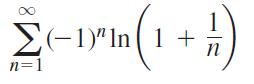
Determine if the alternating series converges or diverges. Some of the series do not satisfy the conditions of the Alternating Series Test. Σ(-1)"In (1 ( n=1 1 + 1 n
Showing 9500 - 9600
of 29454
First
89
90
91
92
93
94
95
96
97
98
99
100
101
102
103
Last
Step by Step Answers

 Get 50% OFF
Claim Now
Get 50% OFF
Claim Now