New Semester
Started
Get
50% OFF
Study Help!
--h --m --s
Claim Now
Question Answers
Textbooks
Find textbooks, questions and answers
Oops, something went wrong!
Change your search query and then try again
S
Books
FREE
Study Help
Expert Questions
Accounting
General Management
Mathematics
Finance
Organizational Behaviour
Law
Physics
Operating System
Management Leadership
Sociology
Programming
Marketing
Database
Computer Network
Economics
Textbooks Solutions
Accounting
Managerial Accounting
Management Leadership
Cost Accounting
Statistics
Business Law
Corporate Finance
Finance
Economics
Auditing
Tutors
Online Tutors
Find a Tutor
Hire a Tutor
Become a Tutor
AI Tutor
AI Study Planner
NEW
Sell Books
Search
Search
Sign In
Register
study help
physics
the physics energy
The Physics of Energy 1st edition Robert L. Jaffe, Washington Taylor - Solutions
A concern with plans for capture of CO2 directly from ambient air (DAC), is the sheer volume of material that must be processed. One design requires fans to blow air at 2 m/s through 2.8 m thickness of absorber and other materials and aims to absorb 50% of the CO2 from the air stream. Assume a
Assume that the linearized analysis of climate leading to (34.46)is correct, and F2× ≅ 3.7 W/m2. Assume also that climate models correctly predict that quadrupling of CO2 levels would give a temperature shift ofΔT4× ≅ 6.4 ◦C. Use a quadratic function to fit the change in
Using the simplified model of Earth’s atmosphere as in Example 34.1, with no absorption, no meridional energy transport, and an albedo of 0.16, use the yearly average integrated insolation computed in §23.3 to compute the temperature in radiative equilibrium on the equator and at the poles.
Assume that ice albedo feedback gives a feedback parameter λ = 0.5 W/m2 ◦C. Estimate the corresponding addition to the change in temperature under adoubling of atmospheric CO2 in the absence of other feedbacks. Assume that water vapor and the lapse rate feedback together contribute a feedback
Earth’s albedo is currently estimated to be a⊕ ≈ 0.30.By what percentage would a⊕ have to increase to offset the estimated increase in forcing eq. (34.36) due to doubling of CO2 since pre-industrial levels?
Show that radiation at a distribution of temperatures decreases the estimate (34.34) of the uniform temperature radiative response λ0 by proving the result in the case where the radiation comes from two different temperatures. Assume I = aσ (T − y)4 + bσ (T + y)4 =240 W/m2, for fixed values of
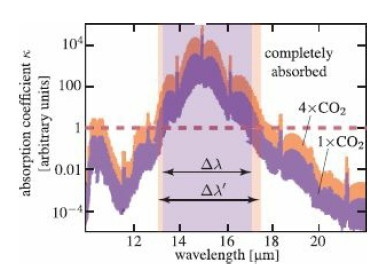
Prove that radiative forcing grows logarithmically withCO2 concentration under the circumstances illustrated in Figure 34.13 Specifically, assume that for wavelengths in the vicinity of the 15 ?m absorption peak, theCO2 absorption coefficient ?(?) exceeds the value ?? at which absorption
Use the value of atmospheric pressure at sea level to estimate the total mass of the atmosphere. Estimate the number of molecules in the atmosphere and check for agreement with recent numbers for the total mass of CO2 in the atmosphere and parts per million by volume.
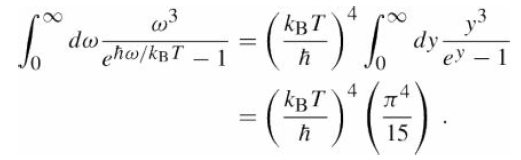
The bond energy of the double bond in the O2 molecule is 5.06 eV. Verify that light must have wavelength less than???246 nm in order to break this bond. Assuming sunlight has a blackbody spectrum at T = 6000 K,what fraction of the photons in the sunlight incident on the upper atmosphere can
We have described hydrostatic equilibrium in §34.2.1 under the approximation that the atmosphere lies above a planar surface. Compute the pressure in hydrostatic equilibrium as a function of height in an atmosphere around a spherical planet, and compare to the Boltzmann distribution.
Consider a slight improvement on the two-layer toy model of Earth’s atmosphere shown in the figure in Example 34.2. Assume that there are two atmospheric layers, each transparent to incoming solar radiation with incoming solar radiation intensity I = 〈Iin〉 ≅ 0.84I⊙/4.
Show that an n-layer atmosphere of the type described in Example 34.2 gives a surface temperature? = ( Vn + 1) × 255 K Is 4
Given the following approximations for planetary albedos and given approximate radii of their orbits, estimate the average effective temperature of the planets Mars and Neptune. (The effective temperature is the temperature at which the planet radiates thermal radiation in to space, which is not
Compare the energy density of oil and geothermal fluid at 250 ◦C pumped from oil/geothermal wells at a rate of 30 L/s. To make a fair comparison, assume that the oil is transformed into useful mechanical energy at 20% net efficiency and that the geothermal fluid emerges from the well as saturated
Compute and compare the amount of carbon released per GJ of delivered energy by (a) a coal plant operating at 35% efficiency, (b) a natural gas combined cycle plant operating at 60% efficiency, (c) an automobile engine running on gasoline at 25% efficiency.
Bitumen extracted from tar sands in Athabasca, Canada, has an API gravity of ◦API 8. Compute the mass of one liter of such bitumen and compare to that of a liter of light crude at ◦API 35.
Using an activation energy E = 250 kJ/mol, compute the change in rate of petroleum generation when temperature increases from 130 ◦C to 430 ◦C. If petroleum generation through such a process takes 10 million years at 130 ◦C, estimate the time it would take in the laboratory at 430 ◦C.
Use the Arrhenius equation in Box 33.5 to show that a reaction rate doubles under a temperature shift ofT ≅ (kBT2 ln 2)/E, assuming E ≫ kBT.
An underground mass of salt may form a dome trapping a petroleum reservoir. Compute the gravitational anomaly (deviation of gravitational acceleration) produced by an underground salt mass, where for simplicity we assume that the salt (density 2220 kg/m3) forms a sphere of radius 0.5 km centered
Compute the fraction of Carnot efficiency realized by a coal plant operating at 600 ◦C and 45% efficiency (assume ambient temperature of 300 K). If another plant operates at the same fraction of Carnot efficiency at a temperature of 700 ◦C, what is the thermal efficiency of the second plant?
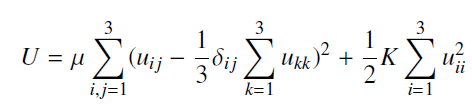
The deformation in a solid can be described by a vector field u(x) = (u1, u2, u3) describing the displacement of the solid away from the equilibrium point x. This is similar to the displacement vector s used to analyze waves in ?31.2. For small deformations, the strain tensor ? is a 3 ? 3 matrix
Estimate how many solar panels or wind turbines are needed to produce the same amount of electrical energy as the 10 kt of coal that can be extracted in a long wall mining operation in one year by one person. (Make reasonable assumptions and approximations.)
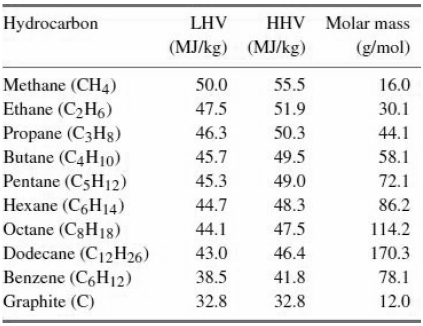
When computing efficiencies, European power plants sometimes use the LHV of a fuel, while for US power plants the HHV is standard. Consider a power plant burning bituminous coal with HHV/LHV of 31.1/30 MJ/kg. If the power plant’s efficiency is 35% when computed from the HHV, what is its
A rough measure of the enthalpy of combustion of a hydrocarbon can be obtained by assuming that all CC bonds contribute the same energy to the combustion process when broken, and that the same is true for all C-H bonds. This is particularly appropriate for alkanes and cycloalkanes, where all C-C
Estimate the energy content of a coal seam measuring 1 km2 by 1 m deep. Estimate the electrical power output of a coal plant burning this fuel over one year, and the area required for a solar thermal plant in a high insolation location to produce a comparable power output. Take the density of coal
Estimate the energy extracted from 1 km3 of granite if cooled from 300 ◦C to 200 ◦C. Assume that a power plant runs between the (time-varying) temperature Tg of the granite and an ambient temperature of 20 ◦C and reaches 1/2 of the Carnot efficiency at each Tg. For how long could a 100
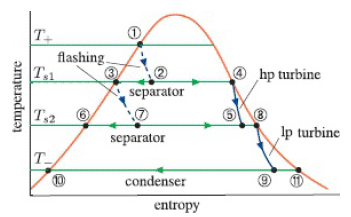
Compute the (ideal) efficiency of a double-flash plant with the same conditions as the example single-flash plant described in Example 32.5. The cycle is labeled in Figure 32.15 You will need to choose temperatures for the two separators. Try using Ts1 = 183.3 ◦C, Ts2 = 116.7 ◦C. Why do
Consider the efficiency computed in the example single-flash cycle in Example 32.5. Use thermodynamic data on water to show that running the separator at T = 140 ◦C or T = 160 ◦C will decrease the efficiency of the ideal cycle.
For a geothermal well that has been running for some time, pressure at the bottom of the well is pw ≅ 15MPa at a depth of 2 km. Assume the fluid is water at 280 ◦C. Estimate the location of the flash horizon. (You may neglect the contribution to the pressure from the weight of the vapor above
Given a geothermal reservoir containing water at temperature T = 200 ◦C at a depth of 1.5 km, use steam tables to determine the density and vapor pressure of the water. Assuming that pressure in the wellbore decreases according to the overlying weight of water, at what well pressure Pw will the
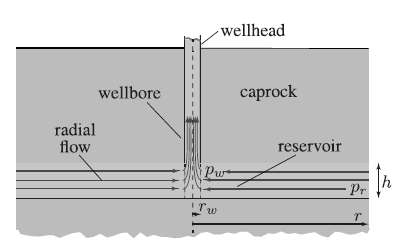
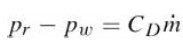
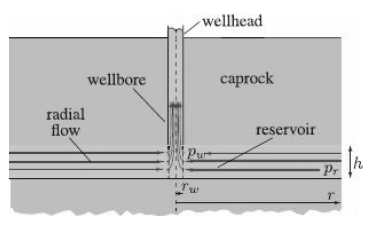
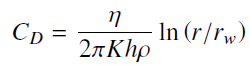
Consider a geothermal reservoir (see Figure 32.17)At a depth of 1.5 km, modeled as a cylindrical volume of radius r = 5 km and height h = 500m, with pressure at the periphery of pr ≅ 15 MPa, pressure at the bottom of the well of pw ≅ 12 MPa, and permeability of K ≅ 50 mD. Use the answer to
Compute the draw down coefficient (32.11)in a simple model where the geothermal reservoir is a large cylindrical volume with height h much smaller than the radius r (see Figure 32.17)Assume that the pressure is constant at pw in a small cylinder of the radius of the wellbore rw, and that flow is
Consider a house in a northern location that needs a total of 100 GJ of thermal energy over a winter season from November through March. Assume that the house has a ground source heat pump that operates with a CoP of 3. The ground around the house has reasonable moisture content, a heat capacity of
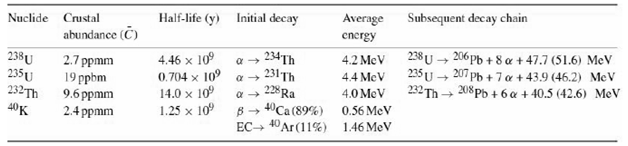
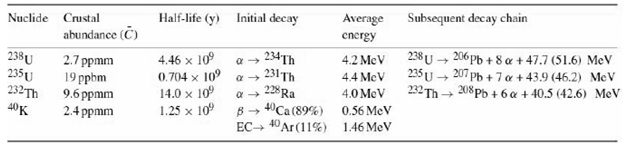
Assume that a region of continental crust has a typical surface heat flux of 65 mW/m2, crustal density of 2750 kg/m3, and typical crustal abundances of radioactive nuclides (as given in Table 20.6). If 60% of the surface heat flux comes from radioactivity in the upper crust, to what depth does this
Check eq. (32.4)by estimating the radioactive heat production rate using data from Table 20.6Take the fractional abundances of 235U, 40K to be 0.72%, 0.012%. Take the average energy release in 40K decay to be 0.71MeV. O = 98CU + 26.5CTH + 0.0035Ck[µW/kg] Half-life (y) Initial decay Average
Make a very rough estimate of the thermal energy content of Earth, assuming that the core has radius 3480 km, temperature 4000 K, density 11000 kg/m3 and heat capacity 800 J/K kg, and that the rest of the planet, dominated by the mantle, has radius 6370 km, temperature 2000 K, density 4500
Estimate the total power of the Gulf Stream in the Florida Straits, given that the mass flux is roughly 30 Sv. Take the speed of the flow to be 4 m/s.
Consider an idealized tidal reservoir of surface area A = 30 km2 that fills and drains through a narrow channel of width w = 60 m and depth d = 20 m. Assume that the tidal range is h = 2.5 m. For simplicity, assume that the water flows uniformly throughout the channel and varies sinusoidally in
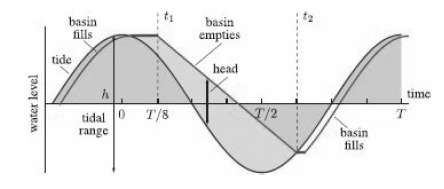
When a tidal barrage follows the water release profile shown in Figure 31.27 it only captures a fraction of the energy (31.35) available in the water stored at high tide. The discharge is indicated continuing until the outside and inside water levels are equal. Show that this fraction is given
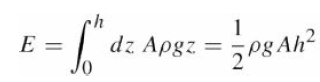
Consider a tidal barrage constructed to enclose a lagoon of surface area 5 km2, with typical tidal range of 4 m. What is the maximum possible average power output of such a barrage? How much would the net output be increased if an additional 1 m of water were pumped in at every high tide and pumped
A basin under consideration for a tidal barrage power installation has an area that grows quadratically with height z, A(z) = A0z2/h2, where h is the difference between high and low tide. Calculate the maximum power that could be extracted a) if the full basin is emptied at low tide,b) if the
Consider building a tidal barrage along a straight section of beach in California. Assume that the average tidal range is 3 m, with two high tides a day. Assume that the tidal basin is 20 m wide and extends for 1 km along the coast. Assume that all available energy from both incoming and outgoing
Is tidal power a renewable resource? Assuming the rate of energy loss due to the tides remains constant at 3.9 TW, estimate the time it will take for Earth to lose 10% of its rotational energy to tidal losses. If humans were to extract additional tidal energy at the rate of 100 MW in such a way
Show that energy loss from Earth’s rotational kinetic energy at a rate of 3.9 TW (including dissipation and energy transferred to lunar orbit) corresponds to an increase in length of day of 2.3 ms/century. You may take Earth’s moment of inertia about its rotational axis to be I = 8.0 × 1037
Imagine that Earth rotated about its axis once per month and that the Moon moved in a circular orbit above Earth’s equator. Under these tidally locked conditions, the Moon and the resulting tidal bulge in Earth’s oceans would remain fixed in an Earth-based reference system. Give an estimate of
In the JONSWAP model, the energy transferred to the moving ocean surface waters is proportional to the distance over which wind travels (fetch, F). For a steady wind at 10 m/s compute the rate of energy transfer per unit area to the ocean’s surface. What fraction of the energy of the wind in the
A tsunami is a very long-wavelength wave produced by a sudden movement in the sea floor over a distance of hundreds of kilometers. The wavelengths in a tsunami are generally much greater than ocean depth so that a tsunami can be described accurately in the shallow wave approximation, and is
Consider a deep-water wave with amplitude a = 1 m and period 12 s. Compute the energy density and power. When the wave moves into shallow water, what is the height and energy density of the wave at 2 m and at 1 m depth?
Use dimensional analysis to determine the dispersion relation ω(k) for surface tension waves (up to a multiplicative constant), which can only depend on the surface tension σ, the density ρ, and the wave number k. Find the phase velocity and the group velocity, and show that vg = 3vp/2. Describe
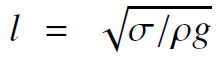
Show that the quantity has the dimensions of length, where the surface tension σ has units of energy per unit area. Look up the surface tension of water and evaluate l for water. When a small drop of water is placed on a porcelain surface it forms a round bead, but as the drop gets bigger, it
Estimate the power output possible for a hydroelectric dam with hydraulic head Z = 30 m, flow rate Q = 300 m3/s, and turbine efficiency 90%.
Compare land use of hydropower to solar power by computing the ratio of power output to reservoir surface area for the Three Gorges Dam (maximum capacity 22500 MW, reservoir area 1084 km2) and the Hoover Dam (maximum capacity 2080 MW, reservoir area 680 km2), and comparing to the power density of a
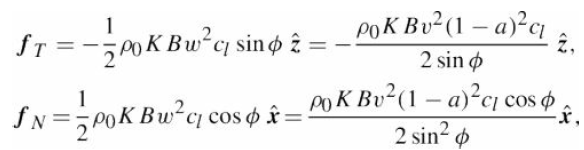
Use blade-element theory to compute the correction to the axial-momentum theory expression for the power (30.7)To first order in cd/cl for an optimized blade. First, recompute f T and f N including the drag force and show that the right-hand side of eq. (30.15)is modified by a factor (1 + (cd/cl)
Model the blades of a HAWT rotor as rods of equal length and mass, equally spaced around a circle, rotating with angular frequency Ω. Compute the moment of inertia of the rotor about the vertical axis. Show that the moment of inertia is independent of time as long as there are three or more blades.
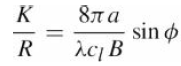
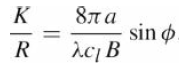
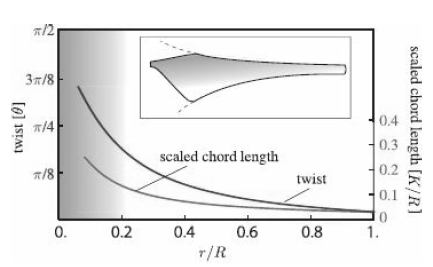
The axial-momentum theory approximation to blade design breaks down when r/R becomes too small. Use eqs. (30.11)and (30.15) to show that the condition KB < 2πr limits the angle φ to sin φ tan φ < cl (1 − a)/(4a). For the choice of parameters in Figure 30.10 what is the
Axial-momentum analysis led to a power coefficient CP = 4a(1 − a)2 for a HAWT eq. (30.7)Compute the power coefficient another way: start from the tangential force per unit length f T in the simple model that led to eq. (30.12)implement the axial momentum theory constraint (30.15)find the torque
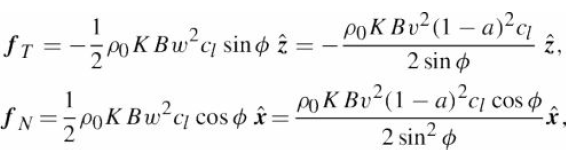
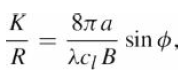
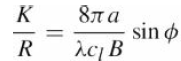
Derive eq. (30.15)by equating the normal force per unit length on a blade element given in eq. (30.12)with the thrust per unit length obtained from the axial momentum analysis (30.14). 8πα K sin o Àc B pOK Bu2(1 – a)²c ST =-K Bu q sino 2 2, 2 sin o oK Bu²(1 – a)²cj cos o SN=;P0K Bw²cj
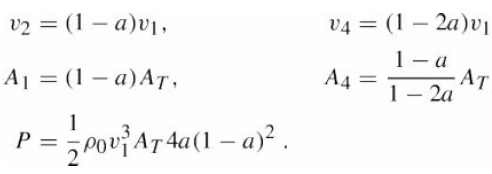
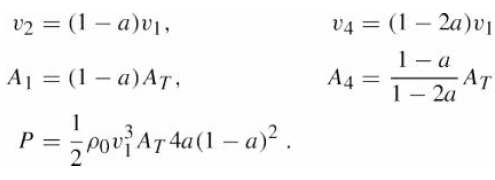
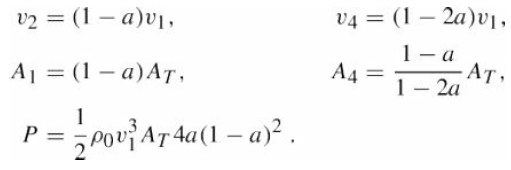
Verify the results of eq. (30.7) and evaluate them at the Betz limit. v4 = (1 – 2a)v1, %3D v2 = (1 – a)v1, 1- a AT, 1- 2a A4 A1 = (1 – a)AT, 1 P = = ;pov{AT4a(1 – a)² .
Wind frequency data obtained at a height of 10 meters at a particular location is summarized by a Weibull distribution with λ = 9 m/s and k = 1.3. The land use is best characterized as “rough pasture.” Your wind power company is considering placing a variable-speed wind turbine with a hub
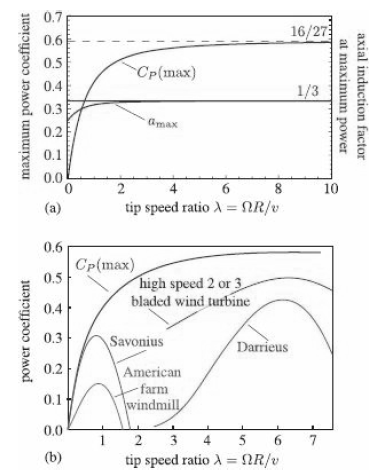
The maximum power of a Savonius wind turbine (see Example 30.2) is claimed to be P = 0.36 hrv3, where P is in watts, and the height h and radius r of the Savonius rotor, and the wind velocity v, are all in SI units. What is its maximum power coefficient as a fraction of the Betz limit?
A variable-speed HAWT has a power coefficient of 0.45 at its rated wind speed vr and maintains its rated power for wind speeds between this value and its cutout speed of 25 m/s. If the rotor diameter is 100 m, and the rated power is 3 MW, what is vr?
The isothermal compressibility of a fluid is the relative change of volume with pressure at constant temperatureβ = −(1/V)∂V/∂p|T. Qualitatively describe and sketch the compressibility of water as a function of temperature from 0 ◦C to 1000 ◦C, at a pressure of 1 atm and at the critical
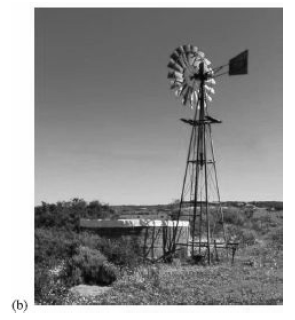
A wind pump based on the “American farm windmill” design Figures 30.2(b) and 30.7with rotor diameter 4.5 m and tip-speed ratio λ ∼ 1 claims to be able to pump 2400 L/h of water from a depth of 30 m when the wind speed is 4 m/s. Do you think this is possible? (b) 0,7 16/27 0.6 0.5
A modern medium size commercial jet plane has a wing span of L = 30 m and a mean chord length of K = 4 m. Its lift coefficient is cl = 0.83 at its cruising angle of attack α ∼ 2◦. What is the lift force generated by the airplane wings when cruising at v ≅ 800 km/h? While cruising, the
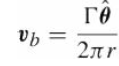
Investigate the location of the stagnation points for fluid flow around a cylinder as described in §29.4.1. Show that for small Γ there are two stagnation points on the cylinder and find their location. What is the critical value of Γ/Rv∞ for which there is only one stagnation point? For
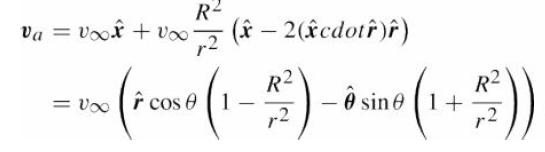
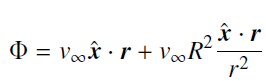
In §29.4.1 it is asserted that eq. (29.28)describes the steady, circulation-free flow of an incompressible ideal fluid around a cylinder. To confirm this, verify (a) that va → v∞ x̂ as r → ∞; (b) that no fluid flows into or out of the cylinder; (c) that the circulation is
Suppose that in a region of steady flow the velocity of a fluid is given by v = Ω × r, where r is the vector from a fixed point in space. Describe the streamlines of this flow. Show that ∇ · v = 0, so this flow is consistent with the fluid being incompressible. Compute the circulation Γ
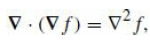
Show that the flow v around a cylinder given in eq. (29.18) has the same functional form as the magnetic field B around a long, straight wire (3.50) and therefore Maxwell?s equations imply that ? ? v = ? ? v = 0. (The radial coordinate in the plane is denoted ? in ?3.) Then use Stoke?s theorem
A large wind turbine blade is 50 m long and has a maximum chord length of 4 m at a point one-third of the way out from the wind turbine hub. When rotating at its design rate, the blade sees an air stream moving at 100 m/s at the blade tip. What is the Reynold’s number of the air flow at the point
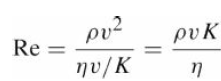
The dependence of Reynold?s number on the parameters of fluid flow can be inferred from dimensional analysis. First show that it is not possible to construct a dimensionless number out of the viscosity ?, density ?, and speed v of a fluid flow. Next show that if a length scale K characterizing the
Show that for the flow of a viscous fluid through a pipe, as analyzed in Box 29.1, the energy per unit mass dissipated as thermal energy by viscous forces is dQ/dm = Δp/ρ, where Δp is the pressure difference between the ends of the pipe. The answer is independent of the viscosity and the
The maximum takeoff mass for a Boeing 777-300ER passenger jet is 3.5 × 10⁵ kg. The plane’s wing area is about 440 m2. Compute the average air pressure on the plane’s wings required to overcome the plane’s weight and lift the plane off the ground. How far does this pressure deviate from
Estimate the speed of water emerging from an opening at the bottom of a dam when the water in the reservoir behind the dam is held at a height h above the opening. Compare the results of using conservation of energy directly to the application of Bernoulli’s principle.
Supply the missing steps in the derivation of the expression for the flow rate Q in a Venturi flow meter in Example 29.2.
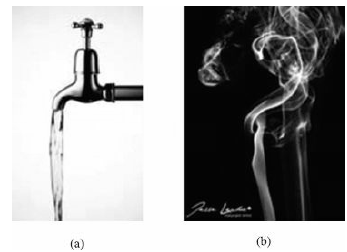
A stream of water emitted by a tap at velocity v0 as in Figure 29.3 has a circular cross section with radius r0. Use conservation of mass to predict how its radius changes as it falls. (a) (b)
An entrepreneur claims to have devised a system for extracting thermal energy from the wind by cooling it. His device lowers the temperature of the air that passes through it by 1 ◦C. He claims to generate 800 W/m2 from air flowing at 1 m/s. Does this device conserve energy? Would you invest
Angel Falls in Venezuela, at a height of 979 m, is the highest waterfall in the world. Ignoring air resistance, how much warmer is the water at the bottom of the falls, where the kinetic energy it acquired by falling has been dissipated as heat, than it was at the top?
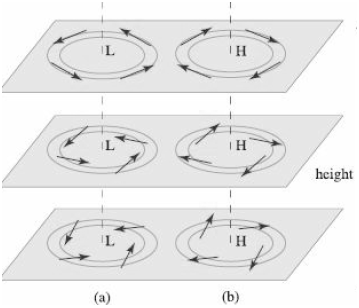
The forces on a parcel of moving air in the Ekman layer include the pressure force f p = ??p, the Coriolis force f hc = f v ? n? (where f = 2 ? sin ?), and a frictional force directed opposite to the wind velocity f f = ??(z)v, where ?(z) arises from the velocity gradient and turbulent viscosity.
Assume that the pressure in a volume of air can be expressed to first order in a local coordinate system (x, y, z) as p = p0 + f x + O(x2, y2, xy, . . .). Show from the balance of forces on a small volume element dV that the force per unit volume is f in the −x-direction. Using the fact that the
The following wind frequency distribution data were obtained in the month of January at a height of 10 m above an airport runway in Buffalo, New York. Calm: 2.0%; 0–5 kt: 5.3%; 5–12 kt: 40.1%; 12– 20 kt: 39.3%; >20 kt: 13.3% (1 knot = 0.514 m/s). Assume that the wind above 20 kt has an
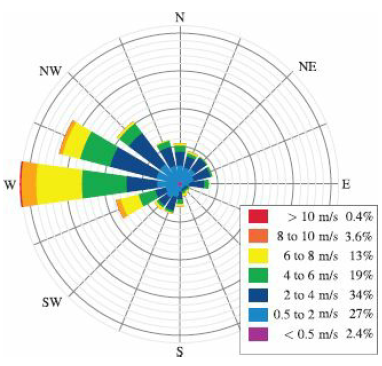
Use the data given in the wind rose Figure 28.19 To make a crude estimate of the average ?v? and root mean cube v? wind speed at Klamath Lake, Oregon. From these, estimate the Weibull parameters for this distribution. Is your result close to a Rayleigh distribution (k = 2)? Is this a promising
Reference [192] studies wind power prospects for several locations in Saudi Arabia, among them Yenbu (Y) and Al Qaysumah (A). They report Weibull parameters measured at a height of 10 m: λY ≅ 5.9 m/s, kY ≅ 2.25; λA ≅ 5.1m/s, kA ≅ 4.38. Estimate the maximum available wind power density and
Consider building a wind turbine at a wind power class 5 site. Assume that the hub height is 50 m and the blade length is 15 m, and that the turbine operates at 50% of the maximum theoretical efficiency. Estimate the average power output of the turbine.
A steady wind is blowing at 8 m/s at 200 m above ground level. Estimate the wind power at a height of 10 m above a large open cropped field. Approximately what height is needed for a turbine in a small town to reach wind flowing with the same power?
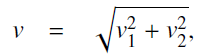
Suppose the wind speed obeys a Gaussian frequency distribution in the two components of the horizontal velocity v = (v1, v2), Show that the wind speed distribution, f (v) = dP/dv, Where? is a Rayleigh distribution (Weibull parameter k = 2). What is the scale ?? f(V1, v2) = 1 Taplap 2no2
What is the maximum power that could be extracted by a mechanical device of cross-sectional area 10 m2 in a steady wind at 10 m/s?
Compute the energy density and power density in a steady wind at 8 m/s and at 16 m/s.
The wind speed at any site can be written as the sum of its average 〈v〉 plus a fluctuating term that averages to zero, v(t) = 〈v〉 + δv(t). Show that the effect of the fluctuations is always to make 〈v3〉 greater than 〈v〉3.
Suppose a gradient wind (see Box 28.1) is flowing along a circular isobar with radius R at a latitude of 45◦. Compare the strength of the Coriolis and centrifugal forces on this flow as a function of wind speed. At what speed (as a function of R) are the two inertial forces equal?
Evaluate the Coriolis factor f = 2Ωρ sin λ at ±45◦ latitude. How large a pressure gradient (in millibars/km) is necessary to sustain a geostrophic wind at 30 m/s at this latitude?
Derive the relation du/dt = d∗u/dt + ω × u by an explicit computation in a coordinate system where ω = ωẑ as described in Box 27.1.
Assume that a constant wind at v = 20 knots (10.3 m/s) is blowing in a southward direction on the eastern side of an ocean basin at latitude +35◦. The combination of the force due to the wind and the Coriolis force cause the water near the surface to drift uniformly with constant velocity. Ignore
Compare the gravitational force and horizontal Coriolis force on a person running at 6 m/s at latitude 45◦. How fast would an object have to be moving for the two to be equal?
Given Earth’s radius, mass, and rate of rotation, estimate the difference in radius measured along the equator from that measured to a pole in order that the apparent gravitational potential is the same everywhere on Earth’s surface by approximating the gravitational potential as that of
Under the same assumptions as for Problem 27.3, estimate the net rate at which energy is lost to upward thermal radiation. First, compute the rate of upward thermal radiation. Then include a downward IR radiation flux, approximated by thermal radiation from the atmosphere at an altitude of 2000 m
Consider a location in the tropical ocean where the mixed layer has a uniform temperature of 30 ◦C to 100 m, and the deep ocean temperature is 5 ◦C at 1000 m. Estimate the rate of conductive heat flow downward between 100 m and 1000 m, assuming a constant gradient between these depths. At this
Crop residues (corn stover, straw, or sugarcane bagasse) represent a potentially sustainable source of cellulosic ethanol. Assuming a production of 6 t/ha y and 270 liters of ethanol per tonne of crop residue, estimate the area of farmland necessary to sustainably provide ethanol for one million
Compute the rate at which carbon is extracted from the atmosphere by a forest growing at the net rate of 4 t/ha y. Assume that the wood is purely composed of cellulose. Compare the carbon savings realized by sequestering this carbon to that realized by using corn ethanol grown on the same land as a
Compute the maximum energy content of the ethanol produced from corn farmed at 10 t/ha y, assuming that the corn is 70% starch composed of polysaccharides (amylose and amylopectin) built from glucose (glucan) units of molar mass 162 g/mol.
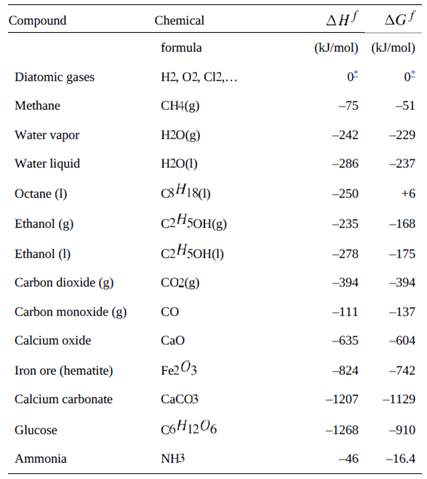
Look up the standard enthalpies of formation of glucose and ethanol (Table 9.8), and verify that eq. (26.4)is exothermic. Then verify that the gravimetric energy density (relative to combustion) of ethanol is approximately twice that of glucose.Table 9.8 СоН1206 > 2C2Н;ОН + 2СО2 Compound
Showing 500 - 600
of 953
1
2
3
4
5
6
7
8
9
10
Step by Step Answers

 Get 50% OFF
Claim Now
Get 50% OFF
Claim Now






![O = 98CU + 26.5CTH + 0.0035Ck[µW/kg]](https://dsd5zvtm8ll6.cloudfront.net/si.question.images/images/question_images/1548/1/8/1/4635c475fd74f4e01548164113802.jpg)