New Semester
Started
Get
50% OFF
Study Help!
--h --m --s
Claim Now
Question Answers
Textbooks
Find textbooks, questions and answers
Oops, something went wrong!
Change your search query and then try again
S
Books
FREE
Study Help
Expert Questions
Accounting
General Management
Mathematics
Finance
Organizational Behaviour
Law
Physics
Operating System
Management Leadership
Sociology
Programming
Marketing
Database
Computer Network
Economics
Textbooks Solutions
Accounting
Managerial Accounting
Management Leadership
Cost Accounting
Statistics
Business Law
Corporate Finance
Finance
Economics
Auditing
Tutors
Online Tutors
Find a Tutor
Hire a Tutor
Become a Tutor
AI Tutor
AI Study Planner
NEW
Sell Books
Search
Search
Sign In
Register
study help
chemistry
physical chemistry
Physical Chemistry 7th Edition Peter Atkins - Solutions
Nuclear magnetic resonance can be used to determine the mobility of molecules in liquids. A set of measurements on methane in carbon tetrachloride showed that its diffusion coefficient is 2.05 x 10⁻⁹m2 S-1 at O°C and 2.89 x 10⁻⁹ m2 S-I at 25°C. Deduce what information you can about the mobility
In a series of observations on the displacement of rubber latex spheres of radius 0.212 urn, the mean square displacements after selected time intervals were on average as follows: These results were originally used to find the value of Avogadro's constant, but there are now better ways of
A. Fenghour, W.A. Wake ham, V. Vesovic, I.T.R. Watson, I. Millet, and E. Vogel. Phys. Chem. Ref Data 24, 1649 (1995)) have compiled an extensive table of viscosity coefficients for ammonia in the liquid and vapour phases. Deduce the effective molecular diameter of NH3 based on each of the following
Start from the Maxwell-Boltzmann’s distribution and derive an expression for the most probable speed of a gas of molecules at a temperature T. Go on to demonstrate the validity of the equipartition conclusion that the average translational kinetic energy of molecules free to move in three
A specially constructed velocity-selector accepts a beam of molecules from an oven at a temperature T but blocks the passage of molecules with a speed greater than the mean. What is the mean speed of the emerging beam, relative to the initial value, treated as a one-dimensional problem?
Calculate the fractions of molecules in a gas that have a speed in a range t. v at the speed ne relative to those in the same range at c itself? This calculation can be used to estimate the fraction of very energetic molecules (which is important for reactions). Evaluate the ratio for n = 3 and n =
Show how the ratio of two transport numbers t' and t" for two cautions in a mixture depends on their concentrations c' and c" and their mobilities u' and UN.
The diffusion equation is valid when many elementary steps are taken in the time interval of interest, but the random walk calculation lets us discuss distributions for short times as well as for long. Use eqn 21.84 to calculate the probability of being six paces from the origin (that is, at x= 61)
Supply the intermediate mathematical steps in Justification 21.7.
Calculate the escape velocity (the minimum initial velocity that will take an object to infinity) from the surface of a planet of radius R. What is the value for? (a) The Earth, R = 6.37 X 10⁶ m, g= 9.81 m S-2, (b) Mars, R = 3.38 X 10⁶ m, mM3, lmE3 th = 0.108. At what temperatures do H2, He, and 02
The principal components of the atmosphere of the Earth are diatomic molecules, which can rotate as well as translate. Given that the translational kinetic energy density of the atmosphere is 0.15 J cm3, what is the total kinetic energy density, including rotation?
Enrico Fermi, the great Italian scientist, was a master at making good approximate calculations based on little or no actual data. Hence, such calculations are often called 'Fermi calculations'. Do a Fermi calculation on how long it would take for a gaseous air-borne cold virus of molar mass 100 kg
In this problem, we examine a model for the transport of oxygen from air in the lungs to blood. First, show that, for the initial and boundary conditions c(x, t) = c(x, 0) = co (0 < x < ∞] and c(0, t) = Cs' (0 < t < ∞ ) where Co and Cs are constants, the concentration, c(x, t), of a species is
Consult literature sources and list the observed timescales during which the following processes occur radiative decay of excited electronic states, molecular rotational motion, molecular vibrational motion, proton transfer reactions, the initial event of vision, energy transfer in photosynthesis,
Describe the main features, including advantages and disadvantages, of the following experimental methods for determining the rate law of a reaction: the isolation method, the method of initial rates, and fitting data to integrated rate law expressions.
Assess the validity of the following statement: the rate-determining step is the slowest step in a reaction mechanism.
Distinguish between kinetic and thermodynamic control of a reaction.
Distinguish between a primary and a secondary kinetic isotope effect. Discuss how kinetic isotope effects in general can provide insight into the mechanism of a reaction.
The rate of the reaction A + 3 B --7 C + 2 D was reported as 1.0 mol dm-1 S-1. State the rates of formation and consumption of the participants.
The rate of consumption of B in the reaction A + 3 B → 7 C + 2 D is 1.0 mol dm3 S-1. State the reaction rate, and the rates of formation or consumption of A, C, and D.
The rate law for the reaction in Exercise 22.1b was found to be v = k[A][BF, What are the units of k? Express the rate law in terms of the rates of formation and consumption of (a) A, (b) C.
The rate law for the reaction in Exercise 22.2b was reported as d[C]/dt = k[A] [B][C]-l Express the rate law in terms of the reaction rate; what are the units for k in each case?
At 400 K, the rate of decomposition of a gaseous compound initially at a pressure of 12.6 kPa was 9.71 Pa S-1 when 10.0 per cent had reacted and 7.67 Pa S-I when 20.0 per cent had reacted. Determine the order of the reaction.
At 400 K, the half-life for the decomposition of a sample of a gaseous compound initially at 55.5 kPa was 340 s. When the pressure was 28.9 kPa, the half-life was 178 s. Determine the order of the reaction.
The rate constant for the first-order decomposition of a compound A in the reaction 2 A --7 P is k = 2.78 X 10.7 S·1 at 25°C. What is the half-life of A? What will be the pressure, initially 32.1 kPa, at? (a) 10 s, (b) 10 min after initiation of the reaction?
A second-order reaction of the type A + 2 B --7 P was carried out in a solution that was initially 0.075 mol dm3 in A and 0.030 mol dm3 in B. After 1.0 h the concentration of A had fallen to 0.045 mol dm-1, (a) Calculate the rate constant. (b) What is the half-life of the reactants?
If the rate laws are expressed with (a) Concentrations in molecules per meter cubed, (b) Pressures in newtons per meter squared, what are the units of the second-order and third-order rate constants?
The second-order rate constant for the reaction A + 2 B --7 C + D is 0.21 dm 3 mol-J S-1. What is the concentration of C after? (a) 10 s, (b) 10 min when the reactants are mixed with initial concentrations of [A] = 0.025 mol dm3 and [B] = 0.150 mol dm-3?
A reaction 2 A --7 P has a third-order rate law with k = 3.50 X 10⁻⁴ dm3 mol3 S-1. Calculate the time required for the concentration of A to change from 0.077 mol dm-3 to 0.021 mol dm-3.
Deduce an expression for the time it takes for the concentration of a substance to fall to one-third its initial value in an nrh-order reaction.
The equilibrium Ac=' B + C at 25°C is subjected to a temperature jump that slightly increases the concentrations of Band C. The measured relaxation time is 3.0 us. The equilibrium constant for the system is 2.0 x 10⁻¹⁶ at 25°C, and the equilibrium concentrations of Band C at 25°C are both 2.0 x
The rate constant for the decomposition of a certain substance is 1.70 x 10⁻² dm3 mol-1 S-1 at 24°C and 2.01 X 10⁻² dm3 mol-1 S-1 at 37"C. Evaluate the Arrhenius parameters of the reaction.
Predict the order of magnitude of the isotope effect on the relative rates of displacement of (a) IH and 3H, (b) 160 and ISO. Will raising the temperature enhance the difference? Take kr(C-H) = 450 N m-1, kr(C-O) = 1750 N m-1.
The effective rate constant for a gaseous reaction that has a Lindemann-Hinshelwood mechanism is 1.7 X 10⁻³ s-I at 1.09 kPa and 2.2 X 10⁻⁴ S-1 at 25 Pa. Calculate the rate constant for the activation step in the mechanism.
The data below apply to the formation of urea from ammonium cyanate, NH4CNO --7 NH2CONH2. Initially 22.9 g of ammonium cyanate was dissolved in enough water to prepare 1.00 dm3 of solution. Determine the order of the reaction, the rate constant, and the mass of ammonium cyanate left after 300 min.
The thermal decomposition of an organic nitrile produced the following data: Determine the order of the reaction and the rate constant.
A first -order decomposition reaction is observed to have the following rate constants at the indicated temperatures. Estimate the activation energy.
Sucrose is readily hydrolyzed to glucose and fructose in acidic solution. The hydrolysis is often monitored by measuring the angle of rotation of plane polarized light passing through the solution. From the angle of rotation the concentration of sucrose can be determined. An experiment on the
Show that the following mechanism can account for the rate law of the reaction in Problem 22.11:What further tests could you apply to verify this mechanism?
In the experiments described in Problems 22.11 and 22.13 an inverse temperature dependence of the reaction rate was observed, the overall rate of reaction at 70°C being roughly one-third that at 19°C. Estimate the apparent activation energy and the activation energy of the rate-determining step
In Problem 22.10 the isomerization of cyclopropane over a limited pressure range was examined. If the Lindemann mechanism of first €“order reactions is to be tested we also need data at low pressures. These have been obtained (H.O. Pritchard, R.G. Sowden, and A.F. Trotman-Dickenson, Proc.
Two products are formed in reactions in which there is kinetic control of the ratio of products. The activation energy for the reaction leading to Product 1 is greater than that leading to Product 2. Will the ratio of product concentrations [P1] / [PZ] increase or decrease if the temperature is
The equilibrium A ( B is first -order in both directions. Derive an expression for the concentration of A as a function of time when the initial molar concentrations of A and Bare [A]0 and [B]0. What is the final composition of the system?
Derive the integrated form of a third-order rate law v = k[A f [B] in which the stoichiometry is 2 A + B ( P and the reactants are initially present in (a) Their stoichiometric proportions, (b) With B present initially in twice the amount.
Show that the ratio t1/2/t3/4 where 1112 is the half-life and 13/4is the time for the concentration of A to decrease to t of its initial value (implying that t3/4 < t1/2) can be written as a function of n alone, and can therefore be used as a rapid assessment of the order of a reaction.
For a certain second-order reaction A + B -7 Products, the rate of reaction, v, may be written where x is the decrease in concentration of A or B as a result of reaction.Find an expression for the maximum rate and the conditions under which it applies. Draw a graph of v against x, and noting that v
The half-life for the (first-order) radioactive decay of 14Cis 5730 y (it emits B rays with an energy of 0.16 MeV). An archaeological sample contained wood that had only 72 per cent of the 14Cfound in living trees. What is its age?
Pharmacokinetics is the study of the rates of absorption and elimination of drugs by organisms. In most cases, elimination is slower than absorption and is a more important determinant of availability of a drug for binding to its target. A drug can be eliminated by many mechanisms, such as
Consider a mechanism for the helix-coil transition in which nucleation occurs in the middle of the chain:We saw in Impact 122.1 that this type of nucleation is relatively slow, so neither step may be rate-determining.(a) Set up the rate equations for this mechanism.(b) Apply the steady-state
Consider the following mechanism for renaturation of a double helix from its strands A and B:Derive the rate equation for the formation of the double helix and express the rate constant of the renaturation reaction in terms of the rate constants of the individual steps.
Methane is a by-product of a number of natural processes (such as digestion of cellulose in ruminant animals, anaerobic decomposition of organic waste matter) and industrial processes (such as food production and fossil fuel use). Reaction with the hydroxyl radical OH is the main path by which CH4
T. Gierczak, R.K. Talukdar, S.C. Herndon, G.L. Vaghjiani, and A.R. Ravish Ankara (J. Phys. Chem. A 101, 3125 (1997)) measured the rate constants for the bimolecular gas-phase reaction of methane with the hydroxyl radical in several isotopic variations. From their data, the following Arrhenius
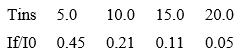
The CIO radical decays rapidly by way of the reaction, 2 CIO ---7Cl, + Oz.The following data have been obtained:Determine the rate constant of the reaction and the half-life of a CIO radical.
The addition of hydrogen halides to alkenes has played a fundamental role in the investigation of organic reaction mechanisms. In one study (M.J. Haugh and D.R. Dalton, J. Amer. Chem. Sac. 97, 5674 (1975)), high pressures of hydrogen chloride (up to 25 atm) and propane (up to 5 atm) were examined
Identify any initiation, propagation, retardation inhibition, and termination steps in the following chain mechanisms:
Discuss the features, advantages, and limitations of the Michaelis-Menten mechanism of enzyme action.
Distinguish between the primary quantum yield and overall quantum yield of a chemical reaction. Describe an experimental procedure for the determination of the quantum yield.
Summarize the main features of the Forster theory of resonance energy transfer. Then, discuss FRET in terms of Forster theory.
On the basis of the following proposed mechanism, account for the experimental fact that the rate law for the decomposition 2 N2O5 (g) → 4 NO2 (g) + O2 (g) is v=k [N205]'
Consider the following mechanism for the thermal decomposition ofR2:Where R2, PA' PB are stable hydrocarbons and Rand R' are radicals. Find the dependence of the rate of decomposition of R, on the concentration ofR2.
Refer to Fig. 23.3 and determine the pressure range for a branching chain explosion in the hydrogen-oxygen reaction at (a) 700 K,(b) 900 K.
Consider the acid-catalyzed reactionDeduce the rate law and show that it can be made independent of the specific term [H+].
Consider the following chain mechanism:Use the steady-state approximation to deduce that the rate law for the consumption of A2.
The enzyme-catalyzed conversion of a substrate at 25°C has a Michaelis constant of 0.042 mol dm-3. The rate of the reaction is 2.45 x 10⁻⁴ mol dm-3 s-1 when the substrate concentration is 0.890 mol dm-3. What is the maximum velocity of this enzymolysis?
In a photochemical reaction A -7 B + C, the quantum efficiency with 500 nm light is 1.2 x 10² mol einstein-1, After exposure of 200 mmol A to the light, 1.77 mmol B is formed. How many photons were absorbed by A?
In an experiment to measure the quantum efficiency of a photochemical reaction, the absorbing substance was exposed to 320 nm radiation from an 87.5 W source for 28.0 min. The intensity of the transmitted light was 0.257 that of the incident light. As a result of irradiation, 0.324 mol of the
Studies of combustion reactions depend on knowing the concentrations of H atoms and HO radicals. Measurements on a flow system using EPR for the detection of radicals gave information on the reactions(I.N. Bradley, W. Hack, K. Hoyermann, and H.G. Wagner, f. Chem. Soc. Faraday Trans. 1, 1889
I.D. Chapple-Sokol, Cl Giunta, and R.G. Gordon (J Electrochem Sac 136,2993 (1989)) proposed the following radical chain mechanism for the initial stages of the gas-phase oxidation of silane by nitrous oxide:Label each step with its role in the chain. Use the steady-state approximation to show that
For many years the reaction Hz (g) + I2 (g) →7 2 HI (g) and its reverse were assumed to be elementary bimolecular reactions. However, I.H. Sullivan (J. Chem. Phys. 46, 73 (1967)) suggested that the following mechanism for the reaction, originally proposed by M. Bodenstein (z. Physik. Chem. 29,
Dansyl chloride, which absorbs maximally at 330 nm and fluoresces maximally at 510 nm, can be used to label amino acids in fluorescence microscopy and FRET studies. Tabulated below is the variation of the fluorescence intensity of an aqueous solution of dansyl chloride with time after excitation by
An electronically excited state of Hg can be quenched by N, according toHg* (g) + Nz (g, V = 0) -7 Hg (g) + N, (g, v = 1) in which energy transfer from Hg* excites Nz vibrationally. Fluorescence lifetime measurements of samples of Hg with and without Nz present are summarized below (T= 300 K):You
The Rice-Herzfeld mechanism for the dehydrogenation of ethane is specified in Section 23.1, and it was noted there that it led to first-order kinetics. Confirm this remark, and find the approximations that lead to the rate law quoted there. How may the conditions be changed so that the reaction
Express the root mean square deviation {(M2) - (M} 2} 1/2 of the molar mass of a condensation polymer in terms of p, and deduce its time dependence.
Calculate the average polymer length in a polymer produced by a chain mechanism in which termination occurs by a disproportionate reaction of the form M• +•M → M + M.
Autocatalysis is the catalysis of a reaction by the products. For example, for a reaction A -> P it may be found that the rate law is v = k[A] [P] and the reaction rate is proportional to the concentration of P. The reaction gets started because there are usually other reaction routes for the
Derive an expression for the rate of disappearance of a species A in a photochemical reaction for which the mechanism is:Hence, show that rate measurements will give only a combination of k2 and k3 if a steady state is reached, but that both may be obtained if a steady state is not reached.
Photolysis of Cr (CO)6 in the presence of certain molecules M, can give rise to the following reaction sequence:Suppose that the absorbed light intensity is so weak that! «k4 [Cr (CO) 5M]. Find the factor fin the equation d [Cr(CO)5M]/dt=-f[Cr(CO)5M]. Show that a graph of l/f against [M]
Many enzyme-catalyzed reactions are consistent with a modified version of the Michaelis-Menten mechanism in which the second step is also reversible.(a) For this mechanism show that the rate of formation of product is given byWhere v max = kd [E]0 v max = k[E]o' KM= (k: + kb)/ka, and KM= (k; +
Enzyme-catalyzed reactions are sometimes analyzed by use of the Eadie-Hofstee plot, in which v is plotted against v/[S]o (a) Using the simple Michaelis-Menten mechanism, derive a relation between v/[S]o and v.(b) Discuss how the values of K M and v max, are obtained from analysis of the
The enzyme carboxypeptidase€™s catalyses the hydrolysis of polypeptides and here we consider its inhibition. The following results were obtained when the rate of the enzymolysis of carbobenzoxy-glycyl-D-phenylalanine (CBGP) was monitored without inhibitor: (All rates in this problem were
In light-harvesting complexes, the fluorescence of a chlorophyll molecule is quenched by nearby chlorophyll molecules. Given that for a pair of chlorophyll a molecules Ra = 5.6 nm, by what distance should two chlorophyll a molecules be separated to shorten the fluorescence lifetime from 1 ns (a
The emission spectrum of a porphyry in dissolved in O,-saturated water shows a strong band at 650 nm and a weak band at 1270 nm. In separate experiments, it was observed that the electronic absorption spectrum of the porphyry in sample showed bands at 420 nm and 550 nm, and the electronic
Use the Chapman model to explore the behaviour of a model atmosphere consisting of pure 0, at 10 Torr and 298 K that is exposed to measurable frequencies and intensities of UV radiation. (a) Look up the values of k" k4, and ks in a source such as the CRC Handbook of chemistry and physics or
Because of its importance in atmospheric chemistry, the thermal decomposition of nitric oxide, 2 NO (g) -7 N,(g) + O,(g), has been amongst the most thoroughly studied of gas-phase reactions. The commonly accepted mechanism has been that of H. Wise and M.F. Freech (J. Chem. Phys. 22, 1724
Describe the essential features of the harpoon mechanism.
Describe the formulation of the Eyring equation.
Describe how the following techniques are used in the study of chemical dynamics: infrared chemiluminescence’s laser-induced fluorescence, multi-photon ionization, resonant multi-photon ionization, reaction product imaging, and fem to second spectroscopy.
A method for directing the outcome of a chemical reaction consists of using molecular beams to control the relative orientations of reactants during a collision. Consider the reaction Rb + CH3I → Rb1 + CH3. How CH3I molecules and Rb atoms should be oriented to maximize the production of Rb!?
Calculate the collision frequency, z, and the collision density, Z, in carbon monoxide, R = 180 pm at 25°C and 100 kPa. What is the percentage increase when the temperature is raised by 10 K at constant volume?
Collision theory demands knowing the fraction of molecular collisions having at least the kinetic energy Ea along the line of flight what is this fraction when (a) Ea= 15 k] mol-1, (b) Ea = 150 k] mol-1 at (i) 300 K and(ii) 800 K?
Calculate the percentage increase in the fractions in Exercise 24.2b when the temperature is raised by 10 K.
Use the collision theory of gas-phase reactions to calculate the theoretical value of the second-order rate constant for the reaction D2 (g) + Br2 (g) →2 DBr (g) at 450 K, assuming that it is elementary bimolecular. Take the collision cross-section as 0.30 nm, the reduced mass as 3.930 u, and
Suppose that the typical diffusion coefficient for a reactant in aqueous solution at 25°C is 4.2 x 10⁻⁹ m2 S-I. If the critical reaction distance is 0.50 nm, what value is expected for the second-order rate constant for the diffusion controlled reaction?
Calculate the magnitude of the diffusion-controlled rate constant at 298 K for a species in (a) Decylbenzene, (b) Concentrated sulfuric acid. The viscosities are 3.36 cP and 27 cP, respectively.
Calculate the magnitude of the diffusion-controlled rate constant at 298 K for the recombination of two atoms in benzene, for which 17 = 0.601 cP. Assuming the concentration of the reacting species is 1.8 mmol dm-3 initially, how long does it take for the concentration of the atoms to fall to half
For the gaseous reaction A + B --7 P, the reactive cross-section obtained from the experimental value of the pre-exponential factor is 8.7 X 10⁻²² nm. The collision cross-sections of A and B estimated from the transport properties are 0.88 and 0.40 nm/, respectively. Calculate the P factor for the
Two neutral species, A and B, with diameters 442 pm and 885 pm, respectively, undergo the diffusion-controlled reaction A + B --7 P in a solvent of viscosity 1.27 cP at20°C. Calculate the initial rate d [P]/dt if the initial concentrations of A and Bare 0.200 mol dm-3 and 0.150 mol dm3
The reaction A- + H+ --7 P has a rate constant given by the empirical expression k2 = (8.72 x 10¹²)e-(6134KI/T dm-3 mol-1 s-1 Evaluate the energy and entropy of activation at 25°C.
A rate constant is found to fit the expression k2 = (6.45 X 10¹³) e-(5375K)/T dm3 mol-3 s-1 near 25°C. Calculate G for the reaction at 25°C.
A gas-phase recombination reaction is first-order in each of the reactants. The energy of activation for the reaction is 49.6 kJ mol-1 at 55°C the rate constant is 0.23 m' S-I. Calculate the entropy of activation at 55°C.
Showing 800 - 900
of 4001
First
2
3
4
5
6
7
8
9
10
11
12
13
14
15
16
Last
Step by Step Answers

 Get 50% OFF
Claim Now
Get 50% OFF
Claim Now




.PNG)



.PNG)
.PNG)
![== k([A], - x)([B], +x) dr U=-](https://dsd5zvtm8ll6.cloudfront.net/si.question.images/images/C-P-C-R(35).PNG)

.PNG)
.PNG)
.PNG)
.PNG)
.PNG)
.PNG)
.PNG)
.PNG)
.PNG)
.PNG)
.PNG)
.PNG)
.PNG)
.PNG)
.PNG)
![(Vma/KM)(S] – (/K[P] 1+ [SJ/K + (P]/K](https://dsd5zvtm8ll6.cloudfront.net/si.question.images/images/C-P-K-C(24).PNG)
.PNG)
.PNG)


