New Semester
Started
Get
50% OFF
Study Help!
--h --m --s
Claim Now
Question Answers
Textbooks
Find textbooks, questions and answers
Oops, something went wrong!
Change your search query and then try again
S
Books
FREE
Study Help
Expert Questions
Accounting
General Management
Mathematics
Finance
Organizational Behaviour
Law
Physics
Operating System
Management Leadership
Sociology
Programming
Marketing
Database
Computer Network
Economics
Textbooks Solutions
Accounting
Managerial Accounting
Management Leadership
Cost Accounting
Statistics
Business Law
Corporate Finance
Finance
Economics
Auditing
Tutors
Online Tutors
Find a Tutor
Hire a Tutor
Become a Tutor
AI Tutor
AI Study Planner
NEW
Sell Books
Search
Search
Sign In
Register
study help
mathematics
calculus 4th
Calculus 4th Edition Jon Rogawski, Colin Adams, Robert Franzosa - Solutions
Calculate the higher derivative.y", y"', y = tan x
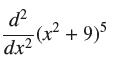
Compute the higher derivative. d2 P -(x2 +9)5 dx2
With P(t) as in Exercises 73 and 74, estimate P'(t) for T = 1999, 2001, 2005, 2011, now using the SDQ.Data From Exercises 73Estimate P'(t) for t = 1997, 2001, 2005, 2009. (Include proper units on the derivative.)Data From Exercises 74Estimate P'(t) for t = 1999, 2003, 2007, 2011. (Include proper
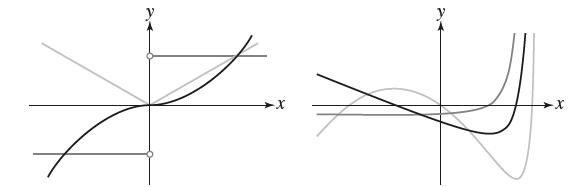
In Figure 7, for the three graphs on the left, identify ƒ, ƒ', and ƒ". Do the same for the three graphs on the right. 24 -X
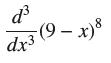
Compute the higher derivative. d³ dx³ (9-x)8
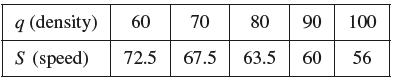
Traffic speed S along Katman Road (in kilometers per hour) varies as a function of traffic density q (number of cars per kilometer of road) according to the data:Estimate S'(80) using the SDQ. (Include proper units on the derivative.) q (density) S (speed) 60 70 72.5 67.5 80 90 100 63.560 56
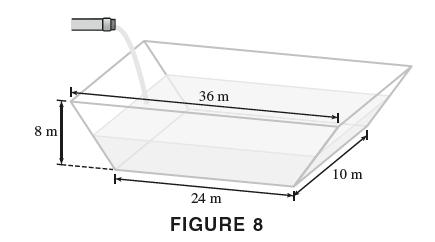
How fast does the water level rise in the tank in Figure 8 when the water level is h = 4 m and water pours in at 20 m3/min? 8 m + 36 m 24 m FIGURE 8 10 m
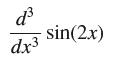
Compute the higher derivative. d³ dx3 sin(2x)
Explain why V = qS, called traffic volume, is equal to the number of cars passing a point per hour. Use the data and the SDQ to estimate V'(80). (Include proper units on the derivative.)
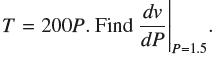
Assume that the average molecular velocity v of a gas in a particular container is given by v(T) = 29 √T m/s, where T is the temperature in kelvins. The temperature is related to the pressure (in atmospheres) by T = 200P. Find dv dP P=1.5
The minute hand of a clock is 8 cm long, and the hour hand is 5 cm long. How fast is the distance between the tips of the hands changing at 3 o’clock?
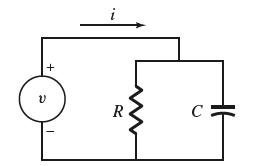
The current (in amperes) at time t (in seconds) flowing in the circuit in Figure 20 is given by Kirchhoff ’s Law:i(t) = Cν'(t) + R−1ν(t)where ν(t) is the voltage (in volts, V), C the capacitance (in farads, F), and R the resistance (in ohms, Ω).Calculate the current at t = 3 ifν(t) = 0.5t
The power P in a circuit is P = Ri2, where R is the resistance and i is the current. Find dP/dt at t = 1/3 if R = 1000 Ω and i varies according to i = sin(4πt) (time in seconds).
Chloe and Bao are in motorboats at the center of a lake. At time t = 0, Chloe begins traveling south at a speed of 50 km/h. One minute later, Bao takes off, heading east at a speed of 40 km/h. At what rate is the distance between them increasing at t = 12 min?
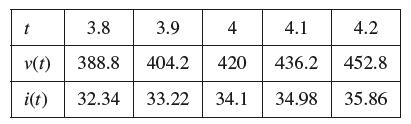
The current (in amperes) at time t (in seconds) flowing in the circuit in Figure 20 is given by Kirchhoff ’s Law:i(t) = Cν'(t) + R−1ν(t)where ν(t) is the voltage (in volts, V), C the capacitance (in farads, F), and R the resistance (in ohms, Ω).Use the following data and the SDQ to estimate
An expanding sphere has radius r = 0.4t cm at time t (in seconds). Let V be the sphere’s volume. Find dV/dt when (a) r = 3 and (b) t = 3.
A bead slides down the curve xy = 10. Find the bead’s horizontal velocity at time t = 2 s if its height at time t seconds is y = 400 − 16t2 cm.
The current (in amperes) at time t (in seconds) flowing in the circuit in Figure 20 is given by Kirchhoff ’s Law:i(t) = Cν'(t) + R−1ν(t)where ν(t) is the voltage (in volts, V), C the capacitance (in farads, F), and R the resistance (in ohms, Ω).Assume that R = 200 Ω but C is unknown. Use
The function L(t) = 12 + 5.5 sin( 2π/365 t) models the length of a day from sunrise to sunset in Moscow, Russia, where t is the day in the year after the spring equinox on March 21. Determine L'(t), and use it to calculate the rate that the length of the days are changing on March 25, April 30,
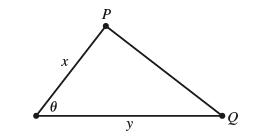
In Figure 9, x is increasing at 2 cm/s, y is increasing at 3 cm/s, and θ is decreasing such that the area of the triangle has the constant value 4 cm2.(a) How fast is θ decreasing when x = 4, y = 4?(b) How fast is the distance between P and Q changing when x = 4, y = 4? 0. X P y Le
Plot the derivative ƒ' of ƒ(x) = 2x3 − 10x−1 for x > 0 (set the bounds of the viewing box appropriately) and observe that ƒ'(x) > 0. What does the positivity of ƒ'(x) tell us about the graph of ƒ itself? Plot ƒ and confirm this conclusion.
The SDQ usually approximates the derivative much more closely than does the ordinary difference quotient. Let ƒ(x) = √x and a = 3. Compute the SDQ with h = 0.01 and the ordinary difference quotients with h = ±0.01. Compare with the actual value, which is ƒ'(3) = 1/(2 √3).
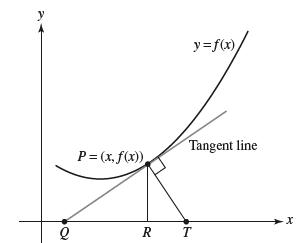
Exercises 83–86 refer to Figure 19. Length QR is called the subtangent at P, and length RT is called the subnormal.Prove in general that the subnormal at P is |ƒ'(x) ƒ(x)|. y Q P=(x, f(x)) R y=f(x) Tangent line T -X
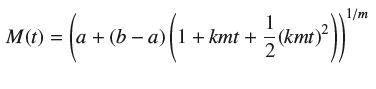
Calculate M'(0) in terms of the constants a, b, k, and m, where 1/m 1 +(b-a) 1 +kmt + = (kmt)²2 ²))" 2 M(1) = ( a + (b− a)
Show that P̅Q̅ has length |ƒ(x)|√1 + ƒ'(x)−2.
Assume that ƒ(1) = 4, ƒ'(1) = −3, g(2) = 1, g'(2) = 3Calculate the derivatives of the following functions at x = 2:(a) ƒ(g(x)) (b) ƒ(x/2) (c) g(2g(x))
Assume that ƒ(0) = 2, ƒ'(0) = 3, h(0) = −1, h'(0) = 7Calculate the derivatives of the following functions at x = 0:(a) (ƒ(x))3 (b) ƒ(7x) (c) ƒ(4x)h(5x)
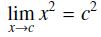
Adapt the argument in Example 2 to prove rigorously that for all c. lim x² = c² 2 X-C
Compute the derivative of h(sin x) at x = π/6 , assuming that h'(0.5) = 10.
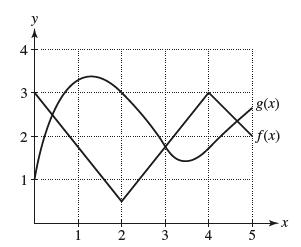
Let F(x) = ƒ(g(x)), where the graphs of ƒ and g are shown in Figure 3. Estimate g'(2) and ƒ'(g(2)) and compute F'(2). 4 3 2 1 1 2 3 TX 4 g(x) f(x) 5 ·X
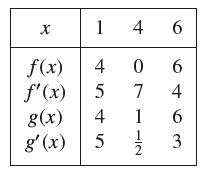
Use the table of values to calculate the derivative of the function at the given point.ƒ(g(x)), x = 6 1 4 f(x) f'(x) 5 g(x) g'(x) 545 4 6 0 6 7 4 16 3
Let ƒ be a differentiable function, and set the function g(x) = ƒ (x + c), where c is a constant. Use the limit definition to show that g'(x) = ƒ'(x + c). Explain this result graphically, recalling that the graph of g is obtained by shifting the graph of ƒ c units to the left (if c > 0) or
Let ƒ(x) = x−2. Compute ƒ'(1) by taking the limit of the SDQs (with a = 1) as h → 0.
Use the table of values to calculate the derivative of the function at the given point.g(ƒ(x)), x = 1 1 4 f(x) f'(x) 5 g(x) g'(x) 545 4 6 0 6 7 4 16 3
Use the table of values to calculate the derivative of the function at the given point.ƒ(2x + g(x)), x = 1 1 4 f(x) f'(x) 5 g(x) g'(x) 545 4 6 0 6 7 4 16 3
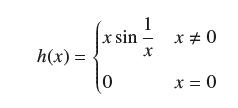
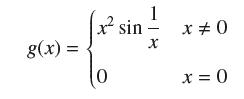
DefineShow that h is continuous at x = 0 but h'(0) does not exist (see Figure 8). h(x) = 1 x sin - X x # 0 x = 0
In the setting of Exercise 98, calculate the rate of change of T (in K/yr) if T = 283 K and R increases at a rate of 0.5 Js−1m−2 per yr.Data From Exercise 98Climate scientists use the Stefan–Boltzmann Law R = σT4 to estimate the change in the earth’s average temperature T (in kelvins)
Use a computer algebra system to compute ƒ(k)(x) for k = 1, 2, 3 for the following functions:(a)ƒ(x) = cot(x2)(b) ƒ(x) = √x3 + 1
Use the Chain Rule to express the second derivative of f ∘ g in terms of the first and second derivatives of ƒ and g.
Compute the second derivative of sin(g(x)) at x = 2, assuming that g(2) = π/4, g'(2) = 5, and g"(2) = 3.
Show that if ƒ, g, and h are differentiable, then [f(g(h(x)))] = f'(g(h(x)))g' (h(x))h'(x)
Show that differentiation reverses parity: If f is even, then ƒ is odd, and if ƒ' is odd, then ƒ' is even. Differentiate ƒ(−x).
(a) Sketch a graph of any even function f and explain graphically why ƒ' is odd.(b) Suppose that f is even. Is f necessarily odd?
Let ƒ(u) = uq and g(x) = xp/q. Assume that g is differentiable.(a) Show that ƒ(g(x)) = xp (recall the Laws of Exponents).(b) Apply the Chain Rule and the Power Rule for whole-number exponents to show that ƒ'(g(x)) g'(x) = pxp−1.(c) Then derive the Power Rule for xp/q.
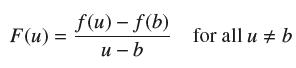
This exercise proves the Chain Rule without the special assumption made in the text. For any number b, define a new function(a) Show that if we define F(b) = ƒ'(b), then F is continuous at u = b.(b) Take b = g(a). Show that if x ≠ a, then for all u,Note that both sides are zero if u = g(a).(c)
Use the limit definition to show that g'(0) exists but g'(0) ≠ ,where lim g'(x) x-0
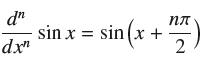
Prove that for all whole numbers n ≥ 1,Use the identity cos x = sin (x + π/2). dn dxn sin x = sin(x + Nπ 2
In Exercises 1–6, compute ƒ'(x) using the limit definition.ƒ(x) = 1 − x−1
Sketch the graph of a function that has an average rate of change equal to zero over the interval [0, 1] but has instantaneous rates of change at 0 and 1 that are positive.
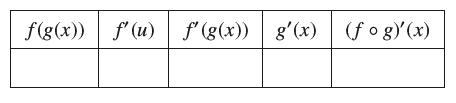
Fill in a table of the following type:ƒ(u) = u4 + u, g(x) = cos x f(g(x)) f'(u) f(g(x)) g'(x) (fog)'(x)
True or false? The third derivative of position with respect to time is zero for an object falling to Earth under the influence of gravity. Explain.
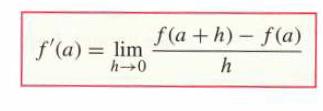
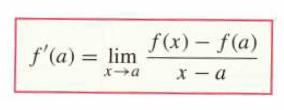
In Exercises 3–8, compute ƒ(a) in two ways, using Eq. (1) and Eq. (2).ƒ(x) = x2 + 9x, a = 2 f'(a) = lim h→0 f(a+h)-f(a) h
Which of (a) or (b) is equal to d/dx (x sin t)?(a) (x cos t) dt/dx(b) (x cos t) dt/dx + sin t
Differentiate the expression with respect to x, assuming that y is implicitly a function of x.x3/y2
Calculate y" and y"'.y = 4t3 − 9t2 + 7
How is the addition formula for sine used in deriving the formula (sin x)' = cos x?
Find an equation of the tangent line at the point indicated.y = sec x, x = π/6
What is the relation between dV/dt and dr/dt if V = (4/3)πr3?
Compute ƒ'(a) using the limit definition and find an equation of the tangent line to the graph of ƒ at x = a.ƒ(x) = x2 − x, a = 1
What do the following quantities represent in terms of the graph of ƒ(x) = sin x? (a) sin 1.3 sin 0.9 (b) sin 1.3- sin 0.9 0.4 (c) f'(0.9)
Assume that the radius r of a sphere is expanding at a rate of 30 cm/min. The volume of a sphere is V = 43 πr3 and its surface area is 4πr2. Determine the given rate.Volume with respect to time when r = 15 cm
In Exercises 1–6, compute ƒ'(x) using the limit definition.ƒ(x) = x − √x
Which type of polynomial satisfies ƒ'''(x) = 0 for all x?
In Exercises 3–8, compute ƒ(a) in two ways, using Eq. (1) and Eq. (2).ƒ(x) = 3x2 + 4x + 2, a = −1 f'(a) = lim h→0 f(a+h)-f(a) h
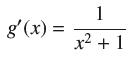
Determine which inverse trigonometric function g has the derivative g'(x) = 1 x² + 1
Differentiate the expression with respect to x, assuming that y is implicitly a function of x.(x2 + y2)3/2
Calculate y" and y"'.y = 4/3πr3
Plot ƒ(x) = 2x4 + 3x3 − 14x2 − 9x + 18 in the appropriate viewing rectangles and determine its roots.
How many solutions does cos x = x2 have?
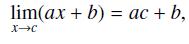
Adapt the argument in Example 1 to prove rigorously that where a, b, c are arbitrary. lim(ax + b) = ac + b, XC
At 1:00 PM Jacqueline began to climb up Waterpail Hill from the bottom. At the same time Giles began to climb down from the top. Giles reached the bottom at 2:20 PM, when Jacqueline was 85% of the way up. Jacqueline reached the top at 2:50. Use the result in Exercise 30 to prove that there was a
Let Investigate G(b) numerically and graphically for b = 0.2, 0.8, 2, 3, 5 (and additional values if necessary). Then make a conjecture for the value of G(b) as a function of b. Draw a graph of y = G(b). Does G appear to be continuous? We will evaluate G(b) using L’Hôpital’s Rule in Section
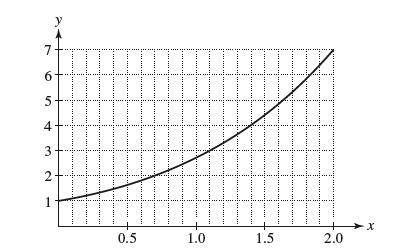
Refer to the function ƒ whose graph is shown in Figure 1.Compute the average rate of change of ƒ(x) over [0, 2]. What is the graphical interpretation of this average rate? X 2.0 1.5 III 1.0 III 0.5 7 ▬▬▬▬▬▬▬ Z ▬ ▬ ▬ ▬ ▬ ▬ ▬ ▬ ▬ ▬▬▬▬▬▬▬ 1 2 نیا 4 5 9
In Exercises 1–6, compute ƒ'(x) using the limit definition.ƒ(x) = 3x − 7
Calculate y" and y"'.y = 14x2
If dx/dt = 3 and y = x2, what is dy/dt when x = −3, 2, 5?
Consider a rectangular bathtub whose base is 18 ft2.How fast is the water level rising if water is filling the tub at a rate of 0.7 ft3/min?
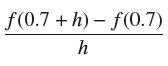
For which value of h is equal to the slope of the secant line between the points where x = 0.7 and x = 1.1? f(0.7+h)-f(0.7) h
What is the slope of the tangent line through the point (2, ƒ(2)) if ƒ'(x) = x3?
Find (ƒ/g)'(1) if f (1) = ƒ'(1) = g(1) = 2 and g'(1) = 4.
Which of the following can be differentiated without using the Chain Rule?(a) y = tan(7x2 + 2) (b) y = x/x + 1(c) y = √x · sec x (d) y = x √sec x(e) y = x sec √x (f) y = tan(4x)
In Exercises 1–6, compute ƒ'(x) using the limit definition.ƒ(x) = x2 + 3x
Let ƒ(x) = 2x2 − 3x − 5. Show that the secant line through (2, ƒ(2)) and (2 + h, ƒ(2 + h)) has slope 2h + 5. Then use this formula to compute:(a) The slope of the secant line through (2, ƒ(2)) and (3, ƒ(3))(b) The slope of the tangent line at x = 2 (by taking a limit)
Which of the following functions can be differentiated using the rules we have covered so far?(a) y = 3 cos x cot x (b) y = cos(x2) (c) y = 2x sin x
Show that if you differentiate both sides of xy + 4x + 2y = 1, the result is (x + 2) dy/dx + y + 4 = 0. Then solve for dy/dx and evaluate it at the point (1, −1).
Calculate y" and y"'.y = 7 − 2x
Assume that the radius r of a sphere is expanding at a rate of 30 cm/min. The volume of a sphere is V = 43 πr3 and its surface area is 4πr2. Determine the given rate.Volume with respect to time at t = 2 min, assuming that r = 0 at t = 0
Choose (a) or (b). The derivative at a point is zero if the tangent line at that point is (a) horizontal (b) vertical.
In Exercises 1–6, compute ƒ'(x) using the limit definition.ƒ(x) = x−1/2
In Exercises 3–8, compute ƒ(a) in two ways, using Eq. (1) and Eq. (2).ƒ(x) = x3, a = 2 f'(a) = lim h→0 f(a+h)-f(a) h
Write the function as a composite ƒ(g(x)) and compute the derivative using the Chain Rule.y = cos(x3)
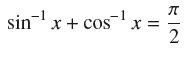
What does the following identity tell us about the derivatives of sin−1 x and cos−1 x? sin¹x + cos¹ x = -1 X KIN π 2
Differentiate the expression with respect to x, assuming that y is implicitly a function of x.√x + y
Calculate y" and y"'.y = √x
Compute the derivative.ƒ(x) = x2 cos x
Restate this question in terms of dV/dt and dh/dt: At what rate is water pouring in if the water level rises at a rate of 1 cm/min?
What are the seventh and eighth derivatives of ƒ(x) = x7?
Assume that the radius r of a sphere is expanding at a rate of 30 cm/min. The volume of a sphere is V = 43 πr3 and its surface area is 4πr2. Determine the given rate.Surface area with respect to time when r = 40 cm
In Exercises 3–8, compute ƒ(a) in two ways, using Eq. (1) and Eq. (2).ƒ(x) = x3 + 2x, a = 1 f'(a) = lim h→0 f(a+h)-f(a) h
Choose (a) or (b). The derivative at a point does not exist if the tangent line at that point is (a) horizontal (b) vertical.
Showing 7100 - 7200
of 8339
First
65
66
67
68
69
70
71
72
73
74
75
76
77
78
79
Last
Step by Step Answers

 Get 50% OFF
Claim Now
Get 50% OFF
Claim Now




![[f(g(h(x)))] = f'(g(h(x)))g' (h(x))h'(x)](https://dsd5zvtm8ll6.cloudfront.net/images/question_images/1699/3/4/7/8776549fda58884e1699347878148.jpg)





![(a) Assume that g and h are continuous on [a, b]. Use Corollary 2 to show that if g(a)](https://dsd5zvtm8ll6.cloudfront.net/images/question_images/1698/5/8/8/187653e661b7f3221698588186969.jpg)