New Semester
Started
Get
50% OFF
Study Help!
--h --m --s
Claim Now
Question Answers
Textbooks
Find textbooks, questions and answers
Oops, something went wrong!
Change your search query and then try again
S
Books
FREE
Study Help
Expert Questions
Accounting
General Management
Mathematics
Finance
Organizational Behaviour
Law
Physics
Operating System
Management Leadership
Sociology
Programming
Marketing
Database
Computer Network
Economics
Textbooks Solutions
Accounting
Managerial Accounting
Management Leadership
Cost Accounting
Statistics
Business Law
Corporate Finance
Finance
Economics
Auditing
Tutors
Online Tutors
Find a Tutor
Hire a Tutor
Become a Tutor
AI Tutor
AI Study Planner
NEW
Sell Books
Search
Search
Sign In
Register
study help
mathematics
calculus early transcendentals
Calculus Early Transcendentals 2nd edition William L. Briggs, Lyle Cochran, Bernard Gillett - Solutions
Use implicit differentiation to find dy/dx.exy = 2y
A spherical balloon is inflated and its volume increases at a rate of 15 in3/min. What is the rate of change of its radius when the radius is 10 in?
Evaluate the derivatives of the following functions.f(x) = tan-1 10x
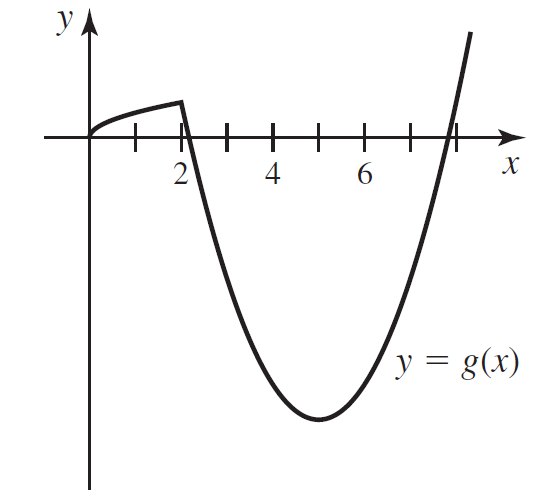
Sketch a graph of g' for the function g shown in the figure. х 6. у %3D3(х) 2.
Find the following derivatives.d/dx (ln |sin x|)
Use implicit differentiation to find dy/dx.sin xy = x + y
The volume of a cube decreases at a rate of 0.5 ft3/min. What is the rate of change of the side length when the side lengths are 12 ft?
Evaluate the derivatives of the following functions.f(x) = sin-1 (esin x)
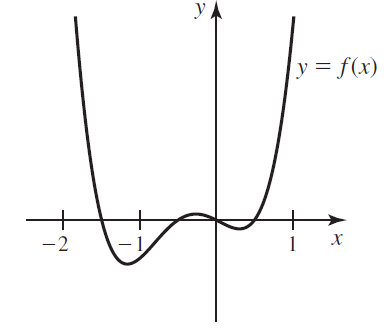
Sketch a graph of f' for the function f shown in the figure. y, y = f(x) х -2
Find the following derivatives.d/dx (ln 2x8)
Carry out the following steps.a. Use implicit differentiation to find dy/dx.b. Find the slope of the curve at the given point.tan xy = x + y; (0, 0)
A circle has an initial radius of 50 ft when the radius begins decreasing at a rate of 2 ft/min. What is the rate of change of the area at the instant the radius is 10 ft?
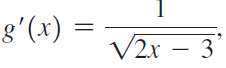
Use the definition of the derivative to do the following.Verify that where g(x) = √2x - 3. g'(x) V2r – 3'
Find the following derivatives.d/dx (ln x2)
Carry out the following steps.a. Use implicit differentiation to find dy/dx.b. Find the slope of the curve at the given point.cos y = x; (0, π/2)
The edges of a cube increase at a rate of 2 cm/s. How fast is the volume changing when the length of each edge is 50 cm?
Evaluate the derivatives of the following functions.f(x) = sin-1 (e-2x)
Evaluate the derivatives of the following functions.f(x) = sin-1 (ln x)
Use the definition of the derivative to do the following.Verify that f'(x) = 4x - 3, where f(x) = 2x2 - 3x + 1.
Find the following derivatives.d/dx (x2 ln x)
Carry out the following steps.a. Use implicit differentiation to find dy/dx.b. Find the slope of the curve at the given point.√x - 2√y = 0; (4, 1)
The area of a circle increases at a rate of 1 cm2/s.a. How fast is the radius changing when the radius is 2 cm?b. How fast is the radius changing when the circumference is 2 cm?
Evaluate the derivatives of the following functions.f(w) = cos (sin-1 2w)
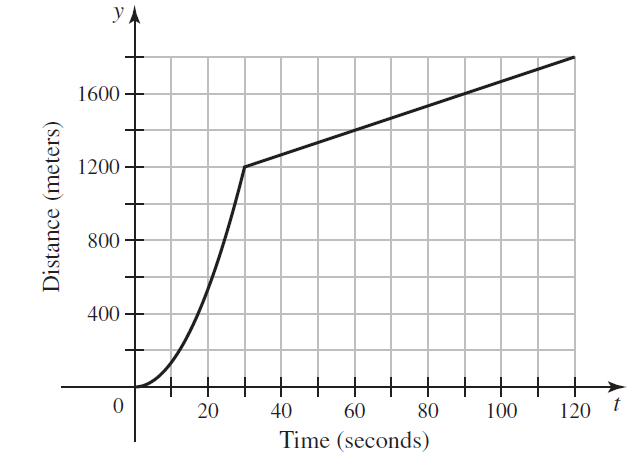
Assume the graph represents the distance (in m) fallen by a skydiver t seconds after jumping out of a plane. a. Estimate the velocity of the skydiver at t = 15.b. Estimate the velocity of the skydiver at t = 70.c. Estimate the average velocity of the skydiver between t = 20 and t = 90.d.
Find the following derivatives.d/dx (ln 7x)
Carry out the following steps.a. Use implicit differentiation to find dy/dx.b. Find the slope of the curve at the given point.sin y = 5x4 - 5; (1, π)
The hypotenuse of an isosceles right triangle decreases in length at a rate of 4/s.a. At what rate is the area of the triangle changing when the legs are 5 m long?b. At what rate are the lengths of the legs of the triangle changing?c. At what rate is the area of the triangle changing when the area
Evaluate the derivatives of the following functions.f(x) = x sin-1 x
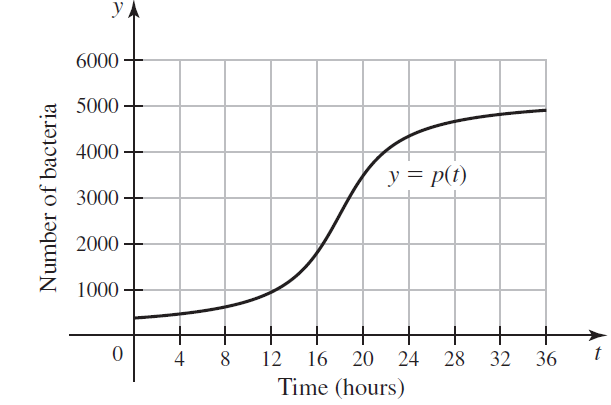
Suppose the following graph represents the number of bacteria in a culture t hours after the start of an experiment.a. At approximately what time is the instantaneous growth rate the greatest, for 0 ≤ t ≤ 36? Estimate the growth rate at this time.b. At approximately what time in the interval 0
Explain the general procedure of logarithmic differentiation.
Carry out the following steps.a. Use implicit differentiation to find dy/dx.b. Find the slope of the curve at the given point.y2 + 3x = 8; (1, √5)
The legs of an isosceles right triangle increase in length at a rate of 2 m/s.a. At what rate is the area of the triangle changing when the legs are 2 m long?b. At what rate is the area of the triangle changing when the hypotenuse is 1 m long?c. At what rate is the length of the hypotenuse changing?
Evaluate the derivatives of the following functions.f(x) = sin-1 2x
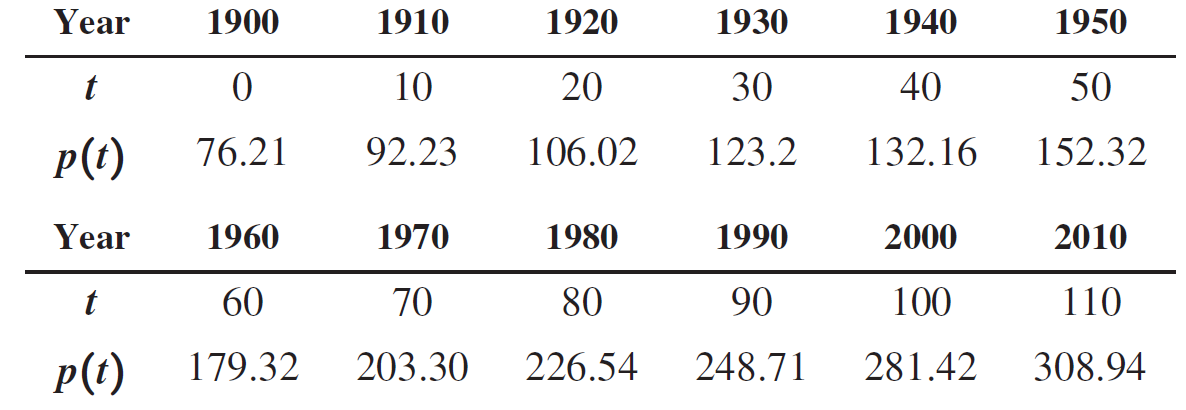
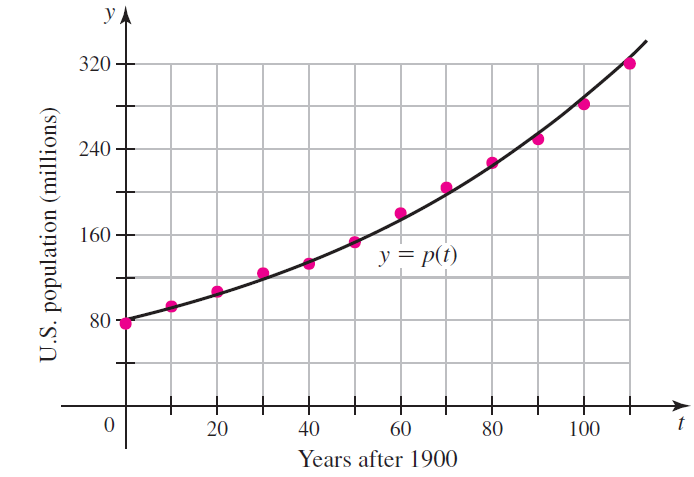
The population of the United States (in millions) by decade is given in the table, where t is the number of years after 1900. These data are plotted and fitted with a smooth curve y = p(t) in the figure.a. Compute the average rate of population growth from 1950 to 1960.b. Explain why the average
Express the function f(x) = g(x)h(x) in terms of the natural logarithmic and natural exponential functions (base e).
Carry out the following steps.a. Use implicit differentiation to find dy/dx.b. Find the slope of the curve at the given point.y2 = 4x; (1, 2)
The sides of a square decrease in length at a rate of 1 m/s.a. At what rate is the area of the square changing when the sides are 5 m long?b. At what rate are the lengths of the diagonals of the square changing?
Explain how to find (f -1)'(y0), given that y0 = f(x0).
Suppose the height s of an object (in m) above the ground after t seconds is approximated by the function s = -4.9t2 + 25t + 1.a. Make a table showing the average velocities of the object from time t = 1 to t = 1 + h, for h = 0.01, 0.001, 0.0001, and 0.00001.b. Use the table in part (a) to estimate
Explain why bx = ex ln b.
Carry out the following steps.a. Use implicit differentiation to find dy/dx.b. Find the slope of the curve at the given point.x = ey; (2, ln 2)
The sides of a square increase in length at a rate of 2 m/s.a. At what rate is the area of the square changing when the sides are 10 m long?b. At what rate is the area of the square changing when the sides are 20 m long?c. Draw a graph that shows how the rate of change of the area varies with the
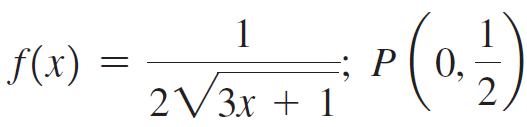
a. Use either definition of the derivative to determine the slope of the curve y = f(x) at the given point P.b. Find an equation of the line tangent to the curve y = f(x) at P; then graph the curve and the tangent line. P( 0, f(x) 2V3x + 1
State the derivative rule for the logarithmic function f(x) = logb x. How does it differ from the derivative formula for ln x?
Carry out the following steps.a. Use implicit differentiation to find dy/dx.b. Find the slope of the curve at the given point.x4 + y4 = 2; (1, -1)
Explain why the term related rates describes the problems of this section.
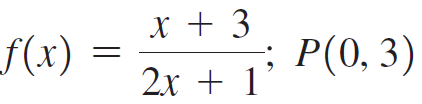
a. Use either definition of the derivative to determine the slope of the curve y = f(x) at the given point P.b. Find an equation of the line tangent to the curve y = f(x) at P; then graph the curve and the tangent line. х+3 f(x) ; P(0, 3) 2х + 1 ||
State the derivative rule for the exponential function f(x) = bx. How does it differ from the derivative formula for ex?
In this section, for what values of n did we prove that d/dx (xn) = nxn-1?
a. Use either definition of the derivative to determine the slope of the curve y = f(x) at the given point P.b. Find an equation of the line tangent to the curve y = f(x) at P; then graph the curve and the tangent line.f(x) = 5x3 + x; P(1, 6)
Show that d/dx (ln kx) = d/dx (ln x), where x > 0 and k is a positive real number.
Why are both the x-coordinate and the y-coordinate generally needed to find the slope of the tangent line at a point for an implicitly defined function?
Explain how implicit differentiation can simplify the work in a related-rates problem.
Explain the differences between computing the derivatives of functions that are defined implicitly and explicitly.
Determine whether the following statements are true and give an explanation or counterexample.a. The function f|x2 = |2x + 1| is continuous for all x; therefore, it is differentiable for all x.b. If d/dx (f(x)) = d/dx (g(x)), then f = g.c. For any function f, d/dx |(f(x)| = |f'(x)|.d. The value of
Sketch the graph of f(x) = ln |x| and explain how the graph shows that f'(x) = 1/x.
Use x = ey to explain why d/dx (ln x) =1/x, for x > 0.
For some equations, such as x2 + y2 = 1 or x - y2 = 0 , it is possible to solve for y and then calculate dy/dx. Even in these cases, explain why implicit differentiation is usually a more efficient method for calculating the derivative.
Use the General Power Rule where appropriate to find the derivative of the following functions.f(x) = xe
Second derivatives Find d2y / dx2.x4 + y4 = 64
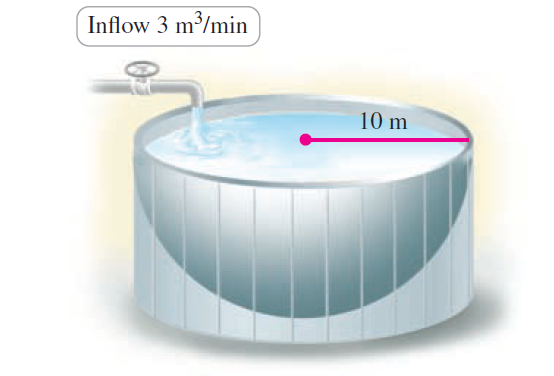
For the situation described in Exercise 32, what is the rate of change of the area of the exposed surface of the water when the water is 5 m deep?Data from Exercise 32A hemispherical tank with a radius of 10 m is filled from an inflow pipe at a rate of 3 m3/min (see figure). How fast is the
Evaluate and simplify the following derivatives.f'(1) when f(x) = x1/x
Find an equation of the line tangent to the graph of f at the given point.f(x) = cos-1 x2; (1/√2,π/3)
Second derivatives Find d2y / dx2.x + y = sin y
A hemispherical tank with a radius of 10 m is filled from an inflow pipe at a rate of 3 m3/min (see figure). How fast is the water level rising when the water level is 5 m from the bottom of the tank? The volume of a cap of thickness h sliced from a sphere of radius r is πh2 (3r - h)/3.
Evaluate and simplify the following derivatives.d/dx (xsin x)
Find an equation of the line tangent to the graph of f at the given point.f(x) = sin-1 (x/4); (2, π/6)
The energy (in joules) released by an earthquake of magnitude M is given by the equation E = 25,000 • 101.5M. (This equation can be solved for M to define the magnitude of a given earthquake; it is a refinement of the original Richter scale created by Charles Richter in 1935.)a. Compute the
Second derivatives Find d2y / dx2.2x2 + y2 = 4
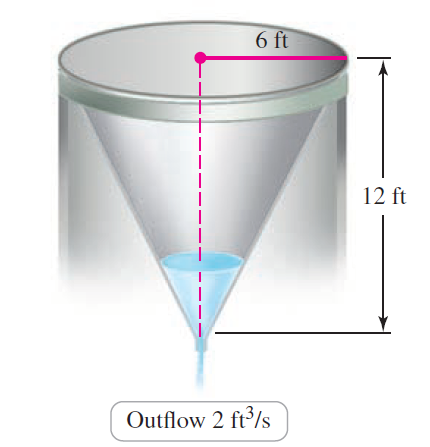
Water is drained out of an inverted cone having the same dimensions as the cone depicted in Exercise 29. If the water level drops at 1 ft/min, at what rate is water (in ft3/min) draining from the tank when the water depth is 6 ft?Data from Exercise 29An inverted conical water tank with a height of
Find an equation of the line tangent to the graph of f at the given point.f(x) = tan-1 2x; (1/2, π/4)
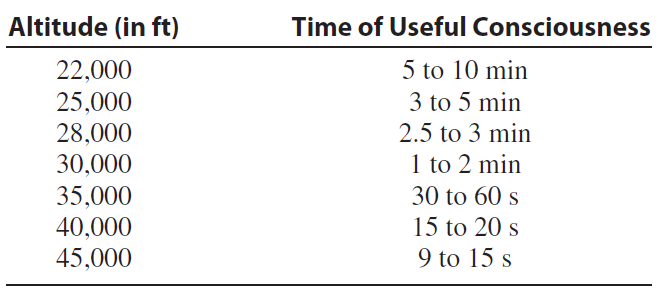
The following table shows the time of useful consciousness at various altitudes in the situation where a pressurized airplane suddenly loses pressure. The change in pressure drastically reduces available oxygen, and hypoxia sets in. The upper value of each time interval is roughly modeled by T = 10
Second derivatives Find d2y / dx2.x + y2 = 1
At what rate is soda being sucked out of a cylindrical glass that is 6 in tall and has a radius of 2 in? The depth of the soda decreases at a constant rate of 0.25 in/s.
Evaluate and simplify the following derivatives. sin dx
Evaluate and simplify the following derivatives.d/dx (log3 (x + 8))
Evaluate the derivatives of the following functions.f(x) = 1/tan-1 (x2 + 4)
Find the derivatives of the following functions.y = ln 10x
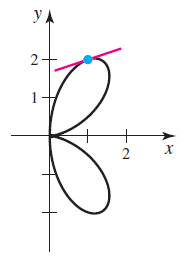
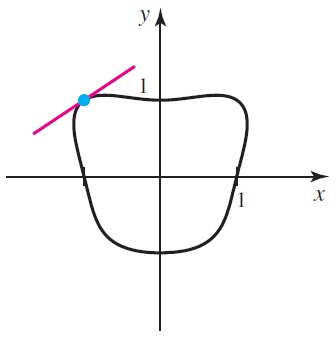
Carry out the following steps.a. Verify that the given point lies on the curve.b. Determine an equation of the line tangent to the curve at the given point.(x2 + y2)2 = 25 / 4 xy2; (1, 2) УА 1 х 2
An inverted conical water tank with a height of 12 ft and a radius of 6 ft is drained through a hole in the vertex at a rate of 2 ft3/s (see figure). What is the rate of change of the water depth when the water depth is 3 ft? Use similar triangles. 6 ft 12 ft Outflow 2 ft³/s
Evaluate and simplify the following derivatives.d/dx (2x2 - x)
Evaluate the derivatives of the following functions.f(s) = cot-1 (es)
Find the derivatives of the following functions.A = 250(1.045)4t
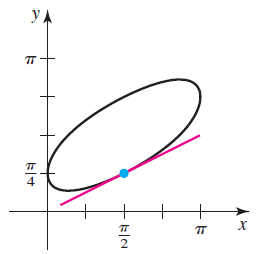
Carry out the following steps.a. Verify that the given point lies on the curve.b. Determine an equation of the line tangent to the curve at the given point.cos (x - y) + sin y = √2; (π/2, π/4) УА IT х
A water heater that has the shape of a right cylindrical tank with a radius of 1 ft and a height of 4 ft is being drained. How fast is water draining out of the tank (in ft3/min) if the water level is dropping at 6 in/min?
Evaluate the derivatives of the following functions.f(x) = sin (tan-1 (ln x))
Evaluate and simplify the following derivatives.d/dw (e-w ln w)
Find the derivatives of the following functions.P = 40/1 + 2-t
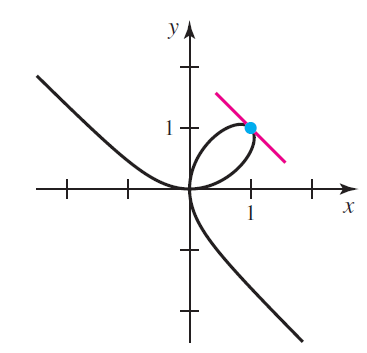
Carry out the following steps.a. Verify that the given point lies on the curve.b. Determine an equation of the line tangent to the curve at the given point.x3 + y3 = 2xy; (1, 1) y
Sand falls from an overhead bin and accumulates in a conical pile with a radius that is always three times its height. Suppose the height of the pile increases at a rate of 2 cm/s when the pile is 12 cm high. At what rate is the sand leaving the bin at that instant?
Evaluate and simplify the following derivatives.d/dx (x ln2 x)
Evaluate the derivatives of the following functions.f(x) = csc-1 (tan ex)
Find the derivatives of the following functions.y = x3 • 3x
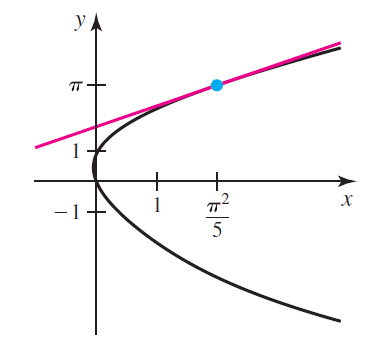
Carry out the following steps.a. Verify that the given point lies on the curve.b. Determine an equation of the line tangent to the curve at the given point.sin y + 5x = y2; (π2 / 5 , π) yA 5
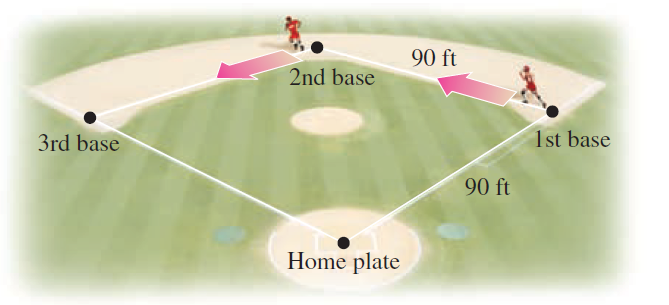
Runners stand at first and second base in a baseball game. At the moment a ball is hit, the runner at first base runs to second base at 18 ft/s; simultaneously, the runner on second runs to third base at 20 ft/s. How fast is the distance between the runners changing 1 second after the ball is hit
Evaluate and simplify the following derivatives.d/dx (xe-10x)
Evaluate the derivatives of the following functions.f(x) = tan-1 (e4x)
Find the derivatives of the following functions.y = 4-x sin x
Carry out the following steps.a. Verify that the given point lies on the curve.b. Determine an equation of the line tangent to the curve at the given point.x4 - x2y + y4 = 1; (-1, 1) х
A 5-foot-tall woman walks at 8 ft/s toward a streetlight that is 20 ft above the ground. What is the rate of change of the length of her shadow when she is 15 ft from the streetlight? At what rate is the tip of her shadow moving?
Showing 5100 - 5200
of 6775
First
45
46
47
48
49
50
51
52
53
54
55
56
57
58
59
Last
Step by Step Answers

 Get 50% OFF
Claim Now
Get 50% OFF
Claim Now