New Semester
Started
Get
50% OFF
Study Help!
--h --m --s
Claim Now
Question Answers
Textbooks
Find textbooks, questions and answers
Oops, something went wrong!
Change your search query and then try again
S
Books
FREE
Study Help
Expert Questions
Accounting
General Management
Mathematics
Finance
Organizational Behaviour
Law
Physics
Operating System
Management Leadership
Sociology
Programming
Marketing
Database
Computer Network
Economics
Textbooks Solutions
Accounting
Managerial Accounting
Management Leadership
Cost Accounting
Statistics
Business Law
Corporate Finance
Finance
Economics
Auditing
Tutors
Online Tutors
Find a Tutor
Hire a Tutor
Become a Tutor
AI Tutor
AI Study Planner
NEW
Sell Books
Search
Search
Sign In
Register
study help
mathematics
calculus early transcendentals
Calculus Early Transcendentals 2nd edition William L. Briggs, Lyle Cochran, Bernard Gillett - Solutions
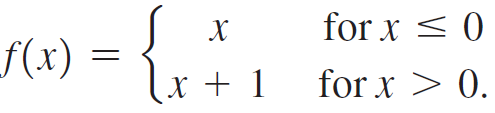
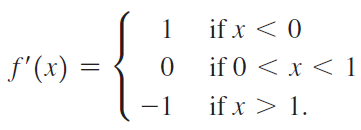
a. Graph the functionb. For x < 0, what is f'(x)?c. For x > 0, what is f'(x)?d. Graph f' on its domain.e. Is f differentiable at 0? Explain for x < 0 f(x) = for x > 0. x + 1
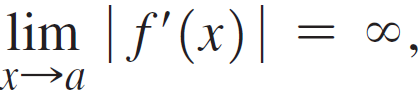
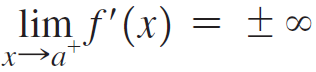
If a function f is continuous at a andthen the curve y = f(x) has a vertical tangent line at a and the equation of the tangent line is x = a. If a is an endpoint of a domain, then the appropriate one-sided derivative is used. Use this information to answer the following questions.Graph the
If a function f is continuous at a andthen the curve y = f(x) has a vertical tangent line at a and the equation of the tangent line is x = a. If a is an endpoint of a domain, then the appropriate one-sided derivative is used. Use this information to answer the following questions.Verify that f(x) =
If a function f is continuous at a andthen the curve y = f(x) has a vertical tangent line at a and the equation of the tangent line is x = a. If a is an endpoint of a domain, then the appropriate one-sided derivative is used. Use this information to answer the following questions.The preceding
If a function f is continuous at a andthen the curve y = f(x) has a vertical tangent line at a and the equation of the tangent line is x = a. If a is an endpoint of a domain, then the appropriate one-sided derivative is used. Use this information to answer the following questions.Graph the
The right-sided and left-sided derivatives of a function at a point a are given byrespectively, provided these limits exist. The derivative f'(a) exists if and only if f+'(a) = f-'(a).a. Sketch the following functions.b. Compute f+'(a) and f-'(a) at the given point a.c. Is f continuous at a? Is f
The right-sided and left-sided derivatives of a function at a point a are given byrespectively, provided these limits exist. The derivative f'(a) exists if and only if f+'(a) = f-'(a).a. Sketch the following functions.b. Compute f+'(a) and f-'(a) at the given point a.c. Is f continuous at a? Is f
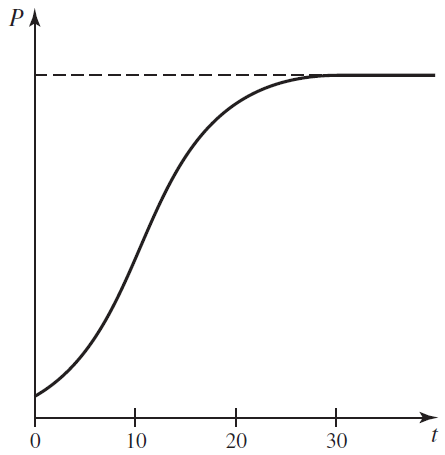
A common model for population growth uses the logistic (or sigmoid) curve. Consider the logistic curve in the figure, where P(t) is the population at time t ≥ 0. a. At approximately what time is the rate of growth P' the greatest?b. Is P' positive or negative for t ≥ 0?c. Is P' an
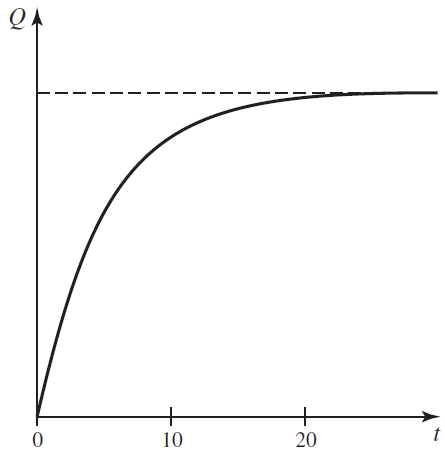
A capacitor is a device in an electrical circuit that stores charge. In one particular circuit, the charge on the capacitor Q varies in time as shown in the figure.a. At what time is the rate of change of the charge Q' the greatest?b. Is Q' positive or negative for t ≥ 0?c. Is Q' an increasing or
Given the function f and the point Q, find all points P on the graph of f such that the line tangent to f at P passes though Q. Check your work by graphing f and the tangent lines.f(x) = e-x; Q(1, -4)
Given the function f and the point Q, find all points P on the graph of f such that the line tangent to f at P passes though Q. Check your work by graphing f and the tangent lines.f(x) = 1/x; Q(-2, 4)
Given the function f and the point Q, find all points P on the graph of f such that the line tangent to f at P passes though Q. Check your work by graphing f and the tangent lines.f(x) = -x2 + 4x - 3; Q(0, 6)
Given the function f and the point Q, find all points P on the graph of f such that the line tangent to f at P passes though Q. Check your work by graphing f and the tangent lines.f(x) = x2 + 1; Q(3, 6)
A line perpendicular to another line or to a tangent line is called a normal line. Find an equation of the line perpendicular to the line that is tangent to the following curves at the given point P.y = x2 - 3x; P(3, 0)
A line perpendicular to another line or to a tangent line is called a normal line. Find an equation of the line perpendicular to the line that is tangent to the following curves at the given point P.y = 2/x; P(1, 2)
A line perpendicular to another line or to a tangent line is called a normal line. Find an equation of the line perpendicular to the line that is tangent to the following curves at the given point P.y = √x; P(4, 2)
A line perpendicular to another line or to a tangent line is called a normal line. Find an equation of the line perpendicular to the line that is tangent to the following curves at the given point P.y = 3x - 4; P(1, -1)
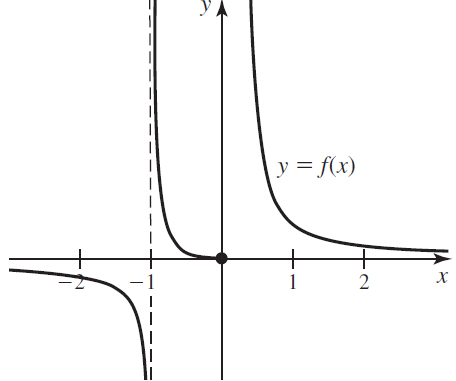
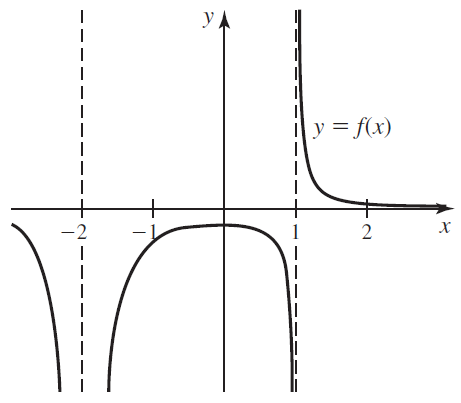
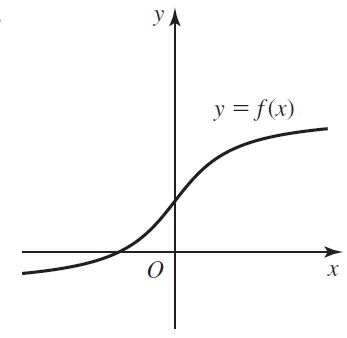
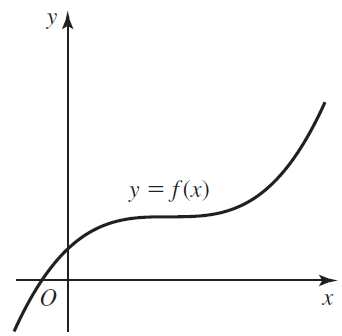
Create the graph of a continuous function f such that
Sketch the graph of f'(x) = x. Then sketch a possible graph of f. Is more than one graph possible?
Sketch the graph of f'(x) = 2. Then sketch three possible graphs of f.
Determine whether the following statements are true and give an explanation or counterexample.a. If the function f is differentiable for all values of x, then f is continuous for all values of x.b. The function f(x) = |x + 1| is continuous for all x, but not differentiable for all x.c. It is
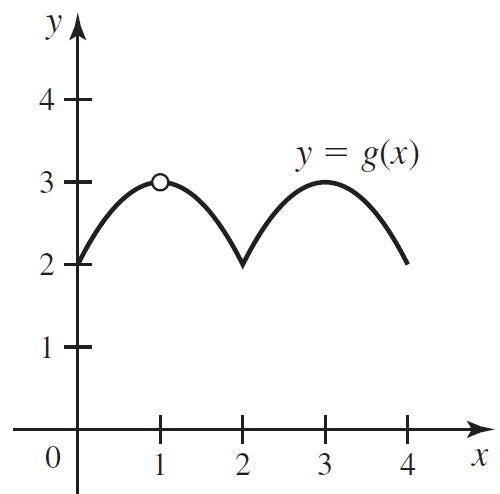
Use the graph of g in the figure to do the following.a. Find the values of x in (0, 4) at which g is not continuous.b. Find the values of x in (0, 4) at which g is not differentiable.c. Sketch a graph of g'. y = g(x) 3 2 + + + 4 1 3.
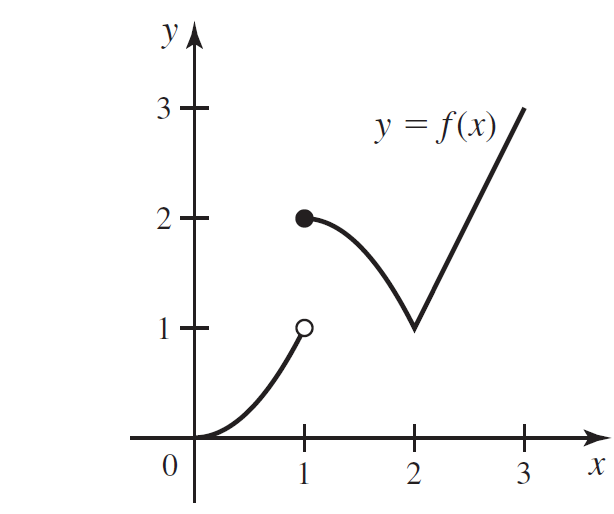
Use the graph of f in the figure to do the following.a. Find the values of x in (0, 3) at which f is not continuous.b. Find the values of x in (0, 3) at which f is not differentiable.c. Sketch a graph of f'. YA 3 y = f(x) 2 + + + 3
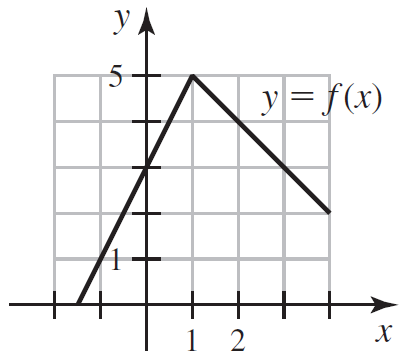
Sketch a graph of the derivative of the functions f shown in the figures. y = f(x)
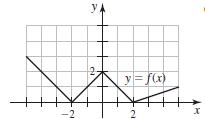
Sketch a graph of the derivative of the functions f shown in the figures. YA y = f(x) %3D -2 |
Reproduce the graph of f and then plot a graph of f' on the same set of axes. y, y = f(x) х
Reproduce the graph of f and then plot a graph of f' on the same set of axes. y, y = f(x) х
Reproduce the graph of f and then plot a graph of f' on the same set of axes. Ул У %3Df() х
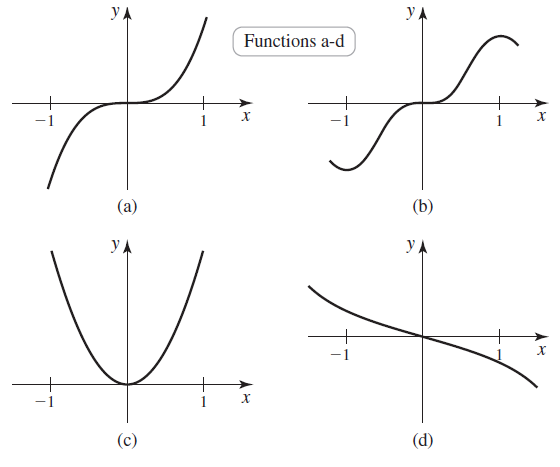
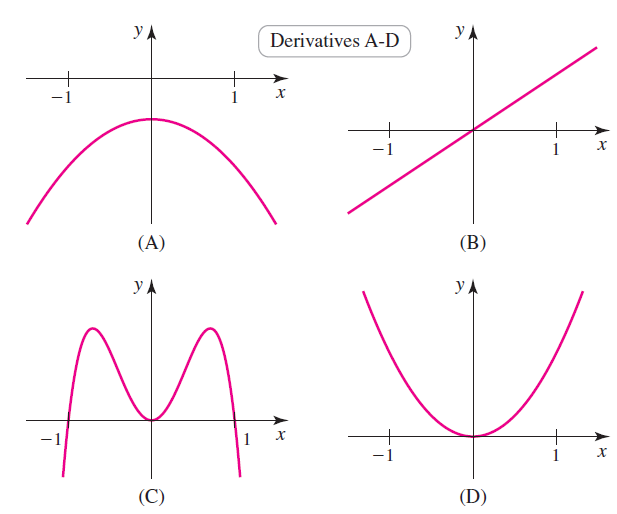
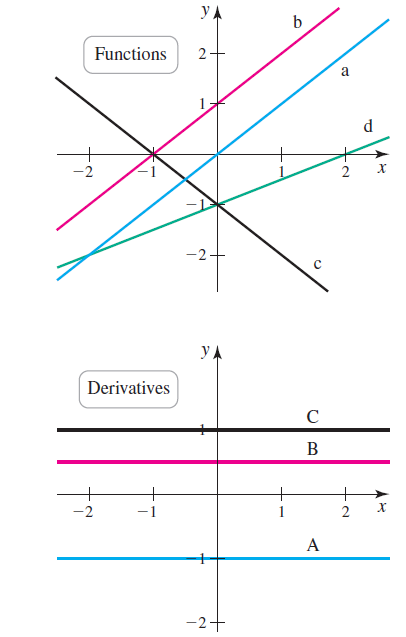
Match the functions a–d in the first set of figures with the derivative functions A–D in the next set of figures УА УА Functions a-d х х (a) (b) УА УА х (c) (d) УА Derivatives A-D 1 х х (A) (B) Ул УА 1 х х (C) (D)
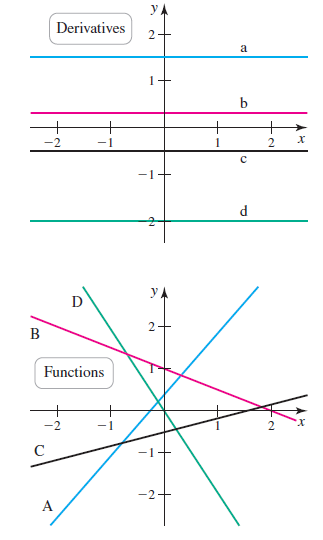
Match graphs a–d of derivative functions with possible graphs A–D of the corresponding functions. уд Derivatives 2- b + -2 -1 Уд D B Functions -1 -1 \V. 2.
Match graphs a–d of functions with graphs A–C of their derivatives. УА Functions 2 - х -2 УА Derivatives B + + х -2 A -2+ 2. 2.
Use the graph of f to sketch a graph of f'. y= f(x) х
Use the graph of f to sketch a graph of f'. yA y= f(x) -2
If f is continuous at a, must f be differentiable at a?
If f is differentiable at a, must f be continuous at a?
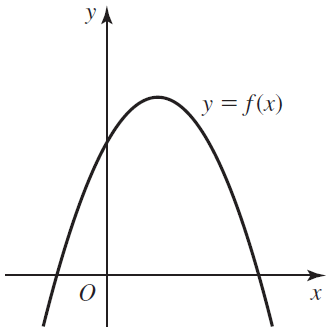
Explain why f(x) could be positive or negative at a point where f'(x) < 0.
Explain why f'(x) could be positive or negative at a point where f(x) > 0.
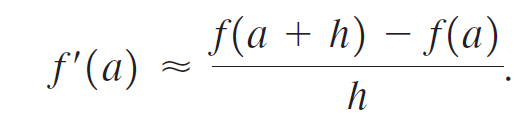
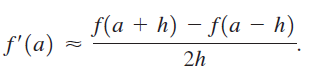
Assuming the limit exists, the definition of the derivativeIf h > 0, then this approximation is called a forward difference quotient; if h < 0, it is a backward difference quotient. As shown in the following exercises, these formulas are used to approximate f' at a point when f is a
Assuming the limit exists, the definition of the derivativeIf h > 0, then this approximation is called a forward difference quotient; if h < 0, it is a backward difference quotient. As shown in the following exercises, these formulas are used to approximate f' at a point when f is a
Assuming the limit exists, the definition of the derivativeIf h > 0, then this approximation is called a forward difference quotient; if h < 0, it is a backward difference quotient. As shown in the following exercises, these formulas are used to approximate f' at a point when f is a
Assuming the limit exists, the definition of the derivativeIf h > 0, then this approximation is called a forward difference quotient; if h < 0, it is a backward difference quotient. As shown in the following exercises, these formulas are used to approximate f' at a point when f is a
Use the definitionto find f'(x) for the following functions.a. f(x) = x2b. f(x) = x3c. f(x) = x4d. Based on your answers to parts (a)–(c), propose a formula for f'(x) if f(x) = xn, where n is a positive integer. f(x + h) – f(x) f'(x) = lim
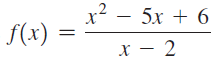
Isdifferentiable at x = 2? Justify your answer. .2 x? — 5х + 6 f(x) х — 2
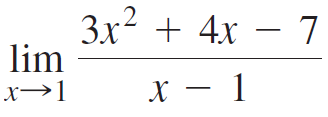
The following limits represent the slope of a curve y = f(x) at the point (a, f(a)). Determine a possible function f and number a; then calculate the limit. 3x? + 4x lim – 7 х — 1
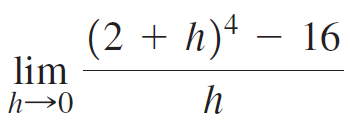
The following limits represent the slope of a curve y = f(x) at the point (a, f(a)). Determine a possible function f and number a; then calculate the limit. (2 + h)* – 16 lim
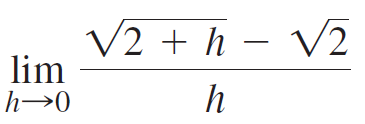
The following limits represent the slope of a curve y = f(x) at the point (a, f(a)). Determine a possible function f and number a; then calculate the limit. V2 + h – V2 lim
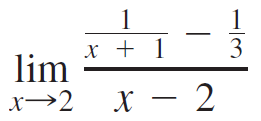
The following limits represent the slope of a curve y = f(x) at the point (a, f(a)). Determine a possible function f and number a; then calculate the limit. 3 lim 2
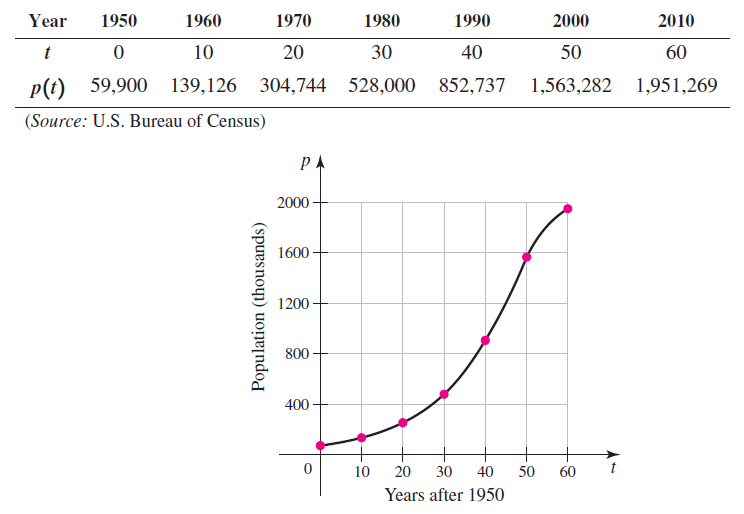
Let p(t) represent the population of the Las Vegas metropolitan area t years after 1950, as shown in the table and figure.a. Compute the average rate of growth of Las Vegas from 1970 to 1980.b. Explain why the average rate of growth calculated in part (a) is a good estimate of the instantaneous
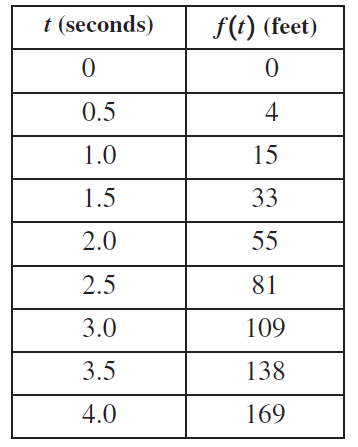
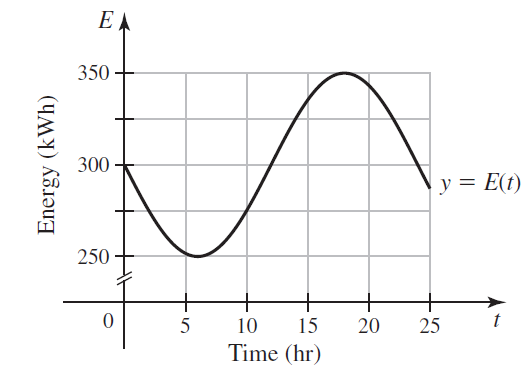
Energy is the capacity to do work, and power is the rate at which energy is used or consumed. Therefore, if E(t) is the energy function for a system, then P(t) = E'(t) is the power function. A unit of energy is the kilowatt-hour (1 kWh is the amount of energy needed to light ten 100-W light bulbs
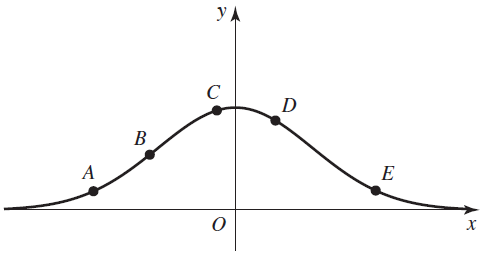
Use the points A, B, C, D, and E in the following graphs to answer these questions.a. At which points is the slope of the curve negative?b. At which points is the slope of the curve positive?c. Using A–E, list the slopes in decreasing order. УЛ B A х
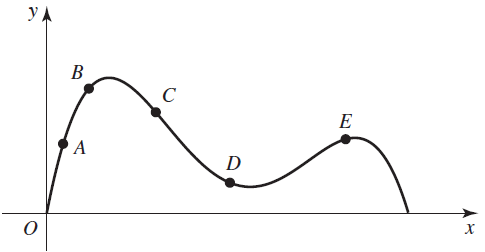
Use the points A, B, C, D, and E in the following graphs to answer these questions.a. At which points is the slope of the curve negative?b. At which points is the slope of the curve positive?c. Using A–E, list the slopes in decreasing order. Ул B D х
a. For the following functions, find f' using the definition.b. Determine an equation of the line tangent to the graph of f at (a, f(a)) for the given value of a.f(x) = 1/x ; a = -5
a. For the following functions, find f' using the definition.b. Determine an equation of the line tangent to the graph of f at (a, f(a)) for the given value of a.f(x) = 2/3x + 1 ; a = -1
a. For the following functions, find f' using the definition.b. Determine an equation of the line tangent to the graph of f at (a, f(a)) for the given value of a.f(x) = √x + 2; a = 7
a. For the following functions, find f' using the definition.b. Determine an equation of the line tangent to the graph of f at (a, f(a)) for the given value of a.f(x) = √3x + 1; a = 8
Consider the line f(x) = mx + b, where m and b are constants. Show that f'(x) = m for all x. Interpret this result.
Determine whether the following statements are true and give an explanation or counterexample.a. For linear functions, the slope of any secant line always equals the slope of any tangent line.b. The slope of the secant line passing through the points P and Q is less than the slope of the tangent
Evaluate the derivative of the following functions at the given point.A = πr2; r = 3
Evaluate the derivative of the following functions at the given point.c = 2√s - 1; s = 25
Evaluate the derivative of the following functions at the given point.y = t - t2; t = 2
Evaluate the derivative of the following functions at the given point.y = 1/(t + 1); t = 1
a. Use the definition of the derivative to determine d/dx (√ax + b), where a and b are constants.b. Let f(x) = 15x + 9 and use part (a) to find f'(x).c. Use part (b) to find f'(-1).
a. Use the definition of the derivative to determine d/dx (ax2 + bx + c), where a, b, and c are constants.b. Let f(x) = 4x2 - 3x + 10 and use part (a) to find f'(x).c. Use part (b) to find f'(1).
a. Find the derivative function f' for the following functions f.b. Find an equation of the line tangent to the graph of f at (a, f(a)) for the given value of a.c. Graph f and the tangent line.f(x) = 1 - x2; a = -1
a. Find the derivative function f' for the following functions f.b. Find an equation of the line tangent to the graph of f at (a, f(a)) for the given value of a.c. Graph f and the tangent line.f(x) = 5x2 - 6x + 1; a = 2
a. Find the derivative function f' for the following functions f.b. Find an equation of the line tangent to the graph of f at (a, f(a)) for the given value of a.c. Graph f and the tangent line.f(x) = 3x2; a = 0
a. Find the derivative function f' for the following functions f.b. Find an equation of the line tangent to the graph of f at (a, f(a)) for the given value of a.c. Graph f and the tangent line.f(x) = 3x2 + 2x - 10; a = 1
a. For the following functions and values of a, find f' (a).b. Determine an equation of the line tangent to the graph of f at the point (a, f(a)) for the given value of a.f(x) = 1/3x - 1 ; a = 2
a. For the following functions and values of a, find f' (a).b. Determine an equation of the line tangent to the graph of f at the point (a, f(a)) for the given value of a.f(x) = 1/x + 5 ; a = 5
a. For the following functions and values of a, find f' (a).b. Determine an equation of the line tangent to the graph of f at the point (a, f(a)) for the given value of a.f(x) = √3x; a = 12
a. For the following functions and values of a, find f' (a).b. Determine an equation of the line tangent to the graph of f at the point (a, f(a)) for the given value of a.f(x) = √2x + 1; a = 4
a. For the following functions and values of a, find f' (a).b. Determine an equation of the line tangent to the graph of f at the point (a, f(a)) for the given value of a.f(x) = 1/x2; a = 1
a. For the following functions and values of a, find f' (a).b. Determine an equation of the line tangent to the graph of f at the point (a, f(a)) for the given value of a.f(x) = 1/√x; a =1/4
a. For the following functions and values of a, find f' (a).b. Determine an equation of the line tangent to the graph of f at the point (a, f(a)) for the given value of a.f(x) = 2x3; a = 10
a. For the following functions and values of a, find f' (a).b. Determine an equation of the line tangent to the graph of f at the point (a, f(a)) for the given value of a.f(x) = 4x2 + 2x; a = -2
a. For the following functions and values of a, find f' (a).b. Determine an equation of the line tangent to the graph of f at the point (a, f(a)) for the given value of a.f(x) = x2; a = 3
a. For the following functions and values of a, find f' (a).b. Determine an equation of the line tangent to the graph of f at the point (a, f(a)) for the given value of a.f(x) = 8x; a = -3
a. Use definition (2) to find the slope of the line tangent to the graph of f at P.b. Determine an equation of the tangent line at P.f(x) = x/x + 1 ; P(-2, 2)Data from Definition (2) f(a + h) – f(a) lim (2) Mtan
a. Use definition (2) to find the slope of the line tangent to the graph of f at P.b. Determine an equation of the tangent line at P.f(x) = √x + 3; P(1, 2)Data from Definition (2) f(a + h) – f(a) lim (2) Mtan
a. Use definition (2) to find the slope of the line tangent to the graph of f at P.b. Determine an equation of the tangent line at P.f(x) = √x - 1; P(2, 1)Data from Definition (2) f(a + h) – f(a) lim (2) Mtan
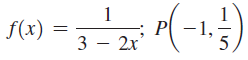
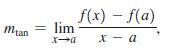
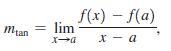
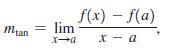
a. Use definition (2) to find the slope of the line tangent to the graph of f at P.b. Determine an equation of the tangent line at P.Data from Definition (2) 1 f(x) -1, 5 3 – 2x f(a + h) – f(a) lim (2) Mtan
a. Use definition (2) to find the slope of the line tangent to the graph of f at P.b. Determine an equation of the tangent line at P.f(x) = 1/2x + 1 ; P(0, 1)Data from Definition (2) f(a + h) – f(a) lim (2) Mtan
a. Use definition (2) to find the slope of the line tangent to the graph of f at P.b. Determine an equation of the tangent line at P.f(x) = x3; P(1, 1)Data from Definition (2) f(a + h) – f(a) lim (2) Mtan
a. Use definition (2) to find the slope of the line tangent to the graph of f at P.b. Determine an equation of the tangent line at P.f(x) = 1/x; P(1, 1)Data from Definition (2) f(a + h) – f(a) lim (2) Mtan
a. Use definition (2) to find the slope of the line tangent to the graph of f at P.b. Determine an equation of the tangent line at P.f(x) = x2 - 4; P(2, 0)Data from Definition (2) f(a + h) – f(a) lim (2) Mtan
a. Use definition (2) to find the slope of the line tangent to the graph of f at P.b. Determine an equation of the tangent line at P.f(x) = 8 - 2x2; P(0, 8)Data from Definition (2) f(a + h) – f(a) lim (2) Mtan
a. Use definition (2) to find the slope of the line tangent to the graph of f at P.b. Determine an equation of the tangent line at P.f(x) = -7x; P(-1, 7)Data from Definition (2) f(a + h) – f(a) lim (2) Mtan
a. Use definition (2) to find the slope of the line tangent to the graph of f at P.b. Determine an equation of the tangent line at P.f(x) = 3x2 - 4x; P(1, -1)Data from Definition (2) f(a + h) – f(a) lim (2) Mtan
a. Use definition (2) to find the slope of the line tangent to the graph of f at P.b. Determine an equation of the tangent line at P.f(x) = 2x + 1; P(0, 1)Data from Definition (2) f(a + h) – f(a) lim (2) Mtan
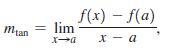
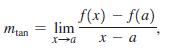
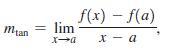
a. Use definition (1) to find the slope of the line tangent to the graph of f at P.b. Determine an equation of the tangent line at P.c. Plot the graph of f and the tangent line at P.f(x) = 5; P(1, 5)Data from Definition (1) f(x) - f(a) lim man X - a
a. Use definition (1) to find the slope of the line tangent to the graph of f at P.b. Determine an equation of the tangent line at P.c. Plot the graph of f and the tangent line at P.f(x) = 4 x2 ; P(-1, 4)Data from Definition (1) f(x) - f(a) lim man X - a
a. Use definition (1) to find the slope of the line tangent to the graph of f at P.b. Determine an equation of the tangent line at P.c. Plot the graph of f and the tangent line at P.f(x) = 1/x; P(-1, -1)Data from Definition (1) f(x) - f(a) lim man X - a
a. Use definition (1) to find the slope of the line tangent to the graph of f at P.b. Determine an equation of the tangent line at P.c. Plot the graph of f and the tangent line at P.f(x) = -5x + 1; P(1, -4)Data from Definition (1) f(x) - f(a) lim man X - a
a. Use definition (1) to find the slope of the line tangent to the graph of f at P.b. Determine an equation of the tangent line at P.c. Plot the graph of f and the tangent line at P.f(x) = -3x2 - 5x + 1; P(1, -7)Data from Definition (1) f(x) - f(a) lim man x - a
a. Use definition (1) to find the slope of the line tangent to the graph of f at P.b. Determine an equation of the tangent line at P.c. Plot the graph of f and the tangent line at P.f(x) = x2 - 5; P(3, 4)Data from Definition (1) f(x) - f(a) lim man X - a
Give three different notations for the derivative of f with respect to x.
Why is the notation dy/dx used to represent the derivative?
Explain the relationships among the slope of a tangent line, the instantaneous rate of change, and the value of the derivative at a point.
Given a function f and a point a in its domain, what does f' (a) represent?
For a given function f, what does f' represent?
Showing 5700 - 5800
of 6775
First
51
52
53
54
55
56
57
58
59
60
61
62
63
64
65
Last
Step by Step Answers

 Get 50% OFF
Claim Now
Get 50% OFF
Claim Now