New Semester
Started
Get
50% OFF
Study Help!
--h --m --s
Claim Now
Question Answers
Textbooks
Find textbooks, questions and answers
Oops, something went wrong!
Change your search query and then try again
S
Books
FREE
Study Help
Expert Questions
Accounting
General Management
Mathematics
Finance
Organizational Behaviour
Law
Physics
Operating System
Management Leadership
Sociology
Programming
Marketing
Database
Computer Network
Economics
Textbooks Solutions
Accounting
Managerial Accounting
Management Leadership
Cost Accounting
Statistics
Business Law
Corporate Finance
Finance
Economics
Auditing
Tutors
Online Tutors
Find a Tutor
Hire a Tutor
Become a Tutor
AI Tutor
AI Study Planner
NEW
Sell Books
Search
Search
Sign In
Register
study help
mathematics
calculus early transcendentals
Calculus Early Transcendentals 2nd edition William L. Briggs, Lyle Cochran, Bernard Gillett - Solutions
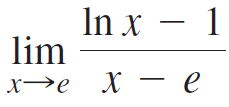
Use the definition of the derivative to evaluate the following limits. In x – 1 lim х>е X —е х —
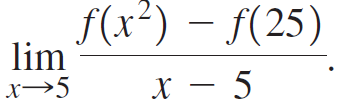
Assuming that f is differentiable for all x, simplify f(x²) – f(25) lim 5
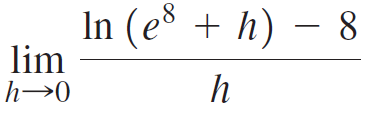
Use the definition of the derivative to evaluate the following limits. In (eš + h) – 8 lim
Recall that f is even if f(-x) = f(x), for all x in the domain of f, and f is odd if f (-x) = -f(x), for all x in the domain of f.a. If f is a differentiable, even function on its domain, determine whether f' is even, odd, or neither.b. If f is a differentiable, odd function on its domain,
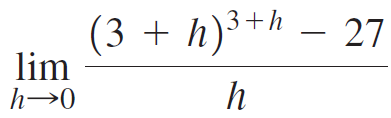
Use the definition of the derivative to evaluate the following limits. (3 + h)³+h – 27 lim
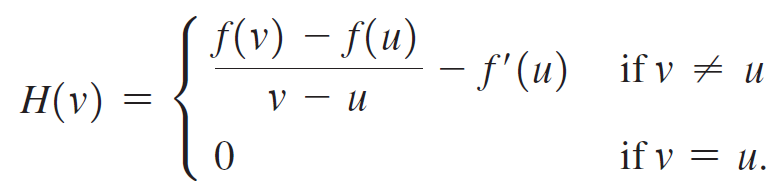
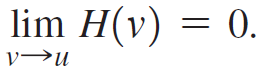
Let f and g be differentiable functions with h(x) = f(g(x)). For a given constant a, let u = g(a) and v = g(x), and definea. Show thatb. For any value of u show thatf(v) - f(u) = (H(v) + f'(u))(v - u).c. Show thatd. Show that h'(a) = f'(g(a))g'(a). f(v) – f(u) - f'(u) if v # u H(v) if v = u. lim
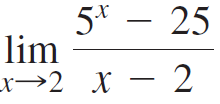
Use the definition of the derivative to evaluate the following limits. 5* – 25 lim х>2 х — 2
Use logarithmic differentiation to prove that пр (х)л u(х) dx dv In u(x) + dx d (и(»)) %3 и(ху() dx
Assume b is given with b > 0 and b ≠ 1. Find the y-coordinate of the point on the curve y = bx at which the tangent line passes through the origin.
Determine whether the following statements are true and give an explanation or counterexample.a. The function x sin x can be differentiated without using the Chain Rule.b. The function e√x + 1 should be differentiated using the Chain Rule.c. The derivative of a product is not the product of the
Use the Chain Rule combined with other differentiation rules to find the derivative of the following functions.y = (z + 4)3 tan z
Use the Chain Rule combined with other differentiation rules to find the derivative of the following functions.y = (p + π)2 sin p2
Use the Chain Rule combined with other differentiation rules to find the derivative of the following functions.y = tet / t + 1
Use the Chain Rule combined with other differentiation rules to find the derivative of the following functions.y = √x4 + cos 2x
Use the Chain Rule combined with other differentiation rules to find the derivative of the following functions.y = e2x(2x - 7)5
Use the Chain Rule combined with other differentiation rules to find the derivative of the following functions.y = ((x + 2)(x2 + 1)4
Use the Chain Rule combined with other differentiation rules to find the derivative of the following functions.y = (3x / 4x + 2)5
Use the Chain Rule combined with other differentiation rules to find the derivative of the following functions.y = θ2 sec 5θ
Use the Chain Rule combined with other differentiation rules to find the derivative of the following functions.y = tan (x ex)
Use the Chain Rule combined with other differentiation rules to find the derivative of the following functions.y = ex2 + 1 sin x3
Use the Chain Rule combined with other differentiation rules to find the derivative of the following functions.y = (ex / x + 1)8
Use the Chain Rule combined with other differentiation rules to find the derivative of the following functions.y = (x / x + 1)5
Calculate the derivative of the following functions.y = (f(g(xm)))n, where f and g are differentiable for all real numbers, and m and n are integers.
Calculate the derivative of the following functions.y = f(g(x2)), where f and g are differentiable for all real numbers
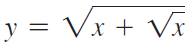
Calculate the derivative of the following functions. Vx + Vx + Vx ||
Calculate the derivative of the following functions. Vx + Vx X.
Calculate the derivative of the following functions.y = (1 - e-0.05x)-1
Calculate the derivative of the following functions.y = tan (e√3x)
Calculate the derivative of the following functions.y = cos4 (7x3)
Calculate the derivative of the following functions.y = sin5 (cos 3x)
Calculate the derivative of the following functions.y = sin2 (e3x + 1)
Calculate the derivative of the following functions.y = sin (sin (ex))
Calculate the derivative of the following functions.y = √(3x - 4)2 + 3x
Calculate the derivative of the following functions.y = √1 + cot2 x
Use the Chain Rule to find the derivative of the following functions.y = (1 - ex)4
Use the Chain Rule to find the derivative of the following functions.y = (1 + 2 tan x)15
Use the Chain Rule to find the derivative of the following functions.y = (cos x + 2 sin x)8
Use the Chain Rule to find the derivative of the following functions.y = (2x6 - 3x3 + 3)25
The lapse rate is the rate at which the temperature in Earth’s atmosphere decreases with altitude. For example, a lapse rate of 6.5° Celsius/km means the temperature decreases at a rate of 6.5°C per kilometer of altitude. The lapse rate varies with location and with other variables such as
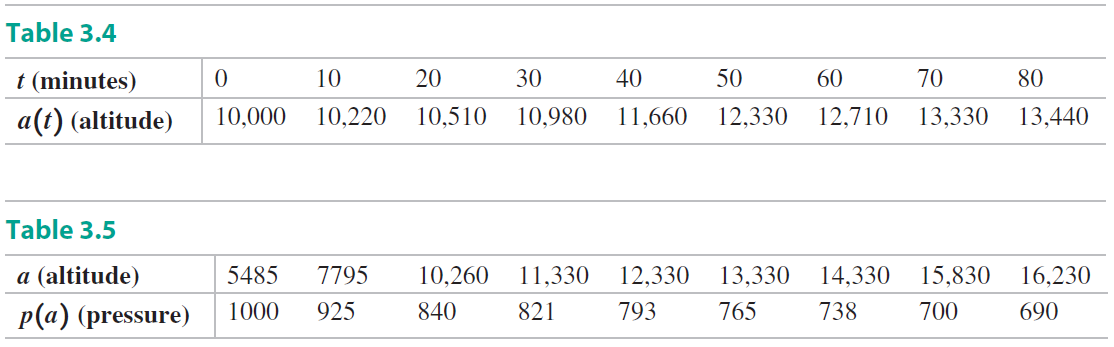
Use the data in Tables 3.4 and 3.5 of Example 4 to estimate the rate of change in pressure with respect to time experienced by the runner when she is at an altitude of 13,330 ft. Make use of a forward difference quotient when estimating the required derivatives.Table 3.4 and 3.5 Table 3.4 t
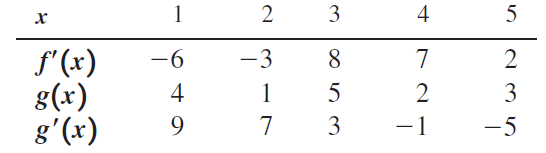
Let h(x) = f(g(x)) and k(x) = g(g(x)). Use the table to compute the following derivatives.a. h'(1)b. h'(2)c. h'(3)d. k'(3)e. k'(1)f. k'(5) 2 3 4 5 f'(x) g(x) g'(x) -3 1 -6 4 5 3 3 -5 -1
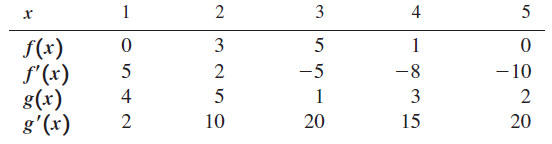
Let h(x) = f(g(x)) and p(x) = g(f(x)). Use the table to compute the following derivatives.a. h'(3)b. h'(2)c. p'(4)d. p'(2)e. h'(5) 1 3 4 1 f(x) 3 f'(x) g(x) -5 1 -8 3 -10 4 g'(x) 10 20 15 20
Two composite functions are given that look similar, but in fact are quite different. Identify the inner function u = g(x) and the outer function y = f(u); then evaluate dy/dx using the Chain Rule.a. y = (ex)3b. y = e(x3)
Two composite functions are given that look similar, but in fact are quite different. Identify the inner function u = g(x) and the outer function y = f(u); then evaluate dy/dx using the Chain Rule.a. y = cos3 xb. y = cos x3
Use Version 2 of the Chain Rule to calculate the derivatives of the following functions.y = sin (4 cos z)
Use Version 2 of the Chain Rule to calculate the derivatives of the following functions.y = (sec x + tan x)5
Use Version 2 of the Chain Rule to calculate the derivatives of the following functions.y = cos4 θ + sin4 θ
Use Version 2 of the Chain Rule to calculate the derivatives of the following functions.y = sin (2√x)
Use Version 2 of the Chain Rule to calculate the derivatives of the following functions.y = csc (t2 + t)
How isused in this section? sin x lim
Therefore, f(-2) < 0 < f(2), but there is no value of c between -2 and 2 for which f(c) = 0. Does this fact violate the Intermediate Value Theorem? Explain. Then f(-2) = -1 and f(2) = 1. f(x)
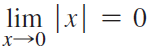
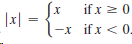
Show that by first evaluatingby first evaluating lim |x|| lim x and 1lim x. х—0+ х—0-
Use Version 2 of the Chain Rule to calculate the derivatives of the following functions.y = sin (4x3 + 3x + 1)
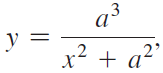
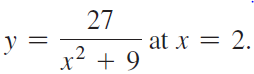
The graph ofwhere a is a constant, is called the witch of Agnesi (named after the 18th-century Italian mathematician Maria Agnesi).a. Let a = 3 and find an equation of the line tangent tob. Plot the function and the tangent line found in part (a). q3 .2 х ,2' x2 + a° 27 at x = 2. x² + 9
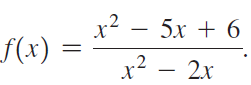
Let a. Analyzeb. Does the graph of f have any vertical asymptotes? Explain.c. Graph f and then sketch the graph with paper and pencil, correcting any errors obtained with the graphing utility. x2 – 5x + 6 f(x) : x2 – 2x lim f(x), lim f(x), lim_f(x), and lim f(x). х—0 х>0 х>2 x→2+*
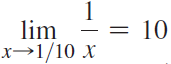
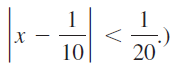
Use the definition of a limit to prove the following results.. To find δ, you need to bound x away from 0. So let lim 10 x→1/10 x 10 20
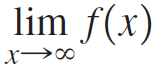
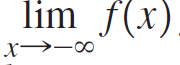
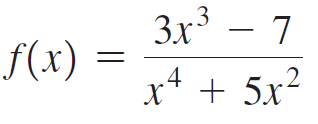
Determineandfor the following rational functions. Then give the horizontal asymptote of f (if any). lim f(x) X' lim f(x) x→-00
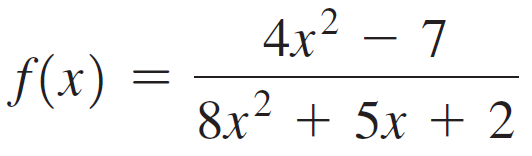
Determineandfor the following rational functions. Then give the horizontal asymptote of f (if any). lim f(x) X' lim f(x) x→-00
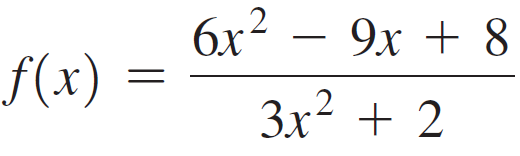
Determineandfor the following rational functions. Then give the horizontal asymptote of f (if any). lim f(x) X' lim f(x) x→-00
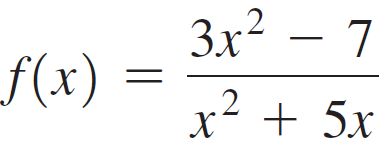
Determineandfor the following rational functions. Then give the horizontal asymptote of f (if any). lim f(x) X' lim f(x) x→-00
Use Version 2 of the Chain Rule to calculate the derivatives of the following functions.y = etan t
Use Version 2 of the Chain Rule to calculate the derivatives of the following functions.y = tan ex
Use Version 2 of the Chain Rule to calculate the derivatives of the following functions.y = csc ex
Use Version 2 of the Chain Rule to calculate the derivatives of the following functions.y = sec (3x + 1)
Use Version 2 of the Chain Rule to calculate the derivatives of the following functions.y = cos 5t
Use Version 2 of the Chain Rule to calculate the derivatives of the following functions.y = 5(7x3 + 1)-3
Use Version 2 of the Chain Rule to calculate the derivatives of the following functions.y = √x2 + 9
Use Version 2 of the Chain Rule to calculate the derivatives of the following functions.y = √10x + 1
Use Version 2 of the Chain Rule to calculate the derivatives of the following functions.y = (x2 + 2x + 7)8
Use Version 2 of the Chain Rule to calculate the derivatives of the following functions.y = (3x2 + 7x)10
Use Version 1 of the Chain Rule to calculate dy/dx.y = e-x2
Use Version 1 of the Chain Rule to calculate dy/dx.y = sec ex
Use Version 1 of the Chain Rule to calculate dy/dx.y = sin x/4
Use Version 1 of the Chain Rule to calculate dy/dx.y = tan 5x2
Use Version 1 of the Chain Rule to calculate dy/dx.y = e√x
Use Version 1 of the Chain Rule to calculate dy/dx.y = √x2 + 1
Use Version 1 of the Chain Rule to calculate dy/dx.y = √7x - 1
Use Version 1 of the Chain Rule to calculate dy/dx.y = e5x - 7
Use Version 1 of the Chain Rule to calculate dy/dx.y = cos x5
Use Version 1 of the Chain Rule to calculate dy/dx.y = sin5 x
Use Version 1 of the Chain Rule to calculate dy/dx.y = (5x2 + 11x)20
Use Version 1 of the Chain Rule to calculate dy/dx.y = (3x + 7)10
Express Q(x) = cos4 (x2 + 1) as the composition of three functions; that is, identify f, g, and h so that Q(x) = f (g(h(x))).
Identify the inner and outer functions in the composition (x2 + 10)-5.
Identify the inner and outer functions in the composition cos4 x.
Fill in the blanks. The derivative of f' (g(x)) equals f' evaluated at _________ multiplied by g' evaluated at _________.
Let h(x) = f(g)x)), where f and g are differentiable on their domains. If g(1) = 3 and g'(1) = 5, what else do you need to know to calculate h'(1)?
Two equivalent forms of the Chain Rule for calculating the derivative of y = f(g)x)) are presented in this section. State both forms.
A thin copper rod, 4 meters in length, is heated at its midpoint, and the ends are held at a constant temperature of 0°. When the temperature reaches equilibrium, the temperature profile is given by T(x) = 40x(4 - x), where 0 ≤ x ≤ 4 is the position along the rod. The heat flux at a point on
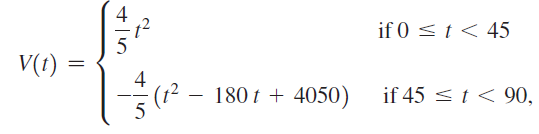
The flow of a small stream is monitored for 90 days between May 1 and August 1. The total water that flows past a gauging station is given bywhere V is measured in cubic feet and t is measured in days, with t = 0 corresponding to May 1.a. Graph the volume function.b. Find the flow rate function
A woman attached to a bungee cord jumps from a bridge that is 30 m above a river. Her height in meters above the river t seconds after the jump is y(t) = 15(1 + e-t cos t), for t ≥ 0.a. Determine her velocity at t = 1 and t = 3.b. Use a graphing utility to determine when she is moving downward
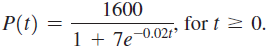
The population of a culture of cells after t days is approximated by the function a. Graph the population function.b. What is the average growth rate during the first 10 days?c. Looking at the graph, when does the growth rate appear to be a maximum?d. Differentiate the population function to
A cylindrical tank is full at time t = 0 when a valve in the bottom of the tank is opened. By Torricelli’s Law, the volume of water in the tank after t hours is V = 100(200 - t)2, measured in cubic meters.a. Graph the volume function. What is the volume of water in the tank before the valve is
Power and energy are often used interchangeably, but they are quite different. Energy is what makes matter move or heat up. It is measured in units of joules or Calories, where 1 Cal = 4184 J. One hour of walking consumes roughly 106 J, or 240 Cal. On the other hand, power is the rate at which
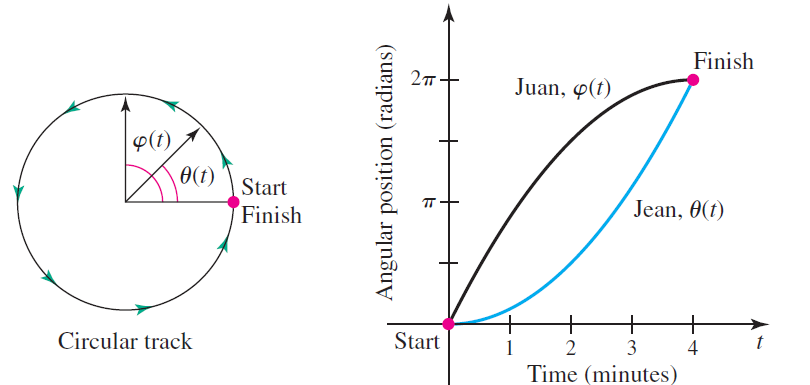
A race Jean and Juan run a one-lap race on a circular track. Their angular positions on the track during the race are given by the functions θ(t) and φ(t), respectively, where 0 ≤ t ≤ 4 and t is measured in minutes (see figure). These angles are measured in radians, where θ = φ = 0
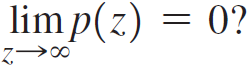
Earth’s atmospheric pressure decreases with altitude from a sea level pressure of 1000 millibars (a unit of pressure used by meteorologists). Letting z be the height above Earth’s surface (sea level) in km, the atmospheric pressure is modeled by p(z) = 1000e-z/10.a. Compute the pressure at the
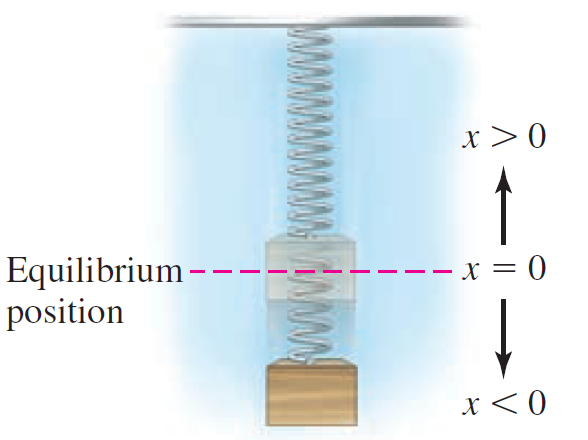
A spring hangs from the ceiling at equilibrium with a mass attached to its end. Suppose you pull downward on the mass and release it 10 inches below its equilibrium position with an upward push. The distance x (in inches) of the mass from its equilibrium position after t seconds is given by the
Suppose you own a fuel-efficient hybrid automobile with a monitor on the dashboard that displays the mileage and gas consumption. The number of miles you can drive with g gallons of gas remaining in the tank on a particular stretch of highway is given by m(g) = 50g - 25.8g2 + 12.5g3 - 1.6g4, for 0
A store manager estimates that the demand for an energy drink decreases with increasing price according to the function d(p) = 100/p2 + 1, which means that at price p (in dollars), d(p) units can be sold. The revenue generated at price p is R(p) = p · d(p) (price multiplied by number of units).a.
A cost function of the form C(x) = 1/2 x2 reflects diminishing returns to scale. Find and graph the cost, average cost, and marginal cost functions. Interpret the graphs and explain the idea of diminishing returns.
Showing 5300 - 5400
of 6775
First
47
48
49
50
51
52
53
54
55
56
57
58
59
60
61
Last
Step by Step Answers

 Get 50% OFF
Claim Now
Get 50% OFF
Claim Now