New Semester
Started
Get
50% OFF
Study Help!
--h --m --s
Claim Now
Question Answers
Textbooks
Find textbooks, questions and answers
Oops, something went wrong!
Change your search query and then try again
S
Books
FREE
Study Help
Expert Questions
Accounting
General Management
Mathematics
Finance
Organizational Behaviour
Law
Physics
Operating System
Management Leadership
Sociology
Programming
Marketing
Database
Computer Network
Economics
Textbooks Solutions
Accounting
Managerial Accounting
Management Leadership
Cost Accounting
Statistics
Business Law
Corporate Finance
Finance
Economics
Auditing
Tutors
Online Tutors
Find a Tutor
Hire a Tutor
Become a Tutor
AI Tutor
AI Study Planner
NEW
Sell Books
Search
Search
Sign In
Register
study help
engineering
introductory chemical engineering thermodynamics
Engineering And Chemical Thermodynamics 2nd Edition Milo D. Koretsky - Solutions
Calculate the equilibrium composition of the isomerization reaction between propylene oxide 1C3H6O2 and acetone 1C3H6O2 at 298 K and 1 bar. Under these conditions, they form miscible liquids and can be described by the two-suffi x Margules equation with A 5 2650 J/mol.
Estimate the equilibrium composition at 1 bar of a gas mixture containing the following isomers: 1-butene (1), cis-butene (2), and trans-butene (3).(a) at 298 K(b) at 1000 K
You have obtained the following equilibrium data for the reaction:with a stoichiometric feed of A and B. At 200°C and 1 bar, 25% of the species in the reactor were the product C. At 300°C and 1 bar, 53.9% C was produced.(a) One mole of A and 2 moles of B react at 250°C and 2 bar. Based on the
Consider the production of hydrogen by the water gas shift reaction:The feed contains an equal amount of CO and H2. Water is present at 500% excess of its stoichiometric requirement. Calculate the equilibrium composition at 1000 K and 1 bar. HO(g) + CO(g) H(g) + CO(g)
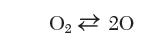
Consider the molecular dissociation of diatomic oxygen to monatomic oxygenWhat is the minimum temperature required to get 10% O at 1 bar? How can you change the pressure to lower the minimum temperature required? 0 0 20
Determine the equilibrium composition of NO from air at 1 bar in the temperature range of 1100–3000 K. Plot the mole fraction of NO vs. temperature. You may assume Dhrxn o is constant for the reaction.
Determine the equilibrium composition of NO2 from air at a temperature 3000 [K] and 1 bar. Repeat at 500 bar.
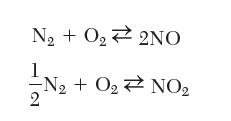
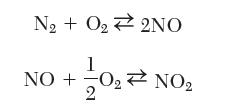
Consider the formation of NO and NO2 from air at 3000 K and 500 bar.(a) Determine the equilibrium conversions and composition from the following set of independent reactions:(b) Determine the equilibrium conversions and composition from the following set of independent reactions:(c) Compare the
Calculate the equilibrium compositions due to the decomposition of 1 mole of nitrogen tetroxide at 25°C and 1 bar in each of the following case(a) The initial state consists of pure N2O4.(b) The initial state consists of 1 mole of inert in addition to 1 mole of nitrogen tetroxide. NO4(g) 2NO(g)
The Gibbs energy of reaction for the following reaction:has been reported as: Ti(s) + 2Cl(g) TiCl(g)
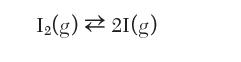
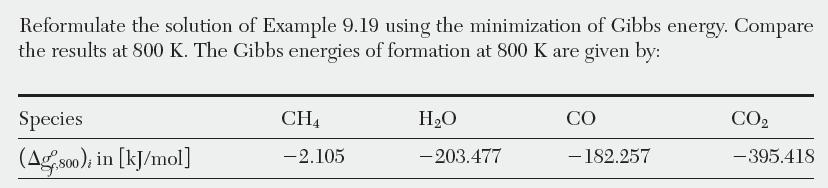
Solve the multiple chemical reaction equilibrium problem in Example 9.19 at 800 K using the following set of independent reactions:Example 9.19Consider a system initially charged with 1 mole of pure I2 that is maintained at 1300 K and 1 bar in which the following dissociation reaction occurs:For
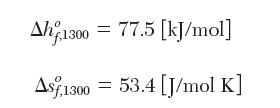
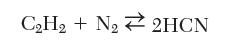
Hydrogen cyanide can be manufactured by reaction of acetylene and nitrogen:Calculate the equilibrium composition at 800 K and 1 bar. CH + N 2HCN
Consider the equilibrium between copper and its oxide:The Gibbs energy of formation of Cu2O is given byMake a plot of pO2 vs. T, illustrating where Cu is stable and where Cu2O is stable in the temperature range of 300 K to 1300 K. 4Cu(s) + O(g) 2Cu0(s)
Consider the reaction of CrCl2 with H2 to form solid Cr as follows:At Answer the following questions:(a) From these data, estimate the enthalpy of reaction.(b) In an attempt to increase the extent of reaction, the reaction temperature is raised to 1000°C and 1 bar. At equilibrium, how much Cr is
Repeat Problem 9.38, part (a), but also consider CO2 and H2 as possible products.Problem 9.38Consider the production of ethanol from acetylene and water at 355 K and 1 bar by the following reaction: CH4(g) + HO(g) * CH5OH(g)
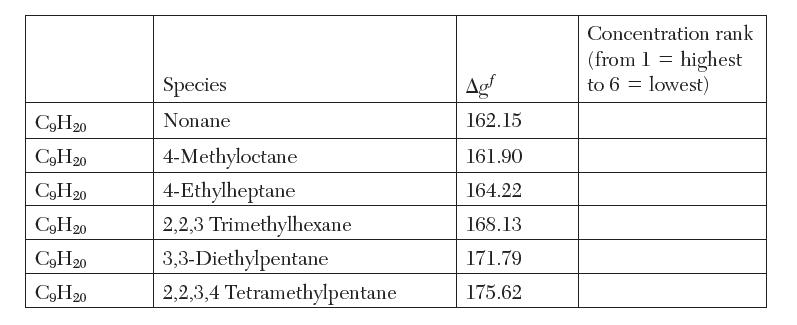
The following values (in kcal/mol) are reported for the Gibbs energy of formation of isomers of C9H20 at 1000 K 14. We wish to calculate the equilibrium composition at 1000 K and 1 atm.(a) By inspection, we can estimate what are the important species to consider. On the table, put these gas phase
The following two cracking reactions for n-pentane occur in parallel:At 183°C and 0.5 bar, both these reactions contribute to the equilibrium composition of species in the system. For every 1.0 mole of n-pentane gas initially fed, 0.10 mol of propylene (C3H6) is formed at equilibrium from Reaction
You are responsible for a process that uses an acetylene (C2H2) torch in atmospheric air.Your supervisor has just contacted you and said that she believes the process is generating (HCN) and is not safe. Answer the following questions:(a) Your supervisor has stated that she has calculated the
Consider the reaction of n-pentane (C5H12) with steam (H2O) to form hydrogen (H2) and carbon dioxide (CO2) at 600 K. Consider a molar feed ratio of 1 mol C5H12 to 10 mol H2O at a pressure of 0.5 bar and a temperature of 600 K. You may assume Δhor xn = const.(a) What is the equilibrium
Repeat Problem 9.58, but consider that Dhrxn changes with temperature.Problem 9.58Consider the reaction of n-pentane (C5H12) with steam (H2O) to form hydrogen (H2) and carbon dioxide (CO2) at 600 K. Consider a molar feed ratio of 1 mol C5H12 to 10 mol H2O at a pressure of 0.5 bar and a temperature
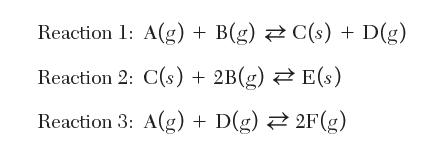
The reaction of vapor components A and B to form desired solid product C, vapor byproducts D and F, and solid by-product E is described by the following three reactions:At a temperature of 500 K and a pressure of 50 kPa, and a feed ratio of 1 mol A to 3 mol B, the equilibrium extents of reaction
Hydrogen gas is a promising alternative source for energy. You want to produce H2 by passing water vapor through a bed of activated carbon at 1000 K and 50 kPa. Consider the following reaction:(a) At equilibrium, how much H2 is produced for every mol of H2O fed? You may assume carbon is present in
What is the electrode potential of the following electrochemical cell:What is the overall reaction? Is the reaction spontaneous? If the reaction is allowed to proceed until the cell reaches equilibrium, what are the concentrations of ZnSO4 and CuSO4 that result?Take each compartment in the cell to
Consider the following electrochemical cell:Answer the following questions:(a) Draw a schematic of the cell.(b) Write the oxidation and reduction half-reactions.(c) Calculate the pH in the electrolyte when the cell potential is E = 0.244V; when E =Corrosion of steel in concrete can be described
Corrosion of steel in concrete can be described by the following shorthand notation:Where oxygen comes from atmospheric air, and the pH is 12. Calculate the electrode potential.Will the corrosion process occur spontaneously? Fe(s) Fe+ (1, 0.1 m) O(g)| Fe(s)
Electrolysis of NaCl is used to manufacture NaOH, Cl2, and H2. Answer the following questions:(a) Determine the overall reaction and each half-cell reaction.(b) Write the process in terms of shorthand notation.(c) Determine the standard potential of reaction.
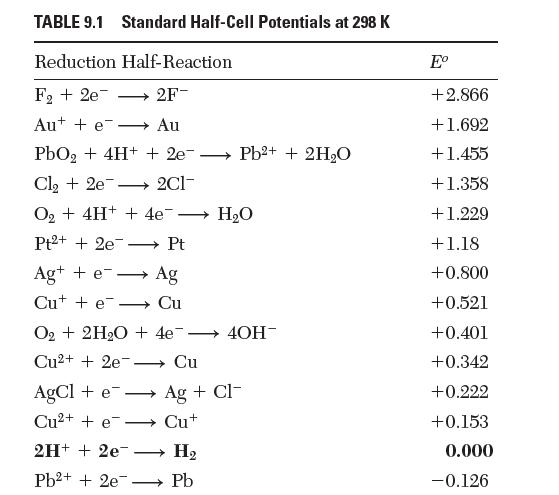
Verify that the standard half-cell potentials reported in Table 9.1 for the reactions between cupric, cuprous, and solid copperand Cu+e Cut, Cu+ + 2 e Cu,
Hydrogen-based fuel cells show promise as an alternative fuel source. They use a galvanic cell in which oxygen gas is supplied to one compartment and hydrogen gas to another. The reduction of O2 gas and oxidation of H2 gas are used to generate power. Consider a fuel cell where the cathodic
Electroplating is used to deposit the copper metal lines in integrated circuit processing. In this case, dissolution of a copper anode is used to provide cupric ions (Cu2+) for reaction; that is, the solid copper–cupric ion reaction is used both at the anode to generate cupric ions and at the
The cell potential of the following cell has been measured to be 0.4586 V at 25°C:Assume that the fugacity of hydrogen gas is 1 bar. Calculate the activity coeffi cient, γ±, of HCl in this solution. Pt|H(g)|HCl(1, 0.0122 m)|AgCl(s) Ag(s)
A ZnO semiconductor is exposed to Cl2 gas. Write the associated chemical reactions for the incorporation of Cl in oxygen sites, with the generation of free electrons. Write the equilibrium constant relations for the reactions you propose.
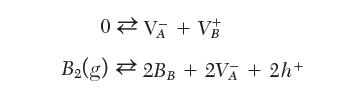
Consider a compound semiconductor AB described by the following defect processes:Construct a Brouwer diagram, including regions of low pB2, intermediate pB2, and high pB2. In the region of intermediate pB2, assume that the concentration of electronic defects is greater than the vacancy
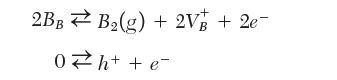
In Example 9.23 we assumed that in the intermediate region, the concentration of electronic defects is greater than the atomic defects. Draw a Brouwer diagram for the case where the concentration of atomic defects is greater than the electronic defects.EXAMPLE 9.23ZnO is a II-VI semiconductor that
In Example 9.22, we studied the growth of ZnO by oxidation of Zn. The conductivity of these fi lms is proportional to the concentration of free electrons. Develop a relationship between the conductivity of ZnO and the oxygen partial pressure with which it is processed. How does the conductivity
Consider a crystal of Cu2O in which the majority of the point defects are copper vacancies. This crystal is placed in 1 atm of air. At constant temperature, the pressure is reduced to 3 torr.Assuming chemical equilibrium, calculate the ratio of copper vacancies at reduced pressure to copper
Consider Si uniformly doped with 1015 cm-3 boron atoms.(a) What are the carrier concentrations at 27°C?(b) What are the carrier concentrations at 100°C?(c) If (1016/cm3) phosphorous atoms are added, what are the approximate equilibrium electron and hole concentrations at 27°C?
Copper is a promising interconnect for silicon. However, it is undesirable to have copper impurities in silicon. It is proposed that two types of copper impurities exist: Cu i + and CuSi 3-. It has been reported that the Cu defect concentrations in intrinsic Si at 25°C are as follows:Your
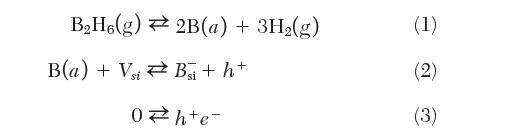
Consider a process whereby a crystal of silicon is placed in a furnace with diborane gas, B2H6. Using the concepts of defect equilibria, we wish to understand the effect of diborane pressure in the furnace on doping concentration. Consider the following reactionswhere B(a) is adsorbed boron on the
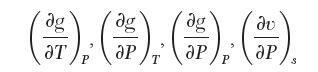
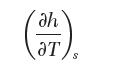
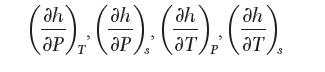
Consider the following partial derivatives. For a liquid, state whether the value is positive, negative, zero, close to zero, or you cannot tell. Explain your answer. (T); (F); (P); (@P), B. K P P T T
Consider the following partial derivatives. For an ideal gas, state whether the value is positive, negative, zero, close to zero, or you cannot tell. Explain your answer. ag ag (2) () () (). , 3 P T P
This question should be completed without doing any calculations. Consider the enthalpy departure function for the following cases. Rank them from the smallest magnitude to the largest. Explain.(a) Methane at 180°C and 1 bar(b) Methane at 240°C and 1 bar(c) Methane at 180°C and 10 bar(d) Water
Of the following mixture, which do you think has entropy departure function of larger magnitude(a) 50 mol% methane mixed with 50 mol% ethane(b) 50 mol% acetone mixed with 50 mol% chloroform? Explain.
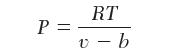
You are using the Peng–Robinson equation of state to determine the entropy change of an ideal gas:Is it better to try s = s (T,v) or s = s (T,P)? Explain. P = RT v-b aa(T) v(v + b) + b(v - b)
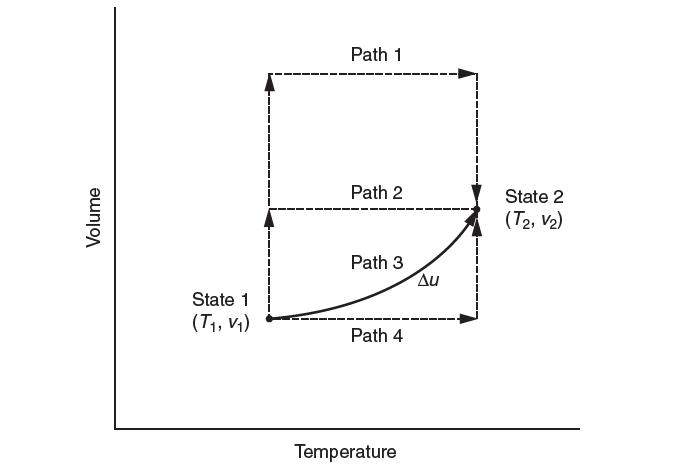
Consider a gas that undergoes a process from state 1 to state 2. You know the ideal gas heat capacity and an equation of state. Which of the following hypothetical paths would be most appropriate to chose to calculate Δu? Explain. Volume State 1 (T, V) Path 1 Path 2 Path 3 Path 4 Temperature Au
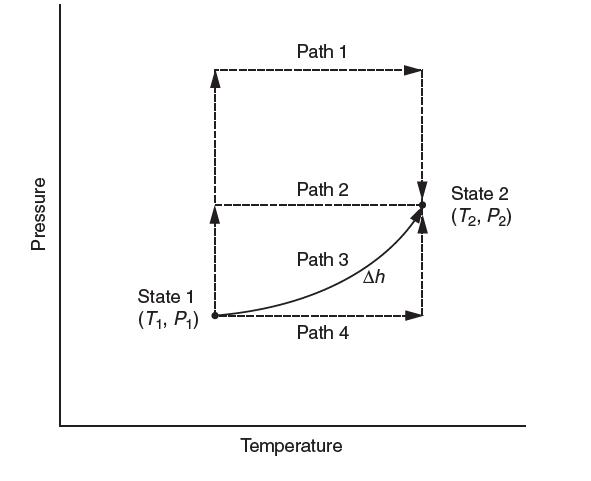
Consider a gas that undergoes a process from state 1 to state 2. You know the ideal gas heat capacity and an equation of state. Which of the following hypothetical paths would be most appropriate to chose to calculate Δh? Explain. Pressure State 1 (T, P) Path 1 Path 2 Path 3 Path 4 Temperature Ah
Consider the following property relation:(a) Come up with a physical process on a system which is described by the relation above. Sketch the process and describe it as completely as needed so that this relation holds.(b) Based on the process you chose in part (a), do you think the relation has a
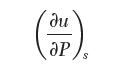
Write equations analogous to Equation (5.5) for the exact differential of internal energy, du, in terms of each of the following sets of independent properties:(a) u = u(T, P)(b) u = u(T, s)(c) u = u(h, s)
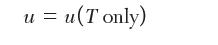
Using the thermodynamic web, show that for an ideal gas: u = u(T only)
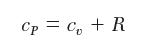
For an ideal gas, show that: Cp = C + R
Show that an ideal gas follows the cyclic relationship in P, v, and T.
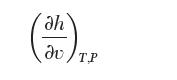
Evaluate the derivative:for a pure species that follows the Peng–Robinson equation of state. The subscript T,P indicates that both temperature and pressure are held constant. dh v T.P
Using the van der Waals equation, fi nd an expression for the derivative:in terms ofa, b, cP, R, v, and T. ( ) . dh . 50
Consider the following equation of state:where B′ and C′ are constant parameters with no temperature dependence. In terms of Br, Cr, R, P, T, and cP, fi nd the following expressions: Pu RT 1+ B'PC'P
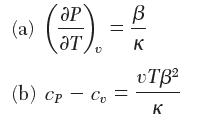
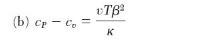
Verify that: (a) aP (b) cp C || || K vTB K
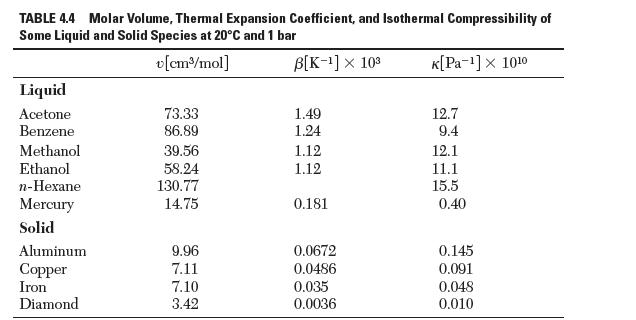
Use the result of Problem 5.20 (b) to calculate the difference, cP - cv, for liquid acetone at 20°C and 1 bar. Data can be found in Table 4.4. Repeat for benzene and copper. How do the values you obtain for cv compare to the value for cP? Explain.Problem 5.20(b)Verify that: TABLE 4.4 Molar Volume,
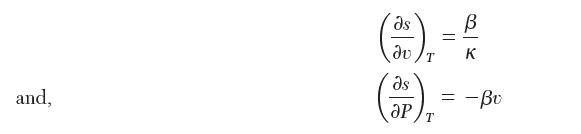
Verify that: and, s ( v T T || = K -Bu
Before the proliferation of personal computers, it was often convenient to summarize thermodynamic property data in the form of graphic diagrams. The Mollier diagram presents h (y-axis)vs. s (x-axis). Obtain an expression for the slope of an isochor (constant-volume line) on a Mollier diagram for
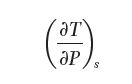
Develop a general relationship for the change in temperature with respect to pressure at constant entropy:(a) Evaluate the expression for an ideal gas.(b) From the result in part (a), show that for an ideal gas with constant cP, an isentropic expansion from state 1 and state 2 yields Equation
Derive Equation (5.39). CP peal = Cp(T, P) = cdeal gas - Preal Pideal gas 2 T dP (5.39)
Your company has just developed a new refrigeration process. This process uses a secret gas, called Gas A. You are told that you need to come up with thermodynamic property data for this gas. The following data have already been obtained for the superheated vapor:As accurately as you can, come up
Consider water at 250°C and 800 kPa. Determine a value for the partial derivative by the following methods: (a) Use the Redlich–Kwong equation of state.(b) Use the steam tables directly.(c) Use the steam tables together with the Maxwell relation given in Equation (5.18).Compare your answers
A gas can be described by the following equation of state:where b = 5 * 1024 m3/mol and cPideal gas = 35 J/ 1mol K2 .(a) Develop an expression of creal P for this gas.(b) One mole of this gas fl ows through an adiabatic porous plug. It enters at 10 bar, 300ºC and it exits at 1 bar. What is the
One mole of methane in a piston-cylinder assembly undergoes an adiabatic compression from an initial state (P1 = 0.5 bar, v1 = 0.05 m3/mol) to a fi nal state (P2 = 10 bar, v2 = 3 * 1023 m3/mol) .Use the van der Waals equation of state for nonideal gas behavior.(a) How much work is done on the
One mole of n-butane in a piston-cylinder assembly undergoes an irreversible isothermal expansion against a constant external pressure until the forces balance. The initial pressure is 10 bar, and the initial molar volume is 3 * 1023 m3/mol, and the fi nal volume is 0.05 m3/mol. Take the
Two moles of ethane in a piston-cylinder assembly undergo a reversible adiabatic compression.The initial pressure is 0.5 bar, and the initial volume is 0.1 m3. The fi nal volume is 0.002 m3.Use the van der Waals equation of state to account for intermolecular interactions. Answer the following
Propane at 350°C and 600 cm3/mol is expanded in an isentropic turbine. The exhaust pressure is atmospheric. What is the exhaust temperature? PvT behavior has been fi t to the van der Waals equation with:(a) Solve this problem using T and v as the independent properties, that is,(b) Solve this
You need to design a heater to preheat a gas fl owing into a chemical reactor. The inlet temperature is 27°C and the inlet pressure is 50 bar. You desire to heat the gas to 227°C and 50 bar.You are provided with an equation of state for the gas:and with ideal gas heat capacity data:(a) Under
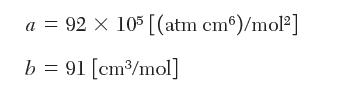
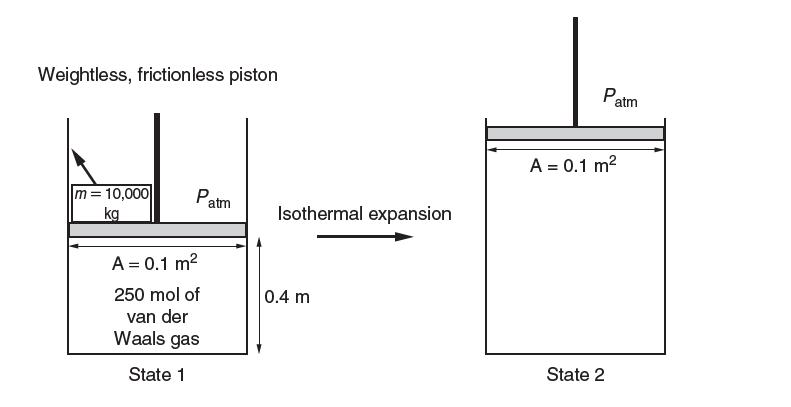
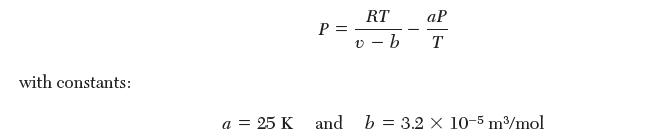
Consider the piston-cylinder assembly shown below; 250 moles of gas expand isothermally after the removal of a 10,000-kg block.(a) What is the internal energy change for the expansion process?(b) What is the entropy change of the universe for this process?Assume that the PvT behavior can be
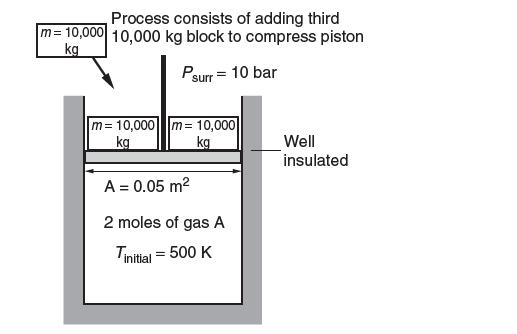
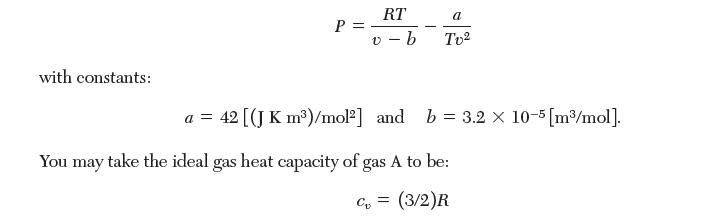
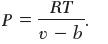
Consider the piston-cylinder assembly shown below. It is well insulated and initially contains two 10,000-kg blocks at rest on the 0.05-m2 piston. The initial temperature is 500 K. The ambient pressure is 10 bar. Two moles of gas A are contained in the cylinder. This gas is compressed in a process
One mole of CO is initially contained on one-half of a well-insulated, rigid tank. Its temperature is 500 K. The other half of the tank is initially at vacuum. A diaphragm separates the two compartments. Each compartment has a volume of 1 L. Suddenly, the diaphragm ruptures. Use the van der Waals
A well-insulated, rigid vessel is divided into two compartments by a partition. The volume of each compartment is 0.1 m3. One compartment initially contains 400 moles of gas A at 300 K, and the other compartment is initially evacuated. The partition is then removed and the gas is allowed to
Consider fi lling a gas cylinder with ethane from a high-pressure supply line. Before fi lling, the cylinder is empty (vacuum). The valve is then opened, exposing the tank to a 3-MPa line at 500 K until the pressure of the cylinder reaches 3 MPa. The valve is then closed. The volume of the cylinder
One mole per second of gas at 10 bar and 500°C fl ows through an isentropic, adiabatic turbine, where it exits at 1 bar. This gas can be described by the equation of state,Where b = 5 * 1024 m3/mol. The ideal gas heat capacity is given by cv = 3/2 R. Answer the following questions:(a) What is the
Following the process used in Example 5.5, develop an expression for the change in the dependent variable s in terms of the independent properties P and v, that is, s = s (P,v). Write your answer using cp, b, k, and v.Example 5.5 Use Equations (5.40) and (5.41) to develop an expression for s = s(T,
Following the process used in Example 5.5, develop an expression for the change in the dependent variable h in terms of the independent properties T and v, that is, h = h1T,v2. Write your answer using cp,b, k, and v.Example 5.5 Use Equations (5.40) and (5.41) to develop an expression for s = s(Tv)
Following the process used in Example 5.5, develop an expression for the change in the dependent variable h in terms of the independent properties T and s, that is, h = h1T,s 2. Write your answer using cp, b, k, and v. Consider an isentropic expansion process. Determine how h changes with T.Example
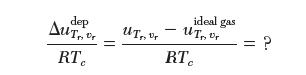
In analogy to Equation (5.43), develop an expression for the internal energy departure function in dimensionless coordinates: dep Attro, te . ,, - ideal gas ,,t, . = ?
Develop expressions for the enthalpy and entropy departure functions for a gas that follows the Redlich–Kwong equation of state.
Calculate the enthalpy and entropy departure for water at 400°C and 30 MPa using generalized correlations. Compare these values to those in the steam tables. The ideal heat capacity of steam is useful in this calculation.
Calculate the enthalpy and entropy change of C2H6 from a state at 300 K and 30 bar to a state at 400 K and 50 bar using departure functions.
Repeat Problem 5.32 using the entropy departure function.Problem 5.32Propane at 350°C and 600 cm3/mol is expanded in an isentropic turbine. The exhaust pressure is atmospheric. What is the exhaust temperature? PvT behavior has been fi t to the van der Waals equation with:(a) Solve this problem
Methane fl owing at 2 mol/min is adiabatically compressed from 300 K and 1 bar to 10 bar.What is the minimum work required?
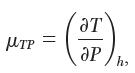
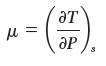
Develop a relationship for the Joule–Thomson coeffi cient in terms of only the thermal expansion coeffi cient, the heat capacity at constant pressure, and measured thermodynamic properties.
What is μJT for an ideal gas?
Determine expressions for the thermal expansion coeffi cient, the isothermal compressibility, and the Joule–Thomson coeffi cient for a gas that obeys the van der Waals equation of state, in terms of T, v, cv,a, b, and R.
Determine μJT for steam at 1 MPa and 300°C using data from the steam tables.
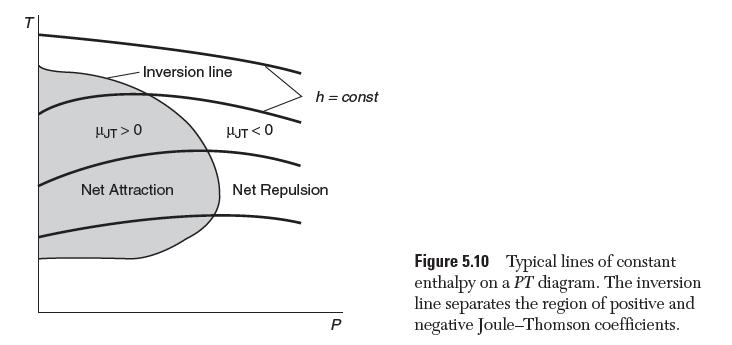
Use the van der Waals equation of state to plot the inversion line for N2 on a PT diagram, as schematically shown in Figure 5.10. T -Inversion line HJT> 0 Net Attraction HUT
Ethylene is liquefi ed by a Joule–Thomson expansion. It enters the throttling process at 50 bar and 0°C and leaves at 10 bar. What is the fraction of the inlet stream that is liquefi ed?
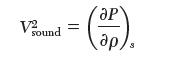
The speed of sound, Vsound [m/s], is formally equal to the partial derivative of pressure with respect to density at constant entropy:Show that,where MW is the molecular weight. sound aP ,
Based on the defi nition in Problem 5.55, use the thermodynamic web to come up with an expression for [Vsound] in air. What is the value of [Vsound] in air at 20°C? You may consider air to be an ideal gas with cP = 17/22R. Based on this result, how far away is a bolt of lightning if you hear the
Based on the defi nition in Problem 5.55, use the thermodynamic web to come up with an expression and a value for [Vsound] in water at 20°C. Use the steam tables for thermodynamic property data of liquid water.Problem 5.55The speed of sound, Vsound [m/s], is formally equal to the partial
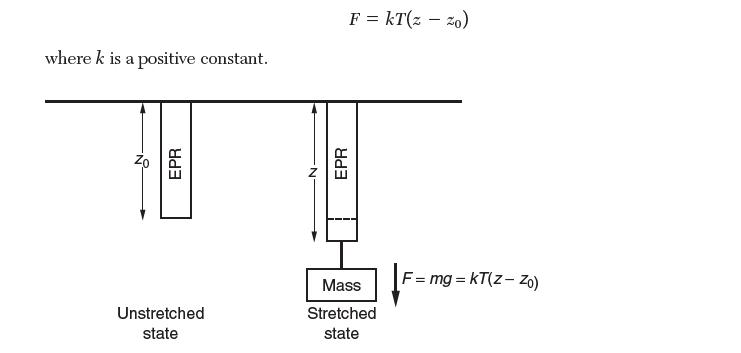
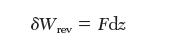
We are interested in the thermodynamic properties of a strip of rubber as it is stretched (see below). Consider n moles of pure ethylene propylene rubber (EPR) that has an unstretched length z0.If it is stretched by applying a force F, it will obtain an equilibrium length z, given by:The heat
The process in Example 5.2 indicates that we need to put work into the system during an expansion process. Determine whether this result is possible (in a thermodynamic sense); if it is, explain this result physically.EXAMPLE 5.2 One mole of propane gas is to be expanded from 0.001 m to 0.040 m
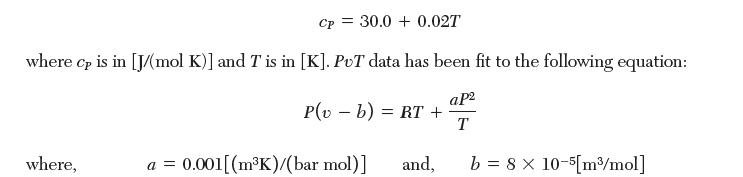
Gas A expands through an adiabatic turbine. The inlet stream fl ows in at 100 bar and 600 K while the outlet is at 20 bar and 445 K. Calculate the work produced by the turbine. The following data are available for gas A. The ideal gas heat capacity for this process is: Cp 30.0+ 0.02T where cp is in
A vessel with a total volume of 0.1 m3 has two compartments separated by a membrane.Compartment A has a volume of 0.005 m3 and contains 1 mol of ethane. Compartment B has a volume of 0.095 m3 and is evacuated. The vessel sits in an isothermal bath at 100°C. The membrane ruptures, fi lling the
The fi rst step in manufacturing isobutene from isomerization of n-butane is to compress the feed stream of n-butane. It is fed into the compressor at 9.47 bar and 80ºC and optimally exits at 18.9 bar and 120ºC, so that it can be fed into the isomerization reactor. The work supplied to the
Use Equations (5.40) and (5.41) to develop an expression for s = s (T, v) in terms of cP, b, k, and v. From the relationship that is developed, determine a general relationship for cP - cv. du BudT kvdP = - (5.40)
1 mole of iron is at 1000 K and 1 bar. It is reversibly compressed in a well-insulated system to 10,000 bar. What is the fi nal temperature?
Develop an expression for the enthalpy departure function for a gas that obeys the van der Waals equation of state. Write it in terms of reduced coordinates.
Develop an expression for the Joule–Thomson coeffi cient using the pressure-based expansion of the virial equation truncated at the second virial coeffi cient. Use the corresponding state relationships presented in Chapter 4 for the temperature dependence of B to develop a generalized correlation
Showing 100 - 200
of 746
1
2
3
4
5
6
7
8
Step by Step Answers

 Get 50% OFF
Claim Now
Get 50% OFF
Claim Now