New Semester
Started
Get
50% OFF
Study Help!
--h --m --s
Claim Now
Question Answers
Textbooks
Find textbooks, questions and answers
Oops, something went wrong!
Change your search query and then try again
S
Books
FREE
Study Help
Expert Questions
Accounting
General Management
Mathematics
Finance
Organizational Behaviour
Law
Physics
Operating System
Management Leadership
Sociology
Programming
Marketing
Database
Computer Network
Economics
Textbooks Solutions
Accounting
Managerial Accounting
Management Leadership
Cost Accounting
Statistics
Business Law
Corporate Finance
Finance
Economics
Auditing
Tutors
Online Tutors
Find a Tutor
Hire a Tutor
Become a Tutor
AI Tutor
AI Study Planner
NEW
Sell Books
Search
Search
Sign In
Register
study help
mathematics
calculus early transcendentals 9th
Calculus Early Transcendentals 9th Edition James Stewart, Daniel K. Clegg, Saleem Watson, Lothar Redlin - Solutions
The second directional derivative of f sx, yd is(a) If u − ka, bl is a unit vector and f has continuous second partial derivatives, show that(b) Find the second directional derivative of f sx, yd − xe2y in the direction of v − k4, 6 l. Dif(x, y) = D.[D. f(x, y)]
Find the directional derivative of f at the given point in the indicated direction.f(x, y, z) = x2y + x√1 + z, (1, 2, 3), in the direction of v = 2i + j − 2k
Find ∂z/∂x and ∂z/∂y.(a) z = f(x) g(y)(b) z = f(xy)(c) z = f(x/y)
Determine the set of points at which the function is continuous. f(x, y, z) = Vy - x² In z
Find all the second partial derivatives.f(x, y) = ln(ax + by)
Draw a contour map of the function showing several level curves.f(x, y) = ln(x2 + 4y2)
Prove the three special limits in (2).
(a) Evaluate ∫∫∫E dV, where E is the solid enclosed by the ellipsoid x2/a2 + y2/b2 + z2/c2 = 1. Use the transformation x = au, y = bv, z = cw.(b) The earth is not a perfect sphere; rotation has resulted in flattening at the poles. So the shape can be approximated by an ellipsoid with a = b =
State Green’s Theorem.
State Stokes’ Theorem.
State the Divergence Theorem.
Determine whether or not the vector field is conservative. If it is conservative, find a function f such that F = ∇f.F(x, y, z) = (yz, xz + y, xy − x)
Graph the function by hand, not by plotting points, but by starting with the graph of one of the standard functions given in Table 1.2.3, and then applying the appropriate transformations.y = sin 4x
Determine whether the equation or table defines y as a function of x. ϰ yYear
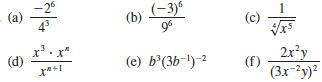
Use the Laws of Exponents to rewrite and simplify each expression. -26 (b) (-3)6 96 (c) x'. x" (d) (e) b'(3b-)-2 2x'y (f) (3x-2y)?
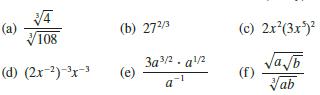
Use the Laws of Exponents to rewrite and simplify each expression. (a) V108 (b) 272/3 (c) 2x(3x)? (d) (2x-2)-3r3 3a2 . a2 (e) (f) Vab
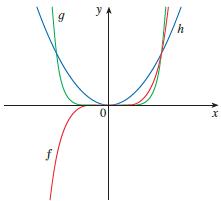
Match each equation with its graph. Explain your choices. (Don’t use a computer or graphing calculator.)(a) y = x2(b) y = x5(c) y = x8
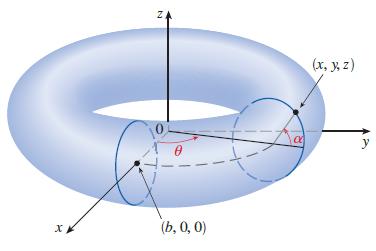
(a) Find a parametric representation for the torus obtained by rotating about the z-axis the circle in the xz-plane with center sb, 0, 0d and radius a , b. (b) Use the parametric equations found in part (a) to graph the torus for several values of a and b.(c) Use the parametric representation from
Solve the inequality in terms of intervals and illustrate the solution set on the real number line.x3 − x2 ≤ 0
Find an equation of the line that satisfies the given conditions.Through (4, 5), parallel to the x-axis
Find an equation of the line that satisfies the given conditions.Through (4, 5), parallel to the y-axis
Find the slope and y-intercept of the line and draw its graph.2x – 5y = 0
Find the slope and y-intercept of the line and draw its graph.y = –2
Find the slope and y-intercept of the line and draw its graph.2x – 3y + 6 = 0
Find the slope and y-intercept of the line and draw its graph.3x – 4y = 12
Find the slope and y-intercept of the line and draw its graph.4x + 5y = 10
Sketch the region in the xy-plane.{(x, y)| x < 0}
Sketch the region in the xy-plane.{(x, y) | y > 0}
Sketch the region in the xy-plane.{(x, y) | x ≥ 1 and y < 3}
Sketch the region in the xy-plane.{(x, y) | |x| ≤ 2}
Sketch the region in the xy-plane.{(x, y) ||x| < 3 and |y| < 2}
Sketch the region in the xy-plane.{(x, y) | 0 ≤ y ≤ 4 and x ≤ 2}
Sketch the region in the xy-plane.{(x, y) | y > 2x – 1}
Sketch the region in the xy-plane.{(x, y) |1 + x ≤ y ≤ 1 – 2x}
Sketch the region in the xy-plane. {(x, y) | -x < y
Find an equation of a circle that satisfies the given conditions.Center (3, –1), radius 5
Find an equation of a circle that satisfies the given conditions.Center (–2, –8), radius 10
Find an equation of a circle that satisfies the given conditions.Center at the origin, passes through (4, 7)
Find an equation of a circle that satisfies the given conditions.Center (–1, 5), passes through (–4, –6)
Show that the equation represents a circle and find the center and radius.x2 + y2 – 4x + 10y + 13 = 0
Show that the equation represents a circle and find the center and radius.x2 + y2 + 6y + 2 = 0
Show that the equation represents a circle and find the center and radius.x2 + y2 + x = 0
Show that the equation represents a circle and find the center and radius.16x2 + 16y2 + 8x + 32y + 1 = 0
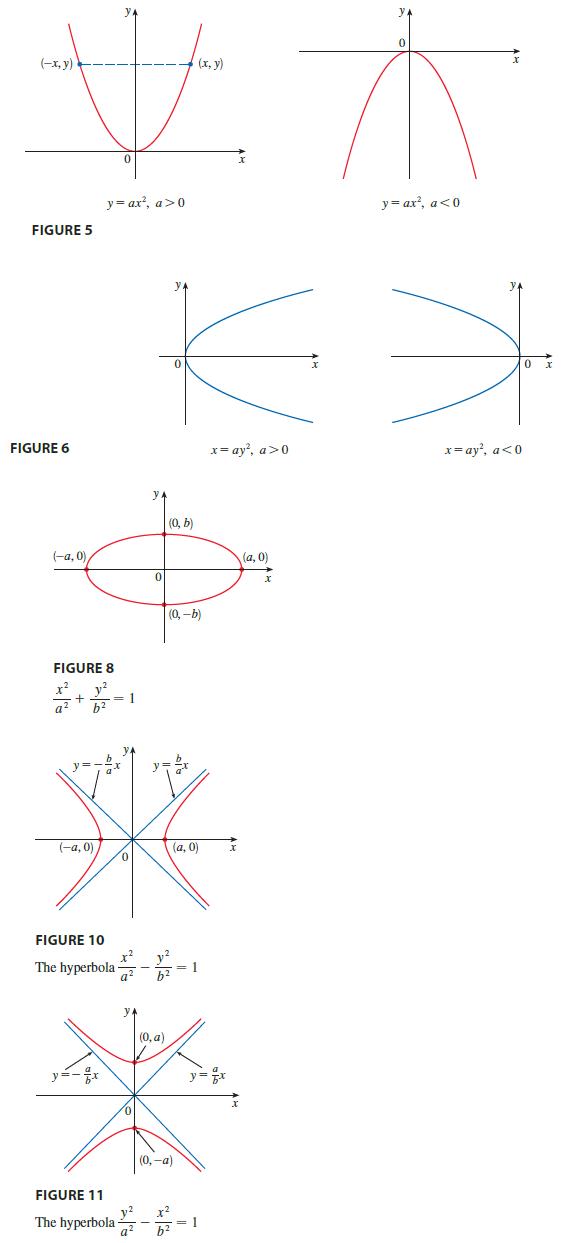
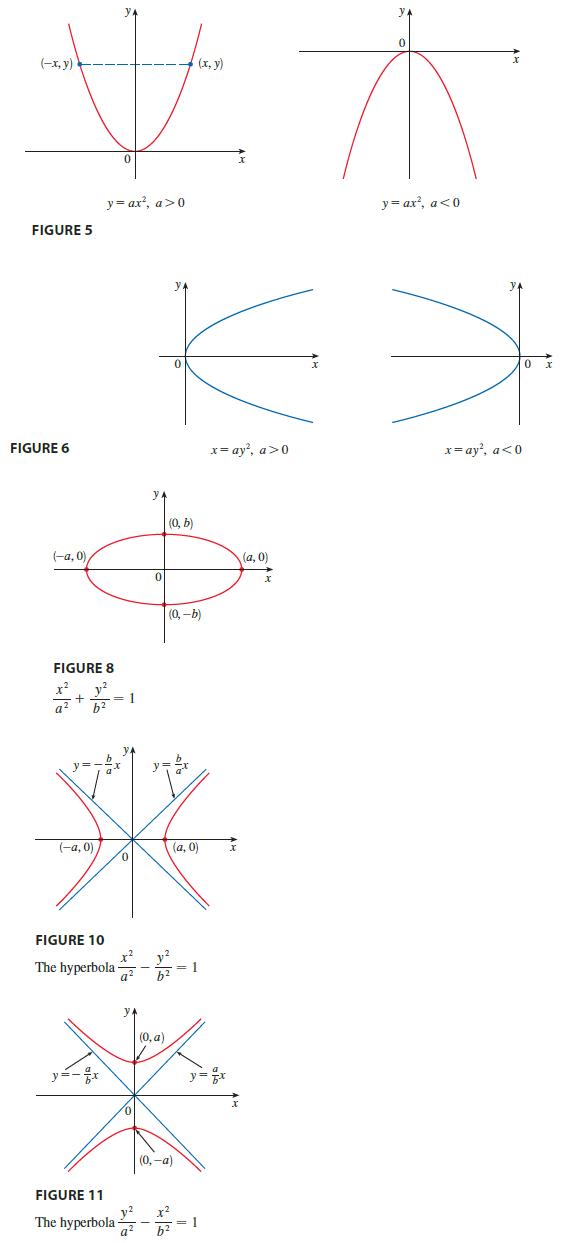
Identify the type of curve and sketch the graph. Do not plot points. Just use the standard graphs given in Figures 5, 6, 8, 10, and 11 and shift if necessary.9y2 – x2 = 9 (-x, v) (x, v) y = ax, a>0 y= ax, a0 x= ay', a
Identify the type of curve and sketch the graph. Do not plot points. Just use the standard graphs given in Figures 5, 6, 8, 10, and 11 and shift if necessary.2x2 + 5y2 = 10 (-x, v) (x, v) y = ax, a>0 y= ax, a0 x= ay', a
Find the slope and y-intercept of the line and draw its graph.x + 3y = 0
Find an equation of the line that satisfies the given conditions.Through (1/2 , –2/3), perpendicular to the line 4x – 8y = 1
Find an equation of the line that satisfies the given conditions.Through (–1, –2), perpendicular to the line 2x + 5y + 8 = 0
Find an equation of the line that satisfies the given conditions.y-intercept 6, parallel to the line 2x + 3y + 4 = 0
Find an equation of the line that satisfies the given conditions.x-intercept –8, y-intercept 6
Find an equation of the line that satisfies the given conditions.Slope 2/5, y-intercept 4
Find an equation of the line that satisfies the given conditions.Through (–1, 4), slope –3
Sketch the graph of the equation.|y| = 1
Sketch the graph of the equation.xy = 0
Sketch the graph of the equation.y = –2
Sketch the graph of the equation.x = 3
Find the distance between the points.(1, –6), (–1, –3)
Find the distance between the points.(6, –2), (–1, 3)
Prove that |x − y| ≥ |x| − |y|. Use the Triangle Inequality with a = x − y and b = y.
Show that if 0 < a < b, then a2 < b2.
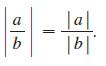
Prove that la| а
Prove that |ab | = |a||b|.
Show that if |x + 3| < 1/2, then |4x + 13| < 3.
Suppose that |x − 2| < 0.01 and |y − 3| < 0.04. Use the Triangle Inequality to show that |(x + y) − 5| < 0.05.
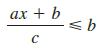
Solve for x, assuming a, b, and c are negative constants. ах + b
Solve for x, assuming a, b, and c are positive constants.a ≤ bx + c < 2a
Solve the inequality in terms of intervals and illustrate the solution set on the real number line.x2 < 2x + 8
Solve the inequality in terms of intervals and illustrate the solution set on the real number line.2x2 + x ≤ 1
Solve the inequality in terms of intervals and illustrate the solution set on the real number line.(2x + 3)(x − 1) ≥ 0
Solve the inequality in terms of intervals and illustrate the solution set on the real number line.(x − 1)(x − 2) > 0
Determine whether the statement is true or false. If it is true, explain why. If it is false, explain why or give an example that disproves the statement.If F and G are vector fields, thencurl(F · G) = curl F · curl G
Use spherical coordinates.Evaluate ∫∫∫B (x2 + y2 + z2)2 dV, where B is the ball with center the origin and radius 5.
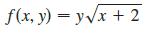
Find ∫20 f(x, y) dx and ∫30 f(x, y) dy f(x, y) = y/x + 2
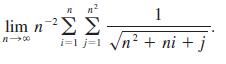
Evaluate 1 lim n Σ Σ i=1 j=l yn? + ni + j
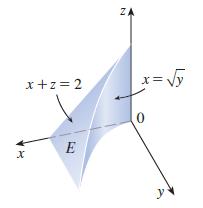
(a) Express the triple integral ∫∫∫E f(x, y, z) dV as an iterated integral for the given function f and solid region E.(b) Evaluate the iterated integral.f(x, y, z) = x + y ZA x+z= 2 x= Vy E y
Find the area of the surface.The part of the surface z = xy that lies within the cylinder x2 + y2 = 1.
Evaluate the double integral. -dA, D={(x, y) | 0
Sketch the solid described by the given inequalitiesρ ≤ 1, 0 ≤ Φ ≤ π/6, 0 ≤ θ ≤ π
Evaluate the double integral by first identifying it as the volume of a solid. Se (4 – 2y) dA, R = [0, 1] X [0, 1] %3!
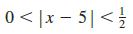
Solve the inequality. 0 < |x - 5|
Solve the inequality.1 ≤ |x| ≤ 4
Solve the inequality.|5x − 2| < 6
Solve the inequality.|2x − 3| ≤ 0.4
Solve the inequality.|x + 1| ≥ 3
Solve the inequality.|x + 5| ≥ 2
Solve the inequality.|x − 6| < 0.1
Solve the inequality.|x − 4| < 1
Solve the inequality.|x| ≥ 3
Solve the inequality.|x| < 3
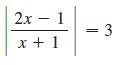
Solve the equation for x. 2x 3 х+1
Solve the equation for x.|x + 3| = |2x + 1|
Solve the equation for x.|3x + 5| = 1
Solve the equation for x.|2x| = 3
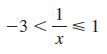
Solve the inequality in terms of intervals and illustrate the solution set on the real number line. 1 -3
Solve the inequality in terms of intervals and illustrate the solution set on the real number line. 1と4
Solve the inequality in terms of intervals and illustrate the solution set on the real number line.x3 + 3x < 4x2
Solve the inequality in terms of intervals and illustrate the solution set on the real number line.x3 > x
Solve the inequality in terms of intervals and illustrate the solution set on the real number line.(x + 1)(x − 2)(x + 3) ≥ 0
Solve the inequality in terms of intervals and illustrate the solution set on the real number line.x2 ≥ 5
Solve the inequality in terms of intervals and illustrate the solution set on the real number line.x2 < 3
Showing 1700 - 1800
of 4932
First
11
12
13
14
15
16
17
18
19
20
21
22
23
24
25
Last
Step by Step Answers

 Get 50% OFF
Claim Now
Get 50% OFF
Claim Now