New Semester
Started
Get
50% OFF
Study Help!
--h --m --s
Claim Now
Question Answers
Textbooks
Find textbooks, questions and answers
Oops, something went wrong!
Change your search query and then try again
S
Books
FREE
Study Help
Expert Questions
Accounting
General Management
Mathematics
Finance
Organizational Behaviour
Law
Physics
Operating System
Management Leadership
Sociology
Programming
Marketing
Database
Computer Network
Economics
Textbooks Solutions
Accounting
Managerial Accounting
Management Leadership
Cost Accounting
Statistics
Business Law
Corporate Finance
Finance
Economics
Auditing
Tutors
Online Tutors
Find a Tutor
Hire a Tutor
Become a Tutor
AI Tutor
AI Study Planner
NEW
Sell Books
Search
Search
Sign In
Register
study help
mathematics
calculus early transcendentals 9th
Calculus Early Transcendentals 9th Edition James Stewart, Daniel K. Clegg, Saleem Watson, Lothar Redlin - Solutions
Evaluate the surface integral. ls (x²z + y°2) dS, S is the hemisphere x? + y? + z? = 4, z >0 %3|
Determine whether or not the vector field is conservative. If it is conservative, find a function f such that F = ∇f.F(x, y, z) = yz sin xy i + xz sin xy j − cos xy k
Evaluate the surface integral. ls (x + y + z) dS, S is the part of the half-cylinder x? + z? = 1, z > 0, that lies between the planes y = 0 and y = 2 %3|
Use the Divergence Theorem to evaluate ∫∫S F · dS, whereand S is the top half of the sphere x2 + y2 + z2 = 1. F(x, y, z) = z'xi + Gy + tan z) j + (xz + y')k %3!
Determine whether or not the vector field is conservative. If it is conservative, find a function f such that F = ∇f.F(x, y, z) = yz2exz i + zexz j + xyzexz k
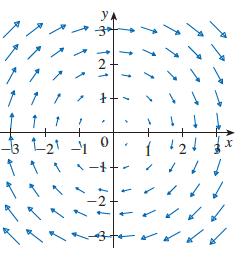
Let F be the vector field shown in the figure.(a) If C1 is the vertical line segment from (−3, −3) to (−3, 3), determine whether ∫C1 F · dr is positive, negative, or zero.(b) If C2 is the counterclockwise-oriented circle with radius 3 and center the origin, determine whether ∫C2 F · dr
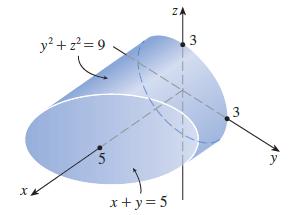
Evaluate the surface integral. ls xz ds, S is the boundary of the region enclosed by the cylinder y? + z? = 9 and the planes x = 0 and x + y = 5
Determine whether or not the vector field is conservative. If it is conservative, find a function f such that F = ∇f.F(x, y, z) = ez cos x i + ey cos z j + (ez sin x − ey sin z) k
Find a parametric representation for the surface.The plane that passes through the point (0, −1, 5) and contains the vectors (2, 1, 4) and (−3, 2, 5)
Evaluate the surface integral Sl: (x² + y? + z?) ds, S is the part of the cylinder x? + y² = 9 between the planes z = 0 and z = 2, together with its top and bottom disks %3D
(a) Find a function f such that F = ∇f(b) Use part (a) to evaluate ∫C F · dr along the given curve C. F(x, y) = (1 + xy)e"i+ x*e" j, C: r(1) = cos ti + 2 sintj, 0
Find a parametric representation for the surface.The part of the hyperboloid 4x2 − 4y2 − z2 = 4 that lies in front of the yz-plane.
(a) Find a function f such that F = ∇f(b) Use part (a) to evaluate ∫C F · dr along the given curve C. F(x, y, z) = 2xy i + (x + 2yz) j + y' k, C is the line segment from (2, –3, 1) to (-5, 1, 2)
Evaluatewhere C is the curve r(t) = (sin t, cos t, sin 2t), 0 ≤ t ≤ 2π. L(y + sin x) dx + (z? + cos y) dy+ x'dz
Find a parametric representation for the surface.The part of the ellipsoid x2 + 2y2 + 3z2 = 1 that lies to the left of the xz-plane.
(a) Find a function f such that F = ∇f(b) Use part (a) to evaluate ∫C F · dr along the given curve C. F(x, y, z) = (y'z + 2xz*) i + 2xyz j + (xy² + 2x²z) k, C: x = Vĩ, y= t + 1, z = t, 0
Use graphing software to plot the vector fieldF(x, y) = (y2 − 2xy) i + (3xy − 6x2) jExplain the appearance by finding the set of points (x, y) such that F(x, y) = 0.
Find a parametric representation for the surface.The part of the sphere x2 + y2 + z2 = 4 that lies above the cone z = √x2 + y2
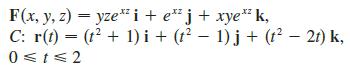
(a) Find a function f such that F = ∇f(b) Use part (a) to evaluate ∫C F · dr along the given curve C. F(x, y, z) = yze*i+ e"j+ xye* k, C: r(t) = (1 + 1) i + (1? – 1) j + (t - 21) k, 0
Evaluate the surface integral ∫∫S F · dS for the given vector field F and the oriented surface S. In other words, find the flux of F across S. For closed surfaces, use the positive (outward) orientation. F(x, y, z) = xyi + yzj + zx k, Sis the part of the paraboloid z = 4 – x² - y? that lies
a. Sketch the curve C with parametric equationsx = cos t y = sin t z = sin t 0 ≤ t ≤ 2πb. Find fc 2xe" dx + (2.x'e + 2y cot z) dy - y csc'z dz.
Find a parametric representation for the surface.The part of the cylinder x2 + z2 = 9 that lies above the xy-plane and between the planes y = −4 and y = 4
(a) Find a function f such that F = ∇f(b) Use part (a) to evaluate ∫C F · dr along the given curve C. F(x, y, z) = sin y i + (x cos y + cos z) j – y sin z k, C: r(t) = sin ti + tj+ 2t k, 0
Use a calculator or computer to evaluate the line integral correct to four decimal places. SeF dr, where F(x, y) = x + y i + (y/x)j and r(t) = sin?t i + sin t cos t j, 7/6
Find a parametric representation for the surface.The part of the sphere x2 + y2 + z2 = 36 that lies between the planes z = 0 and z = 3√3
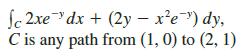
Show that the line integral is independent of path and evaluate the integral. Sc 2xe"dx + (2y - x'e") dy, C is any path from (1, 0) to (2, 1)
Let D be a region bounded by a simple closed path C in the xy-plane. Use Green’s Theorem to prove that the coordinates of the centroid (x, y) of D arewhere A is the area of D. y = dx 2A 2A
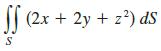
Use the Divergence Theorem to evaluatewhere S is the sphere x2 + y2 + z2 = 1. | (2x + 2y + z) dS
Use a calculator or computer to evaluate the line integral correct to four decimal places. SeF dr, where F(x, y, z) = yze*i + zxe' j + xye k and r(t) = sin ti + cos tj + tan t k, 0
Find a parametric representation for the surface.The part of the plane z = x + 3 that lies inside the cylinder x2 + y2 = 1.
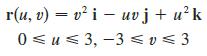
(a) Find an equation of the tangent plane at the point (4, −2, 1) to the parametric surface S given by(b) Graph the surface S and the tangent plane found in part (a).(c) Set up, but do not evaluate, an integral for the surface area of S.(d) Ifuse a computer algebra system to find ∫∫S F · dS
Use a calculator or computer to evaluate the line integral correct to four decimal places.∫C xy arctan z ds, where C has parametric equations x = t2, y = t3, z = √t, 1 ≤ t ≤ 2.
Evaluate the surface integral ∫∫S F · dS for the given vector field F and the oriented surface S. In other words, find the flux of F across S. For closed surfaces, use the positive (outward) orientation. F(x, y, z) = yj - z k, S consists of the paraboloid y = x + z?, 0 < y< 1, and the disk x?
Use a calculator or computer to evaluate the line integral correct to four decimal places.∫C z ln(x + y) ds, where C has parametric equations x = 1 + 3t, y = 2 + t2, z = t4, −1 ≤ t ≤ 1.
Evaluate the surface integral ∫∫S F · dS for the given vector field F and the oriented surface S. In other words, find the flux of F across S. For closed surfaces, use the positive (outward) orientation. F(x, y, z) = yz i + zxj + xy k, S is the surface z = x sin y, 0 < x< 2,0 < y< T, with
Evaluate the surface integral ∫∫S F · dS for the given vector field F and the oriented surface S. In other words, find the flux of F across S. For closed surfaces, use the positive (outward) orientation. F(x, y, z) = xi + 2yj + 3z k, S is the cube with vertices (+1, ±1, ±1)
Find the gradient vector field ∇f of f and sketch it.f(x, y) = 1/2 (x2 − y2)
Evaluate the surface integral ∫∫S F · dS for the given vector field F and the oriented surface S. In other words, find the flux of F across S. For closed surfaces, use the positive (outward) orientation.F(x, y, z) = x i + y j + 5 k, S is the boundary of the region enclosed by the cylinder x2 +
Evaluate the surface integral ∫∫S F · dS for the given vector field F and the oriented surface S. In other words, find the flux of F across S. For closed surfaces, use the positive (outward) orientation. F(x, y, z) = xi + yj+ z k, S is the boundary of the solid half-cylinder 0
Find an equation of the tangent plane to the given parametric surface at the specified point.r(u, v) = sin u i + cos u sin v j + sin v k; u = π/6, v = π/6
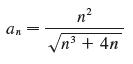
Determine whether the sequence converges or diverges. If it converges, find the limit. n2 an Vn3 + 4n
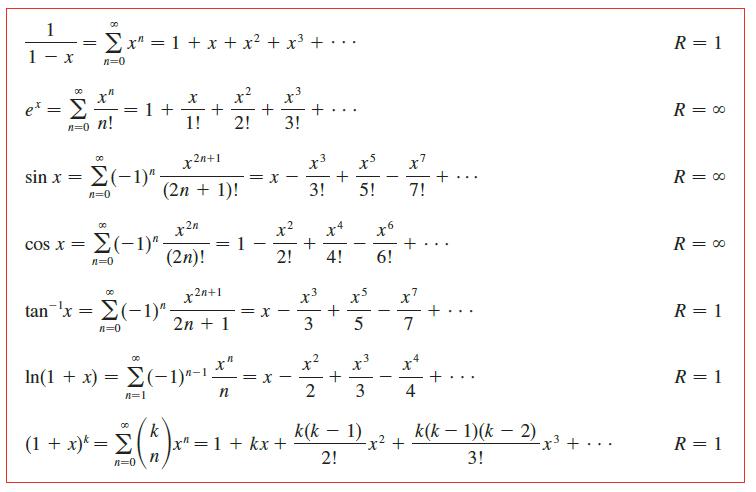
Use a Maclaurin series in Table 1 to obtain the Maclaurin series for the given function.Table 1f(x) = arctan(x2) 1 2x" = 1 + x + x? + x + ... R = 1 n=0 00 x" e* = E- n=0 n! 1 + 1! R = 0 2! + 3! x2n+1 E(-1)" - x7 sin x = R = 00 ... (2n + 1)! 3! 5! 7! n=0 x? x* 00 E(-1)*. = 1 + 6! R = 0 cos x = (2n)!
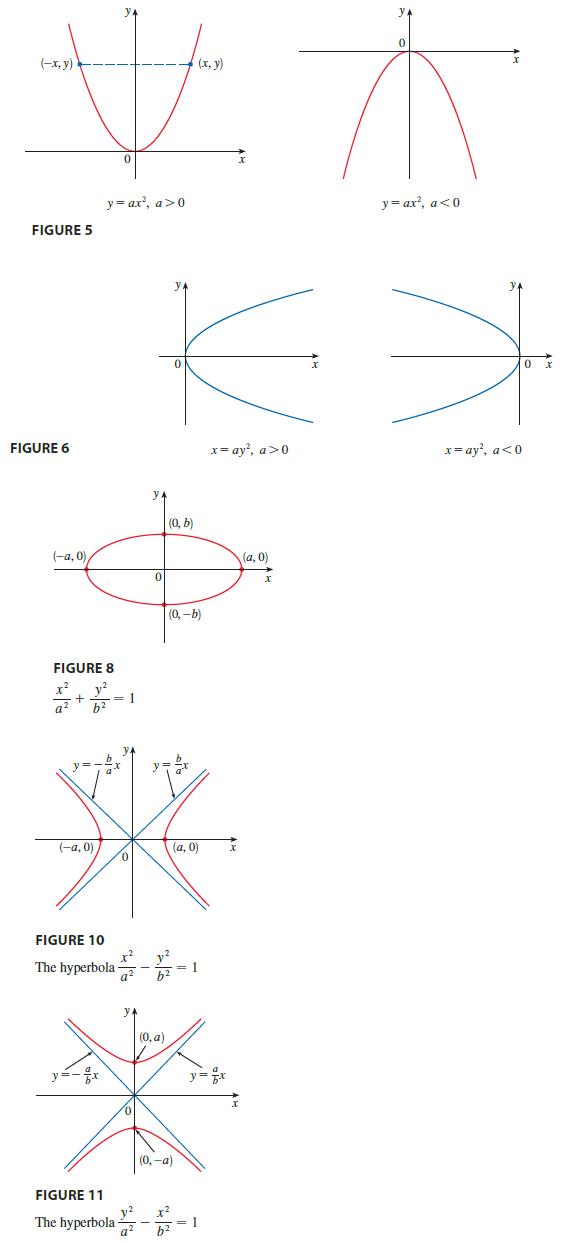
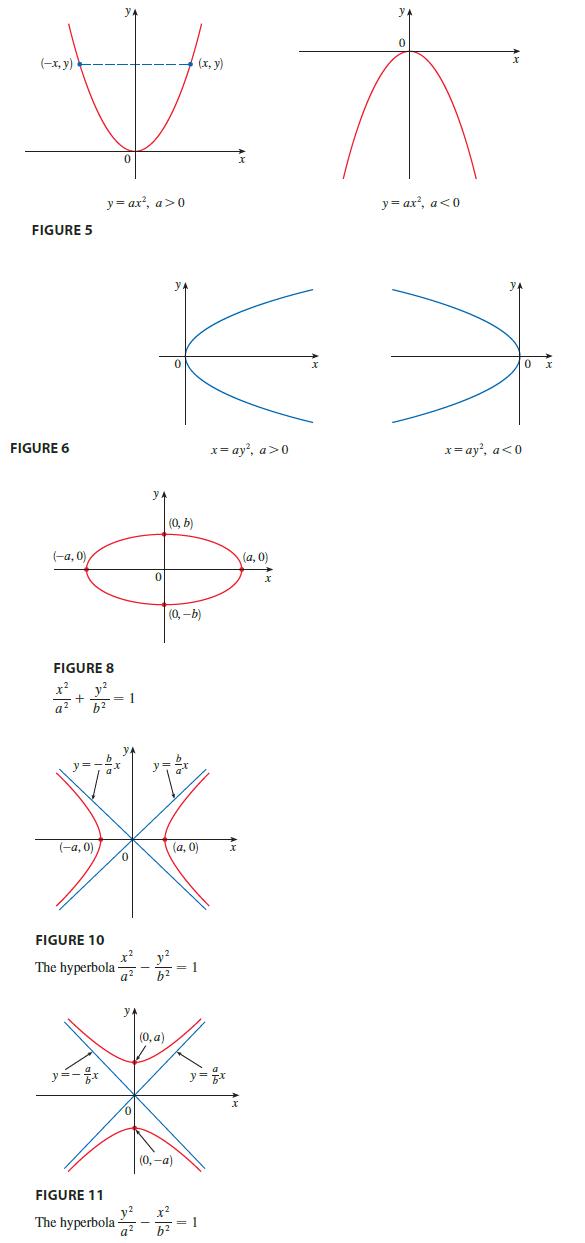
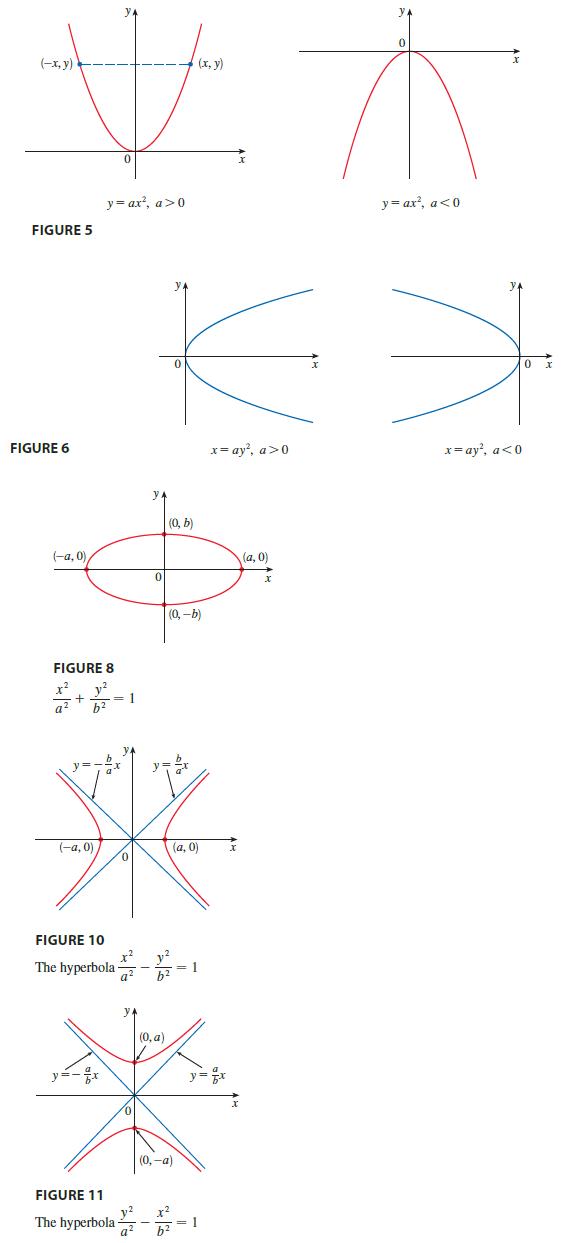
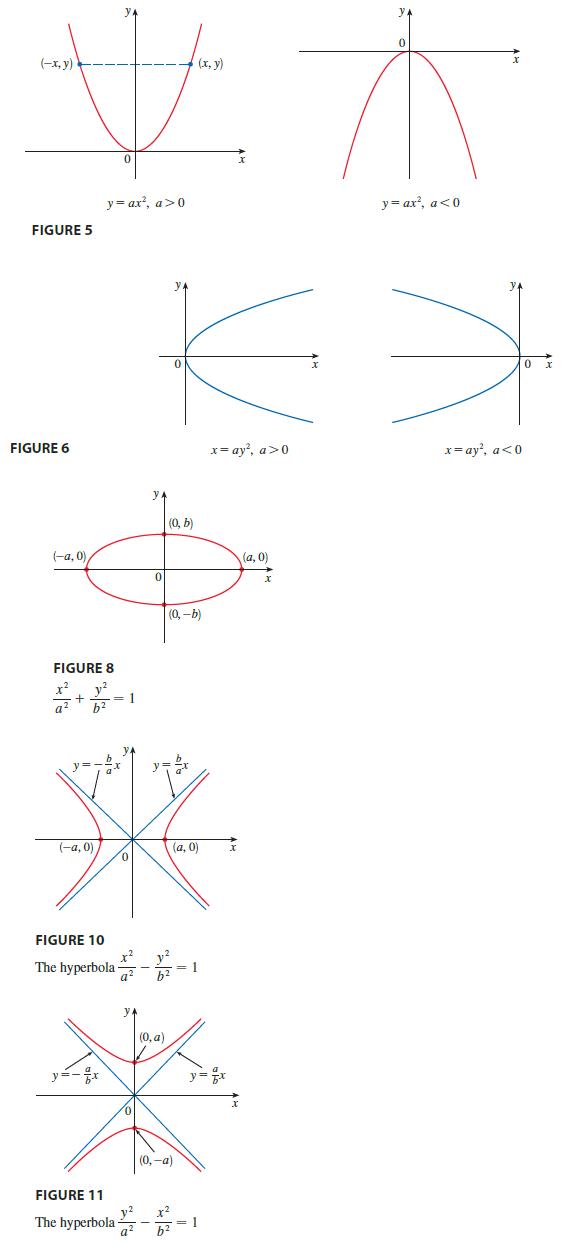
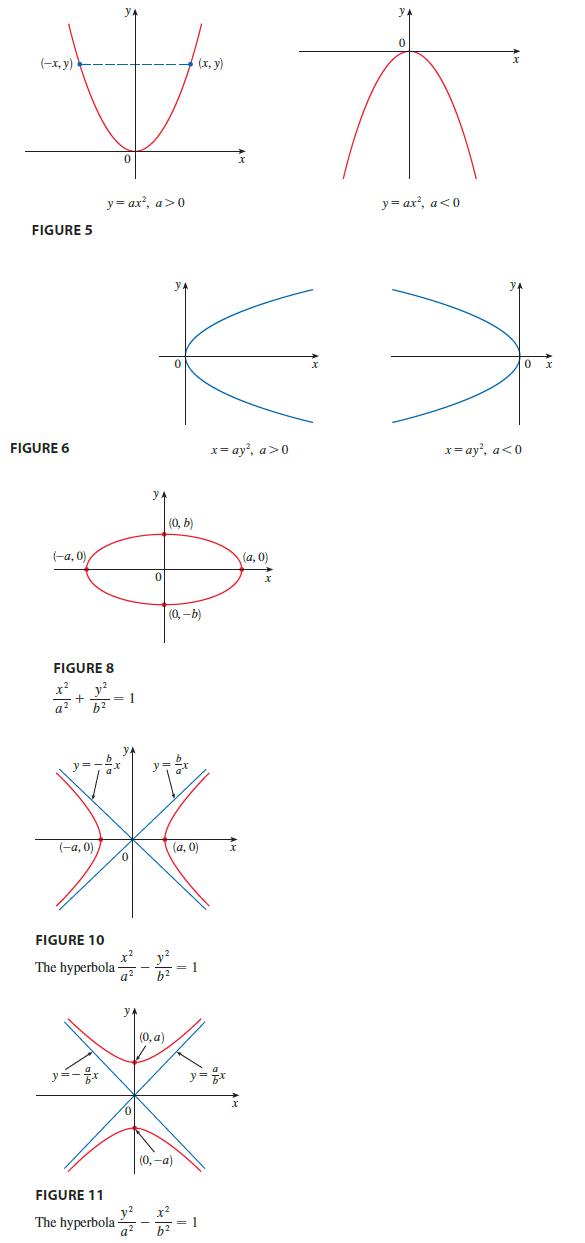
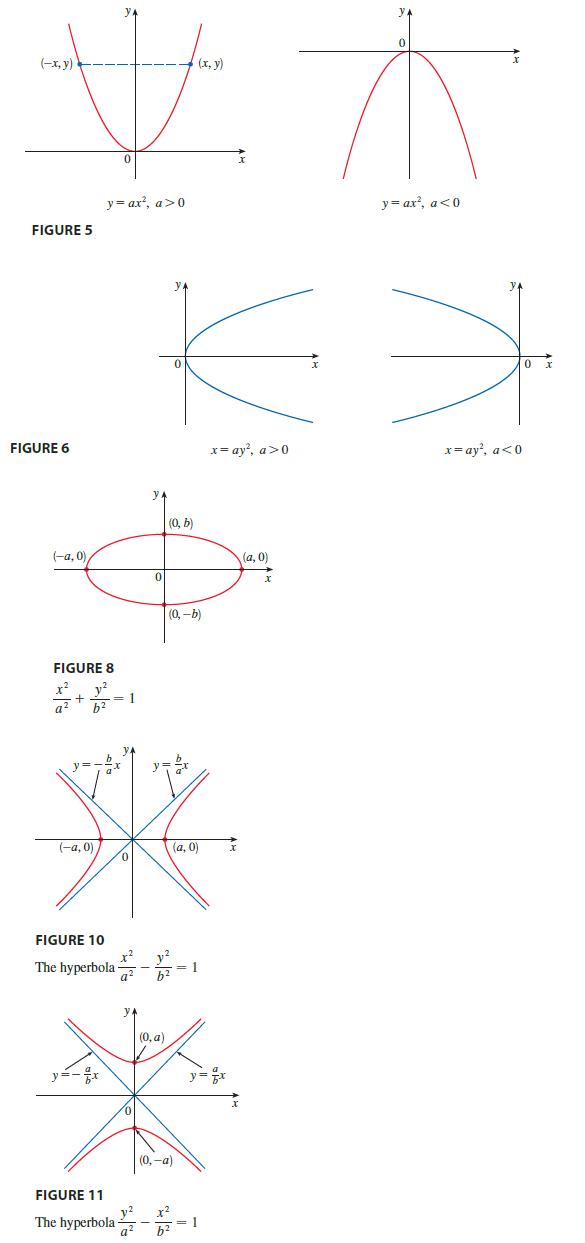
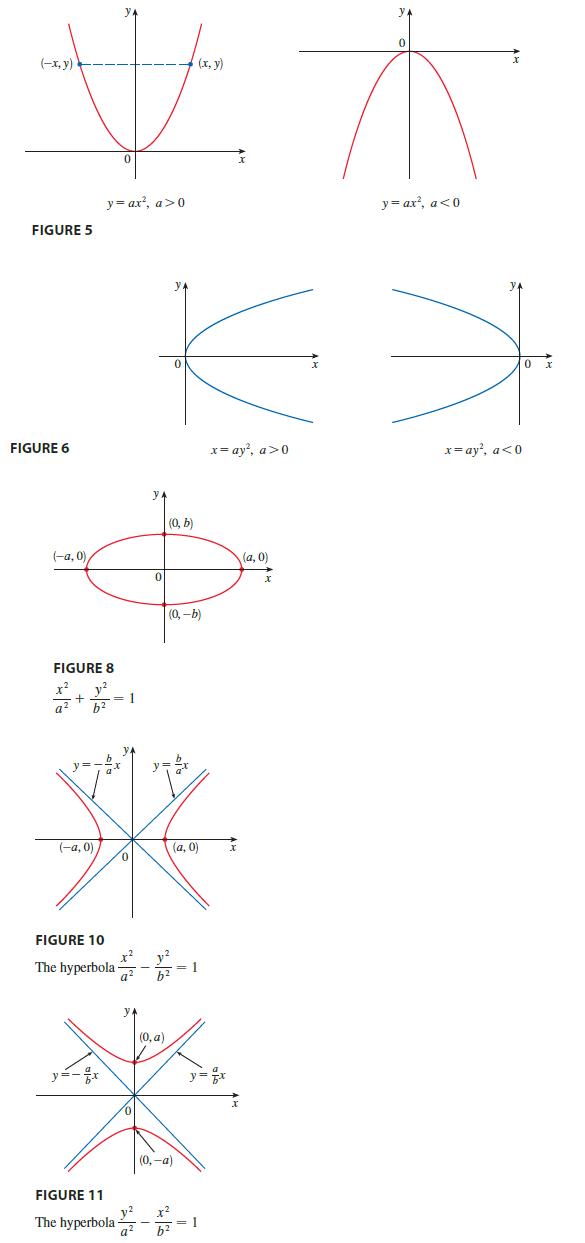
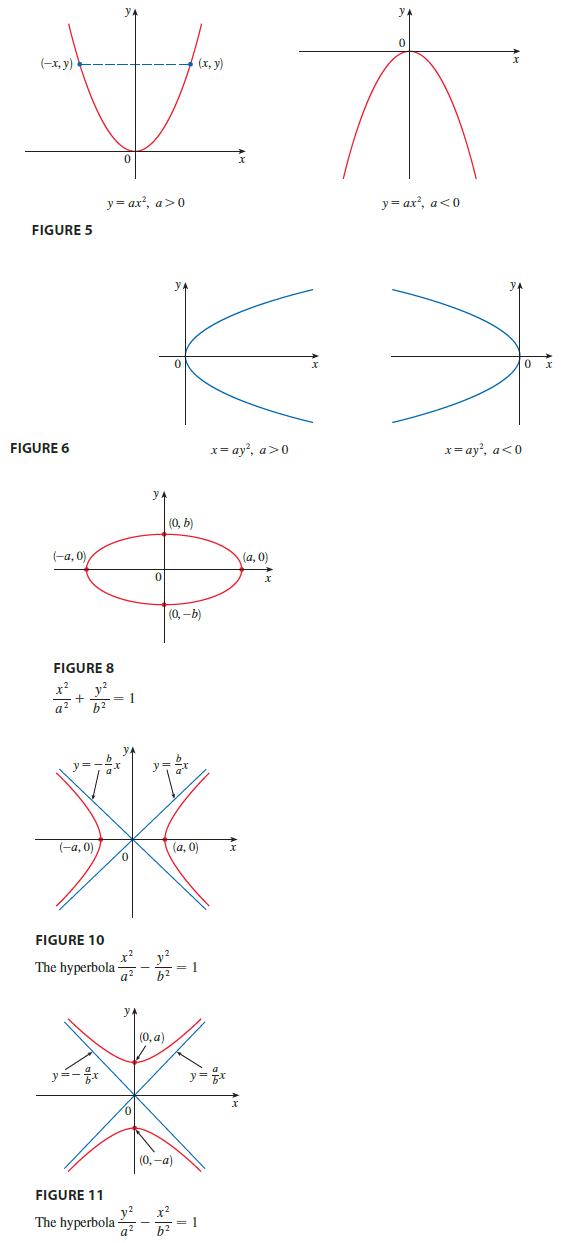
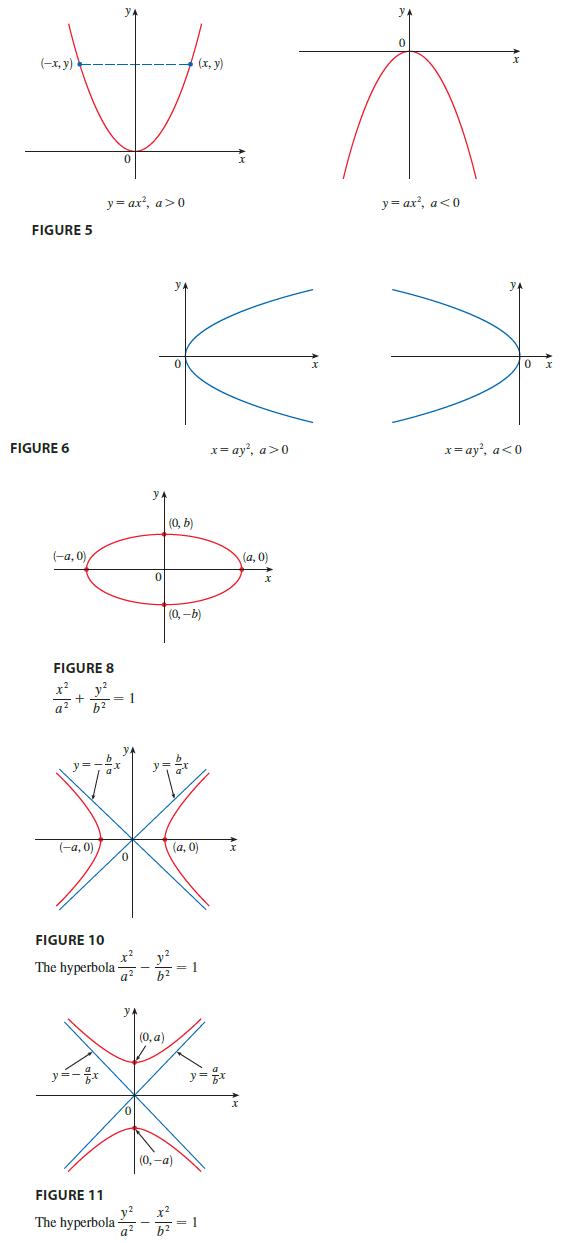
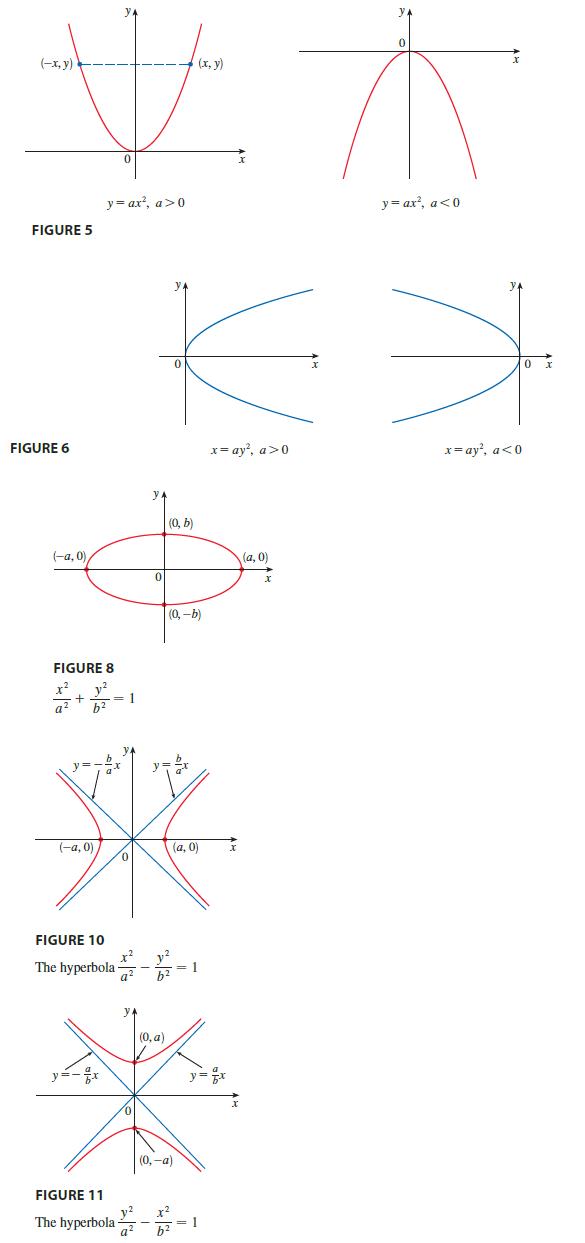
Identify the type of curve and sketch the graph. Do not plot points. Just use the standard graphs given in Figures 5, 6, 8, 10, and 11 and shift if necessary.xy = 4 (-x, v) (x, v) y = ax, a>0 y= ax, a0 x= ay', a
Identify the type of curve and sketch the graph. Do not plot points. Just use the standard graphs given in Figures 5, 6, 8, 10, and 11 and shift if necessary.y = x2 + 2x (-x, v) (x, v) y = ax, a>0 y= ax, a0 x= ay', a
Identify the type of curve and sketch the graph. Do not plot points. Just use the standard graphs given in Figures 5, 6, 8, 10, and 11 and shift if necessary.9(x – 1)2 + 4(y – 2)2 = 36 (-x, v) (x, v) y = ax, a>0 y= ax, a0 x= ay', a
Identify the type of curve and sketch the graph. Do not plot points. Just use the standard graphs given in Figures 5, 6, 8, 10, and 11 and shift if necessary.16x2 + 9y2 – 36y = 108 (-x, v) (x, v) y = ax, a>0 y= ax, a0 x= ay', a
Identify the type of curve and sketch the graph. Do not plot points. Just use the standard graphs given in Figures 5, 6, 8, 10, and 11 and shift if necessary.y = x2 – 6x + 13 (-x, v) (x, v) y = ax, a>0 y= ax, a0 x= ay', a
Identify the type of curve and sketch the graph. Do not plot points. Just use the standard graphs given in Figures 5, 6, 8, 10, and 11 and shift if necessary.x2 – y2 – 4x + 3 = 0 (-x, v) (x, v) y = ax, a>0 y= ax, a0 x= ay', a
Identify the type of curve and sketch the graph. Do not plot points. Just use the standard graphs given in Figures 5, 6, 8, 10, and 11 and shift if necessary.x = 4 – y2 (-x, v) (x, v) y = ax, a>0 y= ax, a0 x= ay', a
Identify the type of curve and sketch the graph. Do not plot points. Just use the standard graphs given in Figures 5, 6, 8, 10, and 11 and shift if necessary.y2 – 2x + 6y + 5 = 0 (-x, v) (x, v) y = ax, a>0 y= ax, a0 x= ay', a
Identify the type of curve and sketch the graph. Do not plot points. Just use the standard graphs given in Figures 5, 6, 8, 10, and 11 and shift if necessary.x2 + 4y2 – 6x + 5 = 0 (-x, v) (x, v) y = ax, a>0 y= ax, a0 x= ay', a
Identify the type of curve and sketch the graph. Do not plot points. Just use the standard graphs given in Figures 5, 6, 8, 10, and 11 and shift if necessary.4x2 + 9y2 – 16x + 54y + 61 = 0 (-x, v) (x, v) y = ax, a>0 y= ax, a0 x= ay', a
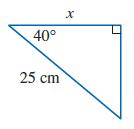
Find, correct to five decimal places, the length of the side labeled x. 40° 25 cm
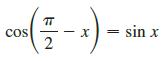
Prove the identity. TT = sin x cos
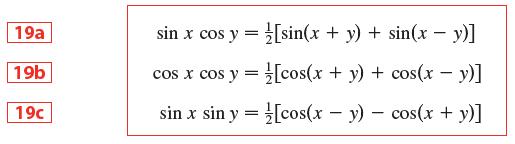
Prove each equation.(a) Equation 19a(b) Equation 19b(c) Equation 19c 19a sin x cos y = [sin(x + y) + sin(x - y)] 19b cos x cos y =[cos(x + y) + cos(x - y)] 19c sin x sin y = [cos(x - y) - cos(x + y)]
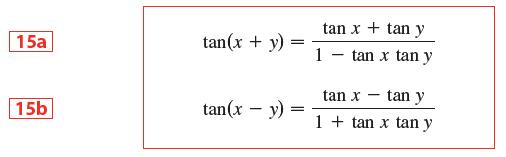
Prove each equation.(a) Equation 15a(b) Equation 15b tan x + tan y 15a tan(x + y) 1 - tan x tan y tan x – tan y 15b tan(x – y) 1 + tan x tany
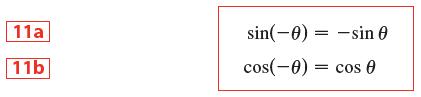
Prove each equation.(a) Equation 11a(b) Equation 11b 11a sin(-0) = -sin 0 11b cos(-0) = cos 0
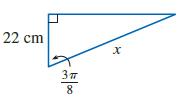
Find, correct to five decimal places, the length of the side labeled x. 22 cm 8.
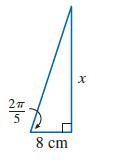
Find, correct to five decimal places, the length of the side labeled x. 8 cm
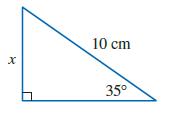
Find, correct to five decimal places, the length of the side labeled x. 10 cm 35°
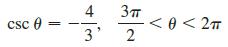
Find the remaining trigonometric ratios. 4 csc e = 3' < 0 < 2m %3| 2.
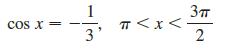
Find the remaining trigonometric ratios. 1 T
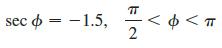
Find the remaining trigonometric ratios. sec o = -1.5, V
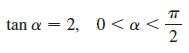
Find the remaining trigonometric ratios. IT tan a = 2, 0 < a
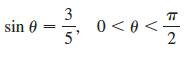
Find the remaining trigonometric ratios. 3 sin 0 = 5' 2 > 0 >0
Find the exact trigonometric ratios for the angle whose radian measure is given.11π/4
Find the exact trigonometric ratios for the angle whose radian measure is given.5π/6
Find the exact trigonometric ratios for the angle whose radian measure is given.–5π
Find the exact trigonometric ratios for the angle whose radian measure is given.9π/2
Find the exact trigonometric ratios for the angle whose radian measure is given.4π/3
Find the exact trigonometric ratios for the angle whose radian measure is given.3π/4
Draw, in standard position, the angle whose measure is given.–3 rad
Draw, in standard position, the angle whose measure is given.2 rad
Draw, in standard position, the angle whose measure is given.7π/3 rad
Draw, in standard position, the angle whose measure is given.–3π/4 rad
Draw, in standard position, the angle whose measure is given.–150°
Draw, in standard position, the angle whose measure is given.315°
Find the radius of a circular sector with angle 3π/4 and arc length 6 cm.
A circle has radius 1.5 m. What angle is subtended at the center of the circle by an arc 1 m long?
If a circle has radius 10 cm, find the length of the arc subtended by a central angle of 72°.
Find the length of a circular arc subtended by an angle of π/12 rad if the radius of the circle is 36 cm.
Convert from radians to degrees.5
Convert from radians to degrees.–3π/8
Convert from radians to degrees.8π/3
Convert from radians to degrees.5π/12
Convert from radians to degrees.–7π/2
Convert from radians to degrees.4π
Convert from degrees to radians.36°
Convert from degrees to radians.900°
Convert from degrees to radians.–315°
Convert from degrees to radians.9°
Convert from degrees to radians.300°
Convert from degrees to radians.210°
Sketch the graph of the set.{(x, y) |x2 + 4y2 ≤ 4}
Sketch the graph of the set.{(x, y) | y ≥ x2 – 1}
Sketch the graph of the set.{(x, y) |x2 + y2 > 4}
Sketch the graph of the set.{(x, y) | x2 + y2 ≤ 1}
Find an equation of the ellipse with center at the origin that passes through the points (1, –10√2 /3) and (–2, 5√5 /3).
Find an equation of the parabola with vertex (1, –1) that passes through the points (–1, 3) and (3, 3).
Sketch the region bounded by the curves.y = 4 – x2, x – 2y = 2
Showing 2000 - 2100
of 4932
First
14
15
16
17
18
19
20
21
22
23
24
25
26
27
28
Last
Step by Step Answers

 Get 50% OFF
Claim Now
Get 50% OFF
Claim Now