New Semester
Started
Get
50% OFF
Study Help!
--h --m --s
Claim Now
Question Answers
Textbooks
Find textbooks, questions and answers
Oops, something went wrong!
Change your search query and then try again
S
Books
FREE
Study Help
Expert Questions
Accounting
General Management
Mathematics
Finance
Organizational Behaviour
Law
Physics
Operating System
Management Leadership
Sociology
Programming
Marketing
Database
Computer Network
Economics
Textbooks Solutions
Accounting
Managerial Accounting
Management Leadership
Cost Accounting
Statistics
Business Law
Corporate Finance
Finance
Economics
Auditing
Tutors
Online Tutors
Find a Tutor
Hire a Tutor
Become a Tutor
AI Tutor
AI Study Planner
NEW
Sell Books
Search
Search
Sign In
Register
study help
mathematics
calculus early transcendentals 9th
Calculus Early Transcendentals 9th Edition James Stewart, Daniel K. Clegg, Saleem Watson, Lothar Redlin - Solutions
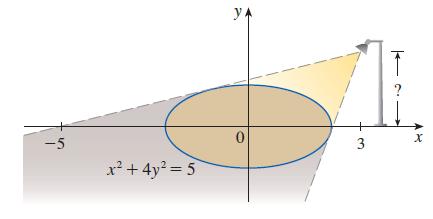
The figure shows a lamp located three units to the right of the y-axis and a shadow created by the elliptical region ϰ2 + 4y2 ≤ 5. If the point (–5, 0) is on the edge of the shadow, how far above the x-axis is the lamp located? y A ? -5 x² + 4y2 = 5 3.
(a) If f(x) = x√5 − x , find f'(x).(b) Find equations of the tangent lines to the curve y = x√5 − x at the points (1, 2) and (4, 4).(c) Illustrate part (b) by graphing the curve and tangent lines on the same screen.(d) Check to see that your answer to part (a) is reasonable by comparing the
Find the derivative of the function. Simplify where possible.y = tan–1(ϰ2)
Find the derivative of the function. Simplify where possible.y = tan–1√ϰ – 1
Use implicit differentiation to find dy/dx for the equationϰ/y = y2 + 1 y ≠ 0and for the equivalent equationϰ = y3 + y y ≠ 0Show that although the expressions you get for dy/dx look different, they agree for all points that satisfy the given equation.
The function f (ϰ) = sin(ϰ + sin 2ϰ), 0 ≤ x ≤ π, arises in applications to frequency modulation (FM) synthesis.(a) Use a graph of f produced by a calculator or computer to make a rough sketch of the graph of f'.(b) Calculate f' (ϰ) and use this expression, with a calculator or computer, to
Find the derivative of the function. Simplify where possible.g(ϰ) = sec–1(eϰ)
(a) Evaluate(b) Evaluate(c) Illustrate parts (a) and (b) by graphing y = ϰ sin(1/ϰ). lim x sin . X SI
Find equations for two lines that are both tangent to the curve y = ϰ3 – 3ϰ2 + 3ϰ – 3 and parallel to the line 3ϰ – y = 15.
Extended Product Rule The Product Rule can be extended to the product of three functions.(a) Use the Product Rule twice to prove that if f, g, and h are differentiable, then (fgh)' = f'gh + fg'h + fgh'.(b) Taking f = g = h in part (a), show that(c) Use part (b) to differentiate y = e3ϰ. d [f(x)]³
(a) If f (ϰ) = ϰ√2 – ϰ2 , find f'(ϰ).(b) Check to see that your answer to part (a) is reasonable by comparing the graphs of f and f'.
Find the derivative of the function. Simplify where possible.f(ϰ) = sin–1(5ϰ)
Find an equation of the line that is both tangent to the curve y = ϰ4 + 1 and parallel to the line 32ϰ – y = 15.
(a) The curve y = |x|/√2 – ϰ2 is called a bullet-nose curve. Find an equation of the tangent line to this curve at the point (1, 1).(b) Illustrate part (a) by graphing the curve and the tangent line on the same screen.
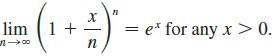
Show that lim (1 + e* for any x > 0. n
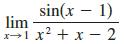
Find the limit. sin(x – 1) lim x-1 x2 + x - 2
Find an equation of the tangent line to the curve at the given point.y = ϰe–ϰ 2, (0, 0)
Find d9/dϰ9 (ϰ8 ln ϰ).
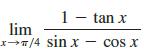
Find the limit. 1- tan x lim xT/4 sin x - cos x
Find the points on the curve y = ϰ3 + 3ϰ2 – 9ϰ + 10 where the tangent is horizontal.
In this exercise we estimate the rate at which the total personal income is rising in Boulder, Colorado. In 2015, the population of this city was 107,350 and the population was increasing by roughly 1960 people per year. The average annual income was $60,220 per capita, and this average was
Find an equation of the tangent line to the curve at the given point.y = sin(sin ϰ), (π, 0)
Find a formula for f(n)(ϰ) if f (ϰ) = ln(ϰ – 1).
Find f(n)(x) if f(x) = 1/(2 − x).
Find the limit. sin(x?) lim
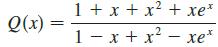
Use the method of Exercise 57 to compute Q'(0), where 1+х + x? + хе* 1 — х + x? — хе* Q(x) .2 xe*
Find an equation of the tangent line to the curve at the given point.y = √1 + ϰ3 , (2, 3)
Find y' if ϰy = yϰ.
Find y" if x6 + y6 = 1.
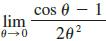
Find the limit. cos e - 1 lim cos 202
Find an equation of the tangent line to the curve at the given point.y = 2ϰ, (0, 1)
If g(θ) = θ sin θ, find g"(π/6).
Find y' and y".y = ee ϰ
Orthogonal Trajectories Two curves are orthogonal if their tangent lines are perpendicular at each point of intersection. Show that the given families of curves are orthogonal trajectories of each other; that is, every curve in one family is orthogonal to every curve in the other family. Sketch
Use logarithmic differentiation to find the derivative of the function.y = (ln ϰ)cos ϰ
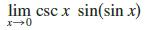
Find the limit. lim csc x sin(sin x)
Find y' and y".y = √cos ϰ
Orthogonal Trajectories Two curves are orthogonal if their tangent lines are perpendicular at each point of intersection. Show that the given families of curves are orthogonal trajectories of each other; that is, every curve in one family is orthogonal to every curve in the other family. Sketch
Use logarithmic differentiation to find the derivative of the function.y = ϰln ϰ
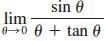
Find the limit. sin e lim 0 0 + tan 0
Calculate y'.y = sin2(cos√sinπx)
Find y' and y".y = (1 + √ϰ)3
Orthogonal Trajectories Two curves are orthogonal if their tangent lines are perpendicular at each point of intersection. Show that the given families of curves are orthogonal trajectories of each other; that is, every curve in one family is orthogonal to every curve in the other family. Sketch
Use logarithmic differentiation to find the derivative of the function.y = (sin ϰ)ln ϰ
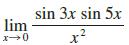
Find the limit. sin 3x sin 5x lim x?
Calculate y'.y = cos(e√tan 3x)
Find the derivative. Simplify where possible. y = x sinh (x/3) – 19 + x2
Find y' and y".y = cos(sin 3θ)
Orthogonal Trajectories Two curves are orthogonal if their tangent lines are perpendicular at each point of intersection. Show that the given families of curves are orthogonal trajectories of each other; that is, every curve in one family is orthogonal to every curve in the other family. Sketch
Use logarithmic differentiation to find the derivative of the function.y = (cos ϰ)ϰ
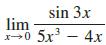
Find the limit. sin 3x lim .3 -0 5x - 4x
Suppose that the volume V of a rolling snowball increases so that dV/dt is proportional to the surface area of the snowball at time t. Show that the radius r increases at a constant rate, that is, dr/dt is constant.
Calculate y'.y = x tanh-1√x
Find the derivative. Simplify where possible. y = x tanhx + In/1 – x2
Find the first and second derivatives of the function. Check to see that your answers are reasonable by comparing the graphs of f , f', and f"f (ϰ) = eϰ – ϰ3
Find the derivative of the function.y = sin3(cos(ϰ2))
Use logarithmic differentiation to find the derivative of the function.y = (√ϰ)ϰ
Find the limit. sir lim 0-0 tan 70
Find the derivative. Simplify where possible. G(u) 3 сosh 'V1 + u?, и > 0
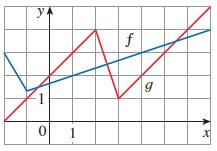
If f and t are the functions whose graphs are shown, let u(ϰ) = f (ϰ)g(ϰ) and v(ϰ) = f (ϰ)/g(ϰ).(a) Find u'(1).(b) Find v'(4). y. g 1 1
Find the derivative of the function.y = cos√sin(tan πϰ)
Use logarithmic differentiation to find the derivative of the function.y = ϰsin ϰ
Find the limit. tan 2x lim
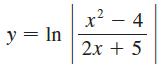
Calculate y'. x? - 4 y = In 2x + 5
Find the derivative. Simplify where possible.y = sech-1(sin θ), 0 < θ < π/2
In physics textbooks, the period T of a pendulum of length L is often given as T ≈ 2π√L/g , provided that the pendulum swings through a relatively small arc. In the course of deriving this formula, the equation aT − gsinθ for the tangential acceleration of the bob of the pendulum is
Find the first and second derivatives of the function.G(r) = √r + 3√r
Find the derivative of the function.y = sin(θ + tan(θ + cos θ))
Use logarithmic differentiation to find the derivative of the function.y = ϰ1/ϰ
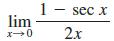
Find the limit. 1- sec x lim 2x
If f(2) = 10 and f'(ϰ) = ϰ2 f(ϰ) for all ϰ, find f"(2).
Find the first and second derivatives of the function.f (x) = 0.001ϰ5 – 0.02ϰ3
Find the derivative of the function.y = (3cos(ϰ2) – 1)4
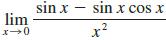
Find the limit. sin x - sin x cos x lim .2
If g(ϰ) = ϰf(ϰ), where f(3) = 4 and f'(3) = –2, find an equation of the tangent line to the graph of t at the point where ϰ = 3.
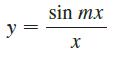
Calculate y'. sin mx y =
Find the derivative. Simplify where possible.g(x) = tanh-1(x3)
Find the derivative of the function. y= 234*
Find the limit. sin? 3x lim 『ー
Calculate y'.y = x sinh(x2)
Find the derivative. Simplify where possible.f(x) = sinh-1(−2x)
Find the derivative of the function.f (ϰ) = esin2(ϰ2)
Find the limit. sin 3t lim 0 sin t
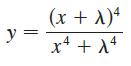
Calculate y'. (х + 1)* y = x* + A4
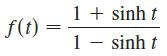
Find the derivative. Simplify where possible. 1 + sinh t f(t) 1- sinh t
Find the derivative of the function.y = √ϰ + √ϰ + ǀ√ϰ
Find the limit. sin x lim x0 sin 7x
Calculate y'.
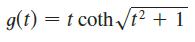
Find the derivative. Simplify where possible. g(t) = t coth /t? + 1
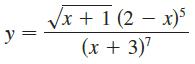
Use logarithmic differentiation to find the derivative of the function.y = (ϰ2 + 2)2(ϰ4 + 4)4
Find the limit. sin 5x lim x 0 3x
Calculate y'.y + ln y = xy2
An object with weight W is dragged along a horizontal plane by a force acting along a rope attached to the object. If the rope makes an angle θ with the plane, then the magnitude of the force isF = µW/µ sin θ + cos θwhere µ is a constant called the coefficient of friction.(a) Find the rate of
Find an equation of the tangent line to the curve at the given point. Illustrate by graphing the curve and the tangent line on the same screen.y = x – √x , (1, 0)
Find the derivative. Simplify where possible.y = sech(tanh x)
If g(ϰ) = ϰ/eϰ, find g(n)(ϰ).
If ϰ2 + ϰy + y3 = 1, find the value of y"' at the point where ϰ = 1.
Find the derivative of the function.f (t) = e1/t√t2 – 1
Let f (ϰ) = logb(3ϰ2 – 2). For what value of b is f' (1) = 3?
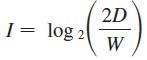
The difficulty of “acquiring a target” (such as using a mouse to click on an icon on a computer screen) depends on the ratio between the distance D to the target and width W of the target. According to Fitts’ law, the index I of difficulty is modeled byThis law is used for designing products
Showing 3600 - 3700
of 4932
First
30
31
32
33
34
35
36
37
38
39
40
41
42
43
44
Last
Step by Step Answers

 Get 50% OFF
Claim Now
Get 50% OFF
Claim Now




![d [f(x)]³ = 3[f(x)]'f'(x) dx](https://dsd5zvtm8ll6.cloudfront.net/si.question.images/images/question_images/1609/4/1/5/6265fedbbca3d02b1609415642143.jpg)