New Semester
Started
Get
50% OFF
Study Help!
--h --m --s
Claim Now
Question Answers
Textbooks
Find textbooks, questions and answers
Oops, something went wrong!
Change your search query and then try again
S
Books
FREE
Study Help
Expert Questions
Accounting
General Management
Mathematics
Finance
Organizational Behaviour
Law
Physics
Operating System
Management Leadership
Sociology
Programming
Marketing
Database
Computer Network
Economics
Textbooks Solutions
Accounting
Managerial Accounting
Management Leadership
Cost Accounting
Statistics
Business Law
Corporate Finance
Finance
Economics
Auditing
Tutors
Online Tutors
Find a Tutor
Hire a Tutor
Become a Tutor
AI Tutor
AI Study Planner
NEW
Sell Books
Search
Search
Sign In
Register
study help
mathematics
calculus early transcendentals 9th
Calculus Early Transcendentals 9th Edition James Stewart, Daniel K. Clegg, Saleem Watson, Lothar Redlin - Solutions
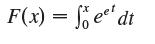
We know thatis a continuous function by FTC1, though it is not an elementary function. The functionsare not elementary either, but they can be expressed in terms of F. Evaluate the following integrals in terms of F.a.b. F(x) = f e di
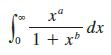
Show that if a > –1 and b > a + 1, then the following integral is convergent. a x' ах Jo 1+ x 4-
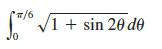
Evaluate the integral. w/6 9/- V1 + sin 20 de
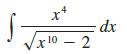
Use the Table of Integrals on the Reference Pages to evaluate the integral.123 x* dx x10 – 2
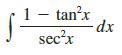
Evaluate the integral. 1- tan'x dx sec'x
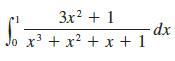
Evaluate the integral. 3x2 + 1 dx Jo x + x? + x + 1
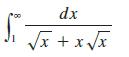
Determine whether the integral is convergent or divergent. Evaluate integrals that are convergent. dx x + x 8
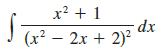
Evaluate the integral. x? + 1 dx (x? – 2x + 2)2
Evaluate the integral.∫2π0 t2 sin 2t dt
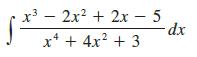
Evaluate the integral. x³ - 2x? + 2x – 5 dx x* + 4x? + 3
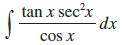
Evaluate the integral. tan x sec?x dx cos x
Evaluate the integral. dx J 1 + e*
Evaluate the integral.∫π/20 cos3x sin 2x dx
Determine whether the integral is convergent or divergent. Evaluate integrals that are convergent. -dx Jo X
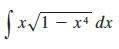
Evaluate the integral. fxT- x* dx
Evaluate the integral.∫π0 x sin x cos x dx
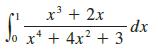
Evaluate the integral. x' + 2x Jo x* + 4x? + 3
Evaluate the integral.∫ sin √at dt
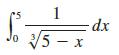
Determine whether the integral is convergent or divergent. Evaluate integrals that are convergent. 1 5 - x
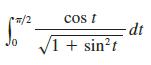
Evaluate the integral. =/2 cos t dt Jo V1 + sin?t
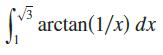
Evaluate the integral. arctan(1/x) dx 3,
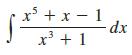
Evaluate the integral. x* + x - 1 dx x' + 1
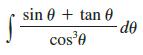
Evaluate the integral. sin e + tan 0 - de cos'e
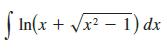
Evaluate the integral. | In(x + Vx? – 1) dx
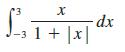
Evaluate the integral. dx s1 + |x|
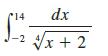
Determine whether the integral is convergent or divergent. Evaluate integrals that are convergent. (14 dx J-2 x + 2
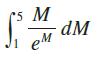
Evaluate the integral. rs M dM a. Ji
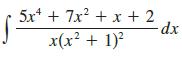
Evaluate the integral. 5x* + 7x? + x + 2 dx x(x? + 1)?
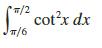
Evaluate the integral. w/2 cotx T/6
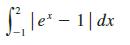
Evaluate the integral. Lle - 1|dx
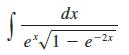
Evaluate the integral. dx e*V1 - e-2*
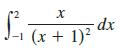
Determine whether the integral is convergent or divergent. Evaluate integrals that are convergent. J-1 (x + 1)?
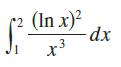
Evaluate the integral. (In x)? dx x3
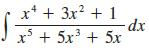
Evaluate the integral. x* + 3x? + 1 dx x' + 5x + 5x .3
Evaluate the integral. w/2 cot'x dx /4 3. X.
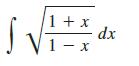
Evaluate the integral. 1 +x dx 1- x
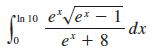
Evaluate the integral. *In 10 e*. e"Ve* - 1 Jo e* + 8
Determine whether the integral is convergent or divergent. Evaluate integrals that are convergent. xp -2 X
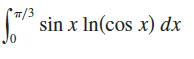
Evaluate the integral. 7/3 sin x In(cos x) dx Jo
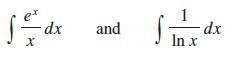
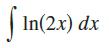
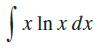
Three integrals are given that, although they look similar, may require different techniques of integration. Evaluate the integrals.a.b.c. In x dx.
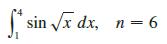
Use(a) The Trapezoidal Rule(b) The Midpoint Rule(c) Simpson’s Rule to approximate the given integral with the specified value of n. sin Vx dx, n = 6
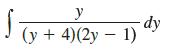
Evaluate the integral. y dy (у + 4)(2у — 1)
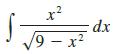
Evaluate the integral. ax 9-x2
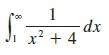
Determine whether the integral is convergent or divergent. Evaluate integrals that are convergent. 1 dx J. x? + 4 an
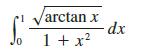
Evaluate the integral. arctan x 1+ x?
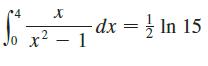
Determine whether the statement is true or false. If it is true, explain why. If it is false, explain why or give an example that disproves the statement. dx =, In 15 x² – 1
Evaluate the integral.∫ (x + 2)2(x + 1)20 dx
Determine whether the statement is true or false. If it is true, explain why. If it is false, explain why or give an example that disproves the statement.If ∫∞a f(x) dx and ∫∞a g(x) dx are both divergent, then ∫∞a [f(x) + g(x)] dx is divergent.
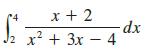
Evaluate the integral. x + 2 +3x 4 **
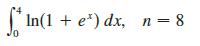
Use(a) The Trapezoidal Rule(b) The Midpoint Rule(c) Simpson’s Rule to approximate the given integral with the specified value of n. In(1 + e*) dx, n= 8
Evaluate the integral.∫ cot x cos2x dx
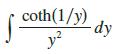
Use the Table of Integrals on the Reference Pages to evaluate the integral. coth(1/y) dy y?
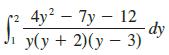
Evaluate the integral. 4y? — Ту — 12 7y dy Л у(у + 2)(у — 3)
Evaluate the integral.∫ t csc2t dt
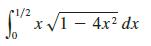
Evaluate the integral. 1/2 xV1 - 4x2 dx Jo
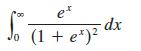
Determine whether the integral is convergent or divergent. Evaluate integrals that are convergent. et (1 + e*)?
Evaluate the integral.∫ x2 tan–1x dx
Determine whether the statement is true or false. If it is true, explain why. If it is false, explain why or give an example that disproves the statement.If∫∞a f(x) dx and ∫∞a g(x) dx are both convergent, then ∫∞a [f(x) + g(x)] dx is convergent.
Evaluate the integral.∫ t sin t cos t dt
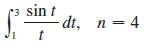
Use(a) The Trapezoidal Rule(b) The Midpoint Rule(c) Simpson’s Rule to approximate the given integral with the specified value of n. sin t -dt, n-4 n = 4
Evaluate∫ √tan x dx.
Evaluate the integral.∫ csc5θ cos3θ dθ
Use the Table of Integrals on the Reference Pages to evaluate the integral.∫π0 x3 sin x dx
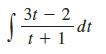
Evaluate the integral. 3t – 2 dt t +1
Evaluate the integral.∫ tan–1(2y) dy
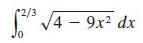
Evaluate the integral. (2/3 * V4 - 9x2 dx Jo
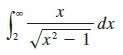
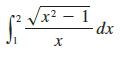
Determine whether the integral is convergent or divergent. Evaluate integrals that are convergent. J2 x²-1
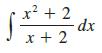
Evaluate the integral. x? + 2 dx х + 2
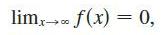
Determine whether the statement is true or false. If it is true, explain why. If it is false, explain why or give an example that disproves the statement.If f is a continuous, decreasing function on [1, ∞) andthen ∫∞1 f(x) dx is convergent. limr f(x) = 0,
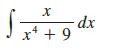
Evaluate the integral. x* + 9 хр.
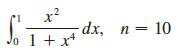
Use(a) The Trapezoidal Rule(b) The Midpoint Rule(c) Simpson’s Rule to approximate the given integral with the specified value of n. dx, n= п 3 10 Jo 1 + x*
Evaluate the integral.∫ sin x sec5x dx
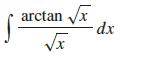
Use the Table of Integrals on the Reference Pages to evaluate the integral. arctan /x dx
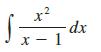
Evaluate the integral. x? dx х — 1
Evaluate the integral.∫ t4 ln t dt
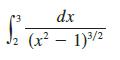
Evaluate the integral. dx (x – 1)/2 1)3/2
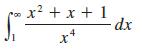
Determine whether the integral is convergent or divergent. Evaluate integrals that are convergent. x? + x + 1 -dx
Evaluate the integral. dx
Determine whether the statement is true or false. If it is true, explain why. If it is false, explain why or give an example that disproves the statement.If f is continuous on [0, ∞) and ∫∞1 f(x) dx is convergent, then ∫∞0 f(x) dx is convergent.
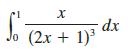
Evaluate the integral. (2x + 1)
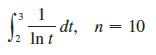
Use(a) The Trapezoidal Rule(b) The Midpoint Rule(c) Simpson’s Rule to approximate the given integral with the specified value of n. 1 dt, n = 10 2 In t
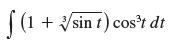
Evaluate the integral. S(1 + sin t) cost dt
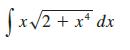
Use the Table of Integrals on the Reference Pages to evaluate the integral. Sxv2 + x* dx
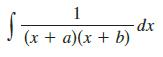
Evaluate the integral. 1 dx (x + a)(x + b)
Evaluate the integral.∫ ln √x dx
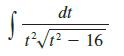
Evaluate the integral. dt tV1? - 16
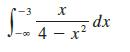
Determine whether the integral is convergent or divergent. Evaluate integrals that are convergent. r-3 4 - x? dx
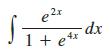
Evaluate the integral. e2x 1+ e** ,4x
Determine whether the statement is true or false. If it is true, explain why. If it is false, explain why or give an example that disproves the statement.(a) Every elementary function has an elementary derivative.(b) Every elementary function has an elementary antiderivative.
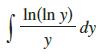
Evaluate the integral. In(In y) dy y
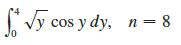
Use(a) The Trapezoidal Rule(b) The Midpoint Rule(c) Simpson’s Rule to approximate the given integral with the specified value of n. Vy cos y dy, n= 8 n = 8
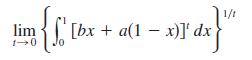
If 0 < a < b, find 1/t { [bx + a(1 - x)1 dx lim
Evaluate the integral.∫ √cos θ sin3θ dθ
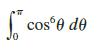
Use the Table of Integrals on the Reference Pages to evaluate the integral. cos°e de
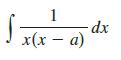
Evaluate the integral. 1 x(x – a)
Evaluate the integral.∫ cos–1x dx
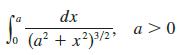
Evaluate the integral. dx Jo (a? + x*)/2* a >0
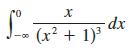
Determine whether the integral is convergent or divergent. Evaluate integrals that are convergent. ro -dx J- (x² + 1)
Evaluate the integral. x² - 1
Determine whether the statement is true or false. If it is true, explain why. If it is false, explain why or give an example that disproves the statement.The Midpoint Rule is always more accurate than the Trapezoidal Rule.
Showing 3200 - 3300
of 4932
First
26
27
28
29
30
31
32
33
34
35
36
37
38
39
40
Last
Step by Step Answers

 Get 50% OFF
Claim Now
Get 50% OFF
Claim Now