New Semester
Started
Get
50% OFF
Study Help!
--h --m --s
Claim Now
Question Answers
Textbooks
Find textbooks, questions and answers
Oops, something went wrong!
Change your search query and then try again
S
Books
FREE
Study Help
Expert Questions
Accounting
General Management
Mathematics
Finance
Organizational Behaviour
Law
Physics
Operating System
Management Leadership
Sociology
Programming
Marketing
Database
Computer Network
Economics
Textbooks Solutions
Accounting
Managerial Accounting
Management Leadership
Cost Accounting
Statistics
Business Law
Corporate Finance
Finance
Economics
Auditing
Tutors
Online Tutors
Find a Tutor
Hire a Tutor
Become a Tutor
AI Tutor
AI Study Planner
NEW
Sell Books
Search
Search
Sign In
Register
study help
mathematics
calculus early transcendentals 9th
Calculus Early Transcendentals 9th Edition James Stewart, Daniel K. Clegg, Saleem Watson, Lothar Redlin - Solutions
Calculate y'.y = tan2(sin θ)
Find the derivative. Simplify where possible.y = sech x tanh x
If f (ϰ) = ϰ2/(1 + ϰ), find f"(1).
If ϰy + ey = e, find the value of y" at the point where ϰ = 0.
Find the derivative of the function.g(ϰ) = sin (eϰ/1 + eϰ)
Let f (ϰ) = cϰ + ln(cos ϰ). For what value of c is f' (π/4) = 6 ?
Hermann Ebbinghaus (1850 =1909) pioneered the study of memory. A 2011 article in the Journal of Mathematical Psychology presents the mathematical model R(t) = a + b(1 + ct)–β for the Ebbinghaus forgetting curve, where R(t) is the fraction of memory retained t days after learning a task; a,
Calculate y'.y = ln(arcsin x2)
Find equations of the tangent line and normal line to the curve at the given point.y = ϰ3/2, (1, 1)
Find the derivative. Simplify where possible.H(v) = etanh 2v
(a) If f (x) = (ϰ2 – 1)/(ϰ2 + 1), find f'(ϰ) and f"(ϰ).(b) Check to see that your answers to part (a) are reasonable by comparing the graphs of f, f', and f".
Find the derivative of the function.y = esin 2ϰ + sin(e2ϰ)
Two straight roads diverge from an intersection at an angle of 60°. Two cars leave the intersection at the same time, the first traveling down one road at 40 mi/h and the second traveling down the other road at 60 mi/h. How fast is the distance between the cars changing after half an hour? [Hint:
Calculate y'.y = x tan-1x − 1/2 ln(1 + x2)
(a) If f (ϰ) = (ϰ3 – ϰ)eϰ, find f'(ϰ).(b) Check to see that your answer to part (a) is reasonable by comparing the graphs of f and f'.
Find the derivative of the function.y = sin2(ϰ2 + 1)
If f (ϰ) = sin ϰ + ln ϰ, find f' (ϰ). Check that your answer is reasonable by comparing the graphs of f and f'.
Calculate y'.y = sin-1(cos θ ), 0 < θ < π
Find an equation of the tangent line to the curve at the given point.y = 4√ϰ – ϰ, (1, 0)
(a) The curve y = ϰ/(1 + ϰ2) is called a serpentine. Find an equation of the tangent line to this curve at the point (3, 0.3).(b) Illustrate part (a) by graphing the curve and the tangent line on the same screen.
Find the derivative of the function.G(z) = (1 + cos2z)3
Find the derivative of the function.t(ϰ) = e–ϰ cos(ϰ2)
Differentiate the function.G(t) = √5t + √7/t
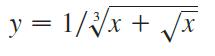
Calculate y'. y = 1/x + JA
Find the differential of the function.y = 1 + 2u/1 + 3u
Differentiate the function.g(t) = 5t + 4t2
Find y" by implicit differentiation. Simplify where possible.ϰ2 + ϰy + y2 = 3
Find an equation of the tangent line to the curve at the given point.y = ϰ2 ln ϰ, (1, 0)
Calculate y'.y = 5 arctan (1/x)
Find the derivative. Simplify where possible.G(t) = sinh(ln t)
Find an equation of the tangent line to the curve at the given point.y = ϰ + 2/ϰ, (2, 3)
(a) The curve y = 1/(1 + ϰ2) is called a witch of Maria Agnesi. Find an equation of the tangent line to this curve at the point (-1, 1/2).(b) Illustrate part (a) by graphing the curve and the tangent line on the same screen.
Find the derivative of the function.F(t) = tan √1 + t2
A faucet is filling a hemispherical basin of diameter 60 cm with water at a rate of 2 L/min. Find the rate at which the water is rising in the basin when it is half full. Use the following facts: 1 L is 1000 cm3. The volume of the portion of a sphere with radius r from the bottom to a height h is V
Calculate y'.y = x sec-1x
Find equations of the tangent line and normal line to the given curve at the specified point.y = ϰ + ϰeϰ, (0, 0)
Suppose f (π/3) = 4 and f' (π/3) = –2, and let g(ϰ) = f (ϰ) sin ϰ and h(x) = (cos ϰ)/f (ϰ). Find(a) g'(π/3)(b) h'(π/3)
Find the derivative. Simplify where possible.t(x) = sinh2x
Find an equation of the tangent line to the curve at the given point.y = 2eϰ + ϰ, (0, 2)
Find equations of the tangent line and normal line to the given curve at the specified point.y = 3ϰ/1 + 5ϰ2 , (1,/12)
Find the derivative. Simplify where possible.h(x) = sinh(x2)
Find an equation of the tangent line to the curve at the given point.y = 2ϰ3 – x2 + 2, (1, 3)
Explain, in terms of linear approximations or differentials, why the approximation is reasonable.ln 1.04 ≈ 0.04
Find the derivative of the function.f (ϰ) = sin ϰ cos(1 – ϰ2)
If f (ϰ) = ln(ϰ + ln ϰ), find f' (1).
Find an equation of the tangent line to the given curve at the specified point.y = 1 + ϰ/1 + eϰ , (0, 1/2)
Find the derivative. Simplify where possible.f(x) = ex cosh x
Find dy/dx and dy/dt.y = t/x2 + x/t
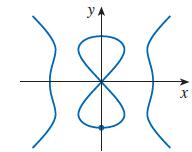
Use implicit differentiation to find an equation of the tangent line to the curve at the given point.y2(y2 – 4) = ϰ2(ϰ2 – 5), (0, –2) (devil’s curve) yA
Calculate y'.y = cot(3x2 + 5)
If g(θ) = sin θ/θ, find g'(θ) and g"(θ).
Find an equation of the tangent line to the given curve at the specified point.y = ϰ2/1 + ϰ, (1, 1/2)
Find the derivative. Simplify where possible.f(x) = cosh 3x
Find dy/dϰ and dy/dt.y = tϰ2 + t3ϰ
Use a linear approximation (or differentials) to estimate the given number.e0.1
Find the derivative of the function.G(ϰ) = 4C/ϰ
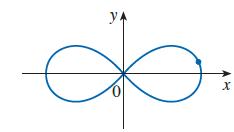
Use implicit differentiation to find an equation of the tangent line to the curve at the given point.2(ϰ2 + y2)2 = 25(ϰ2 – y2), (3, 1) (lemniscate) yA
Calculate y'.y = 10tanπθ
(a) If f (ϰ) = eϰ cos ϰ, find f' (ϰ) and f" (ϰ).(b) Check to see that your answers to part (a) are reasonable by graphing f, f', and f".
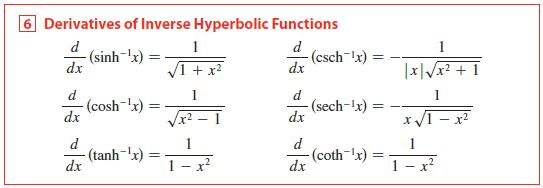
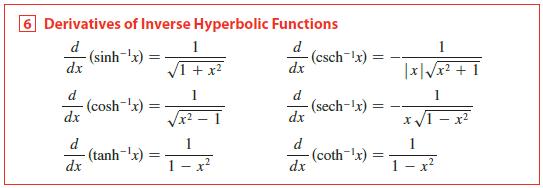
Prove the formula given in Table 6 for the derivative of each of the following functions.(a) sech-1(b) csch-1 6 Derivatives of Inverse Hyperbolic Functions d (sinh-x) dx 1 d (csch-lx) 3D dx 1 !! + x2 |x|Vx² + 1 d (cosh-x) dx d (sech-x) = dx x/1 - x2 d d (coth-x): dx 1 (tanh-x) dx %3D
Find f'(ϰ) and f"(ϰ).f (x) = ϰ/1 + √ϰ
Differentiate the function.y = eϰ+1 + 1
Find the derivative of the function.F(t) = t2 /√t3 + 1
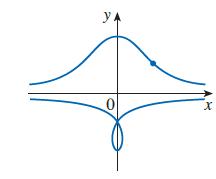
Use implicit differentiation to find an equation of the tangent line to the curve at the given point.ϰ2y2 = ( y + 1)2(4 – y2), (2 √3, 1) (conchoid of Nicomedes) yA X.
A car is traveling north on a straight road at 20 m/s and a drone is flying east at 6 m/s at an elevation of 25 m. At one instant the drone passes directly over the car. How fast is the distance between the drone and the car changing 5 seconds later?
Suppose that the cost (in dollars) for a company to produce ϰ pairs of a new line of jeans isC(ϰ) = 2000 + 3ϰ + 0.01ϰ2 + 0.0002ϰ3(a) Find the marginal cost function.(b) Find C'(100) and explain its meaning. What does it predict?(c) Compare C'(100) with the cost of manufacturing the 101st pair
(a) If f (ϰ) = sec ϰ – ϰ, find f' (ϰ).(b) Check to see that your answer to part (a) is reasonable by graphing both f and f' for |ϰ| < π/2.
Prove the formula given in Table 6 for the derivative of each of the following functions.(a) cosh-1(b) tanh-1(c) coth-1 6 Derivatives of Inverse Hyperbolic Functions d (sinh-x) dx 1 d (csch-lx) 3D dx 1 !! + x2 |x|Vx² + 1 d (cosh-x) dx d (sech-x) = dx x/1 - x2 d d (coth-x): dx 1 (tanh-x) dx %3D
Find f'(ϰ) and f"(x).f (ϰ) = ϰ/ϰ2 – 1
Differentiate the function.P(w) = 2w2 – w + 4/√w
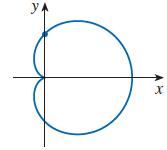
Use implicit differentiation to find an equation of the tangent line to the curve at the given point.ϰ2 + y2 = (2ϰ2 + 2y2 – ϰ)2, (0, 1/2) (cardioid) yA
(a) Find an equation of the tangent line to the curve y = 3ϰ + 6 cos ϰ at the point (π/3, π + 3).(b) Illustrate part (a) by graphing the curve and the tangent line on the same screen.
For each of the following functions (i) give a definition like those in (2), (ii) sketch the graph, and (iii) find a formula similar to Equation 3.(a) csch-1(b) sech-1(c) coth-1
Find f'(ϰ) and f"(ϰ).f (ϰ) = √ϰ eϰ
Differentiate the function.f (v) = 3√v – 2vev/v
Use a linear approximation (or differentials) to estimate the given number.1/4.002
Find the derivative of the function.J(θ) = tan2(nθ)
The sides of an equilateral triangle are increasing at a rate of 10 cm/min. At what rate is the area of the triangle increasing when the sides are 30 cm long?
Calculate y'.y = x tan-1(4x)
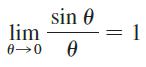
Prove Equation 5 using(a) The method of Example 3(b) Exercise 22 with x replaced by y. sin 0 lim 1 0→0
Find f'(ϰ) and f"(ϰ).f (ϰ) = ϰ2eϰ
Differentiate the function.D(t) = 1 + 16t2 /(4t)3
Use a linear approximation (or differentials) to estimate the given number.(1.999)4
Find the derivative of the function.H(r) = (r2 – 1)3 /(2r + 1)5
Differentiate.f (ϰ) = aϰ + b/cϰ + d
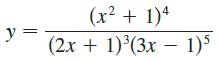
Calculate y'. (x² + 1)* y = (2х + 1) (Зх — 1)5
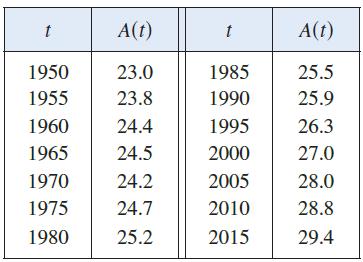
The table shows how the average age of first marriage of Japanese women has varied since 1950.(a) Use a graphing calculator or computer to model these data with a fourth-degree polynomial.(b) Use part (a) to find a model for A'(t).(c) Estimate the rate of change of marriage age for women in
Compare the values of △y and dy if ϰ changes from 1 to 1.05. What if ϰ changes from 1 to 1.01? Does the approximation △y ≈ dy become better as △ϰ gets smaller?f (ϰ) = 1/ϰ2 + 1
Use implicit differentiation to find an equation of the tangent line to the curve at the given point.y2(6 – ϰ) = ϰ3, (2, √2) (cissoid of Diocles)
Given an ellipse x2/a2 + y2/b2 = 1, where a ≠ b, find the equation of the set of all points from which there are two tangents to the curve whose slopes are(a) Reciprocals and(b) Negative reciprocals.
Find an equation of the tangent line to the curve at the given point.y = 1 + sin ϰ/cos ϰ, (π, –1)
Differentiate the function.G(q) = (1 + q–1)2
Differentiate.f (ϰ) = ϰ/ϰ + c/ϰ
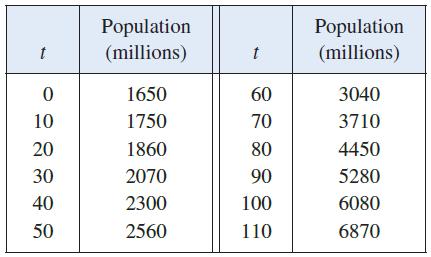
The table gives the world population P(t), in millions, where t is measured in years and t = 0 corresponds to the year 1900.(a) Estimate the rate of population growth in 1920 and in 1980 by averaging the slopes of two secant lines.(b) Use a graphing calculator or computer to find a cubic function
Compare the values of △y and dy if ϰ changes from 1 to 1.05. What if ϰ changes from 1 to 1.01? Does the approximation △y ≈ dy become better as △ϰ gets smaller?f (ϰ) = √5 – ϰ
Find an equation of the tangent line to the curve at the given point.y = eϰ cos ϰ + sin ϰ, (0, 1)
Differentiate the function.F(z) = A 1+ Bz + Cz2/z2
Find the derivative of the function.r(t) = 102√t
Use implicit differentiation to find an equation of the tangent line to the curve at the given point.ϰ2/3 + y2/3 = 4, (–3 √3, 1) (astroid)
Show thatd/dϰ ln √1 – cos ϰ/1 + cos ϰ = csc ϰ.
Showing 3700 - 3800
of 4932
First
31
32
33
34
35
36
37
38
39
40
41
42
43
44
45
Last
Step by Step Answers

 Get 50% OFF
Claim Now
Get 50% OFF
Claim Now