New Semester
Started
Get
50% OFF
Study Help!
--h --m --s
Claim Now
Question Answers
Textbooks
Find textbooks, questions and answers
Oops, something went wrong!
Change your search query and then try again
S
Books
FREE
Study Help
Expert Questions
Accounting
General Management
Mathematics
Finance
Organizational Behaviour
Law
Physics
Operating System
Management Leadership
Sociology
Programming
Marketing
Database
Computer Network
Economics
Textbooks Solutions
Accounting
Managerial Accounting
Management Leadership
Cost Accounting
Statistics
Business Law
Corporate Finance
Finance
Economics
Auditing
Tutors
Online Tutors
Find a Tutor
Hire a Tutor
Become a Tutor
AI Tutor
AI Study Planner
NEW
Sell Books
Search
Search
Sign In
Register
study help
mathematics
precalculus
Precalculus Concepts Through Functions A Unit Circle Approach To Trigonometry 5th Edition Michael Sullivan - Solutions
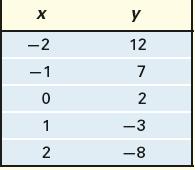
Determine whether the given function is linear or nonlinear. If it is linear, determine the equation that defines y = f (x). X -2 -1 0 1 2 y 12 7 2 -3 -8
True or False Rational numbers and irrational numbers are in the set of real numbers.
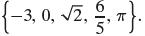
Answers are given at the end of these exercises.Name the integers and the rational numbers in the set (-3, 0, √2,, π) π}.
Answers are given at the end of these exercises.Graph the inequality x ≥ −2.
In Problems 1 – 3 :(a) Determine the slope and y-intercept of each linear function.(b) Graph each function. Label the intercepts.(c) Determine the domain and the range of each function.(d) Determine the average rate of change of each function.(e) Determine whether the function is increasing,
For the linear function f (x) = −4x + 3:(a) Find the slope and y-intercept.(b) Determine whether f is increasing, decreasing, or constant.(c) Graph f.
Answers are given at the end of these exercises.Solve the inequality − 3x − 2 < 7.
Answers are given at the end of these exercises.Use transformations to graph the function f (x) = |x − 3|.
Answers are given at the end of these exercises.If 2 − 3i is a zero of a quadratic function with real coefficients, then______ is also a zero.
Answers are given at the end of these exercises.The solution set of the equation x = 5 is {______ }.
Answers are given at the end of these exercises.The solution set of the inequality x < 5 is {x|______}.
Answers are given at the end of these exercises.What are the intercepts of y = 5x + 10?
Answers are given at the end of these exercises.The intercepts of the graph of 9x2 + 4y = 36 are_____ .
In Problems 3 and 4, find the zeros of each quadratic function.G(x) = −2x2 + 4x + 1
Answers are given at the end of these exercises.The conjugate of 2 + 5i is _____.
Answers are given at the end of these exercises.Solve 3x − 2 > 7.
Answers are given at the end of these exercises.Solve − 1 < 2x + 5 < 13.
In Problems 1 – 3 :(a) Determine the slope and y-intercept of each linear function.(b) Graph each function. Label the intercepts.(c) Determine the domain and the range of each function.(d) Determine the average rate of change of each function.(e) Determine whether the function is increasing,
In Problems 3 and 4, find the zeros of each quadratic function.f (x) = 3x2 − 2x − 8
Answers are given at the end of these exercises.Solve 4x − 3 = 9.
In Problems 1 – 3 :(a) Determine the slope and y-intercept of each linear function.(b) Graph each function. Label the intercepts.(c) Determine the domain and the range of each function.(d) Determine the average rate of change of each function.(e) Determine whether the function is increasing,
Answers are given at the end of these exercises.( 2 + i )(3 − 4i ) = ______ .
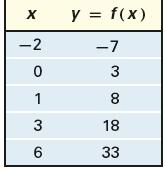
In Problems 5 and 6, determine whether the function is linear or nonlinear. If the function is linear, determine the equation that defines y = f (x). x y = f(x) -2 0 1 3 6 -7 3 8 18 33
Find the real zeros of f (x) = (x − 1)2 + 5(x − 1) + 4.
Find the zero and y-intercept of f (x) = 2x + 14. Use the zero and y-intercept to graph f.
The price p (in dollars) and the quantity x sold of a certain product satisfy the demand equation x = −5p + 100.(a) Find a model that expresses the revenue R as a function of p.(b) What is the domain of R? Assume R is nonnegative.(c) What price p maximizes the revenue?(d) What is the maximum
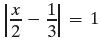
In Problems 17–44, find the real solutions, if any, of each equation. x 2 一 1
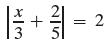
In Problems 17–44, find the real solutions, if any, of each equation. x 3 2
In Problems 23 – 30 , use the given functions f and g .f (x) = −x2 − x + 1g(x) = −x2 + x + 6 (a) Solve f(x) = 0. (e) Solve g(x) ≤ 0. (b) Solve g(x) = 0. (f) Solve f(x) > g(x). (c) Solve f(x) = g(x). (g) Solve f(x) > 1. (d) Solve f(x) > 0.
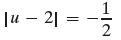
In Problems 17–44, find the real solutions, if any, of each equation. |u2| = 1 2
In Problems 25 – 30 , without solving, determine the character of the solutions of each equation in the complex number system.9x2 − 12x + 4 = 0
Problems 28 – 37. The purpose of these problems is to keep the material fresh in your mind so that you are better prepared for later sections, a final exam, or subsequent courses such as calculus.Solve: 5x2 + 8x − 3 = 0
Problems 28 – 37. The purpose of these problems is to keep the material fresh in your mind so that you are better prepared for later sections, a final exam, or subsequent courses such as calculus.Find the x- intercept and y- intercept of the graph of 5 x + 7y = 140.
Problems 31 – 34, find all complex zeros of each function.f (t) = t4 − 16
Answers are given at the end of these exercises.√−81 =
The price p (in dollars) and the quantity x sold of a certain product satisfy the demand equation x = −20p + 500.(a) Find a model that expresses the revenue R as a function of p.(b) What is the domain of R ? Assume R is nonnegative.(c) What price p maximizes the revenue?(d) What is the maximum
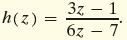
Find the domain of h(z) = = 3z - 1 L - 29
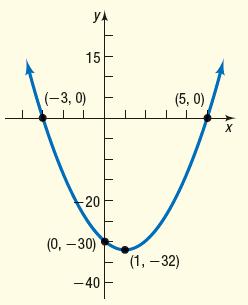
Determine the quadratic function for the given graph. YA 15 (-3,0) -20 (0, -30) -40 (5,0) (1, -32) X
In Problems 8 and 9:(a) Determine whether the graph is concave up or concave down.(b) Determine the vertex of the graph of the quadratic function.(c) Determine the axis of symmetry of the graph of the quadratic function.(d) Determine the intercepts of the graph of the quadratic function.(e) Use the
In Problems 9 – 24, find the complex zeros of each quadratic function. Graph each function and label the intercepts.f (x) = x2 + 4
True or False The equation x = −2 has no solution.
In Problems 7–12, find the zeros of each quadratic function. What are the x-intercepts of the graph of the function?g(x) = (x − 3)2 − 4
In Problems 7 – 22, solve each inequality.x2 + 8x > 0
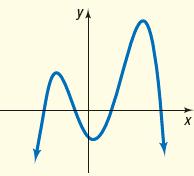
Determine whether the following graph is the graph of a function. YA M. X
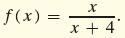
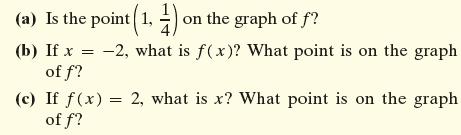
Consider the function f(x)= = X x + 4
True or False The inequality |x| ≥ −2 has the set of real numbers as its solution set.
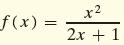
Is the function even, odd, or neither? f(x) = x2 2x + 1
In Problems 9 – 24, find the complex zeros of each quadratic function. Graph each function and label the intercepts.f (x) = x2 − 9
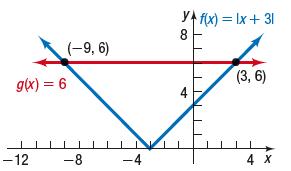
In Problems 13–16, use the graphs of the functions given to solve each problem.f (x) = |x + 3|; g(x) = 6(a) f (x) = g(x)(b) f (x) ≤ g(x)(c) f (x) > g(x) (-9, 6) g(x) = 6 -12 -8 -4 Yf(x) = lx + 31 8 (3,6) 4 X
In Problems 9 – 24, find the complex zeros of each quadratic function. Graph each function and label the intercepts.f (x) = x2 − 16
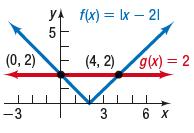
In Problems 13–16, use the graphs of the functions given to solve each problem.f (x) = |x − 2|; g(x) = 2(a) f (x) = g(x)(b) f (x) ≤ g(x)(c) f (x) > g(x) (0, 2) -3 YA 5 f(x) = lx - 21 (4,2) g(x) = 2 1 3 6 X
In Problems 7–12, find the zeros of each quadratic function. What are the x-intercepts of the graph of the function?G(x) = 2x2 − 4x − 1
Which of the following pairs of inequalities is equivalent to x > 4?(a) x > −4 and x < 4(b) x < −4 and x < 4(c) x > −4 or x > 4(d) x < −4 or x > 4
In Problems 7 – 22, solve each inequality.x2 − 1 < 0
In Problems 9 – 24, find the complex zeros of each quadratic function. Graph each function and label the intercepts.f (x) = x2 + 25
In Problems 7 – 22, solve each inequality.x2 + x > 12
Which of the following has no solution?(a) x < −5(b) x ≤ 0(c) x > 0(d) x ≤ 0
Find the complex zeros of f (x) = 2x2 + 4x + 5.
In Problems 7–12, find the zeros of each quadratic function. What are the x-intercepts of the graph of the function?f (x) = −2x2 + x + 1
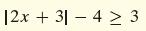
In Problems 15 and 16, solve each absolute value inequality. Express your answer using set-builder notation or interval notation. Graph the solution set. 12x + 314 ≥ 3
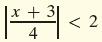
In Problems 15 and 16, solve each absolute value inequality. Express your answer using set-builder notation or interval notation. Graph the solution set. |x + 31 의 4
In Problems 9 – 24, find the complex zeros of each quadratic function. Graph each function and label the intercepts.f (x) = x2 − 6x + 13
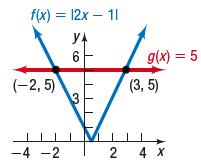
In Problems 13–16, use the graphs of the functions given to solve each problem.f (x) =|2x − 1|; g(x) = 5(a) f (x) = g(x)(b) f (x) ≥ g(x)(c) f (x) < g(x) f(x) = 12x - 11 YA 6 (-2,5) -4-2 3 1 g(x) = 5 (3,5) 2 4 X
In Problems 13 and 14, solve f (x) = g(x). Graph each function and label the intersection points.f (x) = (x − 3)2 ; g(x) = 16
In Problems 9 – 24, find the complex zeros of each quadratic function. Graph each function and label the intercepts.f (x) = x2 + 4x + 8
Solve: |3x + 1| = 8
In Problems 7 – 22, solve each inequality.x2 + 7x < −12
In Problems 13 and 14, solve f (x) = g(x). Graph each function and label the intersection points.f (x) = x2 + 4x − 5; g(x) = 4x − 1
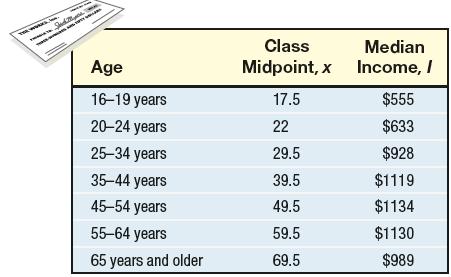
An individual’s income varies with age. The following table shows the median weekly income I of different age groups within the United States for 2021. For each age group, let the class midpoint represent the independent variable, x. For the class “65 years and older,” we will assume that
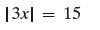
In Problems 17–44, find the real solutions, if any, of each equation. |3x| = 15
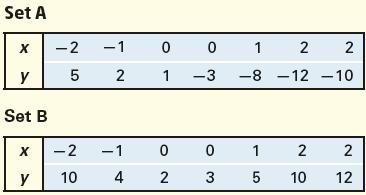
Consider these two data sets:One data set follows a linear pattern, and one data set follows a quadratic relation.(a) Draw a scatter plot of each data set. Determine which is linear and which is quadratic. For the linear data, indicate whether the relation shows a positive or a negative slope. For
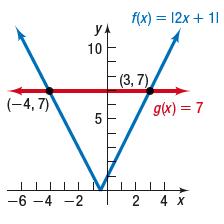
In Problems 13–16, use the graphs of the functions given to solve each problem.f (x) =|2x + 1|; g(x) = 7(a) f (x) = g(x)(b) f (x) ≥ g(x)(c) f (x) < g(x) (-4,7) -6-4-2 ya 10 5 f(x) = 12x + 11 (3,7) g(x) = 7 24 х
In Problems 17–44, find the real solutions, if any, of each equation. |3x| = 12
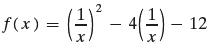
In Problems 15–18, find the real zeros of each function. What are the x-intercepts of the graph of the function? f(x) 21 − ( 7 )+ − (7) = ( x ) £ ₂
In Problems 7 – 22, solve each inequality.2x2 < 5x + 3
In Problems 9 – 24, find the complex zeros of each quadratic function. Graph each function and label the intercepts.f (x) = x2 − 6x + 10
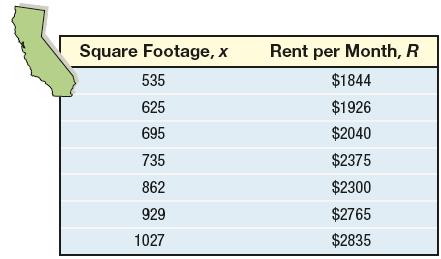
The following data represent the square footage and rents (dollars per month) for apartments in the La Jolla area of San Diego, California.(a) Using a graphing utility, draw a scatter plot of the data treating square footage as the independent variable. What type of relation appears to exist
In Problems 7 – 22 , solve each inequality.6x2 < 6 + 5x
In Problems 9 – 24, find the complex zeros of each quadratic function. Graph each function and label the intercepts.f (x) = x2 − 2x + 5
In Problems 15–18, find the real zeros of each function. What are the x-intercepts of the graph of the function?F(x) = (x − 3)2 − 2( x − 3) − 48
In Problems 7 – 22, solve each inequality.x2 − x + 1 ≤ 0
In Problems 7 – 22, solve each inequality.x2 + 2x + 4 > 0
In Problems 9 – 24, find the complex zeros of each quadratic function. Graph each function and label the intercepts.f (x) = x2 + 6x + 1
In Problems 9 – 24, find the complex zeros of each quadratic function. Graph each function and label the intercepts.f (x) = x2 − 4x + 1
In Problems 15–18, find the real zeros of each function. What are the x-intercepts of the graph of the function?h(x) = 3x − 13 √x − 10
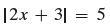
In Problems 17–44, find the real solutions, if any, of each equation. 12x + 3 = 5
In Problems 7 – 22, solve each inequality.4x2 + 9 < 6x
In Problems 9 – 24, find the complex zeros of each quadratic function. Graph each function and label the intercepts.f (x) = 2x2 + 2x + 1
In Problems 19–21, graph each function using transformations (shifting, compressing, stretching, and reflection).f (x) = (x − 2)2 + 2
In Problems 17–44, find the real solutions, if any, of each equation. |3|x = 9
In Problems 17–44, find the real solutions, if any, of each equation. 110⁰ | x = 3
Problems 28 – 37. The purpose of these problems is to keep the material fresh in your mind so that you are better prepared for later sections, a final exam, or subsequent courses such as calculus.Find the distance between the points P1 = (4, −7) and P2 = (−1, 5).
Problems 28 – 37 are based on previously learned material. The purpose of these problems is to keep the material fresh in your mind so that you are better prepared for later sections, a final exam, or subsequent courses such as calculus.Find the equation of the circle with center (− 6, 0) and
In Problems 23 – 30 , use the given functions f and g .f (x) = x2 − x − 2g(x) = x2 + x − 2 (a) Solve f(x) = 0. (e) Solve g(x) ≤ 0. (b) Solve g(x) = 0. (f) Solve f(x) > g(x). (c) Solve f(x) = g(x). (g) Solve f(x) > 1. (d) Solve f(x) > 0.
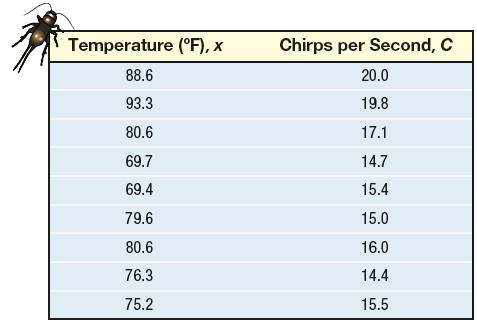
A cricket makes a chirping noise by sliding its wings together rapidly. Perhaps you have noticed that the number of chirps seems to increase with the temperature. The following data list the temperature (in degrees Fahrenheit) and the number of chirps per second for the striped ground cricket.(a)
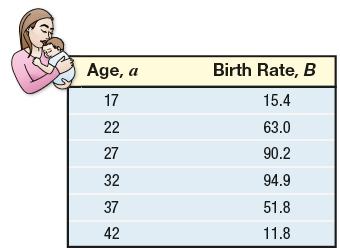
The following data represent the birth rate (births per 1000 population) for females whose age is a, in 2019.(a) Using a graphing utility, draw a scatter plot of the data, treating age as the independent variable. What type of relation appears to exist between age and birth rate?(b) Based on your
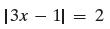
In Problems 17–44, find the real solutions, if any, of each equation. |3x - 11 = 2
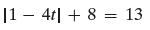
In Problems 17–44, find the real solutions, if any, of each equation. |1 4t| + 8 = 13
In Problems 17–44, find the real solutions, if any, of each equation. |12z| + 6 = 9
In Problems 23 – 30 , use the given functions f and g .f (x) = x2 − 1g(x) = 3x + 3 (a) Solve f(x) = 0. (e) Solve g(x) ≤ 0. (b) Solve g(x) = 0. (f) Solve f(x) > g(x). (c) Solve f(x) = g(x). (g) Solve f(x) > 1. (d) Solve f(x) > 0.
Showing 4600 - 4700
of 29454
First
40
41
42
43
44
45
46
47
48
49
50
51
52
53
54
Last
Step by Step Answers

 Get 50% OFF
Claim Now
Get 50% OFF
Claim Now