New Semester
Started
Get
50% OFF
Study Help!
--h --m --s
Claim Now
Question Answers
Textbooks
Find textbooks, questions and answers
Oops, something went wrong!
Change your search query and then try again
S
Books
FREE
Study Help
Expert Questions
Accounting
General Management
Mathematics
Finance
Organizational Behaviour
Law
Physics
Operating System
Management Leadership
Sociology
Programming
Marketing
Database
Computer Network
Economics
Textbooks Solutions
Accounting
Managerial Accounting
Management Leadership
Cost Accounting
Statistics
Business Law
Corporate Finance
Finance
Economics
Auditing
Tutors
Online Tutors
Find a Tutor
Hire a Tutor
Become a Tutor
AI Tutor
AI Study Planner
NEW
Sell Books
Search
Search
Sign In
Register
study help
social science
psychology 2e
Psychology 2nd Edition Rose M. Spielman, William J. Jenkins, Marilyn D. Lovett - Solutions
The central tenet of Gestalt psychology is that the whole is different from the sum of its parts. What does this mean in the context of perception?
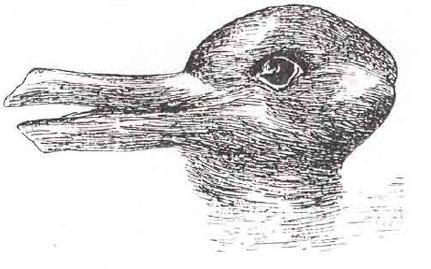
Take a look at the following figure. How might you influence whether people see a duck or a rabbit?
Think about a time when you failed to notice something around you because your attention was focused elsewhere. If someone pointed it out, were you surprised that you hadn’t noticed it right away?
If you grew up with a family pet, then you have surely noticed that they often seem to hear things that you don’t hear. Now that you’ve read this section, you probably have some insight as to why this may be. How would you explain this to a friend who never had the opportunity to take a class
Take a look at a few of your photos or personal works of art. Can you find examples of linear perspective as a potential depth cue?
As mentioned earlier, a food’s flavor represents an interaction of both gustatory and olfactory information. Think about the last time you were seriously congested due to a cold or the flu. What changes did you notice in the flavors of the foods that you ate during this time?
Have you ever listened to a song on the radio and sung along only to find out later that you have been singing the wrong lyrics? Once you found the correct lyrics, did your perception of the song change?
Which of the following is an example of a reflex that occurs at some point in the development of a human being?a. Child riding a bikeb. Teen socializingc. Infant sucking on a nippled. Toddler walking
Learning is best defined as a relatively permanent change in behavior that ________.a. Is innateb. Occurs as a result of experiencec. Is found only in humansd. Occurs by observing others
Two forms of associative learning are ________ and ________.a. Classical conditioning; operant conditioningb. Classical conditioning; Pavlovian conditioningc. Operant conditioning; observational learningd. Operant conditioning; learning conditioning
In ________ the stimulus or experience occurs before the behavior and then gets paired with the behavior.a. Associative learningb. Observational learningc. Operant conditioningd. Classical conditioning
A stimulus that does not initially elicit a response in an organism is a(n) ________.a. Unconditioned stimulusb. Neutral stimulusc. Conditioned stimulusd. Unconditioned response
In Watson and Rayner’s experiments, Little Albert was conditioned to fear a white rat, and then he began to be afraid of other furry white objects. This demonstrates ________.a. Higher order conditioningb. Acquisitionc. Stimulus discriminationd. Stimulus generalization
Extinction occurs when ________.a. The conditioned stimulus is presented repeatedly without being paired with an unconditioned stimulusb. The unconditioned stimulus is presented repeatedly without being paired with a conditioned stimulusc. The neutral stimulus is presented repeatedly without being
In Pavlov’s work with dogs, the psychic secretions were ________.a. Unconditioned responsesb. Conditioned responsesc. Unconditioned stimulid. Conditioned stimuli
________ is when you take away a pleasant stimulus to stop a behavior.a. Positive reinforcementb. Negative reinforcementc. Positive punishmentd. Negative punishment
Which of the following is not an example of a primary reinforcer?a. Foodb. Moneyc. Waterd. Sex
Rewarding successive approximations toward a target behavior is ________.a. Shapingb. Extinctionc. Positive reinforcementd. Negative reinforcement
The person who performs a behavior that serves as an example is called a ________.a. Teacherb. Modelc. Instructord. Coach
In Bandura’s Bobo doll study, when the children who watched the aggressive model were placed in a room with the doll and other toys, they ________.a. Ignored the dollb. Played nicely with the dollc. Played with tinker toysd. Kicked and threw the doll
Which is the correct order of steps in the modeling process?a. Attention, retention, reproduction, motivationb. Motivation, attention, reproduction, retentionc. Attention, motivation, retention, reproductiond. Motivation, attention, retention, reproduction
Who proposed observational learning?a. Ivan Pavlovb. John Watsonc. Albert Bandurad. B. F. Skinner
Compare and contrast classical and operant conditioning. How are they alike? How do they differ?
What is the difference between a reflex and a learned behavior?
If the sound of your toaster popping up toast causes your mouth to water, what are the UCS, CS, and CR?
Explain how the processes of stimulus generalization and stimulus discrimination are considered opposites.
How does a neutral stimulus become a conditioned stimulus?
What is a Skinner box and what is its purpose?
What is the difference between negative reinforcement and punishment?
What is shaping and how would you use shaping to teach a dog to roll over?
What is the effect of prosocial modeling and antisocial modeling?
Cara is 17 years old. Cara’s mother and father both drink alcohol every night. They tell Cara that drinking is bad and she shouldn’t do it. Cara goes to a party where beer is being served. What do you think Cara will do? Why?
What is your personal definition of learning? How do your ideas about learning compare with the definition of learning presented in this text?
What kinds of things have you learned through the process of classical conditioning? Operant conditioning? Observational learning? How did you learn them?
Can you think of an example in your life of how classical conditioning has produced a positive emotional response, such as happiness or excitement? How about a negative emotional response, such as fear, anxiety, or anger?
Explain the difference between negative reinforcement and punishment, and provide several examples of each based on your own experiences.
Think of a behavior that you have that you would like to change. How could you use behavior modification, specifically positive reinforcement, to change your behavior? What is your positive reinforcer?
What is something you have learned how to do after watching someone else?
Cognitive psychology is the branch of psychology that focuses on the study of ________.a. Human developmentb. Human thinkingc. Human behaviord. Human society
Which of the following is an example of a prototype for the concept of leadership on an athletic team?a. The equipment managerb. The scorekeeperc. The team captaind. The quietest member of the team
Which of the following is an example of an artificial concept?a. Mammalsb. A triangle’s areac. Gemstonesd. Teachers
An event schema is also known as a cognitive ________.a. Stereotypeb. Conceptc. Scriptd. Prototype
________ provides general principles for organizing words into meaningful sentences.a. Linguistic determinismb. Lexiconc. Semanticsd. Syntax
________ are the smallest unit of language that carry meaning.a. Lexiconb. Phonemesc. Morphemesd. Syntax
The meaning of words and phrases is determined by applying the rules of ________.a. Lexiconb. Phonemesc. Overgeneralizationd. Semantics
________ is (are) the basic sound units of a spoken language.a. Syntaxb. Phonemesc. Morphemesd. Grammar
A specific formula for solving a problem is called ________.a. An algorithmb. A heuristicc. A mental setd. Trial and error
A mental shortcut in the form of a general problem-solving framework is called ________.a. An algorithmb. A heuristicc. A mental setd. Trial and error
Which type of bias involves becoming fixated on a single trait of a problem?a. Anchoring biasb. Confirmation biasc. Representative biasd. Availability bias
Which type of bias involves relying on a false stereotype to make a decision?a. Anchoring biasb. Confirmation biasc. Representative biasd. Availability bias
Fluid intelligence is characterized by ________.a. Being able to recall informationb. Being able to create new productsc. Being able to understand and communicate with different culturesd. Being able to see complex relationships and solve problems
Which of the following is not one of Gardner’s Multiple Intelligences?a. Creativeb. Spatialc. Linguisticd. Musical
Which theorist put forth the triarchic theory of intelligence?a. Golemanb. Gardnerc. Sternbergd. Steitz
When you are examining data to look for trends, which type of intelligence are you using most?a. Practicalb. Analyticalc. Emotionald. Creative
The mean score for a person with an average IQ is ________.a. 70b. 130c. 85d. 100
Who developed the IQ test most widely used today?a. Sir Francis Galtonb. Alfred Binetc. Louis Termand. David Wechsler
The DSM-5 now uses ________ as a diagnostic label for what was once referred to as mental retardation.a. Autism and developmental disabilitiesb. Lowered intelligencec. Intellectual disabilityd. Cognitive disruption
Where does high intelligence come from?a. Geneticsb. Environmentc. Both A and Bd. Neither A nor B
Arthur Jensen believed that ________.a. Genetics was solely responsible for intelligenceb. Environment was solely responsible for intelligencec. Intelligence level was determined by raced. IQ tests do not take socioeconomic status into account
What is a learning disability?a. A developmental disorderb. A neurological disorderc. An emotional disorderd. An intellectual disorder
Which of the following statements is true?a. Poverty always affects whether individuals are able to reach their full intellectual potential.b. An individual’s intelligence is determined solely by the intelligence levels of his siblings.c. The environment in which an individual is raised is the
Describe an event schema that you would notice at a sporting event.
Explain why event schemata have so much power over human behavior.
How do words not only represent our thoughts but also represent our values?
How could grammatical errors actually be indicative of language acquisition in children?
How could a specific learning disability, such as dysgraphia or dyslexia, impact a child’s educational and school experience?
What is functional fixedness and how can overcoming it help you solve problems?
How does an algorithm save you time and energy when solving a problem?
Describe a situation in which you would need to use practical intelligence.
Describe a situation in which cultural intelligence would help you communicate better.
Why do you think different theorists have defined intelligence in different ways?
Compare and contrast the benefits of the Stanford-Binet IQ test and Wechsler’s IQ tests.
What evidence exists for a genetic component to an individual’s IQ?
Describe the relationship between learning disabilities and intellectual disabilities to intelligence.
Describe a natural concept that you know fully but that would be difficult for someone else to understand and explain why it would be difficult.
Can you think of examples of how language affects cognition?
Which type of bias do you recognize in your own decision making processes? How has this bias affected how you’ve made decisions in the past and how can you use your awareness of it to improve your decisions making skills in the future?
What influence do you think emotional intelligence plays in your personal life?
In thinking about the case of Candace described earlier, do you think that Candace benefitted or suffered as a result of consistently being passed on to the next grade?
Do you believe your level of intelligence was improved because of the stimuli in your childhood environment? Why or why not?
________ is a memory store with a phonological loop, visuospatial sketchpad, episodic buffer, and a central executive.a. Sensory memoryb. Episodic memoryc. Working memoryd. Implicit memory
The storage capacity of long-term memory is ________.a. One or two bits of informationb. Seven bits, plus or minus twoc. Limitedd. Essentially limitless
The three functions of memory are ________.a. Automatic processing, effortful processing, and storageb. Encoding, processing, and storagec. Automatic processing, effortful processing, and retrievald. Encoding, storage, and retrieval
This physical trace of memory is known as the ________.a. Engramb. Lashley effectc. Deese-Roediger-McDermott Paradigmd. Flashbulb memory effect
An exceptionally clear recollection of an important event is a (an) ________.a. Engramb. Arousal theoryc. Flashbulb memoryd. Equipotentiality hypothesis
________ is when our recollections of the past are done in a self-enhancing manner.a. Stereotypical biasb. Egocentric biasc. Hindsight biasd. Enhancement bias
Tip-of-the-tongue phenomenon is also known as ________.a. Persistenceb. Misattributionc. Transienced. Blocking
The formulation of new memories is sometimes called ________, and the process of bringing up oldmemories is called ________.a. Construction; reconstructionb. Reconstruction; constructionc. Production; reproductiond. Reproduction; production
When you are learning how to play the piano, the statement “Every good boy does fine” can help you remember the notes E, G, B, D, and F for the lines of the treble clef. This is an example of a (an) ________.a. Jingleb. Acronymc. Acrosticd. Acoustic
According to a study by Yogo and Fujihara (2008), if you want to improve your short-term memory, you should spend time writing about ________.a. Your best possible future selfb. A traumatic life experiencec. A trivial topicd. Your grocery list
The self-referencing effect refers to ________.a. Making the material you are trying to memorize personally meaningful to youb. Making a phrase of all the first letters of the words you are trying to memorizec. Making a word formed by the first letter of each of the words you are trying to
Memory aids that help organize information for encoding are ________.a. Mnemonic devicesb. Memory-enhancing strategiesc. Elaborative rehearsald. Effortful processing
Compare and contrast implicit and explicit memory.
According to the Atkinson-Shiffrin model, name and describe the three stages of memory.
Compare and contrast the two ways in which we encode information.
What might happen to your memory system if you sustained damage to your hippocampus?
Compare and contrast the two types of interference.
Compare and contrast the two types of amnesia.
What is the self-reference effect, and how can it help you study more effectively?
You and your roommate spent all of last night studying for your psychology test. You think you know the material; however, you suggest that you study again the next morning an hour prior to the test. Your roommate asks you to explain why you think this is a good idea. What do you tell them?
Showing 5400 - 5500
of 5790
First
44
45
46
47
48
49
50
51
52
53
54
55
56
57
58
Step by Step Answers

 Get 50% OFF
Claim Now
Get 50% OFF
Claim Now