New Semester
Started
Get
50% OFF
Study Help!
--h --m --s
Claim Now
Question Answers
Textbooks
Find textbooks, questions and answers
Oops, something went wrong!
Change your search query and then try again
S
Books
FREE
Study Help
Expert Questions
Accounting
General Management
Mathematics
Finance
Organizational Behaviour
Law
Physics
Operating System
Management Leadership
Sociology
Programming
Marketing
Database
Computer Network
Economics
Textbooks Solutions
Accounting
Managerial Accounting
Management Leadership
Cost Accounting
Statistics
Business Law
Corporate Finance
Finance
Economics
Auditing
Tutors
Online Tutors
Find a Tutor
Hire a Tutor
Become a Tutor
AI Tutor
AI Study Planner
NEW
Sell Books
Search
Search
Sign In
Register
study help
business
organizational behavior
Organizational Behavior 1st Edition OpenStax - Solutions
What are some advantages and disadvantages of divisional structures?
Explain the McKinsey 7-S model.
How is a product structure one type of a divisional structure? Explain.
How can employee diversity give a company a competitive advantage?
What are some disadvantages in working in a matrix structure and why?
Explain the concept of hiring for fit as it relates to corporate culture.
What advantages do matrix structures have compared to functional structures?
What are some organizational issues that must be addressed when two large firms merge or grow rapidly like Amazon?
What advantages do geographic structures have compared to a functional structure?
What are issues that working in a networked team structure present?
In what ways is a virtual organization and structure different from the other ones discussed in the chapter?
What major trends discussed at the end of this chapter are different from previous external environments and the ways organizations were organized?
What purposes does an organization’s culture serve when considering the external environment?
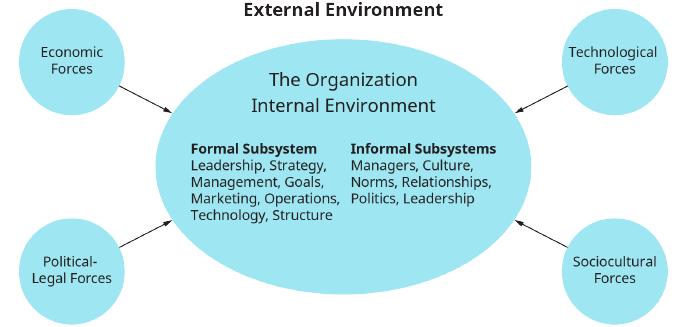
How does Exhibit 15.16 facilitate an understanding of how the internal organization functions with external environments?Exhibit 15.16. Economic Forces Political- Legal Forces External Environment The Organization Internal Environment Formal Subsystem Leadership, Strategy, Management,
You have recently accepted the position of director for a full-service retirement home that has three components. The first component is for retired individuals and married couples who can still manage on their own but appreciate the amenities such as medical care and having other residents that
What concepts should guide decisions about how to design structures?
What is organizational change?
What are the fundamental dimensions of change?
What are organizational development (OD) and change management?
What questions may be used to guide OD and change management?
What are the common models of OD and change management?
How has the function of human resource management evolved over the years?
What are the four “waves” of the human resource management evolution?
How has human resource management’s evolution over the years helped to make it a better partner to the business? In what way would you expect HRM to continue to evolve over the years?
Human resources is a key function within any company, but not all companies are able to afford or justify full-time HR staff. Over the last decade, HR outsourcing has become a good business decision for many small companies whose current staff doesn’t have the bandwidth or expertise to take on
You have been hired as a new Finance VP, and you oversee a team of almost 30 people. Your HR manager has recently informed you that there have been several employee relations in your group in the recent past, and you are concerned about the level of knowledge that your management team has around
In 2013, Zappos was performing well under the leadership of Tony Hsieh and was getting ready to take on a new challenge that would, among other things, push the boundaries of traditional human resource management. Although business was booming, Tony Hsieh was not a man who wanted to be in status
In what way do you usually interact with human resources?
What are some of the key regulations that human resources must manage compliance with?
Do you believe that a formal, annual performance management process is necessary to help an organization reach its goals? Why or why not? What are the minimum process requirements that must be met to successfully evaluate performance?
Multinational companies are always challenged to determine the balance between global and local needs when creating a human resource management strategy. Some large companies weigh heavily on the side of centralization, with very few local deviations from the global strategy. Others may allow more
Your company has decided to drop their formal, annual performance management process and move to a system based on ongoing feedback and communication with employees. You are concerned because you have always been careful to differentiate your employees by performance level, and you’re worried
What are some of the key regulations that guide the compliance work of human resource management?
What are some of the unintended consequences of a forced ranking system?
Is it possible for an organization to reward people fairly without implementing a pay-for-performance process? Why or why not? Do you see any pitfalls to a pay-for-performance process?
There has been a boom in HR technology and innovation over the last several years—and it is making some of the traditional HR systems from last decade seem enormously outdated. Some of the trends that are driving this HR tech innovation include mobile technology, social media, data analytics, and
Your company has recently implemented a pay-for-performance model for compensation. This worries you because you know that your employees will be even more upset with their performance ratings if they know that they are tied to compensation. What actions can you take to start to prepare for this
What does an employee handbook provide to an organization?
What are some of the performance management challenges that must be addressed, no matter what the system?
How does the “war for talent” impact talent acquisition processes? How can HR be more successful working with the business to navigate the competitive talent landscape?
You are the director of an engineering organization and have been fighting the “war for talent” for a while. It seems that whenever you have a role vacancy, you let HR know but it takes forever to find someone—and the candidate often turns down the job. What are some ways to better partner
Where did the concept of performance management originate?
Why are many companies interested in moving to a pay-for-performance strategy?
What are the benefits of having talent review calibration processes? What is the downside of the process? Should an organization let employees know what their talent review “rating” is? Why or why not?
You are the VP of a line of business at an international manufacturing company. You and several of your long-time colleagues will be retiring over the next few years, and you need to start thinking about talent and succession planning. You are going into a talent review discussion next week, and
What are some of the key challenges of any performance management process?
What are the main process steps for implementing pay for performance?
What does a pay-for-performance strategy mean for a company?
What are some best practices for recruiting new leadership candidates?
What is the first step in defining an organization’s pay-for-performance strategy?
Describe the steps of a talent review session.
What are some best practices for recruiting and hiring leadership candidates?
What is the difference between performance and potential?
How can we ensure a more successful integration of the new hire?
How can you tell if a candidate has potential?
What is the difference between the performance and potential categories used in the talent review?
What roles should an organization discuss as part of the succession planning process?
What are the 5 types of people identified by W. S. Neff?
Discuss the five types of problems related to employee work adjustment.
Karoshi literally means death from overwork, and unofficial estimates are that as many people die each year from karoshi as from traffic accidents in Japan—approximately 10,000. In 2016, the legal claims of karoshi rose to a record high of 1,456 according to government figures. Additionally, just
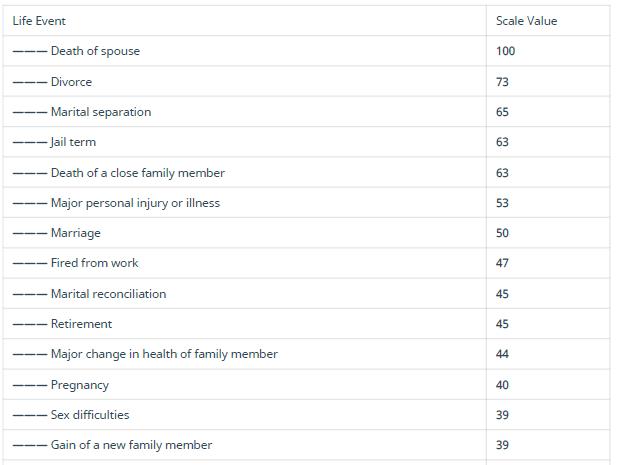
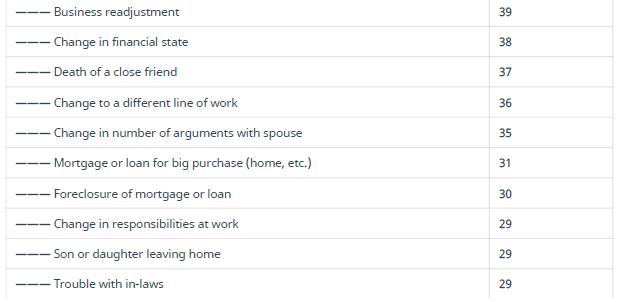
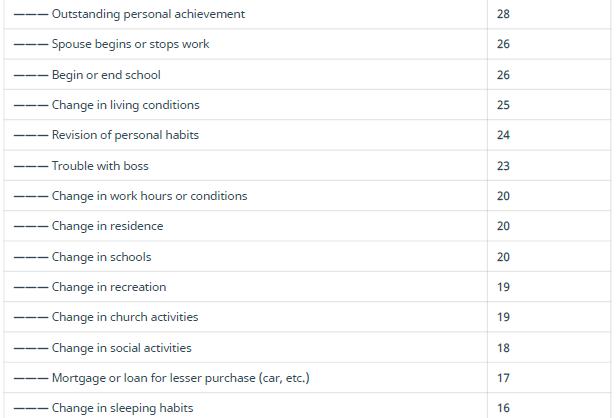
The Holmes and Rahe “Schedule of Recent Experiences” is shown here in this self-assessment. You are encouraged to complete this scale by checking all those events that have occurred to you within the past year. How Stable Is Your Life?Instructions: Place a check mark next to each event you
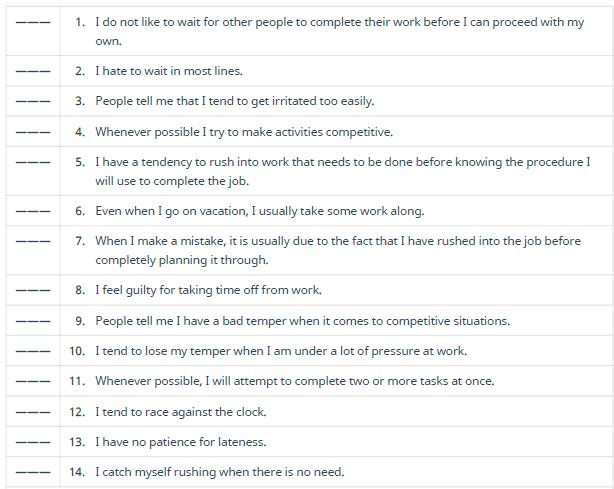
Are you interested in determining whether you are a Type A or Type B? If so, simply complete this self-assessment.Are You a Type A?Instructions: Choose from the following responses to answer the questions below:a. Almost always trueb. Usually trued.c. Seldom trued. Never trueAnswer each question
What is work related stress?
Define stress. How does it differ from strain?
It is very rare that you are farther than an arm’s length away from your smartphone. You get anxious when there is no Wi-Fi in a hotel room, and if your battery is running low, the stress skyrockets through the roof just imagining what you could miss out on. All of these stresses, combined with
What are the major influences of work related stress?
Describe the general adaptation syndrome.
What impact do different occupations have of the stress levels of workers in those jobs?
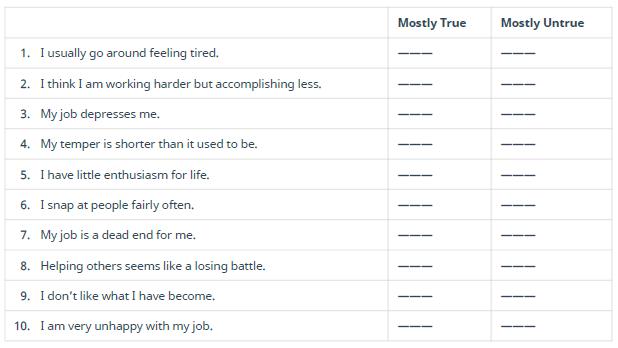
If you are interested in your own potential for burnout, you may wish to complete this self-assessment. Simply answer the ten questions as honestly as you can.Are You Suffering from Burnout?Instructions: Check whether each item is “mostly true” or “mostly untrue” for you. Answer as
Contrast frustration with anxiety.
What impact do role ambiguity, job overload or underutilization have on stress levels?
Identify the major categories of variables that have been found to influence stress. What role does social support play in the process? What role does hardiness play?
What are Type A and Type B personalities and how does stress affect each personality type.
In the chapter, the plight of assembly-line workers was discussed. What realistic suggestions would you make to relieve the tension and stress of this job?
What role does health, social support and hardiness have on the level of stress?
Compare and contrast role conflict and role ambiguity.
What can managers do ro reduce stress levels in employees that can harm productivity and can lead to counterproductive behavior in the workplace, absenteeism, as well as alcoholism and drug abuse.
How does a manager achieve a useful balance in a person-job fit so neither role overload nor role underutilization occurs?
What are some things that managers can do ro reduce stress in the organization?
How should a manager deal with a subordinate who is clearly a Type A personality? How should a manager who is a Type A personality handle her own stress?
Of what utility is the rate-of-life-change concept?
In organizations with which you are familiar, which of the many suggestions for coping with stress would be most applicable? Are the strategies you selected individual or organizational strategies?
At the storming stage, what differences might you expect between groups formed for economic self-interest and groups formed for mutual self-interest?
Describe the stages of group development.
Explain what work roles are.
How does work group size influence individual and group behavior?
What role does group size play in the interactions of group members?
Discuss the role of work group norms in the work situation.
What are group norms and what role do they play toward group cohesiveness?
Consider how groups influence conformity and deviance in work situations.
Why must managers be sensitive to and deal with group processes in the workplace?
What is the major conclusion of Asch’s experiment on group pressure and individual judgment?
Are well-functioning teams or groups in complex tasks more productive and leave workers more satisfied than in traditional arrangements?
Discuss how supervisors sometimes unintentionally weaken employees E ➨ P and P ➨ O expectancies.
What are the reasons for joining a group?
What are the various types of groups often found in work situations?
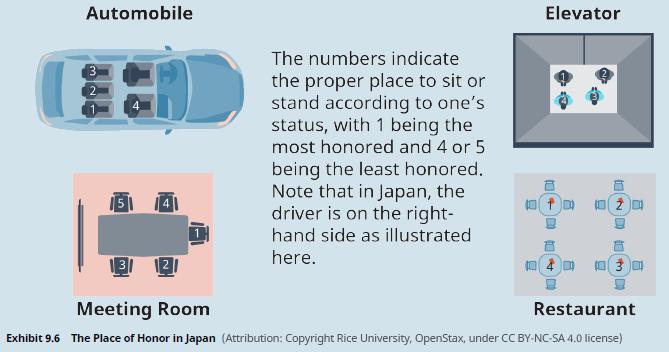
In Japan, etiquette is not simply a prescription for appropriate social responses, it is a complete guide to conducting oneself in all social interactions. At the root of this system of social interaction is one’s status within the organization and society.The effects of status in Japan can be
What are the development stages groups often go through?
Why do people join groups?
In the fast-moving innovative car industry, it is always important to be thinking about improving and staying ahead of the competition. For Ford and Chevrolet however, they have such popular vehicles—the F-150 and the hybrid Volt, respectively—that finding ways to improve them without taking
Showing 4100 - 4200
of 5398
First
35
36
37
38
39
40
41
42
43
44
45
46
47
48
49
Last
Step by Step Answers

 Get 50% OFF
Claim Now
Get 50% OFF
Claim Now