New Semester
Started
Get
50% OFF
Study Help!
--h --m --s
Claim Now
Question Answers
Textbooks
Find textbooks, questions and answers
Oops, something went wrong!
Change your search query and then try again
S
Books
FREE
Study Help
Expert Questions
Accounting
General Management
Mathematics
Finance
Organizational Behaviour
Law
Physics
Operating System
Management Leadership
Sociology
Programming
Marketing
Database
Computer Network
Economics
Textbooks Solutions
Accounting
Managerial Accounting
Management Leadership
Cost Accounting
Statistics
Business Law
Corporate Finance
Finance
Economics
Auditing
Tutors
Online Tutors
Find a Tutor
Hire a Tutor
Become a Tutor
AI Tutor
AI Study Planner
NEW
Sell Books
Search
Search
Sign In
Register
study help
mathematics
a first course in abstract algebra
A First Course In Abstract Algebra 7th Edition John Fraleigh - Solutions
Show that a finite field of pn elements has exactly one subfield of pm elements for each divisor m of n.
Find the degree and a basis for the given field extension. Be prepared to justify your answers.Q(√2 + √3) over Q(√2 + √3)
Correct the definition of the italicized term without reference to the text, if correction is needed, so that it is in a form acceptable for publication.The vectors in a subset S of a vector space V over a field F are linearly independent over F if and only if the zero vector cannot be expressed as
Classify the given a ∈ C as algebraic or transcendental over the given field F. If α is algebraic over F, find deg(α, F).α = √π, F = Q(π)
Show that xPn - x is the product of all monic irreducible polynomials in Zp[x] of a degreed dividing n.
Find the degree and a basis for the given field extension. Be prepared to justify your answers.Q(√2, √6 + √10) over Q(√3 +√5)
Correct the definition of the italicized term without reference to the text, if correction is needed, so that it is in a form acceptable for publication.The dimension over F of a finite-dimensional vector space V over a field F is the minimum number of vectors required to span V.
Correct the definition of the italicized term without reference to the text, if correction is needed, so that it is in a form acceptable for publication.A basis for a vector space V over a field F is a set of vectors in V that span V and are linearly dependent.
Classify the given a ∈ C as algebraic or transcendental over the given field F. If α is algebraic over F, find deg(α, F).α = π2, F = Q
Let p be an odd prime. a. Show that for a ∈ Z, where a ≠ 0 (mod p), the congruence x2 = a (mod p) has a solution in Z if and only if a(P-1)/2 = 1 (mod p).b. Using part (a), determine whether or not the polynomial x2 - 6 is irreducible in Z17[x]
Correct the definition of the italicized term without reference to the text, if correction is needed, so that it is in a form acceptable for publication.An algebraic extension of a field F is a field F(α1, α2, ···, αn) where each αi is a zero of some polynomial in F[x].
Mark each of the following true or false. ___ a. The sum of two vectors is a vector. ___ b. The sum of two scalars is a vector. ___ c. The product of two scalars is a scalar. ___ d. The product of a scalar and a vector is a vector.___ e. Every vector space has a finite
Classify the given a ∈ C as algebraic or transcendental over the given field F. If α is algebraic over F, find deg(α, F).α = π2, F = Q(π)
Correct the definition of the italicized term without reference to the text, if correction is needed, so that it is in a form acceptable for publication.A finite extension field of a field F is one that can be obtained by adjoining a finite number of elements to F.
Let V be a vector space over a field F. a. Define a subspace of the vector space V over F. b. Prove that an intersection of subspaces of V is again a subspace of V over F.
Classify the given a ∈ C as algebraic or transcendental over the given field F. If α is algebraic over F, find deg(α, F).α = π2 , F = Q(π3)
Correct the definition of the italicized term without reference to the text, if correction is needed, so that it is in a form acceptable for publication.The algebraic closure F̅E of a field F in an extension field E of F is the field consisting of all elements of E that are algebraic over F.
Let V be a vector space over a field F, and let S ={αi |i ∈ I} be a nonempty collection of vectors in V. a. Using Exercise 16(b), define the subspace of V generated by S. b. Prove that the vectors in the subspace of V generated by S are precisely the (finite) linear combinations of
Refer to Example 29.19 of the text. The polynomial x2 + x + 1 has a zero a in Z2(α) and thus must factor into a product of linear factors in (Z2(α))[x]. Find this factorization.Data from in Example 29.19The polynomial p(x) = x2 + x + 1 in Z2[x] is irreducible over Z2 by Theorem 23.10, since
Correct the definition of the italicized term without reference to the text, if correction is needed, so that it is in a form acceptable for publication.A field F is algebraically closed if and only if every polynomial has a zero in F.
Let Vi, ··· , Vn be vector spaces over the same field F. Define the direct sum V1 ⊕ ··· ⊕ Vn of the vectors spaces Vi for i = 1, ···, n, and show that the direct sum is again a vector space over F.
a. Show that the polynomial x2 + 1 is irreducible in Z3[x]. b. Let a be a zero of x2 + 1 in an extension field of Z3 As in Example 29.19, give the multiplication and addition tables for the nine elements of Z3(α), written in the order 0, 1, 2, α, 2α, 1 + α, 1 + 2α, 2 + α, and 2 +
Show by an example that for a proper extension field E of a field F, the algebraic closure of F in E need not be algebraically closed.
Generalize Example 30.2 to obtain the vector space Fn of ordered n-tuples of elements of F over the field F, for any field F. What is a basis for Fn?Data from in Example 30.2Consider the abelian group (Rn, +) = R x R x ··· x R. for n factors, which consists of ordered n-tuples under addition by
Correct the definition of the italicized term without reference to the text, if correction is needed, so that it is in a form acceptable for publication.An element α of an extension field E of a field F if algebraic over F if and only if α is a zero of some polynomial.
Mark each of the following true or false. ___ a. If a field E is a finite extension of a field F, then E is a finite field. ___ b. Every finite extension of a field is an algebraic extension. ___ c. Every algebraic extension of a field is a finite extension. ___ d. The top field
Define an isomorphism of a vector space V over a field F with a vector space V' over the same field F.
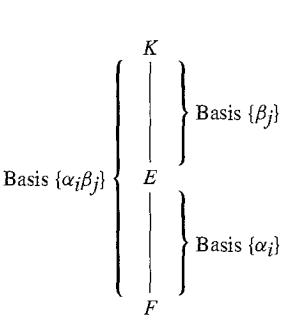
Give a one- or two-sentence synopsis of the proof of Theorem 31.4. Data from Theorem 31.4If E is a finite extension field of a field F, and K is a finite extension field of E, then K is a finite extension of F, and [K : F] = [K : E][E : F]Proof Let {αi | i = 1, ··· , n} be a basis for E as
Correct the definition of the italicized term without reference to the text, if correction is needed, so that it is in a form acceptable for publication.An element β of an extension field E of a field F is transcendental over F if and only if β is not a zero of any polynomial in F[x].
Give a one-sentence synopsis of the proof of Theorem 31.3. Data from Theorem 31.3A finite extension field E of a field F is an algebraic extension of F. Proof We must show that for a ∈ E, α is algebraic over F. By Theorem 30 .19 if [E : F] = n, then 1, α,··· ,αn cannot be linearly
Prove that if V is a finite-dimensional vector space over a field F, then a subset {βi, β2 , ··· , βn} of V is a basis for V over F if and only if every vector in V can be expressed uniquely as a linear combination of the βi.
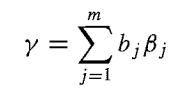
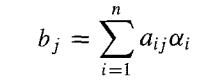
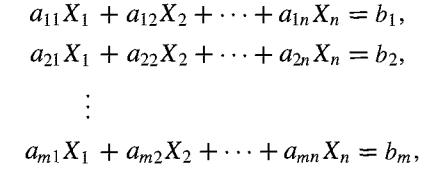
Let F be any field. Consider the "system of m simultaneous linear equations inn unknowns" where aij, bi ∈ F.a. Show that the "system has a solution;' that is, there exist X1, ··· , Xn ∈ F that satisfy all m equations, if and only if the vector β = (b1 , ··· , bm) of Fm is a
Correct the definition of the italicized term without reference to the text, if correction is needed, so that it is in a form acceptable for publication.A monic polynomial in F[x] is one having all coefficients equal to 1.
Let (a+ bi) ∈ C where a, b ∈ R and b ≠ 0. Show that C = R(a + bi).
Let V and V' be vector spaces over the same field F. A function ∅ : V → V' is a linear transformation of V into V' if the following conditions are satisfied for all α, β ∈ V and a ∈ F:a. If {βi | i ∈ I} is a basis for V over F, show that a linear transformation ∅ : V → V' is
Correct the definition of the italicized term without reference to the text, if correction is needed, so that it is in a form acceptable for publication.A field E is a simple extension of a subfield F if and only if there exists some α ∈ E such that no proper subfield of E contains α.
Prove that every finite-dimensional vector space V of dimension n over a field F is isomorphic to the vector space Fn of Exercise 19.Data from Exercise 19Generalize Example 30.2 to obtain the vector space Fn of ordered n-tuples of elements of F over the field F, for any field F. What is a basis for
Mark each of the following true or false.____ a. The number π is transcendental over Q.____ b. C is a simple extension of R____ c. Every element of a field F is algebraic over F.____ d. R is an extension field of Q.____ e. Q is an extension field of Z2.____ f. Let α ∈ C be algebraic over Q of
Prove that x2 - 3 is irreducible over Q(3√2).
We have stated without proof that n and e are transcendental over Q. a. Find a subfield F of R such that π is algebraic of degree 3 over F. b. Find a subfield E of R such that e2 is algebraic of degree 5 over E.
Let V and V' be vector spaces over the same field F, and let ∅ : V → V' be a linear transformation. a. To what concept that we have studied for the algebraic structures of groups and rings does the concept of a linear transformation correspond? b. Define the kernel (or nullspace) of
What degree field extensions can we obtain by successively adjoining to a field F a square root of an element of F not a square in F, then square root of some nonsquare in this new field, and so on? Argue from this that a zero of x14 - 3x2 + 12 over Q can never be expressed as a rational function
a. Show that x3 + x2 + 1 is irreducible over Z2. b. Let a be a zero of x3 + x2 + 1 in an extension field of Z2. Show that x3 + x2 + 1 factors into three linear factors in (Z2(α))[x] by actually finding this factorization.
Let V be a vector space over a field F, and let S be a subspace of V. Define the quotient space V/S, and show that it is a vector space over F.
Let E be a finite extension field of F. Let D be an integral domain such that F ⊆ D ⊆ E. Show that D is a field.
Let E be an extension field of Z2 and let α ∈ E be algebraic of degree 3 over Z2. Classify the groups (Z2(α), +) and ((Z2(α))*, ·) according to the Fundamental Theorem of finitely generated abelian groups. As usual, (Z2(α))* is the set of nonzero elements of Z2(α).
Let V and V' be vector spaces over the same field F, and let V be finite dimensional over F. Let dim(V) be the dimension of the vector space V over F. Let ∅ : V → V' be a linear transformation. a. Show that ∅[VJ is a subspace of V'. b. Show that dim(∅[V]) = dim(V) - dim(Ker(∅)).
Prove in detail that Q(√3 +√7) = Q(√3,√7).
Let E be an extension field of a field F and let α ∈ E be algebraic over F. The polynomial irr(α, F) is sometimes referred to as the minimal polynomial for a over F. Why is this designation appropriate?
Generalizing Exercise 27, show that if √a + √b ≠ 0, then Q(√a + √b) = Q(√a, √b) for all a and b in Q.Data from Exercise 27Prove in detail that Q(√3 +√7) = Q(√3,√7).
Give a two- or three-sentence synopsis of Theorem 29.3. Data from Theorem 29.3Let F be a field and let f(x) be a nonconstant polynomial in F[x]. Then there exists an extension field E of F and an α ∈ E such that f(α) = 0.Proof By Theorem 23.20, f(x) has a factorization in F[x] into
Let E be a finite extension of a field F, and let p(x) ∈ F[x] be irreducible over F and have degree that is not a divisor of [E : F]. Show that p(x) has no zeros in E.
Let E be an extension field of F, and let α, β ∈ E. Suppose α is transcendental over F but algebraic over F(β). Show that β is algebraic over F(α).
Let E be an extension field of F. Let α ∈ E be algebraic of odd degree over F. Show that α2 is algebraic of odd degree over F, and F(α) = F(α2).
Let E be an extension field of a finite field F, where F has q elements. Let α ∈ E be algebraic over F of degree n. Prove that F(α) has qn elements.
Show that if F, E, and K are fields with F ≤ E ≤ K, then K is algebraic over F if and only if E is algebraic over F, and K is algebraic over E.
Show that is a subfield of R by using the ideas of this section, rather than by a formal verification of the field axioms. {a + b(2) + c(√2)² a, b, c = Q}
a. Show that there exists an irreducible polynomial of degree 3 in Z3[x]. b. Show from part (a) that there exists a finite field of 27 elements.
Let E be an extension field of a field F. Prove that every α ∈ E that is not in the algebraic closure F̅E of F in E is transcendental over F̅E.
Consider the prime field ZP of characteristic p≠ 0. a. Show that, for p ≠ 2, not every element in ZP is a square of an element of Zp.b. Using part (a), show that there exist finite fields of p2 elements for every prime p in Z+.
Let E be an extension field of a field F and let α ∈ E be transcendental over F. Show that every element of F(α) that is not in F is also transcendental over F.
Show that if E is an algebraic extension of a field F and contains all zeros in F̅ of every f(x) ∈ F[x]. then E is an algebraically closed field.
Show that no finite field of odd characteristic is algebraically closed.
Let F be a finite field of characteristic p. Show that every element of F is algebraic over the prime field ZP ≤ F.
Prove that, as asserted in the text, the algebraic closure of Q in C is not a finite extension of Q.
Use Exercises 30 and 36 to show that every finite field is of prime-power order, that is, it has a prime-power number of elements. Data from Exercise 30Let E be an extension field of a finite field F, where F has q elements. Let α ∈ E be algebraic over F of degree n. Prove that F(α) has qn
Argue that every finite extension field of R is either R itself or is isomorphic to C.
Use Zorn's lemma to show that every proper ideal of a ring R with unity is contained in some maximal ideal.
Let E be an algebraically closed extension field of a field F. Show that the algebraic closure F̅E of F in E is algebraically closed.
Is x3 + 2x + 3 an irreducible polynomial of Z5[x]? Why? Express it as a product of irreducible polynomials of Z5[x].
Let ∅ be the element of End((Z x Z, +)) given in Example 24.2. That example showed that ∅ is a right divisor of 0. Show that ∅ is also a left divisor of 0.Data from Example 24.2Consider the abelian group (Z x Z, +) discussed in Section 11. It is straightforward to verify that two elements of
Let r and s be positive integers such that gcd(r, s) = 1. Use the isomorphism in Example 18.15 to show that form, n ∈ Z, there exists an integer x such that x = m (mod r) and x = n (mod s).Data from in Example 18.15 We claim that for integers r ands where gcd(r, s) = 1, the rings Zrs and Zr
a. State and prove the generalization of Example 18.15 for a direct product with n factors. b. Prove the Chinese Remainder Theorem: Let ai, bi ∈ Z+ for i = 1, 2, ···, n and let gcd(bi, bj) = 1 for i ≠ j. Then there exists x ∈ Z+ such that x = ai (mod bi) for i = 1, 2, ···· ,
Consider (S, +,•),where S is a set and + and • are binary operations on S such that (S, +) is a group, (S*, •) is a group where S* consists of all elements of S except the additive identity element, a(b + c) =(ab)+ (ac) and (a+ b)c = (ac) + (be) for all a, b, c ∈ S. Show that
Describe all ring homomorphisms of Z x Z into Z x Z.
Write the polynomials in R[x, y, z] in decreasing term order, using the order lex for power products xmynZs where z < y < X.2xy3z5 - 5x2yz3 + 7x2y2z - 3x3
Find all prime ideals and all maximal ideals of Z6.
Let F be the ring of all functions mapping R into R and having derivatives of all orders. Differentiation gives a map ∅ : F → F where δ(f(x)) = f'(x). Is δ a homomorphism? Why? Give the connection between this exercise and Example 26.12.Data from Example 26.12Let F be the ring of all
Write the polynomials in R[x, y, z] in decreasing term order, using the order lex for power products zmynxs where x < y < z.The polynomial in Exercise 4.Data from Exercise 438 - 4xz + 2yz - 8xy + 3yz3
Find all c ∈ Z5 such that Z5[x]/(x2 + x + c) is a field.
Give an example of a ring homomorphism ∅ : R→ R' where R has unity 1 and ∅(1) ≠ 0', but ∅(1) is not unity for R'.
List, in increasing order, the smallest 20 power products in R[x, y, z] for the order deglex with power products xmynzs where z < y < x.
Find all c ∈ Z5 such that Z5[x]/(x2 + cx + 1) is a field.
Give an example to show that a factor ring of an integral domain may have divisors of 0.
Write the polynomials in order of decreasing terms using the order deglex with power products xmynzs where z < y < x.The polynomial in Exercise 4.Data from Exercise 438 - 4xz + 2yz - 8xy + 3yz3
Let R and R' be rings and let N and N' be ideals of R and R', respectively. Let ∅ be a homomorphism or R into R'. Show that ∅ induces a natural homomorphism ∅* : R/N → R'/N' if ∅[N] ⊆ N'. (Use Exercise 39 of Section 14.)Data from Exercise 39 of Section 14Let G and G' be groups, and
Let R[x, y] be ordered by lex. Give an example to show that Pi < Pj does not imply that Pi divides Pj.
Show that a finite abelian group is not cyclic if and only if it contains a subgroup isomorphic to Zp x Zp for some prime p.
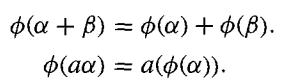
The sign of an even permutation is + 1 and the sign of an odd permutation is -1. Observe that the map sgnn : Sn → {l, -1} defined by sgnn(σ) = sign of σ is a homomorphism of Sn onto the multiplicative group { 1, -1}. What is the kernel? Compare with Example 13.3.Data from example 13.313.3
Let G be a group, and let g ∈ G. Let ∅g : G→ G be defined by ∅g(x) = gx for x ∈ G. For which g ∈ G is ∅g a homomorphism?
Let a group G be generated by { ai | i ∈ I}, where I is some indexing set and ai ∈ G for all i ∈ I. Let ∅ : G → G' and µ : G → G' be two homomorphisms from G into a group G', such that ∅(ai) = µ(ai) for every i ∈ I. Prove that ∅ = µ. [Thus, for example, a homomorphism of a
Show that any group homomorphism ∅ : G → G' where |G| is a prime must either be the trivial homomorphism or a one-to-one map.
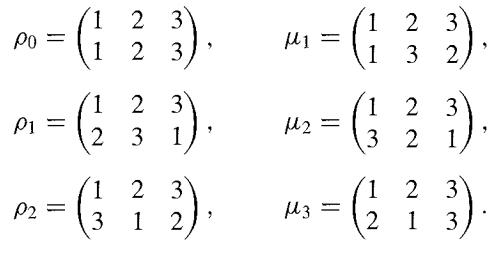
Referring to the group S3 given in Example 8.7, compute the product (0P0 + 1p1 + 0P2 + 0µ1 + 1µ2 + 1µ3)(1p0 + 1P1 + 0P2 + 1µ1 + 0µ2 + 1µ3) in the group algebra Z2S3.Data from in 8.7 Example An interesting example for us is the group S3 of3! = 6 elements. Let the set A be { 1, 2, 3}. We
F = E = Z7 in Theorem 22.4. Compute for the indicated evaluation homomorphism.∅5[(x3 + 2)(4x2 + 3)(x7 + 3x 2 + 1)]Data from Theorem 22.4(The Evaluation Homomorphisms for Field Theory) Let F be a subfield of a field E. let a be any element of E, and let x be an indeterminate. The map ∅α :
let (Q((x)) have the ordering described in Example 25.9. List the labels a, b, c, d, e of the given elements in an order corresponding to increasing order of the elements as described by the relation < of Theorem 25.5. a b.c.d.e. 4x Data from Example 25.9 (Formal Laurent
let G = {e, a, b} be a cyclic group of order 3 with identity element e. Write the element in the group algebra Z5G in the form re + sa + tb for r, s, t ∈ Z5.(3e + 3a + 3b )4
F = E = C in Theorem 22.4. Compute for the indicated evaluation homomorphism.∅i(2x3 - x2 + 3x + 2)Data from Theorem 22.4Let F be a subfield of a field E. let a be any element of E, and let x be an indeterminate. The map ∅α : F [x] → E defined by ∅α(a0 + a1x + anxn) = a0 + a1α + .....
let (Q((x)) have the ordering described in Example 25.9. List the labels a, b, c, d, e of the given elements in an order corresponding to increasing order of the elements as described by the relation < of Theorem 25.5.a.b.c.d.e.Data from Example 25.9 (Formal Laurent Series Fields)
Let (Q((x)) have the ordering described in Example 25.9. List the labels a, b, c, d, e of the given elements in an order corresponding to increasing order of the elements as described by the relation < of Theorem 25.5.a.b.c.d.e.Data from Example 25.9 (Formal Laurent Series Fields)
The polynomial 2x3 + 3x2 - 7x - 5 can be factored into linear factors in Z11[x ]. Find this factorization.
Showing 500 - 600
of 1629
1
2
3
4
5
6
7
8
9
10
11
12
13
14
15
Last
Step by Step Answers

 Get 50% OFF
Claim Now
Get 50% OFF
Claim Now