New Semester
Started
Get
50% OFF
Study Help!
--h --m --s
Claim Now
Question Answers
Textbooks
Find textbooks, questions and answers
Oops, something went wrong!
Change your search query and then try again
S
Books
FREE
Study Help
Expert Questions
Accounting
General Management
Mathematics
Finance
Organizational Behaviour
Law
Physics
Operating System
Management Leadership
Sociology
Programming
Marketing
Database
Computer Network
Economics
Textbooks Solutions
Accounting
Managerial Accounting
Management Leadership
Cost Accounting
Statistics
Business Law
Corporate Finance
Finance
Economics
Auditing
Tutors
Online Tutors
Find a Tutor
Hire a Tutor
Become a Tutor
AI Tutor
AI Study Planner
NEW
Sell Books
Search
Search
Sign In
Register
study help
mathematics
precalculus
Thomas Calculus Early Transcendentals 13th Edition Joel R Hass, Christopher E Heil, Maurice D Weir - Solutions
Graph y = -2x sin (x2) for -2 ≤ x ≤ 3. Then, on the same screen, graphfor h = 1.0, 0.7, and 0.3. Experiment with other values of h. What do you see happening as h → 0? Explain this behavior. y = cos ((x + h)²) - cos (x²) h
a. Find equations for the tangents to the curves y = sin 2x and y = -sin (x/2) at the origin. Is there anything special about how the tangents are related? Give reasons for your answer.b. Can anything be said about the tangents to the curves y = sin mx and y = -sin (x/m) at the origin (m a constant
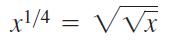
Using the Chain Rule, show that the Power Rule (d/dx)xn = nxn-1 holds for the functions xn. x1/4 = √√x X
Suppose that a piston is moving straight up and down and that its position at time t sec is s = Acos (2πbt), with A and b positive. The value of A is the amplitude of the motion, and b is the frequency (number of times the piston moves up and down each second). What effect does doubling the
The position of a particle moving along a coordinate line is s = √1 + 4t, with s in meters and t in seconds. Find the particle’s velocity and acceleration at t = 6 sec.
Suppose that the velocity of a falling body is y = k√s m/sec (k a constant) at the instant the body has fallen s m from its starting point. Show that the body’s acceleration is constant.
The velocity of a heavy meteorite entering Earth’s atmosphere is inversely proportional to √s when it is s km from Earth’s center. Show that the meteorite’s acceleration is inversely proportional to s2.
A particle moves along the x-axis with velocity dx/dt = ƒ(x). Show that the particle’s acceleration is ƒ(x)ƒ′(x).
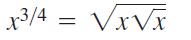
Using the Chain Rule, show that the Power Rule (d/dx)xn = nxn-1 holds for the functions xn. x3/4 = √x√x VxVx
Find dy/dx.y = -10x + 3 cos x
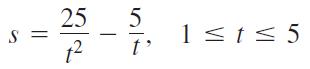
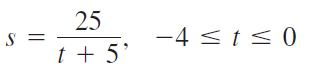
Give the positions s = ƒ(t) of a body moving on a coordinate line, with s in meters and t in seconds.a. Find the body’s displacement and average velocity for the given time interval.b. Find the body’s speed and acceleration at the endpoints of the interval.c. When, if ever, during the interval
Give the positions s = ƒ(t) of a body moving on a coordinate line, with s in meters and t in seconds.a. Find the body’s displacement and average velocity for the given time interval.b. Find the body’s speed and acceleration at the endpoints of the interval.c. When, if ever, during the interval
Find dy/dx.y = x2 cos x
Give the positions s = ƒ(t) of a body moving on a coordinate line, with s in meters and t in seconds.a. Find the body’s displacement and average velocity for the given time interval.b. Find the body’s speed and acceleration at the endpoints of the interval.c. When, if ever, during the interval
Find dy/dx.y = 2√x sec x + 3
Give the positions s = ƒ(t) of a body moving on a coordinate line, with s in meters and t in seconds.a. Find the body’s displacement and average velocity for the given time interval.b. Find the body’s speed and acceleration at the endpoints of the interval.c. When, if ever, during the interval
Using the definition, calculate the derivatives of the function. Then find the values of the derivatives as specified. p(0) = √30; p'(1), p'(3), p'(2/3)
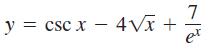
Find dy/dx. y csc x 4√x + = - 7 et
Using the definition, calculate the derivatives of the function. Then find the values of the derivatives as specified. k(z) = 1–²; k'(-1), k'(1), k' (√2) 27
Give the positions s = ƒ(t) of a body moving on a coordinate line, with s in meters and t in seconds.a. Find the body’s displacement and average velocity for the given time interval.b. Find the body’s speed and acceleration at the endpoints of the interval.c. When, if ever, during the interval
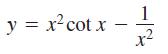
Find dy/dx. y = x² cotx - 1 x²
Give the positions s = ƒ(t) of a body moving on a coordinate line, with s in meters and t in seconds.a. Find the body’s displacement and average velocity for the given time interval.b. Find the body’s speed and acceleration at the endpoints of the interval.c. When, if ever, during the interval
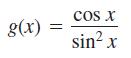
Find dy/dx. g(x) = COS X sin² x
Find dy/dx.ƒ(x) = sin x tan x
At time t, the position of a body moving along the s-axis is s = t3 - 6t2 + 9t m.a. Find the body’s acceleration each time the velocity is zero.b. Find the body’s speed each time the acceleration is zero.c. Find the total distance traveled by the body from t = 0 to t = 2.
At time t Ú 0, the velocity of a body moving along the horizontal s-axis is y = t2 - 4t + 3.a. Find the body’s acceleration each time the velocity is zero.b. When is the body moving forward? Backward?c. When is the body’s velocity increasing? Decreasing?
Find dy/dx.y = xe-x sec x
The equations for free fall at the surfaces of Mars and Jupiter (s in meters, t in seconds) are s = 1.86t2 on Mars and s = 11.44t2 on Jupiter. How long does it take a rock falling from rest to reach a velocity of 27.8 m > sec (about 100 km > h) on each planet?
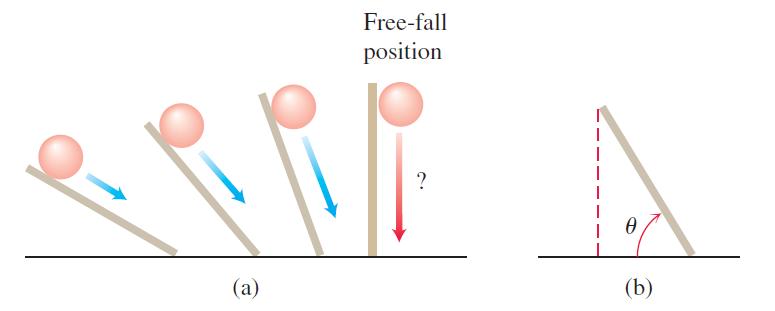
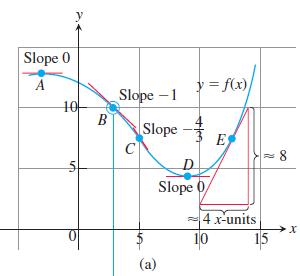
Galileo developed a formula for a body’s velocity during free fall by rolling balls from rest down increasingly steep inclined planks and looking for a limiting formula that would predict a ball’s behavior when the plank was vertical and the ball fell freely; see part (a) of the accompanying
Find dy/dx.y = (sin x + cos x) sec x
A rock thrown vertically upward from the surface of the moon at a velocity of 24 m / sec (about 86 km / h) reaches a height of s = 24t - 0.8t2 m in t sec.a. Find the rock’s velocity and acceleration at time t.b. How long does it take the rock to reach its highest point?c. How high does the rock
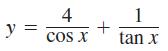
Find dy/dx. y 4 COS X + 1 tan x
Explorers on a small airless planet used a spring gun to launch a ball bearing vertically upward from the surface at a launch velocity of 15 m >sec. Because the acceleration of gravity at the planet’s surface was gs m>sec2, the explorers expected the ball bearing to reach a height of s =
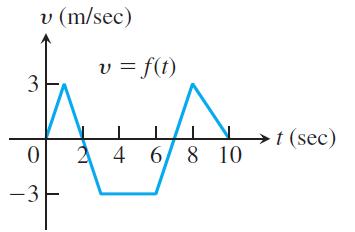
The accompanying figure shows the velocity y = ds/dt = ƒ(t) (m/ sec) of a body moving along a coordinate line.a. When does the body reverse direction?b. When (approximately) is the body moving at a constant speed?c. Graph the body’s speed for 0 ≤ t ≤ 10.d. Graph the acceleration, where
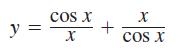
Find dy/dx. y = COS X X + X COS X
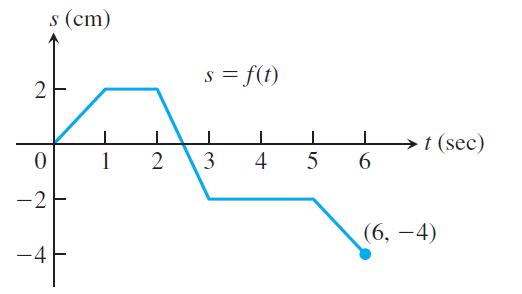
A particle P moves on the number line shown in part (a) of the accompanying figure. Part (b) shows the position of P as a function of time t.a. When is P moving to the left? Moving to the right? Standing still?b. Graph the particle’s velocity and speed (where defined). 0 P S s (cm)
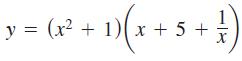
Find y′ (a) By applying the Product Rule(b) By multiplying the factors to produce a sum of simpler terms to differentiate. y = (x² + 1)(x + 5 + + 1)(x + 5 X
A 45-caliber bullet shot straight up from the surface of the moon would reach a height of s = 832t - 2.6t2 ft after t sec. On Earth, in the absence of air, its height would be s = 832t - 16t2 ft after t sec. How long will the bullet be aloft in each case? How high will the bullet go?
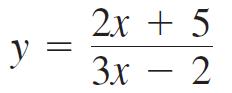
Find the derivatives of the function. y 2x + 5 3x - 2
Had Galileo dropped a cannonball from the Tower of Pisa, 179 ft above the ground, the ball’s height above the ground t sec into the fall would have been s = 179 - 16t2.a. What would have been the ball’s velocity, speed, and acceleration at time t?b. About how long would it have taken the ball
Find y′ (a) By applying the Product Rule and (b) By multiplying the factors to produce a sum of simpler terms to differentiate.y = (3 - x2) (x3 - x + 1)
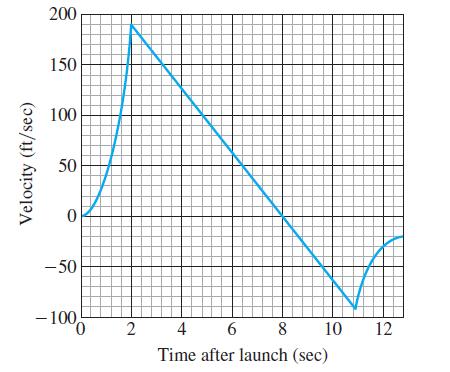
When a model rocket is launched, the propellant burns for a few seconds, accelerating the rocket upward. After burnout, the rocket coasts upward for a while and then begins to fall. A small explosive charge pops out a parachute shortly after the rocket starts down. The parachute slows the rocket to
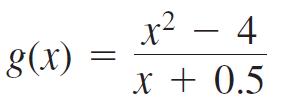
Find the derivatives of the function. g(x) = x² - 4 x + 0.5
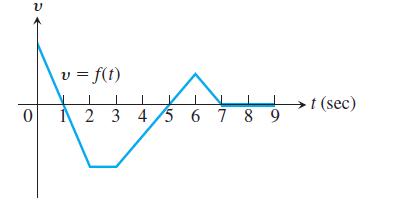
The accompanying figure shows the velocity y = ƒ(t) of a particle moving on a horizontal coordinate line.a. When does the particle move forward? Move backward? Speed up? Slow down?b. When is the particle’s acceleration positive? Negative? Zero?c. When does the particle move at its greatest
Find y′ (a) By applying the Product Rule and (b) By multiplying the factors to produce a sum of simpler terms to differentiate.y = (2x + 3) (5x2 - 4x)
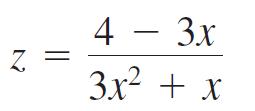
Find the derivatives of the function. Z 4 - 3x 3x² + x
Find dy/dx.y = (sec x + tan x) (sec x - tan x)
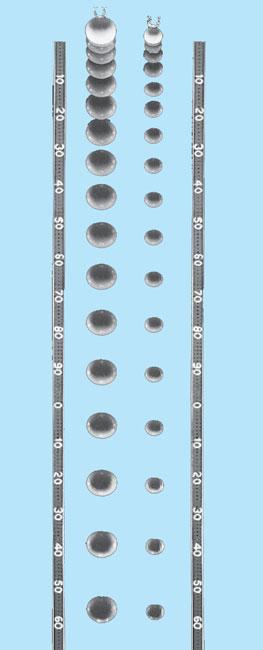
The multiflash photograph in the accompanying figure shows two balls falling from rest. The vertical rulers are marked in centimeters. Use the equation s = 490t2 (the freefall equation for s in centimeters and t in seconds) to answer the following questions.a. How long did it take the balls to fall
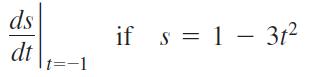
Find the values of the derivative. ds dt t=-1 if s 13t² =
Find dy/dx.y = x2 cos x - 2x sin x - 2 cos x
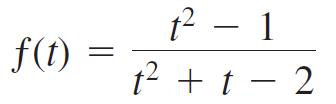
Find the derivatives of the function. f(t) || = 1²2 t² + t - 2 2 1 ▬
Find y′ (a) By applying the Product Rule and (b) By multiplying the factors to produce a sum of simpler terms to differentiate.y = (1 + x2)(x3/4 - x-3)
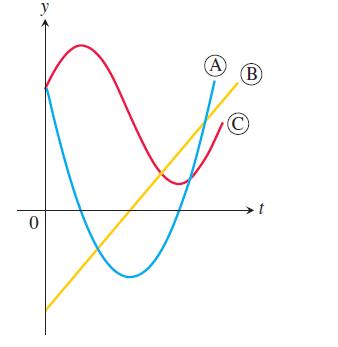
The graphs in the accompanying figure show the position s, velocity y = ds/dt, and acceleration a = d2s/dt2 of a body moving along a coordinate line as functions of time t. Which graph is which? Give reasons for your answers. y (A) (B) C V 0
Find dy/dx.ƒ(x) = x3 sin x cos x
Find dy/dx.g(x) = (2 - x) tan2 x
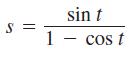
Find ds/dt. S = sin t 1 - cos t
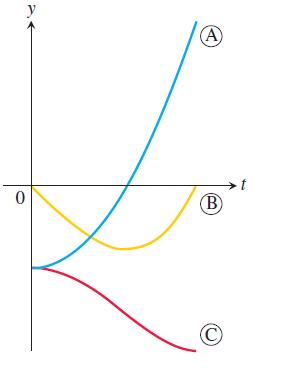
The graphs in the accompanying figure show the position s, the velocity y = ds/dt, and the acceleration a = d2s/dt2 of a body moving along a coordinate line as functions of time t. Which graph is which? Give reasons for your answers. y 0 (A) (B)
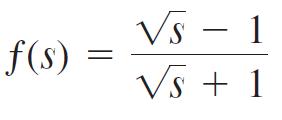
Find the derivatives of the function. f(s) = Vs - 1 Vs + 1
Find ds/dt.s = tan t - e-t
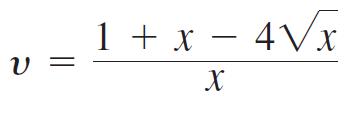
Find the derivatives of the function. υ บ 1 + x = 4√x X
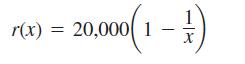
Suppose that the revenue from selling x washing machines isdollars.a. Find the marginal revenue when 100 machines are produced.b. Use the function r′(x) to estimate the increase in revenue that will result from increasing production from 100 machines a week to 101 machines a week.c. Find the
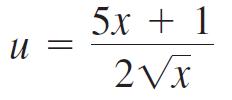
Find the derivatives of the function. И 5x + 1 2√x
Find the derivatives of the function.y = (1 - t) (1 + t2)-1
Find ds/dt.s = t2 - sec t + 5et
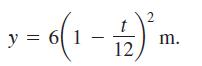
It takes 12 hours to drain a storage tank by opening the valve at the bottom. The depth y of fluid in the tank t hours after the valve is opened is given by the formulaa. Find the rate dy/dt (m/h) at which the tank is draining at time t.b. When is the fluid level in the tank falling fastest?
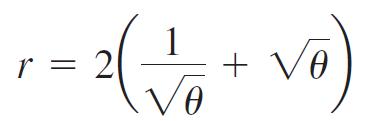
Find the derivatives of the function. r = 1 2 =(√/ + 0 + Ve
Find the derivatives of the function.w = (2x - 7)-1(x + 5)
Find dr/dθ.r = 4 - θ2 sin θ
Suppose that the dollar cost of producing x washing machines is c(x) = 2000 + 100x - 0.1x2.a. Find the average cost per machine of producing the first 100 washing machines.b. Find the marginal cost when 100 washing machines are produced.c. Show that the marginal cost when 100 washing machines are
Find dr/dθ.r = θ sin θ + cos θ
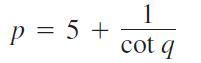
Find dp/dq. P = 5 + 1 cot q
Find dr/dθ.r = sec θ csc θ
Find dr/dθ.r = (1 + sec θ) sin θ
A typical male’s body surface area S in square meters is often modeled by the formula S = 1/60√wh, where h is the height in cm, and w the weight in kg, of the person. Find the rate of change of body surface area with respect to weight for males of constant height h = 180 cm (roughly 5′9″).
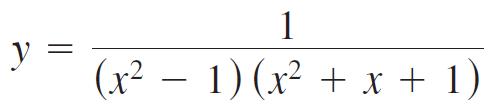
Find the derivatives of the function. y || 1 (x² - 1) (x² + x + 1)
Give the position function s = ƒ(t) of an object moving along the s-axis as a function of time t. Graph ƒ together with the velocity function y(t) = ds/dt = ƒ′(t) and the acceleration function a(t) = d2s/dt2 = ƒ″(t). Comment on the object’s behavior in relation to the signs and values of
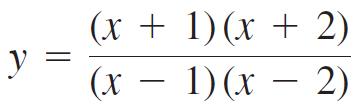
Find the derivatives of the function. y (x + 1)(x (x - 1)(x + 2) 1)(x − 2)
Find dp/dq.p = (1 + csc q)cos q
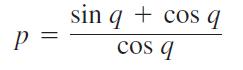
Find dp/dq. P sin q + cos q cos q
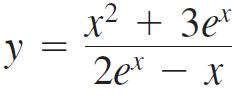
Find the derivatives of the function. y = x² + 3ex 2ex X
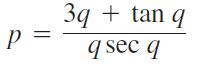
Find dp/dq. P 3q + tan q q sec q
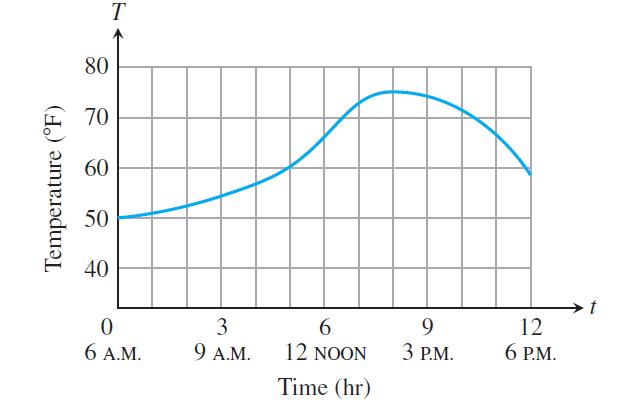
The given graph shows the temperature T in °F at Davis, CA, on April 18, 2008, between 6 a.m. and 6 p.m.a. Estimate the rate of temperature change at the timesi) 7 a.m. ii) 9 a.m. iii) 2 p.m. iv) 4 p.m.b. At what time does the temperature increase most rapidly? Decrease most rapidly? What is
The number of gallons of water in a tank t minutes after the tank has started to drain is Q(t) = 200(30 - t)2. How fast is the water running out at the end of 10 min? What is the average rate at which the water flows out during the first 10 min?
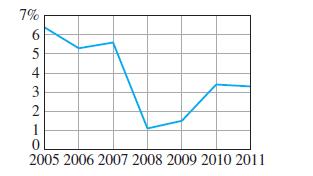
The graph in the accompanying figure shows the average annual percentage change y = ƒ(t) in the U.S. gross national product (GNP) for the years 2005–2011. Graph dy/dt (where defined). 7% 6 5 4 3 2 1 0 2005 2006 2007 2008 2009 2010 2011
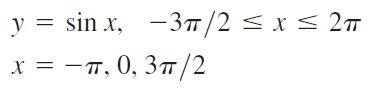
Graph the curves over the given intervals, together with their tangents at the given values of x. Label each curve and tangent with its equation. y = sin x, -3π/2 ≤ x ≤ 2π x = -π, 0, 3π/2
Based on data from the U.S. Bureau of Public Roads, a model for the total stopping distance of a moving car in terms of its speed is s = 1.1v + 0.054v2, where s is measured in ft and v in mph. The linear term 1.1v models the distance the car travels during the time the driver perceives a need to
Find the derivatives of the function.y = 2e-x + e3x
The volume V = (4/3)πr3 of a spherical balloon changes with the radius.a. At what rate (ft3/ft) does the volume change with respect to the radius when r = 2 ft?b. By approximately how much does the volume increase when the radius changes from 2 to 2.2 ft?
Suppose that the distance an aircraft travels along a runway before takeoff is given by D = (10/9)t2, where D is measured in meters from the starting point and t is measured in seconds from the time the brakes are released. The aircraft will become airborne when its speed reaches 200 km/h. How long
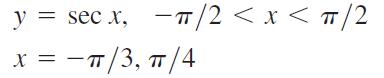
Graph the curves over the given intervals, together with their tangents at the given values of x. Label each curve and tangent with its equation. y= y = sec x, -π/2
Find the derivatives of the function.y = x3ex
Give the position function s = ƒ(t) of an object moving along the s-axis as a function of time t. Graph ƒ together with the velocity function y(t) = ds/dt = ƒ′(t) and the acceleration function a(t) = d2s/dt2 = ƒ″(t). Comment on the object’s behavior in relation to the signs and values of
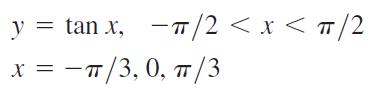
Graph the curves over the given intervals, together with their tangents at the given values of x. Label each curve and tangent with its equation. y = tan x, x = -π/3, 0, π/3 π/2 < x < π/2
Although the November 1959 Kilauea Iki eruption on the island of Hawaii began with a line of fountains along the wall of the crater, activity was later confined to a single vent in the crater’s floor, which at one point shot lava 1900 ft straight into the air (a Hawaiian record). What was the
Find the derivatives of the function.w = re-r
Find y″ ifa. y = csc x. b. y = sec x.
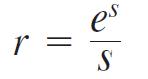
Find the derivatives of the function. r = es S
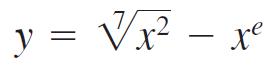
Find the derivatives of the function. = A Vx2 - x X
Find the derivatives of the function.y = x9/4 + e-2x
Graph the curves over the given intervals, together with their tangents at the given values of x. Label each curve and tangent with its equation. y = 1 + cos x, -3π/2 ≤ x ≤ 2π x = -π/3, 3π/2 X
Showing 13300 - 13400
of 29454
First
127
128
129
130
131
132
133
134
135
136
137
138
139
140
141
Last
Step by Step Answers

 Get 50% OFF
Claim Now
Get 50% OFF
Claim Now