New Semester
Started
Get
50% OFF
Study Help!
--h --m --s
Claim Now
Question Answers
Textbooks
Find textbooks, questions and answers
Oops, something went wrong!
Change your search query and then try again
S
Books
FREE
Study Help
Expert Questions
Accounting
General Management
Mathematics
Finance
Organizational Behaviour
Law
Physics
Operating System
Management Leadership
Sociology
Programming
Marketing
Database
Computer Network
Economics
Textbooks Solutions
Accounting
Managerial Accounting
Management Leadership
Cost Accounting
Statistics
Business Law
Corporate Finance
Finance
Economics
Auditing
Tutors
Online Tutors
Find a Tutor
Hire a Tutor
Become a Tutor
AI Tutor
AI Study Planner
NEW
Sell Books
Search
Search
Sign In
Register
study help
sciences
chemistry an atoms first approach
Chemistry An Atoms First Approach 2nd Edition Steven S. Zumdahl, Susan A. Zumdahl - Solutions
What will be the effect on the volume of an ideal gas if the pressure is doubled and the absolute temperature is halved?
A container is filled with an ideal gas to a pressure of 11.0 atm at 0°C. a. What will be the pressure in the container if it is heated to 45°C? b. At what temperature would the pressure be 6.50 atm? c. At what temperature would the pressure be 25.0 atm?
Consider the following reaction:It takes 2.00 L of pure oxygen gas at STP to react completely with a certain sample of aluminum. What is the mass of aluminum reacted? 4Al(s) + 30₂(g) - 2Al₂O3(s)
Which of the following statements is(are) true? a. If the number of moles of a gas is doubled, the volume will double, assuming the pressure and temperature of the gas remain constant. b. If the temperature of a gas increases from 25°C to 50°C, the volume of the gas would double, assuming that
A piece of solid carbon dioxide, with a mass of 7.8 g, is placed in a 4.0-L otherwise empty container at 27°C. What is the pressure in the container after all the carbon dioxide vaporizes? If 7.8 g solid carbon dioxide were placed in the same container but it already contained air at 740 torr,
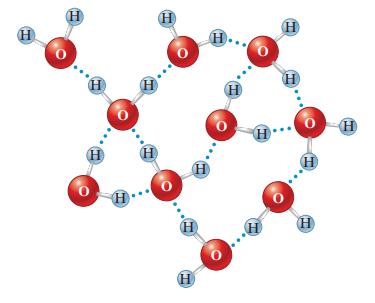
In the diagram below, which lines represent the hydrogen bonding? a. The dotted lines between the hydrogen atoms of one water molecule and the oxygen atoms of a different water molecule b. The solid lines between a hydrogen atom and oxygen atom in the same water molecule c. Both the solid lines
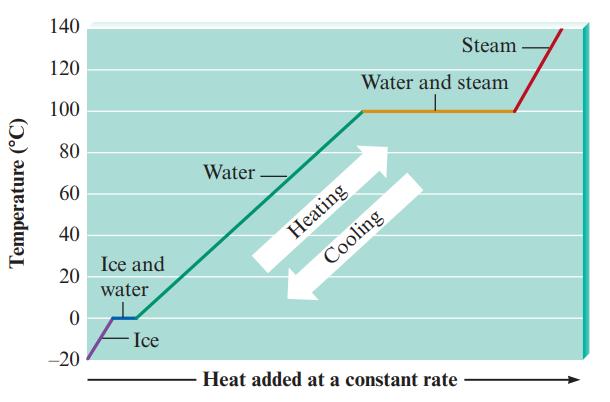
Refer to Fig. 9.14. Why doesn’t temperature increase continuously over time? That is, why does the temperature stay constant for periods of time?Fig. 9.14. Temperature (°C) 140 120 100 80 60 40 20 0 -20 Ice and water Ice Water Heating Steam Water and steam Cooling Heat added at a constant rate
A 20.0-L nickel container was charged with 0.859 atm of xenon gas and 1.37 atm of fluorine gas at 400°C. The xenon and fluorine react to form xenon tetrafluoride. What mass of xenon tetrafluoride can be produced assuming 100% yield?
Use the kinetic molecular theory to explain why a liquid gets cooler as it evaporates from an insulated container.
Silicon carbide (SiC) is an extremely hard substance that acts as an electrical insulator. Propose a structure for SiC.
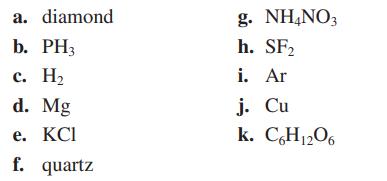
What type of solid will each of the following substances form? a. diamond b. PH3 c. H₂ d. Mg e. KCI f. quartz g. NH4NO3 h. SF₂ i. Ar j. Cu k. C6H12O6
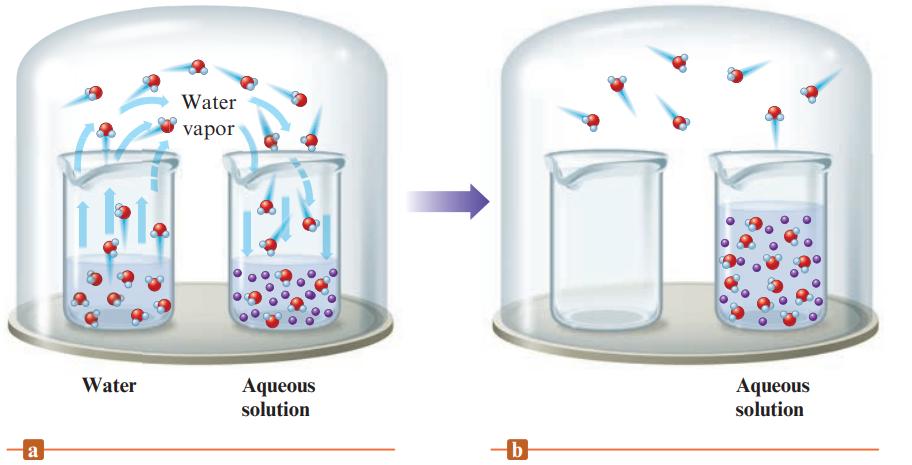
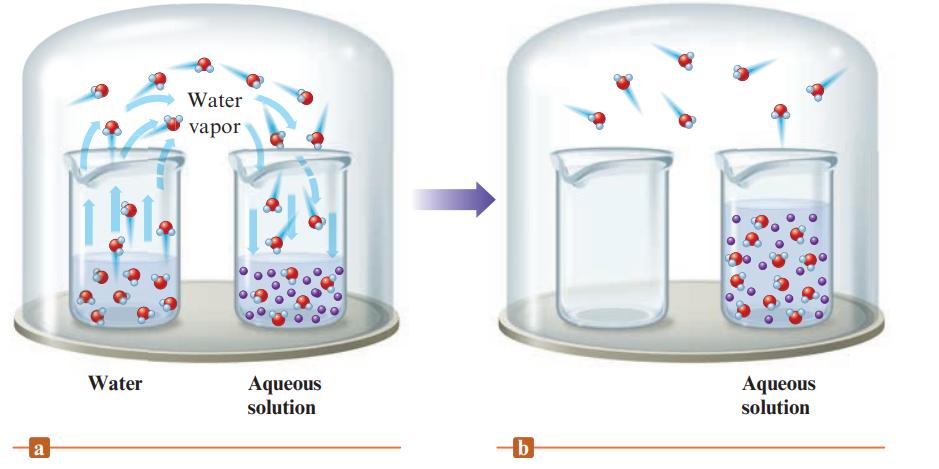
Consider Fig. 10.9. According to the caption and picture, water seems to go from one beaker to another.Fig. 10.9a. Explain why this occurs. b. The explanation in the text uses terms such as vapor pressure and equilibrium. Explain what these have to do with the phenomenon. For example, what is
Explain how doping silicon with either phosphorus or gallium increases the electrical conductivity over that of pure silicon.
Define the terms in Raoult’s law. Fig. 10.9 illustrates the net transfer of water molecules from pure water to an aqueous solution of a nonvolatile solute. Explain why eventually all of the water from the beaker of pure water will transfer to the aqueous solution. If the experiment illustrated in
Some ionic compounds contain a mixture of different charged cations. For example, wüstite is an oxide that contains both Fe2+ and Fe3+ cations and has a formula of Fe0.950O1.00. Calculate the fraction of iron ions present as Fe3+. What fraction of the sites normally occupied by Fe2+ must be vacant
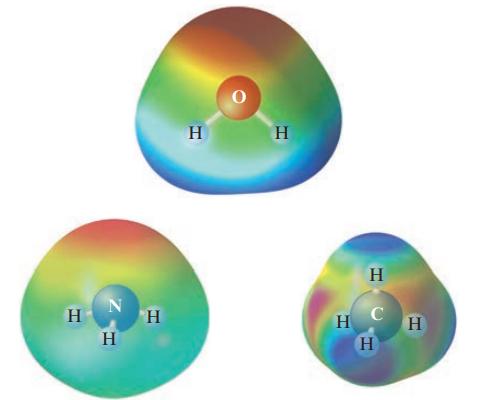
Given the following electrostatic potential diagrams, comment on the expected solubility of CH4 in water and NH3 in water. н N H Н H Н Н Н с Н Н
In terms of Raoult’s law, distinguish between an ideal liquid–liquid solution and a nonideal liquid–liquid solution. If a solution is ideal, what is true about ΔHsoln, ΔT for the solution formation, and the interactive forces within the pure solute and pure solvent as compared to the
Rubbing alcohol contains 585 g isopropanol (C3H7OH) per liter (aqueous solution). Calculate the molarity.
The lattice energy for an ionic compound is the enthalpy change for the process M+(g) + X-(g) → MX(s). For NaI, the lattice energy process is:If the enthalpy of hydration of NaI is -694 kJ/mol, calculate the enthalpy of solution per mole of solid NaI. Describe the process to which this enthalpy
Which solvent, water or hexane (C6H14), would you choose to dissolve each of the following?a. Cu(NO3)2 b. CS2 c. CH3OHd. CH3(CH2)16CH2OH e. HCl f. C6H6
The vapor pressure of a solution containing 53.6 g glycerin (C3H8O3) in 133.7 g ethanol (C2H5OH) is 113 torr at 40°C. Calculate the vapor pressure of pure ethanol at 40°C assuming that glycerin is a nonvolatile, nonelectrolyte solute in ethanol.
At a certain temperature, the vapor pressure of pure benzene (C6H6) is 0.930 atm. A solution was prepared by dissolving 10.0 g of a nondissociating, nonvolatile solute in 78.11 g of benzene at that temperature. The vapor pressure of the solution was found to be 0.900 atm. Assuming the solution
A solution of sodium chloride in water has a vapor pressure of 19.6 torr at 25°C. What is the mole fraction of solute particles in this solution? What would be the vapor pressure of this solution at 45°C? The vapor pressure of pure water is 23.8 torr at 258C and 71.9 torr at 45°C, and assume
Pentane (C5H12) and hexane (C6H14) form an ideal solution. At 25°C the vapor pressures of pentane and hexane are 511 and 150. torr, respectively. A solution is prepared by mixing 25 mL pentane (density, 0.63 g/mL) with 45 mL hexane (density, 0.66 g/mL). a. What is the vapor pressure of the
A solution is prepared by mixing 0.0300 mole of CH2Cl2 and 0.0500 mole of CH2Br2 at 25°C. Assuming the solution is ideal, calculate the composition of the vapor (in terms of mole fractions) at 25°C. At 25°C, the vapor pressures of pure CH2Cl2 and pure CH2Br2 are 133 and 11.4 torr, respectively.
What is the composition of a methanol (CH3OH)–propanol (CH3CH2CH2OH) solution that has a vapor pressure of 174 torr at 40°C? At 40°C, the vapor pressures of pure methanol and pure propanol are 303 and 44.6 torr, respectively. Assume the solution is ideal.
Benzene and toluene form an ideal solution. Consider a solution of benzene and toluene prepared at 25°C. Assuming the mole fractions of benzene and toluene in the vapor phase are equal, calculate the composition of the solution. At 25°C the vapor pressures of benzene and toluene are 95 and 28
Calculate the freezing point and boiling point of an antifreeze solution that is 50.0% by mass of ethylene glycol (HOCH2CH2OH) in water. Ethylene glycol is a nonelectrolyte.
A solution is prepared by dissolving 52.3 g cesium chloride in 60.0 g water. The volume of the solution is 63.3 mL. Calculate the mass percent, molarity, molality, and mole fraction of the CsCl solution.
A solution is prepared by mixing 1.000 mole of methanol (CH3OH) and 3.18 moles of propanol (CH3CH2CH2OH). What is the composition of the vapor (in mole fractions) at 40°C? At 40°C, the vapor pressure of pure methanol is 303 torr, and the vapor pressure of pure propanol is 44.6 torr.
An unknown compound contains only carbon, hydrogen, and oxygen. Combustion analysis of the compound gives mass percents of 31.57% C and 5.30% H. The molar mass is determined by measuring the freezing-point depression of an aqueous solution. A freezing point of -5.20°C is recorded for a solution
On Easter Sunday, April 3, 1983, nitric acid spilled from a tank car near downtown Denver, Colorado. The spill was neutralized with sodium carbonate: a. Calculate DH8 for this reaction. Approximately 2.0 x 10⁴ gal nitric acid was spilled. Assume that the acid was an aqueous solution containing
The standard enthalpy of formation for NO(g) is 90. kJ/mol. Use this and the values for the O = O and N ≡ N bond energies to estimate the bond strength in NO.
When a gas expands, what is the sign of w? Why? When a gas contracts, what is the sign of w? Why? What are the signs of q and w for the process of boiling water?
What is Hess’s law? When a reaction is reversed, what happens to the sign and magnitude of ΔH for that reversed reaction? When the coefficients in a balanced reaction are multiplied by a factor n, what happens to the sign and magnitude of ΔH for that multiplied reaction?
The bond energy for a C-H bond is about 413 kJ/mol in CH4 but 380 kJ/mol in CHBr3. Although these values are relatively close in magnitude, they are different. Explain why they are different. Does the fact that the bond energy is lower in CHBr3 make any sense? Why?
How is average bond strength related to relative potential energies of the reactants and the products?
Which has the greater kinetic energy, an object with a mass of 2.0 kg and a velocity of 1.0 m/s or an object with a mass of 1.0 kg and a velocity of 2.0 m/s?
A gas absorbs 45 kJ of heat and does 29 kJ of work. Calculate ΔE.
A system releases 125 kJ of heat while 104 kJ of work is done on it. Calculate ΔE.
If the internal energy of a thermodynamic system is increased by 300. J while 75 J of expansion work is done, how much heat was transferred and in which direction, to or from the system?
The reactionis the last step in the commercial production of sulfuric acid. The enthalpy change for this reaction is -227 kJ. In designing a sulfuric acid plant, is it necessary to provide for heating or cooling of the reaction mixture? Explain. SO3(g) + H₂O(l) - H₂SO4(aq)
Are the following processes exothermic or endothermic? a. When solid KBr is dissolved in water, the solution gets colder. b. Natural gas (CH4) is burned in a furnace. c. When concentrated H2SO4 is added to water, the solution gets very hot. d. Water is boiled in a teakettle
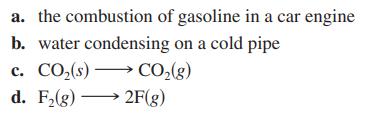
Are the following processes exothermic or endothermic? a. the combustion of gasoline in a car engine b. water condensing on a cold pipe c. CO₂ (s)- → CO₂(g) d. F₂(g) →→→2F(g)
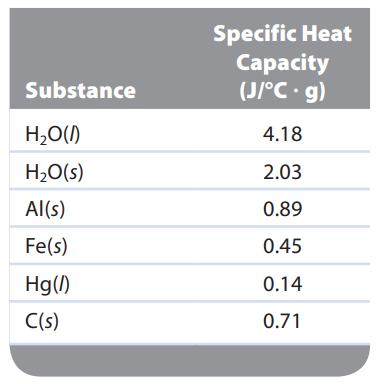
A 5.00-g sample of one of the substances listed in Table 7.1 was heated from 25.2°C to 55.1°C, requiring 133 J to do so. Which substance was it?Table 7.1 Substance H₂O(l) H₂O(s) Al(s) Fe(s) Hg(/) C(s) Specific Heat Capacity (J/°C. g) 4.18 2.03 0.89 0.45 0.14 0.71
In a coffee-cup calorimeter, 100.0 mL of 1.0 M NaOH and 100.0 mL of 1.0 M HCl are mixed. Both solutions were originally at 24.6°C. After the reaction, the final temperature is 31.3°C. Assuming that all the solutions have a density of 1.0 g/cm3 and a specific heat capacity of 4.18 J/°C • g,
The enthalpy of combustion of solid carbon to form carbon dioxide is 2393.7 kJ/mol carbon, and the enthalpy of combustion of carbon monoxide to form carbon dioxide is 2283.3 kJ/mol CO. Use these data to calculate ΔH for the reaction 2C(s) + O₂(g) →2CO(g)
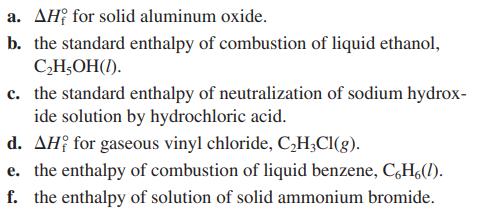
Write reactions for which the enthalpy change will be a. AH for solid aluminum oxide. b. the standard enthalpy of combustion of liquid ethanol, C₂H₂OH(I). c. the standard enthalpy of neutralization of sodium hydrox- ide solution by hydrochloric acid. d. AH for gaseous vinyl chloride,
Water gas is produced from the reaction of steam with coal:Assuming that coal is pure graphite, calculate ΔH° for this reaction. C(s) + H₂O(g) →→→ H₂(g) + CO(g)
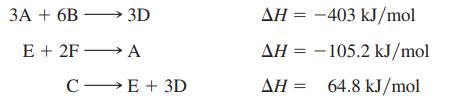
Consider the following equations:Suppose the first equation is reversed and multiplied by 1/6, the second and third equations are divided by 2, and the three adjusted equations are added. What is the net reaction and what is the overall heat of this reaction? 3A + 6B – E + 2F - • 3D Α C ->E
Which of the following substances have an enthalpy of formation equal to zero?a. Cl2(g) b. H2(g) c. N2(l) d. Cl(g)
Quinone is an important type of molecule that is involved in photosynthesis. The transport of electrons mediated by quinone in certain enzymes allows plants to take water, carbon dioxide, and the energy of sunlight to create glucose. A 0.1964-g sample of quinone (C6H4O2) is burned in a bomb
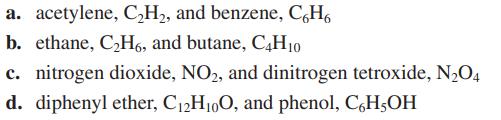
Which of the following pairs of compounds have the same empirical formula? a. acetylene, C₂H₂, and benzene, C6H₁ b. ethane, C₂H6, and butane, C4H10 c. nitrogen dioxide, NO2, and dinitrogen tetroxide, N₂O4 d. diphenyl ether, C₁2H10O, and phenol, C6H5OH
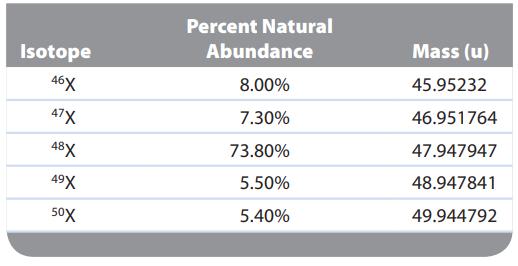
An element “X” has five major isotopes, which are listed below along with their abundances. What is the element? Isotope 46X 47X 48X 49X 50X Percent Natural Abundance 8.00% 7.30% 73.80% 5.50% 5.40% Mass (u) 45.95232 46.951764 47.947947 48.947841 49.944792
What mass of silver chloride can be prepared by the reaction of 100.0 mL of 0.20 M silver nitrate with 100.0 mL of 0.15 M calcium chloride? Calculate the concentrations of each ion remaining in solution after precipitation is complete.
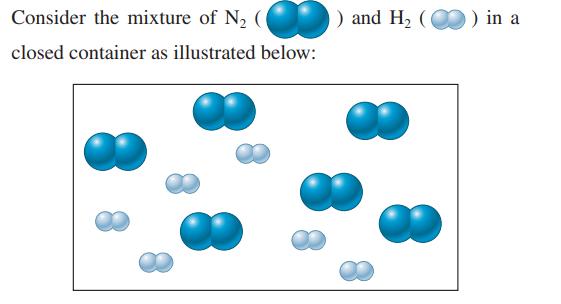
Nitrogen gas (N2) and hydrogen gas (H2) react to form ammonia gas (NH3).Assuming the reaction goes to completion, draw a representation of the product mixture. Explain how you arrived at this representation. Consider the mixture of N₂ ( closed container as illustrated below: ) and H₂ () in a
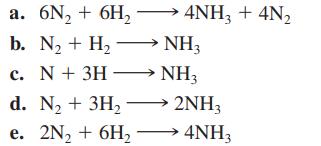
For the preceding question, which of the following equations best represents the reaction? 4NH3 + 4N₂ a. 6N₂ + 6H₂ b. N₂ + H₂NH3 c. N + 3H NH3 d. N₂ + 3H₂ →→→ 2NH3 e. 2N₂ + 6H₂ 4NH3
What is the difference between the empirical and molecular formulas of a compound? Can they ever be the same? Explain.
Can the subscripts in a chemical formula be fractions? Explain. Can the coefficients in a balanced chemical equation be fractions? Explain. Changing the subscripts of chemicals can balance the equations mathematically. Why is this unacceptable?
According to the law of conservation of mass, mass cannot be gained or destroyed in a chemical reaction. Why can’t you simply add the masses of two reactants to determine the total mass of product?
Consider the following generic reaction:In a limiting reactant problem, a certain quantity of each reactant is given and you are usually asked to calculate the mass of product formed. If 10.0 g of Y2 is reacted with 10.0 g of XY, outline two methods you could use to determine which reactant is
What is the difference between the molar mass and the empirical formula mass of a compound? When are these masses the same, and when are they different? When different, how is the molar mass related to the empirical formula mass?
A diamond contains 5.0 × 10²¹ atoms of carbon. What amount (moles) of carbon and what mass (grams) of carbon are in this diamond?
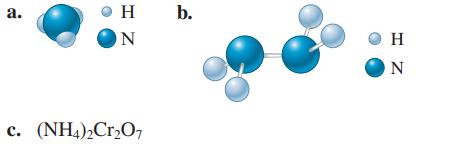
Calculate the molar mass of the following substances. a. H ON c. (NH4)2Cr2O7 b. Ο Η HZ N
Aluminum metal is produced by passing an electric current through a solution of aluminum oxide (Al2O3) dissolved in molten cryolite (Na3AlF6). Calculate the molar masses of Al2O3 and Na3AlF6.
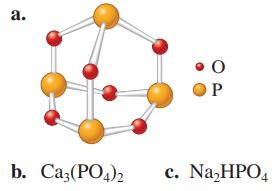
Calculate the molar mass of the following substances. a. 0 OP b. Ca3(PO4)2 c. Na₂HPO4
Hemoglobin is the protein that transports oxygen in mammals. Hemoglobin is 0.347% Fe by mass, and each hemoglobin molecule contains four iron atoms. Calculate the molar mass of hemoglobin.
Express the composition of each of the following compounds as the mass percents of its elements. a. Formaldehyde, CH2O b. Glucose, C6H12O6 c. Acetic acid, HC2H3O2
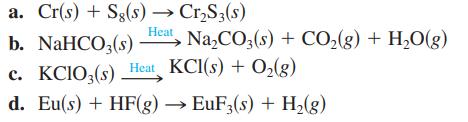
Balance the following equations: a. Cr(s) + Sg(s) → Cr₂S3(s) b. NaHCO3(s) Heat, Na₂CO3(s) + CO₂(g) + H₂O(g) c. KCIO3(s) Heat KCl(s) + O₂(g) d. Eu(s) + HF(g) → EuF3(s) + H₂(g)
Considering your answer to Exercise 79, which type of formula, empirical or molecular, can be obtained from elemental analysis that gives percent composition?Data in Exercise 79,Express the composition of each of the following compounds as the mass percents of its elements.
Ammonia is produced from the reaction of nitrogen and hydrogen according to the following balanced equation: a. What is the maximum mass of ammonia that can be produced from a mixture of 1.00 × 10³ g N2 and 5.00 × 10² g H2? b. What mass of which starting material would remain unreacted? N₂(g)
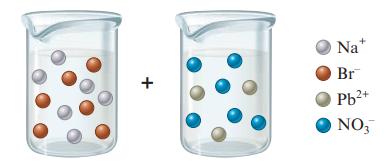
When the following beakers are mixed, draw a molecular level representation of the product mixture (see Fig. 6.17). + Na+ Br Pb²+ NO3
What is an acid–base reaction? Strong bases are soluble ionic compounds that contain the hydroxide ion. List the strong bases. When a strong base reacts with an acid, what is always produced? Explain the terms titration, stoichiometric point, neutralization, and standardization.
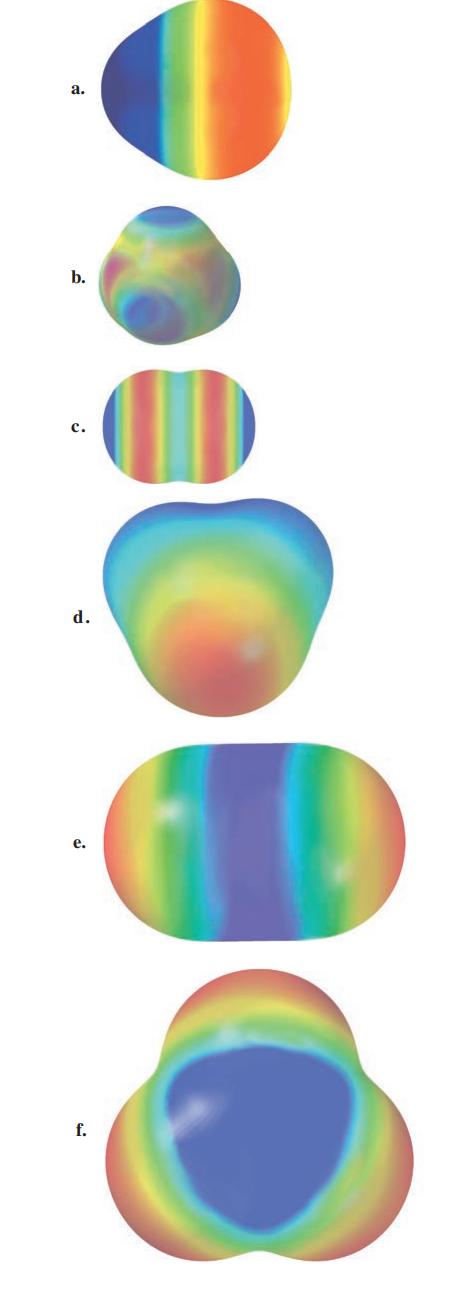
Consider the following electrostatic potential diagrams for some covalent compounds. Which of the represented compounds would not be soluble in water? a. b. C. d. e. f.
Consider the steps involved in balancing oxidation– reduction reactions by using oxidation states. The key to the oxidation states method is to equalize the electrons lost by the species oxidized with the electrons gained by the species reduced. First of all, how do you recognize what is oxidized
Of F2, CF4, and SF2, which substance is most soluble in water? Explain.
A student had 1.00 L of a 1.00-M acid solution. Much to the surprise of the student, it took 2.00 L of 1.00 M NaOH solution to react completely with the acid. Explain why it took twice as much NaOH to react with all of the acid.In a different experiment, a student had 10.0 mL of 0.020 M HCl. Again,
Show how each of the following strong electrolytes “breaks up” into its component ions upon dissolving in water by drawing molecular-level pictures.a. NaBr b. MgCl2 c. Al(NO3)3 d. (NH4)2SO4 e. NaOH f. FeSO4 g. KMnO4h. HClO4i. NH4C2H3O2 (ammonium acetate)
What mass of solid AgBr is produced when 100.0 mL of 0.150 M AgNO3 is added to 20.0 mL of 1.00 M NaBr?
What volume of 0.0200 M calcium hydroxide is required to neutralize 35.00 mL of 0.0500 M nitric acid?
The concentration of a certain sodium hydroxide solution was determined by using the solution to titrate a sample of potassium hydrogen phthalate (abbreviated as KHP). KHP is an acid with one acidic hydrogen and a molar mass of 204.22 g/mol. In the titration, 34.67 mL of the sodium hydroxide
Consider the reaction between sodium metal and fluorine (F2) gas to form sodium fluoride. Using oxidation states, how many electrons would each sodium atom lose, and how many electrons would each fluorine atom gain? How many sodium atoms are needed to react with one fluorine molecule? Write a
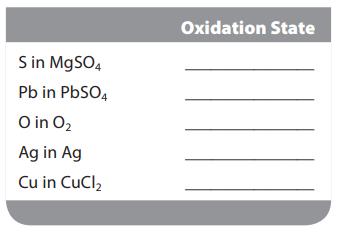
Assign the oxidation state for the element listed in each of the following compounds: S in MgSO4 Pb in PbSO4 O in O₂ Ag in Ag Cu in CuCl₂ Oxidation State
Consider the reaction between oxygen (O2) gas and magnesium metal to form magnesium oxide. Using oxidation states, how many electrons would each oxygen atom gain, and how many electrons would each magnesium atom lose? How many magnesium atoms are needed to react with one oxygen molecule? Write a
The blood alcohol (C2H5OH) level can be determined by titrating a sample of blood plasma with an acidic potassium dichromate solution, resulting in the production of Cr3+(aq) and carbon dioxide. The reaction can be monitored because the dichromate ion (Cr2O72-) is orange in solution, and the Cr3+
The vanadium in a sample of ore is converted to VO2+. The VO2+ ion is subsequently titrated with MnO4- in acidic solution to form V(OH)4+ and manganese(II) ion. The unbalanced titration reaction isTo titrate the solution, 26.45 mL of 0.02250 M MnO4- was required. If the mass percent of vanadium in
A 0.500-L sample of H2SO4 solution was analyzed by taking a 100.0-mL aliquot and adding 50.0 mL of 0.213 M NaOH. After the reaction occurred, an excess of OH- ions remained in the solution. The excess base required 13.21 mL of 0.103 M HCl for neutralization. Calculate the molarity of the original
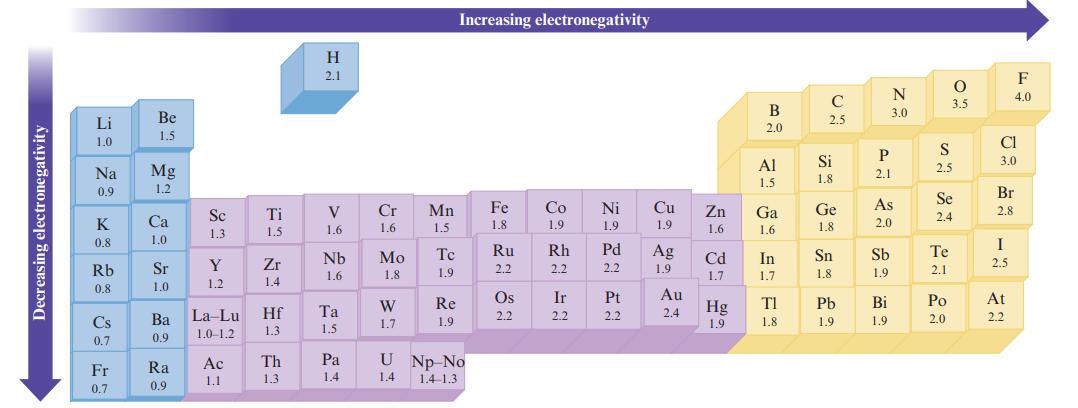
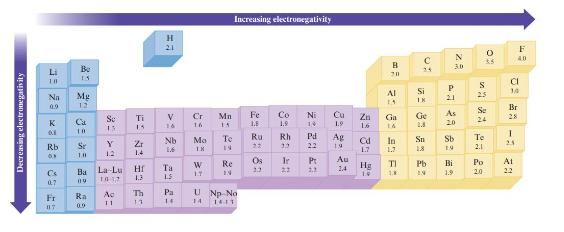
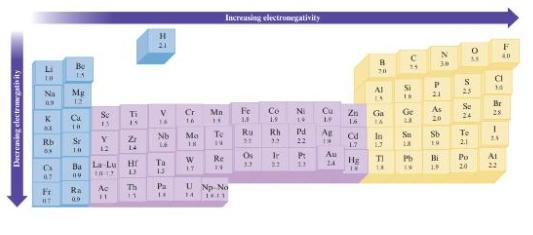
Without using Fig. 3.4, predict the order of increasing electronegativity in each of the following groups of elements. Data in Fig. 3.4a. Na, K, Rb b. B, O, Ga c. F, Cl, Br d. S, O, F Decreasing
Describe the type of bonding that exists in the Cl2(g) molecule. How does this type of bonding differ from that found in the HCl(g) molecule? How is it similar?
Without using Fig. 3.4, predict which bond in each of the fol- lowing groups will be the most polar.Data in Fig. 3.4a. C-F, Si-F, Ge-F b. P-Cl or S-Cl c. S-F, S-Cl, S-Br d. Ti-Cl, Si-Cl, Ge-Cl Decreasing electronegativity Li 18 K Na Mg 0.9 12 X 0. Cs 07 Be 20 Fr 117 Rb Se Y 1.2 de
Without using Fig. 3.4, predict which bond in each of the following groups will be the most polar.Fig. 3.4a. C-H, Si-H, Sn-H b. Al-Br, Ga-Br, In-Br, Tl-Br c. C-O or Si-O d. O-F or O-CI Decreasing electronegativity Li Na * KE Rb 63 C 67 Fi #T Be 15 7 * =2 E Mg Se Y 12 Se 13 Ra 00 Ti 15 Ba La Lu
Which of the following incorrectly shows the bond polarity? Show the correct bond polarity for those that are incorrect.
Predict the empirical formulas of the ionic compounds formed from the following pairs of elements. Name each compound. a. Li and N b. Ga and O c. Rb and Cld. Ba and S
Indicate the bond polarity (show the partial positive and partial negative ends) in the following bonds.a. C-O b. P-H c. H-Cl d. Br-Te e. Se-S
Predict the empirical formulas of the ionic compounds formed from the following pairs of elements. Name each compound. a. Al and Cl b. Na and O c. Sr and F d. Ca and Se
Write Lewis structures that obey the octet rule for each of the following molecules.a. CC14 b. NC13 c. SeCl2d. ICIIn each case, the atom listed first is the central atom.
Write Lewis structures for the following. Show all resonance structures where applicable. a. NO₂, NO3, N₂O4 (N₂O4 exists as O₂N-NO₂.) b. OCN-, SCN-, N₂- (Carbon is the central atom in OCN- and SCN .)
Write the formula for each of the following compounds: a. Zinc chloride b. Tin(IV) fluoride c. Calcium nitride d. Aluminum sulfidee. Mercury(I) selenidef. Silver iodide
Write the formula for each of the following compounds:a. Chromium(III) hydroxide b. Magnesium cyanide c. Lead(IV) carbonate d. Ammonium acetate
Write the formula for each of the following compounds: a. Diboron trioxide b. Arsenic pentafluoride c. Dinitrogen monoxide d. Sulfur hexachloride
Showing 100 - 200
of 248
1
2
3
Step by Step Answers

 Get 50% OFF
Claim Now
Get 50% OFF
Claim Now