New Semester
Started
Get
50% OFF
Study Help!
--h --m --s
Claim Now
Question Answers
Textbooks
Find textbooks, questions and answers
Oops, something went wrong!
Change your search query and then try again
S
Books
FREE
Study Help
Expert Questions
Accounting
General Management
Mathematics
Finance
Organizational Behaviour
Law
Physics
Operating System
Management Leadership
Sociology
Programming
Marketing
Database
Computer Network
Economics
Textbooks Solutions
Accounting
Managerial Accounting
Management Leadership
Cost Accounting
Statistics
Business Law
Corporate Finance
Finance
Economics
Auditing
Tutors
Online Tutors
Find a Tutor
Hire a Tutor
Become a Tutor
AI Tutor
AI Study Planner
NEW
Sell Books
Search
Search
Sign In
Register
study help
sciences
essential university physics
Essential University Physics 3rd Edition Volume 2 Richard Wolfsonby - Solutions
Photons of wavelength 1.68 cm excite transitions from the rotational ground state to the first rotational excited state in a gas. What’s the rotational inertia of the gas molecules?
Find the wavelength of a photon emitted in the l = 5 to l = 4 transition of a molecule whose rotational inertia is 1.75x10-47 kgm2
The rotational inertia of oxygen (O2) is 1.95x10-46 kgm2 . Find the wavelength of electromagnetic radiation needed to excite oxygen molecules to their first rotational excited state.
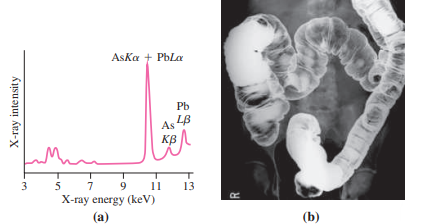
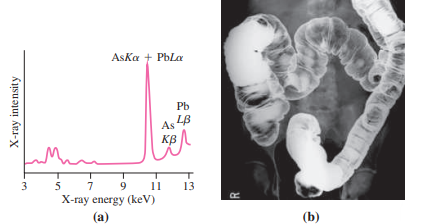
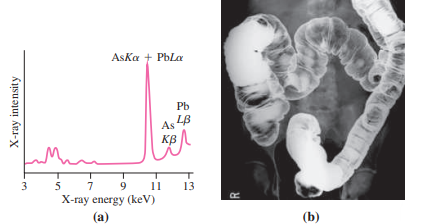
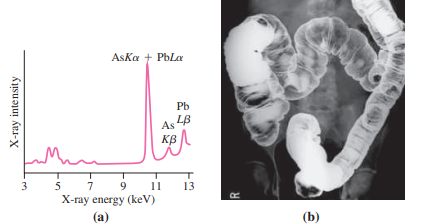
With sufficient energy, it?s possible to eject an electron from an inner atomic orbital. A higher-energy electron will then drop into the unoccupied state, emitting a photon with energy equal to the difference between the two levels. For inner-shell electrons, photon energies are in the keV range,
With sufficient energy, it?s possible to eject an electron from an inner atomic orbital. A higher-energy electron will then drop into the unoccupied state, emitting a photon with energy equal to the difference between the two levels. For inner-shell electrons, photon energies are in the keV range,
With sufficient energy, it?s possible to eject an electron from an inner atomic orbital. A higher-energy electron will then drop into the unoccupied state, emitting a photon with energy equal to the difference between the two levels. For inner-shell electrons, photon energies are in the keV range,
With sufficient energy, it?s possible to eject an electron from an inner atomic orbital. A higher-energy electron will then drop into the unoccupied state, emitting a photon with energy equal to the difference between the two levels. For inner-shell electrons, photon energies are in the keV range,
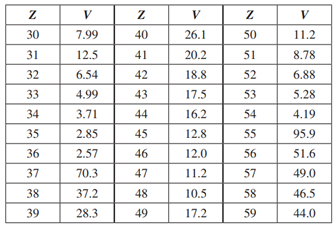
Using the table below, make a plot of atomic volume versus atomic number, for the elements from Z = 30 to Z = 59 listed in the table. Comment on the structure of your graph in relation to the periodic table, the electronic structures of atoms, and their chemical properties. (Volumes are in units of
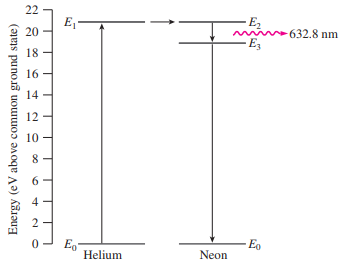
You work for a company that makes red helium?neon lasers widely used in physics experiments. Figure 36.19 shows an energy-level diagram for this laser. An electric current excites helium to a metastable level E1 at 20.61 eV above the ground state. Collisions transfer energy to neon atoms, exciting
The ratio of the magnetic moment, in units of the Bohr magneton μB, to the angular momentum, in units of ℏ, is called the g-factor.(a) Show that the classical orbital g-factor for an atomic electron in a circular Bohr orbit is gL = 1.(b) Show that Equation 36.13 gives gS = 2 for the g-factor
An ensemble of one-electron square-well systems of width 1.17 nm all have their electrons in highly excited states. They undergo all possible transitions in dropping toward the ground state, obeying the selection rule that ∆n must be odd.(a) What wavelengths of visible light are emitted?(b) Is
A selection rule for the infinite square well allows only those transitions in which n changes by an odd number. Suppose an infinite square well of width 0.200 nm contains an electron in the n = 4 state.(a) Draw an energy-level diagram showing all allowed transitions that could occur as this
Excimer lasers for vision correction generally use a combination of argon and fluorine to form a molecular complex that can exist only in an excited state. Stimulated de-excitation produces 6.42-eV photons, which form the laser’s intense beam. What’s the corresponding photon wavelength, and
(a) Verify Equation 36.8 by considering a single-electron atom with nuclear charge Ze instead of e.(b) Calculate the ionization energies for single-electron versions of helium, oxygen, lead, and uranium.? Z²E, n? (13.6 eV)Z² n? (36.8) En n2 2ma
Form the radial probability density P2(r) associated with the ψ2s state of Equation 36.7, and find the electron’s most probable radial position. 1 -r/2ao (36.7) 25 2 ao 4V2ma
Show that the maximum number of electrons in an atom’s nth shell is 2n2.
A hydrogen atom is in the 2s state. Find the probability that its electron will be found(a) beyond one Bohr radius(b) beyond 10 Bohr radii.
A hydrogen atom is in an F state.(a) Find the possible values for its total angular momentum.(b) For the state with the greatest angular momentum, find the number of possible values for the component of J(vector) on a given axis.
What’s the most orbital angular momentum that could be added to an atomic electron initially in the 6d state without changing its principal quantum number? What would be the new state?
Repeat Problem 58 for the case of an infinite square well containing N particles, rather than for a harmonic oscillator. Express your answer in terms of the ground-state energy E1.Data from Problem 58An infinite square well containing a number of particles is in its lowest possible energy state,
An infinite square well containing a number of particles is in its lowest possible energy state, which is 19 times the ground-state energy E1 for the same well when it contains a single particle.(a) How many particles are in the well?(b) What’s the energy of the highest-energy particle?
A harmonic oscillator potential with natural frequency ω contains N electrons and is in its state of lowest energy. Find expressions for the total energy for(a) N even (b) N odd.
A harmonic oscillator potential with natural frequency ω contains N electrons and is in its state of lowest energy. Find expressions for the energy of the highest-energy electron for(a) N even (b) N odd.
A harmonic oscillator potential with natural frequency v contains a number of electrons and is in its state of lowest energy. If that energy is 6.5ℏω(a) how many electrons are in the potential well (b) what’s the energy of the highest-energy electron?
Singly ionized oxygen (so-called O-II) is a prevalent species in the tenuous gas between stars, and O-II emits a doublet spectral line at 372.60 nm and 372.88 nm. Astrophysicists analyze this line to learn, among other things, about the distribution of interstellar gas in distant galaxies. Find the
You’ve acquired a laser for your dental practice. It produces 400-mJ pulses at 2.94 μm wavelength. A patient wonders about the number of photons in each pulse, and where they lie in the EM spectrum.
Find the probability that the electron in the hydrogen ground state will be found in the radial-distance range r = a0 ±0.1a0.
For hydrogen, fine-structure splitting of the 2p state is only about 50 μeV. What percentage is this difference of the photon energy emitted in the 2p → 1s transition? Your answer shows why it’s hard to observe spin-orbit splitting in hydrogen.
A solid-state laser made from lead–tin selenide has a lasing transition at a wavelength of 30 μm. If its power output is 2.0mW, how many lasing transitions occur each second?
An electron in a highly excited state of hydrogen (n1 >> 1) drops into the state n = n2. Find the lowest value of n2 for which the emitted photon will be in the infrared.
Determine the electronic configuration of copper.
You work for a nanotechnology company developing a new quantum device that operates essentially as a one-dimensional infinite square well of width 2.5 nm. You’re asked to specify the maximum number of electrons in the device before the total electron energy exceeds 25 eV.
A harmonic oscillator potential of natural frequency v contains eight electrons and is in its lowest-energy state.(a) What is its energy?(b) What would the lowest energy be if the electrons were replaced by spin-1 particles of the same mass?
Suppose you put five electrons into an infinite square well of width L. Find an expression for the minimum energy of this system, consistent with the exclusion principle.
A hydrogen atom is in the 4F5/2 state. Find(a) its energy in units of the ground-state energy,(b) its orbital angular momentum in units of ℏ, (c) the magnitude of its total angular momentum in units of ℏ.
Differentiate the radial probability density for the hydrogen ground state, and set the result to zero to show that the electron is most likely to be found at one Bohr radius.
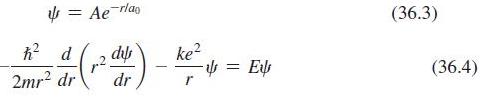
Substitute Equation 36.3 into Equation 36.4 and carry out the differentiation to show that you get the first unnumbered equation following Equation 36.4. 4 = Ae rlao (36.3) h? d r2 dr ke? = Ep (36.4) 2mr? dr
An electron in hydrogen is in the 5f state. What possible values, in units of ℏ, could a measurement of the orbital angular momentum component on a given axis yield?
A hydrogen atom has energy E = -0.850 eV. Find the maximum possible values for(a) its orbital angular momentum (b) the component of that angular momentum on a given axis.
A hydrogen atom is in an l = 2 state. What are the possible angles its orbital angular momentum vector can make with a given axis?
The maximum possible angular momentum for a hydrogen atom in a certain state is 30√11ℏ.. Find(a) the principal quantum number(b) the energy.
Assuming the Moon’s orbital angular momentum is quantized, estimate its orbital quantum number λ.
Find(a) the energy(b) the magnitude of the orbital angular momentum for an electron in the 5d state of hydrogen.
Determine the principal and orbital quantum numbers for a hydrogen atom whose electron has energy 20.850 eV and orbital angular momentum L = √6ℏ.
The 4p → 3s transition in sodium produces a double spectral line at 330.237 nm and 330.298 nm. What’s the energy splitting of the 4p level?
The 4f → 3p transition in sodium produces a spectral line at 567.0 nm. Find the energy difference between these two levels.
Show that the wavelength l in nm of a photon with energy E in eV is λ = 1240/E.
Write the full electronic structure of bromine.
Write the full electronic structure of scandium.
Use shell notation to characterize rubidium’s outermost electron.
A quantum harmonic oscillator with frequency ω contains 21 electrons. What’s the energy of the highest-energy electron?
An infinite square well contains nine electrons. Find the energy of the highest-energy electron in terms of the ground-state energy E1.
What are the possible j values for a hydrogen atom in the 3D state?
Some very short-lived particles known as delta resonances have spin 3 2. Find(a) the magnitude of their spin angular momentum (b) the number of possible spin states.
Theories of quantum gravity predict a spin-2 particle called the graviton. What would be the magnitude of the graviton’s spin angular momentum?
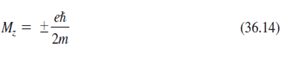
Verify the value of the Bohr magneton ?B in Equation 36.14 eh M. = ±; 2m (36.14)
Give a symbolic description for the state of the electron in a hydrogen atom with total energy -1.51 eV and orbital angular momentum √6ℏ.
A hydrogen atom is in the 6f state. Find(a) its energy(b) the magnitude of its orbital angular momentum.
What’s the orbital quantum number for an electron whose orbital angular momentum has magnitude L = √30ℏ?
The orbital angular momentum of the electron in a hydrogen atom has magnitude 2.585x10⁻³⁴ Js. Find its minimum possible energy.
Which of the following is not a possible value for the magnitude of the orbital angular momentum in hydrogen:(a) √12ℏ;(b) √20ℏ;(c) √30ℏ;(d) √40ℏ;(e) √56ℏ?
Find the maximum possible magnitude for the orbital angular momentum of an electron in the n = 7 state of hydrogen.
A group of hydrogen atoms is in the same excited state, and photons with at least 1.5-eV energy are required to ionize these atoms. What’s the quantum number n for the initial excited state?
Using physical constants accurate to four significant figures (see inside front cover), verify the numerical values of the Bohr radius a0 and the hydrogen ground-state energy E1.
Quantum dots, or qdots, are nanoscale crystals of semiconductor material that trap electrons in a potential well closely resembling the three-dimensional square well discussed in Section 35.4. Physicists, materials scientists, and semiconductor engineers have been studying qdots for their potential
Quantum dots, or qdots, are nanoscale crystals of semiconductor material that trap electrons in a potential well closely resembling the three-dimensional square well discussed in Section 35.4. Physicists, materials scientists, and semiconductor engineers have been studying qdots for their potential
Quantum dots, or qdots, are nanoscale crystals of semiconductor material that trap electrons in a potential well closely resembling the three-dimensional square well discussed in Section 35.4. Physicists, materials scientists, and semiconductor engineers have been studying qdots for their potential
Quantum dots, or qdots, are nanoscale crystals of semiconductor material that trap electrons in a potential well closely resembling the three-dimensional square well discussed in Section 35.4. Physicists, materials scientists, and semiconductor engineers have been studying qdots for their potential
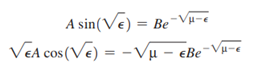
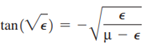
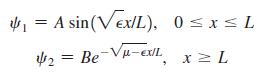
The wave functions of Problem 58, as well as their derivatives, need to be continuous at x = L if these functions are to represent the quantum state of a particle in the finite square well.(a) Show that these conditions lead to two equations: (b) then show that these lead to the single equation A
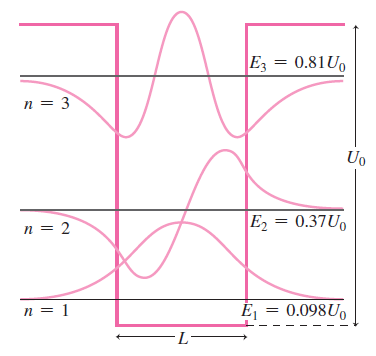
The next three problems solve the Schrödinger equation for finite square wells like that shown in Fig. 35.14. It’s convenient to work in dimensionless forms of the particle energy E and well depth U0, given respectively by ∈ = 2mL2 E/ℏ2 and μ = 2mL2U0/ ℏ2 . Assuming that E < U0, or,
The table below lists the wavelengths emitted as electrons in identical square-well potentials drop from various states n to the ground state. Determine a quantity that, when you plot l against it, should yield a straight line. Make your plot, establish a best-fit line, and use your line to
You’re trying to convince a friend that nuclear energy represents a much more concentrated energy source than fossil fuels, whose combustion involves rearranging atomic electrons. For a rough comparison, you calculate the ground-state energy of a proton confined to 1-fm-diameter atomic nucleus
(a) Using the potential energy U = 1/2mω2x2, develop the Schrödinger equation for the harmonic oscillator.(b) Show by substitution that ψ0(x) = A0e-a^2x^2/2 satisfies your equation, where α2 = mω/ℏ and the energy is given by Equation 35.7 with n = 0. (c) Find the normalization constant
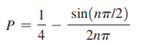
A particle is in the nth quantum state of an infinite square well.(a) Show that the probability of finding it in the left-hand quarter of the well is (b) Show that for odd n, the probability approaches the classical value 1 4 as n ? ?. sin(nt/2) P = 4 2nt
A large number of electrons are confined to infinite square wells 1.2 nm wide. They’re undergoing transitions among all possible states. How many visible lines (400 nm to 700 nm) are in the spectrum emitted by this ensemble of square-well systems?
A 9-W laser beam shines on an ensemble of 1024 electrons, each in the ground state of a one-dimensional infinite square well 0.72 nm wide. The photon energy is just high enough to raise an electron to its first excited state. How many electrons can be excited if the beam shines for 10 ms?
The generalization of the Schrödinger equation to three dimensions isFor a particle confined to the cubical region 0 ≤ x ≤ L, 0 ≤ y ≤ L, 0 ≤ z ≤ L, show by direct substitution that the equation is satisfied by wave functions of the form ψ (x, y, z) = A sin(nxπx/L) sin(nyπy/L)
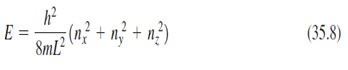
(a) Use Equation 35.8 to draw an energy-level diagram for the first six energy levels of a particle in a cubical box, in terms of h2 /8mL2 ,?(b) give the degeneracy of each. E 8ml? (m? + n} + a?) (35.8)
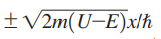
A particle of mass m is in a region where its total energy E is less than its potential energy U. Show that the Schr?dinger equation has nonzero solutions of the form Ae?.?Such solutions describe the wave function in quantum tunneling, beyond the turning points in a quantum harmonic oscillator, or
Find the probability that a particle in an infinite square well is located in the central one-fourth of the well for the quantum states n = (a) 1, (b) 2, (c) 5, and (d) 20. (e) What’s the classical probability in this situation?
A particle detector has a resolution 15% of the width of an infinite square well. What’s the probability that the detector will find a particle in the ground state of the square well if the detector is centered on(a) the midpoint of the well(b) a point one fourth of the way across the well?
In your physical chemistry course, you model hydrogen chloride as a hydrogen atom on a spring; the other end of the spring is attached to a rigid wall (the massive chlorine atom). In order to determine the spring constant in your model, you measure the minimum photon energy that will promote HCl
Is quantization significant for macromolecules confined to biological cells? To find out, consider a protein of mass 250,000 u confined to a 10μm-diameter cell. Treating this as a particle in a one-dimensional square well, find the energy difference between the ground state and the first excited
What’s the probability of finding a particle in the central 80% of an infinite square well, assuming it’s in the ground state?
A laser emits 1.96-eV photons. If this emission is due to electron transitions from the n = 2 to n = 1 states of an infinite square well, what’s the well width?
A particle is in the ground state of an infinite square well. What’s the probability of finding the particle in the left-hand third of the well?
An infinite square well extends from -L/2 to L/2.(a) Find expressions for the normalized wave functions for a particle of mass m in this well, giving separate expressions for even and odd quantum numbers.(b) Find the corresponding energy levels.
Sketch the probability density for the n = 2 state of an infinite square well extending from x = 0 to x = L, and determine where the particle is most likely to be found.
Electrons in an ensemble of 0.834-nm-wide square wells are all initially in the n = 4 state.(a) How many different wavelengths of spectral lines could be emitted as the electrons cascade to the ground state through all possible downward transitions?(b) Find those wavelengths.(c) What regions of the
The ground-state energy for an electron in infinite square well A is equal to the energy of the first excited state for an electron in well B. How do the wells’ widths compare?
An electron is in a narrow molecule 4.4 nm long, a situation that approximates a one-dimensional infinite square well. If the electron is in its ground state, what is the maximum wavelength of electromagnetic radiation that can cause a transition to an excited state?
Show explicitly that the difference between adjacent energy levels in an infinite square well becomes arbitrarily small compared with the energy of the upper level, in the limit of large quantum number n.
An electron drops from the n = 7 to the n = 6 level of an infinite square well 1.5 nm wide. Find(a) the energy(b) the wavelength of the photon emitted.
An electron is trapped in an infinite square well 25 nm wide. Find the wavelengths of the photons emitted in these transitions: (a) n = 2 to n = 1;(b) n = 20 to n = 19;(c) n = 100 to n = 1.
Suppose ψ1 and ψ2 are solutions of the Schrödinger equation for the same energy E. Show that the linear combination aψ1 + bψ2 is also a solution, where a and b are arbitrary constants.
Find an expression for the normalization constant A for the wave function given by ψ = 0 for |x| > b and ψ = A (b2-x2) for -b ≤x ≤b
An electron is confined to a cubical box. For what box width will a transition from the first excited state to the ground state result in emission of a 950-nm infrared photon?
A very crude model for an atomic nucleus is a cubical box 1 fm on a side. What would be the energy of a gamma ray emitted if a proton in such a nucleus made a transition from its first excited state to the ground state?
If all sides of a cubical box are doubled, what happens to the ground-state energy of a particle in that box?
Your roommate is taking Newtonian physics, while you’ve moved on to quantum mechanics. He claims that QM can’t be right, because he didn’t see any evidence of quantized energy levels in a mass–spring harmonic oscillator experiment. You reply by calculating the spacing between energy levels
Showing 300 - 400
of 1601
1
2
3
4
5
6
7
8
9
10
11
12
13
14
15
Last
Step by Step Answers

 Get 50% OFF
Claim Now
Get 50% OFF
Claim Now