New Semester
Started
Get
50% OFF
Study Help!
--h --m --s
Claim Now
Question Answers
Textbooks
Find textbooks, questions and answers
Oops, something went wrong!
Change your search query and then try again
S
Books
FREE
Study Help
Expert Questions
Accounting
General Management
Mathematics
Finance
Organizational Behaviour
Law
Physics
Operating System
Management Leadership
Sociology
Programming
Marketing
Database
Computer Network
Economics
Textbooks Solutions
Accounting
Managerial Accounting
Management Leadership
Cost Accounting
Statistics
Business Law
Corporate Finance
Finance
Economics
Auditing
Tutors
Online Tutors
Find a Tutor
Hire a Tutor
Become a Tutor
AI Tutor
AI Study Planner
NEW
Sell Books
Search
Search
Sign In
Register
study help
business
introduction to probability statistics
Introduction To Probability Statistics And Random Processes 1st Edition Hossein Pishro-Nik - Solutions
Consider the function f : R → R, defined as f(x) = x2. This function takes any real number x and outputs x2. For example, f(2) = 4.Consider the function g : {H,T} → {0, 1}, defined as g(H) = 0 and g(T) = 1. This function can only take two possible inputs H or T, where H is mapped to 0 and T is
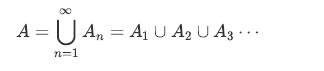
LetDefine Find A. n-1 An A₁ = [0, ¹=¹) = {x € R| 0
We toss a coin three times and observe the sequence of heads/tails. The sample space here may be defined asS = {(H,H,H), (H,H,T), (H,T,H), (T,H,H), (H,T,T), (T,H,T), (T,T,H), (T,T,T)}.
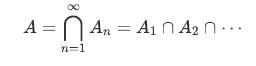
LetDefine Find A. An = [0, 1) = { x = R| 0
In a presidential election, there are four candidates. Call them A, B, C, and D. Based on our polling analysis, we estimate that A has a 20 percent chance of winning the election, while B has a 40 percent chance of winning. What is the probability that A or B win the election?
In this problem our goal is to show that sets that are not in the form of intervals may also be uncountable. In particular, consider the set A defined as the set of all subsets of N:We usually denote this set by A = 2N.a. Show that 2N is in one-to-one correspondence with the set of all (infinite)
You roll a fair die. What is the probability of E = {1, 5}?
Using the axioms of probability, prove the following:a. For any event A, P(Ac) = 1 −P(A).b. The probability of the empty set is zero, i.e., P(∅) = 0.c. For any event A, P(A) ≤ 1.d. P(A −B) = P(A) −P(A ∩ B).e. P(A ∪ B) = P(A) +P(B) −P(A ∩ B), (inclusion-exclusion principle for n =
Suppose we have the following information:1. There is a 60 percent chance that it will rain today.2. There is a 50 percent chance that it will rain tomorrow.3. There is a 30 percent chance that it does not rain either day.Find the following probabilities:a. The probability that it will rain today
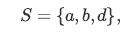
Two teams A and B play a soccer match, and we are interested in the winner. The sample space can be defined aswhere a shows the outcome that A wins, b shows the outcome that B wins, and d shows the outcome that they draw. Suppose we know that:(1) The probability that A wins is P(a) = P({a}) =
I play a gambli ng game in which I will win k −2 dollars with probability 1/2k for any k ∈ N , that is,With probability 1/2, I lose 1 dollar;With probability 1/4, I win 0 dollar;With probability 1/8, I win 1 dollar;With probability 1/16, I win 2 dollars;With probability 1/32, I win 3
Let A and B be two events such thata. Find P(A ∩ B).b. Find P(Ac ∩ B).c. Find P(A −B).d. Find P(Ac −B).e. Find P(Ac ∪ B).f. Find P(A ∩ (B ∪ Ac)). P(A) = 0.4, P(B) = 0.7,P(AUB) = 0.9
I roll a fair die twice and obtain two numbers: X1 = result of the first roll, and X2 = result of the second roll. Write down the sample space S, and assuming that all outcomes are equally likely (because the die is fair), find the probability of the event A defined as the event that X1 + X2 = 8.
Your friend tell s you that she will stop by your house sometime after or equal to 1 p.m. and before 2 p.m., but she cannot give you any more information as her schedule is quite hectic. Your friend is very dependable, so you are sure that she will stop by your house, but other than that we have no
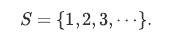
Consider a random experiment with a sample spaceSuppose that we know:where c is a constant number.a. Find c.b. Find P({2, 4, 6}).c. Find P({3, 4, 5,⋯}). S = {1,2,3,}.
I roll a fair die twice and obtain two numbers: X1 = result of the first roll, X2 = result of the second roll.a. Find the probability that X2 = 4.b. Find the probability that X1 + X2 = 7.c. Find the probability that X1 ≠ 2 and X2 ≥ 4.
I roll a fair die. Let A be the event that the outcome is an odd number, i.e., A = {1, 3, 5}. Also let B be the event that the outcome is less than or equal to 3, i.e., B = {1, 2, 3}. What is the probability of A, P(A)? What is the probability of A given B, P(A|B)?
For three events, A, B, and C, with P(C) > 0, we haveP(Ac|C) = 1 −P(A|C);P(∅|C) = 0;P(A|C) ≤ 1;P(A −B|C) = P(A|C) −P(A ∩ B|C);P(A ∪ B|C) = P(A|C) +P(B|C) −P(A ∩ B|C);if A ⊂ B then P(A|C) ≤ P(B|C).
I roll a fair die twice and obtain two numbers X1 = result of the first roll and X2 = result of the second roll. Given that I know X1 + X2 = 7, what is the probability that X1 = 4 or X2 = 4?
Four teams A,B,C, and D compete in a tournament, and exactly one of them will win the tournament. Teams A and B have the same chance of winning the tournament. Team C is twice as likely to win the tournament as team D. The probability that either team A or team C wins the tournament is 0.6. Find
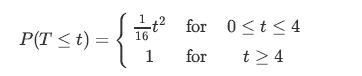
Let T be the time needed to complete a job at a certain factory. By using the historical data, we know thata. Find the probability that the job is completed in less than one hour, i.e., find P(T ≤ 1).b. Find the probability that the job needs more than 2 hours.c. Find the probability that 1 ≤ T
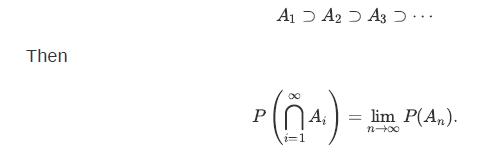
a. Let A1,A2,A3,⋯ be a sequence of increasing events, that isShow thatb. Using part(a), show that if A1,A2,⋯ is a decreasing sequence of events, i.e., A₁ CA2 C A3 C***
Consider a family that has two children. We are interested in the children's genders. Our sample space is S = {(G,G), (G,B), (B,G), (B,B)}. Also assume that all four possible outcomes are equally likely.a. What is the probability that both children are girls given that the first child is girl?b.
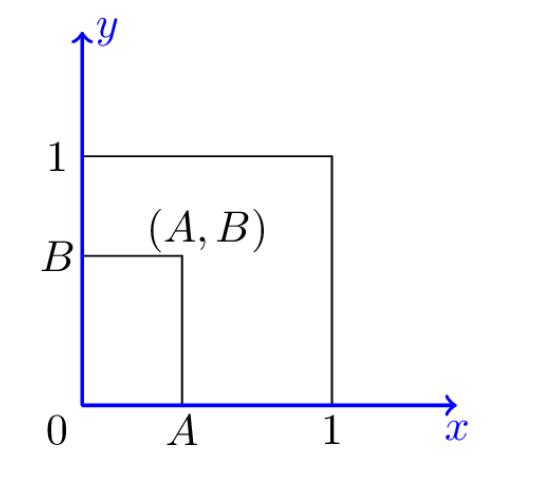
You choose a point (A,B) uniformly at random in the unit square {(x, y) : x, y ∈ [0, 1]}.What is the probability that the equationhas real solutions? 1 B 0 (A, B) A 1 X
In a factory there are 100 units of a certain product, 5 of which are defective. We pick three units from the 100 units at random. What is the probability that none of them are defective?
I pick a random number from {1, 2, 3,⋯, 10}, and call it N. Suppose that all outcomes are equally likely. Let A be the event that N is less than 7, and let B be the event that N is an even number. Are A and B independent?
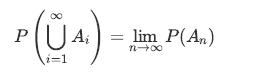
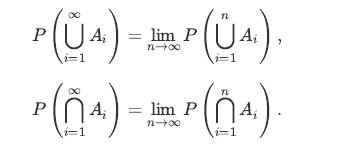
For any sequence of events A1,A2,A3,⋯, prove P(ŨA.) - Im P (U₁.). Р A₁ lim (vū) P(₁) - I'm P(₁.) Р = lim =1
I toss a coin repeatedly until I observe the first tails at which point I stop. Let X be the total number of coin tosses. Find P(X = 5).
Suppose that the probability of being killed in a single flight is pc = 1/4×106 based on available statistics. Assume that different flights are independent. If a businessman takes 20 flights per year, what is the probability that he is killed in a plane crash within the next 20 years? (Let's
Suppose that, of all the customers at a coffee shop,70% purchase a cup of coffee;40% purchase a piece of cake;20% purchase both a cup of coffee and a piece of cake.Given that a randomly chosen customer has purchased a piece of cake, what is the probability that he/she has also purchased a cup of
Two basketball players play a game in which the y alternately shoot a basketball at a hoop. The first one to make a basket wins the game. On each shot, Player 1 (the one who shoots first) has probability p1 of success, while Player 2 has probability p2 of success (assume 0 < p1, p2 < 1). The shots
I have three bags that each contain 100 marbles:Bag 1 has 75 red and 25 blue marbles;Bag 2 has 60 red and 40 blue marbles;Bag 3 has 45 red and 55 blue marbles.I choose one of the bags at random and then pick a marble from the chosen bag, also at random. What is the probability that the chosen
A real number X is selected uniformly at random in the continuous interval [0, 10]. (For example, X could be 3.87.)a. Find P (2 ≤ X ≤ 5).b. Find P (X ≤ 2|X ≤ 5).c. Find P (3 ≤ X ≤ 8|X ≥ 4).
In Example 1.24, suppose we observe that the chosen marble is red. What is the probability that Bag 1 was chosen?Example 1.24:I have three bags that each contain 100 marbles:Bag 1 has 75 red and 25 blue marbles;Bag 2 has 60 red and 40 blue marbles;Bag 3 has 45 red and 55 blue marbles.I choose one
A professor thinks students who live on campus are more likely to get As in the probability course. To check this theory, the professor combines the data from the past few years:a. 600 students have taken the course,b. 120 students have gotten As,c. 200 students lived on campus,d. 80 students lived
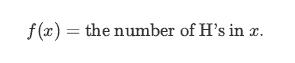
Recall thatConsider the following functiondefined asFor example,a. Determine the domain and co-domain for f.b. Find range of f:Range(f).c. If we know f(x) = 2, what can we say about x? {H,T}³ = {H,T} x {H,T} x {H,T} = {(H,H,H), (H,H,T),,(T,T,T)}.
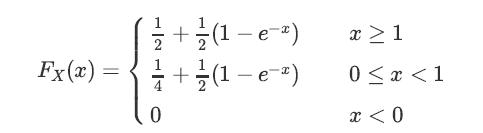
Let X be a random variable with the following CDF:a. What kind of random variable is X (discrete, continuous, or mixed)?b. Find the (generalized) PDF of X.c. Find P(X > 0.5), both using the CDF and using the PDF.d. Find EX and Var(X). Fx (x) = 4 0 (1-e-*) + (1 - e-¹) + x ≥ 1 0 < x < 1 x < 0
A company makes a certain device. We are interested in the lifetime of the device. It is estimated that around 2% of the devices are defective from the start so they have a lifetime of 0 years. If a device is not defective, then the lifetime of the device is exponentially distributed with a
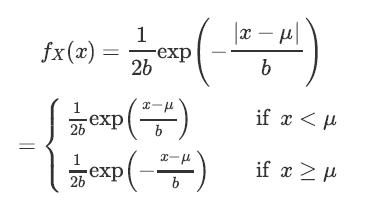
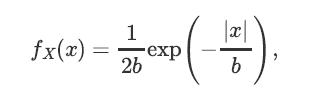
A continuous random variable is said to have a Laplace(μ, b) distribution [14] if its PDF is given by
Let X ∼ Laplace(0, b), i.e.,where b > 0. Define Y = |X|. Show that Y ∼ Exponential (1/b). fx(æ) 1 ਆ) (E), exp 26 b
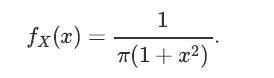
A continuous random variable is said to have the standard Cauchy distribution if its PDF is given byIf X has a standard Cauchy distribution, show that EX is not well-defined. Also, show EX2 = ∞. fx(x) 1 π(1 + x²)
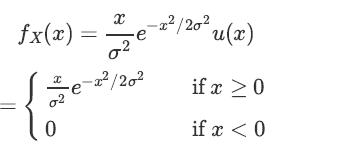
A continuous random variable is said to have a Rayleigh distribution with parameter σ if its PDF is given bywhere σ > 0.a. If X ∼ Rayleigh(σ), find EX.b. If X ∼ Rayleigh(σ), find the CDF of X,FX(x).c. If X ∼ Exponential(1) and Y = √2σ2X, show that Y ∼ Rayleigh(σ). X -x²/20² fx(x)
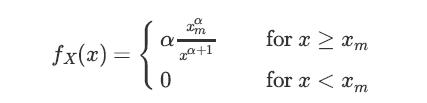
A continuous random variable is said to have a Pareto(xm,α) distribution [15] if its PDF is given bywhere xm,α > 0. Let X ∼ Pareto(xm,α).a. Find the CDF of X, FX(x).b. Find P(X > 3xm|X > 2xm).c. If α > 2, find EX and V ar(X). a - {0 fx(x)= I'm x+1 for xm for xm
Let Z ∼ N(0, 1). If we define X = eσZ+μ, then we say that X has a log-normal distribution with parameters μ and σ, and we write X ∼ LogNormal(μ, σ).a. If X ∼ LogNormal(μ,σ), find the CDF of X in terms of the Φ function.b. Find EX and Var(X).
Let X1, X2, ⋯, Xn be independent random variables with Xi ∼ Exponential(λ). Define Y = X1 +X2 +⋯+Xn.As we will see later, Y has a Gamma distribution with parameters n and λ, i.e., Y ∼ Gamma(n,λ). Using this, show that if Y ∼ Gamma(n,λ), then EY = n/λ and V ar(Y ) = n/λ2.
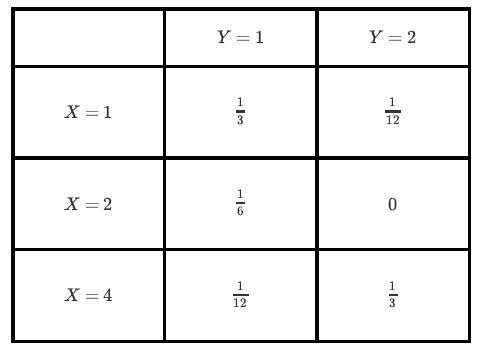
Let X and Y be as defined in Problem 1. I define a new random variable Z = X −2Y.a. Find the PMF of Z.b. Find P(X = 2|Z = 0).Problem 1Consider two random variables X and Y with joint PMF given in Table 5.4 Joint PMF of X and Y in Problem 1 X = 1 X = 2 X = 4 Y = 1 WIT 1 1 Y = 2 1 12 0 -13
A box contains two coins: a regular coin and a biased coin with P(H) = 2/3. I choose a coin at random and toss it once. I define the random variable X as a Bernoulli random variable associated with this coin toss, i.e., X = 1 if the result of the coin toss is heads and X = 0 otherwise. Then I take
Consider the set of points in the grid shown in Figure 5.4. These are the points in set G defined asSuppose that we pick a point (X, Y) from this grid completely at random. Thus, each point has a probability of 1/13 of being chosen.a. Find the joint and marginal PMFs of X and Y.b. Find the
Consider two random variables X and Y with joint PMF given bya. Show that X and Y are independent and find the marginal PMFs of X and Y.b. Find P(X2 + Y2 ≤ 10). PXY (k, l) = 1 , for k, l = 1,2,3, ... 2641?
Let X and Y be as defined in Problem 1. Also, suppose that we are given that Y = 1.a. Find the conditional PMF of X given Y = 1. That is, find PX|Y (x|1).b. Find E[X|Y = 1].c. Find V ar(X|Y = 1).Problem 1Consider two random variables X and Y with joint PMF given in Table 5.4 Joint PMF of X and Y in
Let X ∼ Geometric(p). Find EX by conditioning on the result of the first "coin toss."
The number of customers visiting a store in one hour has a Poisson distribution with mean λ = 10. Each customer is a female with probability p = 3/4 independent of other customers. Let X be the total number of customers in a one-hour interval and Y be the total number of female customers in the
Suppose that the number of customers visiting a fast food restaurant in a given day is N ∼ Poisson(λ). Assume that each customer purchases a drink with probability p, independently from other customers and independently from the value of N. Let X be the number of customers who purchase drinks.
Let X ∼ Geometric(p). Find Var(X) as follows: Find EX and EX2 by conditioning on the result of the first "coin toss", and use Var(X) = EX2 −(EX)2.
Linearity of Expectation: For two discrete random variables X and Y, show that E[X + Y] = EX + EY.
Let X and Y be two independent Geometric(p) random variables. Also let Z = X −Y. Find the PMF of Z.
Consider the set of points in the set C:Suppose that we pick a point (X, Y) from this set completely at random. Thus, each point has a probability of 1/11 of being chosen.a. Find the joint and marginal PMFs of X and Y.b. Find the conditional PMF of X given Y = 1.c. Are X and Y independent?d. Find
Let X = aY + b. Then E[X|Y = y] = E[aY + b|Y = y] = ay + b. Here, we have g(y) = ay + b, and therefore, E[X|Y ] = aY + b, which is a function of the random variable Y.
Consider the set of points in the set C: C = {(x, y)|x, y ∈ Z,x2 +|y| ≤ 2}. Suppose that we pick a point (X,Y ) from this set completely at random. Thus, each point has a probability of 1/11 of being chosen.a. Find E[X|Y = 1].b. Find V ar(X|Y = 1).c. Find E[X||Y | ≤ 1].d. Find E[X2||Y | ≤
The number of cars being repaired at a small repair shop has the following PMF:Each car that is being repaired is a four-door car with probability 3/4 and a two door car with probability 1/4, independently from other cars and independently from the number of cars being repaired. Let X be the number
Let X and Y be two independent random variables with PMFsDefine Z = X − Y. Find the PMF of Z. Px (k)= Py(k)= 1 0 for x = 1,2,3,4,5 otherwise
Let X and Y be two random variables and g and h be two functions. Show that E[g(X)h(Y)|X] = g(X)E[h(Y)|X].
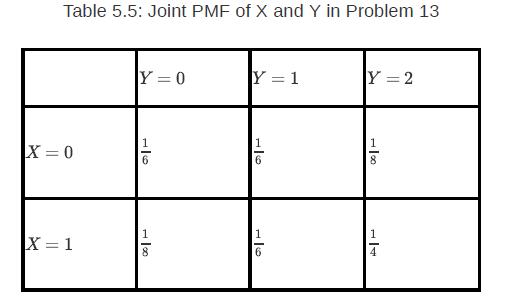
Consider two random variables X and Y with joint PMF given in Table 5.5Define the random variable Z as Z = E[X|Y ].a. Find the Marginal PMFs of X and Y .b. Find the conditional PMF of X, given Y = 0 and Y = 1, i.e., find PX|Y (x|0) and PX|Y (x|1).c. Find the PMF of Z.d. Find EZ, and check that EZ =
Let X, Y, and Z = E[X|Y] be as in Problem 13. Define the random variable V as V = Var(X|Y).a. Find the PMF of V.b. Find EV.c. Check that V ar(X) = EV +V ar(Z).Problem 13Consider two random variables X and Y with joint PMF given in Table 5.5Define the random variable Z as Z = E[X|Y]. Table 5.5:
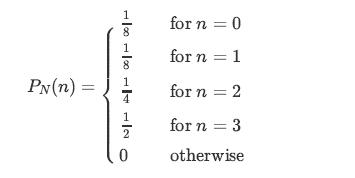
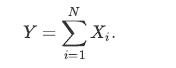
Let N be the number of phone calls made by the customers of a phone company in a given hour. Suppose that N ∼ Poisson(β), where β > 0 is known. Let Xi be the length of the i'th phone call, for i = 1, 2, . . . ,N. We assume Xi's are independent of each other and also independent of N. We further
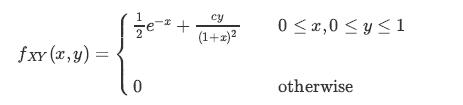
Let X and Y be two jointly continuous random variables with joint PDFa. Find the constant c.b. Find P(0 ≤ X ≤ 1, 0 ≤ Y ≤ 1/2).c. Find P(0 ≤ X ≤ 1). fxy (x, y) = 1/1 ex. 0 + cy (1+x)² 0≤x,0 ≤ y ≤1 otherwise
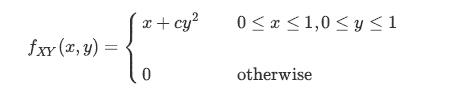
In Example 5.15 find the marginal PDFs fX(x) and fY(y).Example 5.15Let X and Y be two jointly continuous random variables with joint PDF fxy (x, y) = x + cy² 0 0≤x≤ 1,0 ≤ y ≤ 1 otherwise
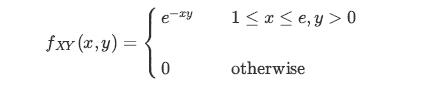
Let X and Y be two jointly continuous random variables with joint PDFa. Find the marginal PDFs, fX(x) and fY (y).b. Write an integral to compute P(0 ≤ Y ≤ 1, 1 ≤ X ≤ √e). -{ fxy(x, y) = e-zy 0 1≤ x ≤e,y>0 otherwise
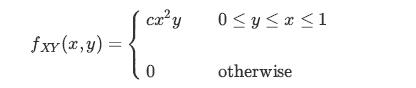
Let X and Y be two jointly continuous random variables with joint PDFa. Find RXY and show it in the x−y plane.b. Find the constant c.c. Find marginal PDFs, fX(x) and fY(y).d. Find P(Y ≤ x/2).e. Find P(Y ≤ X/4|Y ≤ X/2). fxy(x, y) = = cx²y 0 0≤ y ≤x≤1 otherwise
Let X and Y be two jointly continuous random variables with joint PDFa. Find the marginal PDFs, fX(x) and fY(y).b. Find P(X > 0,Y c. Find P(X > 0 or Y d. Find P(X > 0|Y e. Find P(X + Y > 0). fxy (x, y) = 0 x² + y -1 ≤ x ≤ 1,0 ≤ y ≤ 2 otherwise
Let X and Y be two jointly continuous random variables with joint CDFa. Find the joint PDF, fXY(x, y).b. Find P(X c. Are X and Y independent? Fxy (x, y) = 1 0 +e-(x+2y) x, y > 0 otherwise
Find the joint C DF for X and Y in Example 5.15Example 5.15Let X and Y be two jointly continuous random variables with joint PDF fxy (x, y) = x + cy² 0 0≤x≤ 1,0 ≤ y ≤ 1 otherwise
Let X ∼ N(0, 1).a. Find the conditional PDF and CDF of X given X > 0.b. Find E[X|X > 0].c. Find Var(X|X > 0).
Let X ∼ Exponential(1).a. Find the conditional PDF and CDF of X given X > 1.b. Find E[X|X > 1].c. Find Var(X|X > 1).
Let X and Y be two jointly continuous random variables with joint PDFFor 0 ≤ y ≤ 1, find the following:a. The conditional PDF of X given Y = y.b. P(X > 0|Y = y). Does this value depend on y?c. Are X and Y independent? fxx(x,y) = 22 + 글 0 -1 ≤ x ≤ 1,0 ≤ y ≤ 1 otherwise
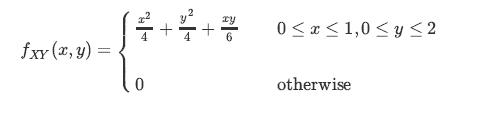
Let X and Y be two jointly continuous random variables with joint PDFFor 0 ≤ y ≤ 2, finda. The conditional PDF of X given Y = y;b. P(X fxy (x, y) = + + xy 0≤x≤ 1,0 ≤ y ≤2 otherwise
Let X and Y be two jointly continuous random variables with joint PDFFind E[Y|X = 0] and Var(Y|X = 0). fxy (x, y) = 2 (²x² + y 2 0 -1 ≤ x ≤ 1,0 ≤ y ≤ 1 otherwise
Let X and Y be two independent Uniform(0, 1) random variables. Find P(X3 + Y > 1).
Suppose X ∼ Exponential(1) and given X = x, Y is a uniform random variable in [0,x] , i.e., Y |X = x ∼ Uniform(0, x), or equivalently Y |X ∼ Uniform(0,X).a. Find EY.b. Find Var(Y).
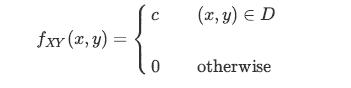
Consider the unit disc D = {(x, y)|x2 +y2 ≤ 1}. Suppose that we choose a point (X, Y) uniformly at random in D. That is, the joint PDF of X and Y is given bya. Find the constant c.b. Find the marginal PDFs fX(x) and fY (y).c. Find the conditional PDF of X given Y = y, where −1 ≤ y ≤ 1.d.
Let X and Y be two independent Uniform(0, 2) random variables. Find P(XY < 1).
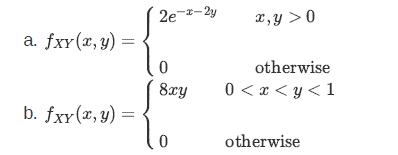
Determine whe ther X and Y are independent: a. fxy(x, y) = b. fxy(x, y) = 2e-2-2y 0 8xy x,y > 0 otherwise 0 < x < y < 1 otherwise
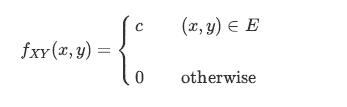
Consider the setSuppose that we choose a point (X,Y ) uniformly at random in E. That is, the joint PDF of X and Y is given bya. Find the constant c.b. Find the marginal PDFs fX(x) and fY(y).c. Find the conditional PDF of X given Y = y, where −1 ≤ y ≤ 1.d. Are X and Y independent? E = {(x, y)
Let X and Y be as in Example 5.21. Find E[X|Y = 1] and Var(X|Y = 1).Example 5.21Let X and Y be two jointly continuous random variables with joint PDFFor 0 ≤ y ≤ 2, find. fxy (x, y) = + + xy 0≤x≤ 1,0 ≤ y ≤2 otherwise
Let X and Y be two jointly continuous random variables with joint PDFa. Find the constant c.b. Find P(0 ≤ X ≤ 1/2, 0 ≤ Y ≤ 1/2). fxy (x, y) = x + cy² 0 0≤x≤ 1,0 ≤ y ≤ 1 otherwise
Let X and Y be two independent Uniform(0, 1) random variables. Finda. E[XY]b. E[eX+Y]c. E[X2 + Y2 + XY]d. E[YeXY]
Suppose X ∼ Uniform(1, 2) and given X = x, Y is an exponential random variable with parameter λ = x, so we can write Y |X = x ∼ Exponential(x).We sometimes write this as Y |X ∼ Exponential(X).a. Find EY.b. Find V ar(Y).
Let X and Y be two independent Uniform(0, 1) random variables, and Z = X/Y. Find the CDF and PDF of Z.
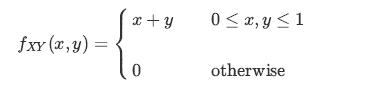
Let X and Y be two jointly continuous random variables with joint PDFFind E[XY2]. fxy (x, y) = x+y 0 0 ≤ x, y ≤ 1 otherwise
Let X and Y be two independent N(0, 1) random variables, and U = X + Y.a. Find the conditional PDF of U given X = x, fU|X(u|x).b. Find the PDF of U, fU (u).c. Find the conditional PDF of X given U = u, fX|U (x|u).d. Find E[X|U = u], and V ar(X|U = u).
Let X and Y be two independent Uniform(0, 1) random variables, and Z = XY. Find the CDF and PDF of Z.
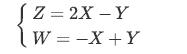
Let X and Y be two independent standard normal random variables. Let alsoFind fZW(z, w). Z = 2X-Y W = -X+Y
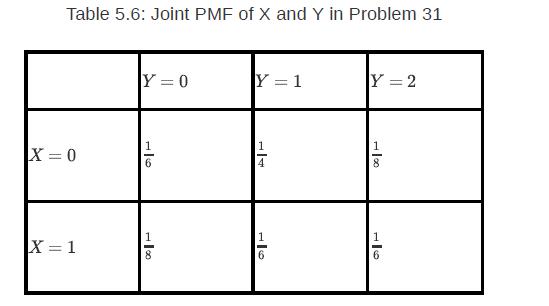
Consider two random variables X and Y with joint PMF given in Table 5.6.Find Cov(X, Y) and ρ(X, Y). Table 5.6: Joint PMF of X and Y in Problem 31 X=0 X = 1 Y=0 6 -00 Y = 1 Y = 2 1 8 6
Let X and Y be two independent standard normal random variables, and let Z = X +Y. Find the PDF of Z.
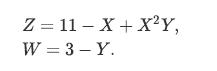
Let X and Y be two independent N(0, 1) random variable andFind Cov(Z,W). Z=11-X+X²Y, W = 3-Y.
Suppose X ∼ Uniform(1, 2), and given X = x, Y is exponential with parameter λ = x. Find Cov(X, Y).
Let X and Y be jointly normal random variables with parameters μX = 1, σ2X = 4, μY = 1, σ2Y = 1, and ρ = 0.a. Find P(X +2Y > 4).b. Find E[X2Y2].
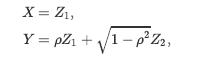
Let Z1 and Z2 be two independent N(0, 1) random variables. Definewhere ρ is a real number in (−1, 1).a. Show that X and Y are bivariate normal.b. Find the joint PDF of X and Y.c. Find ρ(X, Y). X = Z, Y = pZ+1-p Z,
Let X and Y be jointly normal random variables with parameters μX = −1, σ2X = 4, μY = 1, σ2Y = 1, and ρ = 1/2.a. Find P(X + 2Y ≤ 3).b. Find Cov(X −Y, X + 2Y).
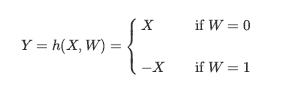
Let X ∼ N(0, 1) and W ∼ Bernoulli (1/2) be independent random variables. Define the random variable Y as a function of X and W:Find the PDF of Y and X +Y. Y=h(X, W) = X 1-x if W = 0 if W = 1
Showing 6900 - 7000
of 7136
First
58
59
60
61
62
63
64
65
66
67
68
69
70
71
72
Step by Step Answers

 Get 50% OFF
Claim Now
Get 50% OFF
Claim Now