New Semester
Started
Get
50% OFF
Study Help!
--h --m --s
Claim Now
Question Answers
Textbooks
Find textbooks, questions and answers
Oops, something went wrong!
Change your search query and then try again
S
Books
FREE
Study Help
Expert Questions
Accounting
General Management
Mathematics
Finance
Organizational Behaviour
Law
Physics
Operating System
Management Leadership
Sociology
Programming
Marketing
Database
Computer Network
Economics
Textbooks Solutions
Accounting
Managerial Accounting
Management Leadership
Cost Accounting
Statistics
Business Law
Corporate Finance
Finance
Economics
Auditing
Tutors
Online Tutors
Find a Tutor
Hire a Tutor
Become a Tutor
AI Tutor
AI Study Planner
NEW
Sell Books
Search
Search
Sign In
Register
study help
business
management information systems
Information Systems Project Management A Process Approach 2nd Edition Christoph Schneider, Mark A Fuller, Joseph S Valacich, Joey George - Solutions
Explain how a screening system is used for comparing proposals from an RFP.
Why is a contract a special document? How is it treated differently from other documents?
Compare and contrast the various organizations that supply systems and systems components. What are their relative strengths and weaknesses? For each source, describe a situation where that particular source would be the best choice.
Create a statement for work for a job that you know well.
Locate an RFP from someone you know (e.g., a parent, an employer, a professor). Analyze it carefully, comparing its structure and content to the guidelines provided in the chapter, and write a two-page essay about what you find.
Explain how project procurement fits within the larger picture of project management. When would you ever be involved in a project that did not involve procurement of products and services from outside your organization?
Bob’s project team is working on developing a webstore. As part of their project, the team has decided it makes little sense to develop their own shopping cart system, given that so many complete shopping cart systems are available on the market. Bob’s team needs to write an RFP for a shopping
Bob’s team, described in Exercise 5, has issued its RFP and has received three responses. The team has developed the following evaluation criteria. Price is the most important criterion; the second most important is the extent to which the shopping cart system can be modified; the third most
Using the information supplied in Exercise 6, develop a screening system that will help you choose among the alternative proposals. First, use price as your filter. Next, try aspects of the software, such as the number of features. Which proposal wins under these schemes? Is it the same as the
Conduct a make-or-buy analysis. This analysis involves identifying the pros and cons of developing this feature yourself or outsourcing.Many companies do not have the required personnel or expertise to develop the systems that they need.Consequently, when these companies need new systems, they
Develop a statement of work (SOW) for the shopping cart development project. The SOW is a document prepared for the vendors that describes thoroughly the product being sought. The SOW should contain• An introduction and overview section, which includes some background information about your
Develop a request for proposal (RFP) for this outsourcing project. The RFP is a document that will be submitted to potential vendors, asking them to propose a solution to the shopping cart problem. The RFP should contain• A project overview • An administrative section, which contains contact
Determine the evaluation criteria you and your team will use to rate the received proposals.Many companies do not have the required personnel or expertise to develop the systems that they need.Consequently, when these companies need new systems, they elect to outsource such projects to other
Compare and contrast the different types of contracts that are available. Indicate which one of these you will use for this outsourcing project. Provide justification for your answer.Many companies do not have the required personnel or expertise to develop the systems that they need.Consequently,
A ceremonial meeting marking the beginning of a project in a very public and memorable way.Match each of the key terms with the definition that best fits it.A. Feature creep B. Managing change C. Monitoring progress D. People-related mistakes E. Process-related mistakes F. Product-related mistakes
A problem that occurs when developers believe a new and usually untried technology is all that is needed to cure the ills of any development project.Match each of the key terms with the definition that best fits it.A. Feature creep B. Managing change C. Monitoring progress D. People-related
Adding more requirements than necessary to an application, even before the beginning of a project.Match each of the key terms with the definition that best fits it.A. Feature creep B. Managing change C. Monitoring progress D. People-related mistakes E. Process-related mistakes F. Product-related
System development mistakes arising from adding people too late to a project, lack of necessary skills, or unrealistic expectations.Match each of the key terms with the definition that best fits it.A. Feature creep B. Managing change C. Monitoring progress D. People-related mistakes E.
System development mistakes arising from feature creep and requirements gold-plating.Match each of the key terms with the definition that best fits it.A. Feature creep B. Managing change C. Monitoring progress D. People-related mistakes E. Process-related mistakes F. Product-related mistakes G.
System development mistakes arising from insufficient planning, overly optimistic schedules, or planning to catch up later.Match each of the key terms with the definition that best fits it.A. Feature creep B. Managing change C. Monitoring progress D. People-related mistakes E. Process-related
System development mistakes arising from overestimating savings from new tools or methods or the silver-bullet syndrome.Match each of the key terms with the definition that best fits it.A. Feature creep B. Managing change C. Monitoring progress D. People-related mistakes E. Process-related mistakes
The process of carrying out the project plan to accomplish the required work.Match each of the key terms with the definition that best fits it.A. Feature creep B. Managing change C. Monitoring progress D. People-related mistakes E. Process-related mistakes F. Product-related mistakes G. Project
The process of dealing with change requests during project execution.Match each of the key terms with the definition that best fits it.A. Feature creep B. Managing change C. Monitoring progress D. People-related mistakes E. Process-related mistakes F. Product-related mistakes G. Project execution
The process of keeping track of all project tasks and the details surrounding each one.Match each of the key terms with the definition that best fits it.A. Feature creep B. Managing change C. Monitoring progress D. People-related mistakes E. Process-related mistakes F. Product-related mistakes G.
The tendency of systems requirements to change over the lifetime of the development project.Match each of the key terms with the definition that best fits it.A. Feature creep B. Managing change C. Monitoring progress D. People-related mistakes E. Process-related mistakes F. Product-related mistakes
What is project plan execution?
According to PMBOK, what are the ten management processes that make up the executing process group? Where else in the book have you studied some of them?
Explain the inputs to the Direct and Manage Project Work process.
Explain the tools and techniques that are used in the Direct and Manage Project Work process.
Explain the outputs from the Direct and Manage Project Work process.
Describe some of the activities that project managers perform during project execution.
What four problems are commonly encountered during project execution?
What are two types of change that project managers have to deal with during project execution?
Name and describe five different ways that project teams can communicate during the Direct and Manage Project Work process.
Explain how project execution can be documented.
Note that one of the management processes in the executing process group is associated with procurement.Why is procurement such a major part of execution?
Why is managing project knowledge so important to project plan execution? What can project managers do to facilitate knowledge management?
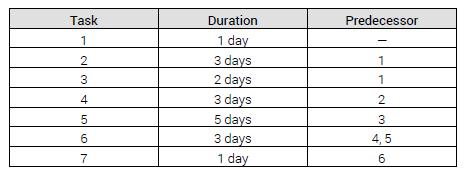
Using the web and other resources, research information systems for project execution. Write a report that describes each system you found and that compares and contrasts the features of each system. Task 1 2 3 4 5 L060 7 Duration 1 day 3 days 2 days 3 days 5 days 3 days 1 day Predecessor 1 1 2 23
Suppose you are the project manager for the following project: First, draw a network diagram for theproject. Determine the critical path and slack times for all of the tasks. This completes your plan for the project schedule. During project execution, you become aware of the need to change the
Find and interview project managers about how they communicate with team members concerning their projects during project execution. Which methods work best for them? How do they incorporate communication into their execution activities? Write a report explaining what you found.
Everyone has managed projects, whether in the workplace, in school, or at home. Describe the activities you undertook during execution. What type of system did you use to manage the project (e.g., computer-based or manual)? How well did the system work for you? What kinds of problems did you
Describe project execution as it relates to your project. In other words, explain what you will do to ensure project completion.Project execution is the phase of the project in which the activities necessary for project completion are undertaken. The execution processes include coordinating the
You developed a Gantt chart for the project assignment in Chapter 6 and updated it with resource information in Chapter
Determine how many of the activities you have completed so far, and update the Gantt chart from Chapter 7 with this new information.Project execution is the phase of the project in which the activities necessary for project completion are undertaken. The execution processes include coordinating the
Describe any changes to the project plan that have been needed so far. Were all these change requests approved?Project execution is the phase of the project in which the activities necessary for project completion are undertaken. The execution processes include coordinating the project resources to
Develop a progress report that describes what you and your team members have accomplished so far for the entertainment website development project. The progress report should include:• Your accomplishments so far, related to the tracking Gantt chart you developed previously• Your plans, which
Describe how you and your team members keep each other updated on the status of your project. In particular, indicate the different forms of communication you are using (e.g., email, face-to-face meetings, collaborative tools, and so on).Project execution is the phase of the project in which the
A compromise between the dogmatic and laid-back philosophies that sticks to a plan but is flexible enough to allow for changes.Match each of the key terms with the definition that best fits it.A. Approved change requests B. Approved corrective actions C. Approved defect repairs D. Approved
A document that is usually completed six to twelve months after implementation as a check on whether the outcomes of the project were as expected, whether ongoing costs are as expected, and whether implementing the product yields net benefits.Match each of the key terms with the definition that
A document used to record any items identified during the project.Match each of the key terms with the definition that best fits it.A. Approved change requests B. Approved corrective actions C. Approved defect repairs D. Approved preventive actions E. Buyer-conducted performance reviews F. Change
A formal, documented process that describes the procedures by which the project scope and product scope can be changed.Match each of the key terms with the definition that best fits it.A. Approved change requests B. Approved corrective actions C. Approved defect repairs D. Approved preventive
A philosophy of project control that allows for project problems or change issues to be dealt with as they arise, on an ad hoc basis.Match each of the key terms with the definition that best fits it.A. Approved change requests B. Approved corrective actions C. Approved defect repairs D. Approved
A philosophy of project control that emphasizes strict adherence to the project plan, with little tolerance for deviations.Match each of the key terms with the definition that best fits it.A. Approved change requests B. Approved corrective actions C. Approved defect repairs D. Approved preventive
A review performed to examine the procurement process from the Plan Procurement Management process through the Conduct Procurements process.Match each of the key terms with the definition that best fits it.A. Approved change requests B. Approved corrective actions C. Approved defect repairs D.
A scope control technique that ensures that the requested changes to the project and product scope are thoroughly considered and documented before being implemented.Match each of the key terms with the definition that best fits it.A. Approved change requests B. Approved corrective actions C.
A systematic and formal inquiry into a project’s expenditures, schedule, and quality of work.Match each of the key terms with the definition that best fits it.A. Approved change requests B. Approved corrective actions C. Approved defect repairs D. Approved preventive actions E. Buyer-conducted
A technique that measures project performance over time, and provides a way to forecast future performance based on past performance.Match each of the key terms with the definition that best fits it.A. Approved change requests B. Approved corrective actions C. Approved defect repairs D. Approved
Activities and reporting methods instituted during the course of the project to monitor the progress of the project and provide reports for project managers and for project stakeholders.Match each of the key terms with the definition that best fits it.A. Approved change requests B. Approved
Document that contains a record of the project management techniques that were employed over the course of the project, surveys, and outstanding items that still need to be resolved.Match each of the key terms with the definition that best fits it.A. Approved change requests B. Approved corrective
Documented and authorized actions that are necessary to correct defects in the project deliverables.Match each of the key terms with the definition that best fits it.A. Approved change requests B. Approved corrective actions C. Approved defect repairs D. Approved preventive actions E.
Documented and authorized changes that are scheduled for implementation by the project team.Match each of the key terms with the definition that best fits it.A. Approved change requests B. Approved corrective actions C. Approved defect repairs D. Approved preventive actions E. Buyer-conducted
Documented and authorized guidelines intended to reduce the probability of negative consequences to the project due to identified risks.Match each of the key terms with the definition that best fits it.A. Approved change requests B. Approved corrective actions C. Approved defect repairs D. Approved
Documented and authorized guidelines necessary to bring future project performance in conformance with the project management plan.Match each of the key terms with the definition that best fits it.A. Approved change requests B. Approved corrective actions C. Approved defect repairs D. Approved
Documented recommendations needed to bring future project performance into conformance with the project management plan.Match each of the key terms with the definition that best fits it.A. Approved change requests B. Approved corrective actions C. Approved defect repairs D. Approved preventive
Documented recommendations that minimize the probability of negative consequences to the project.Match each of the key terms with the definition that best fits it.A. Approved change requests B. Approved corrective actions C. Approved defect repairs D. Approved preventive actions E. Buyer-conducted
Estimates or predictions of conditions or events in the project’s future.Match each of the key terms with the definition that best fits it.A. Approved change requests B. Approved corrective actions C. Approved defect repairs D. Approved preventive actions E. Buyer-conducted performance reviews F.
Final implementation and training related to the project, acceptance and signoff on the project, and archiving of the project’s results and lessons learned.Match each of the key terms with the definition that best fits it.A. Approved change requests B. Approved corrective actions C. Approved
Requested changes that were not chosen for implementation.Match each of the key terms with the definition that best fits it.A. Approved change requests B. Approved corrective actions C. Approved defect repairs D. Approved preventive actions E. Buyer-conducted performance reviews F. Change control
Structured reviews of the vendor’s progress in fulfilling the terms of the contract.Match each of the key terms with the definition that best fits it.A. Approved change requests B. Approved corrective actions C. Approved defect repairs D. Approved preventive actions E. Buyer-conducted performance
Techniques used to evaluate differences between planned baselines and actual performance Match each of the key terms with the definition that best fits it.A. Approved change requests B. Approved corrective actions C. Approved defect repairs D. Approved preventive actions E. Buyer-conducted
The management of claims or disputes related to whether required work was done or what the submitted work is worth.Match each of the key terms with the definition that best fits it.A. Approved change requests B. Approved corrective actions C. Approved defect repairs D. Approved preventive actions
The management style that the manager employs with respect to following the plan and dealing with problems or changes in the plan.Match each of the key terms with the definition that best fits it.A. Approved change requests B. Approved corrective actions C. Approved defect repairs D. Approved
The process of collecting, measuring, and disseminating data related to performance, as well as assessing measurements and trends in order to make any improvements.Match each of the key terms with the definition that best fits it.A. Approved change requests B. Approved corrective actions C.
The process of comparing what was contracted for with what is being done or has been done to ensure that both parties perform according to the contract, and closing the contract.Match each of the key terms with the definition that best fits it.A. Approved change requests B. Approved corrective
The process of delivering the project to the client and training personnel to use it.Match each of the key terms with the definition that best fits it.A. Approved change requests B. Approved corrective actions C. Approved defect repairs D. Approved preventive actions E. Buyer-conducted performance
The process of ensuring that only appropriate changes are included in the modified cost baseline.Match each of the key terms with the definition that best fits it.A. Approved change requests B. Approved corrective actions C. Approved defect repairs D. Approved preventive actions E. Buyer-conducted
The process of identifying, evaluating, and managing changes that occur from project initiation through project closure.Match each of the key terms with the definition that best fits it.A. Approved change requests B. Approved corrective actions C. Approved defect repairs D. Approved preventive
The process of monitoring and measuring project progress and influencing the plan to account for any discrepancies between planned progress and actual progress.Match each of the key terms with the definition that best fits it.A. Approved change requests B. Approved corrective actions C. Approved
The process of screening the project results to determine whether they conform to relevant quality standards and identifying means to eliminate causes of unsatisfactory results.Match each of the key terms with the definition that best fits it.A. Approved change requests B. Approved corrective
The process of verifying that all products and services contracted are acceptable.Match each of the key terms with the definition that best fits it.A. Approved change requests B. Approved corrective actions C. Approved defect repairs D. Approved preventive actions E. Buyer-conducted performance
Define project control.
Explain what a project control philosophy is.
Discuss the different types of project control philosophies with respect to the kinds of projects that might be appropriate for each type.
Explain how controlling processes can affect project integration, scope, time, cost, quality, and risk.
List and briefly describe the various levers that can be used to exert control over a project.
List and briefly describe the various project control techniques.
Describe the components of standard operating procedures techniques.
List and provide the formulas (if required) for the components of an earned value management (EVM)analysis.
Explain how cost performance indexes and schedule performance indexes provide estimates on the budget and schedule performance of the project.
Define project closure.
Describe what is involved in project handover.
Compare and contrast an end report with a postimplementation review.
Discuss how the computerized baggage handling system (CBHS) project at Denver International Airport (DIA) could have been a success with proper control.
For a class project for this (or another) course, compare and contrast the three different philosophies of controlling projects. Which one do you believe is the best?
For a class project for this (or another) course, list and explain the different levers that you can use to exert control over projects. Give an example of how you could use each lever to control your project.
The planned value for a project is US$17,800, the earned value is US$19,450, and the actual cost is US$21,870. Based on this information, calculate the cost performance index and the schedule performance index. What do these indices tell you about the status of the project in terms of cost and
The budget at completion of this project was estimated at US$20,000, and the estimated time to complete was thirteen months. Use the information from Exercise 4 to compute the estimated cost at completion and the estimated time to complete. Is the project on budget and schedule?
Use the internet or any other source to search “variance analysis.” Define what it is and explain its usefulness in project control.
Review Chapter 8 for the different tools and techniques that can be used in performing quality control.For your own project, explain how you used different techniques to control quality. Which techniques were more or less effective? Why?
“Once a project is completed, the project team members should forget about it and move to the next project.” Do you agree with this statement? Explain why.
Showing 4700 - 4800
of 6652
First
41
42
43
44
45
46
47
48
49
50
51
52
53
54
55
Last
Step by Step Answers

 Get 50% OFF
Claim Now
Get 50% OFF
Claim Now