New Semester
Started
Get
50% OFF
Study Help!
--h --m --s
Claim Now
Question Answers
Textbooks
Find textbooks, questions and answers
Oops, something went wrong!
Change your search query and then try again
S
Books
FREE
Study Help
Expert Questions
Accounting
General Management
Mathematics
Finance
Organizational Behaviour
Law
Physics
Operating System
Management Leadership
Sociology
Programming
Marketing
Database
Computer Network
Economics
Textbooks Solutions
Accounting
Managerial Accounting
Management Leadership
Cost Accounting
Statistics
Business Law
Corporate Finance
Finance
Economics
Auditing
Tutors
Online Tutors
Find a Tutor
Hire a Tutor
Become a Tutor
AI Tutor
AI Study Planner
NEW
Sell Books
Search
Search
Sign In
Register
study help
mathematics
advanced engineering mathematics
Advanced Engineering Mathematics 10th edition Erwin Kreyszig - Solutions
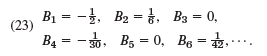
(a) The Maclaurin series Show that E0 = 1, E2 = -1, E4 = 5, E6 = -61. Write a program that computes the E2n from the coefficient formula in (1) or extracts them as a list from the series. (b) The Maclaurin series Using undetermined coefficients, show that Write a program for computing Bn. (c)
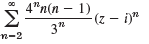
Find the radius of convergence in two ways: (a) Directly by the Cauchy–Hadamard formula in Sec. 15.2. (b) From a series of simpler terms by using Theorem 3 or Theorem 4.
Clearly, from series we can compute function values. In this project we show that properties of functions can often be discovered from their Taylor or Maclaurin series. Using suitable series, prove the following.(a) The formulas for the derivatives of ez, cos z, sin z, cosh z, sinh z, and Ln (1 +
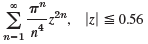
Prove that the series converges uniformly in the indicated region.
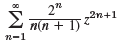
Find the radius of convergence. Try to identify the sum of the series as a familiar function.
Find the center and the radius of convergence.
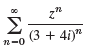
Is the given series convergent or divergent? Give a reason. Show details.
State clearly and explicitly where and how you are using Theorem 2.If in (2) is odd (i.e., f(-z) = -f(z)), show that αn = 0 for even n. Give examples.
Find the Taylor series with center z0 and its radius of convergence.1/(1 - z), z0 = i
Find the radius of convergence. Try to identify the sum of the series as a familiar function.
Write a program for computing R from (6), (6*), or (6**), in this order, depending on the existence of the limits needed. Test the program on some series of your choice such that all three formulas (6), (6*), and (6**) will come up.
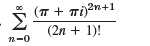
Is the given series convergent or divergent? Give a reason. Show details.
Show that (9) in Sec. 12.6 with coefficients (10) is a solution of the heat equation for t > 0 assuming that f(x) is continuous on the interval 0 ≤ x ≤ L and has one-sided derivatives at all interior points of that interval. Proceed as follows. Show that |Bn| is bounded, say |Bn| and, by
Find the radius of convergence. Try to identify the sum of the series as a familiar function.
Find the Taylor series with center z0 and its radius of convergence.sin z, z0 = π/2
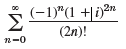
Is the given series convergent or divergent? Give a reason. Show details.
Find the Taylor series with center z0 and its radius of convergence.cosh (z - πi), z0 = πi
Find the Maclaurin series and its radius of convergence. Show details.(sinh z2)/z2
Find the Maclaurin series and its radius of convergence. Show details.1/(1 - z)3
Find the Taylor series with center z0 and its radius of convergence.1/(z + i)2, z0 = i
Find the Maclaurin series and its radius of convergence. Show details.cos2 z
Is the given series convergent or divergent? Give a reason. Show details.
Find the Maclaurin series and its radius of convergence. Show details.1/(πz + 1)
Find the Taylor series with center z0 and its radius of convergence.sinh (2z - i), z0 = i/2
Find the Maclaurin series and its radius of convergence. Show details.-(exp/(-z2) - 1)/z2
Is the given series convergent or divergent? Give a reason. Show details.
Find the Taylor series with the given point as enter and its radius of convergence.cos z, 1/2π
Write a program for computing and graphing numeric values of the first n partial sums of a series of complex numbers. Use the program to experiment with the rapidity of convergence of series of your choice.
Find the Taylor series with the given point as enter and its radius of convergence.Ln z, 3
Show that if a series converges absolutely, it is convergent.
Find the Taylor series with the given point as enter and its radius of convergence.ez, πi
Determine the location and order of the zeros.sin4 1/2z
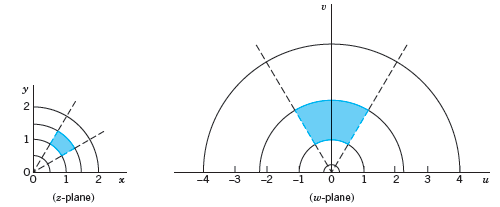
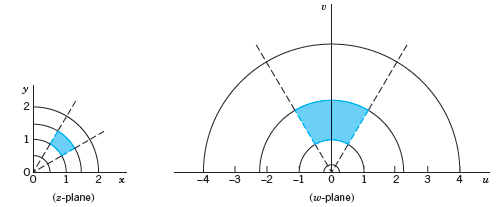
One “rectangle” and its image are colored. Identify the images for the other “rectangles.”
If z moves from z = 1/4 twice around the circle |z| = 1/4, what does w = √z do?
Find the image of x = c = const, -π < y ≤ π, under w = ez.
Expand the function in a Laurent series that converges for 0 < |Z| < R and determine the precise region of convergence. Show the details of your work.cos z/z4
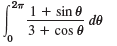
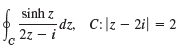
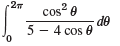
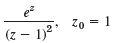
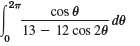
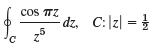
Evaluate the following integrals and show the details of your work.
What is a Laurent series? Its principal part? Its use? Give simple examples.
Expand the function in a Laurent series that converges for 0
What kind of singularities did we discuss? Give definitions and examples.
Determine the location and order of the zeros.(z4 + 81i)4
Draw an analog of Fig. 378 for w = z3.
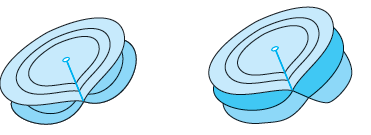
Make a sketch, similar to Fig. 395, of the Riemann surface of w = 4√z + 1.
If you are familiar with 2 × 2 matrices, prove that the coefficient matrices of (1) and (4) are inverses of each other, provided that αd - bc = 1, and that the composition of LFTs corresponds to the multiplication of the coefficient matrices.
Find and sketch the image of the given region under w = ez.-1/2 ≤ x ≤ 1/2, -π ≤ y ≤ π
Expand the function in a Laurent series that converges for 0 < |Z| < R and determine the precise region of convergence. Show the details of your work.exp z2/z3
Find all the singularities in the finite plane and the corresponding residues. Show the details.sin 2z/z6
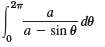
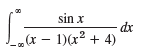
Evaluate the following integrals and show the details of your work.
What is the residue? Its role in integration? Explain methods to obtain it.
Can the residue at a singularity be zero? At a simple pole? Give reason.
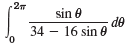
Evaluate the following integrals and show the details of your work.
What is an entire function? Can it be analytic at infinity? Explain the definitions.
Write a program for calculating the residue at a pole of any order in the finite plane. Use it for solving Probs. 5–10.Data from Prob. 5Find all the singularities in the finite plane and the corresponding residues. Show the details.8/1 + z2
Find the images of the lines x = c = const under the mapping w = cos z.
Evaluate (counterclockwise). Show the details.
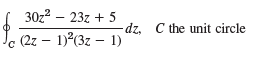
Evaluate the following integrals and show details of your work.
How would you find the image of x = Re z = 1 under w = iz, z2, ez, 1/z?
If w = f(z) is any transformation that has an inverse, prove the (trivial!) fact that f and its inverse have the same fixed points.
Expand the function in a Laurent series that converges for 0 < |Z| < R and determine the precise region of convergence. Show the details of your work.sin πz/z2
Determine the location and order of the zeros.z-2 sin2 πz
Find out whether w = z̅ preserves angles in size as well as in sense. Try to prove your result.
Find the branch points and the number of sheets of the Riemann surface.z2 + 3√4z + i
Find and sketch the image of the given region under w = ez.-∞ < x < ∞, 0 ≤ y ≤ 2π
Expand the function in a Laurent series that converges for 0 < |Z| < R and determine the precise region of convergence. Show the details of your work.1/z2 - z3
Find all the singularities in the finite plane and the corresponding residues. Show the details.8/1 + z2
Evaluate the following integrals and show the details of your work.
State the residue theorem and the idea of its proof from memory.
Derive the mapping in Example 2 from (2).
Expand the function in a Laurent series that converges for 0 < |Z| < R and determine the precise region of convergence. Show the details of your work.sinh 2z/z2
How did we evaluate real integrals by residue integration? How did we obtain the closed paths needed?
Determine the location and order of the zeros.z4 + (1 - 8i) z2 - 8i
Find and sketch or graph the images of the given curves under the given mapping.Curves as in Prob. 6, w = izData from Prob. 6Find and sketch or graph the images of the given curves under the given mapping.x = 1, 2, 3, 4, y = 1, 2, 3, 4, w = z2
Find the branch points and the number of sheets of the Riemann surface.n√z - z0
Find the inverse z = z(w). Check by solving z(w) for w.w = i/2z - 1
Find and sketch the image of the given region under w = ez.0 < x < 1, 0 < y < π
Expand the function in a Laurent series that converges for 0 < |Z| < R and determine the precise region of convergence. Show the details of your work.z3 cosh 1/z
Find all the singularities in the finite plane and the corresponding residues. Show the details.cot πz
What are improper integrals? Their principal value? Why did they occur in this chapter?
If your CAS can do conformal mapping, use it to solve Prob. 7. Then increase y beyond π, say, to 50π or 100π. State what you expected. See what you get as the image. Explain.Data from Prob. 7Find and sketch the image of the given region under w = ez.0 < x < 1, 0 < y < π
What do you know about zeros of analytic functions? Give examples.
Determine the location and order of the zeros.sin 2z cos 2z
Find and sketch or graph the images of the given curves under the given mapping.Curves as in Prob. 6, w = z + 2 + iData from Prob. 6Find and sketch or graph the images of the given curves under the given mapping.x = 1, 2, 3, 4, y = 1, 2, 3, 4, w = z2
Find the branch points and the number of sheets of the Riemann surface.√z3 + z
Find the inverse z = z(w). Check by solving z(w) for w.w = z - i/3iz + 4
Find the points at which w = sin z is not conformal.
Find the Laurent series that converges for 0 0|
Find all the singularities in the finite plane and the corresponding residues. Show the details.1/1 - ez
Evaluate the following integrals and show the details of your work.
What is the extended complex plane? The Riemann sphere R? Sketch z = 1 + i on R.
Find the LFT that maps the given three points onto the three given points in the respective order.1, i,-1 onto i, -1, -i
If f(z) is analytic and has a zero of order n at z = z0, show that f2(z) has a zero of order 2n at z0.
Sketch or graph the given region and its image under the given mapping.|z| ≤ 1/2, -π/8 < Arg z < π/8, w = z2
Find all points at which the mapping is not conformal. Give reason.A cubic polynomial
Evaluate (counterclockwise). Show the details.
Evaluate the following integrals and show details of your work.
Evaluate by the methods of this chapter. Show details.
Find all Taylor and Laurent series with center z0. Determine the precise regions of convergence. Show details.1/z2, z0 = i
Discuss e1/Z2 in a similar way as is discussed in Example 3 of the text.
Find all points at which the mapping is not conformal. Give reason.
Evaluate (counterclockwise). Show the details.
Showing 400 - 500
of 3937
1
2
3
4
5
6
7
8
9
10
11
12
13
14
15
Last
Step by Step Answers

 Get 50% OFF
Claim Now
Get 50% OFF
Claim Now