New Semester
Started
Get
50% OFF
Study Help!
--h --m --s
Claim Now
Question Answers
Textbooks
Find textbooks, questions and answers
Oops, something went wrong!
Change your search query and then try again
S
Books
FREE
Study Help
Expert Questions
Accounting
General Management
Mathematics
Finance
Organizational Behaviour
Law
Physics
Operating System
Management Leadership
Sociology
Programming
Marketing
Database
Computer Network
Economics
Textbooks Solutions
Accounting
Managerial Accounting
Management Leadership
Cost Accounting
Statistics
Business Law
Corporate Finance
Finance
Economics
Auditing
Tutors
Online Tutors
Find a Tutor
Hire a Tutor
Become a Tutor
AI Tutor
AI Study Planner
NEW
Sell Books
Search
Search
Sign In
Register
study help
mathematics
calculus early transcendentals
Calculus Early Transcendentals 2nd edition William L. Briggs, Lyle Cochran, Bernard Gillett - Solutions
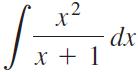
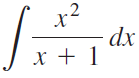
a. Evaluate using the substitution u = x + 1.b. Evaluate after first performing long division on the integrand.c. Reconcile the results in parts (a) and (b). х dx x + 1 x² dx x + 1
a. Evaluate ∫ cot x csc2 x dx using the substitution u = cot x.b. Evaluate ∫ cot x csc2 x dx using the substitution u = csc x.c. Reconcile the results in parts (a) and (b).
a. Evaluate ∫ tan x sec2 x dx using the substitution u = tan x.b. Evaluate ∫ tan x sec2 x dx using the substitution u = sec x.c. Reconcile the results in parts (a) and (b).
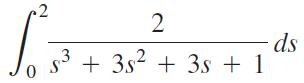
Use the approaches discussed in this section to evaluate the following integral. .2 ds s3 + 3s2 + 3s + 1
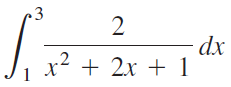
Use the approaches discussed in this section to evaluate the following integrals. 2 dx х? + 2х + 1
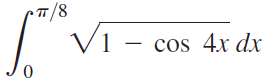
Use the approaches discussed in this section to evaluate the following integrals. -п/8 т/8 Vi - cos 4х dx
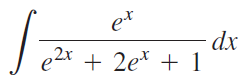
Use the approaches discussed in this section to evaluate the following integrals. et - dx e2x + 2e* + 1
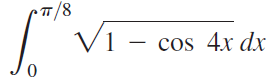
Use the approaches discussed in this section to evaluate the following integrals. 8/- TT VI - сos 4х dx
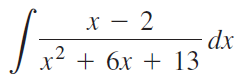
Use the approaches discussed in this section to evaluate the following integrals. dx x2 + 6x + 13
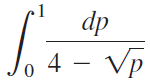
Use the approaches discussed in this section to evaluate the following integrals. dp Г. 4 - Vp
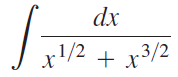
Use the approaches discussed in this section to evaluate the following integrals. dx x!/2 + x³/2
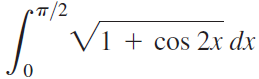
Use the approaches discussed in this section to evaluate the following integrals. TT CT/2 Vi + cos 2.x dx
Use the approaches discussed in this section to evaluate the following integrals.∫ sin x sin 2x dx
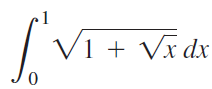
Use the approaches discussed in this section to evaluate the following integrals. V1 + Vĩ dx
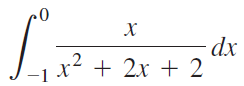
Use the approaches discussed in this section to evaluate the following integral. dx x² + 2x + 2
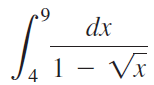
Use the approaches discussed in this section to evaluate the following integrals. 6° dx 1 - Vx 4
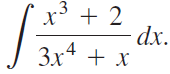
Determine whether the following statements are true and give an explanation or counter example.a.b. Long division simplifies the evaluation of the integral c. 3 dx = x + 4 3 dx + - dх. 4 .2 .3 x' + 2 dx. Зx + х .4
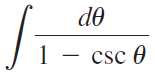
Evaluate the following integrals. do 1 - csc 0
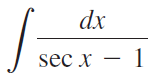
Evaluate the following integrals. dx sec x – 1
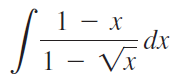
Evaluate the following integrals. х dx х
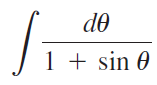
Evaluate the following integrals. do 1 + sin 0
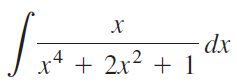
Evaluate the following integrals. dx x* + 2x2 + 1 4
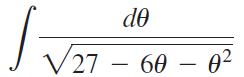
Evaluate the following integrals. do V27 – 60 – 0²
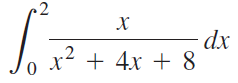
Evaluate the following integrals. х dx x2 + 4x + 8
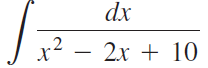
Evaluate the following integrals. dx х2 — 2х + 10 10
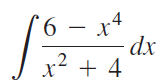
Evaluate the following integrals. 6 – x* X' dx x² + 4
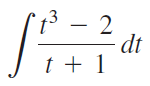
Evaluate the following integrals. = dt t + 1
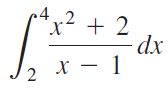
Evaluate the following integrals. x² + 2 dx
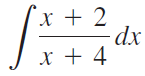
Evaluate the following integrals. x + 2 - dx x + 4
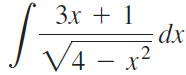
Evaluate the following integrals. Зх + 1 dx V4 — х2
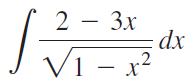
Evaluate the following integrals. 2 — Зх dx V1 – x²
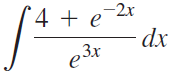
Evaluate the following integrals. 4 + e-2r dx Зх e3x
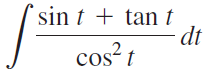
Evaluate the following integrals. sin t + tan t dt cos? t
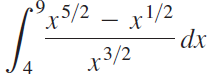
Evaluate the following integrals. 5/2 1/2 dx х3/2 х
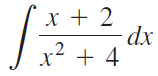
Evaluate the following integrals. x + 2 dx x² + 4
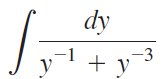
Evaluate the following integrals. dy -1 -3 У
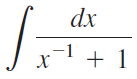
Evaluate the following integrals. dx -1 х
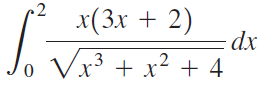
Evaluate the following integrals. x(3x + 2) dx .2 Vx³ + x² + 4
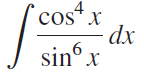
Evaluate the following integrals. cost.x dx sin° x
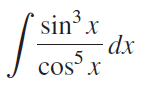
Evaluate the following integrals. sin' x cos x
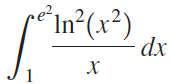
Evaluate the following integrals. *In°(x²) dx х
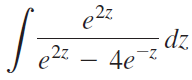
Evaluate the following integrals. ,2z e?z dz e2z – 4e
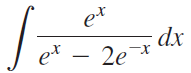
Evaluate the following integrals. et х dx e* – 2e*
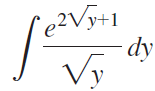
Evaluate the following integrals. ,2Vy+1 dy Vy
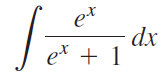
Evaluate the following integrals. et dx e* + 1
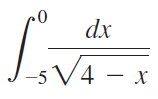
Evaluate the following integrals. Го dх V4 - х
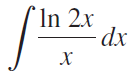
Evaluate the following integrals. In 2x dx
Evaluate the following integrals.∫ e3 - 4x dx
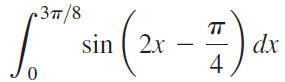
Evaluate the following integrals. .Зп/8 TT dx sin ( 2x 2x
Evaluate the following integrals.∫ (9x - 2)-3 dx
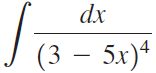
Evaluate the following integrals. dx (3 – 5x)4
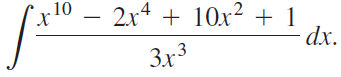
Describe a first step in integrating x10 – 2x4 + 10x² + 1 dx. Зх3
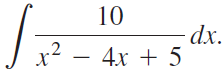
Describe a first step in integrating 10 dx. 4х + 5 .2
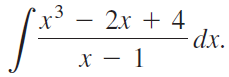
Describe a first step in integrating .3 X* x³ – 2x + 4 dx.
What trigonometric identity is useful in evaluating ∫ sin2 x dx?
Before integrating, how would you rewrite the integrand of ∫ (x4 + 2)2 dx?
What change of variables would you use for the integral ∫ (4 - 7x)-6 dx?
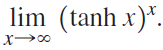
Evaluate lim (tanh x)*. х
Find the linear approximation to f(x) = cosh x at a = ln 3 and then use it to approximate the value of cosh 1.
Find the area of the region bounded by the curves f(x) = 8 sech2 x and g(x) = cosh x.
Compute the following derivatives.a. d6/dx6(cosh x)b. d/dx(x sech x)
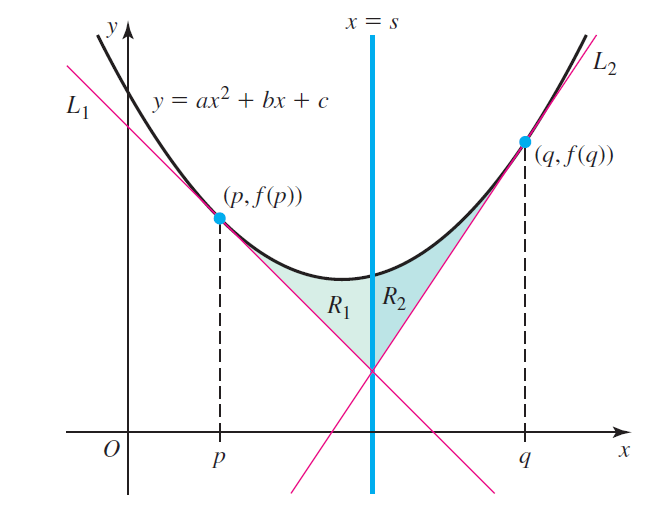
Let f(x) = ax2 + bx + c be an arbitrary quadratic function and choose two points x = p and x = q. Let L1 be the line tangent to the graph of f at the point (p, f(p)) and let L2 be the line tangent to the graph at the point (q, f (q)). Let x = s be the vertical line through the intersection point of
A commonly used distribution in probability and statistics is the log-normal distribution. (If the logarithm of a variable has a normal distribution, then the variable itself has a log-normal distribution.) The distribution function iswhere ln x has zero mean and standard deviation σ > 0.a.
Use the graphing techniques of Section 4.3 to graph the following functions on their domains. Identify local extreme points, inflection points, concavity, and end behavior. Use a graphing utility only to check your work.f(x) = ln x - ln2x
Use the graphing techniques of Section 4.3 to graph the following functions on their domains. Identify local extreme points, inflection points, concavity, and end behavior. Use a graphing utility only to check your work.f(x) = ex(x2 - x)
A savings account advertises an annual percentage yield (APY) of 5.4%, which means that the balance in the account increases at an annual growth rate of 5.4%/yr.a. Find the balance in the account for t ≥ 0 with an initial deposit of $1500, assuming the APY remains fixed and no additional deposits
Growing from an initial population of 150,000 at a constant annual growth rate of 4%/yr, how long will it take a city to reach a population of 1 million?
The mass of radioactive material in a sample has decreased by 30% since the decay began. Assuming a half-life of 1500 years, how long ago did the decay begin?
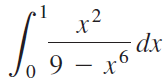
Evaluate the following integrals. dx р9 — х6
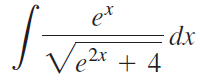
Evaluate the following integrals. х et dx + 4 Vezr ,2x
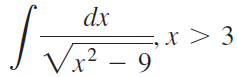
Evaluate the following integrals. dx Vx² – 9
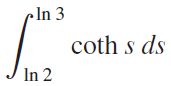
Evaluate the following integrals. eIn 3 coth s ds In 2
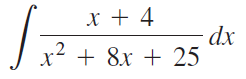
Evaluate the following integrals. x + 4 dx x2 + 8x + 25
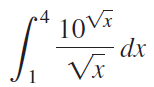
Evaluate the following integrals. 10V dx VI
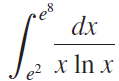
Evaluate the following integrals. ев dx 2 x In x
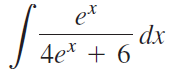
Evaluate the following integrals. et dx 4e* + 6
Find the total force on the face of a semicircular dam with a radius of 20 m when its reservoir is full of water. The diameter of the semicircle is the top of the dam.
A cylindrical water tank has a height of 6 m and a radius of 4 m. How much work is required to empty the full tank by pumping the water to an outflow pipe at the top of the tank?
a. It takes 50 J of work to stretch a spring 0.2 m from its equilibrium position. How much work is needed to stretch it an additional 0.5 m?b. It takes 50 N of force to stretch a spring 0.2 m from its equilibrium position. How much work is needed to stretch it an additional 0.5 m?
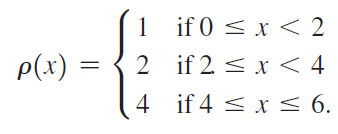
Find the mass of the following thin bars.A bar on the interval 0 ≤ x ≤ 6 with a density if 0 < x < 2 p(x) = 2 if 2 < x < 4 4 if 4 < x < 6.
Find the mass of the following thin bars.A 3-m bar with a density (in g/m) of ρ(x) = 150e-x/3, for 0 ≤ x ≤ 3
Find the mass of the following thin bars.A bar on the interval 0 ≤ x ≤ 9 with a density (in g/cm) given by ρ(x) = 3 + 2√x.
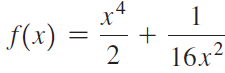
Let and let R be the region bounded by the graph of f and the x-axis on the interval [1, 2].a. Find the area of the surface generated when the graph of f on [1, 2] is revolved about the x-axis.b. Find the length of the curve y = f(x) on [1, 2].c. Find the volume of the solid generated when R is
Find the surface area of a cone (excluding the base) with radius 4 and height 8 using integration and a surface area integral.
Let f(x) = √3x - x2 and let R be the region bounded by the graph of f and the x-axis on the interval [0, 3].a. Find the area of the surface generated when the graph of f on [0, 3] is revolved about the x-axis.b. Find the volume of the solid generated when R is revolved about the x-axis.
Let f(x) = 1/3 x3 and let R be the region bounded by the graph of f and the x-axis on the interval [0, 2].a. Find the area of the surface generated when the graph of f on [0, 2] is revolved about the x-axis.b. Find the volume of the solid generated when R is revolved about the y-axis.c. Find the
Find the length of the following curves.y = ln x between x = 1 and x = b > 1 given thatUse any means to approximate the value of b for which the curve has length 2. Vx² + a² - dx a + Vx² + a² + C. Vx? + a² – a In .2 х х
Find the length of the following curves.y = x3/3 + x2 + x + 1/(4x + 4) on the interval [0, 4]
Find the length of the following curves.y = x1/2 - x3/2/3 on the interval [1, 3]
Find the length of the following curves.y = x3/6 + 1/(2x) on the interval [1, 2]
Find the length of the following curves.y = cosh-1 x on the interval [√2, √5]
Find the length of the following curves.y = 2x + 4 on the interval [-2, 2] (Use calculus.)
Let R be the region bounded by the graph of f(x) = cx(1 - x) and the x-axis on [0, 1]. Find the positive value of c such that the volume of the solid generated by revolving R about the x-axis equals the volume of the solid generated by revolving R about the y-axis.
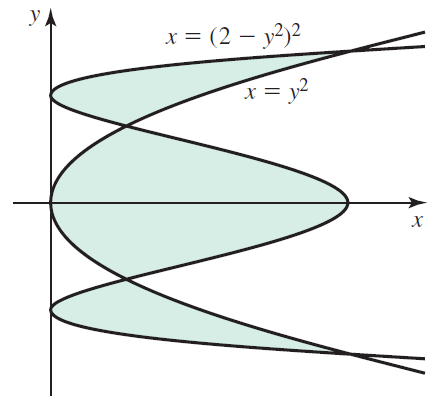
Determine the area of the region bounded by the curves x = y2 and x = (2 - y2)2 (see figure). УА х%3D (2 — у?)? x = y2 х
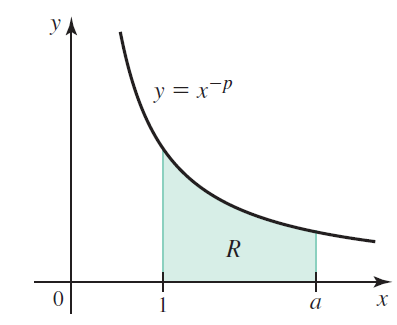
Let R be the region bounded by y = 1/xp and the x-axis on the interval [1, a], where p > 0 and a > 1 (see figure). Let Vx and Vy be the volumes of the solids generated when R is revolved about the x- and y-axes, respectively.a. With a = 2 and p = 1, which is greater, Vx or Vy?b. With a = 4
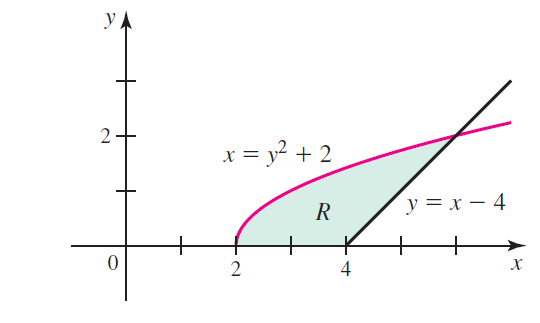
The region R is bounded by the curves x = y2 + 2, y = x - 4, and y = 0 (see figure).a. Write a single integral that gives the area of R.b. Write a single integral that gives the volume of the solid generated when R is revolved about the x-axis.c. Write a single integral that gives the volume of the
Choose the general slicing method, the disk/washer method, or the shell method to answer the following questions.The region bounded by the graphs of y = 2x, y = 6 - x, and y = 0 is revolved about the line y = -2 and the line x = -2. Find the volumes of the resulting solids. Which one is greater?
Choose the general slicing method, the disk/washer method, or the shell method to answer the following questions.The region bounded by the graphs of y = 6x and y = x2 + 5 is revolved about the line y = -1 and the line x = -1. Find the volumes of the resulting solids. Which one is greater?
Choose the general slicing method, the disk/washer method, or the shell method to answer the following questions.The region bounded by the graphs of y = (x - 2)2 and y = 4 is revolved about the line y = 4. What is the volume of the resulting solid?
Choose the general slicing method, the disk/washer method, or the shell method to answer the following questions.The region bounded by the graph of y = 4 - x2 and the x-axis on the interval [-2, 2] is revolved about the line x = -2. What is the volume of the solid that is generated?
Showing 3400 - 3500
of 6775
First
28
29
30
31
32
33
34
35
36
37
38
39
40
41
42
Last
Step by Step Answers

 Get 50% OFF
Claim Now
Get 50% OFF
Claim Now