New Semester
Started
Get
50% OFF
Study Help!
--h --m --s
Claim Now
Question Answers
Textbooks
Find textbooks, questions and answers
Oops, something went wrong!
Change your search query and then try again
S
Books
FREE
Study Help
Expert Questions
Accounting
General Management
Mathematics
Finance
Organizational Behaviour
Law
Physics
Operating System
Management Leadership
Sociology
Programming
Marketing
Database
Computer Network
Economics
Textbooks Solutions
Accounting
Managerial Accounting
Management Leadership
Cost Accounting
Statistics
Business Law
Corporate Finance
Finance
Economics
Auditing
Tutors
Online Tutors
Find a Tutor
Hire a Tutor
Become a Tutor
AI Tutor
AI Study Planner
NEW
Sell Books
Search
Search
Sign In
Register
study help
mathematics
calculus early transcendentals
Calculus Early Transcendentals 2nd edition William L. Briggs, Lyle Cochran, Bernard Gillett - Solutions
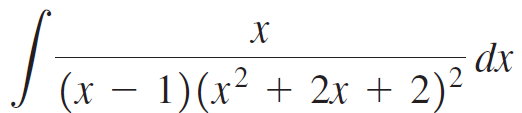
Refer to the summary box (Partial Fraction Decompositions) and evaluate the following integrals. (x – 1)(x² + 2x + 2)²
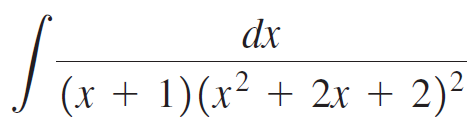
Refer to the summary box (Partial Fraction Decompositions) and evaluate the following integrals. dx (x + 1)(x² + 2x + 2)²
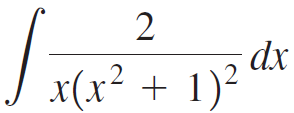
Refer to the summary box (Partial Fraction Decompositions) and evaluate the following integrals. dx x(x² + 1)? 1)2 .2
Consider the curve y = ln x.a. Find the length of the curve from x = 1 to x = a and call it L(a). The change of variables u = √x2 + 1 allows evaluation by partial fractions.b. Graph L(a).c. As a increases, L(a) increases as what power of a?
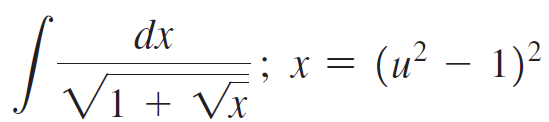
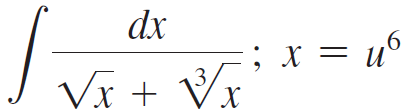
Use the indicated substitution to convert the given integral to an integral of a rational function. Evaluate the resulting integral. dx ; x V1 + Vx = (u? – 1) - 1)²
Use the indicated substitution to convert the given integral to an integral of a rational function. Evaluate the resulting integral.
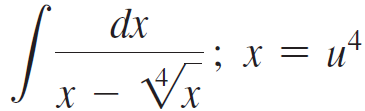
Use the indicated substitution to convert the given integral to an integral of a rational function. Evaluate the resulting integral. dх и° ; х — /x + Уxt х
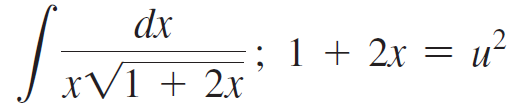
Use the indicated substitution to convert the given integral to an integral of a rational function. Evaluate the resulting integral. dx ; 1 + 2x = u² .2 xV1 + 2x
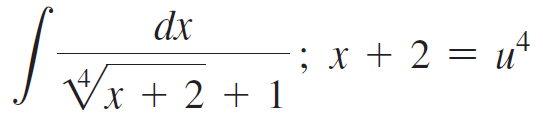
Use the indicated substitution to convert the given integral to an integral of a rational function. Evaluate the resulting integral. dx ; x + 2 = ut Vx + 2 + 1
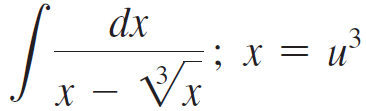
Use the indicated substitution to convert the given integral to an integral of a rational function. Evaluate the resulting integral. dx 3. ; х- 3. х х
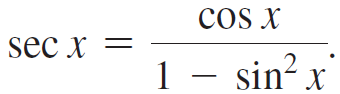
a. Verify the identity b. Use the identity in part (a) to verify that cOs X sec x sin? x || 1 + sin x - In + C. sec x dx sin x
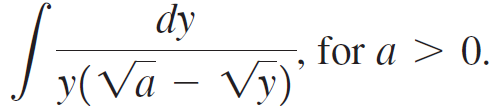
The following integrals require a preliminary step such as long division or a change of variables before using the method of partial fractions. Evaluate these integrals.Let u = √y. dy V y(Va - Vy) for a > 0.
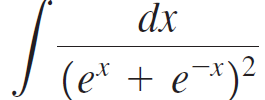
The following integrals require a preliminary step such as long division or a change of variables before using the method of partial fractions. Evaluate these integrals. dx (e* + e=*)? -х)2
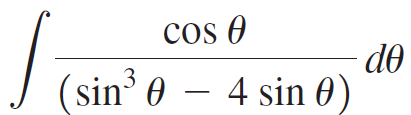
The following integrals require a preliminary step such as long division or a change of variables before using the method of partial fractions. Evaluate these integrals. cos O J (sin³ 0 – 4 sin 0)
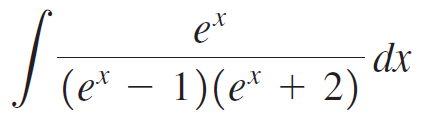
The following integrals require a preliminary step such as long division or a change of variables before using the method of partial fractions. Evaluate these integrals. et dx (e* – 1)(e* + 2)
The following integrals require a preliminary step such as long division or a change of variables before using the method of partial fractions. Evaluate these integrals.∫ √ex + 1 dx. Let u = √ex + 1.
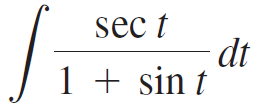
The following integrals require a preliminary step such as long division or a change of variables before using the method of partial fractions. Evaluate these integrals. sec t dt 1 + sin t
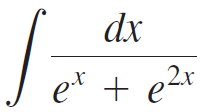
The following integrals require a preliminary step such as long division or a change of variables before using the method of partial fractions. Evaluate these integrals. dx e* + e2x
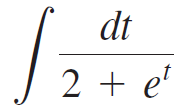
The following integrals require a preliminary step such as long division or a change of variables before using the method of partial fractions. Evaluate these integrals. dt 2 + e'
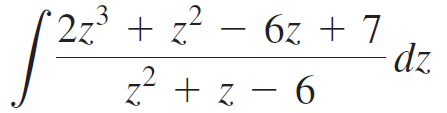
The following integrals require a preliminary step such as long division or a change of variables before using the method of partial fractions. Evaluate these integrals. 6z + 7 dz z? + z - 6 2z + z? -
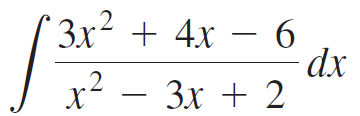
The following integrals require a preliminary step such as long division or a change of variables before using the method of partial fractions. Evaluate these integrals. * 3x² + 4x – 6 -9- dx 3x + 2 .2
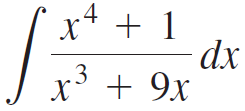
The following integrals require a preliminary step such as long division or a change of variables before using the method of partial fractions. Evaluate these integrals. x+ + 1 .3 x° + 9x
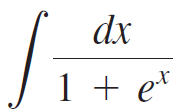
The following integrals require a preliminary step such as long division or a change of variables before using the method of partial fractions. Evaluate these integrals. dx 1 + e*
Why are there no constants A and B satisfying B -? X + 5 |(x – 4)(x + 5) х — 4
Find the volume of the following solids.The region bounded by y = 1/(x + 2), y = 0, x = 0, and x = 3 is revolved about the line x = -1.
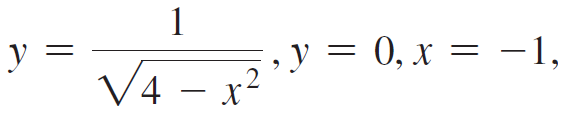
Find the volume of the following solids.The region bounded byand x = 1 is revolved about the x-axis. y = 0, x = –1, V4 - x?
Find the volume of the following solids.The region bounded byand x = 2 is revolved about the x-axis. , y = 0, x = 1, Vx(3 – x)
Find the volume of the following solids.The region bounded by y = (1 - x2)-1/2 and y = 4 is revolved about the x-axis.
Find the volume of the following solids.The region bounded by y = x/(x + 1), the x-axis, and x = 4 is revolved about the x-axis.
Find the volume of the following solids.The region bounded by y = 1/(x + 1), y = 0, x = 0, and x = 2 is revolved about the y-axis.
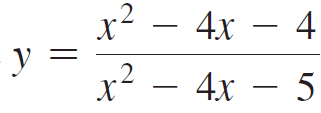
Find the area of the following regions.The region bounded by the curve and the x-axis. 4х — 4 У x² 4х — 5 ||
Find the area of the following regions.The region bounded by the curves y = 1/x, y = x/(3x + 4), and the line x = 10.
Find the area of the following regions.The region bounded by the curve y = 10/(x2 - 2x - 24), the x-axis, and the lines x = -2 and x = 2
Find the area of the following regions.The region bounded by the curve y = x/(1 + x), the x-axis, and the line x = 4.
Determine whether the following statements are true and give an explanation or counterexample.a. To evaluatethe first step is to find the partial fraction decomposition of the integrand.b. The easiest way to evaluateis with a partial fraction decomposition of the integrand.c. The rational
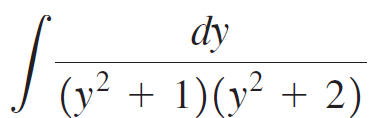
Evaluate the following integrals. dy (y² + 1)(y² + 2)
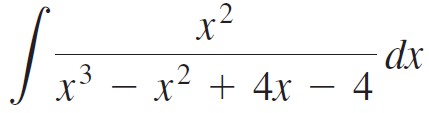
Evaluate the following integrals. dx x³ – x² + 4x – 4
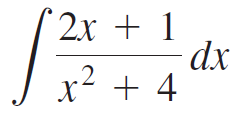
Evaluate the following integrals. 2x + 1 dx + 4 .2
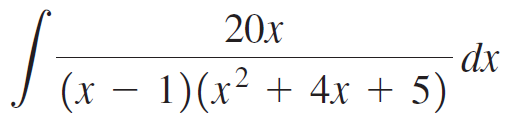
Evaluate the following integrals. 20x dx + 4x + 5) J (x – 1)(x²
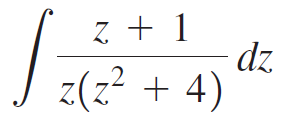
Evaluate the following integrals. z + 1 dz z(z? + 4)
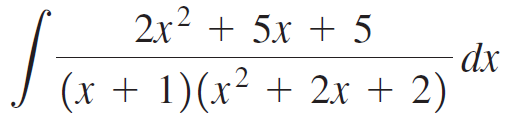
Evaluate the following integrals. 2x2 + 5x + 5 dx J (x + 1)(x² + 2x + 2)
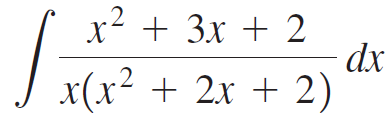
Evaluate the following integrals. x- + 3x + 2 dx x(x² + 2x + 2)
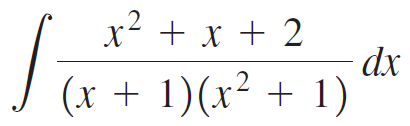
Evaluate the following integrals. x? + x + 2 dx (x + 1)(x² + 1)
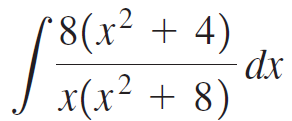
Evaluate the following integrals. 8(x² + 4) dx x(x2 + 8)
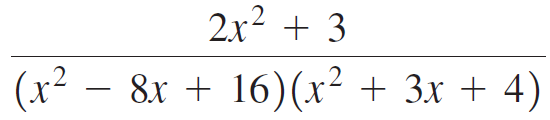
Give the appropriate form of the partial fraction decomposition for the following functions. 2x? + 3 (x² – 8x + 16)(x² + 3x + 4)
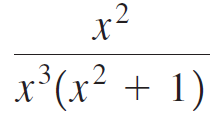
Give the appropriate form of the partial fraction decomposition for the following functions. х* x°(x? + 1) .3 ² +
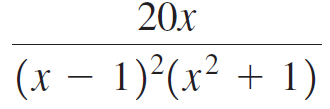
Give the appropriate form of the partial fraction decomposition for the following functions. 20x .2 (x – 1)*(x² + 1)
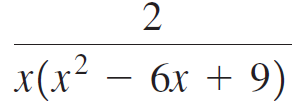
Give the appropriate form of the partial fraction decomposition for the following functions. x(х? — бх + 9)
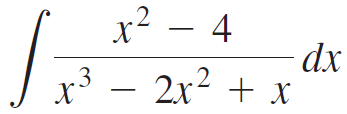
Evaluate the following integrals. x² – 4 dx x³ – 2x2 + x
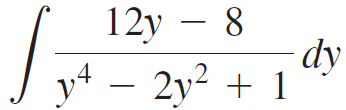
Evaluate the following integrals. 12y – 8 dy y4 – ? + 1 2y
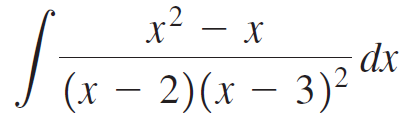
Evaluate the following integrals. x² — х dx Jк- 2)(х - 3)°
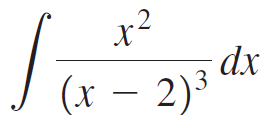
Evaluate the following integrals. dx (x – 2)³
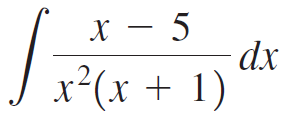
Evaluate the following integrals.
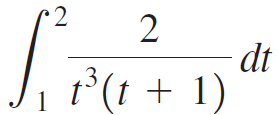
Evaluate the following integrals. dt t° (t + 1) .3 1
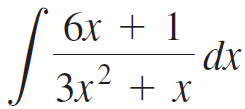
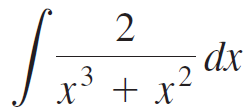
Evaluate the following integrals. .2 3 x' + x
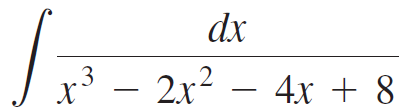
Evaluate the following integrals. dx х3 — 2x? 4х + 8
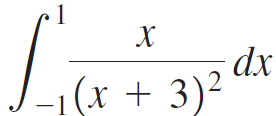
Evaluate the following integrals. Г. х (х + 3)2
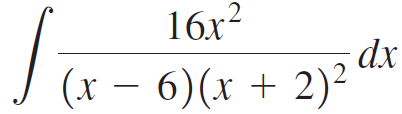
Evaluate the following integrals. .2 16x? dx (x – 6)(x + 2)²
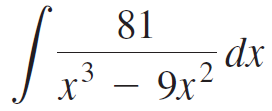
Evaluate the following integrals. 81 -dx
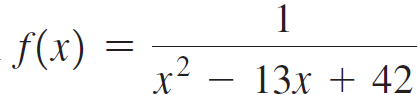
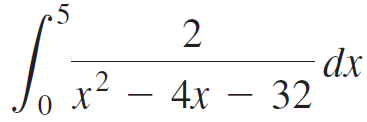
Evaluate the following integrals. dx, x² – 4x – 32
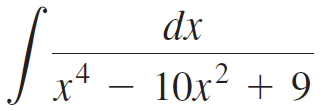
Evaluate the following integrals. dx x4 – 10x? + 9 .2
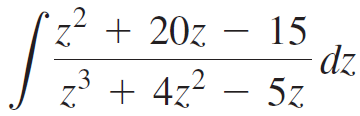
Evaluate the following integrals. z² + 20z – 15 dz 5z .3 z° + 4z2
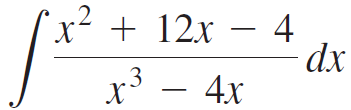
Evaluate the following integrals. x² + 12x dx 4х .3
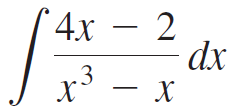
Evaluate the following integrals. 4х dx .3 х
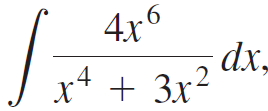
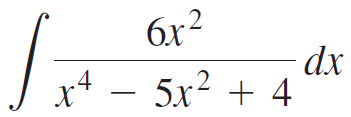
Evaluate the following integrals. бх? dx. 5x² + 4 x4 -
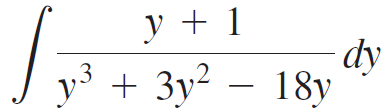
Evaluate the following integrals. y + 1 dy 2 ,3 + Зу? — 18y
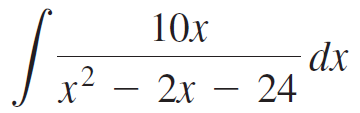
Evaluate the following integrals. 10х x² 2х — 24
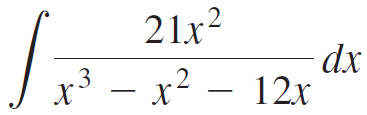
Evaluate the following integrals. .2 21x- x³ – x² – 12x .3
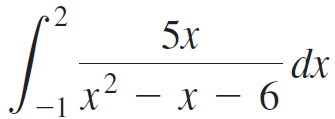
Evaluate the following integrals. 5х dx -1x² – x – 6 6.
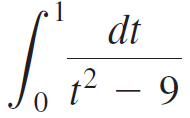
Evaluate the following integrals. dt 12 – 9
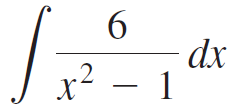
Evaluate the following integrals. dx - 1 .2
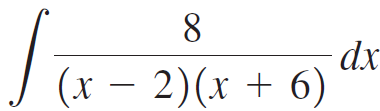
Evaluate the following integrals. dx (x – 2)(x + 6)
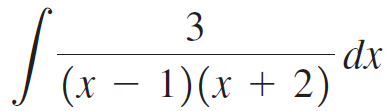
Evaluate the following integrals. 3 -dx (x – 1)(x + 2)
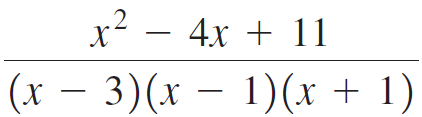
Give the partial fraction decomposition for the following functions. .2 — 4х + 11 (х — 3)(х — 1) (х + 1)
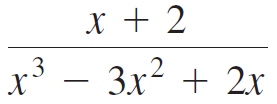
Give the partial fraction decomposition for the following functions. х+2 x3 — Зх2 + 2х
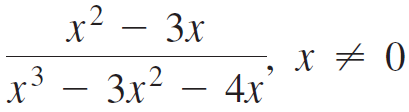
Give the partial fraction decomposition for the following functions. .2 3x 3x? – 4x x³ –
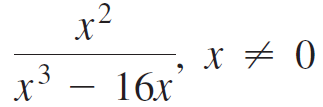
Give the partial fraction decomposition for the following functions. .2 х # 0 - 16х 3
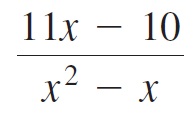
Give the partial fraction decomposition for the following functions. 1 1x – 10 x² – x
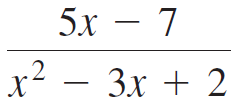
Give the partial fraction decomposition for the following functions. 5x – 7 χ2 3x + 2
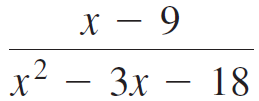
Give the partial fraction decomposition for the following functions. х — 9 х2 — Зх — 18
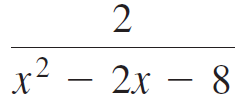
Give the partial fraction decomposition for the following functions. 2 x2 — 2х — 8
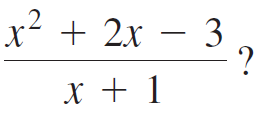
What is the first step in integrating х? + 2х — 3 х+ 1
What term(s) should appear in the partial fraction decomposition of a proper rational function with each of the following?a. A factor of x - 3 in the denominator.b. A factor of (x - 4)3 in the denominator.c. A factor of x2 + 2x + 6 in the denominator.
Give an example of each of the following.a. A simple linear factorb. A repeated linear factorc. A simple irreducible quadratic factord. A repeated irreducible quadratic factor
What kinds of functions can be integrated using partial fraction decomposition?
Let The figure shows that F(x) = area of sector OAB + area of triangle OBC.a. Use the figure to prove thatb. Conclude that F(x) = S*Va² – ² dt a² sin'(x/a), rVa² – x? F (x) =
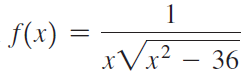
Recall that the substitution x = a sec θ implies either x ≥ a (in which case 0 ≤ θ < π/2 and tan θ ≥ 0) or x ≤ -a (in which case π/2 < θ ≤ π and tan θ ≤ 0).Graph the function on its domain. Then find the area of the region R1 bounded by the curve and the x-axis on [-12,
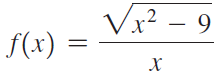
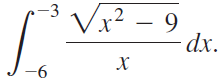
Recall that the substitution x = a sec θ implies either x ≥ a (in which case 0 ≤ θ < π/2 and tan θ ≥ 0) or x ≤ -a (in which case π/2 < θ ≤ π and tan θ ≤ 0).Graph the functionand consider the region bounded by the curve and the x-axis on [-6, -3]. Then evaluate Be sure
Recall that the substitution x = a sec θ implies either x ≥ a (in which case 0 ≤ θ < π/2 and tan θ ≥ 0) or x ≤ -a (in which case π/2 < θ ≤ π and tan θ ≤ 0).Evaluate for Vx² 1 dx, for x > 1 and for x < -1. .2 43
Recall that the substitution x = a sec θ implies either x ≥ a (in which case 0 ≤ θ < π/2 and tan θ ≥ 0) or x ≤ -a (in which case π/2 < θ ≤ π and tan θ ≤ 0).Show that secx + C = tan¬1 Vx² – 1 + C - secx + C = -tan Vx² – 1 + C if x > 1 if x < -1. dx xVx? .2 х
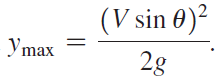
A projectile is launched from the ground with an initial speed V at an angle θ from the horizontal. Assume that the x-axis is the horizontal ground and y is the height above the ground. Neglecting air resistance and letting g be the acceleration due to gravity, it can be shown that the trajectory
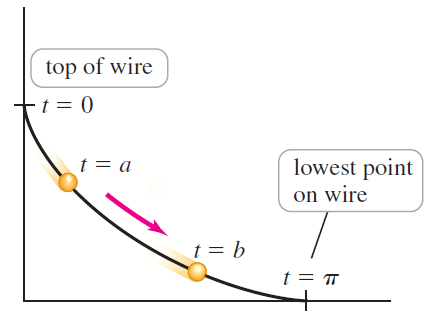
The cycloid is the curve traced by a point on the rim of a rolling wheel. Imagine a wire shaped like an inverted cycloid (see figure). A bead sliding down this wire without friction has some remarkable properties. Among all wire shapes, the cycloid is the shape that produces the fastest descent
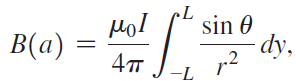
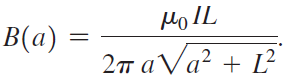
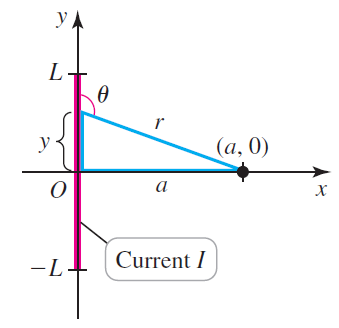
A long, straight wire of length 2L on the y-axis carries a current I. According to the Biot-Savart Law, the magnitude of the magnetic field due to the current at a point (a, 0) is given bywhere μ0 is a physical constant, a > 0, and θ, r, and y are related as shown in the figure.a. Show that
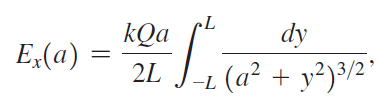
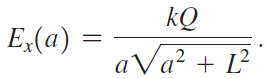
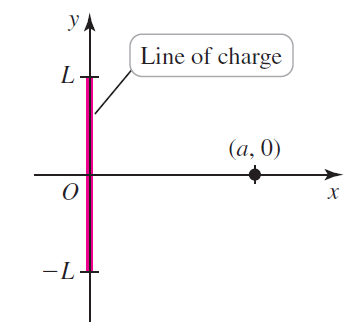
A total charge of Q is distributed uniformly on a line segment of length 2L along the y-axis (see figure). The x-component of the electric field at a point (a, 0) is given bywhere k is a physical constant and a > 0.a. Confirm thatb. Letting ρ = Q/2L be the charge density on the line segment,
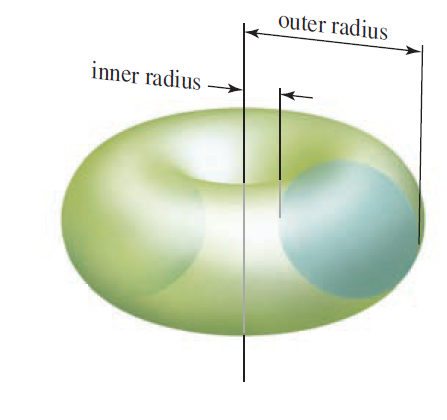
Bob and Bruce bake bagels (shaped like tori). They both make bagels that have an inner radius of 0.5 in and an outer radius of 2.5 in. Bob plans to increase the volume of his bagels by decreasing the inner radius by 20% (leaving the outer radius unchanged). Bruce plans to increase the volume of his
Find the volume of the solid torus formed when the circle of radius 4 centered at (0, 6) is revolved about the x-axis.
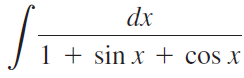
Evaluate using the substitution x = 2 tan-1 θ. The identities sin x = 2 sin x/2 cos x/2 and cos x = cos2 x/2 - sin2 x/2 are helpful. dx 1 + sin x + cos x
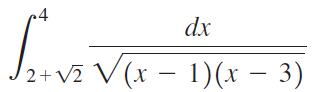
Evaluate the following integrals. Consider completing the square. dx 2+ v2 V (x – 1)(x – 3)
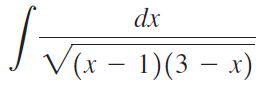
Evaluate the following integrals. Consider completing the square. dx J V(x - 1)(3 – x)
By reduction formula 4 Graph the following functions and find the area under the curve on the given interval.f(x) = (x2 - 25)1/2, [5, 10] (sec u tan u + In sec u + tan u|) + C. 2 sec u du
Showing 2700 - 2800
of 6775
First
21
22
23
24
25
26
27
28
29
30
31
32
33
34
35
Last
Step by Step Answers

 Get 50% OFF
Claim Now
Get 50% OFF
Claim Now