New Semester
Started
Get
50% OFF
Study Help!
--h --m --s
Claim Now
Question Answers
Textbooks
Find textbooks, questions and answers
Oops, something went wrong!
Change your search query and then try again
S
Books
FREE
Study Help
Expert Questions
Accounting
General Management
Mathematics
Finance
Organizational Behaviour
Law
Physics
Operating System
Management Leadership
Sociology
Programming
Marketing
Database
Computer Network
Economics
Textbooks Solutions
Accounting
Managerial Accounting
Management Leadership
Cost Accounting
Statistics
Business Law
Corporate Finance
Finance
Economics
Auditing
Tutors
Online Tutors
Find a Tutor
Hire a Tutor
Become a Tutor
AI Tutor
AI Study Planner
NEW
Sell Books
Search
Search
Sign In
Register
study help
mathematics
precalculus
Thomas Calculus Early Transcendentals 13th Edition Joel R Hass, Christopher E Heil, Maurice D Weir - Solutions
As found in Exercise 39, the centroid of the semicircle y = √a2 - x2 lies at the point (0, 2a/π). Find the area of the surface generated by revolving the semicircle about the line y = x - a.Data from in Exercise 39Use Pappus’s Theorem for surface area and the fact that the surface area of a
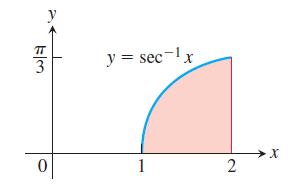
The region between the curve y = sec-1 x and the x-axis from x = 1 to x = 2 (shown here) is revolved about the y-axis to generate a solid. Find the volume of the solid. TT 3 0 y = sec-¹x 1 2 X
A vertical rectangular plate a units long by b units wide is submerged in a fluid of weight-density w with its long edges parallel to the fluid’s surface. Find the average value of the pressure along the vertical dimension of the plate. Explain your answer.
Show that the force exerted by the fluid on one side of the plate is the average value of the pressure (found in Exercise 45) times the area of the plate.Data From in Exercise 45A vertical rectangular plate a units long by b units wide is submerged in a fluid of weight-density w with its long edges
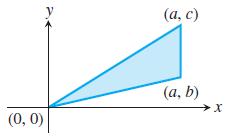
Use a theorem of Pappus to find the centroid of the given triangle. Use the fact that the volume of a cone of radius r and height h is V = 1/3 πr2h. (0, 0) (a, c) (a, b)
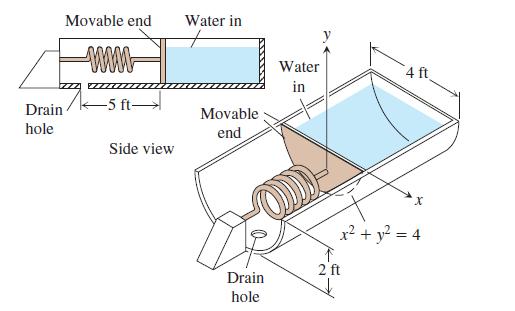
Water pours into the tank shown here at the rate of 4 ft3/min. The tank’s cross-sections are 4-ft-diameter semicircles. One end of the tank is movable, but moving it to increase the volume compresses a spring. The spring constant is k = 100 lb/ft. If the end of the tank moves 5 ft against the
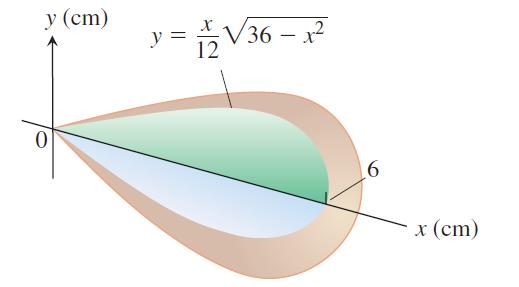
Having been asked to design a brass plumb bob that will weigh in the neighborhood of 190 g, you decide to shape it like the solid of revolution shown here. Find the plumb bob’s volume. If you specify a brass that weighs 8.5 g/cm3, how much will the plumb bob weigh (to the nearest gram)? y
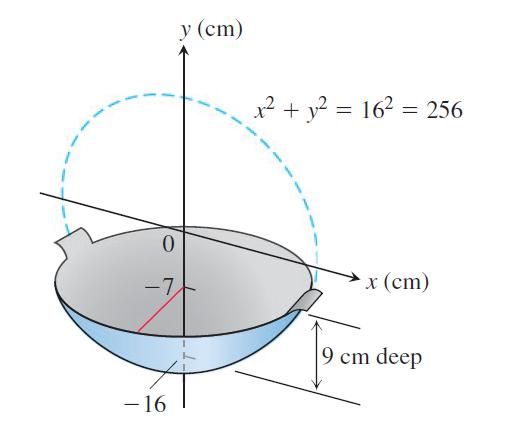
You are designing a wok frying pan that will be shaped like a spherical bowl with handles. A bit of experimentation at home persuades you that you can get one that holds about 3 L if you make it 9 cm deep and give the sphere a radius of 16 cm. To be sure, you picture the wok as a solid of
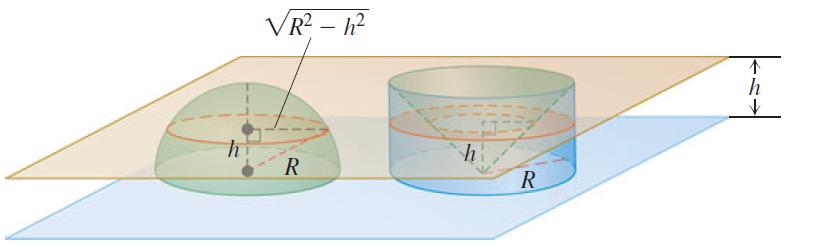
Derive the formula V = (2/3)πR3 for the volume of a hemisphere of radius R by comparing its cross-sections with the cross-sections of a solid right circular cylinder of radius R and height R from which a solid right circular cone of base radius R and height R has been removed, as suggested by the
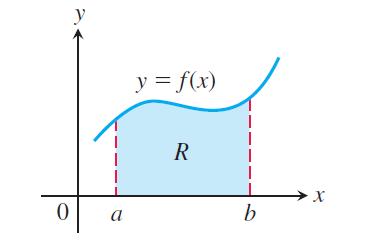
Consider the region R bounded by the graphs of y = ƒ(x) > 0, x = a > 0, x = b > a, and y = 0 (see accompanying figure). If the volume of the solid formed by revolving R about the x-axis is 4π, and the volume of the solid formed by revolving R about the line y = -1 is 8π, find the area
The vertical ends of a watering trough are squares 3 ft on a side.a. Find the fluid force against the ends when the trough is full.b. How many inches do you have to lower the water level in the trough to reduce the fluid force by 25%?
By integration, find the volume of the solid generated by revolving the triangular region with vertices (0, 0), (b, 0), (0, h) abouta. The x-axis. b. The y-axis.
The disk x2 + y2 ≤ a2 is revolved about the line x = b (b > a) to generate a solid shaped like a doughnut and called a torus. Find its volume.
a. A hemispherical bowl of radius a contains water to a depth h. Find the volume of water in the bowl.b. Water runs into a sunken concrete hemispherical bowl of radius 5 m at the rate of 0.2 m3/sec. How fast is the water level in the bowl rising when the water is 4 m deep?
Explain how you could estimate the volume of a solid of revolution by measuring the shadow cast on a table parallel to its axis of revolution by a light shining directly above it.
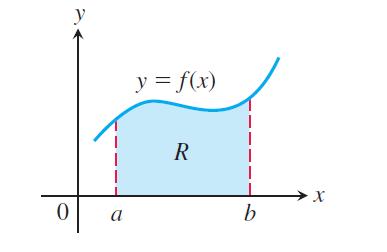
Consider the region R given in Exercise 63. If the volume of the solid formed by revolving R around the x-axis is 6π, and the volume of the solid formed by revolving R around the line y = -2 is 10π, find the area of R.Data from in Exercise 63Consider the region R bounded by the graphs of y =
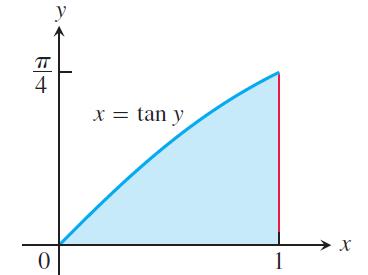
Find the volumes of the solids generated by revolving the shaded regions about the indicated axes.The y-axis TT 4 0 y x = tan y 1 X
Find the limit. lim(e/+ el/n + e²/n +.. + e(n-1)/n + en/n)
Express each limit as a definite integral. Then evaluate the integral to find the value of the limit. In each case, P is a partition of the given interval and the numbers ck are chosen from the subintervals of P. n lim (sin c)(cos C) Axk, where P is a partition of [0, π/2] ||P||→0 k=1
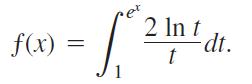
a. Find df / dx ifb. Find ƒ(0).c. What can you conclude about the graph of ƒ? Give reasons for your answer. f(x) = [²² 1 2 ln t t - dt.
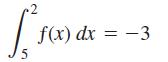
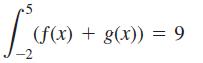
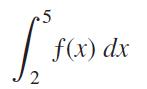
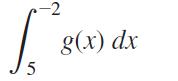
SupposeWhich, if any, of the following statements are true?a.b.c. ƒ(x) ≤ g(x) on the interval -2 ≤ x ≤ 5. 5 [_F(x) dx = 4, [*100) dx = 3. [_8(x) dx = f(x) 2.
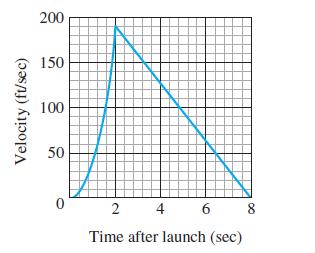
The accompanying figure shows the graph of the velocity (ft/sec) of a model rocket for the first 8 sec after launch. The rocket accelerated straight up for the first 2 sec and then coasted to reach its maximum height at t = 8 sec.a. Assuming that the rocket was launched from ground level, about how
How can you sometimes estimate quantities like distance traveled, area, and average value with finite sums? Why might you want to do so?
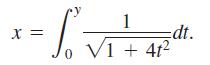
Suppose that x and y are related by the equationShow that d2y/dx2 is proportional to y and find the constant of proportionality. S 0 1 /1+ 41² -dt.
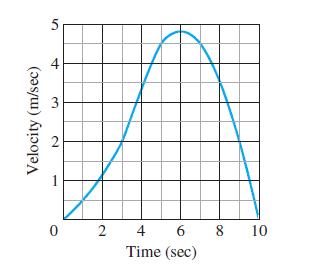
a. The accompanying figure shows the velocity (m/sec) of a body moving along the s-axis during the time interval from t = 0 to t = 10 sec. About how far did the body travel during those 10 sec?b. Sketch a graph of s as a function of t for 0 ≤ t ≤ 10, assuming s(0) = 0. Velocity (m/sec) 5 4 2 0
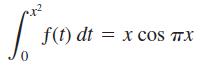
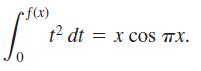
Find ƒ(4) ifa.b. f(t) dt = x cos TTX COS
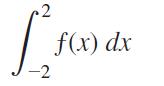
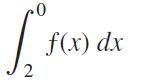
If ∫2-2 3ƒ(x) dx = 12, ∫-25 ƒ(x) dx = 6, and ∫-25 g(x) dx = 2, find the values of the following.a.b.c.d.e. 2 -2 f(x) dx
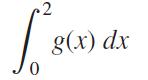
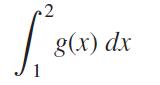
If ∫02 ƒ(x) dx = π, ∫02 7g(x) dx = 7, and ∫01 g(x) dx = 2, find the values of the following.a.b.c.d.e. 2 S 0 g(x) dx
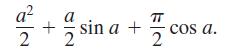
Find ƒ(π/2) from the following information.i) ƒ is positive and continuous.ii) The area under the curve y = ƒ(x) from x = 0 to x = a is a² 2 + sin a + ㅠ c 2 cos a.
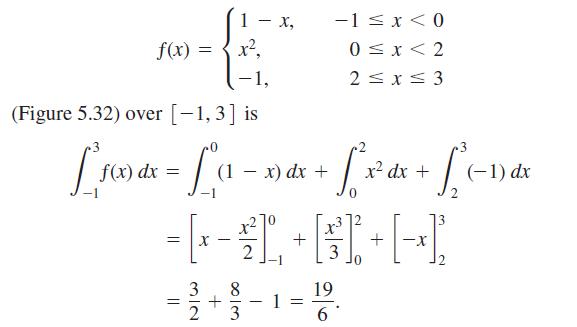
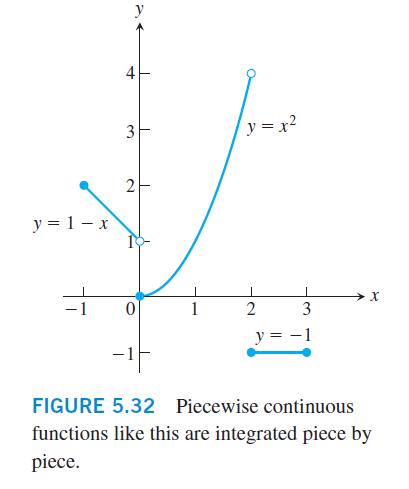
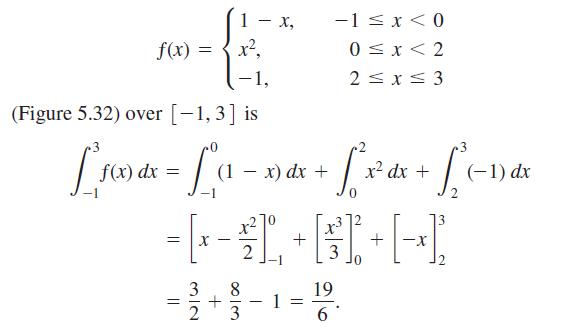
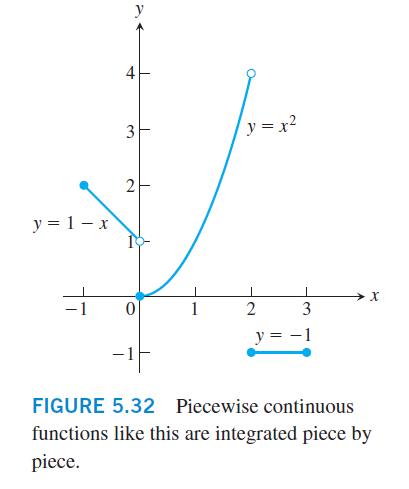
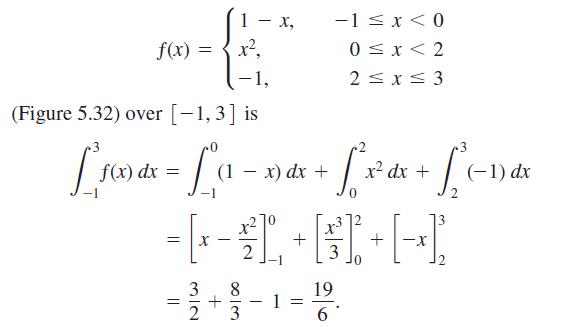
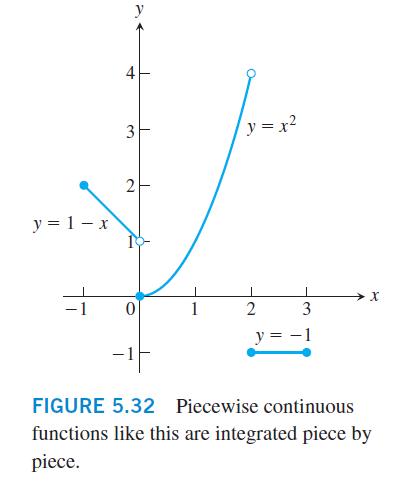
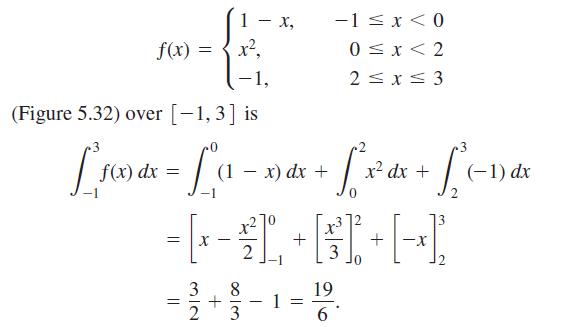
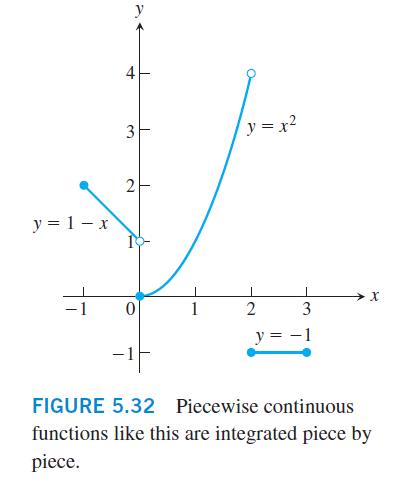
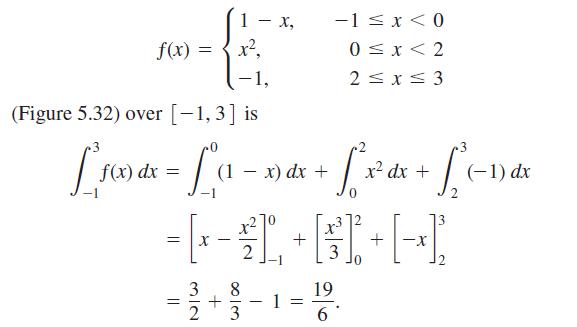
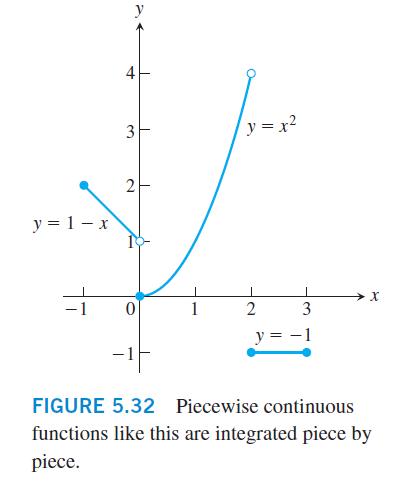
Although we are mainly interested in continuous functions, many functions in applications are piecewise continuous. A function ƒ(x) is piecewise continuous on a closed interval I if ƒ has only finitely many discontinuities in I, the limitsexist and are finite at every interior point of I, and the
Express each limit as a definite integral. Then evaluate the integral to find the value of the limit. In each case, P is a partition of the given interval and the numbers ck are chosen from the subintervals of P. lim (2ck-1)-1/2 Axk, where P is a partition of [1, 5] ||P|| 0 k=1 n
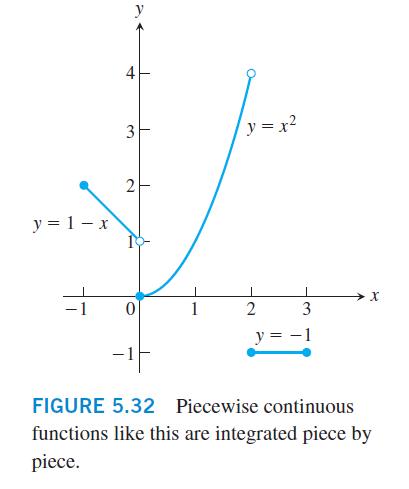
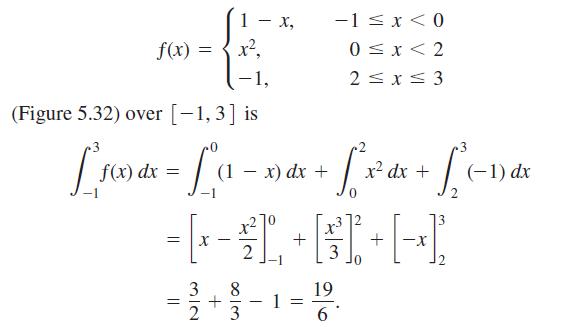
Although we are mainly interested in continuous functions, many functions in applications are piecewise continuous. A function ƒ(x) is piecewise continuous on a closed interval I if ƒ has only finitely many discontinuities in I, the limitsexist and are finite at every interior point of I, and the
Express each limit as a definite integral. Then evaluate the integral to find the value of the limit. In each case, P is a partition of the given interval and the numbers ck are chosen from the subintervals of P. Jim (cos(2)) Axk, where P is a partition of [-7, 0] k=1
What is sigma notation? What advantage does it offer? Give examples.
Express each limit as a definite integral. Then evaluate the integral to find the value of the limit. In each case, P is a partition of the given interval and the numbers ck are chosen from the subintervals of P. lim CK(C²1)1/3 Axk, where P is a partition of [1, 3] ||P|→0 k=1 n
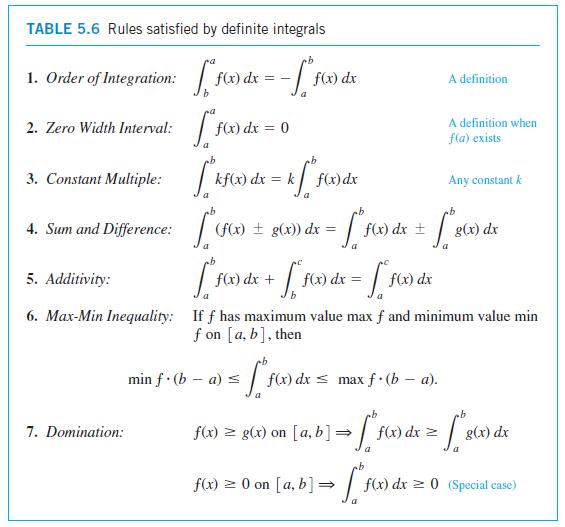
Describe the rules for working with definite integrals (Table 5.6). Give examples. TABLE 5.6 Rules satisfied by definite integrals f" f(x) dx = -f" f(x) dx 1. Order of Integration: 2. Zero Width Interval: 3. Constant Multiple: 4. Sum and Difference: 5. Additivity: 6. Max-Min Inequality: 7.
What is a Riemann sum? Why might you want to consider such a sum?
Although we are mainly interested in continuous functions, many functions in applications are piecewise continuous. A function ƒ(x) is piecewise continuous on a closed interval I if ƒ has only finitely many discontinuities in I, the limitsexist and are finite at every interior point of I, and the
Although we are mainly interested in continuous functions, many functions in applications are piecewise continuous. A function ƒ(x) is piecewise continuous on a closed interval I if ƒ has only finitely many discontinuities in I, the limitsexist and are finite at every interior point of I, and the
What is the norm of a partition of a closed interval?
What is the definite integral of a function ƒ over a closed interval [a, b]? When can you be sure it exists?
Although we are mainly interested in continuous functions, many functions in applications are piecewise continuous. A function ƒ(x) is piecewise continuous on a closed interval I if ƒ has only finitely many discontinuities in I, the limitsexist and are finite at every interior point of I, and the
What is the relation between definite integrals and area? Describe some other interpretations of definite integrals.
Although we are mainly interested in continuous functions, many functions in applications are piecewise continuous. A function ƒ(x) is piecewise continuous on a closed interval I if ƒ has only finitely many discontinuities in I, the limitsexist and are finite at every interior point of I, and the
The area of the region in the xy-plane enclosed by the x-axis, the curve y = ƒ(x), ƒ(x) ≥ 0, and the lines x = 1 and x = b is equal to √b2 + 1 - √2 for all b > 1. Find ƒ(x).
What is the average value of an integrable function over a closed interval? Must the function assume its average value? Explain.
Find the equation for the curve in the xy-plane that passes through the point (1, -1) if its slope at x is always 3x2 + 2.
What is the Fundamental Theorem of Calculus? Why is it so important? Illustrate each part of the theorem with an example.
You sling a shovelful of dirt up from the bottom of a hole with an initial velocity of 32 ft/sec. The dirt must rise 17ft above the release point to clear the edge of the hole. Is that enough speed to get the dirt out, or had you better duck?
Use the result of Exercise 25 to evaluate Data from in exercise 25 Let ƒ(x) be a continuous function. Express as a definite integral. a. b. c. What can be said about the following limits? d. e. lim n→00 n (2 + 4 + 6 + + 2n),
Discuss how the processes of integration and differentiation can be considered as “inverses” of each other.
Find the total area of the region between the graph of ƒ and the x-axis.ƒ(x) = x2 - 4x + 3, 0 ≤ x ≤ 3
How does the Fundamental Theorem provide a solution to the initial value problem dy/dx = ƒ(x), y(x0) = y0, when ƒ is continuous?
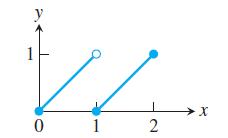
Find the average value of the function graphed in the accompanying figure. y 0 1 2 -X
Find the total area of the region between the graph of ƒ and the x-axis.ƒ(x) = 1 - (x2/4), -2 ≤ x ≤ 3
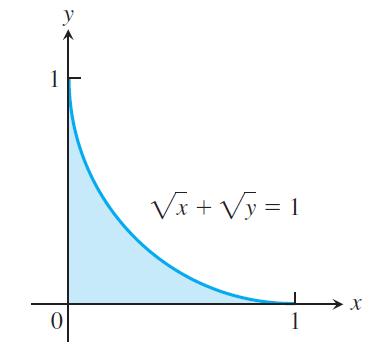
Find the areas of the regions enclosed by the curves and line.√x + √y = 1, x = 0, y = 0 y 이 Vir + Vy = 1 1 X
How is integration by substitution related to the Chain Rule?
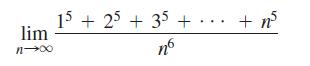
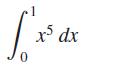
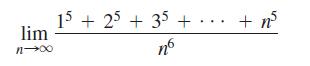
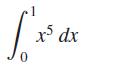
Evaluateby showing that the limit isand evaluating the integral. lim n-x 15 + 25 + 35 + + n² 76
Find the total area of the region between the graph of ƒ and the x-axis.ƒ(x) = 5 - 5x2/3, -1 ≤ x ≤ 8
EvaluateExercise 23Evaluateby showing that the limit isand evaluating the integral. lim (1³ + 2³ + 3³ + ... + n³). n-xxn²
How can you sometimes evaluate indefinite integrals by substitution? Give examples.
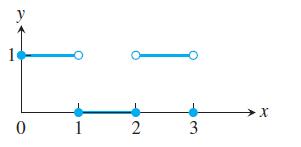
Find the average value of the function graphed in the accompanying figure. 0 1 2 3 → X
Find the total area of the region between the graph of ƒ and the x-axis.ƒ(x) = 1 - √x, 0 ≤ x ≤ 4
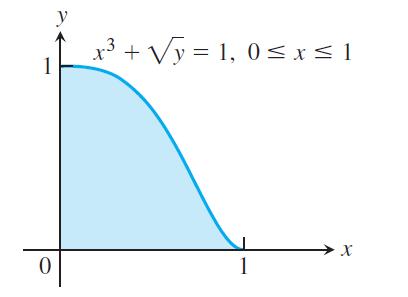
Find the areas of the regions enclosed by the curves and line.x3 + √y = 1, x = 0, y = 0, for 0 ≤ x ≤ 1 1 I ≤ x ≤ 0 1 = ^^ + EX y 0
How does the method of substitution work for definite integrals? Give examples.
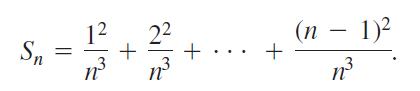
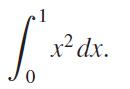
LetTo calculate limn→∞ Sn, show thatand interpret Sn as an approximating sum of the integral Sn n³ 2² ... + (n − 1)² n³
Find the areas of the regions enclosed by the curves and line.y = x, y = 1/x2, x = 2
How do you define and calculate the area of the region between the graphs of two continuous functions? Give an example.
Find the areas of the regions enclosed by the curves and line.y = x, y = 1/√x, x = 2
Let ƒ(x) be a continuous function. Expressas a definite integral. (1) + (a) + - +1(%) 1 lim 11-00
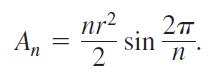
a. Show that the area An of an n-sided regular polygon in a circle of radius r isb. Find the limit of An as n→∞. Is this answer consistent with what you know about the area of a circle? A || nr² - sin 2 27 n
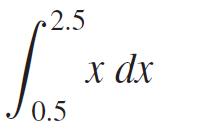
Use the results of Equations (2) and (4) to evaluate the integral. -2.5 0.5 x dx
Find the areas of the regions enclosed by the curves and line.x = 2y2, x = 0, y = 3
Find the areas of the regions enclosed by the curves and line.x = 4 - y2, x = 0
Find the areas of the regions enclosed by the curves and line.y2 = 4x, y = 4x - 2
Find the areas of the regions enclosed by the curves and line.y2 = 4x + 4, y = 4x - 16
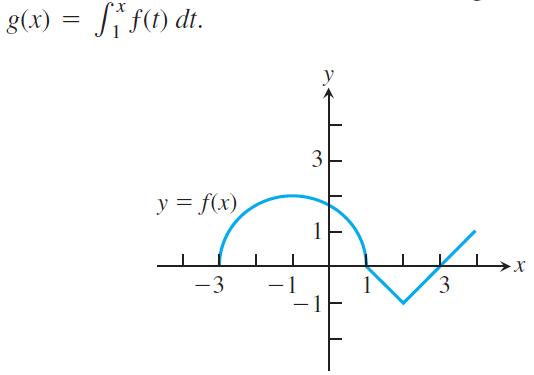
The graph of a function ƒ consists of a semicircle and two line segments as shown. Leta. Find g(1). b. Find g(3). c. Find g(-1).d. Find all values of x on the open interval (-3, 4) at which g has a relative maximum.e. Write an equation for the line tangent to the graph of g at x = -1.f. Find the
Find the areas of the regions enclosed by the curves and line.y = sin x, y = x, 0 ≤ x ≤ π/4
Find the areas of the regions enclosed by the curves and line.y = |sin x|, y = 1, -π/2 ≤ x ≤ π/2
Find the areas of the regions enclosed by the curves and line.y = 2 sin x, y = sin 2x, 0 ≤ x ≤ π
Find the areas of the regions enclosed by the curves and line.y = 8 cos x, y = sec2 x, -π/3 ≤ x ≤ π/3
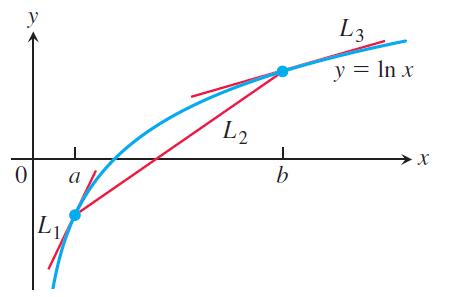
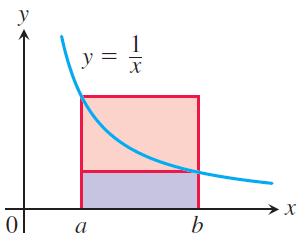
Here are two pictorial proofs thatExplain what is going on in each case.a.b. b> a > 0 1 b In b - In a b - a 1
Find the area of the “triangular” region bounded on the left by x + y = 2, on the right by y = x2, and above by y = 2.
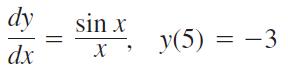
Express the solutions of the initial value problem terms of integral. dy dx = sin x X y(5) = -3
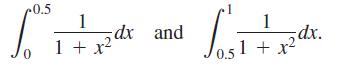
Use the Max-Min Inequality to find upper and lower bounds forAdd these to arrive at an improved estimate ofExercise 73Use the Max-Min Inequality to find upper and lower bounds for the value of 0.5 Sot 0 1 1 + x² 2 dx and 1 J0.51 + x² dx.
Express the solutions of the initial value problem terms of integral. dy dx = V2 - sin²x, y(-1) = 2
Find the area of the “triangular” region bounded on the left by y = √x, on the right by y = 6 - x, and below by y = 1.
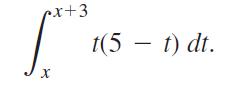
Use Leibniz’s Rule to find the value of x that maximizes the value of the integral px +3 X t(5 - t) dt.
Find the extreme values of ƒ(x) = x3 - 3x2 and find the area of the region enclosed by the graph of ƒ and the x-axis.
Show that both of the following conditions are satisfied by y = sin x + ∫xπ cos 2t dt + 1:i) y″ = -sin x + 2 sin 2xii) y = 1 and y′ = -2 when x = π.
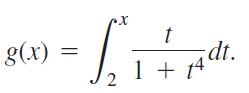
Find ƒ′(2) if ƒ(x) = eg(x) and g(x) = S₁ 2 t 1 +14° dt.
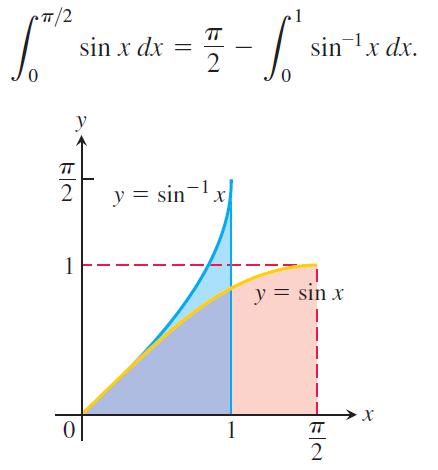
Use the accompanying figure to show that π/2 1.3¹12 0 y TT 2 sin x dx 1 = 7-si sin ¹¹x dx. 2 T y = sin-1 X 1 ۱۰ y = sin x I I TT 2 X
Find the area of the region cut from the first quadrant by the curve x1/2 + y1/2 = a1/2.
Find the total area of the region enclosed by the curve x = y2/3 and the lines x = y and y = -1.
Find the total area of the region between the curves y = sin x and y = cos x for 0 ≤ x ≤ 3π/2.
Find the area between the curve y = 2(ln x)/x and the x-axis from x = 1 to x = e.
a. Show that the area between the curve y = 1/x and the x-axis from x = 10 to x = 20 is the same as the area between the curve and the x-axis from x = 1 to x = 2.b. Show that the area between the curve y = 1/x and the x-axis from ka to kb is the same as the area between the curve and the x-axis
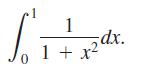
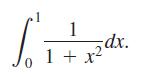
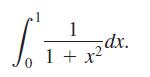
Use the Max-Min Inequality to find upper and lower bounds for the value of 1 Jo 1 + x² dx.
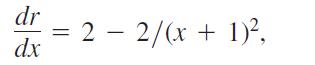
Suppose that a company’s marginal revenue from the manufacture and sale of eggbeaters iswhere r is measured in thousands of dollars and x in thousands of units. How much money should the company expect from a production run of x = 3 thousand eggbeaters? To find out, integrate the marginal revenue
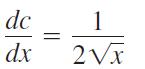
The marginal cost of printing a poster when x posters have been printed isdollars. Find c(100) - c(1), the cost of printing posters 2–100. dc 1 dx = 2√x
Showing 11200 - 11300
of 29454
First
106
107
108
109
110
111
112
113
114
115
116
117
118
119
120
Last
Step by Step Answers

 Get 50% OFF
Claim Now
Get 50% OFF
Claim Now