New Semester
Started
Get
50% OFF
Study Help!
--h --m --s
Claim Now
Question Answers
Textbooks
Find textbooks, questions and answers
Oops, something went wrong!
Change your search query and then try again
S
Books
FREE
Study Help
Expert Questions
Accounting
General Management
Mathematics
Finance
Organizational Behaviour
Law
Physics
Operating System
Management Leadership
Sociology
Programming
Marketing
Database
Computer Network
Economics
Textbooks Solutions
Accounting
Managerial Accounting
Management Leadership
Cost Accounting
Statistics
Business Law
Corporate Finance
Finance
Economics
Auditing
Tutors
Online Tutors
Find a Tutor
Hire a Tutor
Become a Tutor
AI Tutor
AI Study Planner
NEW
Sell Books
Search
Search
Sign In
Register
study help
sciences
organic chemistry
Organic Chemistry 1st edition David R. Klein - Solutions
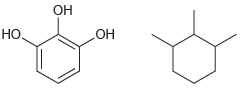
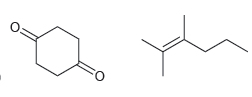
How would you distinguish between each pair of compounds using high-resolution mass spectrometry?a.b. Он Но. но
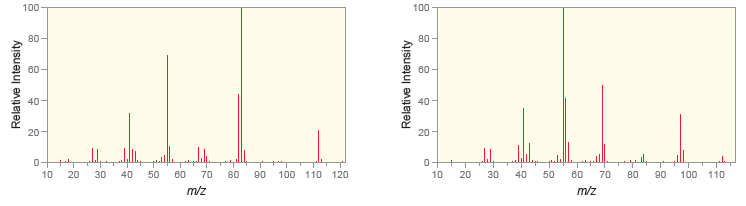
The following are mass spectra for the constitutional isomers ethylcyclohexane and 1, 1-dimethylcyclohexane. Based on likely fragmentation patterns, match the compound with its spectrum. 100 100 80 - 80- 60 - 60- 40- 40- 20- 0+ 10 100 110 120 90 40 50 60 70 80 20 30 40 50 60 70 80 100 110 10 30 90
Identify two peaks that are expected to appear in the mass spectrum of 3-pentanol. For each peak, identify the fragment associated with the peak, and show a mechanism for its formation.
Identify the expected base peak in the mass spectrum of 2, 2, 3-trimethylbutane. Draw the fragment associated with this peak, and explain why the base peak results from this fragment.
Consider the structure of anisole (also called methoxybenzene). In the next chapter, we will discuss whether a methoxy group is electron donating or electron withdrawing. We will see that there is a competition between two factors. Specifically, we will see that the methoxy group is electron
Predict the major product obtained when each of the following compounds is treated with Birch conditions.a.b.c.d.e.f. OH
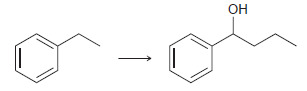
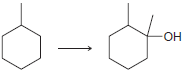
Propose a plausible synthesis for the following transformation. Он
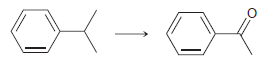
Starting with isopropyl benzene, propose a synthesis for acetophenone.
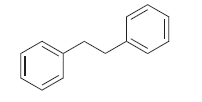
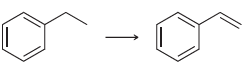
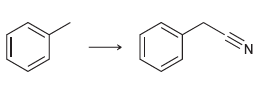
Using toluene as your only source of carbon atoms, show how you would prepare the following compound.
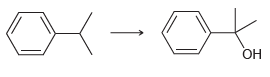
Propose a plausible synthesis for each of the following transformations.a.b.c.d. он
Draw the expected product when each of the following compounds is treated with chromic acid.a.b.c.
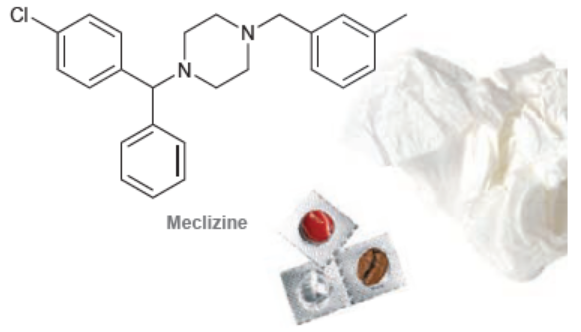
Meclizine, shown below, is an antiemetic (prevents nausea and vomiting).a) Would you expect meclizine to be an antihistamine as well? Justify your answer.b) This drug is known to cause sedation. Describe the source of the sedative properties of meclizine.c) Can you suggest a structural modification
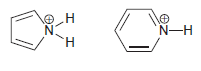
Identify which compound is expected to have a lower pKa. Justify your choice. N-H H.
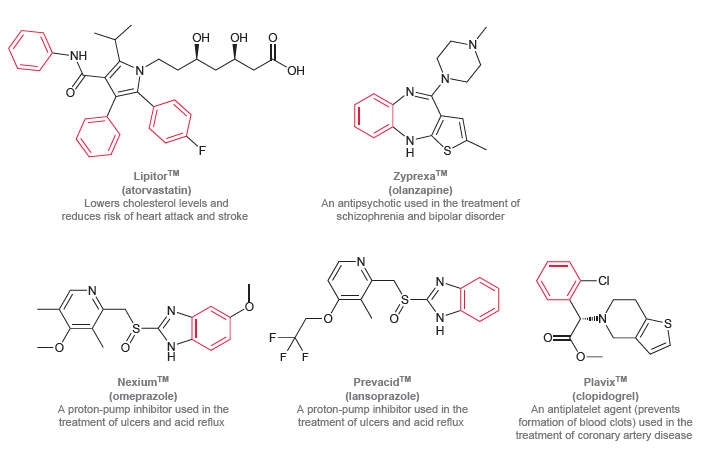
Go to the beginning of Section 18.1 where 8 best-selling drugs were shown. Review the structures of those compounds, and identify all of the aromatic rings that are not already highlighted in red. ОН ОН NH ОН S. LipitorTM (atorvastatin) Lowers cholesterol levels and ZyprexaTM (olanzapine) An
For each of the following compounds determine which (if any) lone pairs are participating in aromaticity.a.b.c.d.e.f.g.h. :N-H
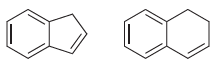
Identify which of the following compounds is more acidic and explain your choice.
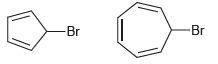
Predict which compound will react more readily in an SN1 process, and explain your choice. Br -Br
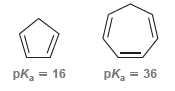
Explain the vast difference in pKavalues for the following two apparently similar compounds. pk, = 16 pk, = 36
Determine whether each of following ions is aromatic, nonaromatic, or antiaromatic.a.b.c.d. 0:<
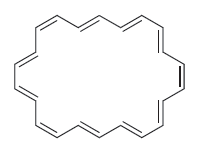
Predict whether the following compound will be aromatic, nonaromatic, or antiaromatic. Explain your reasoning.
Starting with cyclopentanone and using any other reagents of your choosing, identify how you would prepare each of the following compounds:(a)(b)(c)(d) но соон
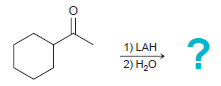
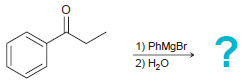
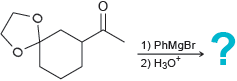
Predict the major product(s) for each reaction below.(a)(b)(c) 1) LAH 2) Н,о 1) PhMgBr 2) H,0
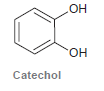
Treatment of catechol with formaldehyde in the presence of an acid catalyst produces a compound with molecular formula C7H6O2. Draw the structure of this product. HO он Catechol
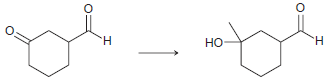
Devise an efficient synthesis for the following transformation (recall that aldehydes are more reactive than ketones): н H. но
Propose a plausible mechanism for the following transformation: [Н'] н но ELOH
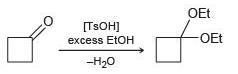
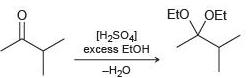
Predict the major product(s) from the treatment of acetone with the following compounds:(a) [H+], NH3, (−H2O)(b) [H+], CH3NH2, (−H2O)(c) [H+], excess EtOH, (−H2O)(d)[H+], (CH3)2NH, (−H2O)(e) [H+], NH2NH2, (−H2O)(f) [H+] , NH2OH , (−H2O)(g) NaBH4, MeOH(h) MCPBA(i) HCN, KCN(j) EtMgBr
You are working in a laboratory, and you are given the task of converting cyclopentene into 1,5 pentanediol. Your first thought is simply to perform an ozonolysis followed by reduction with LAH, but your lab is not equipped for an ozonolysis reaction. Suggest an alternative method for converting
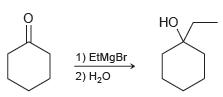
Choose a Grignard reagent and a ketone that can be used to produce each of the following compounds:(a) 3-methyl-3-pentanol(b) 1-ethylcyclohexanol(c) Triphenylmethanol(d) 5-phenyl-5-nonanol
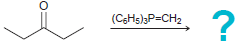
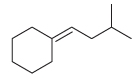
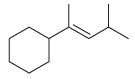
Show how a Wittig reaction can be used to prepare each of the following compounds. In each case, also show how the Wittig reagent would be prepared:(a)(b)
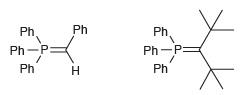
Draw the structure of the alkyl halide needed to prepare each of the following Wittig reagents, and then determine which Wittig reagent will be the more difficult to prepare. Explain your choice: Ph Ph Ph Ph-P Ph-P Ph Ph Н
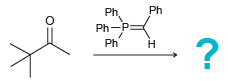
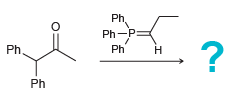
Draw the products of each Wittig reaction below. If two stereoisomers are possible, draw both stereoisomers:(a)(b) Ph Ph Ph-P н Ph Ph. Ph-P Ph, Ph н Ph
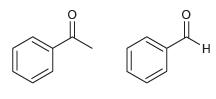
For each pair of the following compounds, identify which compound would be expected to react more rapidly with a nucleophile:(a)(b) H.
Explain why the IUPAC name of a compound will never end with the suffix “-1-one.”
Draw all constitutionally isomeric ketones with molecular formula C6H12O, and provide a systematic (IUPAC) name for each isomer.
Draw all constitutionally isomeric aldehydes with molecular formula C5H10O, and provide a systematic (IUPAC) name for each isomer. Which of these isomers possesses a chirality center?
Draw all constitutionally isomeric aldehydes with molecular formula C4H8O, and provide a systematic (IUPAC) name for each isomer.
Draw the structure for each compound below:(a) Propanedial(b) 4-phenylbutanal(c) (S)-3-phenylbutanal(d) 3,3,5,5-tetramethyl-4-heptanone(e) (R)-3-hydroxypentanal(f) Meta-hydroxyacetophenone(g) 2,4,6-trinitrobenzaldehyde(h) Tribromoacetaldehyde(i) (3R,4R)-3,4-dihydroxy-2-pentanone
Provide a systematic (IUPAC) name for each of the following compounds:(a)(b)(c)(d) H.
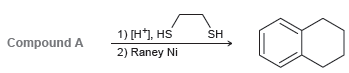
Compound A has molecular formula C10H10O and exhibits a strong signal at 1720 cmˆ’1 in its IR spectrum. Treatment with 1,2-ethanedithiol followed by Raney nickel affords the product shown below. Identify the structure of compound A. 1) [H*), HS 2) Raney Ni SH Compound A
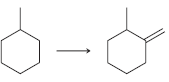
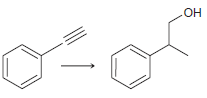
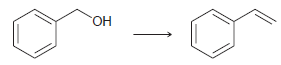
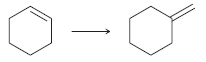
Using any compounds of your choosing, identify a method for preparing each of the following compounds. Your only limitation is that the compounds you use can have no more than two carbon atoms. For purposes of counting carbon atoms, you may ignore the phenyl groups of a Wittig reagent. That is, you
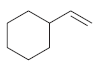
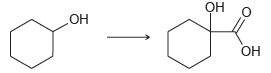
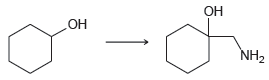
Propose an efficient synthesis for each of the following transformations:(a)(b)(c)(d)(e)(f)(g) -OH
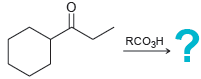
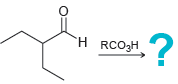
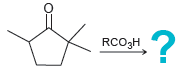
Predict the major product of each reaction below:(a)(b)(c) RCO3H н RCO, ? H RCO3H
Identify the reagents necessary to accomplish each of the transformations below:(a)(b) Он
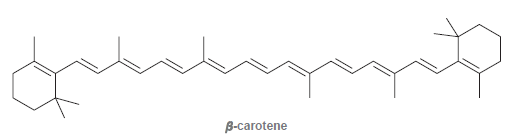
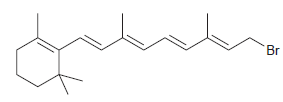
Consider the structure of beta-carotene, mentioned earlier in this chapter:Design a synthesis of beta carotene using the compound below as your only source of carbon atoms: B-carotene Br
Identify the reagents necessary to prepare each of the following compounds using a Wittig reaction:(a)(b)(c)(d)(e) -
Identify the reagents necessary to accomplish each of the transformations below:(a)(b) Он Он ОН OH HO NH2
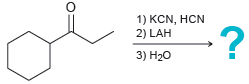
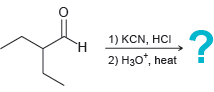
Predict the major product for each reaction below:(a)(b) 1) KCN, HCN 2) LAH -? 3) H20 1) KCN, HCI 2) Hзо, heat
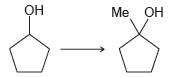
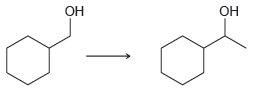
Identify the reagents necessary to accomplish each of the transformations below:(a)(b) Me Он Он ОН Он
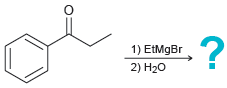
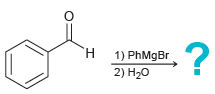
Predict the major product of each reaction below:(a)(b)(c) 1) EtMgBr 2) H20 :? H. 1) PhMgBr 2) H20
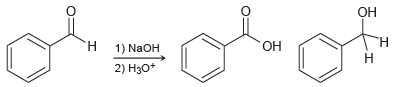
When 2 moles of benzaldehyde are treated with sodium hydroxide, a reaction occurs in which 1 mole of benzaldehyde is oxidized (giving benzoic acid) while the other mole of benzaldehyde is reduced (giving benzyl alcohol):This reaction, called the Cannizzaro reaction, is believed to occur via the
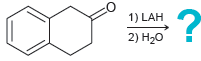
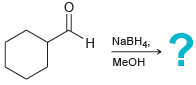
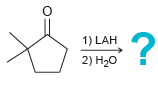
Predict the major product for each of the following reactions:(a)(b)(c)(d) 1) LAH 2) H20 н H NABH4, Меон
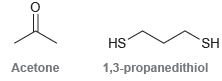
Draw the structure of the cyclic compound that is produced when acetone is treated with 1,3 propanedithiol in the presence of an acid catalyst. SH 1,3-propanedithiol HS Acetone
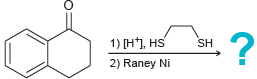
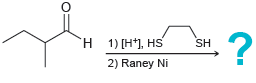
Predict the major product for each reaction below:(a)(b) 1) [H'), HS 2) Raney Ni SH 1) [H*), HS' `H. 2) Raney Ni SH
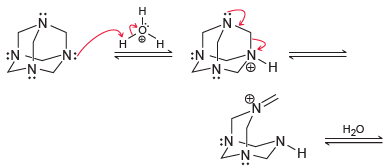
As shown above, methenamine is hydrolyzed in aqueous acid to produce formaldehyde and ammonia. Draw a mechanism showing formation of one molecule of formaldehyde (the remaining five molecules of formaldehyde are each released via a similar sequence of steps). The release of each molecule of
Propose a plausible mechanism for the reaction below: [H2SO4] N- -ОН но. Н-N.
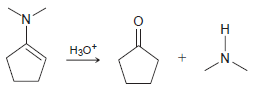
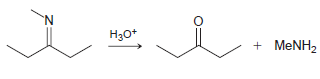
Propose a plausible mechanism for each of the following hydrolysis reactions:(a)(b)(c)(d) EtO OEt Нзо* Нэо* + 2 ELOH (b) N. Н Нзо* .N'
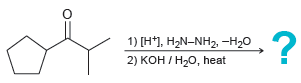
Predict the product of the two-step procedure below, and draw a mechanism for its formation: 1) [H1, Н-N-NH2 -H2о 2) КОН / Н-0, heat
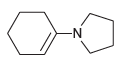
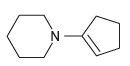
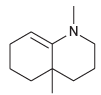
Identify the reactants that you would use to make each of the following enamines:(a)(b)(c) -N
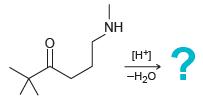
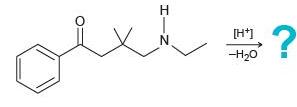
Predict the major product for each of the following intramolecular reactions:(a)(b) NH ? [H7 -H20
Predict the major product for each of the following reactions:(a)(b) [H*] N-H -H20 Н :? [н] -H20
Draw a plausible mechanism for each of the following reactions:(a)(b) [H2SO4] Et,NH 'N' -H20 [H2SO4] Me-NH -H20
Identify the reactants that you would use to make each of the following compounds:(a)(b) он NH2
Predict the product of each of the following reactions:(a)(b) [н1] но-NH2 -H20 [H*] H2N-NH2 -H20
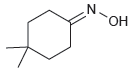
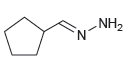
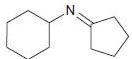
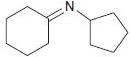
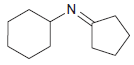
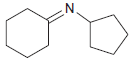
Identify the reactants that you would use to make each of the following imines:(a)(b)(c) N.
Identify the reactants that you would use to make each of the following imines:(a)(b)(c) N.
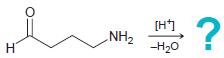
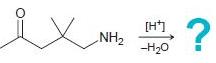
Predict the major product for each of the following intramolecular reactions:(a)(b) ? [H1 NH2 H -H20
Predict the major product for each of the following intramolecular reactions:(a)(b) [H*] -Н2о NH2 Н [H] „NH2 -H20
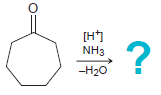
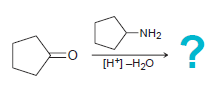
Predict the major product for each of the following reactions:(a)(b) [H') NH3 -H20 NH2 [H*)-H20
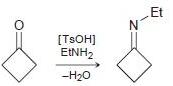
Draw a plausible mechanism for each of the following transformations:(a)(b) [TSOH] MENH2 -H20
Draw a plausible mechanism for each of the following transformations:(a)(b) [TSOH] MENH2 -H20 Et [TSOH] EENH2 -H20
Compound A has molecular formula C8H14O2. Upon treatment with catalytic acid, compound. A is converted into the cyclic hemiacetal. Identify the structure of compound A. Но, Compound A [H*]
Draw a plausible mechanism for the following transformation: Но, [H2SO4] ОН
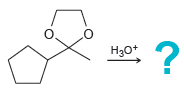
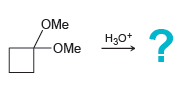
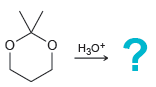
Predict the product(s) for each reaction below:(a)(b)(c)(d) Нао* OMe Нзо* OMe
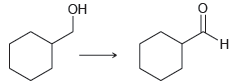
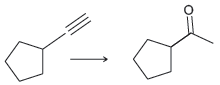
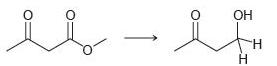
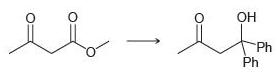
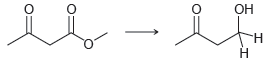
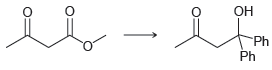
Propose an efficient synthesis for each of the following transformations:(a)(b)(c) OH H.
Propose an efficient synthesis for each of the following transformations:(a)(b)(c) OH
Predict the product of each of the following reactions:(a)(b) [H2SO4] excess MeOH -? -H20 но [H,SO4] он -H20
Draw a plausible mechanism for each of the following reactions:(a)(b) HO HO- [H2SO4] -H20
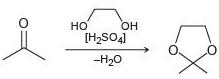
Draw a plausible mechanism for each of the following reactions:(a)(b) Но ОН [H,SO4] -H20 но [H,SO4] он -H20
Draw a plausible mechanism for each of the following transformations:(a)(b)(c)(d) Meo, OMe [H,SO4] excess MeOH -H20
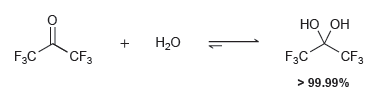
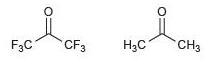
For most ketones, hydrate formation is unfavorable, because the equilibrium favors the ketone rather than the hydrate. However, the equilibrium for hydration of hexafluoroacetone favors formation of the hydrate: Provide a plausible explanation for this observation. НО Он Н.о F3C `CF3 F3C CF3
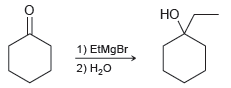
Draw a mechanism for each of the following reactions:(a)(b) HO 1) EtMgBr 2) H20
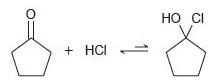
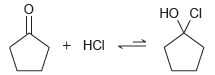
Draw a mechanism for each of the following reactions:(a)(b) Но 1) EtMgBr 2) Н-о Но I + HCI
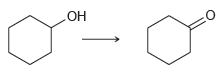
Identify the reagents necessary to achieve each of the following transformations:(a)(b)(c)(d)(e)(f) HO ОН H. н
The compound above is an artificial flavor added to microwave popcorn and movietheater popcorn to simulate the butter flavor. Interestingly, this very same compound is also known to contribute to body odor. Name the following compounds:(a)(b)(c)
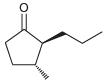
Provide a systematic (IUPAC) name for the compound below. Be careful: This compound has two chirality centers (can you find them?).
Draw the structure of each of the following compounds:(a) (S)-3,3-dibromo-4-ethylcyclohexanone(b) 2,4-dimethyl-3-pentanone(c) (R)-3-bromobutanal
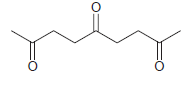
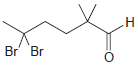
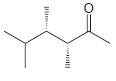
Assign a systematic (IUPAC) name to each of the following compounds:(a)(b)(c)(d)(e) Н Br Br
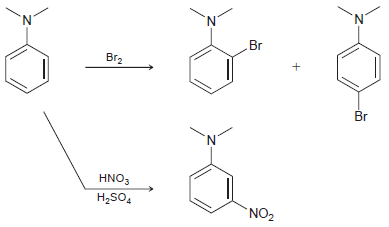
When N,N-dimethylaniline is treated with bromine, ortho and para products are observed. Yet, when N,Ndimethylaniline is treated with a mixture of nitric and sulfuric acid, only the meta product is observed. Explain these curious results. Br Br2 Br N. HNO, H,SO, `NO2
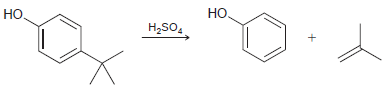
Propose a plausible mechanism for the following transformation: Но. но. Но H,SO.
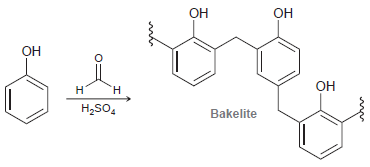
Bakelite is one of the first known synthetic polymers and was used to make radio and telephone casings in the early twentieth century. Bakelite is formed by treating phenol with formaldehyde under acidic conditions. Draw a plausible mechanism for the formation of Bakelite. он ОН он ОН Он
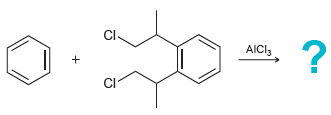
Predict the major product of the following reaction. CI- AICI, CI
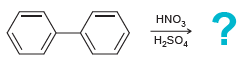
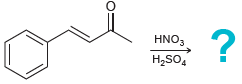
Each of the following compounds is an aromatic compound bearing a substituent that we did not discuss in this chapter. Using the principles that we discussed in this chapter, predict the major product for each of the following reactions:(a)(b) HNO, H,SO4 HNO, H,SO,
When toluene is treated with a mixture of excess sulfuric acid and nitric acid at high temperature, a compound is obtained that exhibits only two signals in its 1H NMR spectrum. One signal appears upfield and has an integration of 3. The other signal appears downfield and has an integration of 2.
The 1H NMR spectrum of phenol exhibits three signals in the aromatic region of the spectrum. These signals appear at 6.7, 6.8, and 7.2 ppm. Use your understanding of shielding and deshielding effects to determine which signal corresponds with the meta protons. Explain your reasoning.
Benzene was treated with (R)-2-chlorobutane in the presence of aluminum trichloride, and the resulting product mixture was found to be optically inactive.(a) What products are expected, assuming that conditions are chosen to favor monoalkylation?(b) Explain why the product mixture is optically
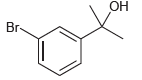
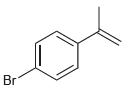
Starting with benzene and using any other necessary reagents of your choice, design a synthesis for each of the following compounds. Each compound has a Br and one other substituent that we did not learn how to install. In each case, you will need to choose one of the substituents that we learned
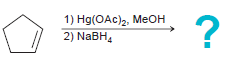
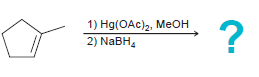
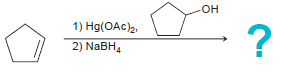
Predict the products for each of the following:a.b.c.d. 1) Hg(OAc), МеОн 2) NABH, 1) Hg(OAc), МeОн 2) NaBH,
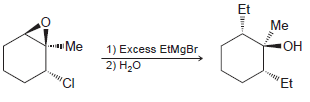
Propose a stepwise mechanism for the following transformation. Et Me 1) Excess EtMgBr Me OH 2) H,0 'Et
Compound B has molecular formula C6H10O and does not possess any π bonds. When treated with concentrated HBr, cis-1, 4-dibromocyclohexane is produced. Identify the structure of compound B.
What product do you expect when tetrahydrofuran is heated in the presence of excess HBr?
Showing 2000 - 2100
of 2904
First
14
15
16
17
18
19
20
21
22
23
24
25
26
27
28
Last
Step by Step Answers

 Get 50% OFF
Claim Now
Get 50% OFF
Claim Now










![[Н'] н но ELOH](https://dsd5zvtm8ll6.cloudfront.net/si.question.images/images/question_images/1524/6/5/0/5175ae05215c43481524650498574.jpg)






![[H2SO4] N- -ОН но. Н-N.](https://dsd5zvtm8ll6.cloudfront.net/si.question.images/images/question_images/1524/6/4/8/2695ae0494d8649b1524648247951.jpg)

![[H*] N-H -H20](https://dsd5zvtm8ll6.cloudfront.net/si.question.images/images/question_images/1524/6/4/4/9555ae03c5b36c131524644939279.jpg)
![Н :? [н] -H20](https://dsd5zvtm8ll6.cloudfront.net/si.question.images/images/question_images/1524/6/4/4/9555ae03c5b76be61524644939607.jpg)
![[H2SO4] Et,NH 'N' -H20](https://dsd5zvtm8ll6.cloudfront.net/si.question.images/images/question_images/1524/6/4/4/9115ae03c2f84a321524644891327.jpg)
![[H2SO4] Me-NH -H20](https://dsd5zvtm8ll6.cloudfront.net/si.question.images/images/question_images/1524/6/4/4/9125ae03c301a17c1524644891722.jpg)
![[н1] но-NH2 -H20](https://dsd5zvtm8ll6.cloudfront.net/si.question.images/images/question_images/1524/6/4/4/7585ae03b964fc9d1524644739370.jpg)
![[H*] H2N-NH2 -H20](https://dsd5zvtm8ll6.cloudfront.net/si.question.images/images/question_images/1524/6/4/4/7585ae03b96935ec1524644739673.jpg)


![[H*] -Н2о NH2 Н](https://dsd5zvtm8ll6.cloudfront.net/si.question.images/images/question_images/1524/6/4/4/4455ae03a5d09ac71524644416433.jpg)
![[H] „NH2 -H20](https://dsd5zvtm8ll6.cloudfront.net/si.question.images/images/question_images/1524/6/4/4/4455ae03a5db27d61524644416757.jpg)
![[TSOH] MENH2 -H20](https://dsd5zvtm8ll6.cloudfront.net/si.question.images/images/question_images/1606/7/3/1/2195fc4c5d334dde1606731218633.jpg)
![[TSOH] MENH2 -H20](https://dsd5zvtm8ll6.cloudfront.net/si.question.images/images/question_images/1524/6/4/4/0935ae038fd72d991524644076441.jpg)
![Et [TSOH] EENH2 -H20](https://dsd5zvtm8ll6.cloudfront.net/si.question.images/images/question_images/1524/6/4/4/0935ae038fdb5df91524644076744.jpg)
![Но, Compound A [H*]](https://dsd5zvtm8ll6.cloudfront.net/si.question.images/images/question_images/1524/6/4/3/9355ae0385f449ad1524643914277.jpg)
![Но, [H2SO4] ОН](https://dsd5zvtm8ll6.cloudfront.net/si.question.images/images/question_images/1524/6/4/3/8945ae038366890d1524643865163.jpg)


![[H2SO4] excess MeOH -? -H20](https://dsd5zvtm8ll6.cloudfront.net/si.question.images/images/question_images/1524/6/4/3/5975ae0370d7a4411524643575525.jpg)
![но [H,SO4] он -H20](https://dsd5zvtm8ll6.cloudfront.net/si.question.images/images/question_images/1524/6/4/3/5975ae0370db39921524643575861.jpg)
![HO HO- [H2SO4] -H20](https://dsd5zvtm8ll6.cloudfront.net/si.question.images/images/question_images/1606/7/3/1/3595fc4c65f2b52c1606731358604.jpg)
![Но ОН [H,SO4] -H20](https://dsd5zvtm8ll6.cloudfront.net/si.question.images/images/question_images/1524/6/4/3/4865ae0369e83c8e1524643464957.jpg)
![но [H,SO4] он -H20](https://dsd5zvtm8ll6.cloudfront.net/si.question.images/images/question_images/1524/6/4/3/4865ae0369ee18121524643465261.jpg)
![Meo, OMe [H,SO4] excess MeOH -H20](https://dsd5zvtm8ll6.cloudfront.net/si.question.images/images/question_images/1606/7/3/1/5905fc4c746e5bb91606731590218.jpg)