New Semester
Started
Get
50% OFF
Study Help!
--h --m --s
Claim Now
Question Answers
Textbooks
Find textbooks, questions and answers
Oops, something went wrong!
Change your search query and then try again
S
Books
FREE
Study Help
Expert Questions
Accounting
General Management
Mathematics
Finance
Organizational Behaviour
Law
Physics
Operating System
Management Leadership
Sociology
Programming
Marketing
Database
Computer Network
Economics
Textbooks Solutions
Accounting
Managerial Accounting
Management Leadership
Cost Accounting
Statistics
Business Law
Corporate Finance
Finance
Economics
Auditing
Tutors
Online Tutors
Find a Tutor
Hire a Tutor
Become a Tutor
AI Tutor
AI Study Planner
NEW
Sell Books
Search
Search
Sign In
Register
study help
sciences
organic chemistry
Organic Chemistry 1st edition David R. Klein - Solutions
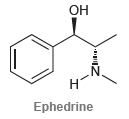
Ephedrine is a bronchodilator and decongestant obtained from the Chinese plant Ephedra sinica. A concentrated solution of ephedrine gives an IR spectrum with a broad signal between 3200 and 3600 cm-1. An IR spectrum of a dilute solution of ephedrine is very similar to the IR spectrum of the
A dilute solution of 1, 3-pentanediol does not produce the characteristic IR signal for a dilute alcohol. Rather, it produces a signal that is characteristic of a concentrated alcohol. Explain.
Explain how you would use IR spectroscopy to distinguish between trans-3-hexene and 2, 3-dimethyl-2-butene.
Limonene is a hydrocarbon found in the peels of lemons and contributes significantly to the smell of lemons. Limonene has a molecular ion peak at m/z = 136 in its mass spectrum, and it has two double bonds and one ring in its structure. What is the molecular formula of limonene?
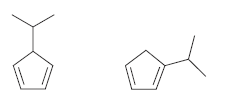
Propose two possible structures for a compound with molecular formula C5H8 that produces an IR signal at 3300 cm-1.
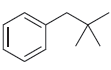
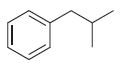
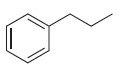
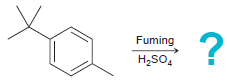
Identify whether each of the following compounds can be made using a direct Friedel-Crafts alkylation or whether it is necessary to perform an acylation followed by a Clemmensen reduction to avoid carbocation rearrangements:a.b.c.d.
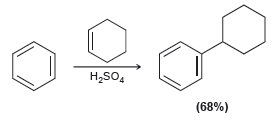
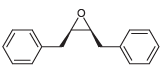
A Friedel-Crafts alkylation is an electrophilic aromatic substitution in which the electrophile (E+) is a carbocation. In previous chapters, we have seen other methods of forming carbocations, such as protonation of an alkene using a strong acid. The resulting carbocation can also be attacked by a
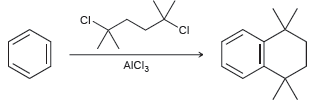
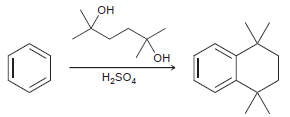
Draw the mechanism of the following reaction, which involves two consecutive Friedel-Crafts alkylations. When drawing the mechanism, do not try to draw the two alkylations as occurring simultaneously (such a mechanism would have too many curved arrows and too many simultaneous charges). First draw
Predict the expected product(s) when benzene is treated with each of the following alkyl halides in the presence of AlCl3. In each case, assume conditions have been controlled to favor monoalkylationa.b.c.. .CI CI
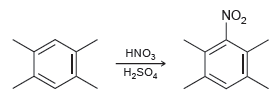
Draw the mechanism of the following reaction, and make sure to draw all three resonance structures of the sigma complex. NO, HNO3 H,SO,
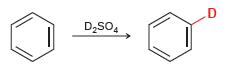
When benzene is treated with D2SO4, a deuterium atom replaces one of the hydrogen atoms. Propose a mechanism for this reaction. Once again, make sure that your mechanism involves a sigma complex. D2SO,
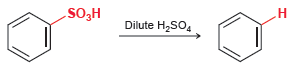
Draw the mechanism of the following reaction. This reaction is the reverse of sulfonation, so you should read the sulfonation mechanism backward. Your mechanism should involve a sigma complex (positively charged). SO,H .H Dilute H,SO,
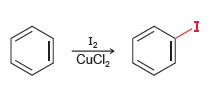
When benzene is treated with I2in the presence of CuCl2, iodination of the ring is achieved with modest yields. It is believed that CuCl2interacts with I2to generate I+, which is an excellent electrophile. The aromatic ring then reacts with I+in an electrophilic aromatic substitution reaction. Draw
Using toluene and acetylene as your only sources of carbon atoms, show how you would prepare the following compound.
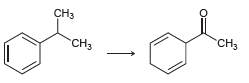
Propose a plausible synthesis for the following transformation. CH3 CH3 CH3
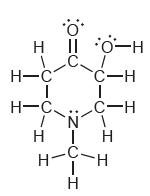
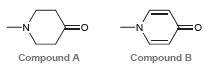
The following two compounds each exhibit two heteroatoms (one nitrogen atom and one oxygen atom).In compound A, the lone pair on the nitrogen atom is more likely to function as a base. However, in compound B, the lone pair on the oxygen atom is more likely to function as a base. Explain this
Compounds A, B, C, and D are constitutionally isomeric, aromatic compounds with molecular formula C8H10.Deduce the structure of compound D using the following clues.• The 1H NMR spectrum of compound A exhibits two up-field signals as well as a multiplet near 7 ppm (with I = 5).• The 13C NMR
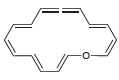
Would you expect the following compound to be aromatic? Explain your answer.
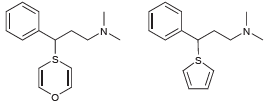
Below are two hypothetical compounds.a) Which compound would you expect to hold greater promise as a potential antihistamine? Explain your choice.b) Do you expect the compound you chose (in part a) to exhibit sedative properties? Explain your reasoning. N. の
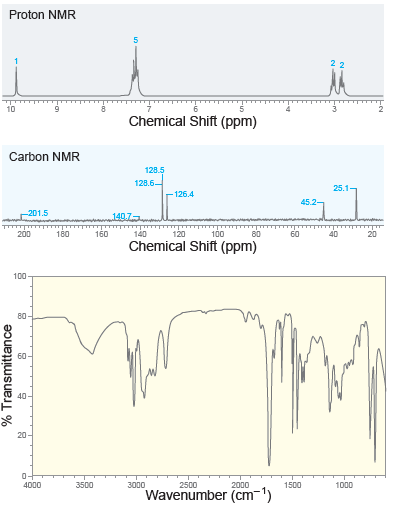
A compound with molecular formula C9H10O exhibits the following spectra (1H NMR,13C NMR, and IR). Identify the structure of this compound.. Proton NMR 10 Chemical Shift (ppm) Carbon NMR 128.5 128.6- 25.1- 126.4 201.5 140.7 160 140 120 100 200 180 80 60 40 20 Chemical Shift (ppm) 100 80 - 60- 40-
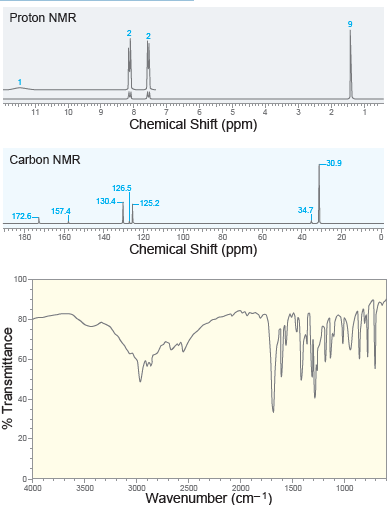
A compound with molecular formula C11H14O2exhibits the following spectra (1H NMR,13C NMR, and IR). Identify the structure of this compound. Proton NMR 11 Chemical Shift (ppm) Carbon NMR 30.9 126.5 130.4- -125.2 34.7 157.4 172.6 120 100 80 180 160 140 60 40 Chemical Shift (ppm) 100 80- По 60- 40-
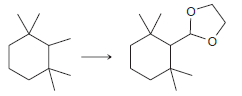
Propose a plausible synthesis for each of the following transformations.a.b.c.d. H.
Identify the structure of a compound with molecular formula C9H10O2 that exhibits the following spectral data.IR: 3005 cm-1, 1676 cm-1, 1603 cm-11H NMR: 2.6 ppm (singlet, I = 3H), 3.9 ppm (singlet, I = 3H), 6.9 ppm (doublet, I = 2H), 7.9 ppm (doublet, I = 2H)13C NMR: 26.2, 55.4, 113.7, 130.3,
Propose a plausible mechanism for the following transformation. — ОН НC CI
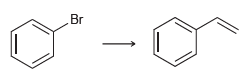
Propose an efficient synthesis for the following transformation. Br
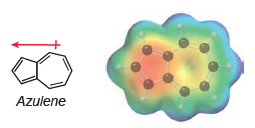
Azulene exhibits an appreciable dipole moment, and an electrostatic potential map indicates that the five-membered ring is electron rich (at the expense of the seven-membered ring).a) In Chapter 2, we saw that a resonance structure will be insignificant if it has carbon atoms with opposite charges
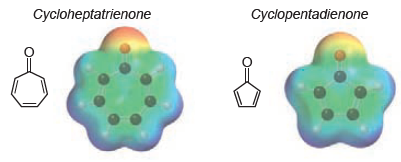
Compare the electrostatic potential maps for cycloheptatrienone and cyclopentadienone.Both of these maps were created using the same color scale so they can be compared. Notice the difference between the oxygen atoms in these two compounds. There is more partial negative character on the oxygen in
Explain how the following two compounds can have the same conjugate base. Is this conjugate base aromatic?
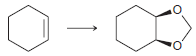
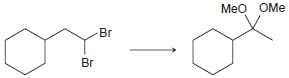
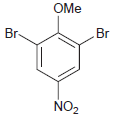
Propose an efficient synthesis for each of the following transformations:(a)(b)(c) OMe Meo Meo Br Br
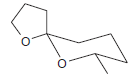
The compound below is believed to be a wasp pheromone. Draw the major product formed when this compound is hydrolyzed in aqueous acid:
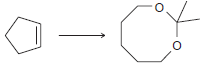
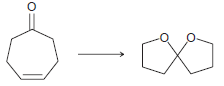
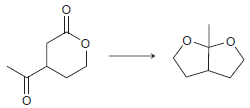
Propose an efficient synthesis for each of the following transformations:(a)(b)
Using ethanol as your only source of carbon atoms, design a synthesis for the following compound:
Identify the starting materials needed to make each of the following acetals:(a)(b)(c) OEt
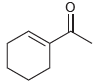
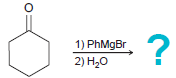
Predict the major product(s) for each of the following reactions:(a)(b)(c)(d)(e)(f) CHз NH2 [H*] (-H20) 1) PhMgBr 2) H20
Draw a plausible mechanism for each of the following transformations:(a)(b)(c) HJo+ N' H. エ エーZ Но H2N. H.
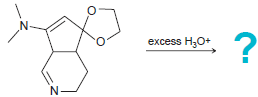
Identify all of the products formed when the compound below is treated with aqueous acid: N- excess H,O+
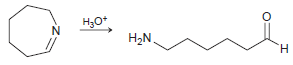
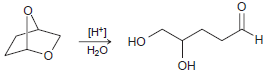
Predict the major product(s) obtained when each of the following compounds undergoes hydrolysis in the presence of H3O+:(a)(b)(c)(d) z- z:
Glutaraldehyde is a germicidal agent that is sometimes used to sterilize medical equipment too sensitive to be heated in an autoclave. In mildly acidic conditions, glutaraldehyde exists in a cyclic form (below right). Draw a plausible mechanism for this transformation: он но [Н0] Н Н
Compound A has molecular formula C8H8O. An IR spectrum of compound A exhibits a signal at 1680 cm-1. The1H NMR spectrum of compound A exhibits a group of signals between 7.5 and 8 ppm (with a combined integration of 5) and one upfield signal with an integration of 3. Compound A is converted into
When benzene is treated with methyl chloride and aluminum trichloride under conditions that favor trialkylation, one major product is obtained. Draw this product, and provide an IUPAC name.
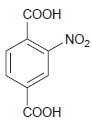
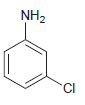
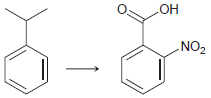
Starting with benzene and using any other necessary reagents of your choice, design a synthesis for each of the following compounds. In some cases, there may be more than one plausible answer.(a)(b)(c)(d)(e)(f)(g)(h)(i) OMe Br Br- NO2 СООН „NO2 СООН
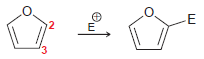
Aromatic heterocycles are also capable of undergoing electrophilic aromatic substitution. For example, when furan is treated with an electrophile, an electrophilic aromatic substitution reaction occurs in which the electrophile is installed exclusively at the C2 position. Explain why this reaction
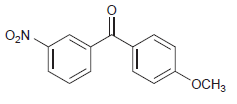
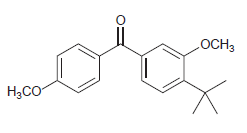
Each of the following compounds can be made with a Friedel-Crafts acylation. Identify the acyl chloride and the aromatic compound you would use to produce each compound.(a)(b) O2N OCH3 оСHз Насо
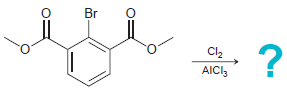
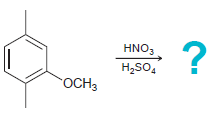
Predict the product(s) for each of the following reactions:(a)(b)(c)(d) Br Cl2 AICI, HNO3 H,SO, OCH3
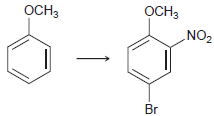
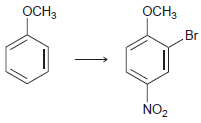
Propose a plausible synthesis for each of the following transformations:(a)(b)(c)(d) ОСHЗ OCH3 NO2 Br OCH3 OCH3 Br NO2
Compound A and compound B are both aromatic esters with molecular formula C8H8O2. When treated with bromine in the presence of iron tribromide, compound A is converted into only one product, while compound B is converted into two different monobromination products. Identify the structure of
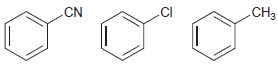
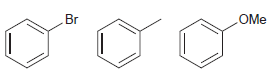
For each of the following groups of compounds, identify which compound will react most rapidly with ethyl chloride in the presence of aluminum trichloride. Explain your choice in each case, and then predict the expected products of that reaction.(a)(b) CN CH3 .CI Br OMe
Draw all resonance structures of the sigma complex formed when toluene undergoes chlorination at the para position.
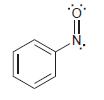
Consider the structure of nitrosobenzene:(a) Draw the resonance structures of the sigma complex formed when nitrosobenzene reacts with an electrophile (E+) at the ortho position.(b) Draw the resonance structures of the sigma complex formed when nitrosobenzene reacts with an electrophile (E+) at the
Benzene was treated with isopropyl chloride in the presence of aluminum trichloride under conditions that favor dialkylation. Draw the major product expected from this reaction.
Propose a plausible mechanism for the following transformation: он он H2SO,
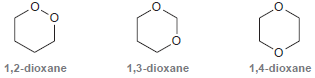
Consider the three constitutional isomers of dioxane (C4H8O2):One of these constitutional isomers is stable under basic conditions as well as mildly acidic conditions and is therefore used as a common solvent. Another isomer is only stable under basic conditions but undergoes hydrolysis under
When cyclohexanone is treated with H2O, an equilibrium is established between cyclohexanone and its hydrate. This equilibrium greatly favors the ketone, and only trace amounts of the hydrate can be detected. In contrast, when cyclopropanone is treated with H2O, the resulting hydrate predominates at
Draw a plausible mechanism for the following transformation: -NH2 [H,SO] NH2 [-H,0]
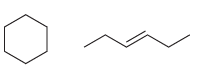
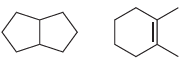
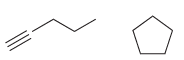
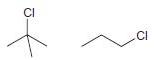
Each pair of compounds below has the same number of carbon atoms. Without counting the hydrogen atoms, determine whether the pair of compounds have the same molecular formula. In each case, simply determine the HDI of each compound to make your decision. Then, count the number of hydrogen atoms to
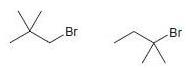
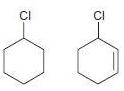
For each pair of the following compounds, identify which compound would react more rapidly in an SN1 reaction. Explain your choice in each case.(a)(b)(c)(d) CI .CI
Identify the structures of compounds A to E below: 1) Br2 н Mg A. A FeBr3 H. 2) H20 PCC но Он [н], -Н-0 ш
Identify the structures of compounds A to D below, and then identify the reagents that can be used to convert cyclohexene into compound D in just one step. но, А Н,о* H,Cro, в н] NH,NH, (-Н-0) КОН/Нао D heat
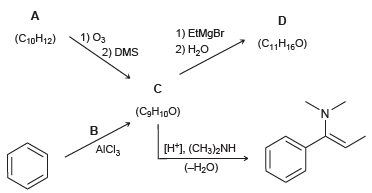
Using the information provided below, deduce the structures of compounds A, B, C, and D: 1) EtMgBr 1) O3 (C10H12) (C,H160) 2) H,0 2) DMS (C9H100) в [H*), (CH3)2NH AICI3 (-H20)
Compound A has molecular formula C7H14O and reacts with sodium borohydride in methanol to form an alcohol. The 1H NMR spectrum of compound A exhibits only two signals: a doublet (I = 12) and a septet (I = 2). Treating compound A with 1,2-ethanedithiol (HSCH2CH2SH) followed by Raney nickel gives
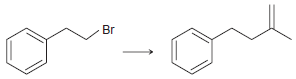
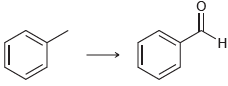
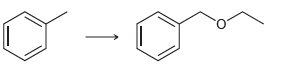
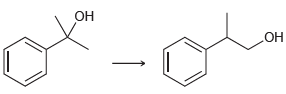
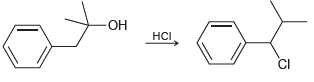
Propose an efficient synthesis for each of the following transformations:(a)(b)(c)(d)(e)(f)(g)(h) Br
Determine the constitution of the compounds with the following molecular formulas:(a) CH4O(b) CH3Cl(c) C2H6(d) CH5N(e) C2F6(f) C2H5Br(g) C3H8
A compound with molecular formula C8H10 produces an IR spectrum with many signals, including 3108, 3066, 3050, 3018, and 1608 cm-1. The 1H NMR spectrum of this compound exhibits a singlet at 2.2 ppm (I = 6H) and a multiple t at 7.1 ppm (I = 4H). The 13C NMR spectrum of this compound exhibits
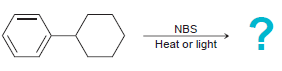
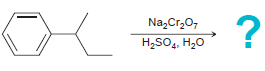
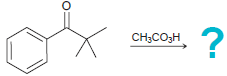
Predict the major product of the following reactions.a.b.c.d. NBS Heat or light Na,Cr,0, H,SO,, H20
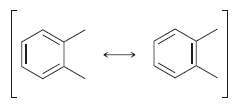
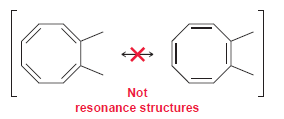
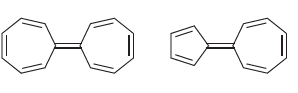
The following two drawings are resonance structures of one compound:But the following two drawings are not resonance structures:They are, in fact, two different compounds. Explain. Not resonance structures
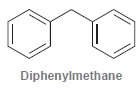
Diphenylmethane exhibits two aromatic rings, which achieve coplanarity in the highest energy conformation. Explain. Diphenylmethane
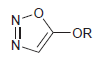
Would you expect the following compound to be aromatic? Justify your answer. OR N-
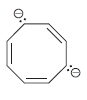
Do you expect the following dianion to exhibit aromatic stabilization? Explain.
Draw a Frost circle for the following cation, and explain the source of instability of this cation.
How many signals do you expect in the13C NMR spectrum of each of the following compounds?a.b.c.d. Br
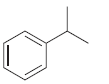
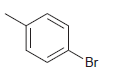
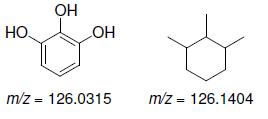
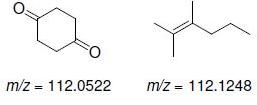
How would you distinguish between each pair of compounds in Problem 15.29 using IR spectroscopy?Problem 15.29a.b. OH HO. HO m/z = 126.0315 m/z = 126.1404
Rank each of the bonds identified in order of increasing wave number. R-CEN -о—н N-H -ОН -н
All of the following compounds absorb IR radiation in the range between 1600 and 1850 cm-1. In each case, identify the specific bond(s) responsible for the absorption(s), and predict the approximate wave number of absorption for each of those bonds.a.b.c.d.e. O.
Does each of the following nucleophiles favor SN2 or SN1?a) b) c) (d) NaOH (e) NaCN ОН SH
Identify whether each of the following substrates favors SN2, SN1, both, or neither:(a)(b)(c)(d)(e)(f)(g) -Br CI
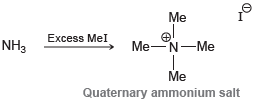
In Chapter 23, we will learn that treatment of ammonia with excess methyl iodide produces a quaternary ammonium salt. This transformation is the result of four sequential SN2 reactions. Use the tools we have learned in this chapter to draw the mechanism of this transformation. Your mechanism should
Draw the mechanism for each of the following solvolysis reactions:(a)(b)(c)(d) Меон OMe (solvolysis) 'CI ETOH (solvolysis) Br
Treatment of (2R, 3R)-3-methyl-2-pentanol with H3O+ affords a compound with no chirality centers. Predict the product of this reaction and draw the mechanism of its formation. Use your mechanism to explain how both chirality centers are destroyed.
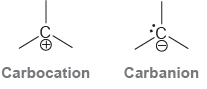
Compare the structures of a carbocation and a carbanion:In one of these ions, the central carbon atom is trigonal planar; in the other it is trigonal pyramidal. Assign the correct geometry to each ion Carbanion Carbocation
Predict the geometry for all atoms except hydrogen in the compounds below:a.b.c. H || 0-H .C. C-H H-C H-C C-H H H H-C-H H
Draw a structure for each of the following compounds.a. Ortho-Dichlorobenzene b. Anisolec. Meta-Nitro toluene d. Anilinee. 2, 4, 6-Tribromophenol f. Para-Xylene
Provide a systematic name for each of the following compounds.a.b.c.d.e. Он OH Br
Draw structures for the eight constitutional isomers with molecular formula C9H12 that contain a benzene ring.
Draw structures for all constitutional isomers with molecular formula C8H10 that contain an aromatic ring.
Draw all aromatic compounds that have molecular formula C8H9Cl.
The systematic name of TNT, a well-known explosive, is 2, 4, 6-trinitrotoluene (as seen in Skill Builder 18.1). There are only five constitutional isomers of TNT that contain an aromatic ring, a methyl group, and three nitro groups. Draw all five of these compounds, and provide a systematic name
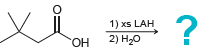
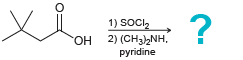
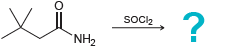
Predict the major product(s) for each of the following reactions:a.b.c.d.e.f.g.h.i.j. 1) xs LAH 2) H20 ОН ? 1) SOCI2 2) (CH3)2NH, OH pyridine ?
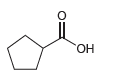
Predict the major product(s) formed when cyclopentanecarboxylic acid is treated with each of the following reagents:(a) SOCl2(b) LAH (excess), followed by H2O(c) NaOH(d) [H+], EtOH
Predict the major product(s) formed when hexanoyl chloride is treated with each of the following reagents:(a) CH3CH2NH2 (excess)(b) LAH (excess), followed by H2O(c) CH3CH2OH, pyridine(d) H2O, pyridine(e) C6H5CO2Na(f) NH3 (excess)(g) Et2CuLi(h) EtMgBr (excess), followed by H2O
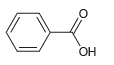
Careful measurements reveal that para-methoxybenzoic acid is less acidic than benzoic acid, while meta-methoxybenzoic acid is more acidic than benzoic acid. Explain these observations.
Identify the reagents you would use to convert each of the following compounds into pentanoic acid:(a) 1-Pentene(b) 1-Bromobutane
Identify the reagents you would use to convert pentanoic acid into each of the following compounds:(a) 1-Pentanol(b) 1-Pentene(c) Hexanoic acid
Draw and name all constitutionally isomeric acid chlorides with molecular formula C4H7ClO. Then provide a systematic name for each isomer.
Draw the structures of eight different carboxylic acids with molecular formula C6H12O2. Then, provide a systematic name for each compound, and identify which three isomers exhibit chirality centers.
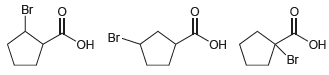
Identify the common name for each of the following compounds:a.b.c.d. Он
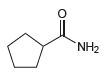
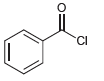
Identify a systematic (IUPAC) name for each of the following compounds a.b.c.d.(e) CH3 (CH2)4CO2H(f) CH3 (CH2)3COCl(g) CH3 (CH2)4CONH2 он O: NH2
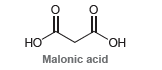
Malonic acid has two acidic protons:The pKa of the first proton (pK1) is measured to be 2.8, while the pKa of the second proton (pK2) is measured to be 5.7.(a) Explain why the first proton is more acidic than acetic acid (pKa = 4.76).(b) Explain why the second proton is less acidic than acetic
Rank each set of compounds in order of increasing acidity:a.b.
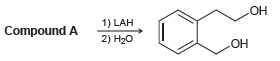
Compound A has molecular formula C9H8O2and exhibits a strong signal at 1740 cm-1in its IR spectrum. Treatment with two equivalents of LAH followed by water gives the following diol. Identify the structure of compound A. Он 1) LAH Compound A 2) H20 ОН
Using acetonitrile (CH3CN) and CO2as your only sources of carbons, identify how you could prepare each of the following compounds:a.b.c.d. Он ОН
Showing 1600 - 1700
of 2904
First
10
11
12
13
14
15
16
17
18
19
20
21
22
23
24
Last
Step by Step Answers

 Get 50% OFF
Claim Now
Get 50% OFF
Claim Now







![CHз NH2 [H*] (-H20)](https://dsd5zvtm8ll6.cloudfront.net/si.question.images/images/question_images/1524/7/1/8/6025ae15c0a95d891524718586667.jpg)



![он но [Н0] Н Н Glutaraldehyde](https://dsd5zvtm8ll6.cloudfront.net/si.question.images/images/question_images/1524/7/1/8/1725ae15a5cce2c91524718157210.jpg)


![-NH2 [H,SO] NH2 [-H,0]](https://dsd5zvtm8ll6.cloudfront.net/si.question.images/images/question_images/1524/7/1/8/8135ae15cddb5a241524718798339.jpg)
![1) Br2 н Mg A. A FeBr3 H. 2) H20 PCC но Он [н], -Н-0 ш](https://dsd5zvtm8ll6.cloudfront.net/si.question.images/images/question_images/1524/7/1/9/7885ae160ace04581524719773593.jpg)
![но, А Н,о* H,Cro, в н] NH,NH, (-Н-0) КОН/Нао D heat](https://dsd5zvtm8ll6.cloudfront.net/si.question.images/images/question_images/1524/7/1/9/7745ae1609e581301524719758915.jpg)