New Semester
Started
Get
50% OFF
Study Help!
--h --m --s
Claim Now
Question Answers
Textbooks
Find textbooks, questions and answers
Oops, something went wrong!
Change your search query and then try again
S
Books
FREE
Study Help
Expert Questions
Accounting
General Management
Mathematics
Finance
Organizational Behaviour
Law
Physics
Operating System
Management Leadership
Sociology
Programming
Marketing
Database
Computer Network
Economics
Textbooks Solutions
Accounting
Managerial Accounting
Management Leadership
Cost Accounting
Statistics
Business Law
Corporate Finance
Finance
Economics
Auditing
Tutors
Online Tutors
Find a Tutor
Hire a Tutor
Become a Tutor
AI Tutor
AI Study Planner
NEW
Sell Books
Search
Search
Sign In
Register
study help
engineering
chemical biochemical and engineering
Chemical Biochemical And Engineering Thermodynamics 5th Edition Stanley I. Sandler - Solutions
Redo Problem 4.40 using Aspen Plus.Problem 4.40A sugar mill in Florida has been disposing of the bagasse (used sugar cane) by open-air burning. You, as a new chemical engineer, determine that by using the dried bagasse as boiler fuel in the mill, you can generate 5000 kg/hr of surplus steam at 20
Steam is available at 2 MPa and 800◦C. a. Determine the maximum amount of shaft work that can be obtained from this steam in a flow process if the ambient conditions are 25◦C and 1 bar. b. This steam will be used in a work producing process that reduces its pressure to 0.6 MPa and its
Which has the greater potential to produce more available work steam at 2 MPa and 800◦C or steam at 1.4 MPa and 900◦C?
a. Derive the equations analogous to Eqs. 4.6-6 and 8 for the nonflow available work. Eqs. 4.6-6Eqs. 4.6-8b. Derive the integrated forms of these equations for an ideal gas of constant heat capacity (х), -( ), = ән ӘT P - -Tamb aS ат P Tamb CP amb Cr = C, (1 - Ть) T T = Cp - Tamb (4.6-6)
A stream of flowing air is available at 25 bar and 1000◦C or at 40 bar and 900◦C. Assuming air is an ideal gas with a constant pressure heat capacity of 29.7 J/mol K, which stream has the greater potential produce available work?
It is desired to improve the thermal efficiency of the Rankine power generation cycle. Two possibilities have been suggested. One is to increase the evaporator temperature, and the second is to decrease the condenser temperature (and consequently the pressure) of the low-pressure part of the
a. An automobile air conditioner uses the vapor compression refrigeration cycle with HFC-134a as the refrigerant. The operational temperature of the evaporator is 7◦C and that of the condenser is 45◦C. Determine the coefficient of performance of this air conditioning system and the amount of
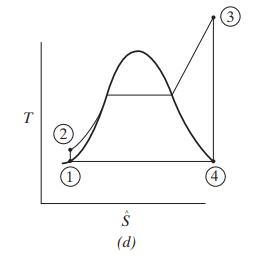
Using a T-Ŝ diagram, discuss the effect of subcooling in the condenser and superheating in the evaporator on the efficiency of a Rankine (or other) power generation cycle.
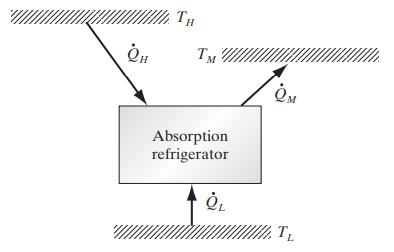
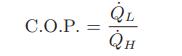
Forest cabins, remote mobile homes, Amish farms, and residential structures in locations where electricity is not available are often equipped with absorption refrigerators that rely on changes from absorption at low temperatures to desorption at high temperatures to produce pressure changes in a
A power plant using a Rankine power generation cycle and steam operates at a temperature of 80◦C in the condenser, a pressure of 2.5 MPa in the evaporator, and a maximum evaporator temperature of 700◦C. Draw the two cycles described below on a temperature entropy diagram for steam, and answer
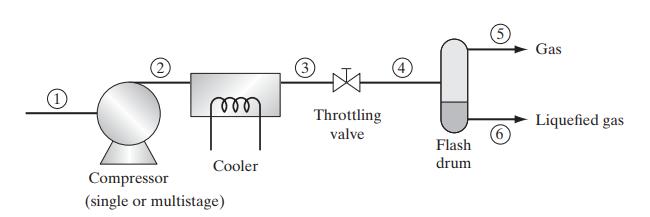
As in Illustration 5.1-1 it is desired to produce liquefied methane; however, the conditions are now changed so that the gas is initially available at 1 bar and 200 K, and methane leaving the cooler will be at 100 bar and 200 K. The flash drum is adiabatic and operates at 1 bar, and each compressor
a. Nitrogen can be liquefied using a simple Joule Thomson expansion process. This is done by rapidly and adiabatically expanding cold nitrogen from a high-pressure gas to a low-temperature, low-pressure vapor-liquid mixture. To produce the high pressure, nitrogen initially available at 0.1 MPa and
A Rankine steam cycle has been proposed to generate work from burning fuel. The temperature of the burning fuel is 1100◦C, and cooling water is available at 15◦C. The steam leaving the boiler is at 20 bar and 700◦C, and the condenser produces a saturated liquid at 0.2 bar. The steam lines are
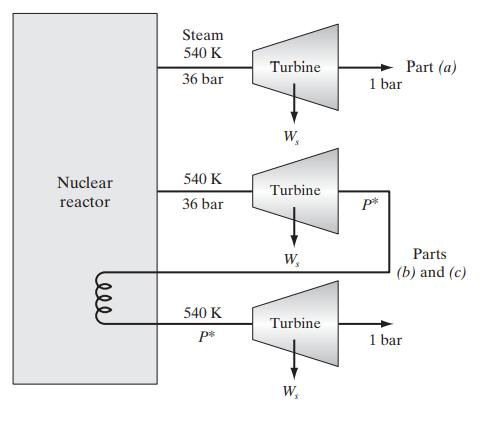
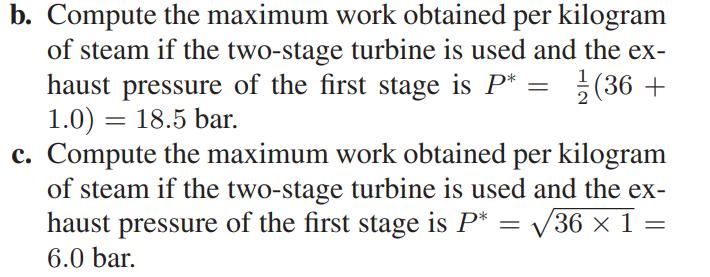
Electrical power is to be produced from a steam turbine connected to a nuclear reactor. Steam is obtained from the reactor at 540 K and 36 bar, the turbine exit pressure is 1.0 bar, and the turbine is adiabatic. a. Compute the maximum work per kilogram of steam that can be obtained from the
High-pressure helium is available from gas producers in 0.045-m3 cylinders at 400 bar and 298 K. Calculate the explosion equivalent of a tank of compressed helium in terms of kilograms of TNT. Assume helium is an ideal gas.
The United States produces about 2700 megawatts (MW) of electricity from geothermal energy, which is comparable to burning 60 million barrels of oil each year. Worldwide about 7000 MW of geothermal electricity are produced. The process is that naturally occurring steam or hot water that is not far
The “Quick Fill” bicycle tire filling system consists of a small (2 cm diameter, 6.5 cm long) cylinder filled with nitrogen to a pressure of 140 bar. Estimate the explosion equivalent of the gas contained in the cylinder in grams of TNT. Assume nitrogen is an ideal gas.
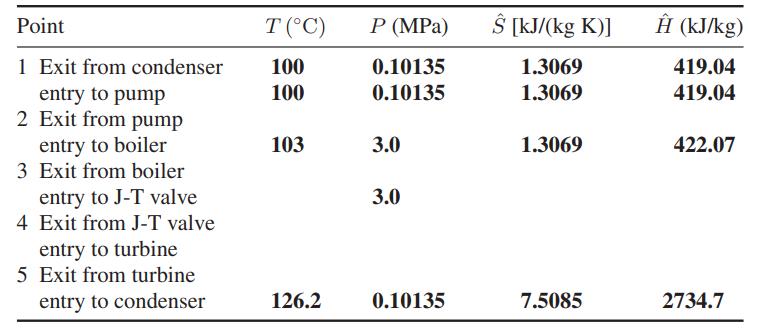
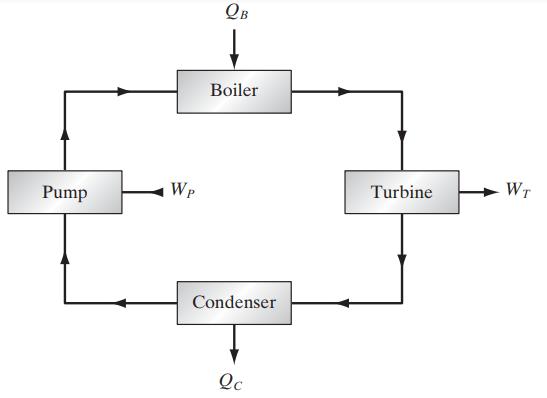
A Rankine power generation cycle is operated with water as the working fluid. It is found that 100 MW of power is produced in the turbine by 89 kg/s of steam that enters the turbine at 700◦C and 5 MPa and leaves at 0.10135 MPa. Saturated liquid water exits the condenser and is pumped back to 5
A tank containing liquid water in equilibrium with a small amount of vapor at 25 bar suddenly ruptures. Estimate the fraction of liquid water in the tank that flash vaporizes, and the explosive energy released per kilogram of water initially in the tank.
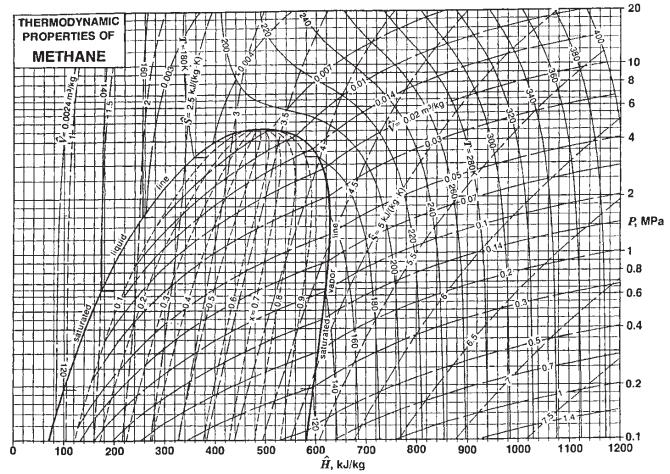
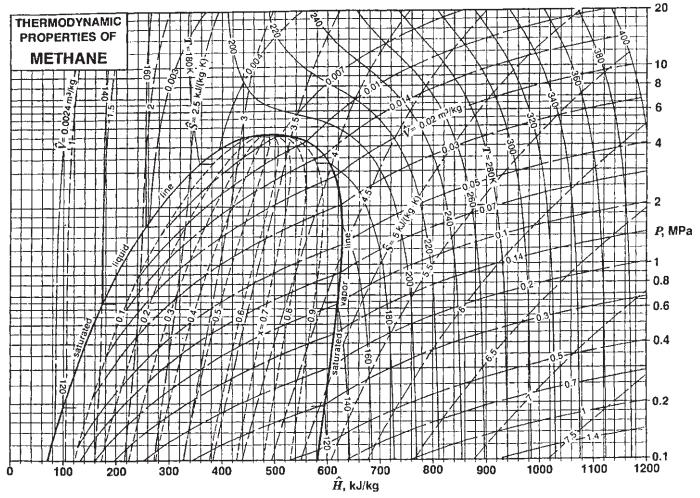
During methane liquefaction, about 1000 kg of methane are stored at a pressure of 10 MPa and 180 K. The plant manager is worried about the possibility of explosion. Determine the energy released by a sudden rupture of this storage tank and the temperature and physical state of the methane
An Automobile engine can be modelled as an idealized four-stroke Otto cycle, although it actually consists of 6 steps: Step 0: A fuel-air mixture is drawn into a cylinder at constant pressure (admission stroke). Step 1: Adiabatic and reversible (isentropic) compression of the air as the piston
N-butane is to be liquefied to make liquid petroleum gas (LPG). The butane is available at 25◦C and 1 bar, it will be compressed to 15 bar in a compressor that has an isentropic efficiency of 85%, cooled to 0◦C in a heat exchanger, and then expanded adiabatically to 1 bar, with the vapor
One suggestion that has been made to conserve energy is that all new electrical power generation plants should be co-generation facilities. In a typical power plant the combustion of coal or natural gas is used to produce steam that is run through a turbine and the only useful energy that results
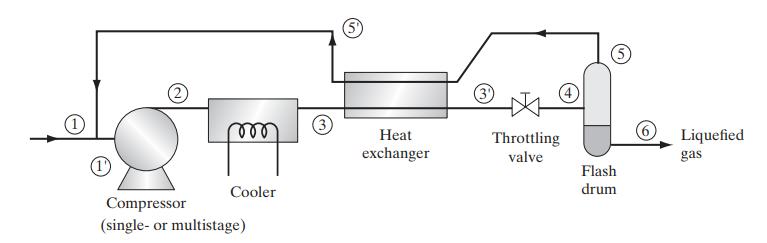
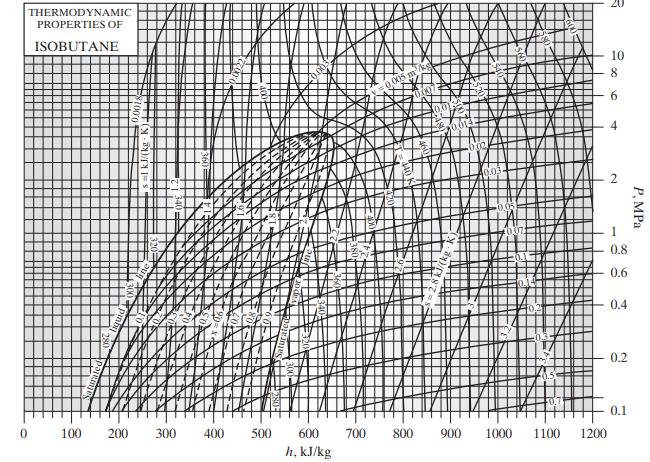
Isobutane is to be liquefied to make liquid petroleum gas (LPG). The butane is available at 25◦C and 1 bar, it will be compressed to 15 bar, cooled to 0◦C in a heat exchanger, and expanded and flashed to 1 bar in an adiabatic valve, and the vapor and liquid separated. Determine the work
Repeat the calculation of problem 5.22 with the vapor being recycled to the compressorProblem 5.22Isobutane is to be liquefied to make liquid petroleum gas (LPG). The butane is available at 25◦C and 1 bar, it will be compressed to 15 bar, cooled to 0◦C in a heat exchanger, and expanded and
Repeat the calculation of problem 5.22 if the compressor has an isentropic efficiency of 72%. Problem 5.22Isobutane is to be liquefied to make liquid petroleum gas (LPG). The butane is available at 25◦C and 1 bar, it will be compressed to 15 bar, cooled to 0◦C in a heat exchanger, and expanded
Repeat the calculation of problem 5.23 if the compressor has an isentropic efficiency of 87%.Problem 5.23Repeat the calculation of problem 5.22 with the vapor being recycled to the compressorProblem 5.22Isobutane is to be liquefied to make liquid petroleum gas (LPG). The butane is available at
The inlet to an adiabatic turbine is steam at 0.8 MPa and 350◦C, and the turbine exit pressure is 0.1 MPa. a. Determine the maximum work that can be obtained from each kg of steam and the exit temperature of the steam. b. If the turbine has an isentropic efficiency of 80%, determine the work
Redo Problem 5.20 using Aspen Plus.Problem 5.20N-butane is to be liquefied to make liquid petroleum gas (LPG). The butane is available at 25◦C and 1 bar, it will be compressed to 15 bar in a compressor that has an isentropic efficiency of 85%, cooled to 0◦C in a heat exchanger, and then
Redo Problem 5.22 using Aspen Plus.Problem 5.22 Isobutane is to be liquefied to make liquid petroleum gas (LPG). The butane is available at 25◦C and 1 bar, it will be compressed to 15 bar, cooled to 0◦C in a heat exchanger, and expanded and flashed to 1 bar in an adiabatic valve, and the vapor
Redo Problem 5.23 using Aspen Plus.Problem 5.23Repeat the calculation of problem 5.22 with the vapor being recycled to the compressorProblem 5.22Isobutane is to be liquefied to make liquid petroleum gas (LPG). The butane is available at 25◦C and 1 bar, it will be compressed to 15 bar, cooled to
Redo Problem 5.27 using Aspen Plus.Problem 5.27Methane at 260 K is to be isothermally compressed from 0.1 MPa to 1.0 MPa. a. What is the minimum work required, and how much heat must be removed to keep the compression process isothermal? b. If the compressor is only 75% isentropically efficient,
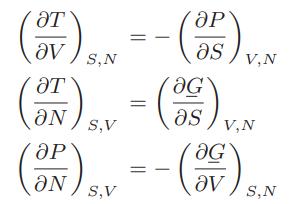
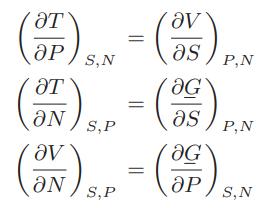
Derive the following Maxwell relations for open systems. a. Starting from Eq. 6.2-5a,b. Starting from Eq. 6.2-6a, c. Starting from Eq. 6.2-7a,d. Starting from Eq. 6.2-8a, (т). HT ON ӘР (0) aN S, N S,V S,V ӘР AS V, N ӘG as V, N - ( ). AG aV S, N
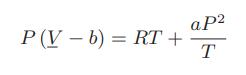
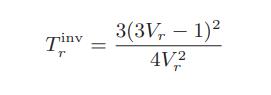
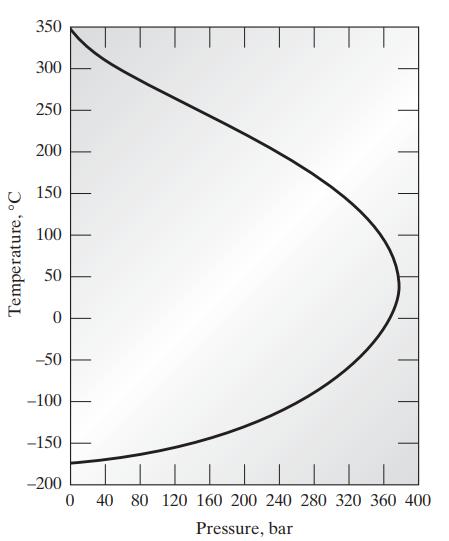
For real gases the Joule-Thomson coefficient is greater than zero at low temperatures and less than zero at high temperatures. The temperature at which μ is equal to zero at a given pressure is called the inversion temperature.a. Show that the van der Waals equation of state exhibits this
Steam is continuously expanded from a pressure of 25 bar and 300°C to 1 bar through a Joule-Thomson expansion valve. Calculate the final temperature and the entropy generated per kilogram of steam using a. The ideal gas law b. The van der Waals equation of state c. The Peng-Robinson equation of
In the calculation of thermodynamic properties, it is convenient to have the following partial derivatives: where Z = (PV /RT) is the compressibility factor. Develop expressions for these two derivatives for the Redlich-Kwong equation of state in terms of temperature and the Redlich-Kwong
The Boyle temperature is defined as the temperature at which the second virial coefficient B is equal to zero. a. Recognizing that any equation of state can be expanded in virial form, find the Boyle temperature for the Redlich-Kwong equation of state in terms of the parameters in that equation.b.
In a continuous manufacturing process, chlorodifluoromethane (CHClF2), initially at 10 bar and 420 K, passes through an adiabatic pressure-reducing valve so that its pressure drops to 0.1 bar (this last pressure low enough that CHClF2 can be considered to be an ideal gas). At these operating
A gas is continuously passed through an adiabatic turbine at the rate of 2 mol/s. Its initial temperature is 600 K, its initial pressure is 5 bar and its exiting pressure is 1 bar. Determine the maximum rate at which work can be obtained in this process. The gas is described by an augmented
Methane at 260 K is to be isothermally compressed from 0.1 MPa to 1.0 MPa. a. What is the minimum work required, and how much heat must be removed to keep the compression process isothermal? b. If the compressor is only 75% isentropically efficient, what work is required, and how much heat must
The inlet to an adiabatic compressor is nitrogen at 1 bar (0.1 MPa) and 150 K, and the exit pressure is 10 bar (1 MPa). a. Determine the minimum work required for each kg of nitrogen compressed and the exit temperature of the nitrogen. b. If the compressor is found to require 20% more work than
Two separate experiments are performed on a gas enclosed in a piston-and-cylinder device, both starting from the same initial state. The result of the first experiment is to be used to predict the outcome of the second. a. In the first experiment, the piston is free to move, with the external
Redo Problem 5.2 using Aspen Plus.Problem 5.2t is desired to improve the thermal efficiency of the Rankine power generation cycle. Two possibilities have been suggested. One is to increase the evaporator temperature, and the second is to decrease the condenser temperature (and consequently the
Redo Problem 5.1 using Aspen Plus.Problem 5.1a. An automobile air conditioner uses the vapor compression refrigeration cycle with HFC-134a as the refrigerant. The operational temperature of the evaporator is 7◦C and that of the condenser is 45◦C. Determine the coefficient of performance of this
Redo Problem 5.4 using Aspen Plus.Problem 5.4A power plant using a Rankine power generation cycle and steam operates at a temperature of 80◦C in the condenser, a pressure of 2.5 MPa in the evaporator, and a maximum evaporator temperature of 700◦C. Draw the two cycles described below on a
Redo Problem 5.7 using Aspen Plus.Problem 5.7A Rankine steam cycle has been proposed to generate work from burning fuel. The temperature of the burning fuel is 1100◦C, and cooling water is available at 15◦C. The steam leaving the boiler is at 20 bar and 700◦C, and the condenser produces a
A natural gas stream (essentially pure methane) is available at 310 K and 14 bar. The gas is to be compressed to 345 bar before transmission by underground pipeline. If the compression is carried out adiabatically and reversibly, determine the compressor outlet temperature and the work of
Redo Problem 5.28 using Aspen Plus.Problem 5.28The inlet to an adiabatic turbine is steam at 1.3 MPa and 385◦C, and the turbine exit pressure is 0.1 MPa. a. Determine the maximum work that can be obtained from each kg of steam and the exit temperature of the steam. b. If the turbine has an
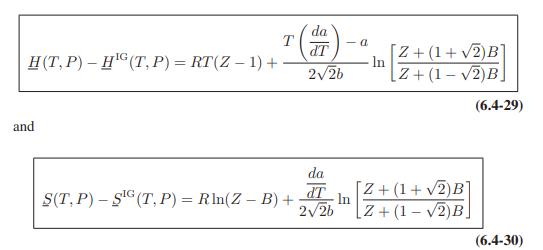
Derive Eqs. 6.4-29 and 6.4-30. T H(T, P) - HG (T, P) = RT(Z - 1) + and IG S(T.P) - S¹ (T, P) = RIn(Z - B) + da dT 2√/2b da
Redo Problem 5.29 using Aspen Plus.Problem 5.29The inlet to an adiabatic compressor is nitrogen at 1 bar (0.1 MPa) and 150 K, and the exit pressure is 10 bar (1 MPa). a. Determine the minimum work required for each kg of nitrogen compressed and the exit temperature of the nitrogen. b. If the
Derive Eq. 6.6-11. Pr,Tr S(T,P)-SIG (T, P) = - R R S Pr=0,Tr (OZ.) P.] Z-1 Tr ᎧᏃ + Pr Pr dP (6.6-11)
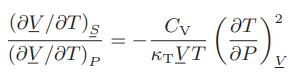
For steam at 500◦C and 10 MPa, using the Mollier diagram, a. Compute the Joule-Thomson coefficient μ = (∂T/∂P)H. b. Compute the coefficient κS = (∂T/∂P)S. c. Relate the ratio (∂H/∂S)T /(∂H/∂S)P to μ and κS, and compute its value for steam at the same conditions.
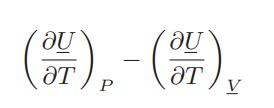
Evaluate the difference for the ideal and van der Waals gases, and for a gas that obeys the virial equation of state. (3²) - (0)₁ P V
A tank containing carbon dioxide at 400 K and 50 bar is vented until the temperature in the tank falls to 300 K. Assuming there is no heat transfer between the gas and the tank, find the pressure in the tank at the end of the venting process and the fraction of the initial mass of gas remaining in
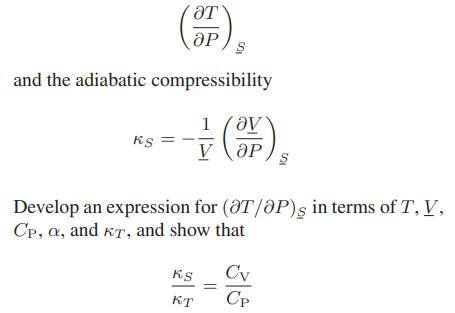
By measuring the temperature change and the specific volume change accompanying a small pressure change in a reversible adiabatic process, one can evaluate the derivative (SP) and the adiabatic compressibility SA 1 - KS V KS KT (OV) Develop an expression for (OT/OP)s in terms of T, V, Cp, a, and
One hundred cubic meters of carbon dioxide initially at 150◦C and 50 bar is to be isothermally compressed in a frictionless piston-and-cylinder device to a final pressure of 300 bar. Calculatei. The volume of the compressed gas ii. The work done to compress the gas iii. The heat flow on
Prove that the following statements are true. a. (∂H/∂V )T is equal to zero if (∂H/∂P)T is equal to zero. b. The derivative (∂S/∂V )P for a fluid has the same sign as its coefficient of thermal expansion α and is inversely proportional to it.
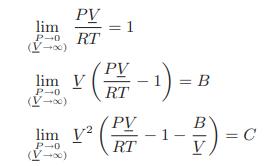
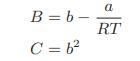
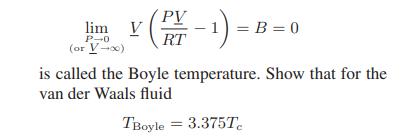
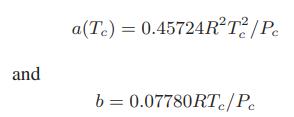
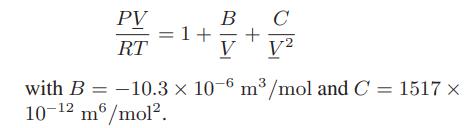
Values of the virial coefficients B and C at a fixed temperature can be obtained from experimental PV T data by noting thata. Using these formulas, show that the van der Waals equation leads to the following expressions for the virial coefficients.b. The temperature at which where Tc is the
a. Show for the Peng-Robinson equation of state (Eq. 6.4-2) thatEq. 6.4-2.b. Determine the critical compressibility of the PengRobinson equation of state. P = RT V-b a(T) V(V+b) + b(V - b) (6.4-2)
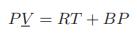
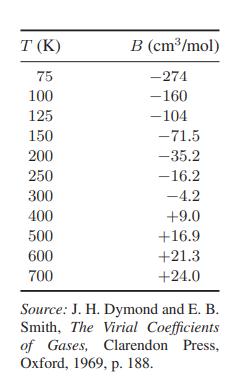
From experimental data it is known that at moderate pressures the volumetric equation of state may be written as where the virial coefficient B is a function of temperature only. Data for nitrogen are given in the table. a. Identify the Boyle temperature (the temperature at which B = 0) and the
The Clausius equation of state is a. Show that for this volumetric equation of state b. For a certain process the pressure of a gas must be reduced from an initial pressure P1 to the final pressure P2. The gas obeys the Clausius equation of state, and the pressure reduction is to be accomplished
By measuring the temperature change accompanying a differential volume change in a free expansion across a valve and separately in a reversible adiabatic expansion, the two derivatives (∂T/∂V )H and (∂T/∂V )S can be experimentally evaluated. a. Develop expressions for these derivatives in
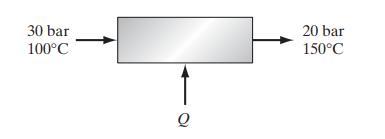
Ethylene at 30 bar and 100°C passes through a heaterexpander and emerges at 20 bar and 150°C. There is no flow of work into or out of the heater-expander, but heat is supplied. Assuming that ethylene obeys the Peng-Robinson equation of state, compute the flow of heat into the heater-expander per
Derive the equations necessary to expand Illustration 6.4-1 to include the thermodynamic state variables internal energy, Gibbs energy, and Helmholtz energy.Illustration 6.4-1Making of a Thermodynamic Properties Chart As an introduction to the problem of constructing a chart or table of the
Draw lines of constant Gibbs and Helmholtz energies on the diagrams of Illustration 6.4-1Illustration 6.4-1Making of a Thermodynamic Properties Chart As an introduction to the problem of constructing a chart or table of the thermodynamic properties of a real fluid, develop a thermodynamic
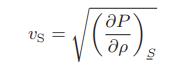
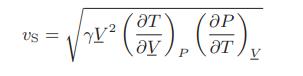
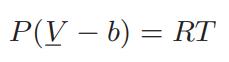
The speed of propagation of a small pressure pulse or sound wave in a fluid, vS, can be shown to be equal towhere ρ is the molar density. a. Show that an alternative expression for the sonic velocity iswhere γ = CP/CV.b. Show that γ = 1+R/CV for both the ideal gas and a gas that obeys the
Repeat the calculations of Problem 6.13 if the mechanical efficiency of the adiabatic turbine is only 85 percent.Problem 6.13Eighteen kilograms of the refrigerant HFC-134a at 150°C is contained in a 0.03-m3 tank. Compare the prediction you can make for the pressure in the tank with that obtained
Nitrogen is to be isothermally compressed at 0°C from 1 bar to 100 bar. Compute the work required for this compression; the change in internal energy, enthalpy; Helmholtz and Gibbs energies of the gas; and the heat that must be removed to keep the gas at constant temperature ifa. The gas is an
For an isothermal process involving a fluid described by the Redlich-Kwong equation of state, develop expressions for the changes in a. Internal energy b. Enthalpy c. Entropy in terms of the initial temperature and the initial and final volumes.
Any residual property θ is defined to bewhere IG denotes the same property in the ideal gas state. Such a quantity is also referred to as a departure function.a. Develop general expressions for dHres, dUres, dSres, and dGres with temperature and pressure as the independent variables. b.
In statistical mechanics one tries to find an equation for the partition function of a substance. The canonical partition function, Q(N,V,T), is used for a closed system at constant temperature, volume, and number of particles N. This partition function can be written as a product of terms as
Redo Problem 6.22 with the Soave–Redlich-Kwong equation of state.Problem 6.22A tank containing carbon dioxide at 400 K and 50 bar is vented until the temperature in the tank falls to 300 K. Assuming there is no heat transfer between the gas and the tank, find the pressure in the tank at the end
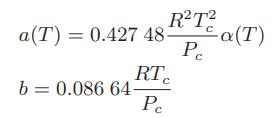
a. Show for the Soave–Redlich-Kwong equation of state (Eq. 6.4-1) thatb. Show that the critical compressibility of the Soave–Redlich-Kwong equation of state is 1/3. a(T) = 0.427 48- -a (T) R²T² Pc RTC Pc b= 0.086 64-
Derive the expressions for the enthalpy and entropy departures from ideal gas behavior (that is, the analogues of Eqs. 6.4-29 and 6.4-30) for the Soave–Redlich-Kwong equation of state. T IG H(T, P) – H¹G (T, P) = RT (Z − 1) + and da dT 2√/26 a In Z + (1+√2)B] Z + (1 -√2)B] da S(T, P) -
Redo Problem 6.7 with the Soave–Redlich-Kwong equation of state.Problem 6.7One hundred cubic meters of carbon dioxide initially at 150°C and 50 bar is to be isothermally compressed in a frictionless piston-and-cylinder device to a final pressure of 300 bar. Calculatei. The volume of the
Redo Problem 6.12 with the Soave–Redlich-Kwong equation of state.Problem 6.12Ethylene at 30 bar and 100°C passes through a heaterexpander and emerges at 20 bar and 150°C. There is no flow of work into or out of the heater-expander, but heat is supplied. Assuming that ethylene obeys the
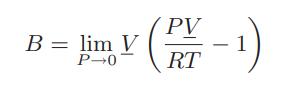
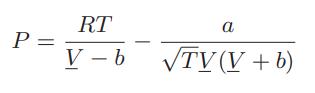
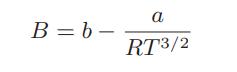
The second virial coefficient B can be obtained from experimental PVT data or from an equation of state from a. Show that for the Redlich-Kwong equation the second virial coefficient is b. Compute the second virial coefficient of n-pentane as a function of temperature from the RedlichKwong
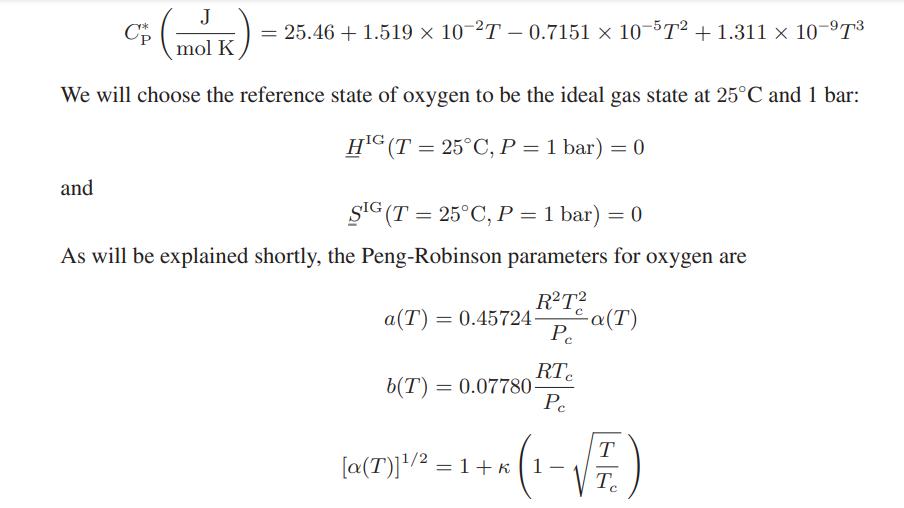
Use the information in Illustration 6.4-1 and the Soave–Redlich-Kwong equation of state to compute the thermodynamic properties of oxygen along the following two isotherms: a. 155 K b. 200 K Illustration 6.4-1Making of a Thermodynamic Properties Chart As an introduction to the problem of
Using the Redlich-Kwong equation of state, compute the following quantities for nitrogen at 298.15 K. a. The difference CP − CV as a function of pressure from low pressures to very high pressures b. CP as a function of pressure from low pressures to very high pressures. It is easier to first
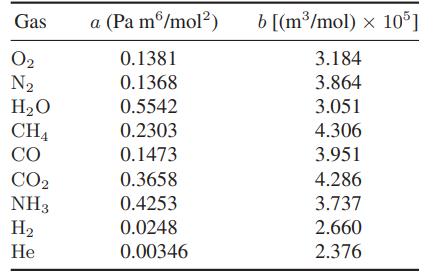
The Joule-Thomson coefficient, μ, given by is a function of temperature. The temperature at which μ = 0 is known as the inversion temperature. a. Use the van der Waals equation of state to determine the inversion temperature of H2, O2, N2, CO and CH4. The van der Waals parameters for these
Repeat Problem 5.9 assuming that helium is described by the Peng-Robinson equation of state.Problem 5.9High-pressure helium is available from gas producers in 0.045-m3 cylinders at 400 bar and 298 K. Calculate the explosion equivalent of a tank of compressed helium in terms of kilograms of TNT.
Using the Redlich-Kwong equation of state, compute and plot (on separate graphs) the pressure of nitrogen as a function of specific volume at the two temperatures: a. 110 K b. 150 K
Repeat Problem 5.10 assuming that nitrogen is described by the Peng-Robinson equation of state.Problem 5.10The “Quick Fill” bicycle tire filling system consists of a small (2 cm diameter, 6.5 cm long) cylinder filled with nitrogen to a pressure of 140 bar. Estimate the explosion equivalent of
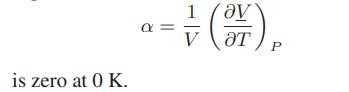
In this chapter, from the third law of thermodynamics, it has been shown that the entropy of all substances approaches a common value at 0 K (which for convenience we have taken to be zero). This implies that the value of the entropy at 0 K is not a function of volume or pressure. Use this
A fluid is described by the Clausius equation of state where b is a constant. Also, the ideal gas heat capacity is given by For this fluid, obtain explicit expressions for a. A line of constant enthalpy as a function of pressure and temperature b. A line of constant entropy as a function of
A piston-and-cylinder device contains 10 kmol of npentane at −35.5°C and 100 bar. Slowly the piston is moved until the vapor pressure of n-pentane is reached, and then further moved until 5 kmol of the n-pentane is evaporated. This complete process takes place at the constant temperature of
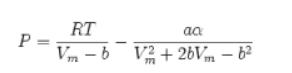
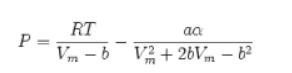
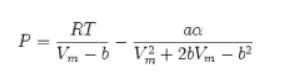
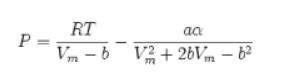
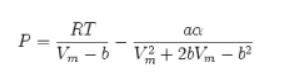
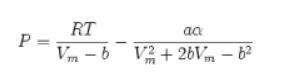
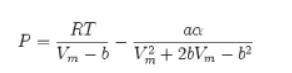
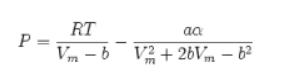
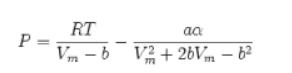
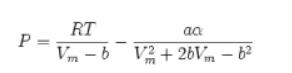
Develop an expression for how the constant-volume heat capacity varies with temperature and specific volume for the Peng-Robinson fluid. P = RT aa Vm-b V2+2bVm – b²
A manuscript recently submitted to a major journal for publication gave the following volumetric and thermal equations of state for a solid: where a, b, c, d, and e are constants. Are these two equations consistent with each other? V (T, P) = a +bTcP and U (T, P) = dT +eP
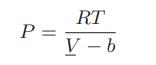
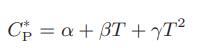
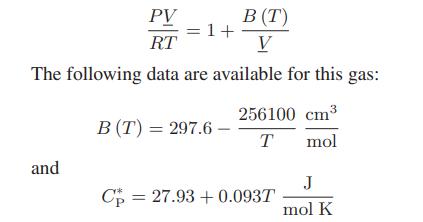
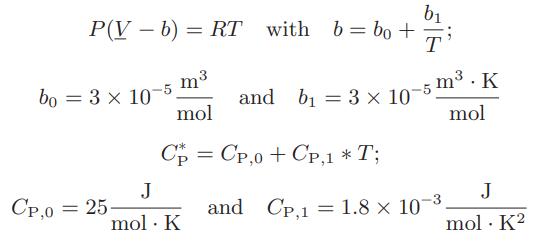
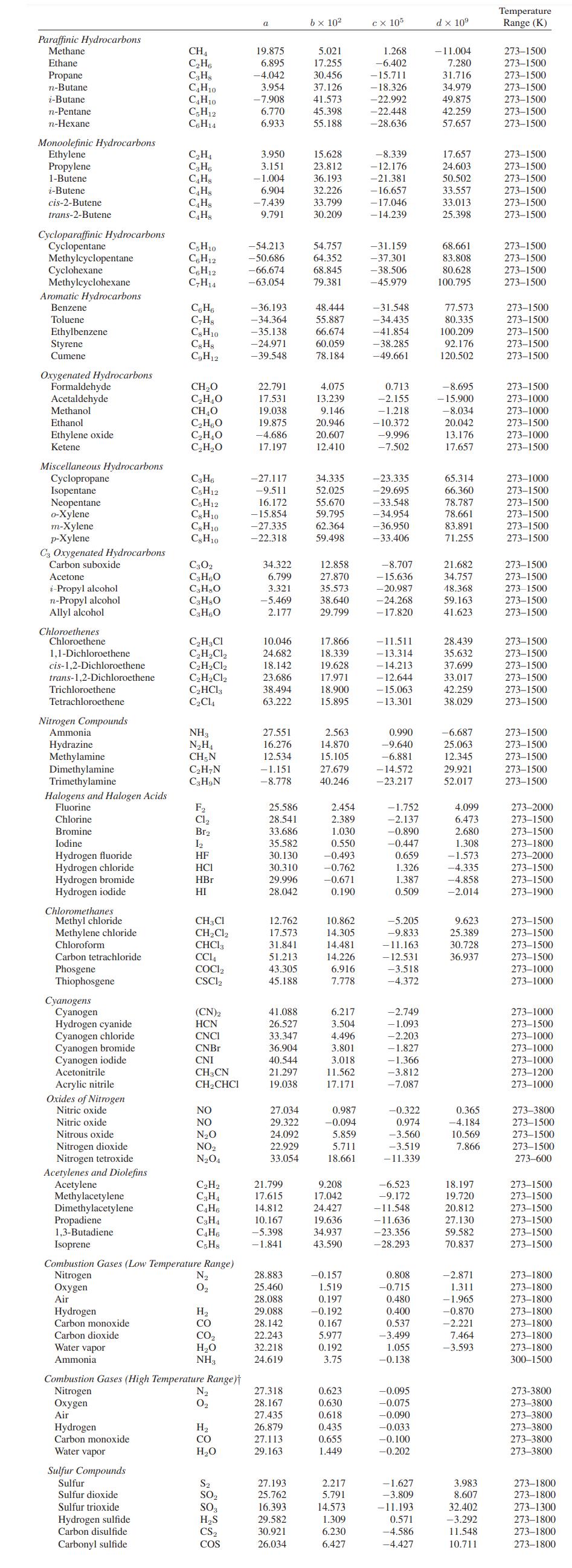
The following equation of state describes the behavior of a certain fluid: where the constants are a = 10−3 m3 K/(bar mol) = 102 (J K)/(bar2 mol) and b = 8 × 10⁻⁵ m3/mol. Also, for this fluid the mean ideal gas constant-pressure heat capacity, CP, over the temperature range of 0 to 300°C at
Redo Problem 4.45 if ethylene is described by the truncated virial equation with B (T) = 5.86 · 10−5 − 0.056/T m3/mol and T in K.Problem 4.45The second virial coefficient B can be obtained from experimental PVT data or from an equation of state from a. Show that for the Redlich-Kwong
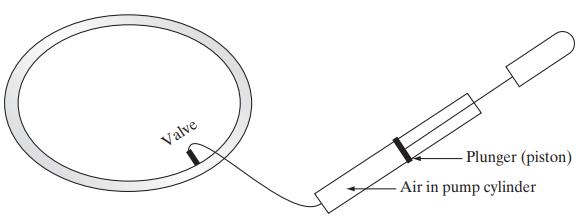
A bicycle pump can be treated as a piston-and-cylinder system that is connected to the tire at the “closed” end of the cylinder. The connection is through a valve that is initially closed, while the cylinder is filled with air at atmospheric pressure, following which the pumping in a cycle
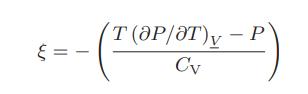
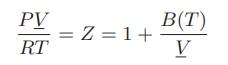
The Euken coefficient ξ is defined as ξ = (∂T/∂V)U. a. Show that the Euken factor is also equal to b. What is the value of the Euken coefficient for an ideal gas? c. Develop an explicit expression for the Euken coefficient for a gas that is described by the truncated virial equationd.
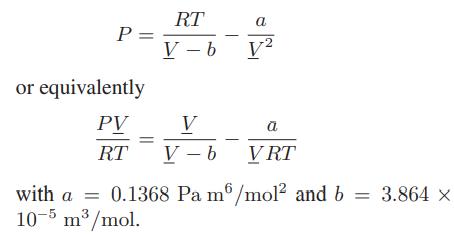
The van der Waals equation of state with a = 0.1368 Pa m3/mol2 and b = 3.864 × 10⁻⁵ m3/mol can be used to describe nitrogen.a. Using the van der Waals equation of state, prepare a graph of pressure (P) of nitogen as a function of log V , where V is molar volume at temperatures of 100 K, 125 K,
Redo Problem 4.45 if ethylene is described by the Peng-Robinson equation of state.Problem 4.45The second virial coefficient B can be obtained from experimental PVT data or from an equation of state from a. Show that for the Redlich-Kwong equation the second virial coefficient is b. Compute the
a. Show that b. Use the result of part (a) to show that for a stable system at equilibrium (∂V /∂T)S and (∂V /∂T)P must have opposite signs. c. Two separate measurements are to be performed on a gas enclosed in a piston-and-cylinder device. In the first measurement the device is well
Gasoline vapor is to be recovered at a filling station rather than being released into the atmosphere. In the scheme we will analyze, the vapor is first condensed to a liquid and then pumped back to a storage tank. Determine the work necessary to adiabatically pump the liquid gasoline from 0.1 MPa
A 3-m3 tank is in the basement of your house to store propane that will be used for home and water heating and cooking. Your basement, and therefore the contents of the tank, remain at 20°C all year. Initially, except for a small vapor space the tank is completely full of liquid propane, but by
Steam is produced at 70 bar and some unknown temperature. A small amount of steam is bled off just before entering a turbine and goes through an adiabatic throttling valve to atmospheric pressure. The temperature of the steam exiting the throttling valve is 400◦C. The unthrottled steam is fed
A well-insulated, 0.7-m3 gas cylinder containing natural gas (which can be considered to be pure methane) at 70 bar and 300 K is exhausted until the pressure drops to 3.5 bar. This process occurs fast enough that there is no heat transfer between the cylinder walls and the gas, but not so rapidly
Pipelines are used to transport natural gas over thousands of miles, with compressors (pumping stations) at regular intervals along the pipeline to compensate for the pressure drop due to flow. Because of the long distances involved and the good heat transfer, the gas remains at an ambient
Showing 300 - 400
of 619
1
2
3
4
5
6
7
Step by Step Answers

 Get 50% OFF
Claim Now
Get 50% OFF
Claim Now






![Pr,Tr S(T,P)-SIG (T, P) = - R R S Pr=0,Tr (OZ.) P.] Z-1 Tr + Pr Pr dP (6.6-11)](https://dsd5zvtm8ll6.cloudfront.net/images/question_images/1699/9/3/9/1636553035b418db1699939160220.jpg)






![T IG H(T, P) HG (T, P) = RT (Z 1) + and da dT 2/26 a In Z + (1+2)B] Z + (1 -2)B] da S(T, P) - SIG (T, P) =](https://dsd5zvtm8ll6.cloudfront.net/images/question_images/1699/9/6/1/91365535c390d89a1699961909723.jpg)
![= T . || - - -[1 - Ta]](https://dsd5zvtm8ll6.cloudfront.net/images/question_images/1699/9/6/4/6836553670be66631699964680686.jpg)