New Semester
Started
Get
50% OFF
Study Help!
--h --m --s
Claim Now
Question Answers
Textbooks
Find textbooks, questions and answers
Oops, something went wrong!
Change your search query and then try again
S
Books
FREE
Study Help
Expert Questions
Accounting
General Management
Mathematics
Finance
Organizational Behaviour
Law
Physics
Operating System
Management Leadership
Sociology
Programming
Marketing
Database
Computer Network
Economics
Textbooks Solutions
Accounting
Managerial Accounting
Management Leadership
Cost Accounting
Statistics
Business Law
Corporate Finance
Finance
Economics
Auditing
Tutors
Online Tutors
Find a Tutor
Hire a Tutor
Become a Tutor
AI Tutor
AI Study Planner
NEW
Sell Books
Search
Search
Sign In
Register
study help
engineering
chemical biochemical and engineering
Chemical Biochemical And Engineering Thermodynamics 5th Edition Stanley I. Sandler - Solutions
Redo Problem 13.27 using Aspen Plus.Problem 13.27Carbon is deposited on a catalytic reactor bed as a result of the cracking of hydrocarbons. Periodically, hydrogen gas is passed through the reactor in an effort to remove the carbon and to preserve the reduced state of the catalyst. It has been
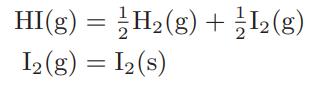
Redo Problem 13.25 using Aspen Plus.Problem 13.25When pure hydrogen iodide gas enters an evacuated cylinder, the following reactions may occur: (Note that since Gibbs energies of formation data are available for iodine in both the gaseous and solid phases, it is more convenient to think of the
Redo Problem 13.23 using Aspen Plus.Problem 13.23Consider a gaseous mixture containing the three isomers n-pentane (1), iso-pentane (2), and neo-pentane (3). These species may interconvert by reaction. a. Determine the number of independent chemical reactions and the number of degrees of freedom
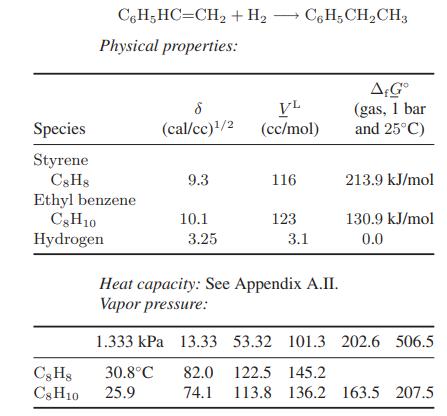
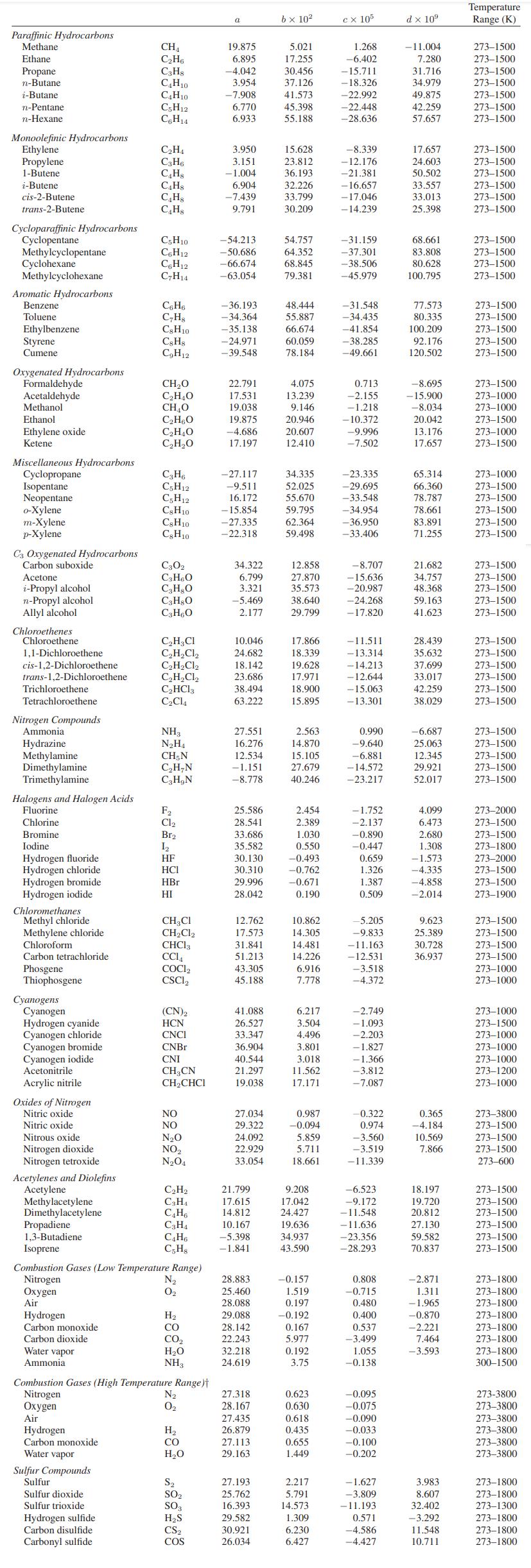
Redo Problem 13.21 using Aspen Plus.Problem 13.21Styrene can be hydrogenated to ethyl benzene at moderate conditions in both the liquid phase and the gas phase. Calculate the equilibrium compositions in the vapor and liquid phases of hydrogen, styrene, and ethyl benzene at each of the following
Redo Problem 13.18 using Aspen Plus.Problem 13.18By catalytic dehydrogenation, 1-butene can be produced from n-butane,C4H10 = C4H8 + H2However, 1-butene may also be dehydrogenated to form 1,3-butadiene,C4H8 = C4H6 + H2Compute the equilibrium conversion of n-butane to 1-butene and 1,3-butadiene at 1
Redo Problem 13.17 using Aspen Plus.Problem 13.17The simple statement of the Le Chatelier-Braun principle given in Sec. 13.1 leads one to expect that if the concentration of a reactant were increased, the reaction would proceed so as to consume the added reactant. This, however, is not always true.
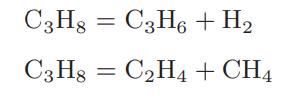
Redo Problem 13.15 using Aspen Plus.Problem 13.15When propane is heated to high temperatures, it pyrolyzes or decomposes. Assume that the only reactions that occur are and that these reactions take place in the gas phase. a. Calculate the composition of the equilibrium mixture of propane and its
Redo Problem 13.14 using Aspen Plus.Problem 13.14Acetaldehyde is produced from ethanol by the following gas-phase reactions: The reactions are carried out at 540°C and 1 bar pressure using a silver gauze catalyst and air as an oxidant. If 50% excess air [sufficient air that 50 percent more oxygen
Redo Problem 13.12 using Aspen Plus.Problem 13.12Ethylene dichloride is produced by the direct chlorination of ethylene using small amounts of ethylene dibromide as a catalyst: If stoichiometric amounts of ethylene and chlorine are used, and the reaction is carried out at 50°C and 1 bar, what is
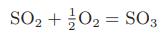
Redo Problem 13.11 using Aspen Plus.Problem 13.11An important step in the manufacture of sulfuric acid is the gas-phase oxidation reaction Compute the equilibrium conversion of sulfur dioxide to sulfur trioxide over the temperature range of 0 to 1400°C for a reactant mixture consisting of
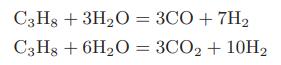
Redo Problem 13.10 using Aspen Plus.Problem 13.10Hydrogen gas can be produced by the following reactions between propane and steam in the presence of a nickel catalyst:a. Compute the standard heat of reaction and the standard-state Gibbs energy change on reaction for each of the reactions at 1000
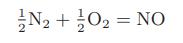
Redo Problem 13.5 using Aspen Plus.Problem 13.5The production of NO by the direct oxidation of nitrogen,occurs naturally in internal combustion engines. This reaction is also used to commercially produce nitric oxide in electric arcs in the Berkeland-Eyde process. If air is used as the feed,
Redo Problem 13.3 using Aspen Plus.Problem 13.3Carbon dioxide can react with graphite to form carbon monoxide, and the carbon monoxide formed can further react to form carbon and oxygen: Determine the equilibrium composition when pure carbon dioxide is passed over a hot carbon bed maintained at 1
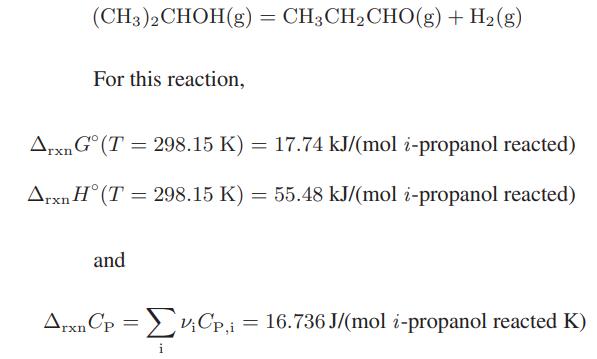
Redo Problem 13.1 using Aspen Plus.Problem 13.1Isopropyl alcohol is to be dehydrogenated in the gas phase to form propionaldehyde according to the reaction Compute the equilibrium fraction of isopropyl alcohol that would be dehydrogenated at 500 K and 1.013 bar. (CH3)2CHOH(g) = CH3CH₂CHO(g) +
Adenosine monophosphate (AMPH) is a nucleotide that is present as a monomer in DNA and RNA. It consists of a phosphate group, a ribose molecule and an adenine molecule. Consequently, it can be found in three different ionic forms in aqueous solution (AMPH32+, AMPH2+ and AMP−) plus its neutral
Starting with an equimolar mixture of acetaldehyde and NAD+ at 25°C, calculate and plot the extent of the following reaction as a function of pH. Also determine the pH at which half the acetaldehyde will have reacted at equilibrium.For this reaction at solution conditions, the apparent Gibbs
Starting with an equimolar mixture of methanol and NAD+ at 25°C, calculate and plot the extent of the following reaction as a function of pH:For this reaction at solution conditions, the apparent Gibbs energy change is ΔrxnG = −15.1 kJ. Also, assume that water is present in great excess, so
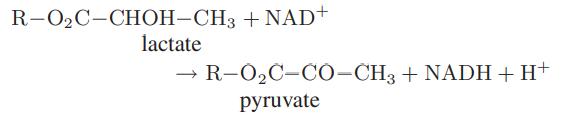
Starting with an equimolar mixture of lactate and NAD+ at 25°C, calculate and plot the extent of the following reaction as a function of pH:where R is a side group. For this reaction at solution conditions, the apparent Gibbs energy change is ΔrxnG = 25.9 kJ. Also determine the pH at which half
Determine the charge on tyrosine as a function of pH. Tyrosine (C9H11NO3), another amino acid in proteins, has two dominant ionizable groups with pKHA values of 2.24 and 9.04 at 25°C (and a third, less easily ionizable group with a pK value of 10.10, which we will neglect here).
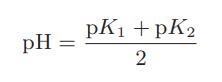
a. Prove that the isoelectric point for an amino acid with two ionization sites is b. Develop an equation for the calculation of the isoelectric point of an amino acid or protein with three ionization sites. pH = pK₁ + pK2 2
L-cystine C6H12N2O4S2 has four ionization states with the following values for its ionization constants:Determine the charge on L-cystine as a function of pH. pK₁ = 1.0 pK₂ = 2.1 and pK3 = 8.71 pK3 = 8.02
Oxaloacetic acid C4H4O5 has the following values for its ionization constants:Determine the charge on oxaloacetic acid as a function of pH. pK₁ = 2.55 pK₂ = 4.37 and and pK3 pK3 13.03 =
Oxalic acid C2H2O4 is a dibasic acid with the following values for its ionization constants:Determine the charge on oxalic acid as a function of pH. pK₁ = 1.2 and pK₂ = 4.2
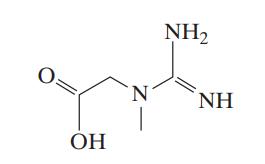
Creatine C4H9N3O2 has been used by body builders and athletes to increase muscle mass and strength. Its chemical structure (not showing all of its carbon atoms and attached hydrogens) isThe following values are known for its dissociation constants: a. Determine the charge on this amino acid as a
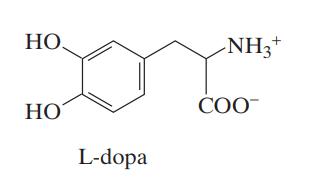
The compound levodopa C9H11NO4 (usually referred to a L-dopa) is used in the treatment of Parkinson’s disease. The chemical structure (not showing its carbon atoms and attached hydrogens) isThe following values are known for its equilibrium constants for the release of hydrogen ions: pK1 = 2.20
The following values are known for the amino acid serine C3H7NO2S:Determine the charge on this amino acid as a function of pH. How does your result compare with the reported isoelectric point (pI) for cysteine of 5.68? pK₁ = 2.21 and pK₂ = 9.15
Derive the equation that replaces Eq. 13.6-3 for a protein that has six ionizable sites. Macid = MH₂A + MHA- + MA²_ = MH₂A + K₁ MH₂A 1+ [₁ = K₁ MH+ + K₂ (MH+)²] . MH₂A. K₁ MH₂A K₁ K₂ + MH+ (MH+)² . (13.6-3)
An equimolar mixture of methanol and acetic acid react in the liquid phase at 150°C and 5 bar to form methyl acetate and water. Determine the equilibrium composition at these conditions. (Assume the mixture can be described by the NRTL model with Aspen Plus default parameters.)
An equimolar mixture of ethylene and hydrogen chloride react in the gas phase at 150°C and 10 bar to form ethyl chloride. Determine the equilibrium composition at these conditions.
Photosynthesis to produce sucrose C12H22O11 can be considered to occur by the following reactionHow much Gibbs free energy at 25°C must be obtained from sunlight for each mole of sucrose produced? 6CO2 +11H₂O → C12H22011 +602
Another way to reduce the amount of nitric oxide is exhaust gasses is to inject ammonia resulting in the following reaction Determine the equilibrium conversion of nitric oxide at 1000°C and 1 bar by this reaction assuming a stoichiometric amount of each component.Is the reaction endothermic or
A way to reduce the amount of nitric oxide from the exhaust of diesel automobile engines is to inject urea resulting in the following reaction Determine the equilibrium conversion of nitric oxide at 100°C and 5 bar by this reaction assuming a stoichiometric amount of each component. Is the
For the reaction in Problem 13.69, at 5 bar determine the equilibrium temperature for 95% conversion of coal by this reaction. Is the reaction endothermic or exothermic at this temperature?Problem 13.69,Consider the following reaction for producing hydrogen starting from coal (carbon) at 1
Consider the following reaction for producing hydrogen starting from coal (carbon) at 1 bar Determine the equilibrium conversion of coal at 750 K and 5 bar. Is the reaction endothermic or exothermic at 750 K? C+H,O → H2+CO
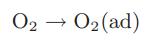
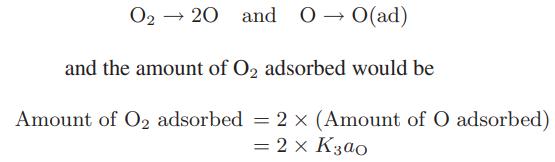
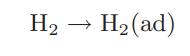
It is possible that oxygen and other gases dissociate when adsorbed on a solid surface, and in catalysis it is important to know whether such a dissociation occurs. If oxygen did not dissociate, that is, the adsorption process wasthe amount of oxygen adsorbed would be given by where aH2 is the
At an appropriate temperature, a larger alkane will “crack” to former a smaller alkane and an olefin. One example is the cracking of propane to form methane and ethylene a. Calculate the equilibrium compositions that would result at 298.15 K and a total pressure of 1 bar by starting with pure
The following equilibrium constants have been found experimentally when CO2 is in contact with waterCompute the pH of water at each of the CO2 concentrations in air. CO₂ (gas) → CO₂ (dissolved) with 1 KH = 29.76 atm - liter mol CO₂ + H₂O → H₂CO3 Kh H₂CO3→ HCO3 + H+ Και = 1
It has been suggested that as the carbon dioxide concentration in the atmosphere increases, the ocean surface water will become more acidic, which will have a serious effect on fish and coral. The proposed mechanics of the acidification is where H is the Henry’s constant for carbon dioxide in
Ammonia, air and water is to be converted to a nitric acid solution. Ammonia is available as a liquid at 25°C and its saturation pressure, air and water (as a liquid) are available at 1.013 bar and the same temperature. The nitric acid solution produced is to be 60 wt % HNO3 also at 25°C and
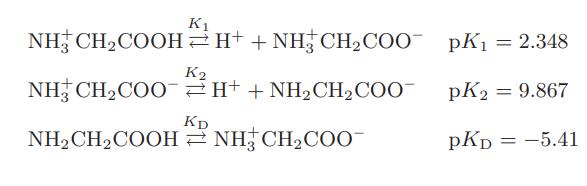
The amino acid dl-alanine HCOO-CNH2H-CH3 exists in the following four forms in solutionDetermine the fraction of dl-alanine in each of these forms at a. pH = 3 b. pH = 10 K₁ NH CH₂COOH H+ + NHCH₂COO- NH CH,COO` =H*+NH,CH,COO KD NH₂ CH₂COOH NH3 CH₂COO- K2 pK₁ = 2.348 pK2 =
Redo Illustration 13.5-2 including the ionization of water and including the effect of solution nonidealities.Illustration 13.5-2A common analytical procedure is titration, in which a solution of a strong base is quantitatively added to an acidic solution (or a strong acid added to a basic
Derive the equation that replaces Eq. 13.5-16 if the thermodynamic equilibrium constant (rather than the apparent equilibrium constant) is used and electrolyte solution nonideality is included. MH+ = aMHA,0 - MBOH -(KHA+MBOH) + (KHA - MBOH)2 + 4KHA MHAO (13.5-16) 2
Derive the equation that replaces Eq. 13.5-16 for the case of a weak base and a strong acid. MH+ = aMHA,0 – MBOH -(KHA +MBOH)+ √(KHA - MBOH)² +4KHA MHA,O (13.5-16) 2 .
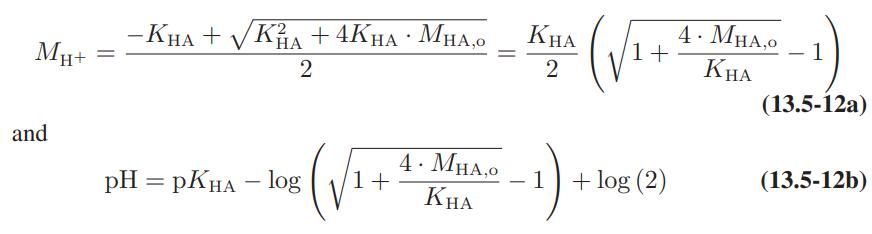
Derive the equations that replace Eqs. 13.5-12a and b if the thermodynamic equilibrium constant (rather than the apparent equilibrium constant) is used and electrolyte solution nonideality is included. My+ and = . -KHA + V KA + 4KHA · MHA, KHA HA 2 2 pH = PKHA - log να 1+ = 4·
Derive the equation that replaces Eq. 13.5-11 if the thermodynamic equilibrium constant (rather than the apparent equilibrium constant) is used and electrolyte solution nonideality is included. pH = 1/ PKHA /log (MHA,O) (13.5-11)
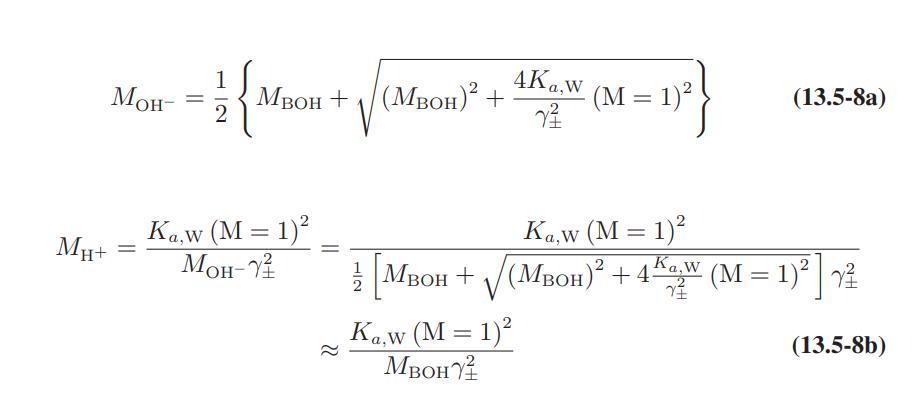
Derive Eqs. 13.5-8a and b. Мон- MH+ = = 1 {{ MBOH + (MBOH)² + Ka,w (M = 1)² MOH-7² 22 W 4Ka,w Y² (M = 1)² Kaw (M = 1)² MBOHY (13.5-8a) Ka,w (M = 1)² Ka, [MBON + √(MBOH)² + 4%, (M = 1)² ] ² Y (13.5-8b)
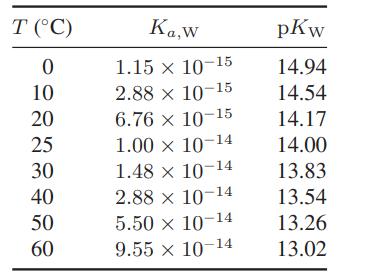
Using the values for the equilibrium constant for the ionization of water in Table 13.5-1, estimate the standard-state heat of ionization of water as a function of temperature. Also, determine the pH of water at each of the temperatures in this table.Table 13.5-1 T
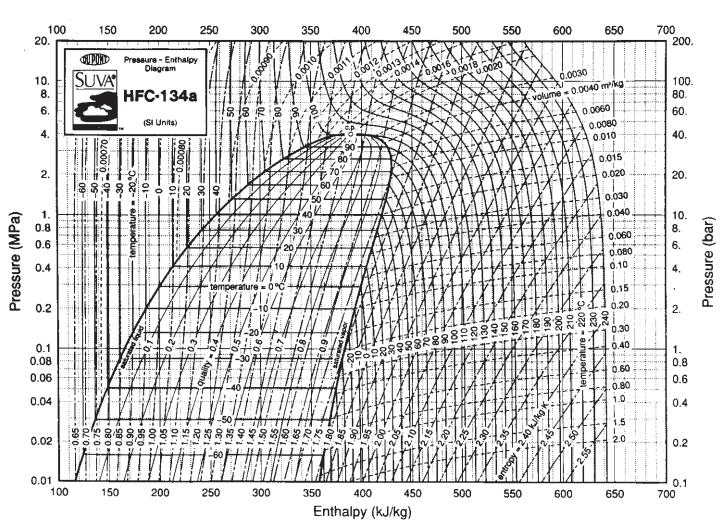
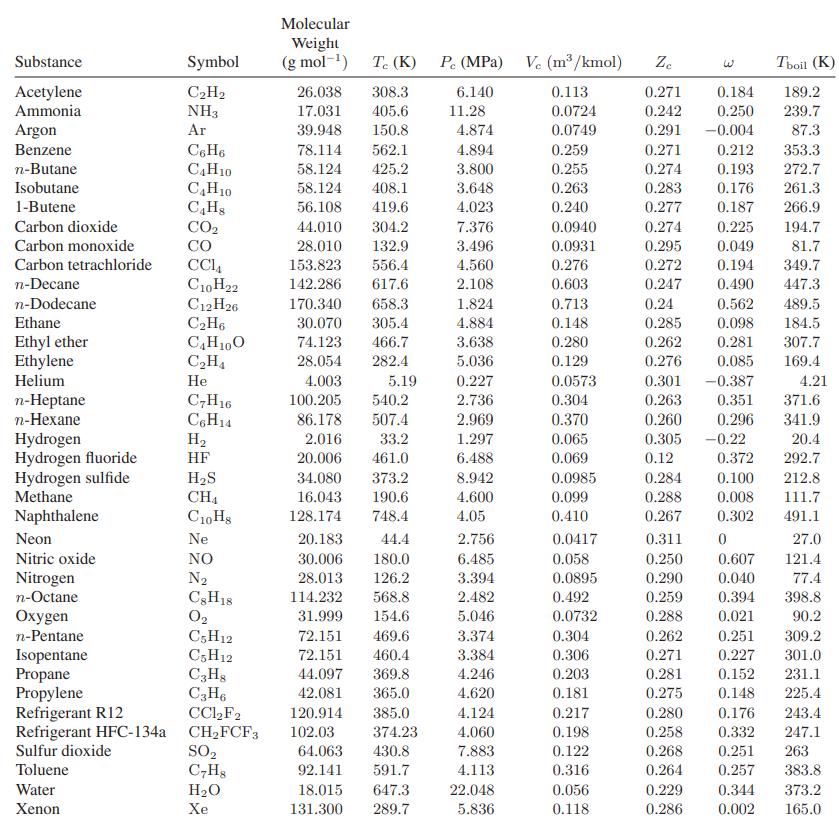
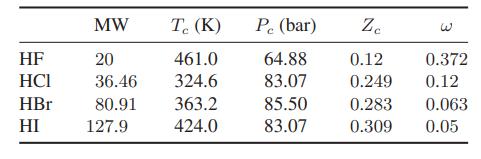
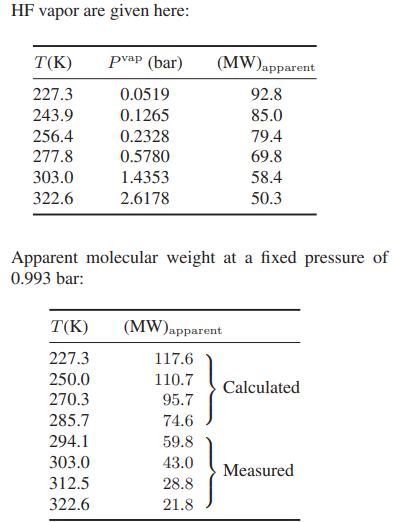
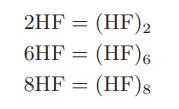
The behavior of hydrogen fluoride is unusual! For example, here are the critical properties of various hydrogen halides: has the lowest reported critical compressibility of any species. Experimental data for the vapor pressure and the apparent molecular weight of saturated In each case the
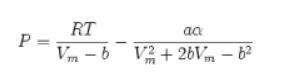
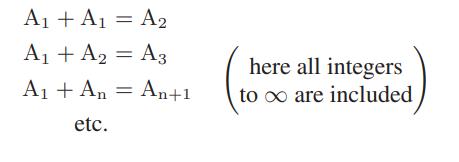
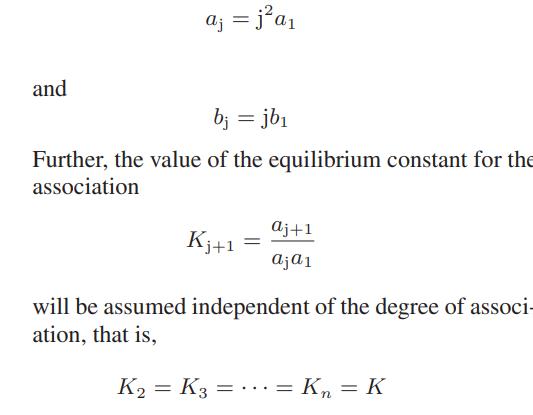
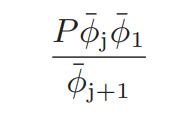
The description of components that associate or hydrogen-bond is difficult. An alternative model to the one considered in the previous problem is the continuous association model, in which Assume that this associating fluid is described by the van der Waals equation, and in the equation-of-state
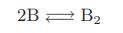
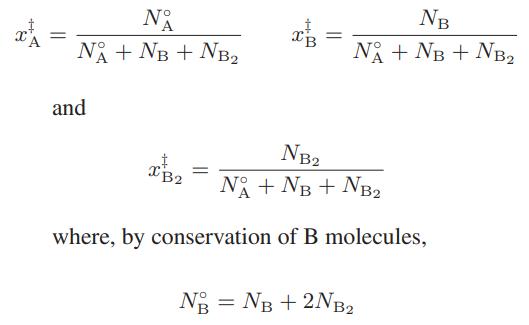
Assume two species can associate in the vapor phase according to the reactionsUsing the notation that G̅A and G̅B are the partial molar Gibbs energies of the total species A and B (in all its forms, unassociated and associated), prove thatwhere G̅A1 and G̅B1 are the partial molar Gibbs energies
At low temperatures mixtures of water and methane can form a hydrate, that is, a solid containing trapped methane. Hydrates have both positive and negative features. For example, they are potentially a very large source of underground trapped methane in the Arctic and Antarctic regions that could
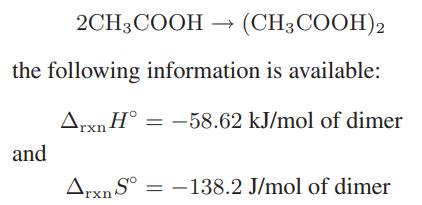
Very polar molecules may associate in the gas phase. One example is acetic acid, which, because of its structure, can form dimers but not higher polymers. For the reaction These values are for the ideal gas, 1 bar standard state, and can be assumed to be independent of temperature. a. Compute the
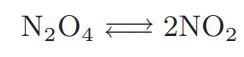
The chemical reaction for the dissociation of nitrogen tetroxide is N2O4(g) → 2NO2(g)The reported standard-state Gibbs energy change for this reaction over a limited temperature range isfor the pure component, ideal gas at 1 bar standard state and T in kelvins. a. What is the standard-state
While ethanol can be made by biological fermentation, for large-scale production the following nonbiological reaction starting with ethylene and water can be used instead: If stoichiometric amounts of ethylene and water are used, compute the equilibrium constant and the equilibrium extent of
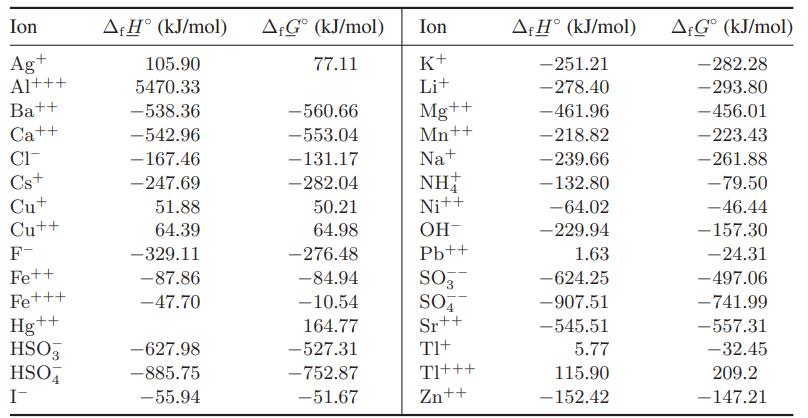
a. Use the data in Table 13.1-4 and the information that ΔfG°AgCl = −108.7 kJ/mol to predict the solubility product K°AgCl of silver chloride in water, and compare your predictions with the data given in Illustration 13.3-2. b. Use the data in Table 13.1-4 and the information that ΔfG°TlCl
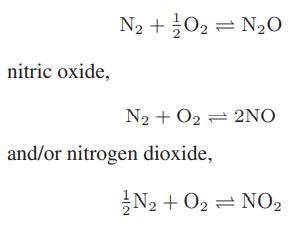
At high temperatures—for example, in a combustion process—nitrogen and oxygen in air can react to form nitrous oxide, Starting with air (79 mol % nitrogen and 21 mol % oxygen), compute the equilibrium concentrations of all the oxides of nitrogen at atmospheric pressure over the temperature
The dissociation of hydrogen selenide gas to produce pure selenium may be approximated as occurring by the reaction for which ΔrxnG = 89.38 − 0.0879T in kJ and T in K. Over the temperature range of 1000 to 1250 K, compute the equilibrium number of moles of Se2 that will be formed for each mole
a. One mole of calcium carbonate is placed in an evacuated 10-liter cylinder and heated to 1150 K. Compute the extent of dissociation of calcium carbonate to calcium oxide and the pressure in the cylinder as a function of temperature. The volume of one mole of calcium carbonate is 35 cc, and you
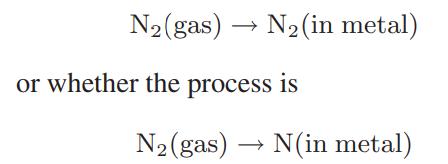
Gases can be (very) slightly soluble in molten metals. For example, the solubility of nitrogen in liquid iron is well correlated by the empirical expression One question that arises is whether the gas dissociates on the dissolution, that is, whether the dissolution process is Use the equilibrium
The proteolytic enzyme α-chymotrypsin is known to dimerize. The following data are available for this reaction at 25°C and pH = 7.8.based on ideal 1 M standard states. a. Determine the values of the equilibrium constant for this reaction over the physiologically important temperature range of 0
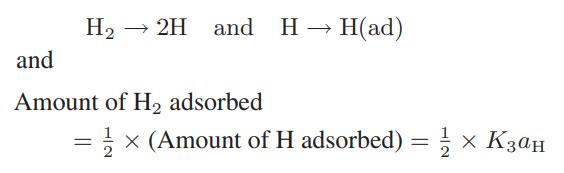
It is possible that hydrogen and other gases dissociate when adsorbed on a solid surface, and in catalysis it is important to know whether such a dissociation occurs. If hydrogen did not dissociate, that is, the adsorption process wasthe amount of hydrogen adsorbed would be given by Amount of H2
At an appropriate temperature, a larger alkane will “crack” to form a smaller alkane and an olefin. One example is the cracking of propane to form methane and ethylene: a. Calculate the equilibrium compositions that would result at 298.15 K and a total pressure of 1 bar by starting with pure
Formaldehyde is an important industrial solvent and also a raw material in chemical manufacture. At elevated temperatures, it dissociates into ammonia and carbon monoxide in the following gas-phase reaction: a. Compute the equilibrium constant for this reaction over the temperature range of 400 to
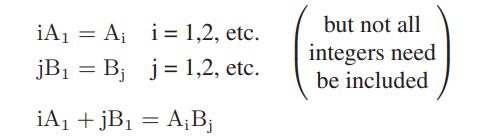
Consider a closed vessel in which selenium is in equilibrium with its vapor. Selenium, in the vapor phase, polymerizes to Sei species where i = 1, 2, 3, 5, 7, 8. a. At any temperature above the melting point of selenium, compute the degrees of freedom in the system. Note that the vapor-phase
Liquid benzene can be catalytically hydrogenated, with cyclohexene, cyclohexane, and 1,3-cyclohexadiene being among the products. Determine the product distribution as a function of the hydrogen partial pressure of 1 bar at 298.15 K. Assume that the vapor phase contains only hydrogen, and that its
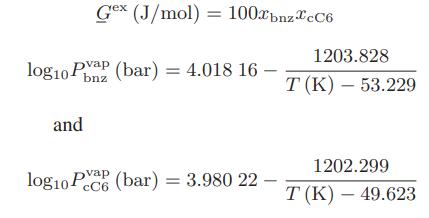
The liquid in a two-phase, binary mixture of benzene and cyclohexane has a composition of 20 mol % of benzene and 80 mol % of cyclohexane at T = 80°C. a. Find the pressure of the system and the composition of the vapor phase. b. The vapor is removed, heated isobarically to 550 K, and passed
A process is being developed to produce high-purity titanium. As part of the proposed process, titanium will be kept in a quartz (silicon dioxide) crucible at 1273 K. A chemical engineer working on the process is concerned that the titanium could reduce the silicon dioxide, producing titanium
A gas mixture containing equimolar quantities of carbon dioxide and hydrogen is to be “reformed” by passing it over a catalyst. The pressure in the reformer will be determined by the possibility of solid carbon deposition. Although a large number of reactions are possible, only the following
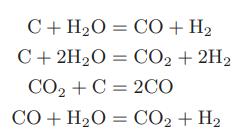
Carbon is deposited on a catalytic reactor bed as a result of the cracking of hydrocarbons. Periodically, hydrogen gas is passed through the reactor in an effort to remove the carbon and to preserve the reduced state of the catalyst. It has been found, by experiment, that the effluent gas contains
The calcination of sodium bicarbonate takes place according to the reaction When this reaction was run in the laboratory by placing sodium bicarbonate in an initially evacuated cylinder, it was observed that the equilibrium total pressure was 0.826 kPa at 30°C and 166.97 kPa at 110°C. The heat
When pure hydrogen iodide gas enters an evacuated cylinder, the following reactions may occur: (Note that since Gibbs energies of formation data are available for iodine in both the gaseous and solid phases, it is more convenient to think of the solid-vapor iodine phase equilibrium as a chemical
Methane gas hydrates are formed from liquid water by the following reaction: a. Calculate the Gibbs energy of formation of the hydrate at 278 K and 283 K using the information that the methane partial pressure in equilibrium with the hydrate at 278 K is 4.2 MPa and at 283 K is 6.8 MPa. b. One
Consider a gaseous mixture containing the three isomers n-pentane (1), iso-pentane (2), and neo-pentane (3). These species may interconvert by reaction. a. Determine the number of independent chemical reactions and the number of degrees of freedom for this system. b. Calculate the equilibrium
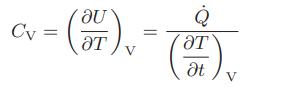
If 1 mole of a gas in a constant-volume system is heated, and both the heat flow and the gas temperature are measured as a function of time, the constant volume heat capacity can be computed from This equation can also be used to calculate the effective heat capacity CV,eff of a gas that is
Styrene can be hydrogenated to ethyl benzene at moderate conditions in both the liquid phase and the gas phase. Calculate the equilibrium compositions in the vapor and liquid phases of hydrogen, styrene, and ethyl benzene at each of the following conditions:a. 3-bar pressure and 25°C, with a
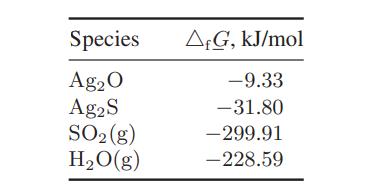
Silver, when exposed to air, tarnishes. The following reactions have been proposed for this tarnishing: The following data are available: Air can be assumed to contain 0.5 ppm H2, 0.03 ppm (80 mg/m3) SO2, and 0.1 H2S mg/m3 and water at a partial pressure of 2.0 kPa. Which of these reactions are
By catalytic dehydrogenation, 1-butene can be produced from n-butane,C4H10 = C4H8 + H2However, 1-butene may also be dehydrogenated to form 1,3-butadiene,C4H8 = C4H6 + H2Compute the equilibrium conversion of n-butane to 1-butene and 1,3-butadiene at 1 bar and a. 900 K b. 1000 K
As part of the process of glycogen breakdown and utilization in muscles, glucose 1-phosphate is converted to glucose 6-phosphate (that is, the phosphate group on a glucose molecule moves from the carbon 1 atom to the carbon 6 atom) as a result of the action of the enzyme phosphoglumutase. An in
When propane is heated to high temperatures, it pyrolyzes or decomposes. Assume that the only reactions that occur are and that these reactions take place in the gas phase. a. Calculate the composition of the equilibrium mixture of propane and its pyrolysis products at a pressure of 1 bar and
Acetaldehyde is produced from ethanol by the following gas-phase reactions: The reactions are carried out at 540°C and 1 bar pressure using a silver gauze catalyst and air as an oxidant. If 50% excess air [sufficient air that 50 percent more oxygen is present than is needed for all the ethanol to
Polar molecules interact more strongly at large distances than do nonpolar molecules, and generally form nonideal solutions. One model for solution nonidealities in a binary mixture consisting of a nonpolar species, which we denote by A, and a polar substance, designated by the symbol B, is based
Ethylene dichloride is produced by the direct chlorination of ethylene using small amounts of ethylene dibromide as a catalyst: If stoichiometric amounts of ethylene and chlorine are used, and the reaction is carried out at 50°C and 1 bar, what is the equilibrium conversion of ethylene? The
An important step in the manufacture of sulfuric acid is the gas-phase oxidation reactionCompute the equilibrium conversion of sulfur dioxide to sulfur trioxide over the temperature range of 0 to 1400°C for a reactant mixture consisting of initially pure sulfur dioxide and a stoichiometric amount
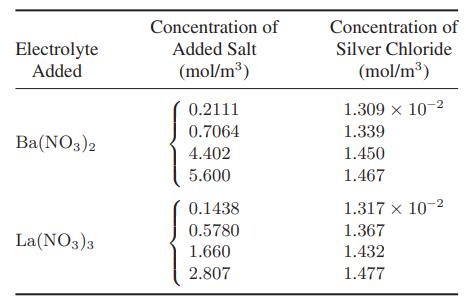
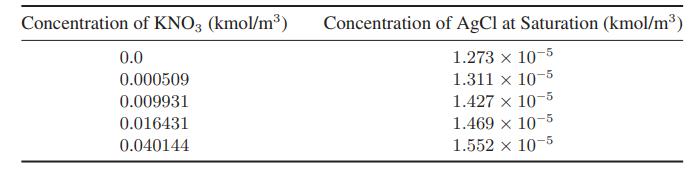
The data in the following table give the solubility of silver chloride in various aqueous solutions at 25°C. Show that these data can be plotted on the same ln Ks versus √I curve as used in Illustration 13.2-3.Illustration 13.2-3.Calculation of the Solubility Product from Solubility Data The
Carbon disulfide is produced from the high-temperature reaction of carbon and sulfur:C(s) + S2(g) = CS2(g)This reaction is carried out in a retort at low pressure, and in the absence of oxygen and other species that may react with either the carbon or the sulfur. Compute the equilibrium percentage
Crystalline sodium sulfate, in the presence of water vapor, may form a decahydrate, Na2SO4(s) + 10H2O(g) = Na2SO4·10H2O(s) a. Estimate the minimum partial pressure of water at which the decahydrate will form at 25°C. b. Make a rough estimate of the minimum water partial pressure for
The extent of reaction generally depends on pressure as well as temperature. For the reaction (or phase transition) the standard-state Gibbs energy change at 25°C is 2866 J/mol. The density of graphite is 2.25 g/cc and that of diamond is approximately 3.51 g/cc; both solids may be considered to
Carbon dioxide can react with graphite to form carbon monoxide, and the carbon monoxide formed can further react to form carbon and oxygen: Determine the equilibrium composition when pure carbon dioxide is passed over a hot carbon bed maintained at 1 bar and (a) 2000 K or (b) 1000 K.
Isopropyl alcohol is to be dehydrogenated in the gas phase to form propionaldehyde according to the reaction Compute the equilibrium fraction of isopropyl alcohol that would be dehydrogenated at 500 K and 1.013 bar. (CH3)2CHOH(g) = CH3 CH₂CHO(g) + H₂(g) For this reaction, Arxn Gᵒ (T = 298.15
Ionic liquids are salts with melting temperatures that are sufficiently low that they are liquids at or near room temperature. They consist of a larger cation and a smaller anion, for example, 1-methyl-3- butylimidazolium octyl sulfate [BMIN][OctS], and it is because of their size and complex
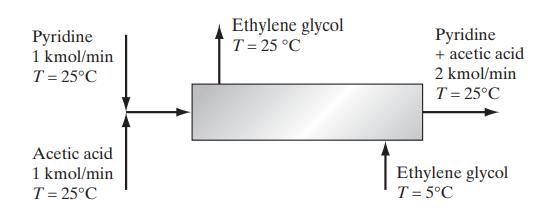
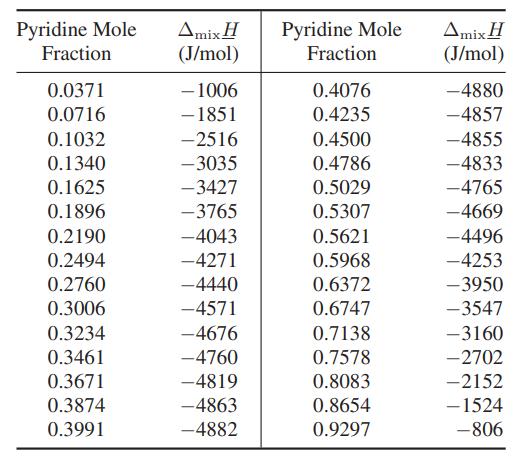
Use the data in problem 8.29 to compute the partial molar enthalpies of pyridine and acetic acid in their mixtures at 25°C over the whole composition range.Problem 8.29Two streams containing pyridine and acetic acid at 25°C are mixed and fed into a heat exchanger. Due to the heat-of-mixing
Show that if the polymer fiber of Problem 6.26 is to be thermodynamically stable at all temperatures, the parameters α, β, and γ must be positive.Problem 6.26Nitrogen is to be isothermally compressed at 0°C from 1 bar to 100 bar. Compute the work required for this compression; the change in
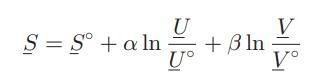
The entropy of a certain fluid has been found to be related to its internal energy and volume in the following way: where S°, U°, and V° are, respectively, the molar entropy, internal energy, and volume of the fluid for some appropriately chosen reference state, and α and β are positive
The heat of fusion ΔfusĤ for the ice-water phase transition is 335 kJ/kg at 0°C and 1 bar. The density of water is 1000 kg/m3 at these conditions, and that of ice is 915 kg/m3. Develop an expression for the change of the melting temperature of ice with pressure.b. The heat of vaporization for
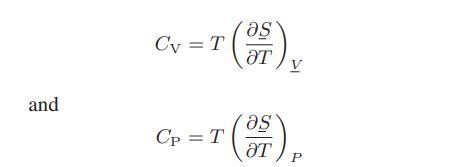
From Eqs. 6.2-18 and 6.2-20, we have the following as definitions of the heat capacities at constant volume and constant pressure:More generally, we can define a heat capacity subject to some other constraint X by One such heat capacity of special interest is CLV, the heat capacity along the
Redo Illustration 7.5-2 using the Soave–RedlichKwong equation of state.Illustration 7.5-2Complete the calculated thermodynamic properties chart for oxygen by considering temperatures between −100°C and −200°C.
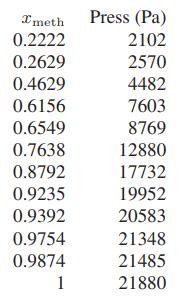
The sublimation pressure of carbon dioxide as a function of temperature is and the molar volume of CO2 is 2.8 × 10⁻⁵ m3/mol. a. Determine the heat of sublimation of CO2 at 190 K. b. Estimate the fugacity of solid CO2 at 190 K and 200 bar. T (K) P
Use the Analysis>Pure tool in Aspen Plus with the Peng-Robinson equation of state to compute the vapor pressures of the refrigerants R12 (dichlorodifluoromethane, or Freon 12), R124 (1-chloro-1,2,2,2,-tetrafluoroethane), and R134a (1,1,1,2-tetrafluoroethane) over the temperature range of 0 to
Redo Problem 6.32 using Aspen PlusProblem 6.32Repeat the calculations of Problem 6.13 if the mechanical efficiency of the adiabatic turbine is only 85 percent.Problem 6.13Eighteen kilograms of the refrigerant HFC-134a at 150°C is contained in a 0.03-m3 tank. Compare the prediction you can make for
Redo Problem 6.31 using Aspen PlusProblem 6.31Steam is continuously expanded from a pressure of 25 bar and 300°C to 1 bar through a Joule-Thomson expansion valve. Calculate the final temperature and the entropy generated per kilogram of steam using a. The ideal gas law b. The van der Waals
Showing 100 - 200
of 619
1
2
3
4
5
6
7
Step by Step Answers

 Get 50% OFF
Claim Now
Get 50% OFF
Claim Now













![Macid = MHA + MHA- + MA_ = MHA + K MHA 1+ [ = K MH+ + K (MH+)] . MHA. K MHA K K + MH+ (MH+) . (13.6-3)](https://dsd5zvtm8ll6.cloudfront.net/images/question_images/1700/2/2/1/940655753f45f5771700221935928.jpg)






![CO (gas) CO (dissolved) with 1 KH = 29.76 atm - liter mol CO + HO HCO3 Kh HCO3 HCO3 + H+ = 1 [CO2] Pco2 KH](https://dsd5zvtm8ll6.cloudfront.net/images/question_images/1700/2/1/7/8966557442868c021700217893124.jpg)
![CO2(g) CO,(1) CO (1) + HO HCO3 HCO3 HCO3 + H+ [CO]H = Pco K = [HCO3] [CO2] [HCO][H+] [HCO3] K2 =](https://dsd5zvtm8ll6.cloudfront.net/images/question_images/1700/2/1/7/820655743dcc5ce31700217817668.jpg)





















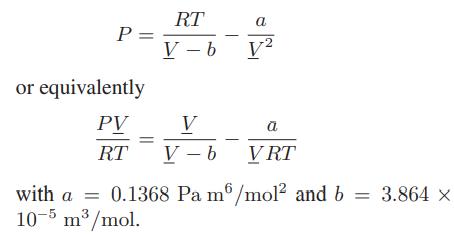
![as 'U C),-), ),-), [C).] = T V V V U V = Cv|T (6.2-18)](https://dsd5zvtm8ll6.cloudfront.net/images/question_images/1700/0/4/0/09265548d9c4aa281700040090435.jpg)