New Semester
Started
Get
50% OFF
Study Help!
--h --m --s
Claim Now
Question Answers
Textbooks
Find textbooks, questions and answers
Oops, something went wrong!
Change your search query and then try again
S
Books
FREE
Study Help
Expert Questions
Accounting
General Management
Mathematics
Finance
Organizational Behaviour
Law
Physics
Operating System
Management Leadership
Sociology
Programming
Marketing
Database
Computer Network
Economics
Textbooks Solutions
Accounting
Managerial Accounting
Management Leadership
Cost Accounting
Statistics
Business Law
Corporate Finance
Finance
Economics
Auditing
Tutors
Online Tutors
Find a Tutor
Hire a Tutor
Become a Tutor
AI Tutor
AI Study Planner
NEW
Sell Books
Search
Search
Sign In
Register
study help
mathematics
precalculus
Thomas Calculus Early Transcendentals 13th Edition Joel R Hass, Christopher E Heil, Maurice D Weir - Solutions
Verify that the infinite series diverges. 18 n= n³+1 n³ + n²
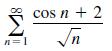
Use the Direct Comparison Test to determine the convergence or divergence of the series. 18 n=1 cos n + 2 √n
Verify that the infinite series diverges. 18 n=1 4 + 3 4"+1
Use the Direct Comparison Test to determine the convergence or divergence of the series. 18 n=1 sin² n n³
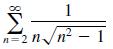
Confirm that the Integral Test can be applied to the series. Then use the Integral Test to determine the convergence or divergence of the series. 18 1 n=2 n√Inn
Simplify the ratio of factorials. (n + 1)! (n − 1)!
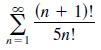
Verify that the infinite series diverges. 18 n=1 (n + 1)! 5n!
Confirm that the Integral Test can be applied to the series. Then use the Integral Test to determine the convergence or divergence of the series. 18 n+ 2 n=₁n+1
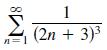
Confirm that the Integral Test can be applied to the series. Then use the Integral Test to determine the convergence or divergence of the series. 18 A= 1 (2n + 3)³
Verify that the infinite series converges. 18 n=0 ol n
Simplify the ratio of factorials. (3n + 1)! (3n)!
Confirm that the Integral Test can be applied to the series. Then use the Integral Test to determine the convergence or divergence of the series. 18 n=1 An 2n² + 1
Simplify the ratio of factorials. (4n+ 1)! (4n + 3)!
Confirm that the Integral Test can be applied to the series. Then use the Integral Test to determine the convergence or divergence of the series. 18 n=1 n nt +1
Confirm that the Integral Test can be applied to the series. Then use the Integral Test to determine the convergence or divergence of the series. 18 n=1 1 3√/n +9
Verify that the infinite series converges. со ₂² (-¹)" n=1
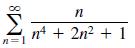
Confirm that the Integral Test can be applied to the series. Then use the Integral Test to determine the convergence or divergence of the series. 8 n n² + 2n² + 1
Verify that the infinite series converges. 00 Σ (0.9) = 1 + 0.9 + 0.81 + 0.729 + · n=0
Verify that the infinite series converges. 00 n=0 (-0.2) 10.2 +0.04 - = 0.008 +
Find the limit of the sequence with the given nth term. n² 2 + 9 = "D
Find the limit of the sequence with the given nth term. a 'n || n+1 n
Verify that the infinite series converges. 18 n=1 1 n(n+1)
Use the Limit Comparison Test to determine the convergence or divergence of the series. 00 n=1 sin n
Use the Integral Test to determine the convergence or divergence of the p-series. 18 n=1 1 nº.9
Find the sum of the convergent series. 18 -)} n=0 -110 n
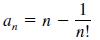
Determine the convergence or divergence of the sequence with the given nth term. If the sequence converges, find its limit. an = n 1 n!
Use the Integral Test to determine the convergence or divergence of the p-series. 18 "=1 1 1.001
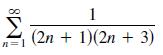
Find the sum of the convergent series. n=1 1 (2n + 1)(2n + 3)
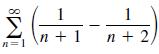
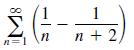
Test for convergence or divergence, using each test at least once. Identify which test was used.(a) nth-Term Test(b) Geometric Series Test(c) p-Series Test(d) Telescoping Series Test(e) Integral Test(f) Direct Comparison Test(g) Limit Comparison Test n=1 1 1 n+1 n + 2/
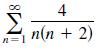
Find the sum of the convergent series. 18 n=1 4 n(n + 2)
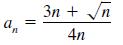
Determine the convergence or divergence of the sequence with the given nth term. If the sequence converges, find its limit. a an 3n + n 4n
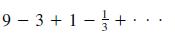
Find the sum of the convergent series. 9-3+1+...
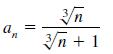
Determine the convergence or divergence of the sequence with the given nth term. If the sequence converges, find its limit. n an √√n +1
Find the sum of the convergent series. 8 + 6 +++
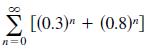
Find the sum of the convergent series. Σ [(0.3)" + (0.8)"] n=0
Determine the convergence or divergence of the sequence with the given nth term. If the sequence converges, find its limit. an
Find the sum of the convergent series. 18 n=0 2n 1 3n
Determine the convergence or divergence of the sequence with the given nth term. If the sequence converges, find its limit. a In(n³) 2n
Find the sum of the convergent series. 18 n=1 (sin 1)"
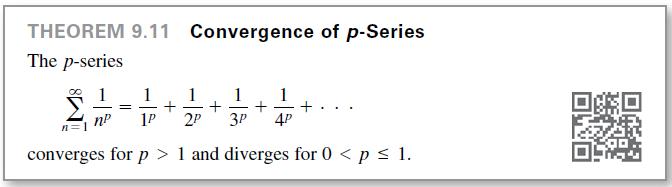
Use Theorem 9.11 to determine the convergence or divergence of the p-series. THEOREM 9.11 Convergence of p-Series The p-series 1 1 1 1 = + + + + np 1P 2P 3P 4P converges for p > 1 and diverges for 0 < p ≤ 1.
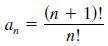
Determine the convergence or divergence of the sequence with the given nth term. If the sequence converges, find its limit. an (n + 1)! n
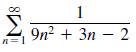
Find the sum of the convergent series. M8 A= 1 9n² + 3n - 2
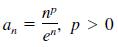
Determine the convergence or divergence of the sequence with the given nth term. If the sequence converges, find its limit. a n || nP en P >0
Determine the convergence or divergence of the sequence with the given nth term. If the sequence converges, find its limit. an = n sin 1 n
Determine the convergence or divergence of the sequence with the given nth term. If the sequence converges, find its limit. an = 2¹/n
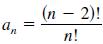
Determine the convergence or divergence of the sequence with the given nth term. If the sequence converges, find its limit. an (n − 2)! n!
Determine the convergence or divergence of the series. 200 + + 208 216 224 + +
Determine the convergence or divergence of the sequence with the given nth term. If the sequence converges, find its limit. a 'n -3-"
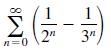
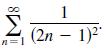
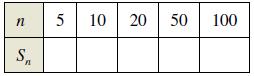
Consider the series (a) Verify that the series converges.(b) Use a graphing utility to complete the table.(c) The sum of the series is (π2/6) - (5/4). Find the sum of the series(d) Use a graphing utility to find the sum of the series 18 n=1 1 (2n-1)²¹
Determine the convergence or divergence of the series. 18 n=0 (1.075)"
Determine the convergence or divergence of the series. 200 400 600 800 +
Determine the convergence or divergence of the sequence with the given nth term. If the sequence converges, find its limit. 'n cos 2n 3n
Determine the convergence or divergence of the series. H H + + + + 201 208 227 264
Determine the convergence or divergence of the series. 201 + 204 + + + 209 216
Determine the convergence or divergence of the series. 18 (1/ 1 n+ 2,
Determine the convergence or divergence of the series. 18 6 n+ 1 n=on 0
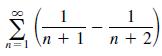
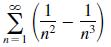
Determine the convergence or divergence of the series. n=1 1 n+ 1 1 n+2)
Determine the convergence or divergence of the series. 18 n=1 4n + 1 3n-1
Determine the convergence or divergence of the series. 18 n= 3n n
Show that the seriesconverges, where xi is one of the numbers 0, 1, 2, . . ., 9. X₁ X2 10 10² X3 103 X4 104 +
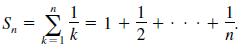
Let(a) Show that ln(n + 1) ≤ Sn ≤ 1 + ln n.(b) Show that the sequence {an} = {Sn - ln n} is bounded.(c) Show that the sequence {an} is decreasing.(d) Show that the sequence {an} converges to a limit ϒ (called Euler’s constant).(e) Approximate ϒ using a100. S – ΣΕ Γ 1++ k 12
Determine the convergence or divergence of the series. 00 7 5n n=0
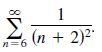
Determine the convergence or divergence of the series. 18 n=2 n In n
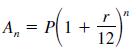
Consider the sequence {An} whose nth term is given bywhere P is the principal, An is the account balance after n months, and r is the interest rate compounded annually.(a) Is {An} a convergent sequence? Explain.(b) Find the first 10 terms of the sequence when P = $10,000 and r = 0.055. = P(1 + 12 )
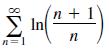
Determine the convergence or divergence of the series. 18 n=1 1 In n
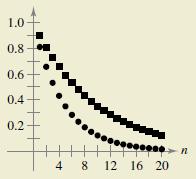
The figure shows the first 20 terms of the series Σcn using squares and the first 20 terms of the series Σdn using circles. If Σdn converges, can you determine anything about the convergence or divergence of Σcn? Explain. 1.0 0.8- 0.6 0.4 0.2 ++ 4 8 12 16 20 程
Determine whether the statement is true or false. If it is false, explain why or give an example that shows it is false. 00 If 0
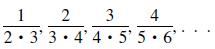
Write an expression for the nth term of the sequence and then determine whether the sequence you have chosen converges or diverges. (There is more than one correct answer.) 1 2 3 2.3'34'4.5'5.6'' 4
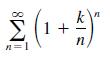
Determine the convergence or divergence of the series. 18 n=1 + k n 江
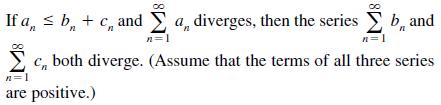
Determine whether the statement is true or false. If it is false, explain why or give an example that shows it is false. ∞o 00 If a ≤ b + c, anda, diverges, then the series b and n=1 n=1 c, both diverge. (Assume that the terms of all three series n=1 are positive.)
Determine the convergence or divergence of the series. 18 n=1 arctan n
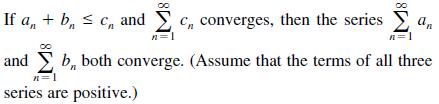
Determine whether the statement is true or false. If it is false, explain why or give an example that shows it is false. 00 If a + b ≤ c, and Σc, converges, then the series Cn n=1 00 an n=1 and b, both converge. (Assume that the terms of all three n=1 series are positive.)
Determine the convergence or divergence of the series. 8 n е
Determine the convergence or divergence of the series. 00 n=1 n+ (" + ¹) n In
Determine the convergence or divergence of the series. 18 A=l 1 3n - 2
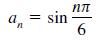
Determine whether the sequence with the given nth term is monotonic and whether it is bounded. Use a graphing utility to confirm your results. an = sin nπ 6
Determine the convergence or divergence of the series. 18 1 n²-1 n=2n√√n²
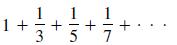
Determine whether the every-other-term harmonic seriesconverges or diverges. 1 + 3 + +
Determine the convergence or divergence of the series. 18 Aul n=1 n
Determine the convergence or divergence of the series. 18 3 n=1 1 20.95
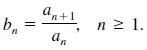
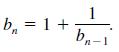
In a study of the progeny of rabbits, Fibonacci (ca. 1170–ca. 1240) encountered the sequence now bearing his name. The sequence is defined recursively as an+2 = an + an+1, where a1 = 1 and a2 = 1.(a) Write the first 12 terms of the sequence.(b) Write the first 10 terms of the sequence defined
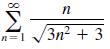
Determine the convergence or divergence of the series. 18 Σ n=1 n /3η2 + 3
Determine the convergence or divergence of the series. 18 0=" (7) 71
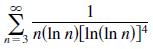
Determine the convergence or divergence of the series. n=3 1 n(In n)[In(In n)]4
Determine the convergence or divergence of the series. 18 1 n=2 n(In n)³
The populations an (in millions) of Zimbabwe from 2000 through 2015 are given below as ordered pairs of the form (n, an), where n represents the year, with n = 0 corresponding to 2000.(0, 11.8), (1, 11.9),(2, 11.9), (3, 11.8),(4, 11.7), (5, 11.6),(6, 11.5), (7, 11.4),(8, 11.4), (9, 11.4),(10,
Determine the convergence or divergence of the series. 18 n=1 -1 n 3 nº
A deposit of $100 is made in an account at the beginning of each month at an annual interest rate of 3% compounded monthly. The balance in the account after n months is An = 100(401)[(1.0025)n - 1].(a) Compute the first six terms of the sequence {An}.(b) Find the balance in the account after 5
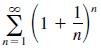
Determine the convergence or divergence of the series. 18 n=1 (1 + 1/1 n n
Determine the convergence or divergence of the series. 18 n=4 In n
Determine whether the statement is true or false. If it is false, explain why or give an example that shows it is false. If lim a 17 n co = 00 0, then a converges. n=1
A company buys a machine for $475,000 that depreciates at a rate of 30% per year. Find a formula for the value of the machine after n years. What is its value after 5 years?
Determine whether the statement is true or false. If it is false, explain why or give an example that shows it is false. If Nll n=1 = an L, then .. a = L + u
Determine whether the statement is true or false. If it is false, explain why or give an example that shows it is false. If |r| < 1, then A=1 arn a 1- -
Determine whether the statement is true or false. If it is false, explain why or give an example that shows it is false. The series =1 n= n 1000(n + 1) diverges.
Determine whether the statement is true or false. If it is false, explain why or give an example that shows it is false.0.75 = 0.749999 . . .
Find equations for the(a) Tangent plane and(b) Normal line at the point P0 on the given surface.cos πx - x2y + exz + yz = 4, P0(0, 1, 2)
Find equations for the(a) Tangent plane and(b) Normal line at the point P0 on the given surface.x2 - xy - y2 - z = 0, P0(1, 1, -1)
(a) Express ∂u/∂x, ∂u/∂y, and ∂u/∂z as functions of x, y, and z both by using the Chain Rule and by expressing u directly in terms of x, y, and z before differentiating. Then (b) Evaluate ∂u/∂x, ∂u/∂y, and ∂u/∂z at the given point (x, y, z). P - q q r r = x + y U = - - p =
Find the derivative of the function at P0 in the direction of u.ƒ(x, y) = 2xy - 3y2, P0(5, 5), u = 4i + 3j
Showing 7100 - 7200
of 29454
First
65
66
67
68
69
70
71
72
73
74
75
76
77
78
79
Last
Step by Step Answers

 Get 50% OFF
Claim Now
Get 50% OFF
Claim Now