New Semester
Started
Get
50% OFF
Study Help!
--h --m --s
Claim Now
Question Answers
Textbooks
Find textbooks, questions and answers
Oops, something went wrong!
Change your search query and then try again
S
Books
FREE
Study Help
Expert Questions
Accounting
General Management
Mathematics
Finance
Organizational Behaviour
Law
Physics
Operating System
Management Leadership
Sociology
Programming
Marketing
Database
Computer Network
Economics
Textbooks Solutions
Accounting
Managerial Accounting
Management Leadership
Cost Accounting
Statistics
Business Law
Corporate Finance
Finance
Economics
Auditing
Tutors
Online Tutors
Find a Tutor
Hire a Tutor
Become a Tutor
AI Tutor
AI Study Planner
NEW
Sell Books
Search
Search
Sign In
Register
study help
mathematics
precalculus
Thomas Calculus Early Transcendentals 13th Edition Joel R Hass, Christopher E Heil, Maurice D Weir - Solutions
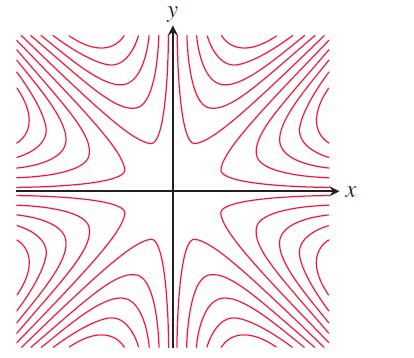
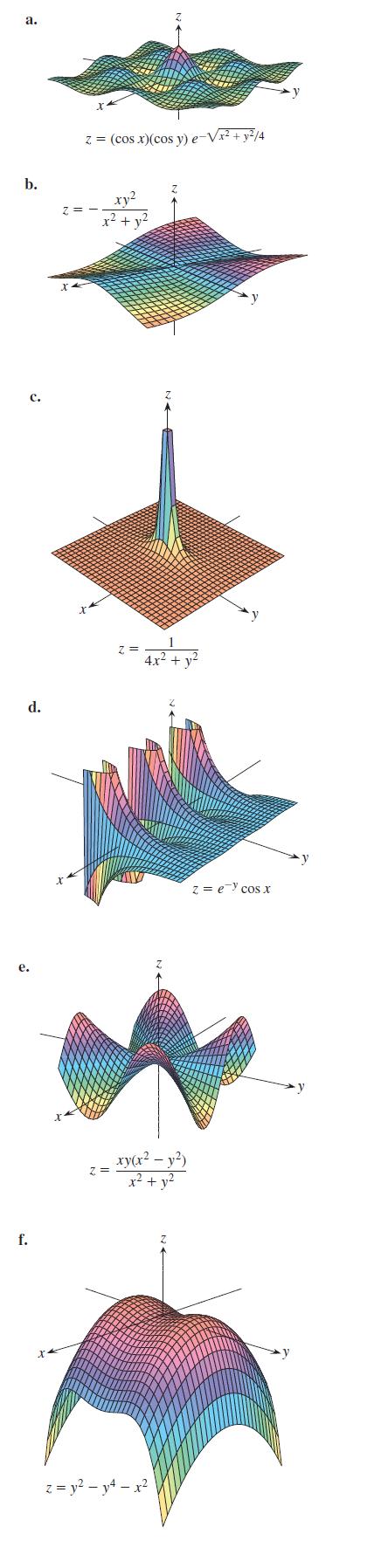
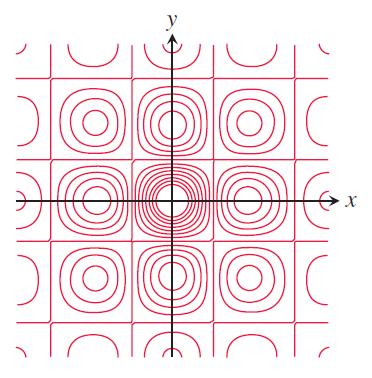
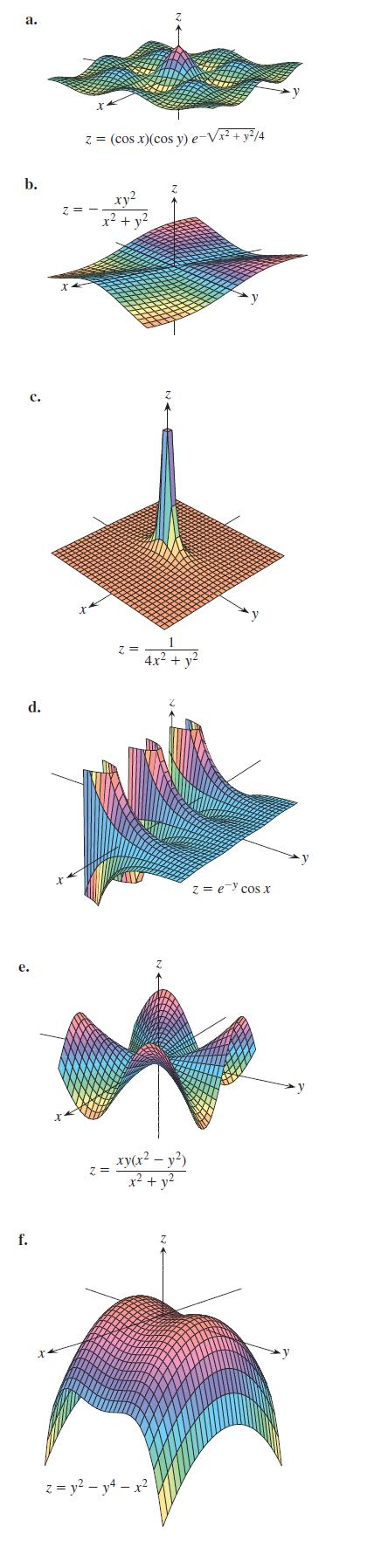
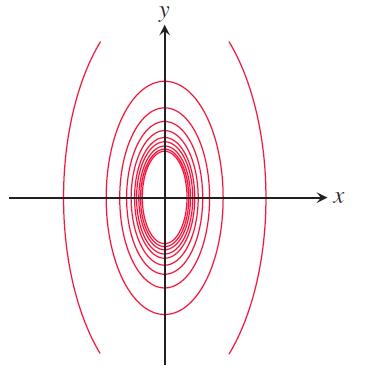
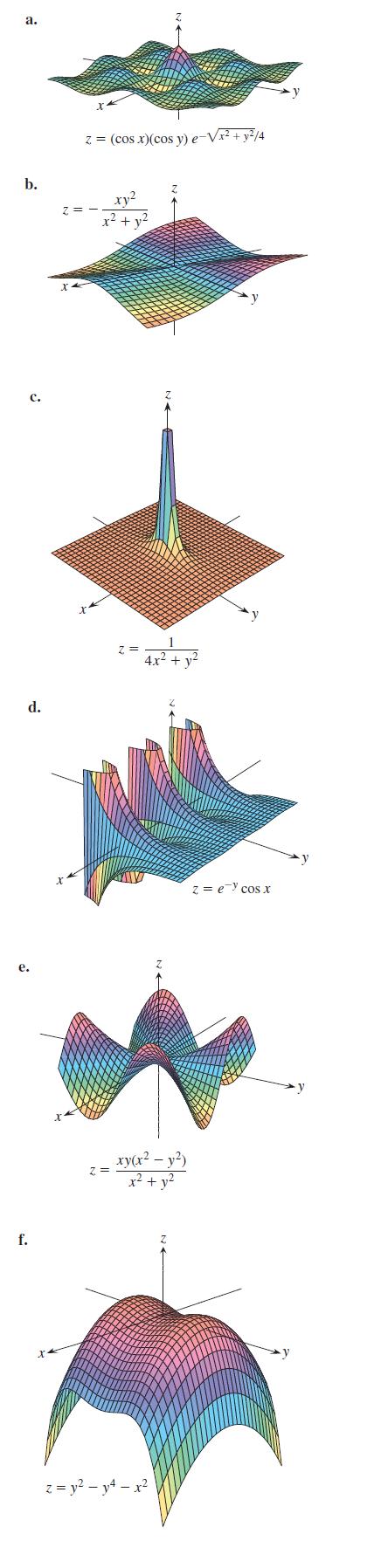
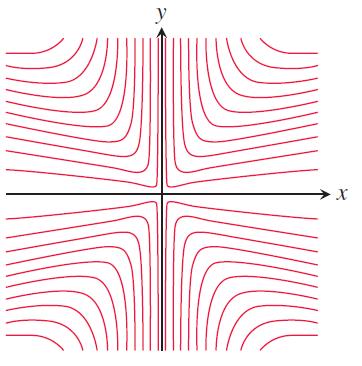
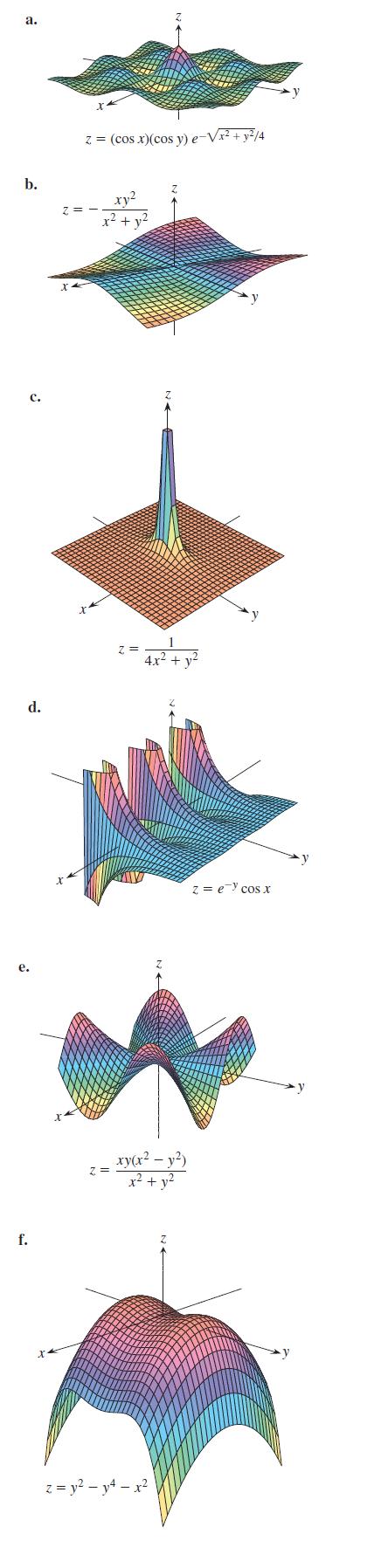
Show level curves for the functions graphed in (a)–(f) the shown below. Match each set of curves with the appropriate function. y X
Find ƒx, ƒy, and ƒz.ƒ(x, y, z) = sec-1 (x + yz)
Find the values of ∂z/∂x and ∂z/∂y at the point. 1 1 1 2 - 1 = 0, (2, 3, 6)
Sketch the curve ƒ(x, y) = c together with ∇ƒ and the tangent line at the given point. Then write an equation for the tangent line.x2 - xy + y2 = 7, (-1, 2)
Find the volume of the largest closed rectangular box in the first octant having three faces in the coordinate planes and a vertex on the plane x/a + y/b + z/c = 1, where a > 0, b > 0, and c > 0.
A space probe in the shape of the ellipsoid 4x2 + y2 + 4z2 = 16 enters Earth’s atmosphere and its surface begins to heat. After 1 hour, the temperature at the point (x, y, z) on the probe’s surface is T(x, y, z) = 8x2 + 4yz - 16z + 600.Find the hottest point on the probe’s surface.
Find the values of ∂z/∂x and ∂z/∂y at the point. sin (x + y) + sin (y+z) + sin (x + z) = 0, TT, TT, TT)
(a) Find the function’s domain, (b) Find the function’s range, (c) Describe the function’s level curves, (d) Find the boundary of the function’s domain, (e) Determine if the domain is an open region, a closed region, or neither, and (f) Decide if the domain is
Find ƒx, ƒy, and ƒz.ƒ(x, y, z) = ln (x + 2y + 3z)
Show level curves for the functions graphed in (a)–(f) the shown below. Match each set of curves with the appropriate function. X
Find the values of ∂z/∂x and ∂z/∂y at the point.z3 - xy + yz + y3 - 2 = 0, (1, 1, 1)
If the cost of a unit of labor is c1 and the cost of a unit of capital is c2, and if the firm can spend only B dollars as its total budget, then production P is constrained by c1x + c2 y = B. Show that the maximum production level subject to the constraint occurs at the point x = aB C₁ and y= (1
Suppose that the Celsius temperature at the point (x, y, z) on the sphere x2 + y2 + z2 = 1 is T = 400xyz2. Locate the highest and lowest temperatures on the sphere.
(a) Find the function’s domain, (b) Find the function’s range, (c) Describe the function’s level curves, (d) Find the boundary of the function’s domain, (e) Determine if the domain is an open region, a closed region, or neither, and (f) Decide if the domain is
Find ƒx, ƒy, and ƒz.ƒ(x, y, z) = yz ln (xy)
Find the values of ∂z/∂x and ∂z/∂y at the point. xey+ ye² + 2 ln x - 2 - 3 ln 2 = 0, (1, In 2, In 3)
Show level curves for the functions graphed in (a)–(f) the shown below. Match each set of curves with the appropriate function. y
During the 1920s, Charles Cobb and Paul Douglas modeled total production output P (of a firm, industry, or entire economy) as a function of labor hours involved x and capital invested y (which includes the monetary worth of all buildings and equipment). The Cobb-Douglas production function is given
Find ƒx, ƒy, and ƒz.ƒ(x, y, z) = e-(x2+y2+z2)
Show level curves for the functions graphed in (a)–(f) the shown below. Match each set of curves with the appropriate function. X
In what direction is the derivative of ƒ(x, y) = xy + y2 at P(3, 2) equal to zero?
Find the absolute maxima and minima of the functions on the given domains.ƒ(x, y) = 2x2 - 4x + y2 - 4y + 1 on the closed triangular plate bounded by the lines x = 0, y = 2, y = 2x in the first quadrant
Find ƒx, ƒy, and ƒz.ƒ(x, y, z) = e-xyz
In what directions is the derivative of ƒ(x, y) = (x2 - y2)/ (x2 + y2) at P(1, 1) equal to zero?
In economics, the usefulness or utility of amounts x and y of two capital goods G1 and G2 is sometimes measured by a function U(x, y). For example, G1 and G2 might be two chemicals a pharmaceutical company needs to have on hand and U(x, y) the gain from manufacturing a product whose synthesis
Find ƒx, ƒy, and ƒz.ƒ(x, y, z) = tanh (x + 2y + 3z)
Is there a direction u in which the rate of change of ƒ(x, y) = x2 - 3xy + 4y2 at P(1, 2) equals 14? Give reasons for your answer.
Find the absolute maxima and minima of the functions on the given domains.ƒ(x, y) = x2 + y2 on the closed triangular plate bounded by the lines x = 0, y = 0, y + 2x = 2 in the first quadrant
Human blood types are classified by three gene forms A, B, and O. Blood types AA, BB, and OO are homozygous, and blood types AB, AO, and BO are heterozygous. If p, q, and r represent the proportions of the three gene forms to the population, respectively, then the Hardy-Weinberg Law asserts that
Find ƒx, ƒy, and ƒz.ƒ(x, y, z) = sinh (xy - z2)
Is there a direction u in which the rate of change of the temperature function T(x, y, z) = 2xy - yz (temperature in degrees Celsius, distance in feet) at P(1, -1, 1) is -3°C/ft? Give reasons for your answer.
Find the partial derivative of the function with respect to each variable.ƒ(t, α) = cos (2πt - α)
The derivative of ƒ(x, y) at P0(1, 2) in the direction of i + j is 2√2 and in the direction of -2j is -3. What is the derivative of ƒ in the direction of -i - 2j? Give reasons for your answer.
You are in charge of erecting a radio telescope on a newly discovered planet. To minimize interference, you want to place it where the magnetic field of the planet is weakest. The planet is spherical, with a radius of 6 units. Based on a coordinate system whose origin is at the center of the
Find the partial derivative of the function with respect to each variable.g(u, ν) = y2e(2u/ν)
Display the values of the functions in two ways: (a) By sketching the surface z = ƒ(x, y) (b) By drawing an assortment of level curves in the function’s domain. Label each level curve with its function value. f(x, y) = √x² + √²
Given a constant k and the gradientsestablish the algebra rules for gradients. Vf = || + əyj + k. Vg || + + k.
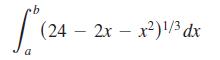
Find two numbers a and b with a ≤ b such thathas its largest value. a (242xx2)¹/³ dx
Display the values of the functions in two ways: (a) By sketching the surface z = ƒ(x, y) (b) By drawing an assortment of level curves in the function’s domain. Label each level curve with its function value.ƒ(x, y) = y2
Find the partial derivative of the function with respect to each variable.h(ρ, ϕ, θ) = ρ sin ϕ cos θ
How is the derivative of a differentiable function ƒ(x, y, z) at a point P0 in the direction of a unit vector u related to the scalar component of (∇ƒ)P0 in the direction of u? Give reasons for your answer.
Display the values of the functions in two ways: (a) By sketching the surface z = ƒ(x, y) (b) By drawing an assortment of level curves in the function’s domain. Label each level curve with its function value.ƒ(x, y) = √x
Find the partial derivative of the function with respect to each variable.g(r, θ, z) = r(1 - cos θ) - z
Assuming that the necessary derivatives of ƒ(x, y, z) are defined, how are Di ƒ, Dj ƒ, and Dk ƒ related to ƒx, ƒy, and ƒz? Give reasons for your answer.
Display the values of the functions in two ways: (a) By sketching the surface z = ƒ(x, y) (b) By drawing an assortment of level curves in the function’s domain. Label each level curve with its function value.ƒ(x, y) = x2 + y2
Show that A(x - x0) + B( y - y0) = 0 is an equation for the line in the xy-plane through the point (x0, y0) normal to the vector N = Ai + Bj.
Display the values of the functions in two ways: (a) By sketching the surface z = ƒ(x, y)(b) By drawing an assortment of level curves in the function’s domain. Label each level curve with its function value. f(x, y) = √x² + y² - 4
Display the values of the functions in two ways: (a) By sketching the surface z = ƒ(x, y) (b) By drawing an assortment of level curves in the function’s domain. Label each level curve with its function value.ƒ(x, y) = x2 - y
Find all the second-order partial derivatives of the function.ƒ(x, y) = x + y + xy
Display the values of the functions in two ways: (a) By sketching the surface z = ƒ(x, y) (b) By drawing an assortment of level curves in the function’s domain. Label each level curve with its function value. f(x, y) = √x² + y² + 4
Display the values of the functions in two ways: (a) By sketching the surface z = ƒ(x, y) (b) By drawing an assortment of level curves in the function’s domain. Label each level curve with its function value.ƒ(x, y) = 4 - x2 - y2
Find all the second-order partial derivatives of the function.ƒ(x, y) = sin xy
Find an equation for and sketch the graph of the level curve of the function ƒ(x, y) that passes through the given point. f(x, y) = Vx²1, (1, 0)
Display the values of the functions in two ways: (a) By sketching the surface z = ƒ(x, y) (b) By drawing an assortment of level curves in the function’s domain. Label each level curve with its function value.ƒ(x, y) = 4x2 + y2
Find all the second-order partial derivatives of the function.g(x, y) = x2y + cos y + y sin x
Find an equation for and sketch the graph of the level curve of the function ƒ(x, y) that passes through the given point. f(x, y) = 16 — x² - y², (2√2, √2) -
Display the values of the functions in two ways: (a) By sketching the surface z = ƒ(x, y)(b) By drawing an assortment of level curves in the function’s domain. Label each level curve with its function value.ƒ(x, y) = 6 - 2x - 3y
Find all the second-order partial derivatives of the function.h(x, y) = xey + y + 1
Find an equation for and sketch the graph of the level curve of the function ƒ(x, y) that passes through the given point. f(x, y) = 2y x x + y + 1' - (-1, 1)
Display the values of the functions in two ways: (a) By sketching the surface z = ƒ(x, y) and (b) By drawing an assortment of level curves in the function’s domain. Label each level curve with its function value.ƒ(x, y) = 1 - |y|
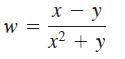
Find all the second-order partial derivatives of the function. W = x - y x² + y
Find all the second-order partial derivatives of the function.r(x, y) = ln (x + y)
Find an equation for and sketch the graph of the level curve of the function ƒ(x, y) that passes through the given point. f(x, y) = √x + y²3, (3,-1)
Display the values of the functions in two ways: (a) By sketching the surface z = ƒ(x, y) (b) By drawing an assortment of level curves in the function’s domain. Label each level curve with its function value.ƒ(x, y) = 1 - |x| - |y|
Find all the second-order partial derivatives of the function.s(x, y) = tan-1 ( y/x)
Find all the second-order partial derivatives of the function.w = x2 tan (xy)
Find all the second-order partial derivatives of the function.w = yex2- y
Find all the second-order partial derivatives of the function.w = x sin (x2y)
Verify that wxy = wyx.w = ln (2x + 3y)
Use the limit definition of partial derivative to compute the partial derivatives of the functions at the specified points. f(x, y) = 1 x + y - 3x²y, af ax and af dy at (1, 2)
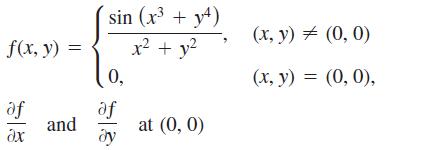
Use the limit definition of partial derivative to compute the partial derivatives of the functions at the specified points. f(x, y) = af ax and sin (x³ + y4) x² + y² 0, af dy at (0, 0) (x, y) = (0, 0) (x, y) = (0, 0),
Use the limit definition of partial derivative to compute the partial derivatives of the functions at the specified points. f(x, y) = 4 + 2x - 3y - xy², af ax and af dy at (-2, 1)
Verify that wxy = wyx.w = ex + x ln y + y ln x
Sketch a typical level surface for the function.ƒ(x, y, z) = x2 + y2 + z2
Use the limit definition of partial derivative to compute the partial derivatives of the functions at the specified points. f(x, y) = √2x + 3y − 1, af ax and of oy at (-2, 3)
Sketch a typical level surface for the function.ƒ(x, y, z) = ln (x2 + y2 + z2)
Sketch a typical level surface for the function.ƒ(x, y, z) = x + z
Find an equation for the level surface of the function through the given point. f(x, y, z) = ln (x² + y + z²), (1, 2, 1)
Which order of differentiation will calculate fxy faster: x first or y first? Try to answer without writing anything down.a. ƒ(x, y) = x sin y + eyb. ƒ(x, y) = 1/xc. ƒ(x, y) = y + (x/y)d. ƒ(x, y) = y + x2y + 4y3 - ln ( y2 + 1)e. ƒ(x, y) = x2 + 5xy + sin x + 7exf. ƒ(x, y) = x ln xy
Find an equation for the level surface of the function through the given point. f(x, y, z)=√x - y - Inz, (3,-1, 1)
Sketch a typical level surface for the function.ƒ(x, y, z) = z
Find an equation for the level surface of the function through the given point. g(x, y, z) = y² + z², (1,-1, √2) √x² + y²
The fifth-order partial derivative ϑ5ƒ/ϑx2ϑy3 is zero for each of the following functions. To show this as quickly as possible, which variable would you differentiate with respect to first: x or y? Try to answer without writing anything down.a. ƒ(x, y) = y2x4ex + 2b. ƒ(x, y) = y2 + y(sin x -
Sketch a typical level surface for the function.ƒ(x, y, z) = x2 + y2
Sketch a typical level surface for the function.ƒ(x, y, z) = y2 + z2
Find and sketch the domain of ƒ. Then find an equation for the level curve or surface of the function passing through the given point. g(x, y, z) = Σ n=0 (x + y)" n!zn (In 4, In 9, 2)
Find an equation for the level surface of the function through the given point. g(x, y, z) x = y + z 2x + y - z' (1, 0, -2)
Sketch a typical level surface for the function.ƒ(x, y, z) = z - x2 - y2
Sketch a typical level surface for the function.ƒ(x, y, z) = (x2/25) + (y2/16) + (z2/9)
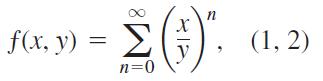
Find and sketch the domain of ƒ. Then find an equation for the level curve or surface of the function passing through the given point. f(x, y) = Σ n=0 X n (1, 2)
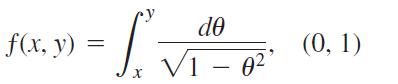
Find and sketch the domain of ƒ. Then find an equation for the level curve or surface of the function passing through the given point. f(x, y) -S₁²= X de V1 - 02' (0, 1)
Let ƒ(x, y) = 2x + 3y - 4. Find the slope of the line tangent to this surface at the point (2, -1) and lying in the a. Plane x = 2b. Plane y = -1.
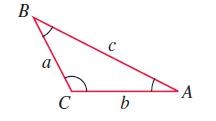
The triangle shown here.Express A implicitly as a function of a, b, and c and calculate ∂A/∂a and ∂A/∂b. B a C C b -А A
Let ƒ(x, y) = x2 + y3. Find the slope of the line tangent to this surface at the point (-1, 1) and lying in the a. Plane x = -1b. Plane y = 1.
Let w = ƒ(x, y, z) be a function of three independent variables and write the formal definition of the partial derivative ∂ƒ/∂z at (x0, y0, z0). Use this definition to find ∂ƒ/∂z at (1, 2, 3) for ƒ(x, y, z) = x2yz2.
Let w = ƒ(x, y, z) be a function of three independent variables and write the formal definition of the partial derivative ∂ƒ/∂y at (x0 , y0 , z0). Use this definition to find ∂ƒ/∂y at (-1, 0, 3) for ƒ(x, y, z) = -2xy2 + yz2.
Find the value of ∂z/∂x at the point (1, 1, 1) if the equation xy + z3x - 2yz = 0 defines z as a function of the two independent variables x and y and the partial derivative exists.
Find the value of ∂x/∂z at the point (1, -1, -3) if the equation xz + y ln x - x2 + 4 = 0 defines x as a function of the two independent variables y and z and the partial derivative exists.
Use a CAS to perform the following steps for each of the function.a. Plot the surface over the given rectangle.b. Plot several level curves in the rectangle.c. Plot the level curve of ƒ through the given point. У f(x, y) = x sin 2 + y sin 2x, 0 < x < 5m, 0 ≤ y < 5п, P(3п, 3п)
Find and sketch the domain of ƒ. Then find an equation for the level curve or surface of the function passing through the given point. g(x, y, z) dt de = - [₁₂₁&P + √₁₂√ ² = OF S 1 + f² V4 4 - 0²² X 0 (0, 1, √3)
Showing 7800 - 7900
of 29454
First
72
73
74
75
76
77
78
79
80
81
82
83
84
85
86
Last
Step by Step Answers

 Get 50% OFF
Claim Now
Get 50% OFF
Claim Now