New Semester
Started
Get
50% OFF
Study Help!
--h --m --s
Claim Now
Question Answers
Textbooks
Find textbooks, questions and answers
Oops, something went wrong!
Change your search query and then try again
S
Books
FREE
Study Help
Expert Questions
Accounting
General Management
Mathematics
Finance
Organizational Behaviour
Law
Physics
Operating System
Management Leadership
Sociology
Programming
Marketing
Database
Computer Network
Economics
Textbooks Solutions
Accounting
Managerial Accounting
Management Leadership
Cost Accounting
Statistics
Business Law
Corporate Finance
Finance
Economics
Auditing
Tutors
Online Tutors
Find a Tutor
Hire a Tutor
Become a Tutor
AI Tutor
AI Study Planner
NEW
Sell Books
Search
Search
Sign In
Register
study help
mathematics
precalculus
Thomas Calculus Early Transcendentals 13th Edition Joel R Hass, Christopher E Heil, Maurice D Weir - Solutions
Gives an integral over a region in a Cartesian coordinate plane. Sketch the region and evaluate the integral. 0 3/2 4-2u 2u - 4 = 24 dr v² - dv du (the uv-plane)
Let D be the region bounded below by the cone z = √x2 + y2 and above by the plane z = 1. Set up the triple integrals in spherical coordinates that give the volume of D using the following orders of integration.a. dρ dϕ dθ b. dϕ dρ dθ
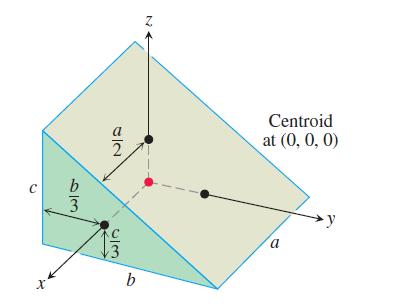
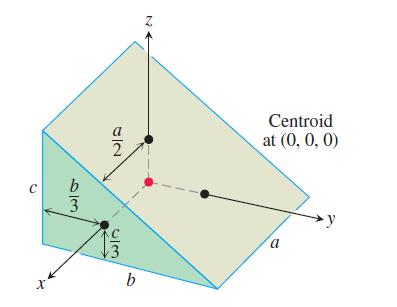
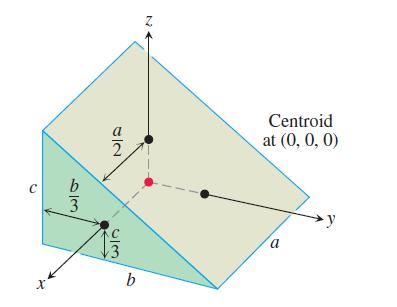
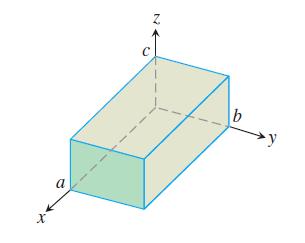
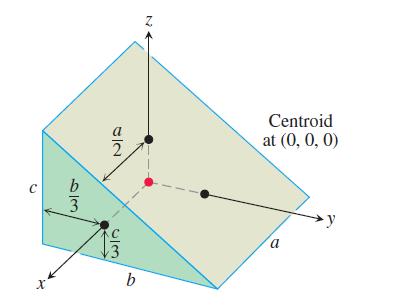
Finda. The mass of the solid.b. The center of mass.c. The moments of inertia about the coordinate axes.A wedge like the one in Exercise 22 has dimensions a = 2, b = 6, and c = 3. The density is δ(x, y, z) = x + 1. Notice that if the density is constant, the center of mass will be (0, 0, 0).Data
Gives an integral over a region in a Cartesian coordinate plane. Sketch the region and evaluate the integral. TT/3 -π/3J0 sect 3 cos t du dt (the tu-plane)
Find the volumes of the region. The region in the first octant bounded by the coordinate planes, the plane x + y = 4, and the cylinder y2 + 4z2 = 16. N X
Find the area of the region common to the interiors of the cardioids r = 1 + cos θ and r = 1 - cos θ.
Let D be the region in Exercise 11. Set up the triple integrals in spherical coordinates that give the volume of D using the following orders of integration.a. dρ dϕ dθb. dϕ dρ dθData from Exercise 11Let D be the region bounded below by the plane z = 0, above by the sphere x2 + y2 + z2 = 4,
Find the area of the region cut from the first quadrant by the cardioid r = 1 + sin θ.
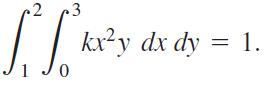
Find a value of the constant k so that 1 2 0 3 kx²y dx dy = 1.
Finda. The mass of the solid.b. The center of mass.c. The moments of inertia about the coordinate axes.A solid cube in the first octant is bounded by the coordinate planes and by the planes x = 1, y = 1, and z = 1. The density of the cube is δ(x, y, z) = x + y + z + 1.
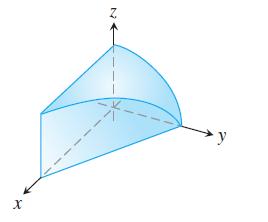
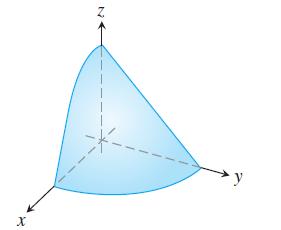
Find the volumes of the region.The region in the first octant bounded by the coordinate planes and the surface z = 4 - x2 - y X y
Suppose ƒ(x, y) is continuous and nonnegative over a region R in the plane with a defined area A(R). If ∫∫R ƒ(x, y) dA = 0, prove that ƒ(x, y) = 0 at every point (x, y) ε R.
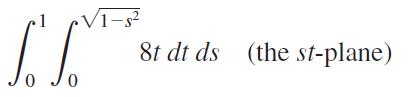
Gives an integral over a region in a Cartesian coordinate plane. Sketch the region and evaluate the integral. 1 √1-8² S.J 0 0 8t dt ds (the st-plane)
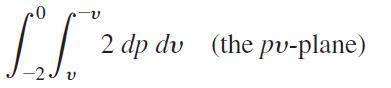
Gives an integral over a region in a Cartesian coordinate plane. Sketch the region and evaluate the integral. V LS² -2. Iv 2 dp du (the pu-plane)
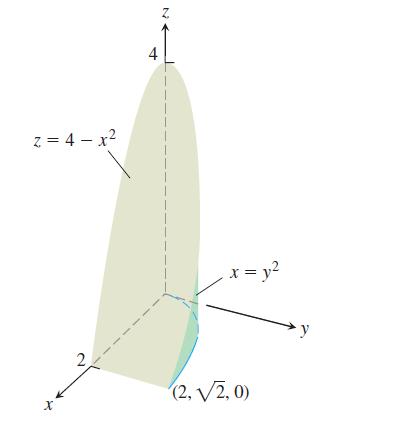
Finda. The mass of the solid. b. The center of mass.A solid in the first octant is bounded by the planes y = 0 and z = 0 and by the surfaces z = 4 - x2 and x = y2. Its density function is δ(x, y, z) = kxy, k a constant. z = 4-x² X 2 4 Z x = y² (2, √2,0)
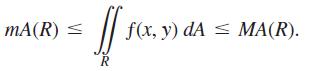
Suppose ƒ(x, y) is continuous over a region R in the plane and that the area A(R) of the region is defined. If there are constants m and M such that m ≤ ƒ(x, y) ≤ M for all (x, y)ε R, prove that mA(R) < ffs f(x, y) dAMA(R). R
Find the area of the region enclosed by the positive x-axis and spiral r = 4θ/3, 0 ≤ θ ≤ 2π. The region looks like a snail shell.
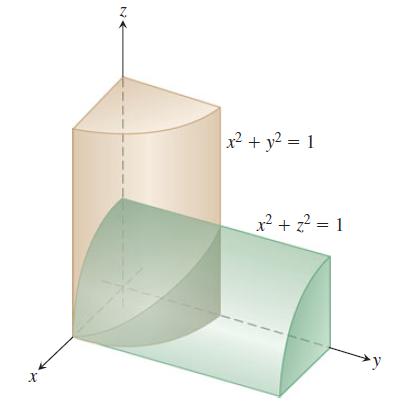
Find the volumes of the region. The region common to the interiors of the cylinders x2 + y2 = 1 and x2 + z2 = 1, one-eighth of which is shown in the accompanying figure X x² + y² = 1 x² + z² = 1
Find the volume of the region bounded above by the surface z = 4 - y2 and below by the rectangle R: 0 ≤ x ≤ 1, 0 ≤ y ≤ 2.
A wedge like the one in Exercise 22 has a = 4, b = 6, and c = 3. Make a quick sketch to check for yourself that the square of the distance from a typical point (x, y, z) of the wedge to the line L: x = 4, y = 0 is r2 = (x - 4)2 + y2. Then calculate the moment of inertia of the wedge about L.Data
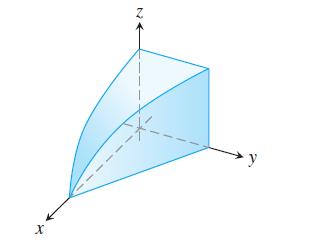
Find the volumes of the region. The region in the first octant bounded by the coordinate planes, the plane y = 1 - x, and the surface z = cos (πx/2), 0 ≤ x ≤ 1 X
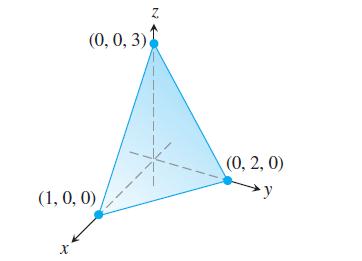
Find the volumes of the region. The tetrahedron in the first octant bounded by the coordinate planes and the plane passing through (1, 0, 0), (0, 2, 0), and (0, 0, 3) (0, 0, 3) (1, 0, 0) X (0,2,0)
A wedge like the one in Exercise 22 has a = 4, b = 6, and c = 3. Make a quick sketch to check for yourself that the square of the distance from a typical point (x, y, z) of the wedge to the line L: z = 0, y = 6 is r2 = (y - 6)2 + z2. Then calculate the moment of inertia of the wedge about L.Data
Find the area enclosed by one leaf of the rose r = 12 cos 3θ.
Find the volume of the region bounded above by the surface z = 2 sin x cos y and below by the rectangle R: 0 ≤ x ≤ π/2, 0 ≤ y ≤ π/4.
Finda. The mass of the solid. b. The center of mass.A solid region in the first octant is bounded by the coordinate planes and the plane x + y + z = 2. The density of the solid is δ(x, y, z) = 2x.
If y = ƒ(x) is a nonnegative continuous function over the closed interval a ≤ x ≤ b, show that the double integral definition of area for the closed plane region bounded by the graph of ƒ, the vertical lines x = a and x = b, and the x-axis agrees with the definition for area beneath the curve.
Evaluate the spherical coordinate integrals. 0 2π π/4 seco 0 (p o cos d) p² sin & dp do do co
Find the area of the region that lies inside the cardioid r = 1 + cos θ and outside the circle r = 1.
Find the volume of the region bounded above by the plane z = y/2 and below by the rectangle R: 0 ≤ x ≤ 4, 0 ≤ y ≤ 2.
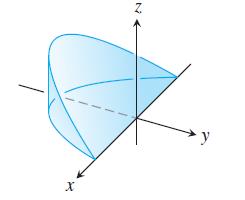
Find the volumes of the region. The wedge cut from the cylinder x2 + y2 = 1 by the planes z = -y and z = 0 X Z y
According to the Texas Almanac, Texas has 254 counties and a National Weather Service station in each county. Assume that at time t0, each of the 254 weather stations recorded the local temperature. Find a formula that would give a reasonable approximation of the average temperature in Texas at
Find the area of the region cut from the first quadrant by the curve r = 2(2 - sin 2θ)1/2.
Find the volume of the region bounded above by the plane z = 2 - x - y and below by the square R: 0 ≤ x ≤ 1, 0 ≤ y ≤ 1.
If ƒ(x, y) = 100 ( y + 1) represents the population density of a planar region on Earth, where x and y are measured in miles, find the number of people in the region bounded by the curves x = y2 and x = 2y - y2.
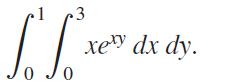
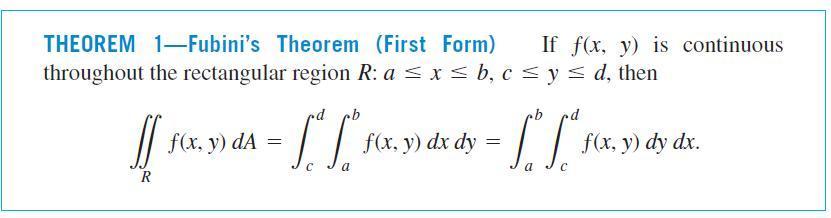
Use Fubini’s Theorem to evaluate 3 SS³ 0 JO 0 xexy dx dy.
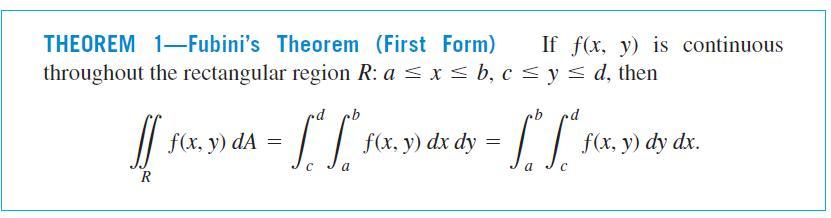
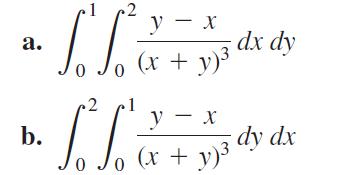
Use a software application to compute the integralsExplain why your results do not contradict Fubini’s Theorem. y - x a. • S₁ S₁² (x + 25/5 dx dy y)³ 0 b. 1 y - x Jo (x + y) ³0 dx
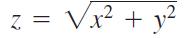
Find the average height of the (single) coneabove the disk x2 + y2 ≤ a2 in the xy-plane. Z = √x² + y²
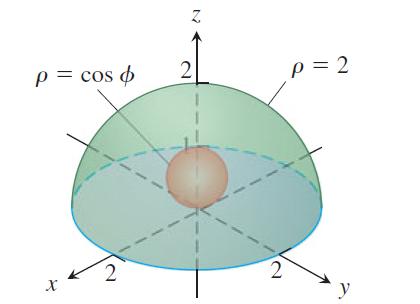
(a) Find the spherical coordinate limits for the integral that calculates the volume of the given solid and then(b) Evaluate the integral.The solid between the sphere ρ = cosϕ and the hemisphere r = 2, z ≥ 0 p = cos o X 2 2 2 P = 2 y
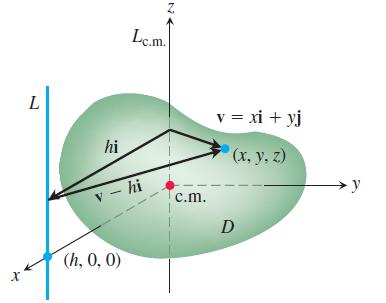
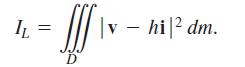
a. Show that the first moment of a body in space about any plane through the body’s center of mass is zero.b. To prove the Parallel Axis Theorem, place the body with its center of mass at the origin, with the line Lc.m. along the z-axis and the line L perpendicular to the xy-plane at the point
Find the mass of the solid bounded by the planes x + z = 1, x - z = -1, y = 0, and the surface y = √z. The density of the solid is δ(x, y, z) = 2y + 5.
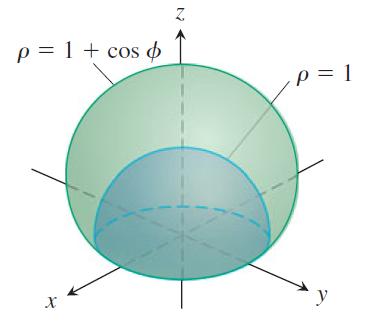
(a) Find the spherical coordinate limits for the integral that calculates the volume of the given solid and then(b) Evaluate the integral.The solid bounded below by the hemisphere r = 1, z ≥ 0, and above by the cardioid of revolution ρ = 1 + cosϕ p = 1 + cos X p = 1 y
Find the volumes of the region.The region between the planes x + y + 2z = 2 and 2x + 2y + z = 4 in the first octant
The moment of inertia of the solid in Exercise 21 about the z-axis is Iz = abc(a2 + b2)/3.a. Use Equation (2) to find the moment of inertia of the solid about the line parallel to the z-axis through the solid’s center of mass.b. Use Equation (2) and the result in part (a) to find the moment of
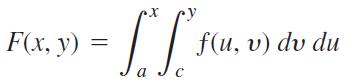
If ƒ(x, y) is continuous over R: a ≤ x ≤ b, c ≤ y ≤ d andon the interior of R, find the second partial derivatives Fxy and Fyx. F(x, y) = Sfs a C f(u, v) du du
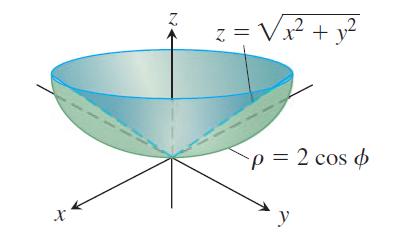
(a) Find the spherical coordinate limits for the integral that calculates the volume of the given solid and then(b) Evaluate the integral.The solid bounded below by the sphere ρ = 2 cos ϕ and above by the cone z = √x2 + y2 X N. Z z =√x² + y² 2 p = 2 cos o y
Find the mass of the solid region bounded by the parabolic surfaces z = 16 - 2x2 - 2y2 and z = 2x2 + 2y2 if the density of the solid is δ(x, y, z) = √x2 + y2.
Find the volumes of the region.The finite region bounded by the planes z = x, x + z = 8, z = y, y = 8, and z = 0
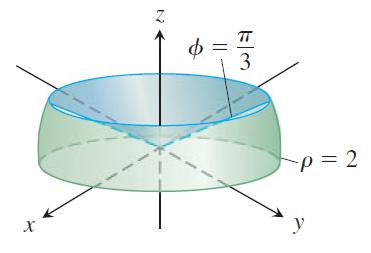
(a) Find the spherical coordinate limits for the integral that calculates the volume of the given solid and then(b) Evaluate the integral.The solid bounded below by the xy-plane, on the sides by the sphere ρ = 2, and above by the cone ϕ = π/3 X N ||| Elm p=2 y
Find the average distance from a point P(x, y) in the disk x2 + y2 ≤ a2 to the origin.
If a = b = 6 and c = 4, the moment of inertia of the solid wedge in Exercise 22 about the x-axis is Ix = 208. Find the moment of inertia of the wedge about the line y = 4, z = -4/3 (the edge of the wedge’s narrow end).Data from Exercise 22The coordinate axes in the figure run through the centroid
Find the volumes of the region.The region cut from the solid elliptical cylinder x2 + 4y2 ≤ 4 by the xy-plane and the plane z = x + 2
(a) Find the spherical coordinate limits for the integral that calculates the volume of the given solid and then(b) Evaluate the integral.The solid enclosed by the cardioid of revolution ρ = 1 - cosϕ
Find the average value of the square of the distance from the point P(x, y) in the disk x2 + y2 ≤ 1 to the boundary point A(1, 0).
The moment of inertia about a diameter of a solid sphere of constant density and radius a is (2/5)ma2, where m is the mass of the sphere. Find the moment of inertia about a line tangent to the sphere.
Find the volumes of the region.The region bounded in back by the plane x = 0, on the front and sides by the parabolic cylinder x = 1 - y2, on the top by the paraboloid z = x2 + y2, and on the bottom by the xy-plane
(a) Find the spherical coordinate limits for the integral that calculates the volume of the given solid and then(b) Evaluate the integral.The upper portion cut from the solid in Exercise 35 by the xy-planeExercise 35The solid enclosed by the cardioid of revolution ρ = 1 - cosϕ
Set up triple integrals for the volume of the sphere ρ = 2 in (a) Spherical, (b) Cylindrical, and (c) Rectangular coordinates.
Find the centroid of the “triangular” region bounded by the lines x = 2, y = 2 and the hyperbola xy = 2 in the xy-plane.
Find the centroid of the region between the parabola x + y2 - 2y = 0 and the line x + 2y = 0 in the xy-plane.
Find the polar moment of inertia about the origin of a thin triangular plate of constant density δ = 3 bounded by the y-axis and the lines y = 2x and y = 4 in the xy-plane.
Find the polar moment of inertia about the center of a thin rectangular sheet of constant density δ = 1 bounded by the linesa. x = ±2, y = ±1 in the xy-planeb. x = ±a, y = ±b in the xy-plane.
Find the moment of inertia about the x-axis of a thin plate of constant density δ covering the triangle with vertices (0, 0), (3, 0), and (3, 2) in the xy-plane.
Find the center of mass and the moments of inertia about the coordinate axes of a thin plate bounded by the line y = x and the parabola y = x2 in the xyplane if the density is δ(x, y) = x + 1.
Find the mass and first moments about the coordinate axes of a thin square plate bounded by the lines x = ±1, y = ±1 in the xy-plane if the density is δ(x, y) = x2 + y2 + 1/3.
Find the moment of inertia about the x-axis of a thin triangular plate of constant density δ whose base lies along the interval [0, b] on the x-axis and whose vertex lies on the line y = h above the x-axis. As you will see, it does not matter where on the line this vertex lies. All such triangles
Find the volume of the region bounded above by the paraboloid z = x2 + y2 and below by the triangle enclosed by the lines y = x, x = 0, and x + y = 2 in the xy-plane.
Find the volume of the solid that is bounded above by the cylinder z = x2 and below by the region enclosed by the parabola y = 2 - x2 and the line y = x in the xy-plane.
Find the volume of the solid whose base is the region in the xyplane that is bounded by the parabola y = 4 - x2 and the line y = 3x, while the top of the solid is bounded by the plane z = x + 4.
Find the volume of the solid in the first octant bounded by the coordinate planes, the cylinder x2 + y2 = 4, and the plane z + y = 3.
Find the volume of the solid in the first octant bounded by the coordinate planes, the plane x = 3, and the parabolic cylinder z = 4 - y2.
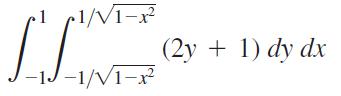
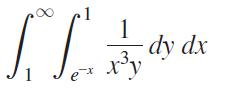
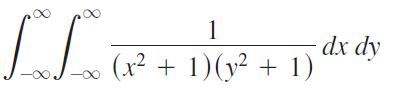
Improper double integrals can often be computed similarly to improper integrals of one variable. The first iteration of the following improper integrals is conducted just as if they were proper integrals. One then evaluates an improper integral of a single variable by taking appropriate limits.
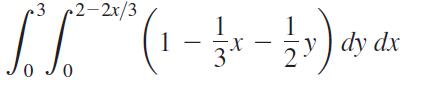
Sketch the region of integration and the solid whose volume is given by the double integral. 3 2-2x/3 [² 2² ²²² ( 1 — — x − 2 y ) dy dx 0 0
Find the volume of the wedge cut from the first octant by the cylinder z = 12 - 3y2 and the plane x + y = 2.
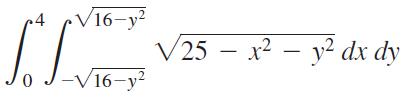
Sketch the region of integration and the solid whose volume is given by the double integral. 4 /16-y² -√16-y² V25 - x² - y² dx dy
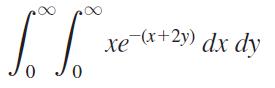
Improper double integrals can often be computed similarly to improper integrals of one variable. The first iteration of the following improper integrals is conducted just as if they were proper integrals. One then evaluates an improper integral of a single variable by taking appropriate limits.
Improper double integrals can often be computed similarly to improper integrals of one variable. The first iteration of the following improper integrals is conducted just as if they were proper integrals. One then evaluates an improper integral of a single variable by taking appropriate limits.
Improper double integrals can often be computed similarly to improper integrals of one variable. The first iteration of the following improper integrals is conducted just as if they were proper integrals. One then evaluates an improper integral of a single variable by taking appropriate limits.
Find the volume of the solid cut from the first octant by the surface z = 4 - x2 - y.
Find the volume of the solid cut from the square column |x| + |y| ≤ 1 by the planes z = 0 and 3x + z = 3.
Find the volume of the solid that is bounded on the front and back by the planes x = 2 and x = 1, on the sides by the cylinders y = ± 1/x, and above and below by the planes z = x + 1 and z = 0.
Find the volume of the solid bounded on the front and back by the planes x = ± π/3, on the sides by the cylinders y = ± sec x, above by the cylinder z = 1 + y2, and below by the xy-plane.
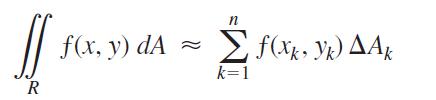
Approximate the double integral of ƒ(x, y) over the region R partitioned by the given vertical lines x = a and horizontal lines y = c. In each sub-rectangle, use (xk, yk) as indicated for your approximation. fay4 - R n f(x, y) dA Σ f(xk, 3) ΔΑΚ k=1
What symmetry will you find in a surface that has an equation of the form r = ƒ(z) in cylindrical coordinates? Give reasons for your answer.
What symmetry will you find in a surface that has an equation of the form ρ = ƒ(ϕ) in spherical coordinates? Give reasons for your answer.
(a) Find the function’s domain, (b) Find the function’s range, (c) Describe the function’s level curves, (d) Find the boundary of the function’s domain, (e) Determine if the domain is an open region, a closed region, or neither, and (f) Decide if the domain is
Find the absolute maxima and minima of the functions on the given domains.D(x, y) = x2 - xy + y2 + 1 on the closed triangular plate in the first quadrant bounded by the lines x = 0, y = 4, y = x
By about how much will g(x, y, z) = x + x cos z - y sin z + y change if the point P(x, y, z) moves from P0(2, -1, 0) a distance of ds = 0.2 unit toward the point P1(0, 1, 2)?
Let S be the surface that is the graph of ƒ(x, y) = 10 - x2 - y2. Suppose that the temperature in space at each point (x, y, z) is T(x, y, z) = x2y + y2z + 4x + 14y + z.a. Among all the possible directions tangential to the surface S at the point (0, 0, 10), which direction will make the rate of
Find the points on the surface z2 = xy + 4 closest to the origin.
Find ∂w/∂u and ∂w/∂y when u = ν = 0 if w = ln√1 + x2 - tan-1 x and x = 2eu cos ν.
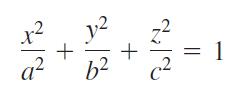
Find the minimum volume for a region bounded by the planes x = 0, y = 0, z = 0 and a plane tangent to the ellipsoidat a point in the first octant. + + = 1
Draw a branch diagram and write a Chain Rule formula for each derivative. dz dt for z = f(u, v, w), u = g(t), v = h(t), W = k(t)
Find parametric equations for the line tangent to the curve of intersection of the surfaces at the given point.Surfaces: x + y2 + 2z = 4, x = 1Point: (1, 1, 1)
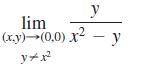
By considering different paths of approach, show that the limits do not exist. y lim (x,y)-(0,0) x² - y y+r²
Find the maximum and minimum values of x2 + y2 subject to the constraint x2 - 2x + y2 - 4y = 0.
Draw a branch diagram and write a Chain Rule formula for each derivative. dw ди ????w dv Z k(u, v) = and =h(x, y, z), x = f(u, v), y = g(u, v), for w=
Find and sketch the level curves ƒ(x, y) = c on the same set of coordinate axes for the given values of c. We refer to these level curves as a contour map.ƒ(x, y) = x + y - 1, c = -3, -2, -1, 0, 1, 2, 3
What is the derivative of a function ƒ(x, y) at a point P0 in the direction of a unit vector u? What rate does it describe? What geometric interpretation does it have? Give examples.
Find the derivative of the function at P0 in the direction of u.h(x, y) = tan-1 (y/x) + √3 sin-1 (xy/2), P0(1, 1), u = 3i - 2j
Showing 7400 - 7500
of 29454
First
68
69
70
71
72
73
74
75
76
77
78
79
80
81
82
Last
Step by Step Answers

 Get 50% OFF
Claim Now
Get 50% OFF
Claim Now